REVIEW · ARUSHA
3 Days Safari Ngorongoro Crater and Serengeti National Park
Serengeti’s open southern plains and Ngorongoro’s wildlife-filled crater make this three-day safari a sharp introduction to northern Tanzania. You spend long hours on the road, but those miles connect two very different wildlife settings: wide grassland in Serengeti and a compact crater floor in Ngorongoro.
I like the small group limit of six, which gives you more room in the safari vehicle and makes it easier to ask questions. I also like that meals are covered, with three lunches, two breakfasts, and two dinners included. The tradeoff is the pace: a six-hour drive on the first day leaves limited time for a full Serengeti experience, and the camping setup will suit practical visitors better than people seeking comfort.
Key points to know before booking
- Two famous wildlife areas in three days: You visit the southern and central Serengeti, then explore Ngorongoro Conservation Area.
- Long first-day transfer: The drive from Arusha is listed at about six hours and 335 kilometers, followed by a game drive.
- Small shared group: The maximum is six people, useful for viewing wildlife and keeping the trip more personal.
- Camping keeps the price down: The basic option uses tents, with meals included but tips and visas extra.
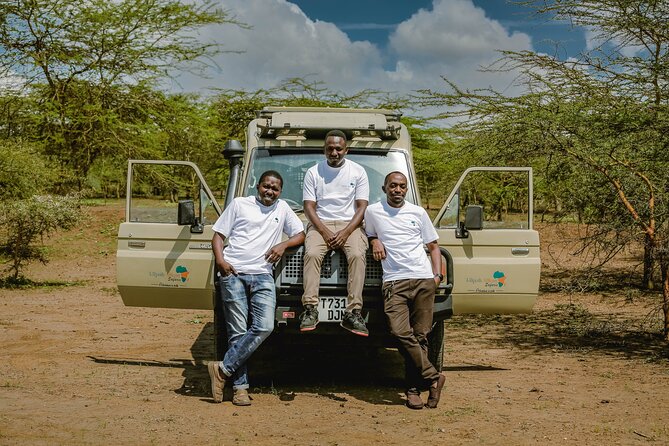
- Good guide support: Felix, Simon, Christian, Bulldozer, and Heavenlight are names associated with the operator’s service, though your exact guide is not guaranteed.
- Timing needs checking: The schedule lists an 8 a.m. pickup after breakfast, while the meeting information gives a 3 p.m. start time.
Arusha to the southern Serengeti on day one
Your first morning begins with breakfast at 7 a.m. and a planned pickup at 8 a.m. From Arusha, the drive to the southern Serengeti takes about six hours and covers roughly 335 kilometers. You enter through the Ngorongoro gate, then continue toward the park’s southern, central, and Seronera Valley areas.
This transfer is a major part of the day, so set your expectations correctly. You are not getting a slow morning game drive followed by a short hop to camp. You are crossing a large section of northern Tanzania, with the reward coming later when the plains open up and wildlife begins to appear.
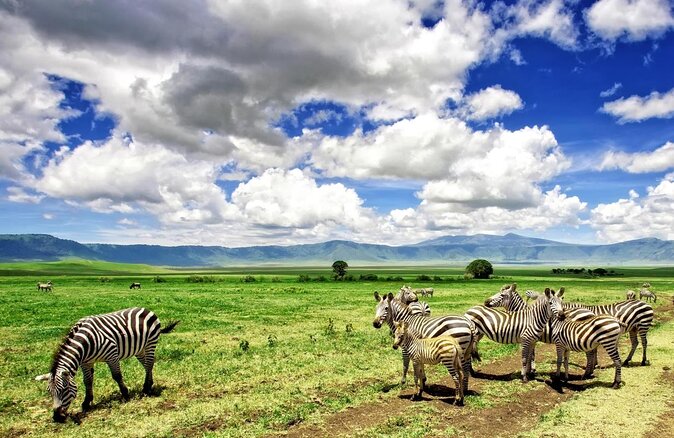
The southern Serengeti is known for broad grazing country. Wildebeest, zebra, Coke’s hartebeest, waterbuck, Grant’s gazelle, Thomson’s gazelle, and impala are all listed among the animals you may see. The abundance of grazing animals helps explain why this area is also important for predators, although sightings can never be guaranteed.
The name Serengeti comes from the Maasai word Serengit, commonly explained as the land of endless plains. You will understand the name quickly. The first impression is scale: grassland, sky, scattered trees, and a road that seems to run into the horizon.
The listed schedule allows about seven hours for the first Serengeti stop. That figure appears to include the game-drive period, but the exact split between driving, gate formalities, and wildlife viewing should be confirmed before departure. The tour includes a visit to a hippo habitat, adding a different kind of wildlife stop after the open grasslands.
More Volcano National Parks in Arusha
- 3 Day Serengeti National Park & Ngorongoro Crater Camping Safari
★ 5.0 · 142 reviews - 4 Day Ngorongoro Crater Tarangire and Serengeti National Park
★ 5.0 · 44 reviews - 3 Days Safari to Serengeti National Park & Ngorongoro Crater in Tanzania
★ 5.0 · 34 reviews
What makes the Seronera Valley and Moru Kopjes special
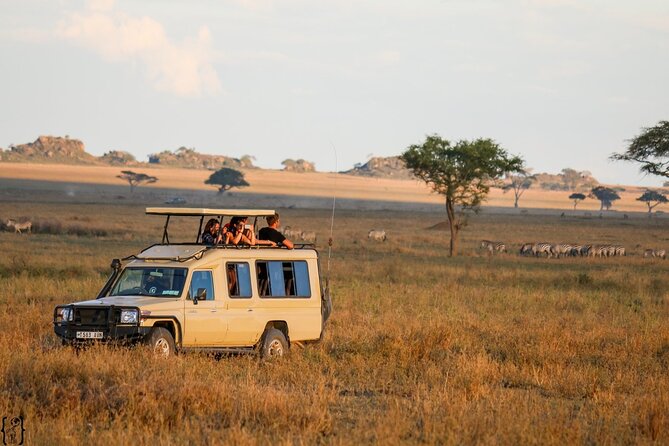
The central Serengeti and Seronera Valley give you a second view of the park. Here, rocky outcrops called kopjes break up the grassland. Moru Kopjes are described as rising from the plains like ships on a sea, and they can provide high points from which predators watch for prey.
The area also has distinctive plant life, including candelabra trees and short-lived flowers that appear when conditions allow. That detail matters because the Serengeti is not simply a stage for large mammals. The plants, rocks, and seasonal changes shape where animals gather and how predators hunt.
Elephants are found across parts of the plains, and the central region is also associated with rare black rhinos. The itinerary refers to Gong Rock and Maasai cave paintings showing elephants, shields, and abstract patterns. These cultural and geological details give the drive more depth than a simple checklist of animals.
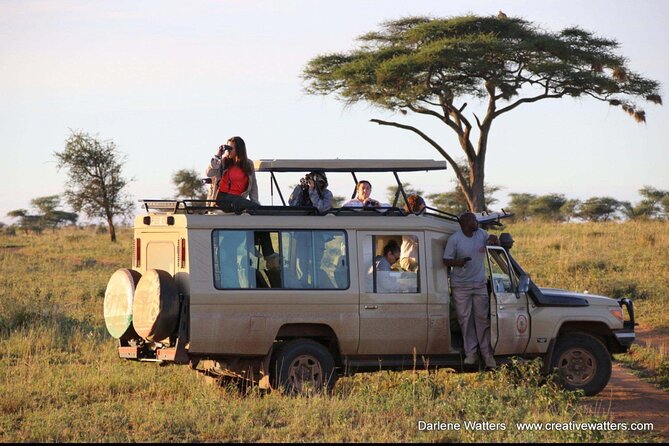
Your guide’s role matters most here. A good driver can explain animal behavior, read tracks, and choose a useful position without rushing from one sighting to another. The operator has used guides named Felix, Simon, Christian, and Bulldozer on different trips. Availability varies, so ask for the assigned guide before you travel if that is important to you.
The central Serengeti is also a place where conditions can change the experience. One account specifically found the crater more rewarding than the Serengeti during a dry October period, when the grass was dry and animal sightings felt harder. That does not make October a poor choice, but it is a useful warning: season and recent weather can affect what you see.
Camping between the parks
This is a camping safari, and the lower price reflects that choice. The basic option is described as sleeping in tents on both nights. You should expect a functional outdoor stay rather than a lodge-based holiday.
Camping works well if your priority is spending more of your budget on park access and transport. It also keeps the trip simple and close to the setting. The supplied meals include three lunches, two breakfasts, and two dinners, and food receives strong praise in the available feedback, including positive comments about the safari cook and picnic lunches.
Still, you should know what you are buying. The information does not specify tent size, bedding, showers, toilets, or the exact campsites. Ask those questions before paying if comfort is a major concern. The same applies to the word camping: it can cover several levels of service, and this tour’s basic option should not be confused with a permanent tented lodge.
A small group helps here. With no more than six people, shared meals and camp arrangements are likely to feel less crowded than on a large coach-style safari. It also means the vehicle can remain focused on wildlife rather than moving a large party from place to place.
Day two, more Serengeti before Ngorongoro
The supplied schedule gives the second day about six hours in Serengeti National Park. This is valuable because the park deserves more than a quick crossing. You may return to the southern plains, central zone, or Seronera area, depending on the route and animal activity.
This day is also where the itinerary needs clarification. The overview describes a journey toward the Ngorongoro Conservation Area on day two, while the detailed stops still place you in Serengeti for about six hours. The exact overnight location and timing are not clear from the information provided. Confirm whether you sleep inside Serengeti, near the crater, or elsewhere in the conservation area.
That question matters because it affects the next morning. A night closer to the crater can reduce backtracking. A night deeper in Serengeti may give you more time in the park but can make the following transfer longer.
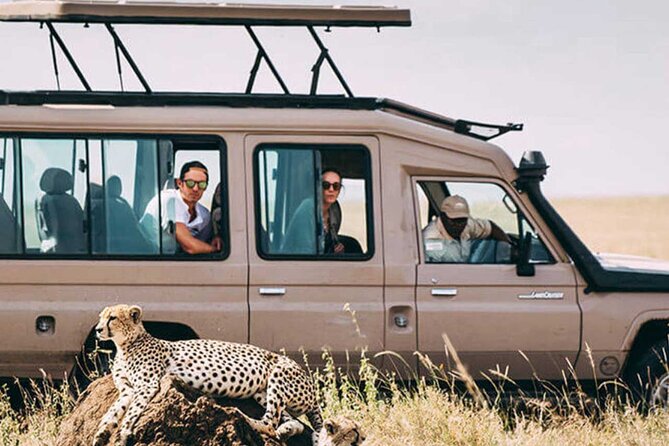
The route may include additional views of elephants, kopjes, open grassland, and predator habitat. If you are hoping for the Great Migration, keep your expectations measured. Some people on similar trips have seen moving zebra and wildebeest, but the tour cannot promise migration sightings. The same is true of the Big Five. One traveler saw all five, but wildlife remains wild and seasonal.
More Volcano National Parks in Tanzania
- 3days Serengeti National park and Ngorongoro Crater Tanzania Safari
★ 5.0 · 21 reviews - 3 Days Lake Manyara, Ngorogoro Crater, Tarangire National Park
★ 5.0 · 21 reviews - 2 Days Joined Group Tarangire and Ngorongoro Crater National Park
★ 4.5 · 17 reviews - 5days Tarangire,Serengeti,ngorongoro Crater and Lake Manyara National park
★ 5.0 · 11 reviews
Ngorongoro Crater on day three
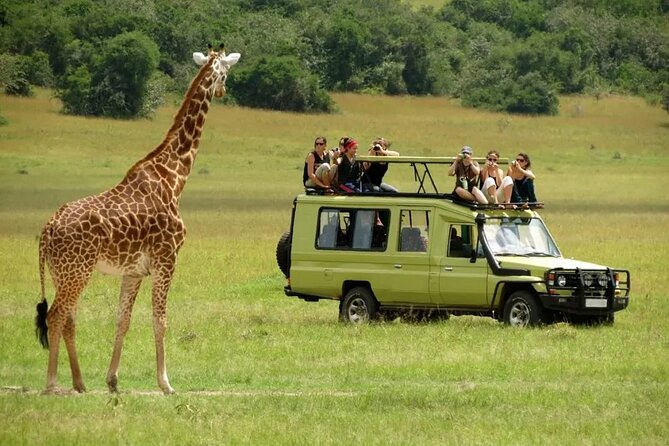
The final wildlife focus is the Ngorongoro Conservation Area, with about six hours listed for the stop. The crater is the visual highlight for many people because its steep walls hold a concentrated mix of grassland, wet areas, and wildlife in a relatively contained setting.
You may see wildebeest, gazelle, golden jackals, bat-eared foxes, hippopotamus, buffalo, eland, waterbuck, and other hoofed animals. Leopards, cheetahs, hyenas, wild dogs, and other predators are listed as possible sightings, but the same information notes that giraffes, oribi, topi, spotted hyenas, cheetahs, impalas, and some other animals are rarely seen in the park. That is useful guidance: the crater can be highly productive, but it is not a guaranteed animal catalogue.
The crater’s reputation for Big Five sightings comes from its varied habitat and dense wildlife. It is possible to see several major species in a single day, and some visitors have done so. Even here, your guide’s judgment and the day’s conditions matter.
Ngorongoro also adds human and archaeological context. Maasai families live in circular homesteads called bomas within the conservation area. The region is linked to early human evolution research associated with Mary and Louis Leakey. These details remind you that this is not only a wildlife destination. People, animals, and ancient human history share the same broad setting.
After the crater visit, you return to Arusha. The schedule labels this final portion at about six hours, but the exact arrival time is not provided. Do not book a tight onward flight or fixed evening plan without checking the expected return time.
What the $810 price really covers
At $810 per person, this is not a bargain-basement day trip, but a three-day northern Tanzania safari involves substantial driving, park access, meals, guiding, camping equipment, and vehicle costs. The value is strongest if you want both Serengeti and Ngorongoro without arranging separate transport and meals yourself.
The price becomes more attractive with a full group of six because shared safari costs are spread across the vehicle. If you are traveling alone or as a couple, ask whether the departure is guaranteed and how many people are already booked. The experience is advertised as a shared group safari, and the maximum group size is six, but the minimum group size is not stated.
Included meals reduce daily spending and simplify the trip. Tips for the driver-guide and safari cook are not included, and visas are also extra. Set aside money for both rather than treating the advertised price as the complete trip cost.
The strongest value comes from the access to two major protected areas in a short time. The weakest point is comfort and pace. You are paying for a concentrated safari, not a leisurely lodge holiday with long rest periods.
Communication, guides, and practical planning
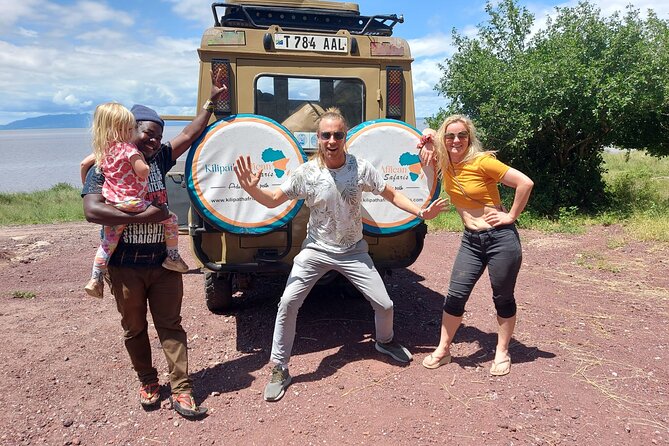
Communication is one of the strongest parts of the operator’s service. Heavenlight and Felix are specifically associated with quick replies and pre-trip support, including help with bookings and WhatsApp communication. That can be very useful when you need to confirm pickup, camping arrangements, or the exact overnight plan.
Several guides receive warm praise for being friendly, helpful, and effective at explaining animals and scenery. Christian is associated with a first-time safari that included many animal sightings. Simon is linked with a highly praised three-day trip, while Bulldozer is described as an experienced driver who knew how to handle the route. These names are useful when discussing preferences, but they do not guarantee who will lead your departure.
The pickup details need special attention. The schedule says breakfast at 7 a.m. and pickup at 8 a.m., yet the meeting information lists a 3 p.m. start time. Those details conflict. Contact Kilipath African Safaris before the trip and get the pickup time in writing.
Confirmation is provided at booking, and most people can participate. The activity accepts mobile tickets. Free cancellation is available if you cancel at least 24 hours before the local start time. Inside that window, the payment is not refunded, and last-minute changes are not accepted.
Who will enjoy this safari most
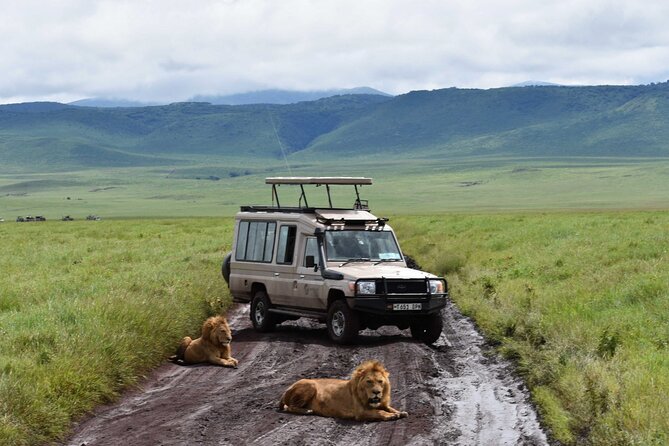
I would choose this trip if you have three days, want the major northern Tanzania highlights, and are comfortable with long drives and basic camping. It is particularly suitable for first-time safari visitors who want a strong introduction without committing to a week-long route.
It also suits people who value a small group, included meals, and direct support from an operator. The group cap of six is a real advantage for wildlife viewing and for keeping the vehicle from feeling crowded.
I would look elsewhere if you want luxury tents, a slow pace, or several full days in Serengeti. A longer trip would give you more time for changing wildlife conditions and reduce the sense that you are rushing between famous names.
Should you book the three-day Serengeti and Ngorongoro safari?
Book it if your priority is seeing two major Tanzanian wildlife areas in one compact trip, and you are happy to trade comfort for price. The combination of Serengeti plains, Seronera and Moru Kopjes, a hippo habitat, and the Ngorongoro crater floor gives you plenty of variety in three days.
Before booking, confirm four things: the exact pickup time, the overnight camping locations, the tent and bathroom setup, and your guide assignment. If those details suit you, $810 can be fair value for a small-group safari with meals included. If you need more rest, more reliable migration timing, or lodge comfort, spend more time and money on a longer route.
FAQ
How long is the safari?
The experience lasts about three days.
Where does the safari begin?
Pickup is offered from accommodation in Arusha. The detailed schedule gives an 8 a.m. pickup after breakfast, while the meeting information lists a 3 p.m. start time, so confirm the correct time before departure.
How many people can join the safari?
The maximum group size is six travelers.
What meals are included?
The price includes three lunches, two breakfasts, and two dinners.
Are camping nights included?
Yes. The experience is described as a camping safari, with the basic option using tents for both nights.
Are tips and visas included?
No. Tips for the driver-guide and safari cook, along with visa costs, are not included.
Can I cancel for a full refund?
Yes, if you cancel at least 24 hours before the local start time. Cancellations or changes made within 24 hours are not refunded or accepted.
More Safaris in Arusha
- 5 Days Tanzania Group Joining Safari, Tarangire/Serengeti/Ngorongoro Crater
★ 5.0 · 85 reviews - 5 day safari Tarangire Serengeti and Ngorongoro crater
★ 5.0 · 83 reviews - 3 Days Small Group Safari to Serengeti NP and Ngorongoro Crater Tour in Tanzania
★ 5.0 · 77 reviews - 5 Day Silver Serengeti & Ngorongoro Crater & Tarangire Safari
★ 5.0 · 46 reviews
More Ngorongoro Crater Safaris in Arusha
- 5-Day Highlights mid-Range Crater, Serengeti, Tarangire
★ 5.0 · 296 reviews - Private 6-Day Tarangire Manyara Crater and Serengeti with Mid-Range Lodges
★ 5.0 · 238 reviews - 5 Days Camping Tarangire, Serengeti & Ngorongoro crater & Visiting Maasai
★ 5.0 · 229 reviews - 4 Days Join Group tour Tarangire Serengeti and Ngorongoro crater
★ 5.0 · 219 reviews
Just added around Arusha
- 4 Days Private Safari – Tarangire, Serengeti & Ngorongoro Crater★ 5.0 · 28 reviews
- 3Days luxury safari to Tarangire Ngorongoro crater and Manyara★ 5.0 · 16 reviews
- 4 Days Tanzania Safari Tarangire, Serengeti and Ngorongoro Crater★ 4.5 · 16 reviews
- Elephant Special Serengeti & Ngorongoro Crater 5 Days / 4 Nights★ 5.0 · 21 reviews
- Tanzania Safari 10 Days- Serengeti, Lake Manyara, Ngorongoro Crater.★ 5.0 · 4 reviews
- 03 days Serengeti and Ngorongoro Crater group (camping)★ 5.0 · 75 reviews
- Private Group Serengeti Safari, Crater & Tarangire National Park★ 5.0 · 5 reviews
- Small Group Serengeti and Ngorongoro Crater Adventure Safari★ 5.0 · 7 reviews
Arusha Volcano Tours, compared.
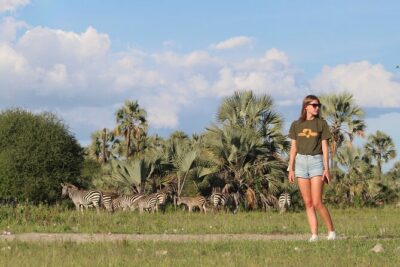
5-Day Highlights mid-Range Crater, Serengeti, Tarangire
Read our review →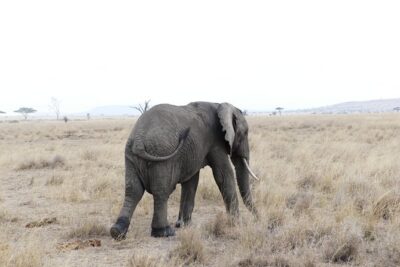
Private 6-Day Tarangire Manyara Crater and Serengeti with Mid-Range Lodges
Read our review →
5 Days Camping Tarangire, Serengeti & Ngorongoro crater & Visiting Maasai
Read our review →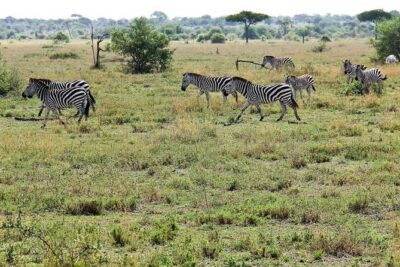
4 Days Join Group tour Tarangire Serengeti and Ngorongoro crater
Read our review →3 Day Serengeti National Park & Ngorongoro Crater Camping Safari
Read our review →
5 Days Tanzania Group Joining Safari, Tarangire/Serengeti/Ngorongoro Crater
Read our review →