
REVIEW · ARUSHA
From Arusha: 5 Days Classic Safari Cats, Calves & Crater
The heart of this safari is Ndutu during the migration and calving season, when prey gathers and predators follow. You also get two very different wildlife settings: elephant country in Tarangire and the enclosed grasslands of Ngorongoro Crater.
I like the sensible route from Arusha and the four included nights with meals, park fees, transport, and a driver-guide. I also like the private format, since your group controls the pace more than it would on a large shared departure. The main consideration is timing: this trip is built around November through April, with the best calving action expected from December through February, so wildlife patterns and road conditions can affect what you see.
Key points to know before booking
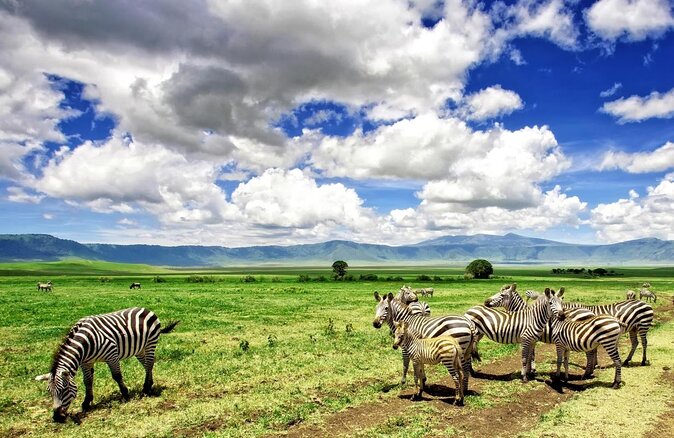
- Ndutu is the wildlife focus: Spend an afternoon and a full day around Lake Ndutu during the Great Migration period.
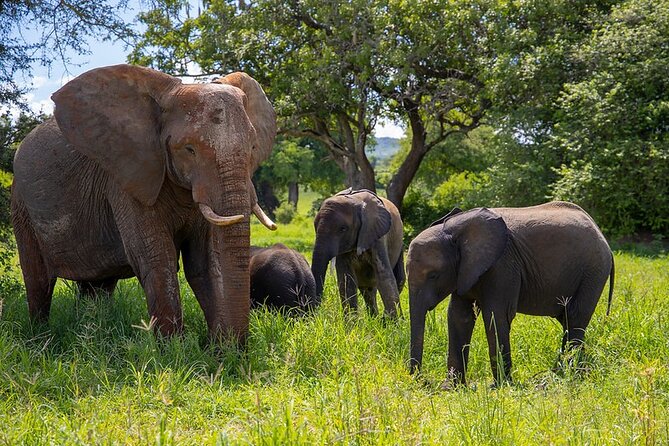
- Tarangire brings elephants and baobabs: The first full game drive offers a strong introduction to northern Tanzania’s scenery and wildlife.
- Ngorongoro Crater is your Big Five chance: The six-hour crater drive gives you one of the trip’s best opportunities for concentrated wildlife viewing.
- Four nights are full board: Breakfast, lunch, and dinner are included, along with overnight stays in distinctive accommodations near the parks.
- The trip is private: Only your group participates, which can make the long drives and game-drive stops easier to manage.
- Allow for extra local charges: A tourism development levy of $1.50 per person per night and village tax of $1 per person per night are paid at check-in.
Why this five-day route works
At $1,254, this safari is not a budget bus tour, but the price covers several costly parts of a Tanzania safari: park fees, transport, a driver-guide, four nights of lodging, and full-board meals. That makes the value easier to judge than a low headline price with major extras removed.
You are paying for a compact route that reaches three important wildlife areas without trying to cover every famous park in northern Tanzania. Tarangire, Ndutu, and Ngorongoro each offer a different experience. Tarangire is known for elephants and baobabs. Ndutu is the seasonal wildlife play. Ngorongoro is the crater setting where animals gather in a relatively contained area.
The private format matters too. Only your group takes part, so you are not being moved around with a large party. The supplied start time is 8:00 a.m., with pickup from your accommodation or the airport in Arusha. Since safari days can be long, a private vehicle gives you more room to discuss stops and questions with your guide.
There are still costs to keep in mind. Drinks, tips, personal expenses, the tourism development levy, and village tax are not included. The information also lists an additional tourism development levy in Arusha, so I would ask for the exact total before departure. Free cancellation applies up to 24 hours before the start time, but changes or cancellations inside that period are not refunded.
More Safaris in Arusha:
- 3 Day Serengeti National Park & Ngorongoro Crater Camping Safari
★ 5.0 · 142 reviews - 5 Days Tanzania Group Joining Safari, Tarangire/Serengeti/Ngorongoro Crater
★ 5.0 · 85 reviews - 5 day safari Tarangire Serengeti and Ngorongoro crater
★ 5.0 · 83 reviews
Day 1: Tarangire’s elephants and baobab country
Your first morning begins in Arusha. The guide collects you from your place of stay or the airport, then the route heads toward Tarangire National Park. The listed driving time within the first stop is brief, but the important part of the day is the six-hour game drive inside the park.
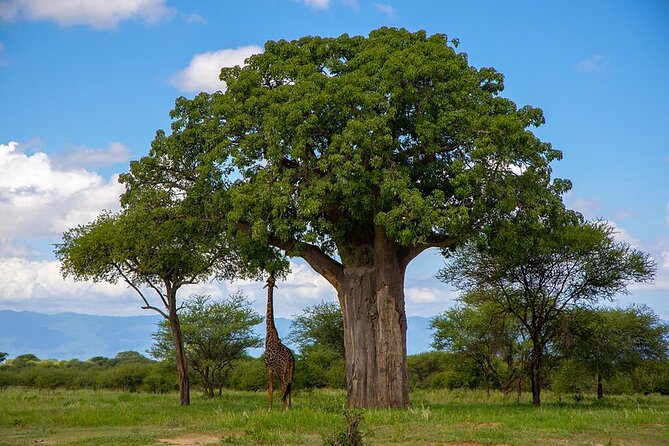
Tarangire is a good opening act because it gives you a clear sense of northern Tanzania’s wildlife and scenery right away. Its huge baobab trees create memorable photo settings, while elephants are the park’s best-known draw. If elephants are high on your list, this is one of the most useful days of the trip.
A six-hour game drive gives you enough time to watch rather than simply collect sightings. You can look for animal behavior, not only animal names. An elephant herd feeding beneath baobabs tells you more than a quick roadside encounter. Your driver-guide is also there to explain the environment and point out wildlife that may be hard to spot from a moving vehicle.
The tradeoff is that Tarangire is only one day of the schedule. You do not get a second chance in this park if weather or animal movement limits sightings. Still, the route uses the day well, since the park adds a distinct setting before you move toward the migration zone.
Day 2: Through Ngorongoro to Lake Ndutu
After Tarangire, the trip passes through the Ngorongoro Conservation Area on the way to Ndutu in the southern Serengeti area. This transfer is listed at about four hours, so you should expect a substantial amount of time on the road.
That drive is not just a blank connection between parks. The Ngorongoro Conservation Area is home to the Maasai, and the route brings you through some of Tanzania’s most striking highland scenery. Wildlife can appear along the way, so keep watching outside rather than treating the transfer as dead time.
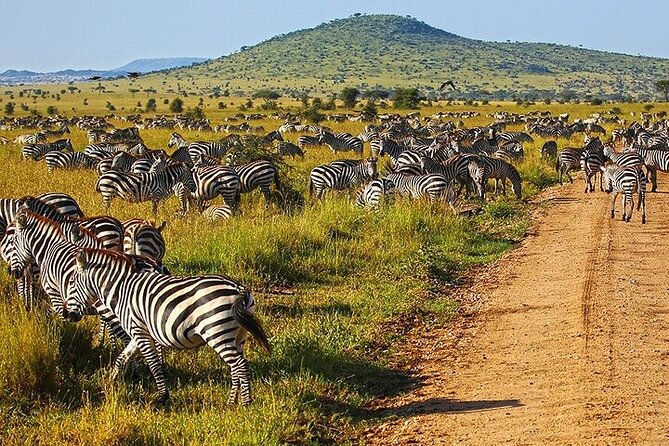
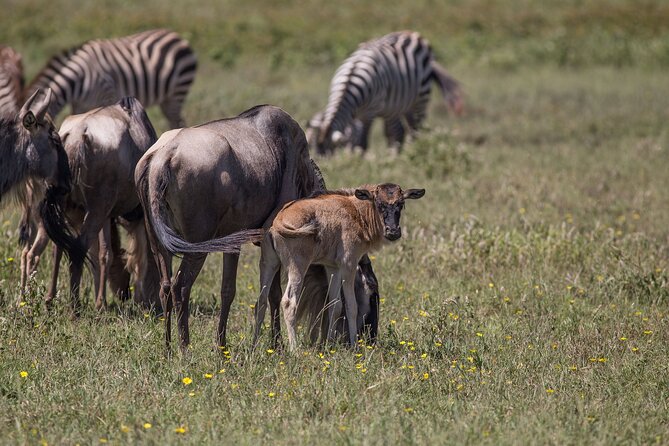
The afternoon is reserved for a three-hour game drive around Lake Ndutu. This is where the schedule begins to match the safari’s Cats, Calves and Crater theme. Ndutu is especially important from November through April, when the Great Migration passes through the area. December through February is the stated calving period.
Calving season changes the character of a game drive. Young animals draw predators, and the open plains can produce scenes of pursuit, caution, and herd movement. Nothing is guaranteed, but your timing gives you a better reason to focus on predator-prey behavior than a general safari route would.
The practical drawback is the transfer. You are combining a long move with an afternoon drive, so Day 2 may feel full. If you prefer a slow holiday with short travel days, this is not that kind of trip. If you want to reach Ndutu without adding extra nights, the compromise is reasonable.
Day 3: A full day around Lake Ndutu
Day 3 is the clearest reason to choose this itinerary. After breakfast, you spend about six hours on a full-day game drive around Lake Ndutu. Unlike a short stop, this gives you time to search different areas and wait for wildlife activity to develop.
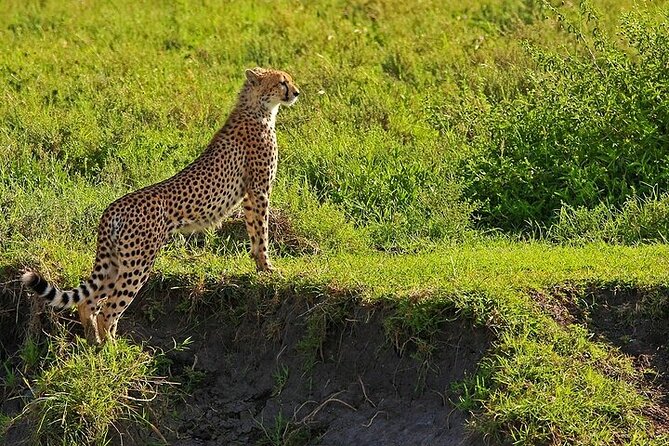
Ndutu is known for lions, and the route also highlights the chance of seeing leopards along the riverbank. Leopard sightings are never something you can promise, but the area is described as one of the world’s densest leopard habitats. Bring your camera, but keep your eyes open too. A guide may spot an animal before anyone else in the vehicle does.
This is where guide skill becomes important. Names connected with the safari experience include Thobias, Joel Thobias, David, and Justin. Thobias is associated with sightings of five lions, while David is noted for finding a leopard in a tree and helping a group see all of the Big Five. These examples do not guarantee which guide you will receive, but they show why a strong spotter and calm driver can make a major difference.
You should also keep expectations sensible. The Great Migration is a moving event, not a fixed attraction. Animal concentrations can shift, and a six-hour drive may bring many sightings or a slower search. The value of this day is the time you have in the right area during the right season, not a promise of a particular chase or kill.
Meals are included on a full-board basis, with breakfast, lunch, and dinner covered across the four-night stay. That keeps the day simple. You are not stopping to arrange every meal while trying to make the most of the wildlife hours.
A few more volcano tours around Arusha worth a look
- 5-Day Highlights mid-Range Crater, Serengeti, Tarangire
★ 5.0 · 296 reviews - 5 Days Camping Tarangire, Serengeti & Ngorongoro crater & Visiting Maasai
★ 5.0 · 229 reviews - 5 Day Silver Serengeti & Ngorongoro Crater & Tarangire Safari
★ 5.0 · 46 reviews - 5days Tanzania Safari lodge and camping Serengeti, Tarangire & Ngorongoro Crater
★ 5.0 · 31 reviews
Day 4: Inside Ngorongoro Crater
The fourth day brings you to Ngorongoro Crater for another six-hour game drive. The crater is the world’s largest intact volcanic caldera, and its enclosed setting gives you a strong chance of seeing a wide range of wildlife in one place.
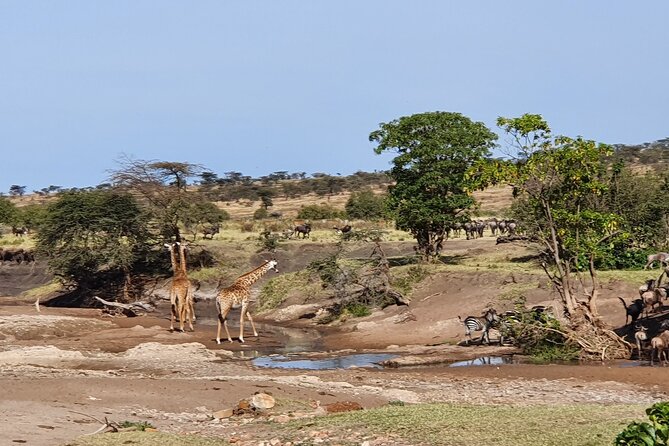
This is the day aimed most directly at the Big Five. You might see lions, elephants, buffalo, leopards, and rhinos, but the full set is never assured. The appeal is that the crater concentrates wildlife across a dramatic natural setting, giving you a better chance to encounter several major species during one long drive.
The contrast with Ndutu is useful. Ndutu is seasonal and tied to migration and calving. The crater is about variety and concentration. If you want a safari with both a major wildlife event and a famous all-purpose game-viewing area, this combination makes sense.
A six-hour crater drive is long enough to feel substantial, but it also means an early start or a full day in the vehicle may be part of the experience. Physical fitness is listed as moderate, so you should be comfortable with extended road time and repeated vehicle stops. The itinerary does not promise a walking component, and this is primarily a vehicle-based safari.
Day 5: The return to Arusha
After breakfast, your guide drives you back toward Arusha. The stated drive is roughly three hours, followed by drop-off in central Arusha, at your accommodation, or at the airport.
This final transfer is useful if you are connecting to another plan in Arusha, but do not assume the morning is open for a separate activity. The day is mainly a return journey. Share your drop-off details clearly when booking, especially if you need to reach the airport or make a timed connection.
The end point is flexible within the options given, which is helpful. You finish where you need to be rather than being limited to one central meeting point.
Accommodation, meals, and what the price covers
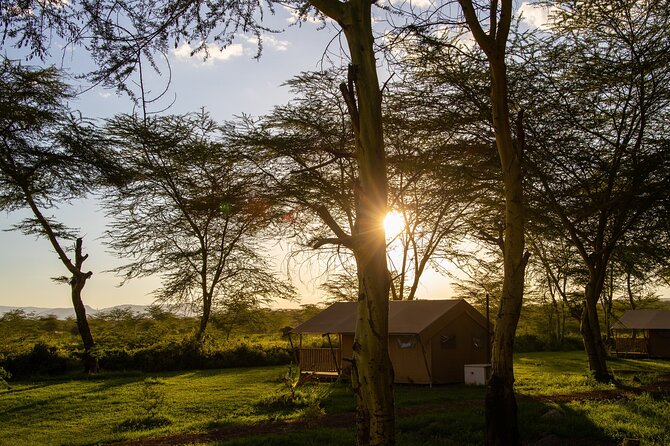
The four overnight stays are described as unique accommodations close to the national parks and surrounded by attractive natural settings. Exact property names and room details are not provided, so ask for them before booking if lodging style matters to you.
Full board is a real convenience on this route. Breakfast, four lunches, and four dinners are included. That suits a safari where days begin early and park areas can be far from ordinary restaurants. Drinks are excluded, so budget separately for them.
Park fees are included, as are transport and the driver-guide. Those inclusions make the $1,254 price more useful than a simple per-day comparison. Tanzania safari costs can rise quickly when park access, vehicle use, meals, and lodging are added separately.
Still, I would not call the price all-inclusive. Tips are optional, and personal spending is extra. The tourism development levy of $1.50 per person per night and village tax of $1 per person per night are paid at check-in. Confirm whether the Arusha levy applies to your exact booking, since it is also listed among the exclusions.
Guides and the private safari format
Your driver-guide is central to the experience. The guide drives long distances, handles park access, reads the terrain, and explains the wildlife and environment. A guide who can spot a leopard in a tree or pick out distant lions adds real value to the vehicle time.
The available guide names include Joel Thobias, Thobias, David, and Justin. Ask who is assigned to your departure rather than assuming you will receive a particular person. The positive feedback connected to these guides highlights three useful qualities: animal spotting, safe driving, and a helpful attitude.
Because this is a private activity, only your group participates. That makes it a good choice for couples, families, or friends who want shared time without strangers in the vehicle. It also lets you discuss how long to stay at a sighting, within park rules and the guide’s judgment.
The private format does not remove the basic realities of safari. You will still spend many hours driving, and animal sightings depend on season, weather, movement, and luck. The benefit is control and personal attention, not certainty.
Who should book this safari
I would choose this trip if you want a focused five-day safari with a strong seasonal reason for going. It suits you especially well if your dates fall between November and April, and it is most appealing from December through February if calving season is your priority.
It is also a good fit if elephants, lions, leopards, and the Big Five matter more to you than visiting a long list of parks. The route has three clear wildlife purposes rather than a rushed collection of stops.
Couples and honeymooners may like the private arrangement and the mix of dramatic scenery with serious game viewing. One honeymoon account connected with the trip describes positive energy from the guide, help finding favorite animals, and a leopard spotted in a tree. Families should consider the long drives and moderate fitness requirement before booking.
I would be more cautious if your schedule cannot tolerate a four-hour transfer on Day 2 or if you need a guaranteed animal checklist. Safari conditions are never fully controlled. The best reason to book is access to the right areas at the right time, not a promise of perfect sightings.
Should you book the Cats, Calves and Crater safari?
Book it if you want Ndutu migration viewing, a full day in Tarangire, and a strong Big Five opportunity in Ngorongoro Crater, all with private transport and meals included. At $1,254, the package has solid value for a five-day route because the major park and operating costs are already covered.
Before paying, confirm the accommodation names, your assigned guide, the exact pickup point, and the total of the extra taxes. If those details suit your plans, this is a focused and practical safari for seeing Tanzania’s wildlife during one of its busiest seasonal periods.
FAQ
How long does the safari last?
The experience lasts five days, with pickup in Arusha at about 8:00 a.m. on the first day.
Is pickup included?
Yes. Pickup is offered from your place of stay or the airport in Arusha. On the final day, drop-off is available in central Arusha, at your accommodation, or at the airport.
When is the best time to see the Great Migration on this route?
The migration period at Ndutu is listed as November through April. The calving season is listed as December through February.
Are meals included?
Yes. The package includes four breakfasts, four lunches, and four dinners as part of the full-board overnight stay. Drinks are not included.
Is this a private safari?
Yes. Only your group participates in the activity. Transport and a driver-guide are included.
What is the cancellation policy?
You can cancel at least 24 hours before the start time for a full refund. Cancellations or changes made less than 24 hours before the start time are not accepted for a refund.
Just added around Arusha
- 4 Days Private Safari – Tarangire, Serengeti & Ngorongoro Crater★ 5.0 · 28 reviews
- 3Days luxury safari to Tarangire Ngorongoro crater and Manyara★ 5.0 · 16 reviews
- Elephant Special Serengeti & Ngorongoro Crater 5 Days / 4 Nights★ 5.0 · 21 reviews
- Tanzania Safari 10 Days- Serengeti, Lake Manyara, Ngorongoro Crater.★ 5.0 · 4 reviews
- 4 Days Tanzania Safari Tarangire, Serengeti and Ngorongoro Crater★ 4.5 · 16 reviews
- 03 days Serengeti and Ngorongoro Crater group (camping)★ 5.0 · 75 reviews
- Private Group Serengeti Safari, Crater & Tarangire National Park★ 5.0 · 5 reviews
- Small Group Serengeti and Ngorongoro Crater Adventure Safari★ 5.0 · 7 reviews
Arusha Volcano Tours, compared.
5-Day Highlights mid-Range Crater, Serengeti, Tarangire
Read our review →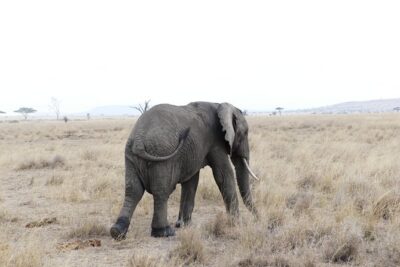
Private 6-Day Tarangire Manyara Crater and Serengeti with Mid-Range Lodges
Read our review →
5 Days Camping Tarangire, Serengeti & Ngorongoro crater & Visiting Maasai
Read our review →
4 Days Join Group tour Tarangire Serengeti and Ngorongoro crater
Read our review →3 Day Serengeti National Park & Ngorongoro Crater Camping Safari
Read our review →
5 Days Tanzania Group Joining Safari, Tarangire/Serengeti/Ngorongoro Crater
Read our review →
5 day safari Tarangire Serengeti and Ngorongoro crater
Read our review →Browse the lists this tour appears in