
REVIEW · FUJIKAWAGUCHIKO
Tokyo: Mt. Fuji Highlights Tour with Lake Kawaguchi Cruise
The best part of this day is the sheer variety: Fuji viewpoints, spring-fed ponds, old streets, seasonal flowers, and a lake cruise all fit into one long outing. You climb 398 steps at Arakurayama Sengen Park, photograph Fuji from Honcho Street, then see the mountain from the water.
I like the excellent photo range and the included Appare Boat cruise. I also like that guides such as Carp Feng make a real effort to explain things in English, even when most of the group speaks another language. The main catch is simple: Mt. Fuji may hide behind clouds, and ten hours is a lot of time for a packed day away from Tokyo.
Key points to know
- 398 steps to Arakurayama’s famous view: The climb leads to a panoramic sight of Fuji, the pagoda area, and Fuji-Yoshida.
- Several very different Fuji photo spots: You see the mountain from a city street, a village, a lakeside park, and a boat.
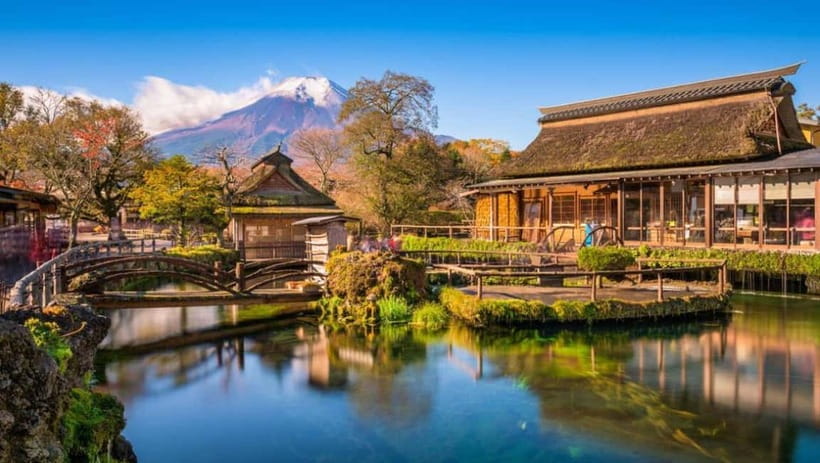
- Oshino Hakkai adds rural Japan: Eight clear spring ponds, wooden bridges, streams, and thatched roofs break up the sightseeing.
- The Appare Boat is included: This Sengoku-era warship-style boat offers open-deck views from Lake Kawaguchi.
- Seasonal scenery changes the day: Cherry blossoms, lavender, red kochia, autumn leaves, and winter snow each alter the best stop.
- Cloud cover is the big variable: The villages and parks remain worthwhile, but Fuji itself is never guaranteed.
Why This Fuji Day Works So Well From Tokyo
At $79 per person, this is a strong value if you want to see several Mt. Fuji sights without arranging separate trains, local buses, and boat tickets. The price includes road transport, a guide, and the Lake Kawaguchi cruise. Lunch, drinks, and personal purchases are extra.
The appeal is not one grand attraction. It is the sequence. You move from a city overlook to a traditional shopping street, then to clear mountain springs, open water, and a flower-filled park. Each stop gives you a different way to understand the Fuji area.
You begin at the first-floor meeting point inside Tokyu Plaza Ginza. Allow yourself enough time to find the building and meeting area, since the day starts in central Tokyo and the group then has about 2.5 hours of road travel to the Fuji region.
That long transfer is the main practical tradeoff. You lose part of the day on the road, but you gain a simple all-in-one route. For a first visit to the Fuji area, that can be easier than piecing together transport on your own.
More Mount Fuji Tours in Fujikawaguchiko:
- Mt Fuji Area Private Guided Tours in English-Nature up close, quiet, personal
★ 5.0 · 288 reviews - Explore Mt. Fuji Ice Cave in Aokigahara Forest
★ 5.0 · 243 reviews - From Tokyo: Mount Fuji Full Customized Tour English Guide
★ 5.0 · 137 reviews
Arakurayama Sengen Park and the 398-Step Climb
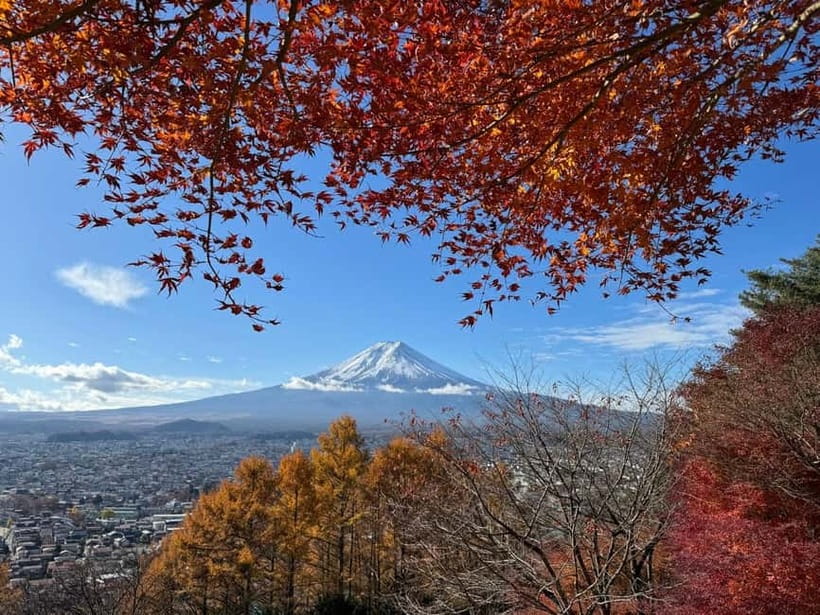
Arakurayama Sengen Park is the kind of place you have probably seen in photographs: Fuji rising behind a traditional pagoda, with Fuji-Yoshida spread below. The view is especially strong because it combines several familiar Japanese images in one frame.
The route to the viewing platform includes 398 steps called the Konohana-sakuya-hime Stairs. You should wear comfortable shoes and take the climb at your own pace. This is not a flat photo stop where you step off the vehicle and immediately take a picture.
The effort is part of the reward, but it may be tiring for anyone who dislikes stairs. The activity information does not promise an alternative route, so anyone concerned about the climb should keep this in mind before booking.
Spring brings more than 650 cherry trees to the park. In fall, the trees around the steps turn shades of red and gold. The view changes with the season, but the central composition remains the same: Fuji, the pagoda, and the town below.
You will have time for photographs and a short walk rather than a long park visit. Bring a camera, but also keep your hands free for the climb. A small bag is easier than bulky luggage on a busy sightseeing day.
Honcho Street and the Fuji View Through Town
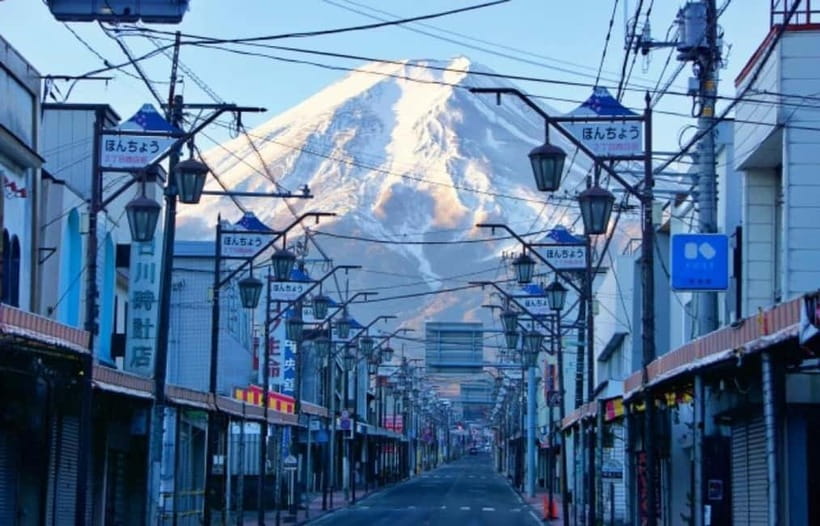
The stop at Shimoyoshida Honcho Street gives you a different kind of Fuji photograph. Instead of looking across a lake or from a high platform, you face the mountain through a traditional town street.
The road has a retro shopping-street feel, with Fuji visible beyond the buildings. From the right angle, the street seems to lead toward the mountain. That contrast between ordinary town life and a giant snow-capped peak is what makes the stop special.
This is a short photo and walking visit, not a shopping tour with lots of free time. You should follow the guide’s instructions and be careful when taking pictures near the street. The appeal is the view down the road, so your best photographs may require patience while cars, bicycles, and other people pass.
I like this stop because it feels less arranged than a formal lookout. You see Fuji as part of a living town, not only as a postcard subject. It also gives you a chance to slow down after the climb at Arakurayama.
Oshino Hakkai’s Eight Clear Springs
Oshino Hakkai brings the day into the countryside. The village is known for eight clear ponds fed by snowmelt from Mt. Fuji. The ponds reflect the sky, trees, and mountain when conditions are right.
This is one of the most useful stops for anyone who wants more than repeated mountain photographs. You get streams, wooden bridges, thatched roofs, and a quiet village setting. The area has a storybook quality, but it is still a place where you should look closely at the water, the buildings, and the small details around the paths.
Oshino Hakkai is designated a Natural Monument of Japan. That status reflects the importance of its spring water and traditional setting. The ponds are the main attraction, yet the village atmosphere is what gives the visit its character.
You can take photographs here, walk between the ponds, and enjoy a break from the bus or car. Lunch is not included, so this is one of the likely places to consider buying food or a drink, though the provided information does not specify particular restaurants or how much free time you will have.
The stop can feel busy because it is a popular place. Even so, the ponds offer a welcome change from the larger viewpoints. If Fuji disappears behind clouds, Oshino Hakkai still gives you a worthwhile visit because the springs and village do not depend entirely on a clear mountain view.
Same volcano country, a different day out:
- Ramen Cooking Class at Ramen Factory in Mt.Fuji
★ 5.0 · 101 reviews - Mt Fuji Hakone/Enoshima Tour:Optional Ropeway/Lake Ashi Boat
★ 4.3 · 49 reviews - From Kawaguchiko: Mt. Fuji Private Tour with a Local Guide
★ 5.0 · 35 reviews - Private Local Hiking to enjoy the nature and culture of Mt.Fuji
★ 5.0 · 22 reviews
Lake Kawaguchi and the Appare Boat
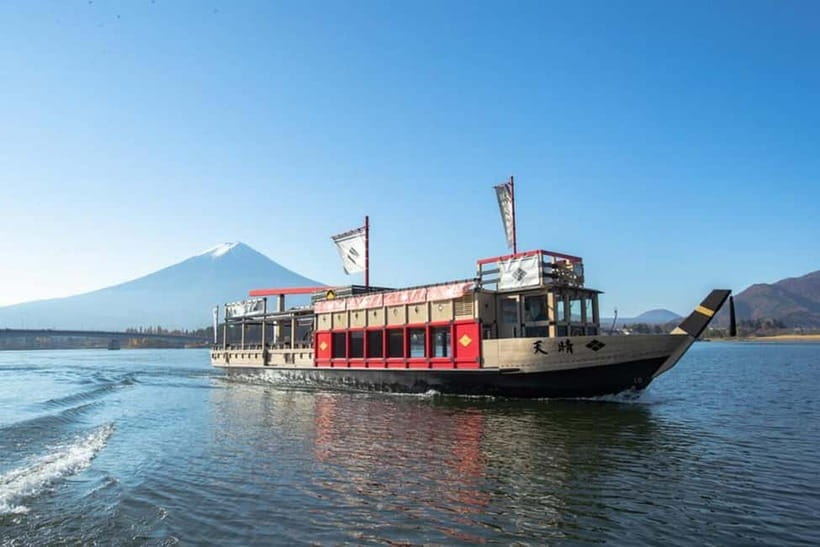
The Lake Kawaguchi cruise is included in the price, which improves the value of the tour. The boat is designed like a Sengoku-era warship, giving a standard sightseeing cruise a distinctly Japanese look.
The Appare Boat has open decks and a Japanese-style cabin. You can choose between being outside for the clearest views and stepping inside for shelter if the weather is less pleasant. The boat gives you a chance to see Fuji without buildings or roadside signs in the foreground.
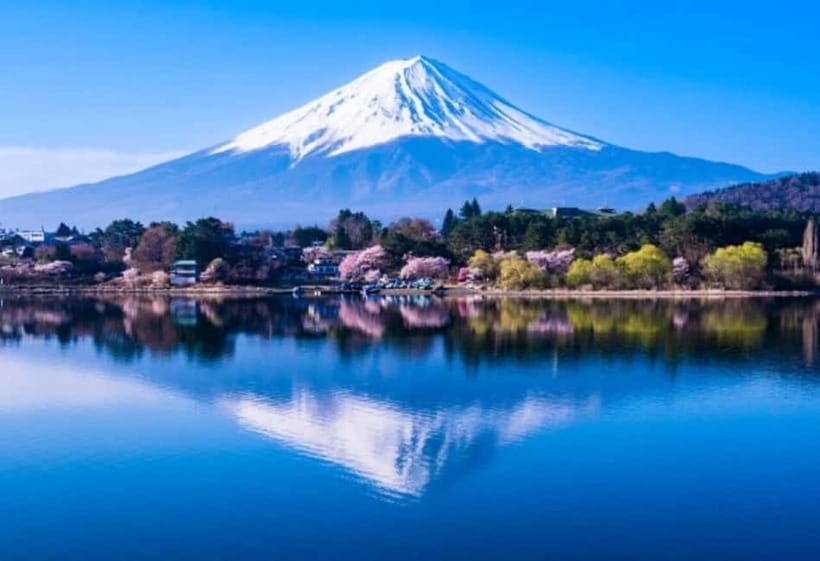
On a clear day, the mountain may reflect on the lake. That is the ideal moment, but you should not treat it as a promise. Cloud, haze, and seasonal weather can change the view quickly.
The cruise also breaks up the road-based portion of the day. After several walking stops, a short period on the water gives you a different pace. You still need to keep an eye on the schedule, since this is a sightseeing cruise within a full-day route rather than a leisurely lake excursion.
The boat is one of the clearest reasons to choose this tour instead of a simple Fuji photo transfer. You are not only driven to a viewpoint. You receive a distinct activity that adds movement and a new angle on the mountain.
Oishi Park and Four Seasons of Fuji
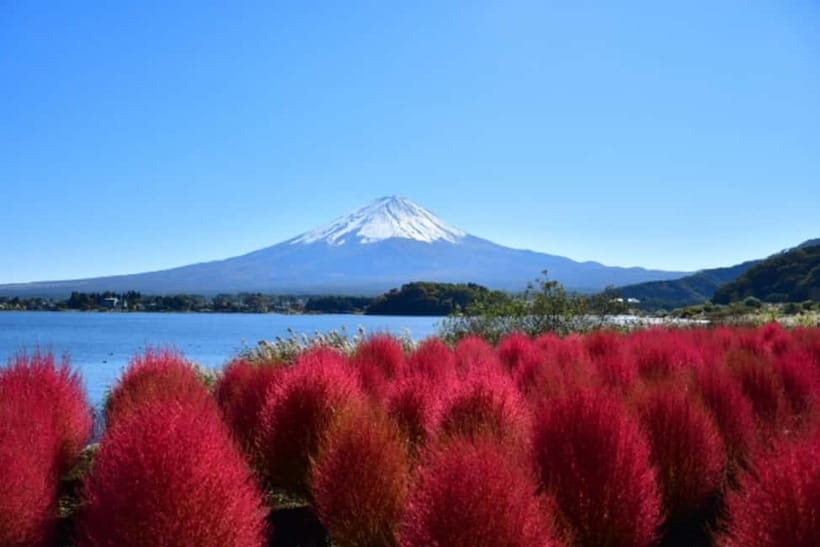
Oishi Park sits beside Lake Kawaguchi and is known for broad views of Fuji with seasonal plants in the foreground. It is an easy place to walk, take photographs, and see how the scenery changes throughout the year.
In spring, rapeseed flowers and cherry trees add warm color near the lake. Summer brings lavender. Autumn brings red kochia, and winter can offer snow around the mountain and a reflected view in the water.
This seasonal variety makes Oishi Park especially appealing to repeat visitors. The same stop can feel quite different in June than in December. It also gives you a chance to photograph Fuji with flowers rather than only rooftops or water.
There is one important seasonal change. From November 1 through November 23, the visit to Oishi Park is replaced by the Kawaguchi Lake Maple Corridor because of autumn foliage conditions. If your trip falls during those dates, expect a leaf-lined route instead of the flower park.
That replacement is not a reason to avoid the tour. It simply means you should know which version of the day applies to your dates. The Maple Corridor keeps the focus on seasonal color and the Lake Kawaguchi area.
Guides, Language, and Group Expectations
The tour offers live guidance in English, Chinese, and Japanese. The actual quality of the explanation matters on a long day, and the available feedback gives useful detail here.
Guide Carp Feng received specific praise for being kind and helpful, and for explaining the stops in English when only a small number of English-speaking people were on the vehicle. Another English-speaking participant said the guide repeated explanations so the information was easier to follow.
That suggests a guide who tries to include people rather than speaking only to the largest language group. Still, one French-language review reported that the advertised English guide spoke very little English. You should therefore treat language service as a possibility with some variation, not an absolute guarantee of a fluent English commentary on every departure.
For smaller groups, the driver also serves as the guide. That can make the day feel more direct, but it also means the person handling the road transport is responsible for explanations and timing. The exact group size is not provided, so you should expect the format to vary.
The tour received an overall rating of 4.6 from four reviews, with strong praise for the scenery and for guides who made an effort with English. The sample is small, so I would use it as a useful signal rather than a guarantee.
Weather, Photography, and the Fuji Gamble
Mt. Fuji is the star of the day, but it is also the least controllable part. One participant had a very cloudy day and could not see the mountain clearly, yet still found the visited places enjoyable. That is the right way to think about this outing.
You are buying access to the Fuji region and several attractive places, not a guaranteed clear view. Clouds can cover the peak at Arakurayama, Honcho Street, Oshino Hakkai, the boat, and Oishi Park. On a clear day, the range of angles can produce excellent photographs. On a cloudy day, you may rely more on the pagoda, village, flowers, lake, and traditional buildings.
Bring weather-appropriate clothing. Conditions can feel different at the lake and in the open areas than they do in central Tokyo. Comfortable shoes are essential because the day includes walking at several stops and the steep stair climb at Arakurayama.
A camera is worth bringing, but do not spend the whole day chasing the perfect frame. The schedule covers many stops, and the best memories may come from seeing how Fuji appears in different settings, even when the summit is partly hidden.
Who Should Book This $79 Tour?
I would choose this tour if you are staying in Tokyo and want a single organized day around Mt. Fuji. It suits first-time visitors, photographers, couples, and anyone who prefers not to manage several connections outside the city.
It is also a good fit if you want more than one viewpoint. The route gives you mountain photographs, traditional streets, a rural village, a boat ride, and a flower park. That variety keeps the day interesting even when one stop is crowded or the summit is cloudy.
You may want another option if you dislike long road transfers, steep stairs, or a tightly timed schedule. The 10-hour length is substantial, and lunch is not included. You also need to accept that the main view depends on weather.
The $79 price works best when you value convenience and the included cruise. Buying transport and a boat ticket separately could take more planning, while this day handles the route for you. Personal food, drinks, and purchases will add to the total, so carry some extra spending money.
Cancellation is flexible up to 24 hours before departure for a full refund, and you can reserve now and pay later. Those terms help if your Tokyo plans or the weather forecast remain uncertain.
My Final Take: A Strong Fuji Sampler With One Big Variable
Book this tour if you want a full day of varied Mt. Fuji scenery at a moderate price and you are comfortable with a long day on the road. The Appare Boat, Oshino Hakkai, Honcho Street, and Arakurayama give you four notably different settings, while Oishi Park adds seasonal color.
I would not book it solely for a guaranteed postcard view of Fuji. No tour can control the clouds, and one English-language experience was less successful than the others. But if you see the mountain as one part of a broader day, this is a practical and enjoyable way to reach the Fuji area from Tokyo.
FAQ
How long does the Mt. Fuji tour last?
The tour lasts 10 hours, including the journey from Tokyo to the Mt. Fuji area and the return to Ginza.
Where does the tour begin and end?
It begins and ends at the first floor of Tokyu Plaza Ginza, written in the meeting information as TOKYU PLAZA GINAZ 1F.
What languages are available?
Live guides are listed as speaking Chinese, English, and Japanese.
Is the Lake Kawaguchi boat ride included?
Yes. The Appare Boat cruise on Lake Kawaguchi is included in the tour price.
Is lunch included?
No. Lunch, meals, drinks, and personal purchases are not included.
What should I bring?
Bring comfortable shoes, a camera, and clothing suitable for the weather.
What happens to the Oishi Park visit in early November?
From November 1 through November 23, the Oishi Park visit is replaced by a visit to the Kawaguchi Lake Maple Corridor.
Just added around Fujikawaguchiko
- Tokyo To Mount FUJI Day Trip With English guide★ 4.7 · 14 reviews
- Tokyo: Private Day Tour to Mount Fuji with English Driver★ 4.5 · 4 reviews
- Tokyo: Mt. Fuji Hidden Gems and Aokigahara Forest Tour★ 4.6 · 20 reviews
- Tokyo: Mount fuji & Hakone Private Day Tour★ 5.0 · 4 reviews
- Mt.FUji private Full Day Trip with English Driver★ 4.0 · 4 reviews
- From Kawaguchiko: Mt. Fuji Private Tour with a Local Guide★ 5.0 · 35 reviews
- Lake Kawaguchiko: Ramen Cooking Class with Souvenir★ 5.0 · 7 reviews
- Mt. Fuji Guided Scenic Trike Adventure from Lake Kawaguchi★ 5.0 · 15 reviews
Fujikawaguchiko Volcano Tours, compared.
Mt Fuji Area Private Guided Tours in English-Nature up close, quiet, personal
Read our review →
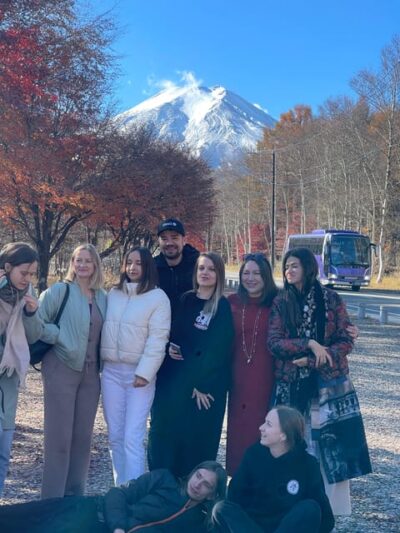
From Tokyo: Mount Fuji Full Customized Tour English Guide
Read our review →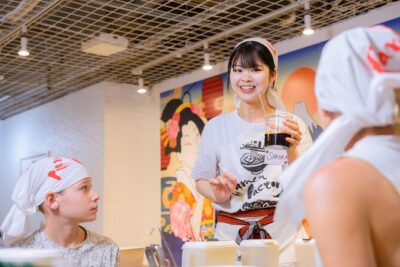
Ramen Cooking Class at Ramen Factory in Mt.Fuji
Read our review →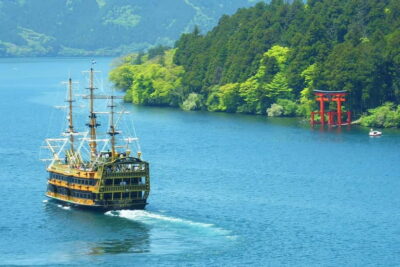
Mt Fuji Hakone/Enoshima Tour:Optional Ropeway/Lake Ashi Boat
Read our review →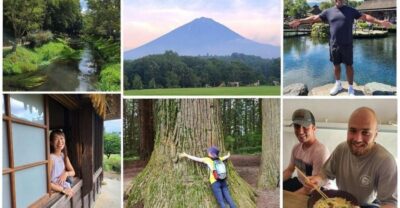
From Kawaguchiko: Mt. Fuji Private Tour with a Local Guide
Read our review →
Private Local Hiking to enjoy the nature and culture of Mt.Fuji
Read our review →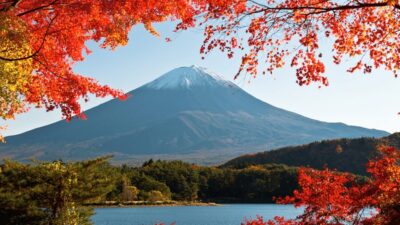
Browse the lists this tour appears in