
REVIEW · FUJIKAWAGUCHIKO
Private Local Hiking to enjoy the nature and culture of Mt.Fuji
Mt. Fuji is the star here, but the best part is the quieter world around it: an old shrine, lava shaped by an eruption, the forest called Jukai, and a hilltop view over Saiko. Yuki, a certified mountain guide and licensed local hunter, brings useful local context to places that are easy to pass without understanding.
I like the private format, which lets the pace suit your group, and I like the thoughtful finish with Yoshida udon and a Japanese garden. The main consideration is weather. Clouds can block Fuji, and pickup is limited to the Kawaguchiko and Fujiyoshida areas, or to people who can reach those areas on their own.
Key points to know before booking
- A private outing with Yuki: Your group receives the guide’s full attention, with local stories about Fuji worship, eruptions, forests, and mountain life.
- The Sankodai hike takes about 90 minutes round trip: Expect roughly one hour uphill and 30 minutes back down on a moderate trail.
- A sacred lava cave adds cultural depth: Ryugudoketsu-iriguchi was linked to prayers for the goddess of Mt. Fuji before mountain climbs.
- Saiko offers a quieter Fuji setting: Lake Saiko is less busy than Lake Kawaguchiko and can provide striking views on a clear day.
- Lunch is local and affordable: Yoshida udon costs about JPY 1,000 and is not included in the tour price.
- Gear is supplied: Trekking shoes, poles, rainwear, and gloves are available at no extra charge.
Why this Mt. Fuji walk feels different
Many Fuji outings focus on a photo stop at Lake Kawaguchiko and little else. This one uses the famous mountain as a doorway into the area’s natural and spiritual past.
You begin around the Fuji Five Lakes region, where the relationship between the mountain and nearby communities is easy to see. The route links a shrine, two lakes, an old lava formation, the broad Aokigahara Forest, and a viewpoint above Saiko. That mix gives the day more shape than a simple nature walk.
The tour lasts about five to six hours and is private, so you are not trying to keep up with a large group. That matters on a trail. You can pause for photographs, ask questions, or take a little longer at the shrine without holding up strangers.
Yuki is central to the experience. He has climbed Mt. Fuji more than 40 times and is also a licensed local hunter. Those qualifications suggest a guide who can speak about both the mountain as a physical place and the traditions and working life tied to it. He has also been praised for bringing coffee, tea, chocolate, and snacks to the summit viewpoint, a small touch that can make the break at the top feel special.
More Volcano Hikes and Treks in Japan
- Traverse Outer Rim of Hakone Caldera and Enjoy Onsen Hiking Tour
★ 5.0 · 30 reviews - Mt.Fuji Trekking 1 Day Tour up to the summit
★ 5.0 · 14 reviews - Oiso: Adventure Hike to See Mt. Fuji & Historic Coastal Walk
★ 5.0 · 10 reviews
Fuji Omuro Sengen Shrine and the mountain’s sacred side
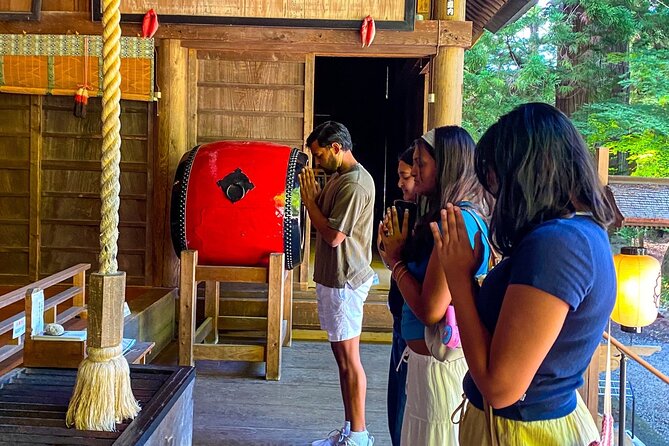
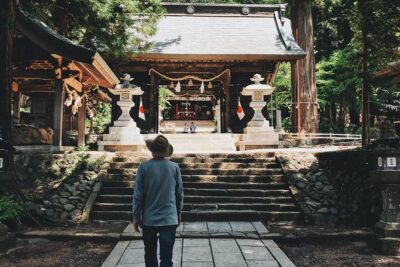
The first major stop is Fuji Omuro Sengen Shrine, an ancient place connected with Mt. Fuji worship. The shrine was built in response to the mountain’s largest eruption, with people praying for the eruptions to settle.
That background gives you a useful key to the whole day. Mt. Fuji is not only a scenic peak. It has long been treated as a sacred presence, one capable of beauty and danger. At the shrine, you begin to see why climbing and worship became linked in this region.
You have about 15 minutes here. That is enough for a look around and an explanation from the guide, but not enough for a long, unhurried temple visit. If shrines are your main interest, this stop may feel brief. As an opening chapter to the larger route, though, it works well.
The admission cost is included, since there is no separate ticket listed. You can focus on the setting and the stories rather than handling another payment.
Lake Kawaguchiko and Lake Saiko
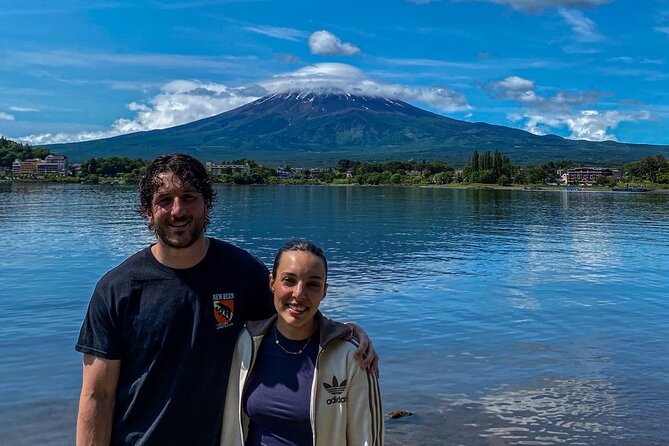
Lake Kawaguchiko is the best-known of the Fuji Five Lakes. Its combination of open water and Mt. Fuji draws large crowds, especially when the summit is clear. The tour uses the area as a visual reference point, but it does not stop there.
Lake Saiko is quieter and has a more subdued feel. You spend about 10 minutes at the lake, with time to take in the water, nearby forest, and Fuji views if the weather cooperates.
That weather note matters. Mt. Fuji can disappear behind cloud even when the rest of the day is pleasant. The tour requires good weather, and a poor forecast can lead to a new date or a full refund. Still, even a cloudy day can suit the forest walk, as one outing showed when overcast conditions made the trekking comfortable and the guide chose an easier route with good views.
A short lake stop will not satisfy anyone hoping for a long waterfront walk. Its purpose is to frame the mountain and show the contrast between the more popular Kawaguchiko area and quieter Saiko.
Aokigahara Forest and the lava beneath your feet
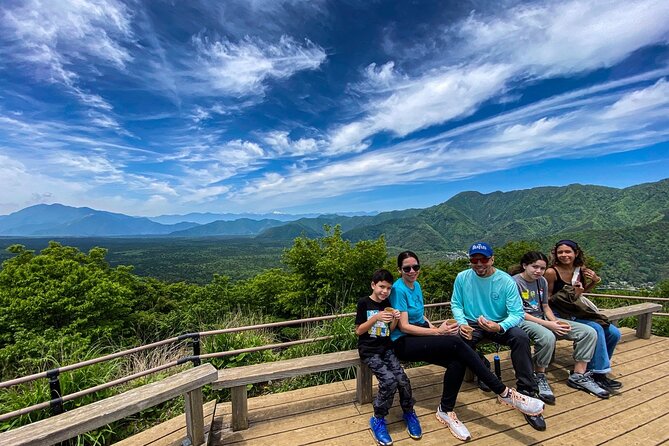
Aokigahara is known locally as Jukai, meaning the sea of trees. From a viewpoint, the forest spreads out like a green sea. Its unusual ground was formed by a major Mt. Fuji eruption about 1,200 years ago, when lava moved across the area and changed the shape of the region.
This is where the day’s nature lesson becomes more tangible. You are not simply looking at trees. You are seeing how volcanic activity created the ground, forest, lakes, caves, and routes around Fuji.
The planned stop is about 15 minutes, though the forest also forms part of the wider walking area. Yuki can explain how the eruption shaped the area and why the forest looks and feels different from an ordinary woodland.
You should not expect a long independent walk through Aokigahara during this stop. The main hike comes at Sankodai, while the forest visit works as a compact introduction to the volcanic setting.
More Mount Fuji Tours in Fujikawaguchiko:
- Mt Fuji Area Private Guided Tours in English-Nature up close, quiet, personal
★ 5.0 · 288 reviews - Explore Mt. Fuji Ice Cave in Aokigahara Forest
★ 5.0 · 243 reviews - From Tokyo: Mount Fuji Full Customized Tour English Guide
★ 5.0 · 137 reviews - Ramen Cooking Class at Ramen Factory in Mt.Fuji
★ 5.0 · 101 reviews
Ryugudoketsu-iriguchi, a sacred lava cave
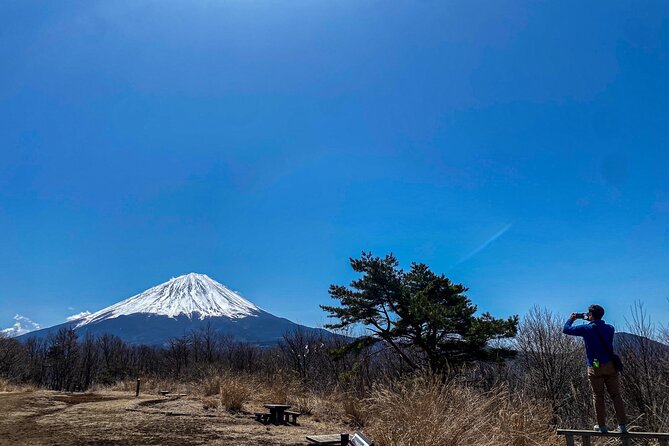
Ryugudoketsu-iriguchi adds a strong cultural link to the volcanic terrain. This sacred cave was once visited by people praying to the goddess of Mt. Fuji before climbing the mountain. They believed the cave’s interior represented the inside of the goddess.
The cave is listed as a 30-minute stop. That gives you more time here than at the shrine or lake, and it allows the guide to connect the physical cave with Fuji worship.
This is also the point where practical footwear matters. The tour includes rental trekking shoes, poles, rain jackets and pants, and gloves. You should still expect an outdoor setting rather than a polished visitor attraction. The free gear is useful for people who did not pack hiking equipment, but you will want comfortable clothing suited to a moderate trail.
The cave is not presented as a major technical challenge. Its value lies in the combination of geology and belief: the rock was created by Fuji, then given a spiritual meaning by the people who came to it.
The Sankodai hike and the payoff at the top
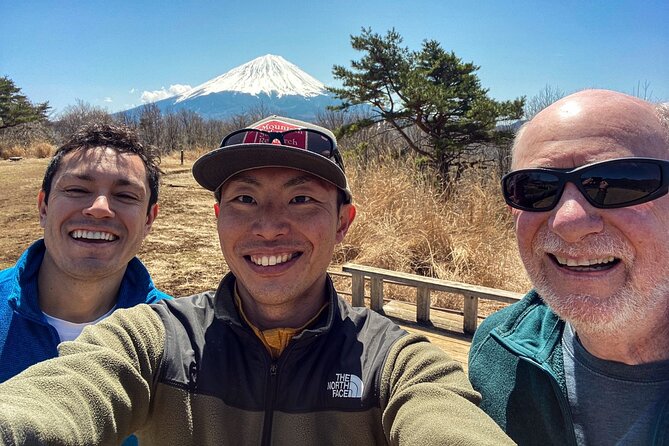
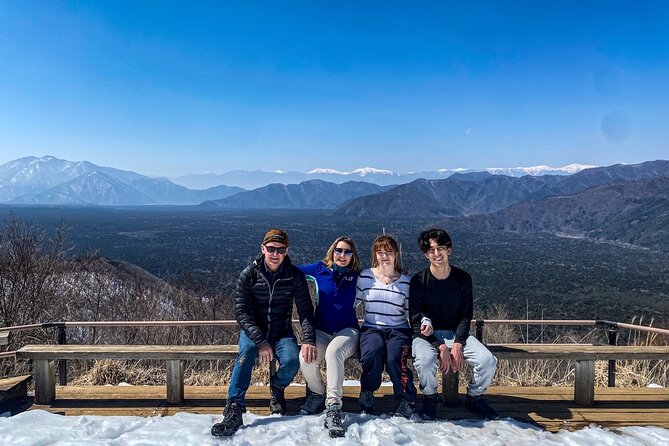
The main walk leads to Sankodai, a viewpoint with views toward Mt. Fuji, Lake Saiko, and Jukai. The uphill section takes about one hour, followed by roughly 30 minutes downhill. The trail is described as moderate and suitable for outdoor beginners.
That does not mean you should treat it as a stroll. One hour uphill requires steady effort, and conditions can change with rain. The supplied poles can help, especially on the way down. If you rarely hike, tell Yuki early so he can set a comfortable pace.
The reward is a broad view rather than a single postcard angle. On a clear day, you can see the tallest mountain in Japan, the lake, and the forest spread below. This is the tour’s main scenic moment, and it depends heavily on visibility.
The guide’s small summit break is a nice practical detail. Coffee, tea, chocolate, and snacks have been brought out for groups at the viewpoint. You get time to rest and enjoy the view instead of turning straight around after reaching the top.
A private tour is especially useful here. Your group can stop at the summit without worrying about a fixed line of hikers. The guide can also adjust the pace, choose an easier route when needed, and spend extra time explaining the area.
Yoshida udon at a local restaurant
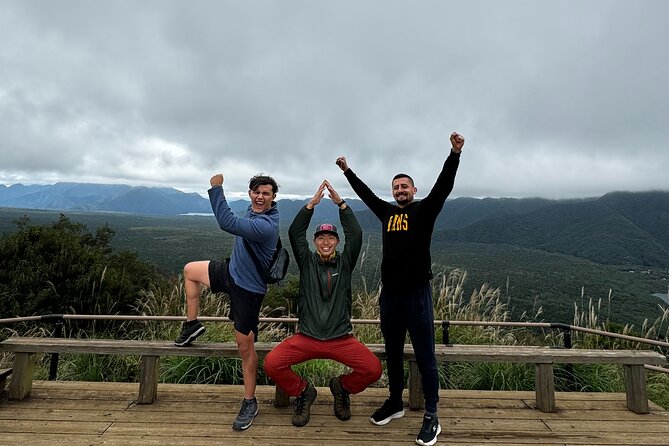
After the hike, the tour turns to food. You visit a local restaurant for Yoshida udon, a signature dish from the Fujiyoshida area. Lunch costs about JPY 1,000 per person and is not included in the tour price.
That separation keeps the base price clear, but you should budget for lunch. You are also relying on the guide to choose the restaurant, rather than selecting a place yourself. For many people, that is a plus. A local noodle stop is more useful than being dropped at a generic restaurant near a busy tourist zone.
The meal is scheduled for about 30 minutes. This is a quick local lunch, not a long food tour. If you need a slow meal or have strict dietary requirements, ask about arrangements before booking, since the supplied details do not list special menu options.
Japanese garden and optional matcha
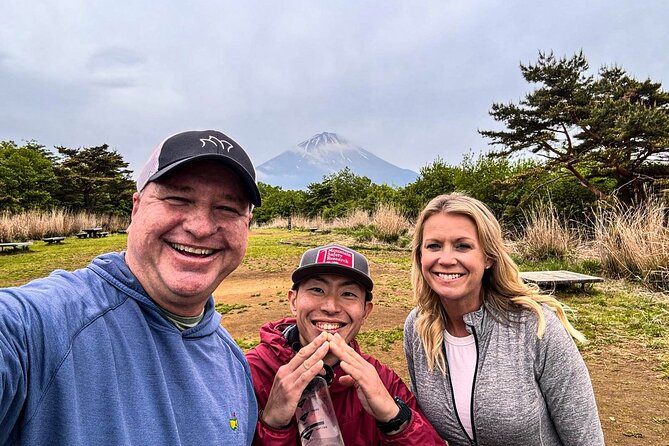
The final stop is Fujisan Onsen Hotel Kaneyamaen in Fujiyoshida. The hotel is one of the city’s older hotels and opens its large Japanese garden to the public.
You can finish with matcha and a Japanese sweet for an optional JPY 1,000 per person, or simply sit in the garden without ordering tea. This is a calm end to a day that includes a climb, forest, cave, and local meal.
I like this ending because it gives your legs and mind a chance to slow down. It also adds a cultural experience without requiring another formal temple visit. The matcha is optional, so you can keep the extra cost down if the garden itself is enough.
The garden stop lasts about 30 minutes. It is not a full onsen visit, and the information provided does not include bathing. Book it for the garden and tea, not for a hot spring session.
Price, transport, and what is included
The price is $131.38 per person. For a private five to six hour experience, that is a reasonable value if you want transport, a guide, and equipment arranged in one booking.
You receive private transportation and the guide fee. Trekking shoes, poles, rain jackets and pants, and gloves are also available at no extra charge. Those inclusions can save you the trouble of packing or renting gear separately.
Lunch and optional matcha are extra. Set aside about JPY 1,000 for Yoshida udon and another JPY 1,000 if you want matcha with a Japanese sweet. Insurance is not included, so check your own coverage before going.
Pickup is offered only for people staying in the Kawaguchiko or Fujiyoshida area. If you are elsewhere, you need to reach one of those areas on your own. The start time is 9:00 am, so confirm that your accommodation and transport plans fit the schedule.
Who should book this private Fuji experience
This tour suits you best if you want more than a lake photograph and prefer a guide-led introduction to the region. It is a good match for couples, families, and small groups who value a private pace.
You do not need advanced hiking skills. The trail is moderate, the main climb takes about an hour, and equipment is available. Still, you should be comfortable walking uphill for that length of time and spending several hours outdoors.
The outing is less suitable if you want to climb Mt. Fuji itself, spend the whole day at one lake, or follow a demanding mountain route. It is also a poor fit for anyone who cannot reach Kawaguchiko or Fujiyoshida for pickup.
Communication before the tour has been described as good, and the guide has been flexible with timing and drop-offs. One group was taken to the start of an afternoon tour after finishing this outing, though you should confirm any such request directly rather than assume it will be possible.
Should you book it?
Book this tour if you want Mt. Fuji explained through its forests, eruptions, shrines, caves, lakes, and food. The private format, supplied hiking equipment, flexible pace, and local meal give it more substance than a standard sightseeing loop.
Think twice if your main goal is a guaranteed Fuji view. No tour can control the clouds, and the scenery depends on good weather. If the forecast is poor, the provider offers a different date or a full refund, but you may still prefer a more indoor-focused plan.
For most people staying in the Kawaguchiko or Fujiyoshida area, this is a well-balanced half-day choice. You get a moderate walk, strong mountain views when conditions allow, and a clearer sense of why Mt. Fuji matters to the people who live around it.
FAQ
How long does the private Mt. Fuji hiking tour last?
The experience lasts approximately five to six hours, beginning at 9:00 am.
Where is pickup available?
Pickup is available for people already staying in the Kawaguchiko or Fujiyoshida area. If you are not in those areas, you need to reach one of them on your own.
Is this a private tour?
Yes. Only your group participates in the activity.
Who leads the tour?
The experience provider is Yuki. He is a certified mountain guide who has climbed Mt. Fuji more than 40 times and is also a licensed local hunter.
How difficult is the hike?
The trail is moderate. The climb to Sankodai takes about one hour one way, followed by about 30 minutes downhill, and it is described as suitable for outdoor beginners.
What hiking equipment is included?
Trekking shoes, trekking poles, rain jackets and pants, and gloves are available as free rentals.
Is lunch included in the price?
No. Yoshida udon costs about JPY 1,000 per person and is paid separately.
What happens if bad weather cancels the tour?
If poor weather causes a cancellation, you will be offered a different date or a full refund. You can also cancel up to 24 hours before the start time for a full refund.
More Volcano Hikes and Treks in Fujikawaguchiko
- Bali: Sunrise Mount Batur Guided Hike with Breakfast
★ 4.8 · 9,660 reviews - Bali: Mount Batur Sunrise Guided Hike and Natural Hot Spring
★ 4.8 · 9,284 reviews - Mount Etna: Summit Guided Hiking Tour up to 3,400 m
★ 4.8 · 4,792 reviews - Mount Etna: Trek to 3000m with cable car and 4×4
★ 4.6 · 3,823 reviews
Just added around Fujikawaguchiko
- Tokyo To Mount FUJI Day Trip With English guide★ 4.7 · 14 reviews
- Tokyo: Private Day Tour to Mount Fuji with English Driver★ 4.5 · 4 reviews
- Tokyo: Mt. Fuji Highlights Tour with Lake Kawaguchi Cruise★ 4.6 · 4 reviews
- Tokyo: Mt. Fuji Hidden Gems and Aokigahara Forest Tour★ 4.6 · 20 reviews
- Tokyo: Mount fuji & Hakone Private Day Tour★ 5.0 · 4 reviews
- Mt.FUji private Full Day Trip with English Driver★ 4.0 · 4 reviews
- From Kawaguchiko: Mt. Fuji Private Tour with a Local Guide★ 5.0 · 35 reviews
- Lake Kawaguchiko: Ramen Cooking Class with Souvenir★ 5.0 · 7 reviews
Fujikawaguchiko Volcano Tours, compared.
Mt Fuji Area Private Guided Tours in English-Nature up close, quiet, personal
Read our review →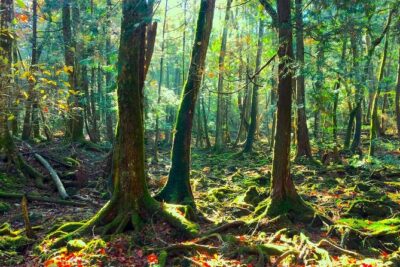
From Tokyo: Mount Fuji Full Customized Tour English Guide
Read our review →
Ramen Cooking Class at Ramen Factory in Mt.Fuji
Read our review →
Mt Fuji Hakone/Enoshima Tour:Optional Ropeway/Lake Ashi Boat
Read our review →
From Kawaguchiko: Mt. Fuji Private Tour with a Local Guide
Read our review →

Mt. Fuji Guided Scenic Trike Adventure from Lake Kawaguchi
Read our review →Browse the lists this tour appears in