
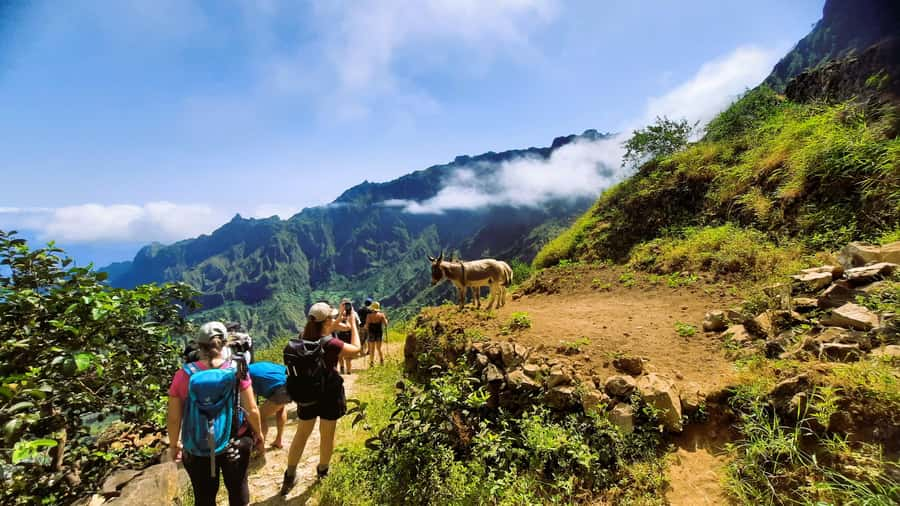
REVIEW · VOLCANO HIKES & TREKS
Santo Antão: Hiking Cova Volcano Crater to Ribeira Paúl
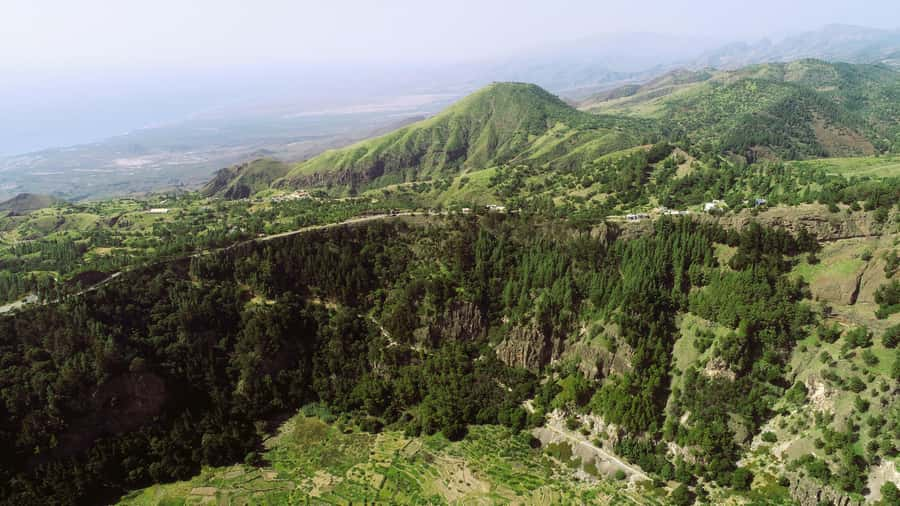
The great appeal here is the change under your feet and eyes: you begin high in Cova Natural Park, among the open slopes and vegetation of an extinct volcanic crater, then work your way toward the thick green fields of Paúl Valley. The final views reach toward the ocean, about 10 kilometers away.
I like two things especially. First, the hike gives you a clear sense of Santo Antão’s variety in just five hours. Second, the stop at a traditional grogue distillery adds local life to what could otherwise be just a scenic walk. The main caution is serious: steep drops, rough weather, wind, rain, and rockfall can make parts of the route unsafe, so this is not a good choice if you fear heights.
Key points
- Cova begins above 1,100 meters, with views across the volcanic crater and toward the sea.
- The route changes quickly, from open high ground to sugarcane, banana, mango, avocado, coconut, and other crops.
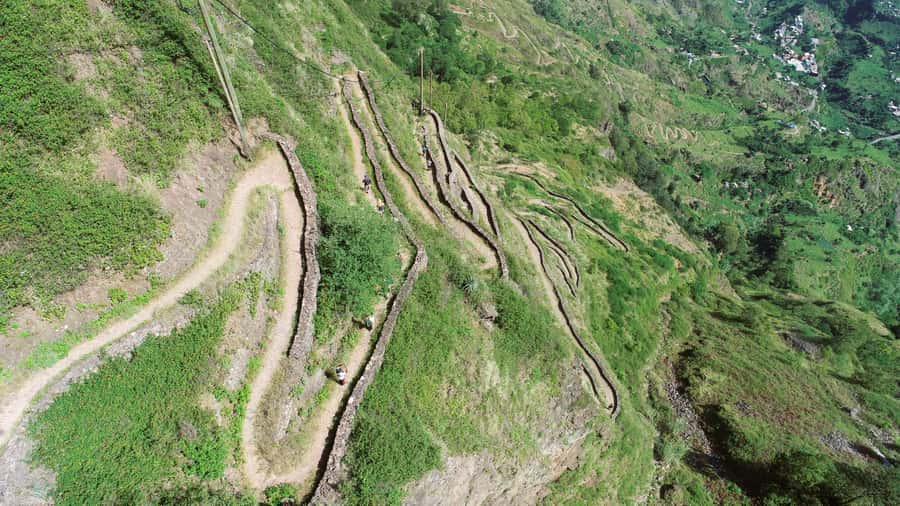
- The zigzag descent is the physical heart of the hike, with steep sections and exposed views.
- A traditional grogue distillery adds a genuine local stop, though food and drinks beyond the tasting are not included.
- Guides such as Maira, Lea, Edy, Ravi, and Riva have received strong praise for their stories, care, and knowledge of island life.
- Weather matters greatly, and a storm can limit the walk or make parts of it dangerous.
Starting high in Cova Natural Park
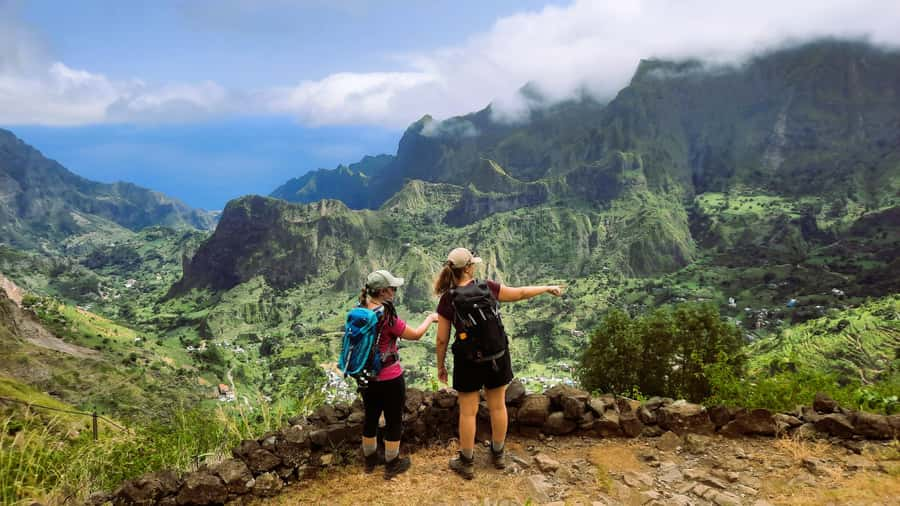
Your day begins with hotel pickup, transportation to Cova Natural Park, and a guide who speaks English, French, or Portuguese. Pickup starts about 10 minutes before the agreed start time, so I would be ready early, especially if you are staying somewhere with a busy entrance or a hard-to-find meeting point.
Cova sits at roughly 1,100 meters above sea level. The setting feels open and spacious at first. You look across the old volcanic crater, where vegetation has taken hold inside the bowl of the extinct volcano. The height gives you broad views, but it also brings the first warning: clouds, wind, and rain can change conditions quickly.
This opening section is valuable because it gives you more than a viewpoint. Your guide can explain how the crater’s environment differs from the warmer valley below and point out native vegetation along the route. Guides have also shared stories, local facts, and legends about the region, which helps turn a walk through the countryside into a better understanding of Santo Antão.
The route is often described as accessible, but that does not mean effortless. You will be hiking for about five hours, with zigzagging sections and a descent that can feel demanding on knees and ankles. Good hiking shoes are essential. A hat and sunscreen also belong in your day pack, even when clouds cover the high ground.
More Volcano Hikes and Treks in the world:
- Mount Etna: Summit Crater Trek with Cable Car
★ 4.8 · 1,875 reviews - La Palma: Tajogaite Volcano Guided Trek
★ 4.8 · 1,810 reviews - Etna: summit craters trekking with volcano guide 3350mt
★ 4.7 · 1,712 reviews
The crater views and the first steep sections
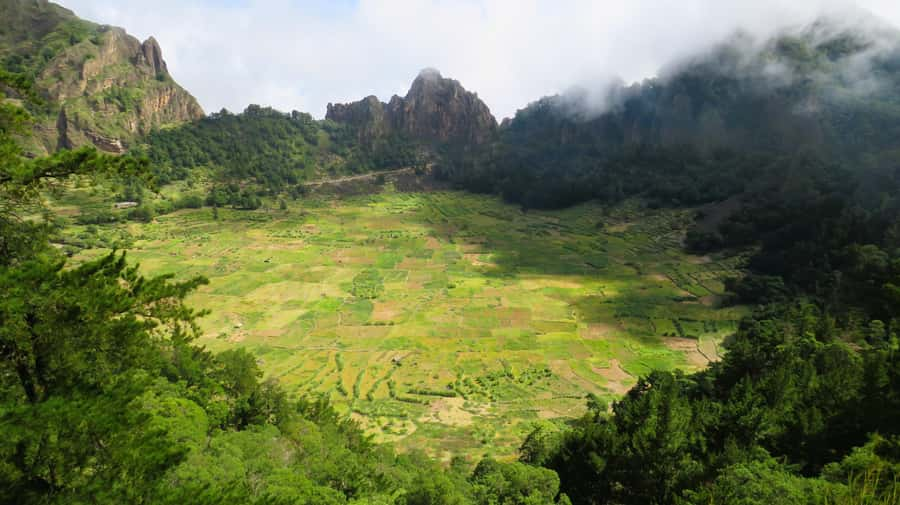
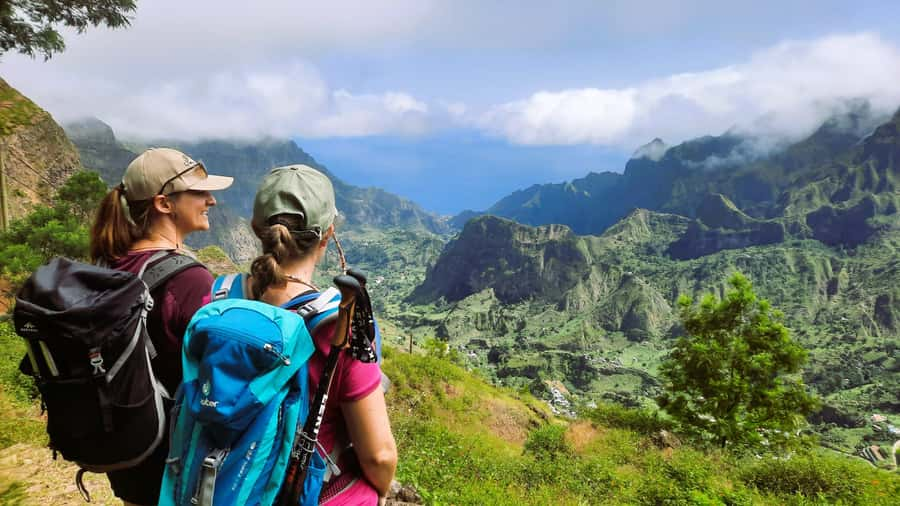
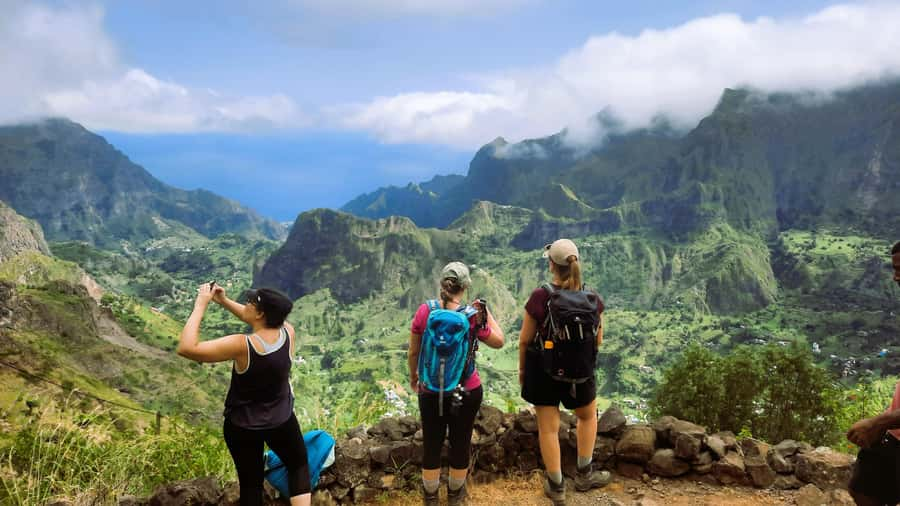
One of the strongest parts of the experience comes near the crater edge, where the view opens toward Paúl Valley and the ocean. You can pause here, catch your breath, and see how far the route drops toward the cultivated valley.
This is also the section that may trouble anyone afraid of heights. The route includes exposed views and steep ground, and the sense of height is part of the attraction. If you are comfortable with mountain paths, the drop adds drama. If heights unsettle you, it can turn the walk into a long exercise in managing nerves.
Do not judge the hike only by the first glance at the valley. The descent continues through zigzags, and footing may vary with weather. Strong wind, rain, and cloud can reduce visibility and make the rockier sections less secure. One recent outing was badly affected by storm conditions, with dangerous wind, heavy rain, cloud, and concern about falling rocks. The guide handled the situation well, but the conditions meant much of the route and the distillery visit could not be completed.
That is useful advice for you: ask about the weather before setting out, and be prepared to postpone if conditions are poor. A five-hour hike is good value only when the route can be walked safely. The operator offers free cancellation up to 24 hours before departure, which gives you some room to adjust plans if you have reliable notice of bad weather.
Following the zigzag trail toward Paúl Valley
The long descent is where the tour earns its reputation as Santo Antão’s best-known hike. The path works down through changing vegetation, and the views keep shifting as you lose altitude. You begin with the open crater and high mountain air. Later, plantations start to fill the view.
Sugarcane is a major feature, joined by banana, mango, avocado, coconut, and other crops. Your guide can explain the plants as you pass and describe life in the mountain communities. One of the pleasures of this section is that you are not simply looking at a green valley from above. You are walking through working agricultural land.
Guides can make a big difference here. Maira has been praised for identifying crops such as mango, papaya, avocado, banana, and coffee beans, and for explaining mountain life while allowing you to sample some produce along the way. Edy has been praised for his preparation and kindness, while Ravi and Riva have also received warm praise for sharing information about the island. Lea and Maira have been singled out for trying hard to help when a difficult day was affected by weather and pickup confusion.
Those names do not guarantee who will lead your group, but they give you a useful sense of what to expect from the guiding style. The best part is not a formal lecture. It is the small information that connects each crop, path, and settlement to daily life.
The trail’s biggest drawback is that downhill does not always mean easy. A steep descent can be harder on your legs than a gentle climb, especially when the surface is wet. Hiking shoes with a firm grip will help. Take care on the zigzags, keep your pace steady, and do not rush simply because the valley looks close.
Seeing the working farms of the Green Valley
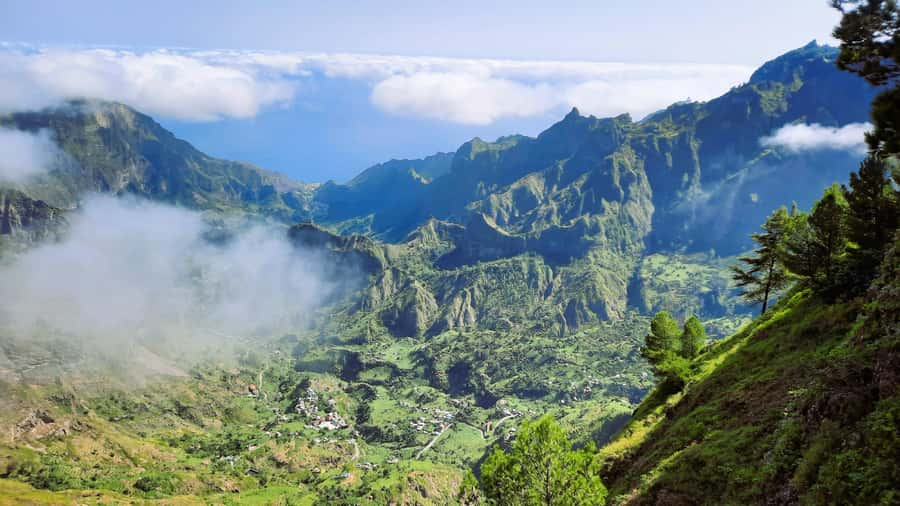
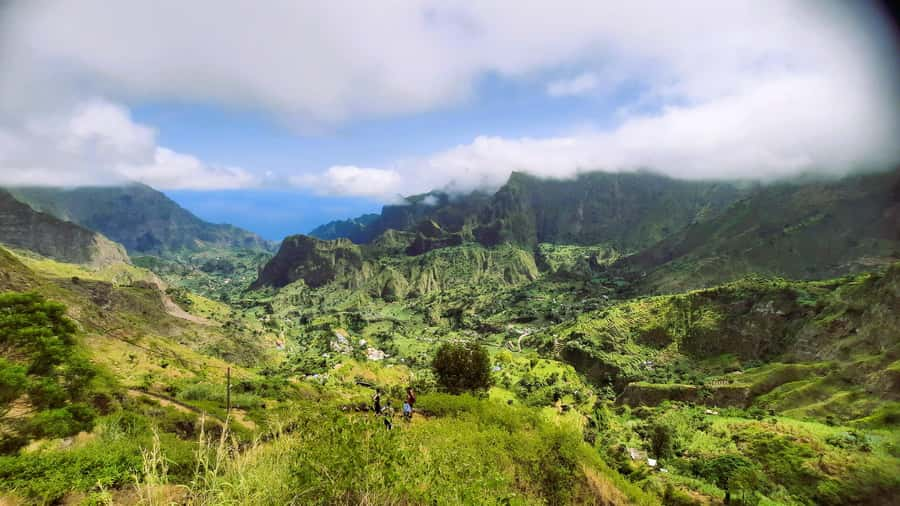
Paúl Valley is famous for its thick vegetation, and the contrast with the higher crater is striking. The valley feels warmer, more enclosed, and more productive. Banana plants, sugarcane, mango trees, avocado trees, coconut palms, and other crops fill the route.
I like this part because it gives the scenery a human scale. The high views are memorable, but the plantations explain why the valley matters. You see food crops and sugarcane growing in a place shaped by volcanic terrain, mountain water, and careful farming.
Your guide’s local stories add another layer. The experience includes regional legends and facts, plus explanations of native vegetation. If you enjoy learning how people live in a place rather than simply collecting photographs, this is one of the tour’s strongest features.
Do keep your expectations realistic. This is not a botanical tour with a printed plant guide, and the exact amount of time spent among the crops will depend on walking speed, trail conditions, and the group. A private or small-group format should make questions easier and allow a more personal pace, but the activity still follows a mountain route with a fixed five-hour duration.
A few more volcano tours around the world worth a look
- Reykjavik: Golden Circle Full-Day Tour with Kerid Crater
★ 4.8 · 24,485 reviews - Santorini: Volcanic Islands Cruise with Hot Springs Visit
★ 4.4 · 10,869 reviews - Big Island in a Day: Volcanoes Waterfalls Sightseeing and History
★ 5.0 · 6,569 reviews - Small-Group Golden Circle, Blue Lagoon with Ticket & Kerid Crater
★ 5.0 · 5,631 reviews
Learning about grogue at a traditional distillery
The distillery stop gives the hike a welcome cultural finish. Grogue is Cape Verde’s well-known local rum, traditionally made from sugarcane. You can see how local sugarcane connects with a drink that is part of the island’s identity, then taste the spirit.
This is not just a quick drink added to the day. It links the fields you have walked through with a local product. After seeing sugarcane growing in Paúl Valley, the production process has more meaning. It also gives you a chance to pause after the steep route.
Food and drinks are not included in the $100 price, apart from the stated grogue tasting. Bring water and anything else you need for the hike. Do not assume the distillery is a full meal stop.
Weather can affect this part of the plan. On a stormy day, the distillery visit may be missed if the guide must shorten or alter the route. That is another reason to ask about conditions and not treat the tasting as the only reason to book. The views, vegetation, and local explanations remain the core of the experience.
What $100 covers and what it does not
At $100 per person, this is not the cheapest way to see Santo Antão, but the price covers several practical needs: hotel pickup and drop-off, transportation, a tour guide, and liability insurance. For a visitor without easy access to Cova, that bundled transport matters. You avoid arranging your own mountain transfer and trying to coordinate the start and finish of a one-way hike.
The guide is also part of the value. Without one, you would still see the crater and valley, but you would miss much of the information about crops, local life, legends, and grogue production. A good guide helps you notice what is easy to walk past.
The price makes the most sense for you if you want a guided half-day with transport and a cultural stop, rather than a bare trail transfer. It makes less sense if you want a completely independent hike, need a flexible schedule, or are unwilling to walk in exposed mountain conditions.
The private or small-group choice is worth considering. A smaller group can make it easier to hear the guide and ask questions, while a private group may provide more control over pauses. Still, the supplied information does not promise a particular group size or a completely custom route, so confirm that detail when booking.
Safety, weather, and the right level of fitness
The height warning should be taken seriously. This activity is not suitable for people afraid of heights, and it is not available for children under 12. The steep views and zigzag sections are central to the route, not an unusual side feature.
Weather deserves equal attention. Wind, rain, and cloud can change the experience quickly. Poor conditions may block views, make the track slippery, and increase the risk of rockfall. In severe weather, the ethical choice is to shorten or postpone the hike, even if that means missing the distillery.
I would contact the operator before departure to confirm the pickup point and weather plan. A communication error once left a traveler and the guides searching for each other for about two hours after a pickup location was changed. The guides, including Lea and Maira on that occasion, tried to help, but the problem began in the office communication. Confirming the exact pickup location yourself is a sensible precaution.
Pack light, but bring the basics:
- Hiking shoes with good grip
- A hat
- Sunscreen
- Water and any food you need
- A layer for changing high-altitude weather
The activity lasts five hours, but the actual walking pace can vary. The route is described as accessible by one satisfied participant, yet the height, descent, and weather mean I would rate it as moderate rather than casual sightseeing.
Who will enjoy this Santo Antão hike most
You should book this if you want Santo Antão’s classic mountain scenery in one well-organized outing. It suits people who enjoy walking, want local stories along the way, and like combining nature with food or drink traditions.
It is especially good for you if you want to see several sides of the island at once: a high volcanic crater, ocean views, steep mountain paths, cultivated slopes, tropical vegetation, and a traditional distillery. The route offers more variety than a short viewpoint stop.
You should think twice if you dislike steep drop-offs, struggle with uneven ground, or want a guaranteed schedule in all weather. The storm experience shows that even a well-intentioned guide cannot make an unsafe route safe. You may also prefer another activity if you want a relaxed walk with no sustained descent.
The strongest part of the tour is the guide-led connection between the scenery and island life. Maira’s explanations of crops and mountain living, Edy’s careful attention, and the praise given to Ravi and Riva show how much the day can depend on the person leading it. The company’s communication around pickup and weather deserves more care, so take a few minutes to confirm both before you leave.
Should you book the Cova to Paúl hike?
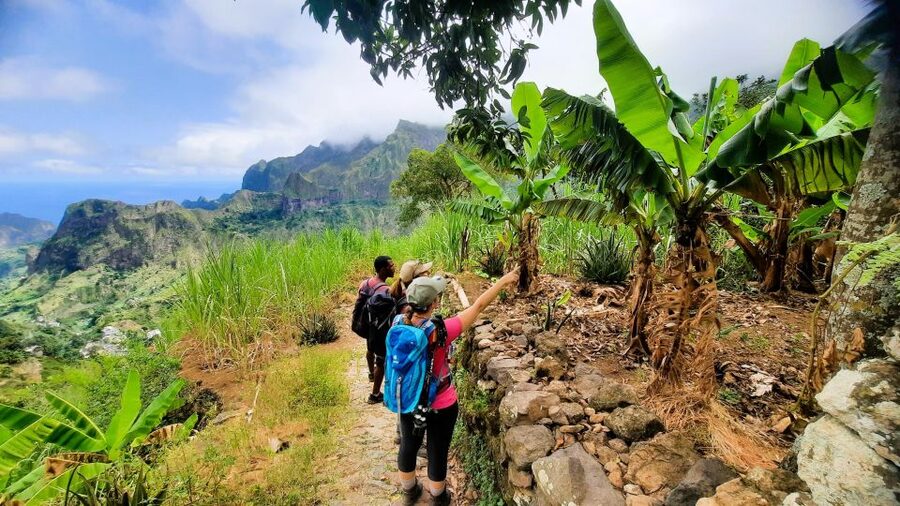
Book it if the thought of walking from a 1,100-meter crater through plantations to a green valley sounds exciting. The views are the headline, but the crops, local stories, and grogue stop give the day its character. At $100, transport, insurance, and guiding make the price reasonable for a visitor who wants the logistics handled.
Do not book it simply because it is famous. Book it because you are comfortable with heights and a real mountain descent. Check the forecast, confirm pickup, wear proper shoes, and remain open to changing the plan if wind and rain make the trail unsafe. On a clear day, this is one of the most rewarding ways to understand Santo Antão in a single half-day.
FAQ
How long does the Cova to Paúl hike take?
The activity lasts about five hours, including the guided hike and the planned stops.
Where does the hike begin?
The route begins in Cova Natural Park, at roughly 1,100 meters above sea level.
Where does the hike finish?
The route leads toward Ribeira Paúl and the Green Valley of Paúl.
Is hotel pickup included?
Yes. Hotel pickup and drop-off, along with transportation, are included. Pickup begins about 10 minutes before the start time.
What languages can the guide speak?
Guides are available in English, French, and Portuguese.
Is the grogue tasting included?
The activity includes a visit to a traditional distillery and a taste of grogue. Food and other drinks are not included.
Is the hike suitable for children?
No. The activity is not suitable for children under 12 years old.
What should I bring?
Bring a hat, hiking shoes, and sunscreen. Since food and drinks are not included, you should also plan for your own water and refreshments.
Can I cancel if my plans change?
You can cancel up to 24 hours in advance for a full refund. A reserve-now, pay-later option is also available.
Just added around the world
- Volcanoes National Park: Guided, Small-Group Hike★ 5.0 · 15 reviews
- Fat Tire E-Bike Rental – Volcanoes National Park★ 4.5 · 26 reviews
- Evening Volcano Explorer Tour from Kona★ 4.5 · 24 reviews
- Evening Volcano Explorer from Hilo★ 4.5 · 67 reviews
- Big Island Waterfalls, Blacksand Beaches, Lava Tubes & Volcanoes★ 5.0 · 24 reviews
- Expert Led Private Guided Tour Hawaii Volcanoes National Park★ 5.0 · 5 reviews
- Best of Big Island: Volcanoes, Waterfall, Blacksand Beach & Lunch★ 5.0 · 14 reviews
- Big Island Private Tour Waipio Valley Volcanoes Waterfalls★ 5.0 · 4 reviews
Volcano Hikes & Treks, compared.
Bali: Sunrise Mount Batur Guided Hike with Breakfast
Read our review →
Bali: Mount Batur Sunrise Guided Hike and Natural Hot Spring
Read our review →
Mount Etna: Summit Guided Hiking Tour up to 3,400 m
Read our review →
Mount Etna: Trek to 3000m with cable car and 4×4
Read our review →
Bali: Mount Batur Sunrise Trek With Guide and Breakfast
Read our review →
Mount Batur Sunrise Hike and Natural Hot Spring Option
Read our review →
Mount Etna: Summit Crater Trek with Cable Car
Read our review →
Browse the lists this tour appears in