
REVIEW · ITALY
Mount Etna: Summit Crater Trek with Cable Car
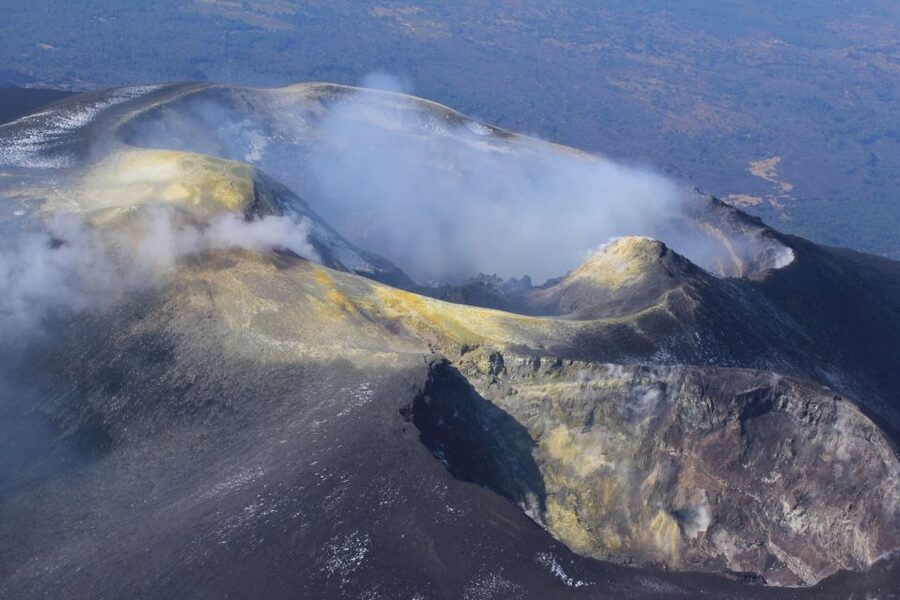
Mount Etna gives you something rare: a chance to walk across an active volcano and reach the edge of summit craters at about 3,300 meters. The route mixes a cable-car ride, a 4×4 climb, loose volcanic ground, smoking vents, and wide views across Sicily. On a clear day, you may see the Aeolian Islands.
I like the small groups, limited to eight people, and the patient pace set by guides such as Simone, Alessandro, Giuseppe, Basilio, and Vincenzo. I also like that boots, poles, a helmet, and a wind jacket are available, since Etna can be cold and rough even in summer. The catch is the price: the advertised $77 does not include the cable car and 4×4 transport, which adds €65 per adult.
Key points before you book
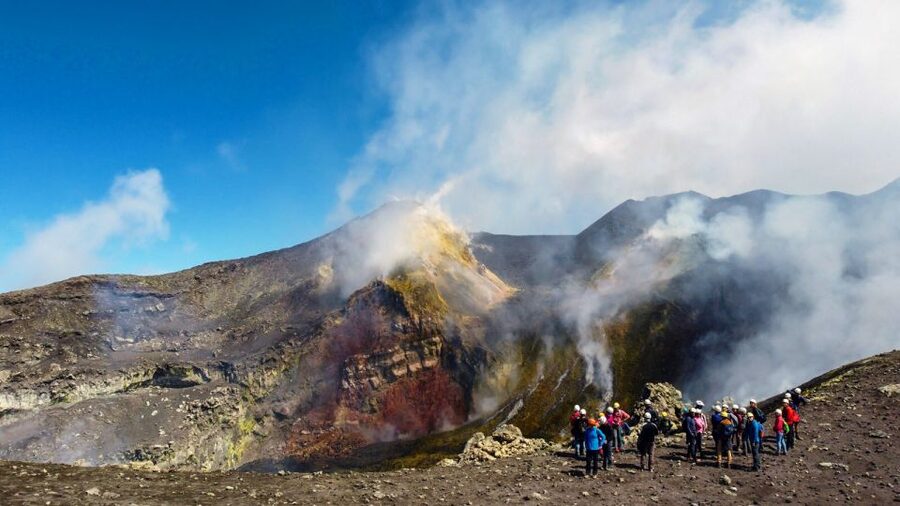
- The summit route reaches the Bocca Nuova at about 3,300 meters, but volcanic activity and wind can close higher areas.
- The €65 transport fee is extra, paid in cash for the cable car and 4×4 ride. If the 4×4 cannot run, the cable-car fee is €52.
- The five-hour outing is a real mountain hike, not a gentle walk from the visitor center.
- Loose volcanic sand makes the descent demanding, though it also creates one of the tour’s most enjoyable stretches.
- You get equipment at the office, including hiking boots, poles, helmet, and wind jacket.
- The guides are the main strength, combining safety checks with clear explanations of eruptions, craters, and lava flows.
Why Etna’s summit route is worth your time
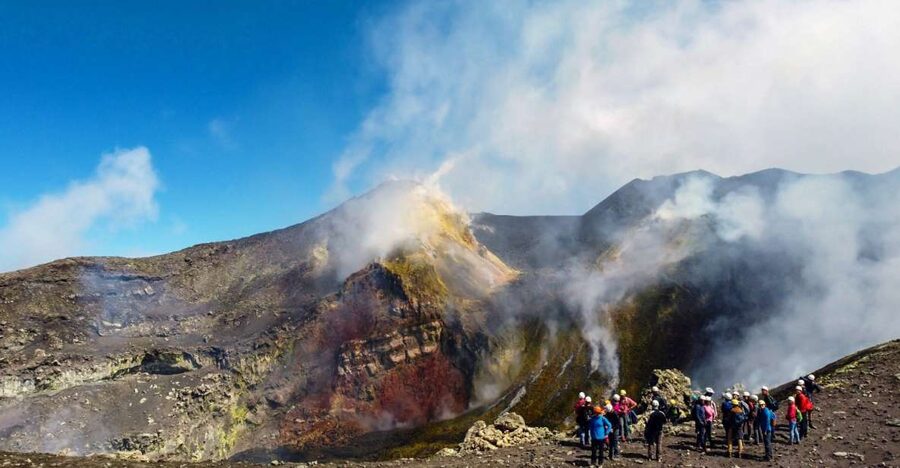
Mount Etna is not just a high viewpoint. It is an active volcanic system, and the ground under your boots tells the story. You walk past craters formed in different eruptions, cross black and brown volcanic sand, and may see steam or smoke rising from the summit area.
That physical setting makes a guided walk far more useful than simply taking the cable car and a 4×4. Your guide points out eruption scars, explains how lava moved across the slopes, and helps you choose secure footing on loose ground. Guides such as Marco, Simone, Alessandro, and Giuseppe are praised for combining geology with humor and practical help.
The group size matters. With no more than eight participants, the guide can keep an eye on the slower hikers, adjust the pace, and stop to explain what you are seeing. This is especially helpful on the final climb, where the air is thinner and the surface is less forgiving.
Still, do not mistake the small group for an easy outing. The hike can be cold, windy, steep, and tiring. Some people have not reached the summit, either because conditions changed or because the climb proved too hard. You need a decent fitness level and a willingness to walk on loose volcanic scree.
More Volcano Hikes and Treks in Italy
- Mount Etna: Summit Guided Hiking Tour up to 3,400 m
★ 4.8 · 4,792 reviews - Mount Etna: Trek to 3000m with cable car and 4×4
★ 4.6 · 3,823 reviews - Etna: summit craters trekking with volcano guide 3350mt
★ 4.7 · 1,712 reviews
Meeting at Etna South
You meet at AITNE Escursioni Etna, next to the restaurant La Terrazza dell’Etna, opposite the cable-car station on the southern side of Etna. Free parking is available until the spaces run out, so arriving early is sensible if you are driving.
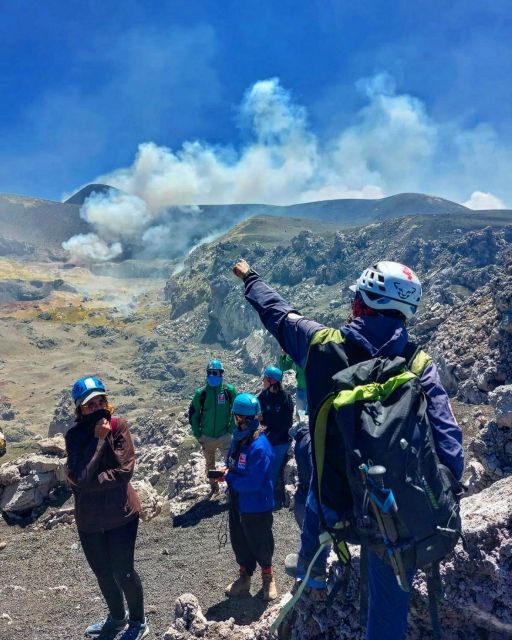
The check-in includes a safety briefing and the fitting of equipment. You can use hiking boots, walking poles, a wind jacket, and a helmet. This is a useful service, especially if you are traveling through Sicily with light shoes and summer clothing rather than full mountain gear.
The start can feel busy because several groups may be checking in at the same time. Keep your booking details handy and confirm your guide and group before heading toward the cable car. The nearby café can provide breakfast and water, but food and drinks are not included in the tour.
Wear long trousers and bring a snack, water, sun protection, and something to cover your mouth and nose. Sulfur and volcanic dust can irritate your throat, particularly near active vents. A warm layer is essential. Etna’s summit can feel wintry even when Catania is hot.
The 15-minute cable-car ride
The first transport section is a roughly 15-minute cable-car ride from Etna South. It saves your legs for the part of the excursion that matters most: the high-altitude walk.
The cable car also gives you a quick visual lesson in Etna’s changing surfaces. Lower slopes give way to darker volcanic ground, and the higher you go, the more stark and open the setting becomes. Weather can affect this part of the plan. In strong winds, the cable car may be closed, and the operator may use a 4×4 from a lower point instead.
The cable-car cost is separate from the tour price. Adults pay €65 for the round trip together with the 4×4 ride when the upper route is open. Children under 11 pay €50. If conditions prevent the 4×4 summit connection, the round-trip cable-car fee is €52 per person.
That extra fee changes the value calculation. At $77, the guided hike looks inexpensive, but the actual adult cost is closer to the advertised tour price plus €65. You are paying for transport, specialist guiding, equipment, and access to a route that would be difficult to manage safely alone. It is fair value if the summit is open and you want a serious walk, but less attractive if you only want a short scenic ride.
The 4×4 climb to Torre del Filosofo
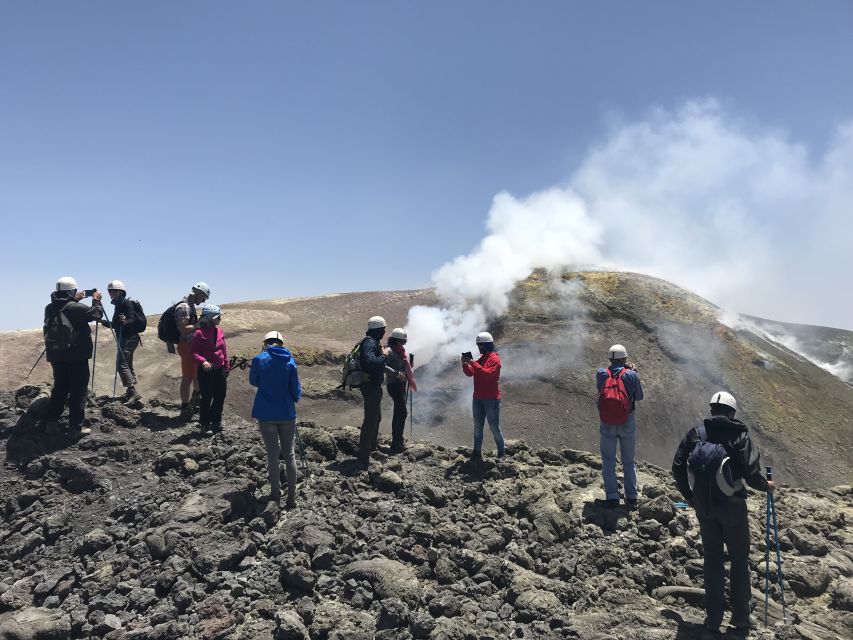
At the top of the cable car, a 4×4 vehicle carries the group toward the Torre del Filosofo area at about 2,850 meters. This 15-minute ride crosses high volcanic ground and places you close to the start of the summit trek.
The vehicle is practical rather than scenic transport. It lets you gain altitude quickly, but you will not spend much time sitting back and admiring the views. The main benefit is energy conservation. Every step saved here helps later, especially during the final approach to the craters.
The route may change at short notice. Volcanic risk, wind, snow, and visibility can affect both the 4×4 and the walking route. In April, one group reached a viewpoint and the Barbagallo Crater after high winds closed parts of the summit area. In other cases, groups have been redirected to Etna’s north side when southern paths were not suitable.
That flexibility is not a flaw. It is part of visiting an active volcano. The important point is to book this experience for the mountain, not for one guaranteed viewpoint. You may reach the summit, or you may get a different route that still includes craters, lava formations, and broad views.
More Mount Etna Tours in Italy:
- Catania: Mount Etna Morning or Sunset Day Trip with Tasting
★ 4.8 · 4,028 reviews - Catania: Sunset Jeep Tour of Mount Etna and Lava Flow Caves
★ 4.8 · 2,113 reviews - Sicily: Etna and Alcantara Gorges Full-Day Tour with Lunch
★ 4.8 · 1,766 reviews - Mount Etna: Roundtrip Cable Car and 4×4 Bus Ticket
★ 4.3 · 1,602 reviews
Walking toward the Bocca Nuova
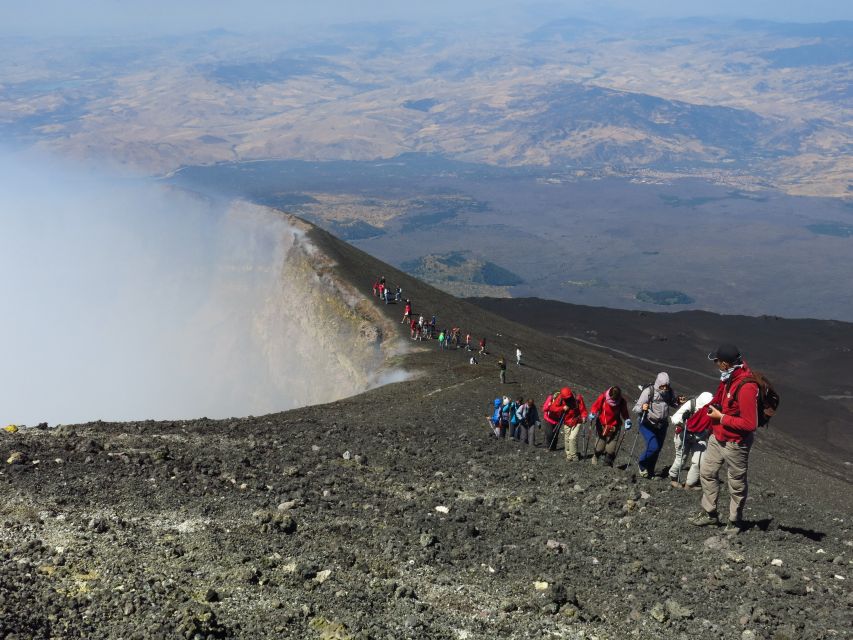
The main trek begins near Torre del Filosofo. The route heads toward the Bocca Nuova, a crater that opened in 1968, at roughly 3,300 meters. The walking time here is about two hours, including stops and explanations.
The higher section is the most demanding part of the tour. You may walk over uneven rock and loose ash, with wind making the effort feel harder. Your guide sets a steady pace and checks that nobody is left behind. Several guides, including Raffaelo and Alessandro, are praised for stopping often and helping less confident members of the group.
The reward is a closer look at Etna’s active summit area. Steam, smoke, sulfur, and sudden sounds can make the crater feel powerful and slightly intimidating. If you are anxious around active volcanic vents, tell your guide early and stay within the group.
At the Bocca Nuova, your guide explains how the crater formed and how Etna’s eruptions have changed the summit. The information is far more meaningful when you are standing beside the rock and ash created by those events. This is where the tour shifts from a high mountain walk to a close encounter with an active geological system.
The Central Crater and 360-degree views
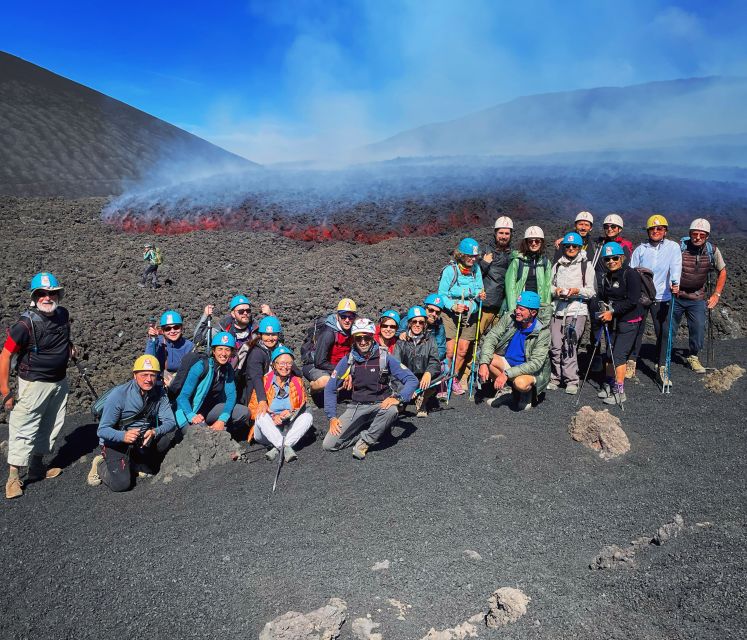
The Central Crater section takes about 30 minutes of walking and guided explanation. This is one of the clearest reasons to choose the summit trek rather than a basic cable-car excursion.
On a clear day, you can look across much of northern Sicily and possibly see the Aeolian Islands. The view is not guaranteed. Clouds can cover the summit, and strong winds can make the upper route impossible. Even in poor weather, the changing clouds, dark volcanic slopes, and sudden breaks in visibility can make the setting memorable.
The summit is also where fitness matters most. The altitude, cold, and loose footing can slow you down. A guide such as Simone or Vincenzo can help with pace and footing, but no guide can remove the physical work. If you regularly hike and are comfortable with uneven terrain, the challenge is manageable. If you have a low fitness level, heart or respiratory problems, recent surgery, or mobility limits, this is not the right activity.
The tour is not suitable for children under six, pregnant women, wheelchair users, or people over 95. Children who meet the age requirement still need to cope with the terrain and altitude.
Barbagallo Crater and the volcanic-sand descent
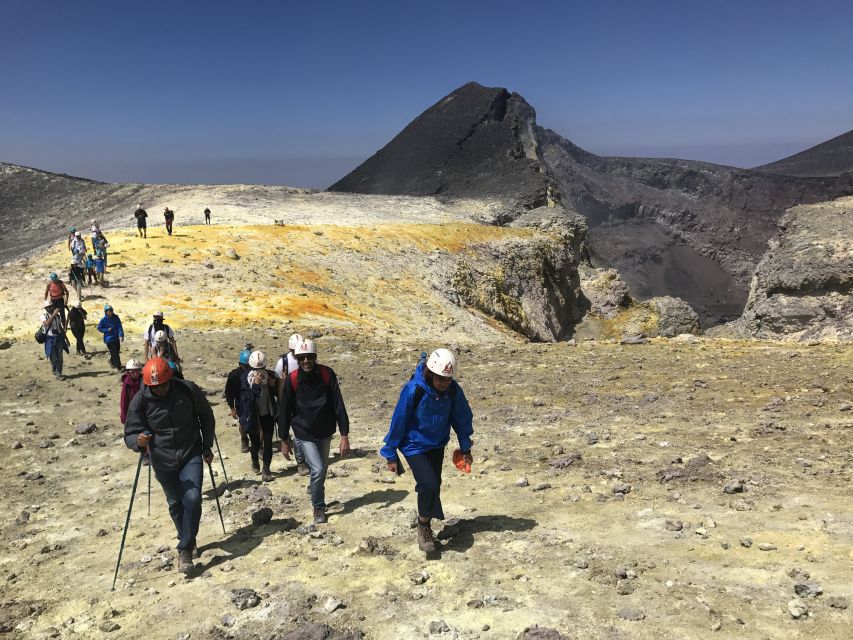
After the summit craters, the route continues toward the Barbagallo Crater, formed during the 2002 eruption. This section takes about an hour and adds a different feel to the day. Instead of focusing only on the summit, you see the broader pattern of eruptions across Etna.
The descent through volcanic sand is one of the tour’s most enjoyable moments, but it can also be awkward. Your boots may slide, and each step can sink into the loose surface. The provided poles are useful here. Some people find the downhill walk easier than the climb, while others feel that the shifting ground puts more strain on their legs.
From this area, you can admire the Valle del Bove, a vast volcanic amphitheater measuring about eight kilometers long and four kilometers wide. Its scale helps explain why Etna is more than a single cone. You are looking into a huge caldera shaped by past volcanic activity.
The route may also include a lava tunnel. This is a short but memorable change from the open summit. Inside, you see how flowing lava can harden on the outside while hotter material continues moving beneath it. The exact tunnel and route can change with safety conditions, so treat this as a likely feature rather than a fixed promise.
The return by cable car
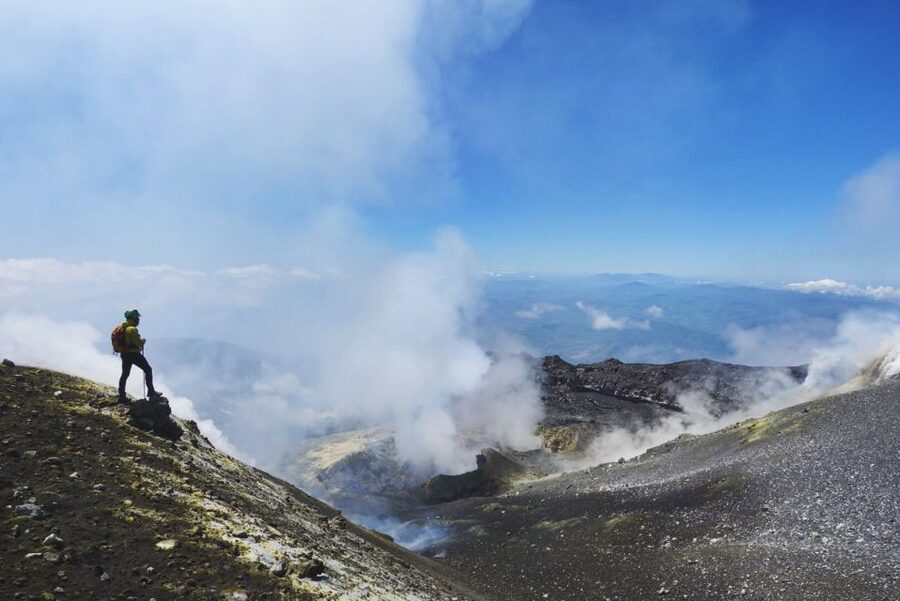
The final return to Etna South uses the cable car when it is operating. The ride is welcome after the descent, especially if the day has involved wind, cold, and loose ash.
Keep an eye on timing. One afternoon outing had to descend on foot because the cable car closed at 5 p.m. That made the experience much more tiring. The schedule and weather can change, so do not plan a tight dinner reservation immediately afterward.
The full activity lasts about five hours, but volcanic conditions can alter the timing. A morning outing may be canceled or moved to the afternoon if weather closes the upper mountain. The provider offers free cancellation up to 24 hours before the start and allows you to reserve without paying immediately, which gives you some flexibility when planning around Sicily’s weather.
What the guides add to the day
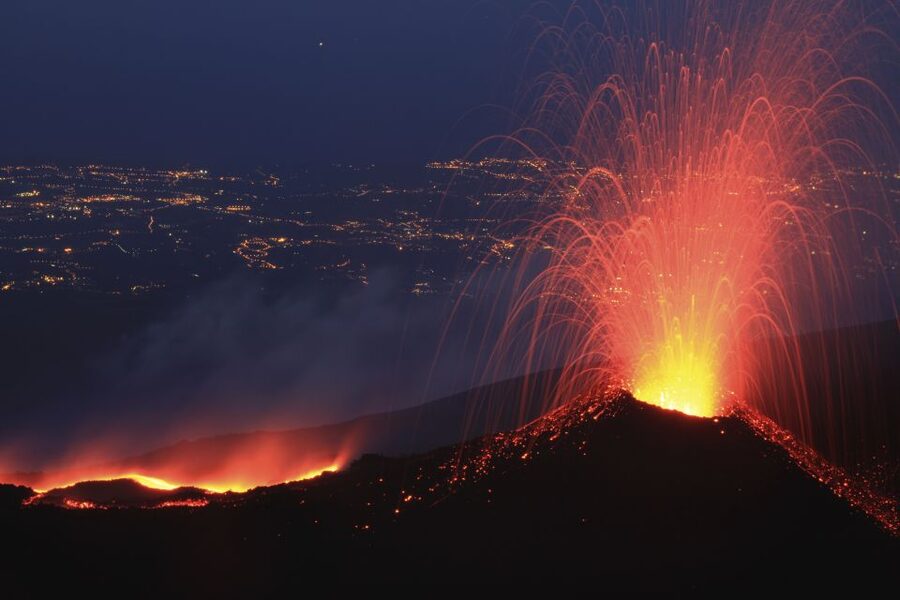
The guides make or break this experience. Marco, Giuseppe, Simone, Alessandro, Basilio, Vincenzo, and others are noted for clear explanations, friendly humor, and close attention to safety.
A good guide does three jobs at once. First, the guide explains the geology in plain language. Second, the guide watches the group on difficult ground. Third, the guide changes the route when conditions require it. That combination is more valuable here than a long lecture about volcanoes.
The languages offered are English, French, and Italian. Ask questions as you walk. The best part of the tour is not simply reaching a high point, but understanding why one crater looks different from another and how recent eruptions changed the mountain.
Who should book this Etna trek
Book it if you want a serious half-day adventure and the chance to get close to Etna’s summit craters. It suits hikers with a reasonable level of fitness, people interested in geology, and anyone who prefers walking through volcanic terrain to riding around it in a vehicle.
Think twice if you want a relaxed sightseeing trip, dislike loose ground, or need a guaranteed summit view. The tour can change because Etna is active, and that is not negotiable. You should also budget the extra €65 transport charge rather than treating the $77 price as the full cost.
FAQ
How long does the Mount Etna summit trek last?
The activity lasts about five hours, including the cable car, 4×4 transport, guided walk, crater visits, and return.
Is the cable car included in the tour price?
No. The round-trip cable car and 4×4 transport cost €65 per adult and €50 for children under 11. If the summit cannot be reached, the cable-car-only fee is €52 per person.
What happens if weather or volcanic activity blocks the summit?
The route may be changed or moved to another part of Etna. If the 4×4 cannot reach the summit area, the group may use only the cable car or follow a lower route. The tour can also be redirected to Etna’s north side.
What equipment is provided?
The tour includes hiking boots, walking sticks, a wind jacket, and a helmet. Insurance is also included.
How fit do I need to be?
You need a reasonable level of fitness for steep sections, high altitude, loose volcanic sand, and a potentially tiring descent. The activity is not suitable for people with low fitness, mobility impairments, heart or respiratory problems, or recent surgery.
Where does the tour meet?
Meet at AITNE Escursioni Etna, next to La Terrazza dell’Etna and opposite the cable-car station on Etna South. Free parking is available until the available spaces are filled.
Should you book it?
Yes, if reaching Etna’s summit area matters to you and you are ready for a real hike. The guides, small groups, safety gear, lava tunnel, eruption craters, and views give this experience much more depth than a simple cable-car ride.
Book with realistic expectations. The summit can close, the weather can turn cold and windy, and the extra transport fee is substantial. But if you accept those limits, this is one of the stronger ways to meet Mount Etna: on foot, beside its craters, with someone who can explain what you are seeing and keep you moving safely.
More Volcano Crater Hikes in Italy
- Etna Sunset Tour: Volcano trek, Cave & tasting from Catania
★ 4.8 · 1,290 reviews - Etna Volcano: South Side Guided Summit Hike
★ 5.0 · 311 reviews - Mount Etna: scenic Summit Trek with a volcano Guide and Gear
★ 4.5 · 284 reviews - Linguaglossa: Mt Etna Summit Crater Hike with Optional 4×4
★ 4.8 · 44 reviews
Just added around Italy
- Enjoy Pompeii And Vesuvius from Amalfi Coast★ 5.0 · 13 reviews
- Vulcano, Panarea and Stromboli from Lipari★ 4.5 · 6 reviews
- Boat Tour from Lipari between Volcanoes and Uncontaminated Landscapes 4/6 pax★ 5.0 · 26 reviews
- Boat Tour to Panarea and Stromboli from Lipari★ 4.5 · 55 reviews
- Sunset excursion on the Stromboli volcano★ 4.5 · 5 reviews
- Exclusive tour of Stromboli island, Boat tour with Pasqualo★ 4.5 · 13 reviews
- TICKET VESUVIUS SKIP THE LINE WITH SUPPORT ASSISTANCE★ 3.9 · 22 reviews
- Vesuvius National Park Skip-the-Line Ticket★ 3.8 · 221 reviews
Italy Volcano Tours, compared.
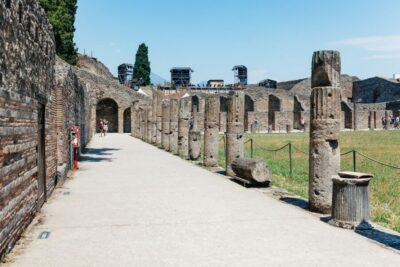
From Naples: Pompeii Ruins & Mount Vesuvius Day Tour
Read our review →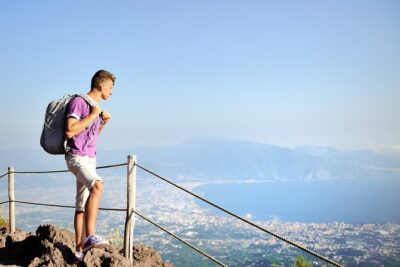
Pompeii and Mount Vesuvius Day Trip from Rome with Pizza Lunch
Read our review →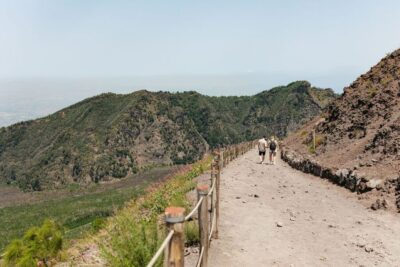
From Rome: Pompeii Day Trip with Optional Vesuvius and Lunch
Read our review →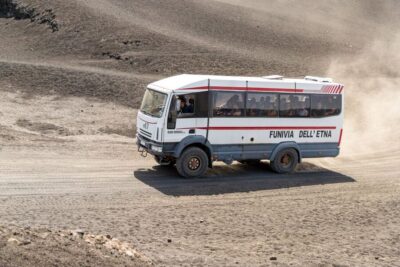
Mount Etna: Summit Guided Hiking Tour up to 3,400 m
Read our review →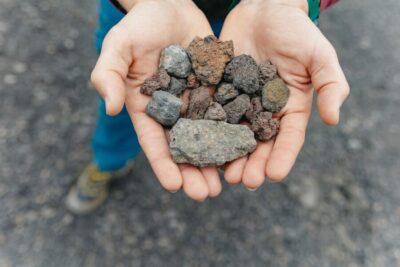
Catania: Mount Etna Morning or Sunset Day Trip with Tasting
Read our review →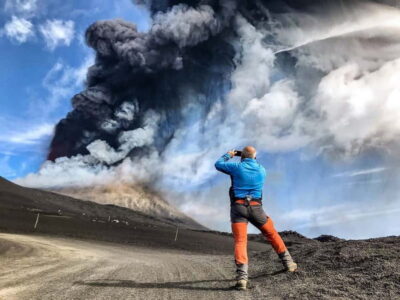
Mount Etna: Trek to 3000m with cable car and 4×4
Read our review →
Pompeii & Mt.Vesuvius Day Tour from Naples with Pizza Lunch
Read our review →
Mount Vesuvius: Skip-the-Line Ticket and Smart Digital Guide
Read our review →Browse the lists this tour appears in