
REVIEW · CHILE
Pucón: Ascent to Villarrica Volcano
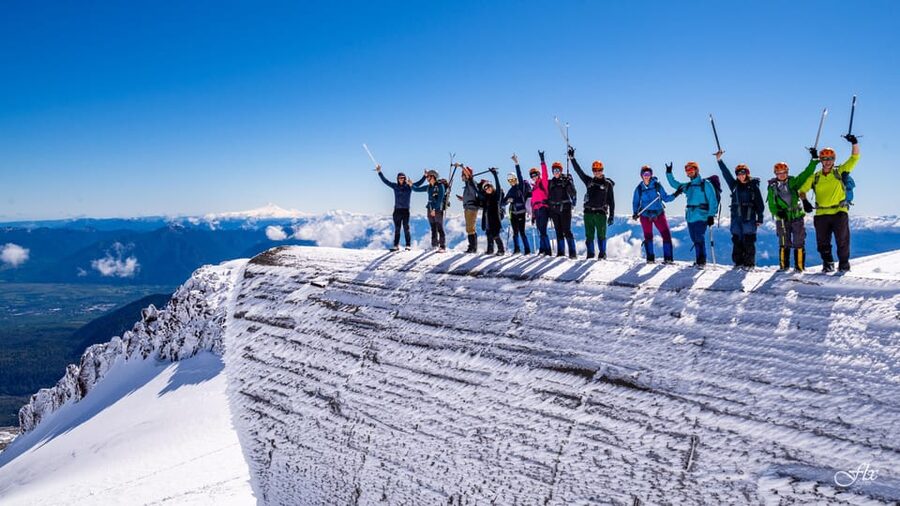
Villarrica is not a gentle hill with a grand name. It is a serious, steady climb up an active volcano, followed by one of Chile’s great downhill rewards: sliding back over the snow. From the 2,848-meter summit, you look into the crater and across Pucón, Villarrica, nearby lakes, and other volcanoes.
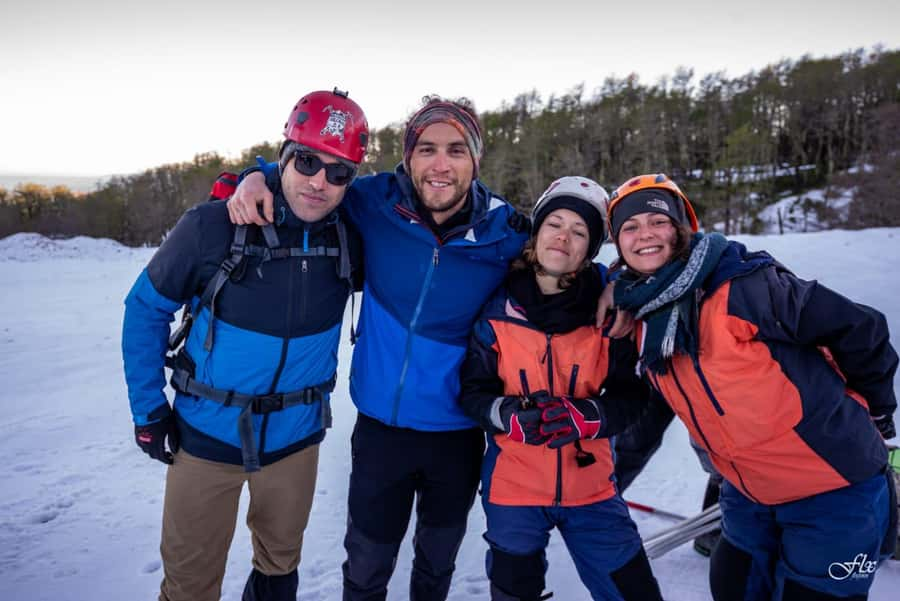
I like the full equipment package, which includes mountain boots, crampons, an ice axe, helmet, jacket, backpack, gloves, and trekking poles. I also like the guides’ practical approach. Felipe, Cristian, and JR helped one group manage different hiking speeds, taught self-arrest with ice axes, and kept the outing moving without turning it into a race.
The catch is simple: this is a hard day with about 1,570 meters of elevation gain. Wind can make the climb tougher, the weather can cancel or alter the ascent, and the 6:00 am start means you need to prepare the day before.
Key points to know before you book
- The climb gains about 1,570 meters: Expect a long, steep ascent, not a casual park walk.
- The summit reaches 2,848 meters: You may see into the volcanic crater, and lava can sometimes be visible depending on activity.
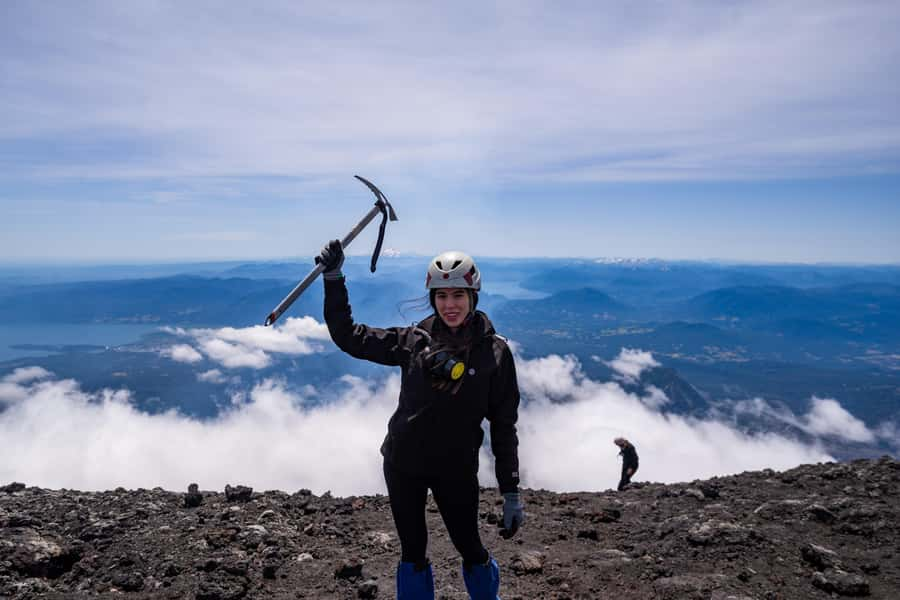
- Crampons and ice axes matter: You use them near the glacier, with instruction and guide support.
- The descent is the playful part: In winter, spring, and autumn, you slide down snow. In summer, you walk down.
- Guides can manage mixed ability levels: Groups may naturally split into different paces while staying under guide supervision.
- Bring more food and water than you think: The operator requires 2 liters of water, and snacks are not included.
Why Villarrica is worth the hard work
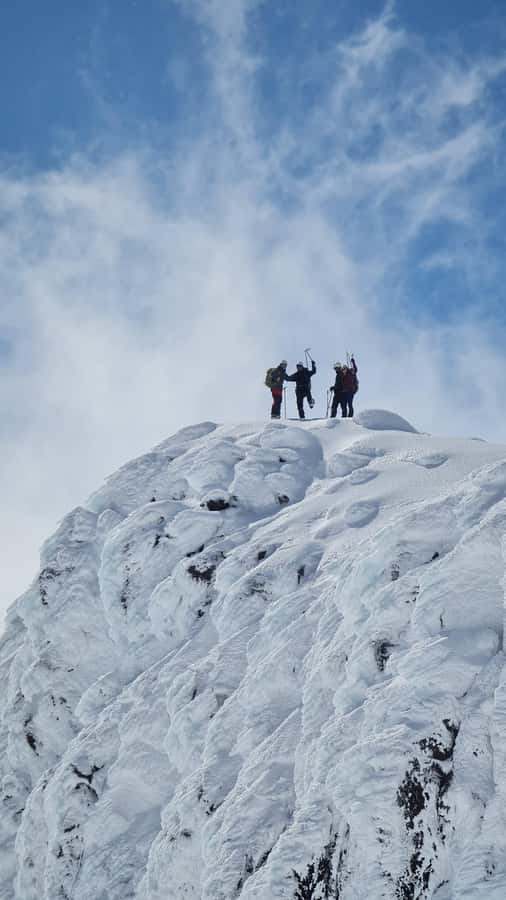
The appeal here is not only reaching a high point. Villarrica gives you a clear sense of changing terrain as you climb. You begin below the volcano, walk upward for hours, reach snow and glacier conditions, then finish at a crater that may show signs of volcanic activity.
That progression makes the day feel like a real mountain outing rather than a viewpoint reached by vehicle. You earn the panorama step by step. On a clear morning, views extend toward Pucón, Villarrica, lakes, and neighboring volcanoes.
The summit itself is also unusual. At 2,848 meters, you are not simply looking across a valley. You can contemplate the crater’s geological shape, and depending on the volcano’s activity, you may see lava inside. That possibility is part of the attraction, but it also explains why weather and volcanic conditions must guide the final decision.
This is a demanding experience, yet the descent changes the mood. In the colder seasons, you use snow slides to come down. One participant described the sliding as the highlight of the day, and that makes sense: after hours of uphill work, the mountain finally gives you a fast, playful way back.
A few more volcano tours around Chile worth a look
- Pucón: Villarrica Volcano Climb
★ 4.8 · 191 reviews - From Puerto Varas: Osorno Volcano & Petrohue Falls Day Tour
★ 4.6 · 121 reviews - Puerto Montt: Osorno Volcano and Petrohué Falls Guided Tour
★ 4.5 · 104 reviews
The early start at Terra Volcano
Your day begins at 6:00 am at the Terravolcano office, Av. Bernardo O’Higgins 717, local 4, in Bulevar Patagonia. The early hour is not decorative. You need time for equipment, transport, the trail, and the long climb before returning to Pucón.
You should visit the office one day before the ascent to test the equipment. This is one of the most useful practical requirements, since mountain boots, crampons, clothing, and other gear need to fit properly before you reach the trailhead.
The operator provides a large amount of technical equipment:
- Helmet
- Backpack
- Mountain footwear
- Crampons
- Ice axe
- Trouser cover
- Windproof jacket
- Trekking poles
- Gloves
- Transport
- National park entry
- Certified guide
- Activity insurance
That package adds real value to the $185 price. You are not paying only for a guide and a van. You are also getting specialist gear, park admission, transport, and insurance. If you already own proper mountain equipment, the package may feel less important. For most visitors arriving in Pucón with ordinary hiking clothes, it removes a major logistical problem.
The office stage is also your chance to ask questions and check what you still need. The supplied gear does not include sunglasses, sunscreen, a sun hat, a cold-weather hat, food, or water. Pack all of those yourself.
The 30-minute ride to Villarrica National Park
After gearing up, you travel by van for about 30 minutes to Villarrica National Park. The short transfer keeps the morning efficient and avoids making you arrange separate transport to the volcano.
At the park, expect a safety briefing of about 10 minutes. This is where the day’s rules and mountain procedures matter. You should pay close attention to how the equipment works, especially the crampons and ice axe.
The weather check happens the day before and again on the activity day. That is important for a volcano ascent, where wind, snow, visibility, and surface conditions can change the plan. The tour does not promise a summit in every kind of weather, and that is the sensible policy.
You should also arrive ready to adjust your expectations. The operators may decide that conditions are not safe for the full climb, or they may alter how far the group goes. A fixed summit promise would be a warning sign on an outing like this.
Six hours of steady uphill walking
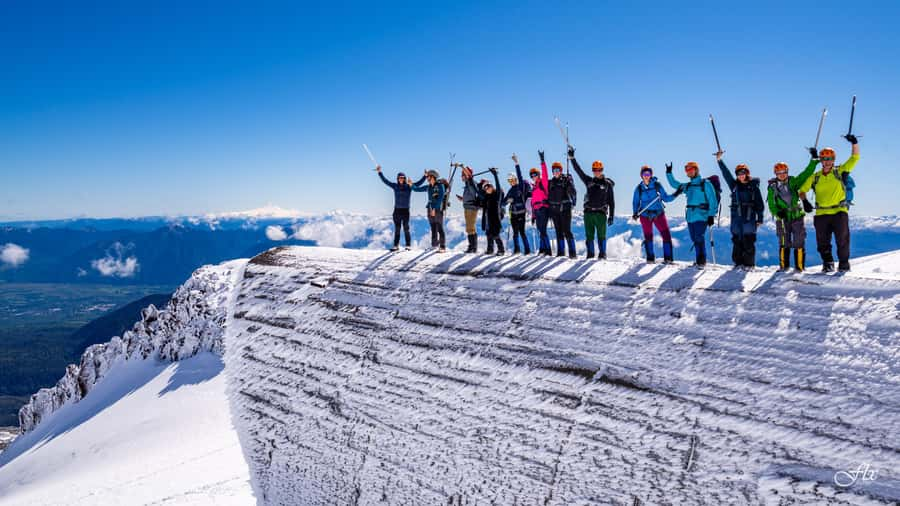
The ascent begins at about 7:30 am. You move at a constant pace, with the aim of enjoying the scenery while keeping enough energy for the upper slopes.
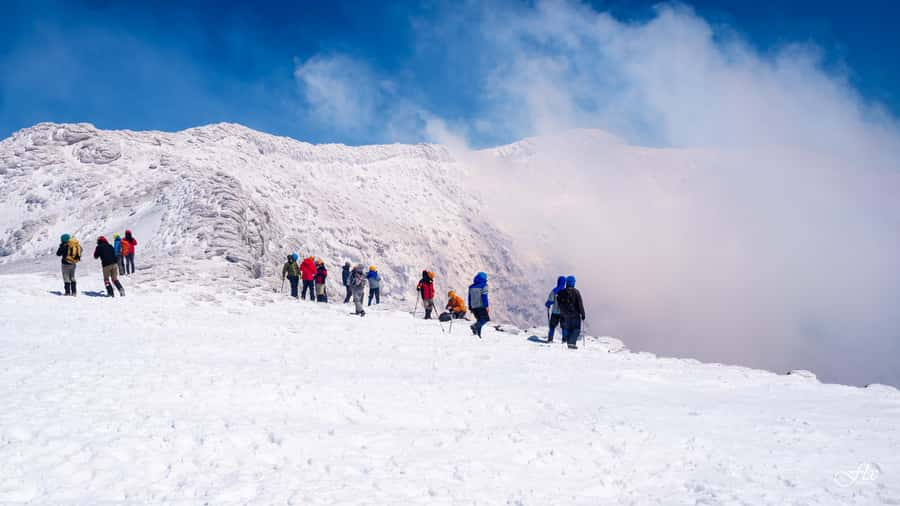
Do not mistake the steady pace for an easy one. The uphill section can take five to six hours, and the total elevation gain is about 1,570 meters. That is the central fact to consider before booking. You need to be comfortable with prolonged uphill effort, cold conditions, and a full day outside.
The climb is suited to adults with solid fitness and mountain endurance. It is not suitable for children under 18, pregnant women, people with vertigo, respiratory problems, altitude sickness, or recent surgery. Smoking, intoxication, alcohol, drugs, and littering are not allowed.
Groups can include people with different levels of hiking experience. Guides Felipe, Cristian, and JR were praised for helping a mixed group find a workable rhythm. The group naturally split into two paces, which can be helpful if you are strong but do not want to race, or if you need a slower rhythm without feeling abandoned.
Still, do not book on the assumption that guide support will remove the physical challenge. Guides can set a good pace and coach you through equipment use, but they cannot make 1,570 meters of climbing disappear.
Same volcano country, a different day out:
- San Pedro de Atacama: El Tatio Geysers Tour
★ 4.7 · 943 reviews - From Santiago: Cajón del Maipo and Volcán San José Hike 8K
★ 4.9 · 418 reviews - From San Pedro de Atacama: El Tatio Geyser Field & Wetlands
★ 4.5 · 141 reviews - Full Day Tour to Geyser del Tatio, Vado Putana and Machuca
★ 5.0 · 134 reviews
Crampons, ice axes, and the glacier section
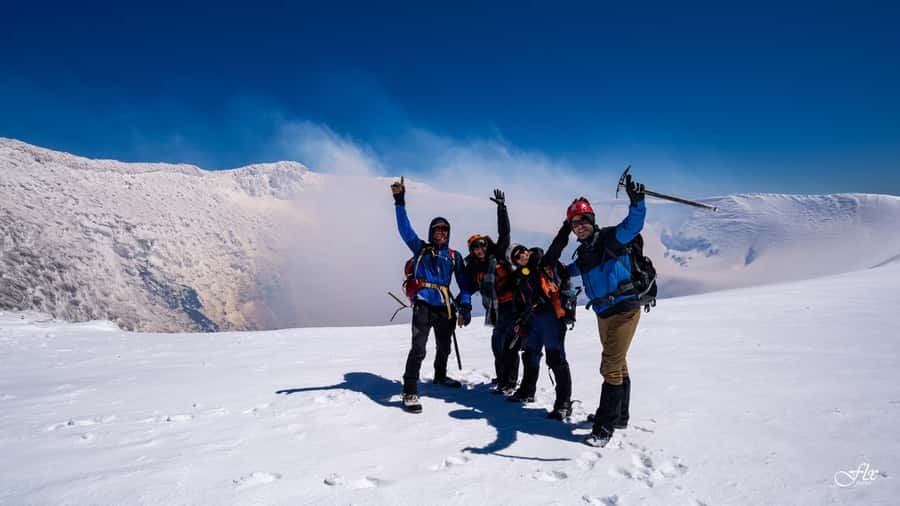
As you approach the glacier near the summit, the outing becomes more technical. You put on crampons and use ice axes under guide supervision. The equipment is included, but you still need to learn how to move with it.
One group received instruction in self-arrest, a technique for stopping yourself if you slip on snow. That kind of lesson is valuable because it gives the ice axe a practical purpose rather than making it a prop for photographs.
You should expect cold, wind, and changing footing in this upper section. A windproof jacket is supplied, but warm layers are still your responsibility. Pack a long-sleeved shirt, warm clothing, hiking pants, socks, and a jacket. Gloves are included, though an extra pair may be useful if your hands get wet.
Good sunglasses and sunscreen are essential. Snow can reflect strong sunlight, and the supplied equipment does not cover those items. A cold-weather hat and sun hat are both listed as things to bring, which tells you how quickly conditions can shift during the day.
The crater at 2,848 meters
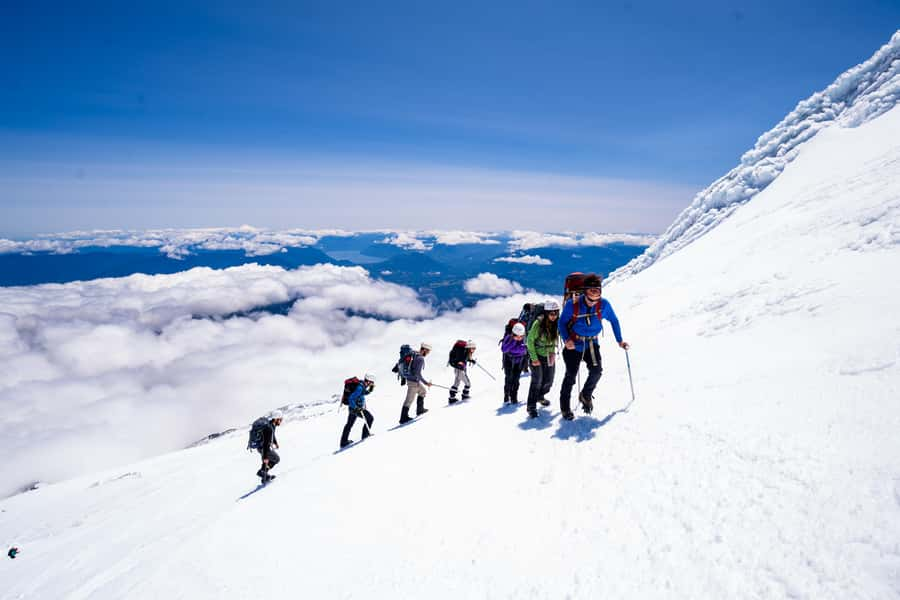
Reaching the summit is the main physical goal, but the crater provides the most distinctive moment. From 2,848 meters, you can look at the volcano’s geological formation from above rather than viewing Villarrica only from town.
The summit stop includes time for photographs, about 10 minutes in the stated schedule. That is not a long pause, so have your phone charged and easy to access. The guides may need to keep the group moving because of wind, cold, volcanic conditions, or the schedule for the descent.
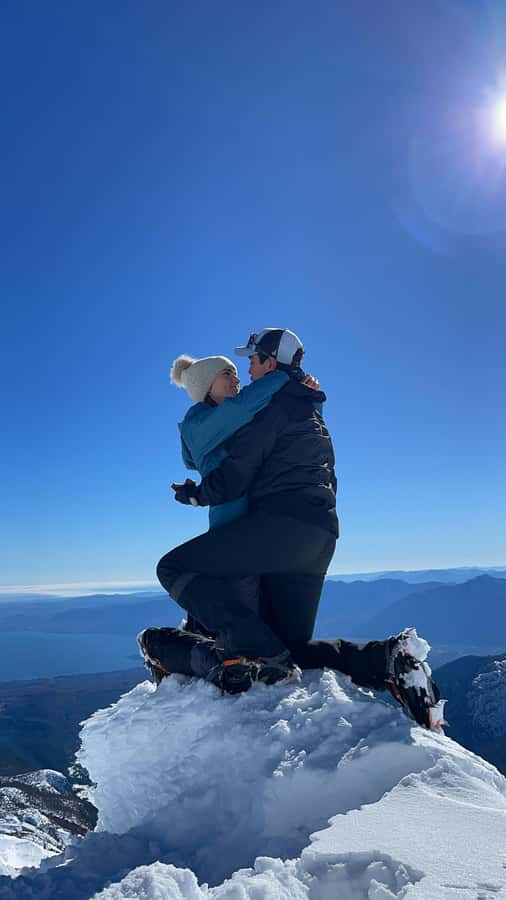
The view can include Pucón, Villarrica, lakes, and other volcanoes in the area. Sunrise may also be part of the experience for an early group. One outing reached the trailhead early and saw an impressive sunrise, but you should treat that as a possible bonus rather than a guaranteed feature.
The crater may show lava depending on current volcanic activity. That is a remarkable possibility, but it also reinforces the need to follow guide instructions closely. You are visiting an active volcanic environment, not a standard summit viewpoint.
The descent: snow slides or a walk down
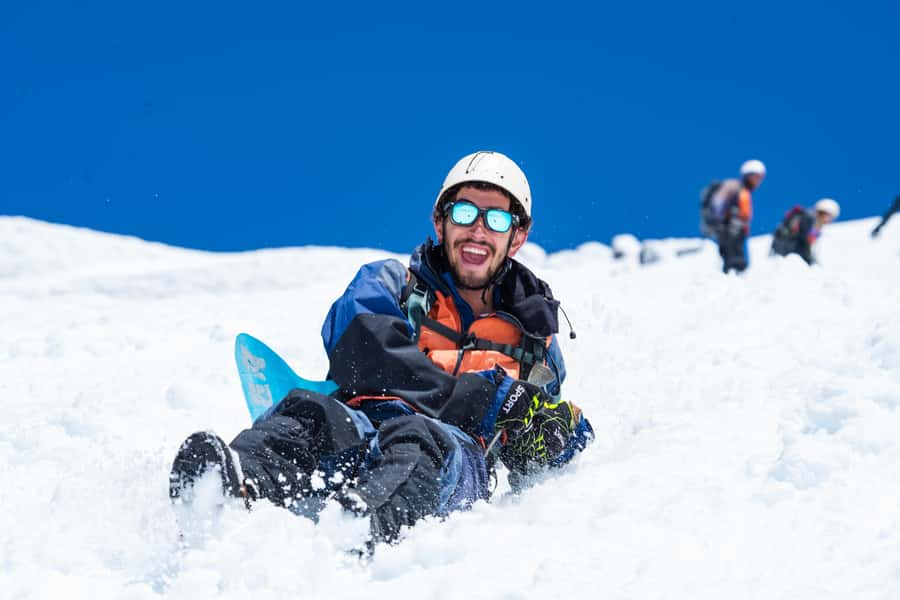
The way down depends on the season. In winter, autumn, and spring, you may slide down snow slides. In summer, you descend on foot.
The snow slides are one of the strongest reasons to choose this particular outing. After five to six hours uphill, sliding can make the descent feel far less punishing and adds a bit of mountain fun. It is not merely a photo stop. It becomes a real part of the return journey.
Summer visitors should set different expectations. You will walk down rather than slide, and the return can take two to four hours. That is still a substantial descent, especially after the effort of reaching the crater.
The return to the base is followed by the 30-minute van ride back to Pucón. At the office, the group celebrates with cold beer in summer or hot chocolate in winter. Snacks and drinks may also be available after the outing, but you should not depend on that during the climb. Bring your own food for the day.
What to eat, drink, and wear
The operator asks you to bring 2 liters of water, and I would take that instruction seriously. The climb is long, and water is not included.
Food is also not included. Pack compact, easy-to-eat items such as sandwiches, fruit, cookies, chocolate, or other snacks. Extra snacks are especially useful because the day may take around 510 minutes, or eight and a half hours, from departure to return.
Your clothing should work in layers. Bring warm clothing, a long-sleeved shirt, hiking pants, socks, a jacket, a cold-weather hat, a sun hat, and gloves. The operator supplies a windproof jacket, gloves, mountain footwear, and trouser covers, but you still need a personal clothing system that keeps you comfortable while your temperature changes.
Do not forget sunglasses and sunscreen. A charged smartphone is useful for photographs, but protect it from cold and keep enough battery for the summit. Comfortable clothing matters more than looking polished. This is a mountain day, not a town stroll.
The $185 price and what you receive
At $185 per person, the price is fair if you need the equipment and transport. The package covers a certified guide, national park admission, activity insurance, the van, and nearly all the technical gear needed for the ascent.
The value is strongest for visitors who are not carrying crampons, ice axes, mountain boots, helmets, and suitable outerwear. Renting those pieces separately can be a hassle, and a poor fit can affect both comfort and safety.
The price is less compelling if you already have every required item and would normally arrange your own mountain access. Even then, guide support is important on the glacier section and around an active crater. This is not the place to save a small amount by choosing an unofficial or poorly equipped outing.
The booking terms also give you some flexibility. You can cancel up to 24 hours ahead for a full refund, and you can reserve now and pay later. Since weather determines whether the climb goes ahead, those terms are useful. Check the available starting time before booking, since the activity lasts 510 minutes.
Who should book this volcano climb
I would choose this outing if you want a demanding mountain day with a clear goal and a memorable descent. It suits adults who enjoy long climbs, can handle cold and wind, and want more than a simple scenic ride.
It is also a good choice if you want technical guidance without assembling your own equipment. The included crampons, ice axe, boots, helmet, transport, and park entry make the day easier to arrange.
I would not choose it if you dislike steep exercise, feel uneasy near drop-offs or a crater, or need a relaxed schedule. The early start, long ascent, changing conditions, and possible altitude symptoms are real considerations.
Language should not be a major barrier. Live guides are available in English, French, and Portuguese. You should still confirm the available language for your departure when booking.
Should you book the Villarrica ascent?
Book it if reaching the crater matters more to you than comfort, and if the thought of sliding down a volcano sounds like a fair reward for hours of climbing. The strongest parts are the well-equipped setup, guide support on snow and ice, big views, and the unusual descent.
Skip it if you are not prepared for a hard uphill day or if you want a guaranteed summit regardless of weather. Bring 2 liters of water, generous snacks, warm layers, sunglasses, sunscreen, and a charged phone. Visit the office the day before to test the equipment, then let the mountain conditions decide the rest.
FAQ
How long does the Villarrica Volcano experience last?
The activity lasts about 510 minutes, or eight and a half hours. The schedule includes a 30-minute van ride each way, about six hours of hiking, a summit photo stop, and the safety briefing.
Where is the meeting point?
You meet at the Terravolcano Agency at Av. Bernardo O’Higgins 717, local 4, Bulevar Patagonia.
What time does the day begin?
The day begins at 6:00 am at the Terravolcano office. The walk starts at approximately 7:30 am after the transfer and safety briefing.
How high is the summit?
The summit reaches 2,848 meters above sea level.
Is the climb suitable for children?
No. The activity is not suitable for children under 18 years old.
What equipment is included?
The tour includes a helmet, backpack, mountain footwear, crampons, ice axe, trouser cover, windproof jacket, trekking poles, gloves, transport, national park entry, a certified guide, and activity insurance.
What do I need to bring?
Bring warm clothing, sunglasses, a sun hat, a cold-weather hat, sunscreen, 2 liters of water, food, drinks, a jacket, comfortable clothing, a long-sleeved shirt, socks, hiking pants, and a charged smartphone.
Can I see lava in the crater?
You may see lava inside the crater depending on the volcano’s activity at the time of the ascent.
What happens if the weather is poor?
The ascent depends on the weather. Conditions are checked the day before and again at the time of the activity, and the plan can change according to those conditions.
Just added around Chile
- Tatio Geysers Tour: San Pedro de Atacama★ 5.0 · 5 reviews
- San Pedro de Atacama: Saver Pack Tatio Geysers + Moon Valley★ 4.5 · 15 reviews
- San Pedro de Atacama: Volcano Downhill Bike Tour★ 4.8 · 5 reviews
- San Pedro de Atacama: Láscar Volcano Summit Hiking Day Trip★ 4.5 · 8 reviews
- San Pedro de Atacama: Geysers del Tatio★ 4.8 · 9 reviews
- San Pedro de Atacama: Tatio Geysers and Machuca Tour★ 4.6 · 6 reviews
- San Pedro de Atacama: El Tatio Geysers & Machuca Lagoon Trip★ 4.8 · 4 reviews
- San Pedro de Atacama: El Tatio Geyser Field and Wetlands★ 5.0 · 7 reviews
Chile Volcano Tours, compared.
From Santiago: Cajón del Maipo and Volcán San José Hike 8K
Read our review →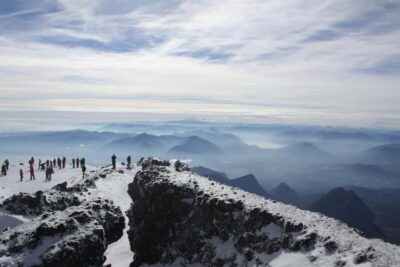
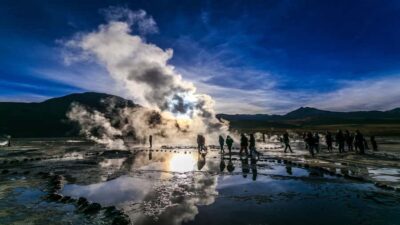
From San Pedro de Atacama: El Tatio Geyser Field & Wetlands
Read our review →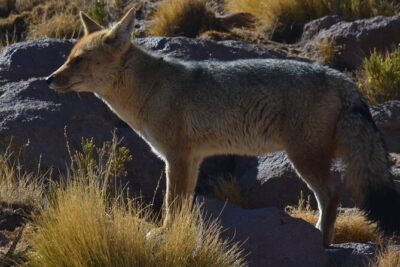
Full Day Tour to Geyser del Tatio, Vado Putana and Machuca
Read our review →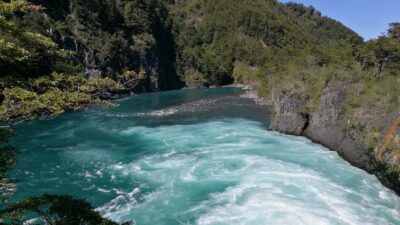
From Puerto Varas: Osorno Volcano & Petrohue Falls Day Tour
Read our review →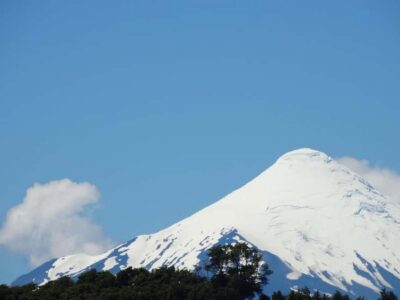
Puerto Montt: Osorno Volcano and Petrohué Falls Guided Tour
Read our review →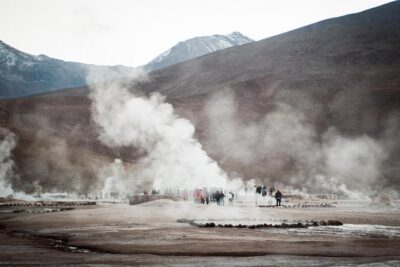
El Tatio Geysers Tour from San Pedro de Atacama
Read our review →Browse the lists this tour appears in