
REVIEW · SAN PEDRO DE ATACAMA
Full Day Tour to Geyser del Tatio, Vado Putana and Machuca
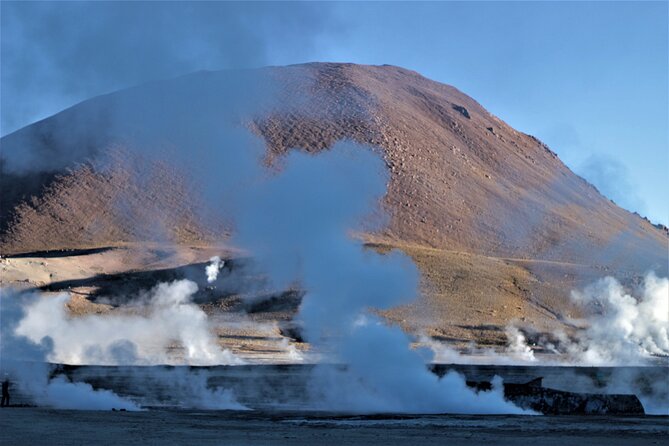
At about 4,300 meters, El Tatio sends white columns of steam into the freezing dawn. The show is strongest between 6 and 7 a.m., when the cold air makes the fumaroles most visible. I like the early timing, which gives you the best chance of seeing the geysers at their most active, and the chance to spot vicuñas, flamingos, llamas, and rheas afterward.
I also like the small group limit of 12, plus a cooked breakfast after the main viewing. The tradeoff is real: you leave San Pedro at 4:30 a.m., spend about three hours on the road, and pay the geyser entrance fee separately. This is an excellent half-day outing, despite the full-day name.
Key points to know before you book
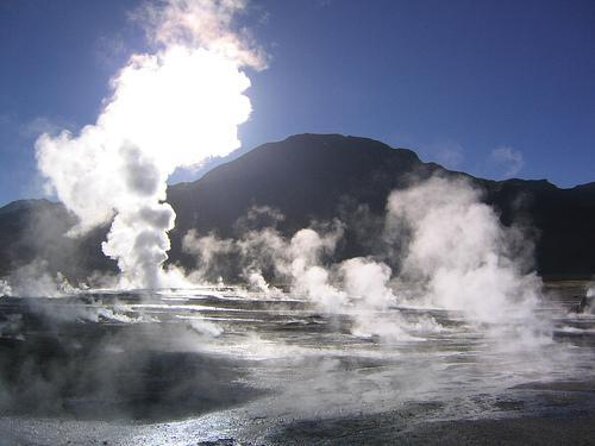
- The geysers are strongest at sunrise: Plan on cold air, rising steam, and the best viewing between 6 and 7 a.m.
- The tour reaches high altitude: El Tatio sits around 4,300 meters, so water, warm clothing, and a little time to acclimatize matter.
- Breakfast is included: The meal is served during the morning outing, a welcome comfort after the early departure.
- You get more than geysers: Putana Ford, Machuca, Laguna Salada, and roadside wildlife add variety to the return trip.
- The group is capped at 12 people: Shared transport keeps the price low without creating a huge coach group.
- Budget for the entrance fee: The geyser admission is listed at 15,000 Chilean pesos, about 16 US dollars, and is not included.
Why El Tatio is worth the 4:30 a.m. alarm
El Tatio is not a casual morning stop. You leave San Pedro de Atacama in darkness, spend hours on a high mountain road, and arrive in bitter cold. Yet the timing has a clear purpose: the geysers and fumaroles are most dramatic before the sun warms the air.
The field lies in the Andes northeast of San Pedro and is one of the highest geyser areas in the world. It is also described as the largest group of geysers in the Southern Hemisphere and the third largest worldwide, after Yellowstone and Dolina Giezerow in Russia.
What you see is not one giant cone erupting on a fixed schedule. You walk or look across a broad geothermal area filled with steam vents, bubbling pools, and jets of hot water. Some fumaroles send columns high into the air, while others hiss close to the ground. The sight changes with the light, wind, and temperature.
The heat is serious. Some water reaches about 85 degrees Celsius. Stay within the marked viewing areas and follow the guide’s instructions. The ground around geothermal features can be unstable, and steam can obscure what lies ahead.
The cold creates the visual effect you came to see. When the air is still and near freezing, steam hangs above the vents in thick white plumes. As the morning warms, the display can become less dramatic. That is why a late start would miss the point.
More Geothermal Parks and Geysers in Chile:
- San Pedro de Atacama: El Tatio Geysers Tour
★ 4.7 · 943 reviews - From San Pedro de Atacama: El Tatio Geyser Field & Wetlands
★ 4.5 · 141 reviews - El Tatio Geysers Tour from San Pedro de Atacama
★ 4.5 · 100 reviews
The journey from San Pedro to 4,300 meters
The scheduled pickup is 4:30 a.m. The drive from San Pedro and the return journey together take about three hours, with roughly two hours listed for the main geyser visit and shorter stops on the way back.
This is the part you need to judge honestly. If you dislike early starts, shared vehicles, or long mountain drives, El Tatio may feel tiring. The road time is not dead time, though. It takes you from the dry basin around San Pedro into a much higher Andean setting, with wide views and chances to spot wildlife.
The operator uses shared transportation with a maximum of 12 people. That is a useful middle ground. You do not get a private vehicle, but the group is small enough for the guide to answer questions and stop for photos without managing a large bus.
The altitude is the bigger issue than the clock. One guide’s practical advice is to spend a day or two taking easier outings around San Pedro before coming here. At 4,300 meters, even fit people can feel short of breath, tired, or headachy. Drink plenty of water, avoid rushing, and do not treat this as an ordinary city sightseeing trip.
The tour requires a strong level of physical fitness. It is not offered to pregnant women under the agency’s policy, and people with hypertension need medical authorization. The minimum age is 12.
Watching the geysers before breakfast
The first major stop lasts about two hours. That gives you time to see the geothermal area, listen to explanations, and take photographs without treating the visit as a quick roadside pause.
Several guides associated with this experience are named Alex, Ernesto, Thiago, and Danielo. Alex receives especially strong praise for explaining the geology and local setting, answering questions, and allowing time for photographs. Your guide is not guaranteed, but the guide’s role matters here. Without context, El Tatio can look like a field of steam. With good explanations, you begin to understand why the vents behave differently and why the cold hour is so important.
The breakfast is included, which is more than a minor detail. After leaving before dawn, you will appreciate having food during the outing rather than needing to wait until you return to San Pedro. One guide, Alex, is specifically remembered for preparing a very good breakfast, though the exact menu can vary.
Bring layers. The morning begins very cold, then warms after about 8 a.m. A warm jacket, hat, gloves, and sturdy shoes are sensible. The temperature changes quickly once the sun reaches the high plateau, so layers are easier to manage than one heavy garment.
Putana Ford and the return through the Andes
After El Tatio, the tour turns toward Vado del Río Putana, also called Putana Ford. The stop lasts about 20 minutes and has no separate admission charge.
The attraction here is the setting around the river crossing and the chance to see the high desert beyond the geyser field. This is a short stop, so think of it as a scenic break rather than a second major attraction. It helps break up the return drive and gives you another view of the Andean terrain.
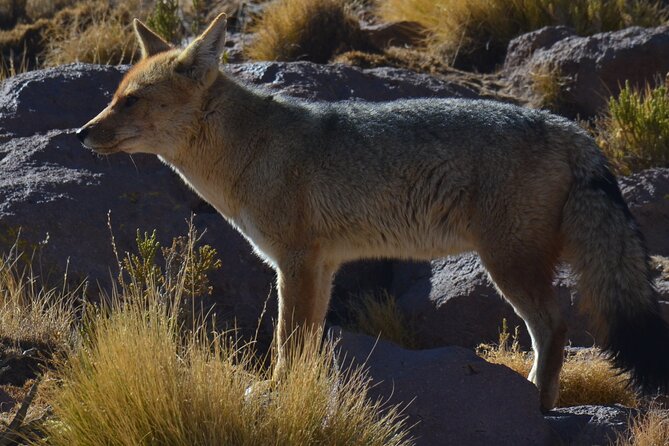
The route can also bring wildlife into focus. Possible sightings include vicuñas, llamas, rheas, and vizcachas. These animals are not guaranteed, and you should not book the tour expecting a wildlife safari. Still, the return journey offers a better chance to notice them than a rushed drive straight back to town.
The plant life is spare but distinctive. You might see giant cactus, llareta, and coirón grass. In a region where water is scarce and conditions are harsh, these plants help show how much the environment changes with altitude.
More Full-Day Tours in Chile:
- Puerto Varas: Osorno Volcano, Petrohue Falls Full-day Trip
★ 4.9 · 5 reviews - Reykjavik: Golden Circle Full-Day Tour with Kerid Crater
★ 4.8 · 24,485 reviews - From Tokyo: Mount Fuji Full-Day Sightseeing Trip
★ 4.5 · 4,970 reviews - Naples or Sorrento: Full-Day Pompeii and Mount Vesuvius Tour
★ 4.6 · 4,235 reviews
Machuca, Laguna Salada, and a short village stop
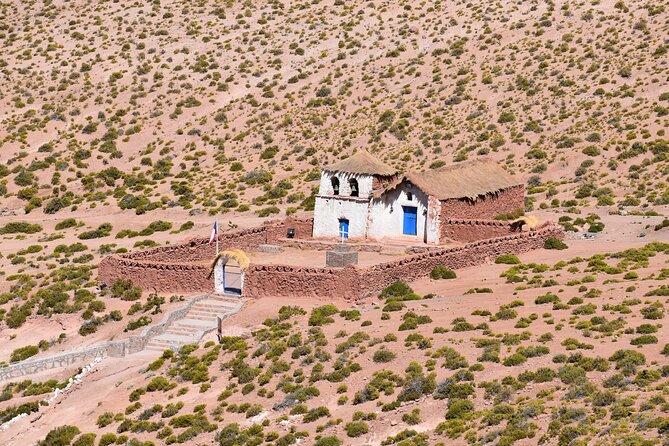
Machuca is viewed from the route, with about 15 minutes set aside for the town and nearby lagoon. This is a very brief stop, so it will not satisfy anyone looking for a long village visit or a detailed cultural tour.
Machuca has only a few inhabitants. Local life is linked mainly to herding and cheese production. The stop gives you a glimpse of a small high-altitude settlement rather than a polished attraction built for a long visit.
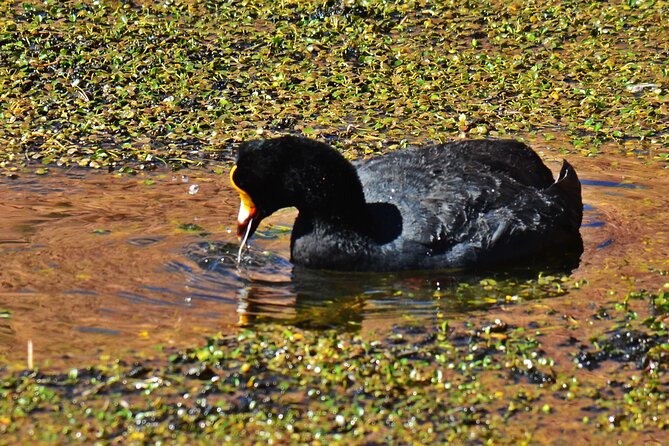
Near Machuca is Laguna Salada, where flamingos, ducks, and gulls can be found. The lagoon adds a welcome change from the steam fields and bare mountain terrain. Bring binoculars if you have them, though the short schedule limits how long you can watch birds.
The village stop also shows why the tour works best as a compact morning circuit. El Tatio is the main event, but Putana and Machuca keep the return from becoming only a long ride. If you want hours in Machuca, time for a proper meal, or a slower birding session, you would need a different arrangement.
What the $50 price really covers
At about $50 per person, this is a low-cost way to reach a remote high-altitude site. The price includes hotel pickup, shared transport, an English or Spanish driver-guide, breakfast, and drop-off in the center of San Pedro.
That value depends on what you would otherwise pay for transport. El Tatio is far from town, and reaching it independently means arranging a vehicle capable of making the trip and handling the early departure. The shared format keeps the cost down and gives you a guide for the route.
The advertised price does not include the geyser entrance. The supplied details list the fee as 15,000 Chilean pesos, or about $16, and also repeat it as a $16 admission charge. Treat $16 as the amount to budget, then confirm the current peso price when booking.
The tour is described as lasting about seven hours, but the practical pattern is an early departure and a return around noon. One useful point from the timing is that you still have much of the afternoon free. You can rest, eat, or take another activity, although doing another demanding high-altitude outing immediately afterward may be uncomfortable.
The main drawbacks to weigh carefully
The early start is the obvious drawback. You need to be ready at 4:30 a.m., and a poor night’s sleep can make the altitude feel harder. I would not schedule this on the first morning after arriving in San Pedro if you can avoid it.
The second issue is the road and vehicle. A small shared vehicle is more personal than a large bus, but it can still feel cramped during the long drive. One account describes the journey as uncomfortable and the explanations as limited when the guide focused too much on taking participant photos. That experience is not universal, but it is a useful reminder to keep expectations practical.
Communication can also be a concern if the operator changes. One booking was transferred to another company at short notice, and the entrance fee payment was not initially passed along. The issue was eventually resolved, but a last-minute operator switch is frustrating. If your departure details change, confirm the vehicle, guide, pickup time, and whether the geyser admission has already been paid.
On the positive side, the strongest pattern is clear. Guides, especially Alex, are praised for useful explanations, patience, and leaving time for photos. The geysers themselves are the reason to come, and the breakfast helps make the early schedule easier.
Who should book this El Tatio outing?
I would recommend it to you if you want to see one of the Atacama’s most unusual natural sights at a reasonable price. It suits active adults, older children aged 12 and up, solo visitors who prefer organized transport, and anyone who wants an English or Spanish guide without paying for a private vehicle.
It is also a good choice if you want a compact outing that returns around midday. You get El Tatio, Putana, Machuca, a lagoon, breakfast, and possible wildlife sightings in one morning.
I would hesitate if you are still adjusting to altitude, dislike cold mornings, have a medical condition affected by high elevation, or need a leisurely cultural visit. The short Machuca stop is a glimpse, not a full village experience. The geyser field is the clear priority.
Should you book it?
Book this tour if El Tatio is high on your list and you are willing to pay the entrance fee, wake before dawn, and manage a high-altitude morning. The combination of small-group transport, breakfast, an included guide, and a return around noon gives you solid value at $50.
Before paying, confirm the total cost, operator, pickup details, and whether your guide is Alex, Ernesto, Thiago, Danielo, or someone else. Bring water, warm layers, sun protection, and patience for the road. If you prepare for the altitude and accept that this is a strenuous half-day rather than a relaxed full-day excursion, it is a strong way to experience El Tatio.
FAQ
What time does the tour start?
Pickup begins at 4:30 a.m.
How long does the tour last?
The tour lasts approximately seven hours and generally returns to San Pedro around noon.
Is the geyser entrance fee included?
No. The entrance fee is listed as 15,000 Chilean pesos, about $16 per person.
How high is El Tatio?
The geyser field is about 4,300 meters above sea level.
Is breakfast included?
Yes. Breakfast is included in the tour price.
How many people can join the tour?
The shared tour has a maximum of 12 travelers.
Is the tour available in English?
Yes. The driver-guide may provide guidance in English or Spanish.
Can pregnant women or people with hypertension join?
Pregnant women are not permitted under the agency’s policy. People with hypertension need medical authorization. The tour also requires a strong level of physical fitness.
What is the cancellation policy?
You can cancel up to 24 hours before the start time for a full refund. Changes or cancellations made less than 24 hours before departure are not accepted for a refund. If poor weather causes the operator to cancel, you can choose another date or receive a full refund.
Just added around Chile
- Tatio Geysers Tour: San Pedro de Atacama★ 5.0 · 5 reviews
- San Pedro de Atacama: Saver Pack Tatio Geysers + Moon Valley★ 4.5 · 15 reviews
- San Pedro de Atacama: Volcano Downhill Bike Tour★ 4.8 · 5 reviews
- San Pedro de Atacama: Láscar Volcano Summit Hiking Day Trip★ 4.5 · 8 reviews
- San Pedro de Atacama: Geysers del Tatio★ 4.8 · 9 reviews
- San Pedro de Atacama: Tatio Geysers and Machuca Tour★ 4.6 · 6 reviews
- San Pedro de Atacama: El Tatio Geyser Field and Wetlands★ 5.0 · 7 reviews
- San Pedro de Atacama: El Tatio Geysers & Machuca Lagoon Trip★ 4.8 · 4 reviews
San Pedro de Atacama Volcano Tours, compared.
From San Pedro de Atacama: El Tatio Geyser Field & Wetlands
Read our review →
El Tatio Geysers Tour from San Pedro de Atacama
Read our review →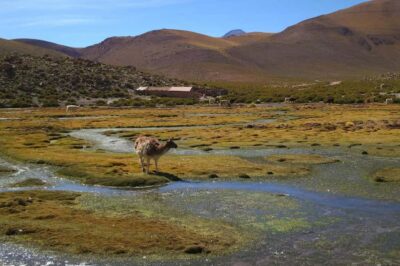
From San Pedro de Atacama: Geysers del Tatio Half-Day Tour
Read our review →
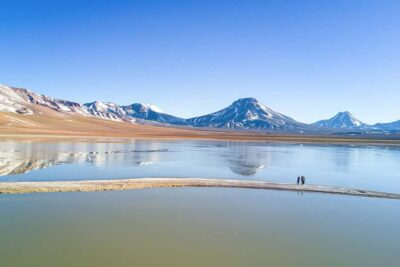
San Pedro de Atacama: Láscar Volcano Summit Hiking Day Trip
Read our review →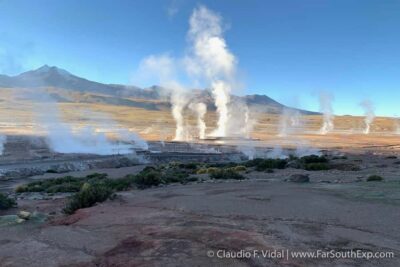
San Pedro de Atacama: El Tatio Geyser Field and Wetlands
Read our review →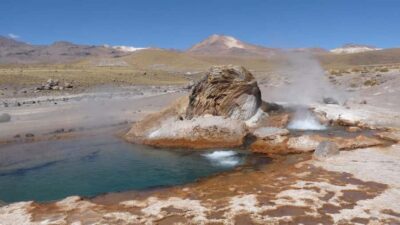
San Pedro de Atacama: Tatio Geysers and Machuca Tour
Read our review →Browse the lists this tour appears in