
REVIEW · CHILE
Pucón: Villarrica Volcano Climb
Villarrica is not a gentle hill with a fancy name. It is an active volcano in Chile’s Pacific Ring of Fire, rising to 2,847 meters above sea level, with fumaroles, possible lava, and a crater you can look into from the rim. The reward is a full mountain day that feels both wild and carefully managed.
I like the small guide ratio, with one certified guide for every three participants, and I like that nearly all major mountain gear is supplied. Guides such as Nacho, Chacha, Osiel, Raul, Felipe, Sebastian, and Luisa have earned strong praise for clear instructions and patient support. The main catch is simple: this is a hard, nonstop uphill climb, and poor weather or volcanic activity can prevent a summit attempt.
Key points to know before you book
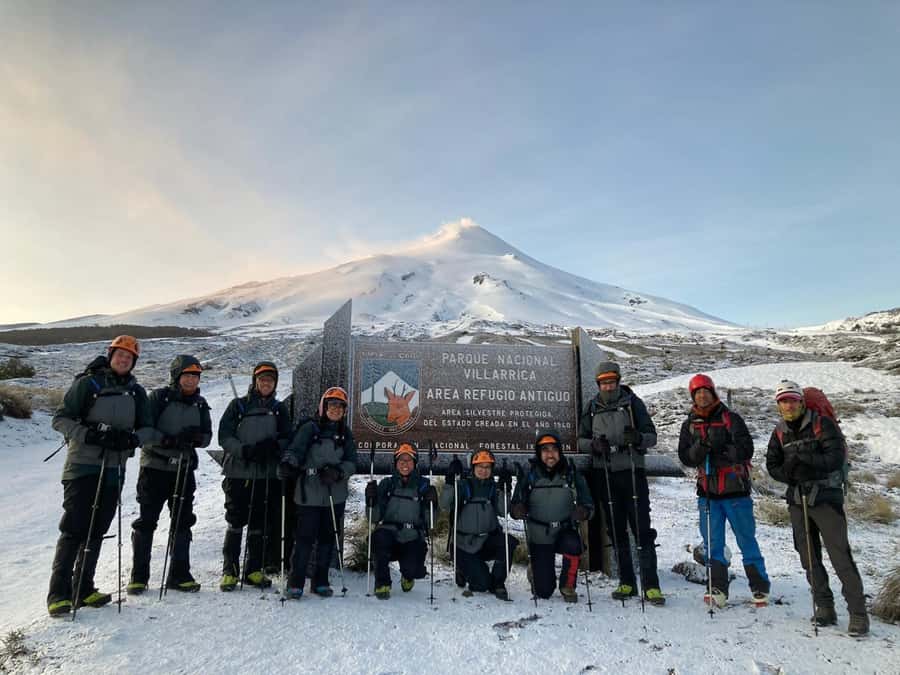
- The climb begins at 1,200 meters and reaches 2,847 meters, usually after five to six hours of uphill travel.
- The descent is part of the fun, with controlled snow sliding on suitable slopes instead of simply walking every step down.
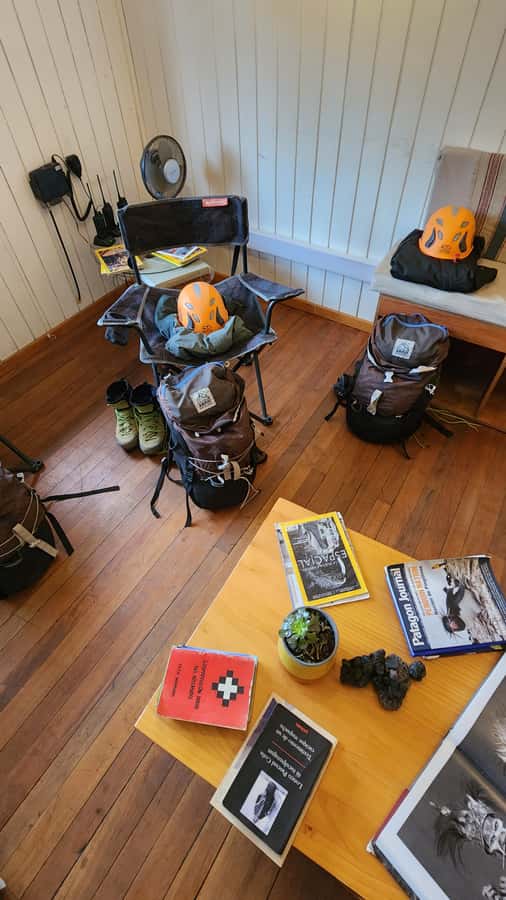
- Zenit Travel supplies major mountain equipment, including boots, crampons, ice axe, helmet, jacket, trousers, gloves, gaiters, poles, and backpack.
- The summit is never guaranteed, since weather, wind, and daily seismic monitoring control the route.
- A good fitness base matters, even though previous mountaineering experience is not required.
- The $190 price includes transport, park entry, equipment, and guides, but not food, sunscreen, trekking clothes, or the optional ski lift.
Why Villarrica is such a serious day out
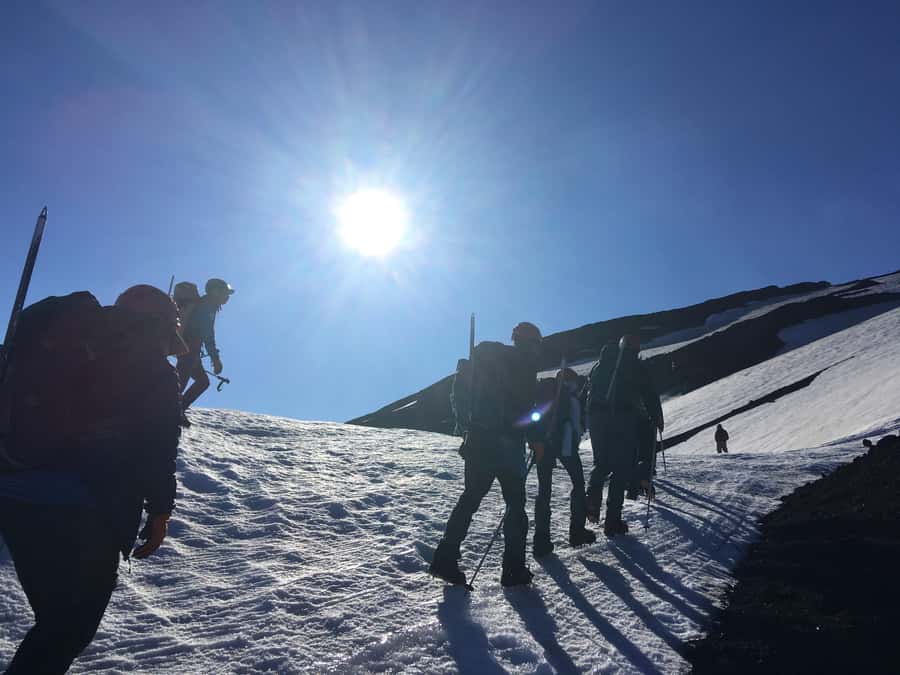
From Pucón, Villarrica looks inviting: a clean volcanic cone rising above forests, lakes, and smaller peaks. The appearance can fool you. The route has very few flat sections, and the upper part involves snow and ice rather than an ordinary trail.
You begin at about 1,200 meters, then work steadily upward through the national park. The first section is a conventional mountain hike, but the slope continues for hours. Once you reach the glacier, the character of the outing changes. You put on crampons, take an ice axe, and learn how to move safely across the snow.
You do not need previous alpine experience. You do need a reasonable level of fitness, patience, and comfort with a long day on your feet. The activity is for adults aged 18 and above, and I would not choose it if your idea of a holiday hike is a relaxed stroll with frequent level stretches.
A few more volcano tours around Chile worth a look
- From Puerto Varas: Osorno Volcano & Petrohue Falls Day Tour
★ 4.6 · 121 reviews - Puerto Montt: Osorno Volcano and Petrohué Falls Guided Tour
★ 4.5 · 104 reviews - Puerto Varas: Osorno Volcano Day Trip by Air-conditioned Van
★ 4.6 · 17 reviews
The 6:00 a.m. start in Pucón
The morning begins at the Zenit Travel office at Pedro de Valdivia 205. The stated meeting time is around 6:00 a.m., with instructions also asking participants to arrive at 6:15 a.m. Check your final confirmation carefully, since an early start is part of the practical rhythm of the day.
The van ride to Villarrica National Park takes about 30 minutes. That short transfer is useful because it lets the team organize the group before the real work begins. It also means you do not need to arrange separate transport to the volcano or pay the park entrance fee yourself.
The day before, you visit the office for an equipment check and a brief explanation of the route. Take this seriously. This is when you should test the mountain boots, check that the trousers and jacket fit, and tell the staff about any concerns with your feet or ankles.
One useful warning comes from the equipment process: keep track of the boots fitted to you. On one departure, a pair was mixed up by morning, leading to another fitting. It was resolved, but correctly fitted boots are worth a few extra minutes.
The lower trail and the optional ski lift
The walk begins with a steady ascent from 1,200 meters. The guides set an easy pace at first, which helps you settle into the altitude and avoid burning energy too early. You will carry a backpack, though the supplied equipment means you do not need to bring a full climbing kit from home.
There may be an optional ski resort lift for the lower approach. It is not included in the price, and the lift ticket is also not included. The lift can save energy on the early section, which may be worthwhile because the main climb still has several hours ahead.
Ask about the lift during the equipment meeting, and ask how much cash you need. This option has not always been explained clearly at the fitting, and it is not automatically part of the booking. If you want to use it, tell the guide team in advance.
Groups can move at different speeds. With several guides on the mountain, the party may split into smaller pace groups while staying in radio contact. That arrangement is valuable. Stronger climbers can keep moving, while others can take more breaks without feeling abandoned.
At the same time, a large group can create bottlenecks. One 12-person group found itself waiting behind other climbers on parts of the route. If an earlier start is offered, it may help you avoid some of that traffic.
Crampons, ice axes, and the upper mountain
As the trail reaches the glacier, the guides explain how to use crampons and ice axes. This is one of the most useful parts of the guided format. You are not expected to arrive with alpine technique, and the guides show you how to place your feet and use the axe for balance and control.
The upper route is steep and exposed to changing conditions. You may be moving in snow, ice, wind, or bright sun within the same morning. The clothing supplied includes mountain boots, trousers, jacket, gloves, and gaiters, along with a helmet, poles, crampons, ice axe, and backpack.
Bring your own base layers and trekking clothes. You are also responsible for sunglasses, sunscreen, food, and drinks. A buff is a smart extra, since it can protect your face from wind, sun, and volcanic gases. Wear layers that you can adjust as your body heats up.
A mask may be useful near the crater if gases are strong. One outing included a gas mask as part of the equipment, but it is not listed among the standard items, so ask Zenit Travel what will be supplied for your date.
The guides talk about volcanology, the Andes, and the relationship between native peoples and the mountains. The quality of these explanations can vary by guide and by the demands of the climb. Some participants wanted more geology during the ascent, while others especially valued the friendly conversations and regional context.
Same volcano country, a different day out:
- San Pedro de Atacama: El Tatio Geysers Tour
★ 4.7 · 943 reviews - From Santiago: Cajón del Maipo and Volcán San José Hike 8K
★ 4.9 · 418 reviews - From San Pedro de Atacama: El Tatio Geyser Field & Wetlands
★ 4.5 · 141 reviews - Full Day Tour to Geyser del Tatio, Vado Putana and Machuca
★ 5.0 · 134 reviews
Reaching the 2,847-meter crater rim
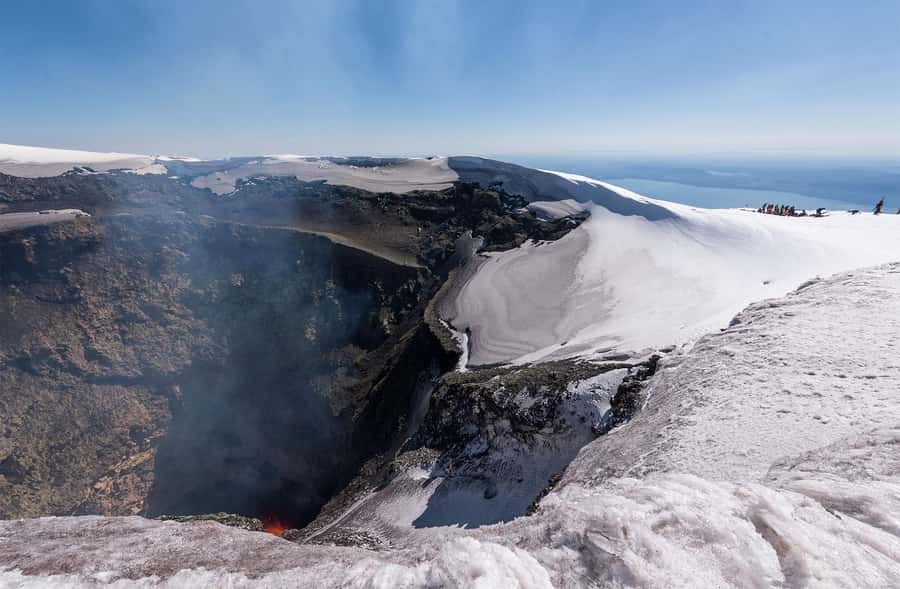
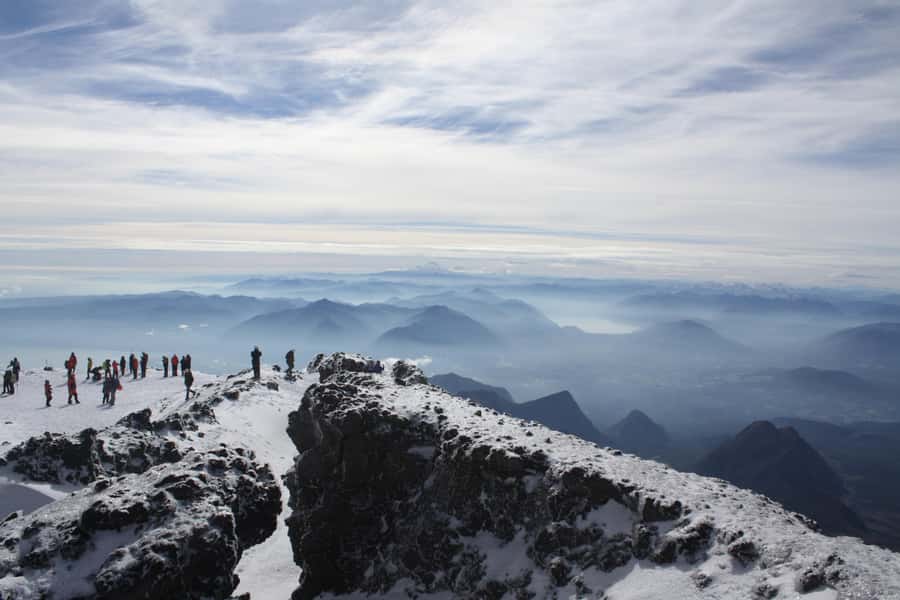
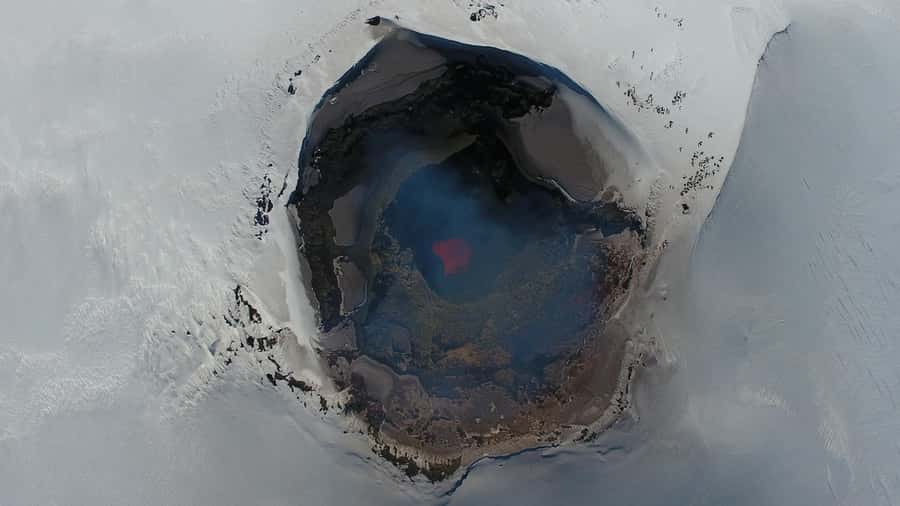
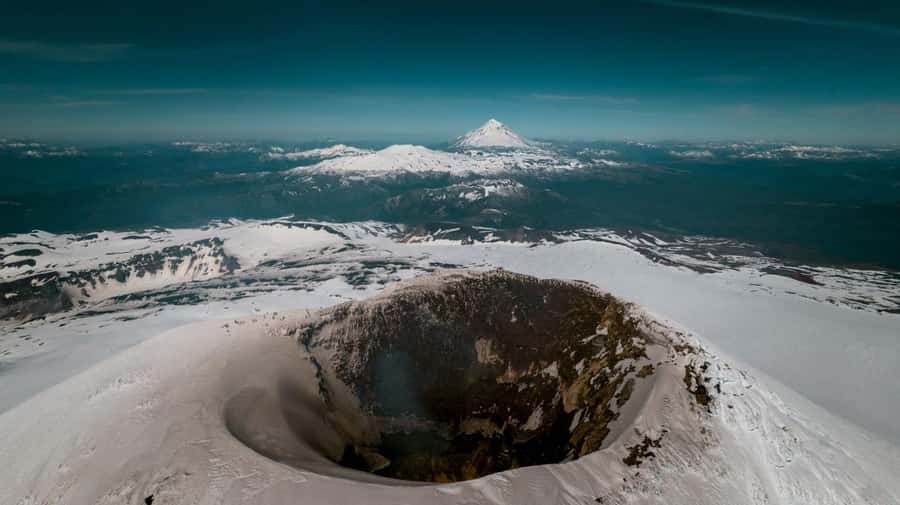
After roughly five to six hours of climbing, you reach the summit area at 2,847 meters. The prize is not just the height. You look toward the middle of an active volcanic crater, with fumaroles and, on suitable days, perhaps a glimpse of lava.
The summit stay lasts about 30 minutes. That is enough time to catch your breath, take photographs, and absorb the unusual setting without lingering too long in exposed conditions. One memorable touch has been drinking freshly poured mate at the top, a small cultural moment after a very physical effort.
On a clear day, the view reaches across volcanoes, lagoons, forests, and the broad country around Pucón. The view can be dramatic, but it depends entirely on the weather. Wind, cloud, poor visibility, and volcanic conditions can shorten the route or stop the summit attempt.
That is not a minor footnote. Some departures have reached the top through a brief weather window, while others have turned back because of wind or volcanic activity. A route may also operate under a warning level that makes the crater inaccessible. Zenit’s practice has been to explain the conditions and offer alternatives or another date when possible.
Do not book this as an activity where reaching the summit is the only acceptable result. The climb itself remains a substantial mountain day, even if the final crater section is closed.
The descent: fast, cold, and surprisingly fun
The return takes about half the time of the ascent. That is partly because you are moving downhill and partly because suitable snow slopes allow controlled sliding.
The guides explain how to sit, brake, and steer before you begin. You may slide down several sections on your backside, sometimes feeling more like a child on a sled than a mountaineer. It is great fun, but you can get wet and cold, so keep a dry layer protected in your bag if possible.
Snow sliding also reduces the strain of walking downhill. One participant with knee concerns found this style of descent especially appealing. Still, it is not effortless. You need to follow instructions, control your speed, and accept that your clothing may take a beating.
When the snow ends, you continue on foot to the base. The van then returns you to the Zenit office in Pucón. The full day lasts about nine hours, including the 30-minute drive each way.
The guide team and safety setup
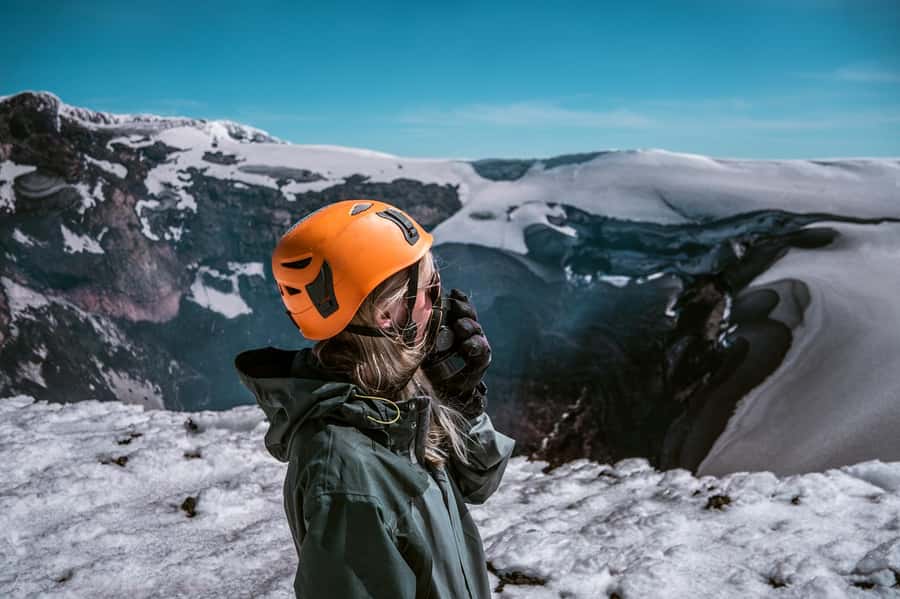
The guide team is the strongest part of this experience. The company uses a certified guide for every three participants, and the guides stay attentive to individual pace, rest needs, and safety. English is available, and clear explanations are given before the technical sections.
The staff has also shown good judgment when conditions turn poor. On one difficult-weather morning, the team explained that the summit might not be possible and let the group decide whether to try. On other days, strong winds forced an early finish. That caution is exactly what you want on an active volcano.
Names associated with the Zenit team include Nacho, Chacha, Osiel, Raul, Felipe, Sebastian, and Luisa. Osiel has also been praised for taking photographs and videos during the day, though photography should not be assumed as a formal inclusion.
The safety system is helped by daily seismic monitoring. The program remains subject to the weather and the volcano’s activity on the day. This is a real safety measure, not a vague disclaimer, and it means your plans need some flexibility.
Is $190 good value?
At $190 per person, this is not a cheap day hike. I still consider it fair value if you would otherwise need to rent or buy mountain equipment and arrange park transport yourself.
The price includes transport from the central office, Villarrica National Park admission, the major equipment package, and the guide service. Boots, crampons, ice axe, helmet, jacket, trousers, gloves, gaiters, poles, and backpack would add up quickly if purchased separately.
The price does not include food or drinks, trekking clothes, sunglasses, sunscreen, the optional lift ticket, or hotel pickup. You need to reach the office in central Pucón yourself. Pack enough food for a long physical day and bring plenty of water.
The one-to-three guide ratio adds real value. You are paying for supervision on steep snow, not simply a person walking at the front of a group. The price looks strongest for visitors who do not already own alpine gear and who want a well-organized introduction to volcano climbing.
How to prepare the night before
Preparation makes a big difference. Eat a carbohydrate-heavy meal, such as pasta, the night before. Drink plenty of water and avoid alcohol, which can leave you dehydrated before the early start.
At the fitting, speak up about boot pressure, ankle support, or any foot problem. A blister can turn a rewarding climb into a long exercise in stubbornness. Bring sunscreen, sunglasses, food, drinks, trekking layers, and a buff.
Expect changing temperatures. You may feel cold in the wind near the summit and hot during the lower climb. Layers are more useful than one thick garment.
The most important preparation is mental. The route is steep, long, and tiring. You may need to move slowly, stop often, or accept that the weather will decide the highest point you reach.
Who should book this climb?
I would choose this experience if you want a demanding outdoor day with a clear goal, an unusual crater view, and a playful snow descent. It suits fit adults who can handle several hours of continuous uphill movement and who do not mind an early start.
It is also a good choice for first-time alpine climbers because equipment, instruction, and close guide support are built in. You do not need technical experience, but you should not confuse that with low difficulty.
I would think twice if you exercise rarely, dislike steep terrain, have current foot or ankle problems, or need a guaranteed summit. The climb has been described as manageable by fit participants, but also tougher than expected by athletic people in their twenties. That is a useful warning.
Should you book Villarrica Volcano Climb?
Yes, if you want one of Pucón’s most memorable challenges and can accept that the summit depends on nature. The combination of an active crater, full equipment, a strong guide ratio, wide mountain views, and snow sliding on the way down gives the day real variety.
Book it with a flexible schedule if possible. Use the equipment meeting to ask about the lift, confirm the start time, and make sure your boots fit. Bring food, water, sunscreen, sunglasses, layers, and a buff. If you are reasonably fit and ready for a hard uphill day, Villarrica offers a rare chance to walk onto an active volcano without needing to arrive as an experienced mountaineer.
FAQ
How long does the Villarrica Volcano climb take?
The full activity lasts about nine hours, including transport between central Pucón and Villarrica National Park. The ascent takes roughly five to six hours, and the descent usually takes about half that time.
Where do I meet the group?
Meet at the Zenit Travel office at Pedro de Valdivia 205 in central Pucón. Look for Zenit Travel under the arch, and arrive around the stated early-morning meeting time.
Is previous climbing experience required?
No. Previous experience is not required, but you need a minimum level of physical fitness. The route is steep and demanding, with several hours of uphill movement.
What equipment is included?
The equipment package includes mountain boots, poles, crampons, an ice axe, helmet, backpack, trousers, jacket, gloves, and gaiters. The activity also includes park entry, transport from the central office, and certified guides.
What should I bring?
Bring food, drinks, sunscreen, sunglasses, and your own trekking clothes or base layers. Warm layers and a buff are useful because conditions can change with elevation and wind.
Is the summit always reached?
No. The route depends on weather, wind, and daily monitoring of the volcano’s seismic activity. The group may stop below the crater or change plans if conditions are unsafe.
Can I cancel the booking?
You can cancel up to 24 hours before the activity for a full refund. You can also reserve and pay later, subject to the booking conditions.
Just added around Chile
- Tatio Geysers Tour: San Pedro de Atacama★ 5.0 · 5 reviews
- San Pedro de Atacama: Saver Pack Tatio Geysers + Moon Valley★ 4.5 · 15 reviews
- San Pedro de Atacama: Volcano Downhill Bike Tour★ 4.8 · 5 reviews
- San Pedro de Atacama: Láscar Volcano Summit Hiking Day Trip★ 4.5 · 8 reviews
- San Pedro de Atacama: Geysers del Tatio★ 4.8 · 9 reviews
- San Pedro de Atacama: Tatio Geysers and Machuca Tour★ 4.6 · 6 reviews
- San Pedro de Atacama: El Tatio Geysers & Machuca Lagoon Trip★ 4.8 · 4 reviews
- San Pedro de Atacama: El Tatio Geyser Field and Wetlands★ 5.0 · 7 reviews
Chile Volcano Tours, compared.
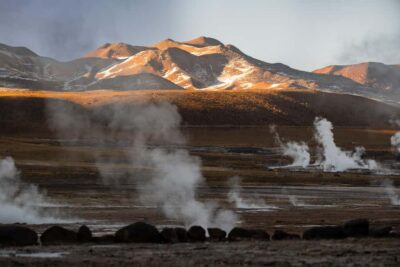
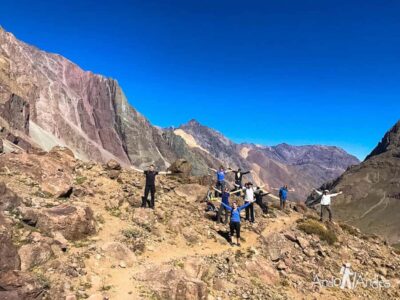
From Santiago: Cajón del Maipo and Volcán San José Hike 8K
Read our review →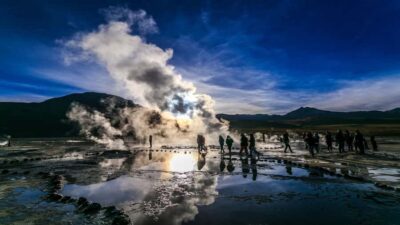
From San Pedro de Atacama: El Tatio Geyser Field & Wetlands
Read our review →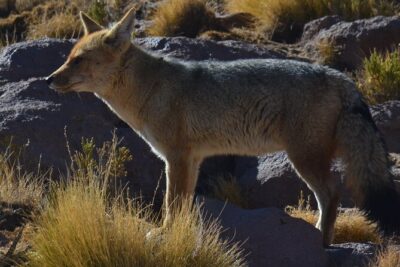
Full Day Tour to Geyser del Tatio, Vado Putana and Machuca
Read our review →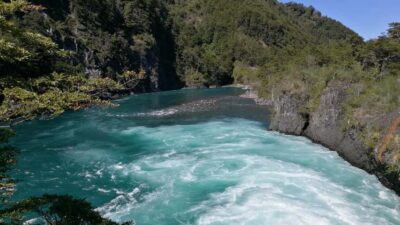
From Puerto Varas: Osorno Volcano & Petrohue Falls Day Tour
Read our review →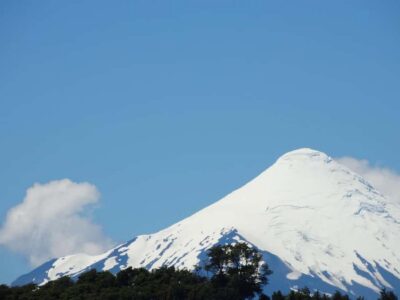
Puerto Montt: Osorno Volcano and Petrohué Falls Guided Tour
Read our review →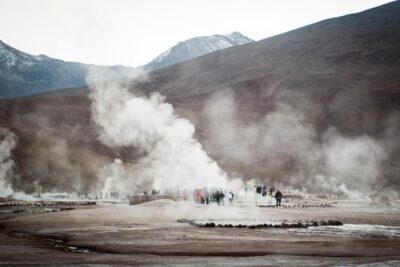
El Tatio Geysers Tour from San Pedro de Atacama
Read our review →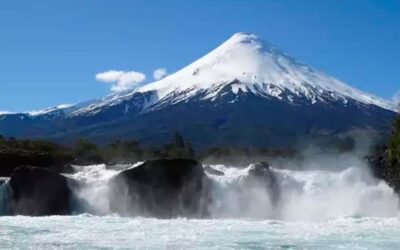
Puerto Varas: Osorno Volcano Day Trip by Air-conditioned Van
Read our review →Browse the lists this tour appears in