REVIEW · LANZAROTE
Lanzarote: Volcano Hike
Lanzarote’s Volcanoes Natural Park gives you a close look at the island’s rawest side: black lava fields, volcanic cones, deep craters, and the remains of tunnels formed when molten rock cooled on the outside but kept flowing within. This is not a sightseeing drive with a few quick photo stops. You spend about 8 kilometres on foot, with time to understand how the eruptions of 1730 to 1736 and 1824 shaped Lanzarote.
I like the clear volcanic story told along the route, and I like the chance to walk into a crater rather than simply view one from a coach. Guides including Famara Espino and Marcelo have been praised for explaining the geology and local history in a friendly way. Hotel pickup, when selected, also removes much of the day’s fuss.
The main consideration is the ground. Much of the walk is fairly easy, but loose stones can slip into ordinary trainers, and wind and sun are constant factors. The advertised time is three hours, yet some outings have taken three and a half to four hours, so do not schedule this too tightly against another activity.
Key points to know before you book
- About 8 kilometres across young volcanic ground: Expect a real walk, not a short stroll, with mostly manageable terrain and loose surfaces in places.
- Craters, calderas, lava flows, and tunnels: The route brings you close to several volcanic features rather than keeping you on a distant viewpoint.
- Guides add the meaning: English, French, and Spanish are available, with guides such as Famara and Marcelo explaining eruptions, island history, and the return of plant life.
- Hotel pickup can make the day easier: Pickup and transport are optional, with collection times generally falling between 9:00 and 9:40 a.m. depending on your location.
- Come prepared for wind and sun: Closed walking shoes, water, sunscreen, a hat, sunglasses, and a windbreaker are sensible basics.
- Best for active visitors aged seven and older: The route is not suitable for wheelchair users or people with mobility impairments.
Walking through Lanzarote’s black volcanic country
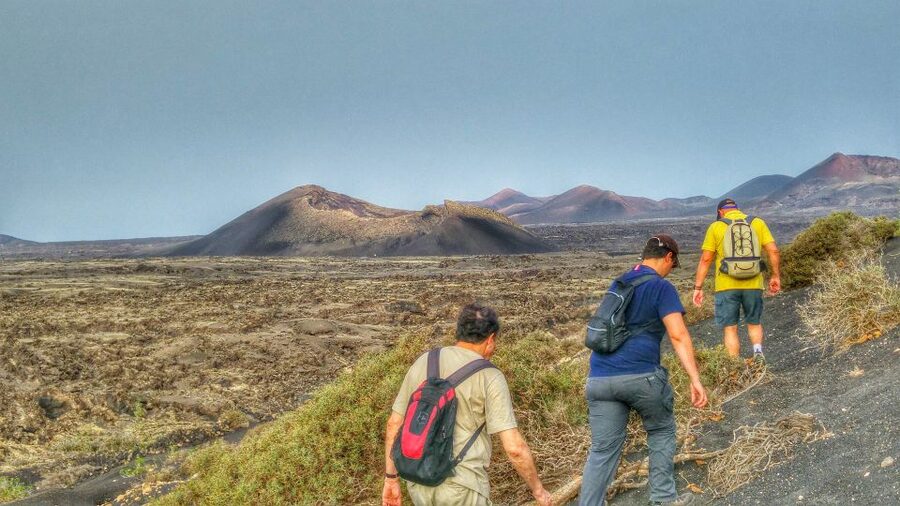
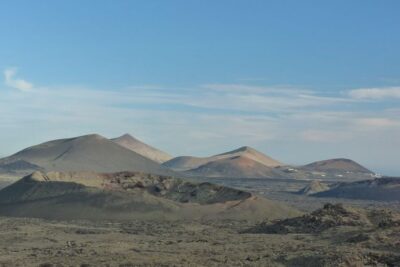
The first thing you notice is how little soft greenery there is. The centre-south of Lanzarote is covered with dark lava, red and brown volcanic slopes, and scattered cones that give the area a stark, almost lunar appearance.
That barrenness is part of the lesson. The Volcanoes Natural Park contains eruptions from 1730 to 1736, along with the later activity of 1824. Because Lanzarote is dry, vegetation returns slowly, leaving volcanic forms unusually clear. You can read the ground as a record of eruptions, cooling lava, collapsed openings, and wind-shaped ash.
Your guide turns that scene into something more than a striking backdrop. As you cross lava flows and climb toward volcanic cones, you learn how the island’s inner forces built and reshaped it. The route also considers the slow return of life, showing how plants begin to occupy rock that once seemed completely lifeless.
I find this far more useful than simply hearing that Lanzarote is volcanic. You are shown the evidence under your feet. A rough black surface, a smooth curve, or a hollow in the rock becomes part of the island’s story.
More Volcano Crater Hikes in Spain
- Lanzarote: Guided Volcano Hike with Transfers
★ 4.9 · 861 reviews - Volcano Hike – Timanfaya eruptions
★ 5.0 · 246 reviews - Caleta de Fuste/Corralejo: Guided E-Bike Tour & Crater Hike
★ 4.7 · 57 reviews
What the three-hour route feels like
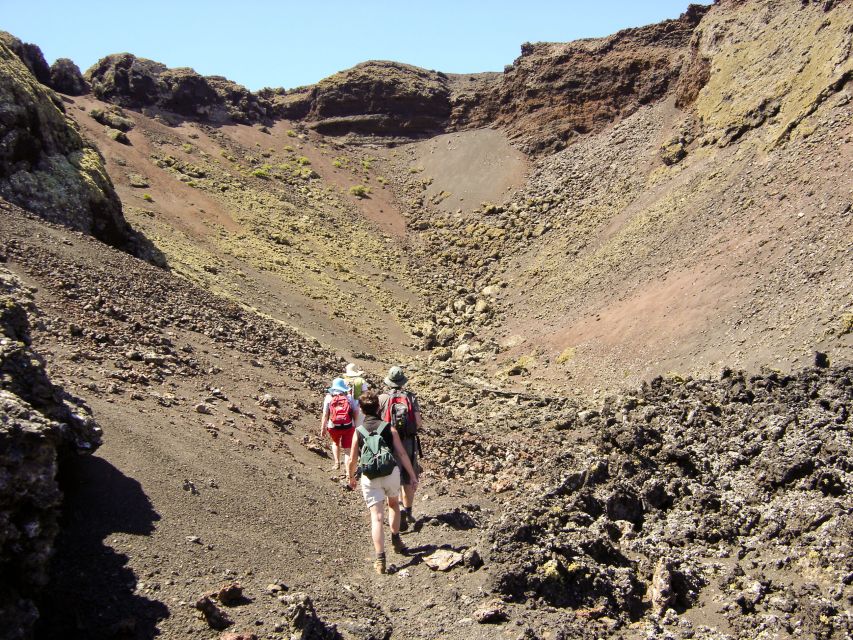
The walk covers approximately 8 kilometres, though the exact distance and timing can vary. One outing was described as roughly 9 kilometres over four hours, while another was closer to 8.5 kilometres. Treat the three-hour figure as a guide rather than a stopwatch promise.
The route is mostly flat or gently rolling, but that does not make it effortless. Volcanic ground can be uneven, and loose stones make every step a little less automatic. You do not need to be a technical hiker, yet you should be comfortable walking steadily for several hours.
A typical outing begins by getting the group organised at the meeting point or after hotel collection. When several languages are involved, groups may be separated by language before setting off. The initial arrangement can feel a little untidy, especially if vans are being matched with guides, but the walk itself has generally been well organised once everyone is in the right place.
The pace is described as robust by one participant and leisurely by another. That difference is useful: your experience will depend on the guide, the group, and the day. Plan for a steady walk with stops for explanations and a short break, not a race to complete the route.
Craters and cones are the main reward
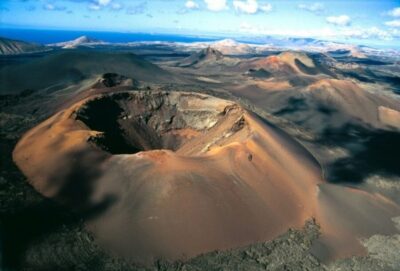
The most memorable section for many people is reaching a volcanic crater. You do not merely stop at a roadside viewpoint. The route allows you to walk into a crater, look across its interior, and see how the surrounding cone was formed.
Climbing to the top takes some effort, especially on loose ground, but the view is the payoff. From higher points, you can take in the broad field of volcanic cones and lava flows spreading across the centre-south of the island. The scenery is spare, but it has plenty of shape and colour: black rock, rust-red slopes, grey ash, and blue sky when the weather is clear.
The crater also gives the guide a natural place to explain how volcanic openings work. You begin to see that the island is not simply covered by one blanket of lava. It is made from many eruptions, each leaving different textures and forms.
Bring your camera, but do not rely on photographs to capture the scale. The route works best when you pause to look around rather than spending every break behind a lens.
Lava flows and the remains of tunnels
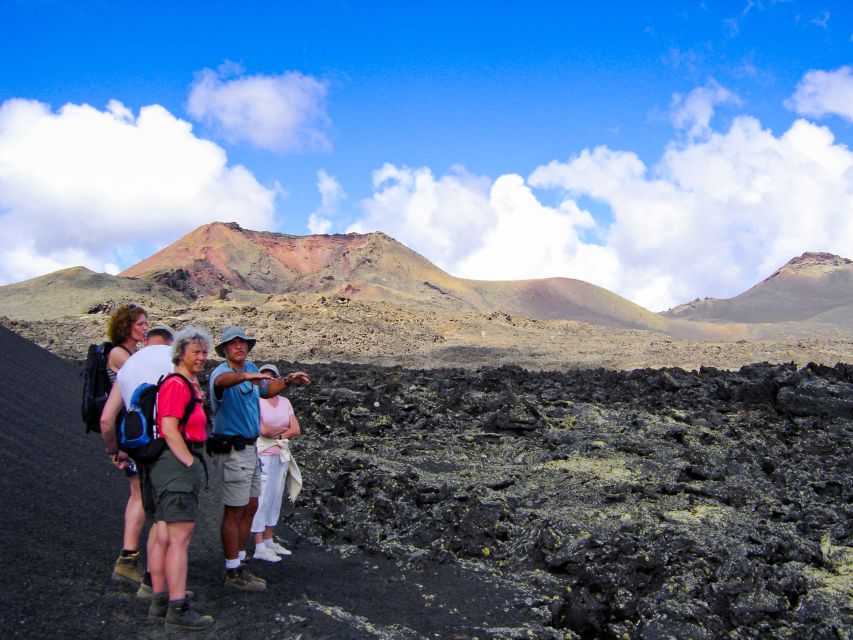
Walking across lava fields is another strong part of the experience. Some flows appear rough and broken, while others show smoother surfaces where the molten rock moved before hardening. Your guide points out the remains of lava tunnels and explains how these passages formed.
A lava tunnel develops when the outside of a flow cools into a crust while hotter material continues moving underneath. Once the eruption ends and the inner lava drains away, a hollow channel can remain. The route does not turn the activity into a technical geology class, but these details help you make sense of what you are seeing.
The ground also explains why proper footwear matters. Fine stones can work their way into trainers, and one person found that walking boots made the route much easier while ordinary trainers required frequent stops to empty out debris. Closed-toe shoes are required, and sturdy walking shoes are the safer choice.
You will not need specialist climbing equipment based on the information provided, but comfortable shoes are not just a polite suggestion. They affect how much attention you can give to the guide instead of to your feet.
More Volcano Hikes and Treks in Lanzarote
- Lanzarote: Hike Across Timanfaya’s Volcanic Landscapes
★ 4.8 · 1,234 reviews - Lanzarote: Timanfaya Natural Park Trekking Tour
★ 4.8 · 766 reviews - Volcano Trekking Tour (Timanfaya eruptions)
★ 5.0 · 339 reviews - Lanzarote: Guided Hike discover volcano history and culture
★ 5.0 · 9 reviews
The guide makes the difference
This is an informative route, and the guide is central to its value. The strongest experiences come from guides who can connect the rocks with Lanzarote’s past and explain the slow return of life without drowning you in technical terms.
Famara Espino has led walks praised for her friendly manner, clear explanations, and strong knowledge of the island’s volcanic setting. Marcelo has also been singled out for making the route engaging despite rainy weather. Guides speak English, French, and Spanish, and some are fluent in more than one language.
You may be assigned to a language group at the start. That is helpful if your party needs a particular language, though the sorting process can briefly feel chaotic when several vehicles and groups are being organised.
The best question to ask during the walk is not simply how old a crater is. Ask your guide how the terrain in front of you formed, why some areas have more plant life than others, and how the eruptions affected Lanzarote’s people. The route is designed to explain both the physical island and the human story behind it.
Pickup, meeting point, and the practical start
You can meet the group at Camino Testeina, a dirt road beside Montaña Testeina near the main LZ 30 road. There is space to park after turning a short distance onto the dirt road. The stated coordinates are 28°59’12.0″N 13°40’35.1″W.
If you choose pickup, hotel transport is available from the specified areas. You need to provide your hotel name when booking, and the supplier sends the exact collection place and time afterward. Pickup may fall between 9:00 and 9:40 a.m., depending on where you are staying.
Check your spam folder for the transport message. That small step matters because the precise meeting details arrive after the reservation. The collection service is useful if you do not want to drive on unfamiliar roads, but allow patience at the start as people are gathered and placed into the correct groups.
Transport is included only when that option is selected. If you drive yourself, check the meeting instructions carefully rather than assuming the tour begins at a visitor centre or major car park.
Sun, wind, rain, and a small snack
Lanzarote’s dry climate does not mean perfect walking weather every day. Wind can be strong across open volcanic ground, and the sun feels direct because there is little shade. Wear a windbreaker, sunglasses, a sun hat, and sunscreen even if the morning feels cool.
Water is essential. The route lasts several hours and crosses exposed terrain, so do not count on finding refreshments along the way. A camera is welcome, but protect it from dust and keep both hands free on rougher sections.
A banana and cereal bar have been provided on some outings, with a short stop halfway through. That is a pleasant practical touch, but bring your own water and do not treat the snack as a full meal.
Rain is possible, too. The volcanic ground can feel different when damp, and conditions may affect the pace. Marcelo has guided in rainy weather, but the activity remains outdoors, so a windbreaker and sensible footwear are still important.
What the $48 price buys you
At $48 per person, the value depends on what you want from Lanzarote. You are paying for a guided walk, interpretation in your chosen language, and the chance to reach volcanic features on foot. If you already have transport and enjoy walking independently, you could decide that the guide is the main part of the purchase.
For many visitors, that guide is precisely what makes the cost worthwhile. The park can look simple at first glance: black rock, cones, and open sky. Without explanation, you may admire the colours but miss how lava tunnels formed, how eruptions changed the island, and why plants return so slowly.
The optional pickup adds convenience, especially if you are staying away from the meeting point or would rather not drive. Since transport is not automatically included, compare the price of the pickup option with your own rental car, fuel, and time before booking.
The route also includes several hours of actual walking, not just transfers and viewing stops. If you value outdoor activity and local explanation, $48 is a fair price. If you want a relaxed scenic tour with minimal effort, look for a driving excursion instead.
Who will enjoy this hike most
I would choose this experience if you want to understand Lanzarote through its geology and are happy to walk on uneven volcanic ground. It suits couples, active adults, families with children aged seven or older, and anyone curious about how volcanic islands are built.
It is also a good choice for visitors who want a quieter alternative to simply visiting famous viewpoints. The route gives you time to move through the terrain and notice small details, including early signs of plant life on the lava.
I would not choose it if you have limited mobility, use a wheelchair, or dislike loose ground. It is also a poor match if you want to stay completely sheltered from wind and sun. Children under seven cannot join, and even older children should be comfortable with a several-hour walk.
The pace may feel easy to one person and tiring to another. Your fitness does not need to be extreme, but you should be ready for about 8 kilometres and possibly closer to 9 kilometres depending on the route.
My booking advice
Book this tour if you want more than photographs of volcanoes. The strongest reason to go is the combination of walking, crater views, lava fields, and a guide who explains what you are seeing. Famara and Marcelo are names associated with particularly strong guiding, though your assigned guide may differ.
Choose the pickup option if transport would otherwise be awkward, and leave extra time after the walk because the real outing may run beyond three hours. Wear walking boots or firm closed shoes, carry water, and expect wind.
Skip it if you need an accessible route or prefer a short, polished sightseeing stop. For an active visitor who wants Lanzarote’s volcanic past explained at ground level, this is a well-priced and worthwhile morning.
FAQ
How long does the Volcano Hike last?
The advertised duration is three hours. Actual outings can take about three and a half to four hours, depending on the route and pace.
How far do you walk?
The route is approximately 8 kilometres. Some outings have covered around 8.5 or 9 kilometres.
Where does the hike meet?
The meeting point is Camino Testeina, a dirt road beside Montaña Testeina near the LZ 30 road. The coordinates are 28°59’12.0″N 13°40’35.1″W.
Is hotel pickup available?
Yes, pickup and transport are available if you select that option. You must provide your hotel name, and the supplier sends the exact time and location after booking.
What time might pickup take place?
Depending on your location, pickup may be between 9:00 and 9:40 a.m. The exact time is provided after the booking is received.
Which languages are available?
The live guides speak English, French, and Spanish. Groups may be divided by language at the meeting point.
What should I wear and bring?
Bring comfortable closed-toe walking shoes, water, sunscreen, sunglasses, a sun hat, a windbreaker, and a camera. Firm walking shoes are preferable because loose stones can enter trainers.
Is the hike suitable for children?
Children under seven are not permitted. The activity is suitable only for children who can manage an approximately 8-kilometre walk over uneven volcanic ground.
Can wheelchair users join the hike?
No. The activity is not suitable for wheelchair users or people with mobility impairments.
More Volcano Crater Hikes in Lanzarote
- Mount Etna: Summit Crater Trek with Cable Car
★ 4.8 · 1,875 reviews - Etna Sunset Tour: Volcano trek, Cave & tasting from Catania
★ 4.8 · 1,290 reviews - From Antigua: Pacaya Volcano Trek
★ 4.4 · 798 reviews - From Reykjavík: Fagradalsfjall Volcano Hike with Geologist
★ 4.8 · 780 reviews
More Volcano Hikes and Treks in Spain
- La Palma: Tajogaite Volcano Guided Trek
★ 4.8 · 1,810 reviews - The Volcano Heart Tour: Hiking, Tasting and Sunset Experience
★ 5.0 · 1,120 reviews - Tenerife: Mount Teide Summit Hiking Adventure with Cable Car
★ 4.3 · 688 reviews - From South Tenerife: Mount Teide Hiking Day Trip & Cable Car
★ 4.8 · 482 reviews
Just added around Lanzarote
- Timanfaya National Park: Evening Tour with Volcano Dinner★ 4.4 · 129 reviews
- Lanzarote: Tandem Paragliding over Volcanoes & the Atlantic★ 5.0 · 115 reviews
- South Tour: Timanfaya National Park★ 4.4 · 70 reviews
- Lanzarote E-Bike Tour: Volcano Craters & Scenic Vineyards★ 4.9 · 140 reviews
- Lanzarote: Volcanic Landscapes Tour with Panoramic Views★ 4.1 · 24 reviews
- Lanzarote: Timanfaya and Cueva de los Verdes Day Trip★ 4.5 · 39 reviews
- Lanzarote: Volcanic Yoga Session with Ocean Views★ 3.2 · 6 reviews
- Lanzarote: 5-Hour Timanfaya National Park Southern Tour★ 4.4 · 114 reviews
Lanzarote Volcano Tours, compared.
Lanzarote: Timanfaya Park, Jameos Agua, & Cueva Verdes Tour
Read our review →
Arrecife: Timanfaya and Green Lagoon for Cruise Passengers
Read our review →
Lanzarote: Timanfaya Park and Jameos del Agua Full-Day Tour
Read our review →
Tour to Timanfaya, Jameos del Agua, Cueva de los Verdes and viewpoint from the cliff
Read our review →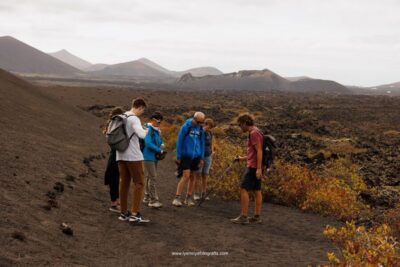
Lanzarote: Hike Across Timanfaya’s Volcanic Landscapes
Read our review →
Timanfaya And El Golfo For Cruise Passengers (Mornings)
Read our review →