
REVIEW · JAPAN
Walking through the Aso Caldera, Historical Walk along the “Bungo Kaido”
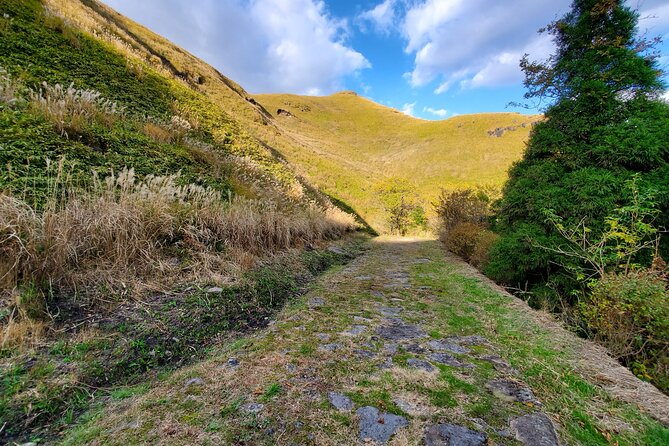
The remarkable thing here is the scale. From Futae Pass, you look across the Aso Caldera toward the active Mt. Aso, then walk down the northern outer rim on an old stone-paved section of the Bungo Kaido. The route lets you enter the caldera on foot, rather than simply stopping at a lookout and snapping a photo.
I like the mix of volcanic science and local stories, and I like the quiet tea break featuring Aso yogurt and grassland-grown sweets. The main consideration is the price: at $182.10 per person for about four hours, this is not a cheap walk. You are paying for a guided interpretation of places that can be hard to understand on your own, not for a long list of attractions.
Key points at a glance
- Walk an old 400-year-old road: Follow surviving stone paving along the Bungo Kaido, once used to connect Kumamoto with Edo, now Tokyo.
- See the caldera from above: Futae Pass offers a broad view toward Mt. Aso and the enormous volcanic basin.
- Learn how people shaped Aso: The walk connects geology with more than 2,000 years of local life, beliefs, mythology, and culture.
- Meet guides with a local touch: Guides including Kana and Kanna explain the area in an approachable way and respond to questions as you walk.
- Take a regional tea break: Aso yogurt and sweets made from grassland produce give the walk a pleasant local pause.
- Plan for moderate walking: The route descends from the northern outer rim, so good basic fitness and suitable shoes matter.
Why this Aso walk feels different from a lookout stop
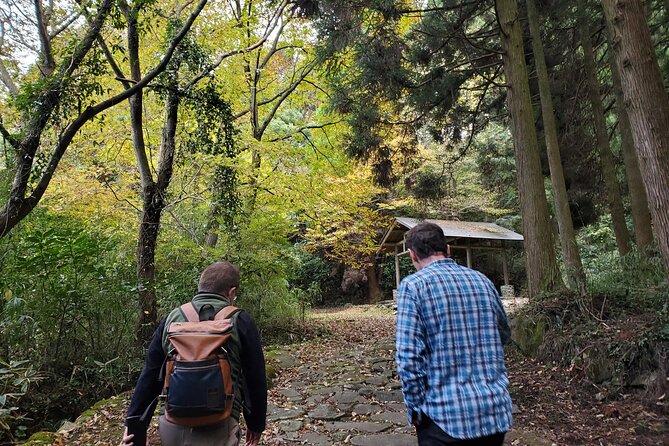
Many Aso outings begin and end with a grand view of the volcano. That view is worth having, but it can leave you with only a rough idea of how the caldera works or why people live where they do. This tour takes a slower route. You start high on the outer rim, then move toward the basin, feeling the change in scale as the land opens below you.
The caldera is one of the largest in the world. The useful part of this experience is not just hearing that fact. As you descend, the size becomes easier to grasp because you are crossing the space instead of viewing it from one fixed point.
The route follows the old Bungo Kaido. More than 400 years ago, this road connected Kumamoto, in Higo Province, with Edo, the city now called Tokyo. Remains of stone paving still appear along the route through the grasslands of the northern rim. That gives the walk a physical link to the past. You are not only hearing that people once crossed this region. You are walking on part of their route.
More History Tours in Japan:
- Mt. Fuji Heritage Tour: Traditional Villages, Lakes & Shrine
★ 4.5 · 509 reviews - Oiso: Adventure Hike to See Mt. Fuji & Historic Coastal Walk
★ 5.0 · 10 reviews - Mount Fuji E-Bike Tour: Explore Nature and History
★ 5.0 · 7 reviews
Futae Pass and the first view of Mt. Aso
The tour begins at Futae Pass, where the main stage is already in front of you: the Aso Caldera and the active Mt. Aso. This is the best place to get your bearings before the walk begins. The view helps you understand the relationship between the high outer rim, the broad basin, and the volcanic peaks.
Your guide uses this setting to explain Aso from several angles. Expect discussion of volcanic activity, geology, local history, culture, and beliefs rather than a single narrow lesson. That blend matters because Aso is not just a geological feature. It is also a place where people have lived in the caldera for more than 2,000 years.
Guide names provided for this experience include Kana and Kanna. The exact guide on your departure may vary, but the style appears personal and conversational. Kanna is specifically associated with explaining local life and history during the walk, while Kana is named in connection with adapting to changing weather and making sure the group felt comfortable.
You should allow a little time at the start to take in the view. The tour begins at 1:00 p.m., so the light and weather can affect what you see. A clear day should give you the strongest views of Mt. Aso, but the tour may be canceled if conditions are poor. If that happens, you are offered another date or a full refund.
Following the stone-paved Bungo Kaido
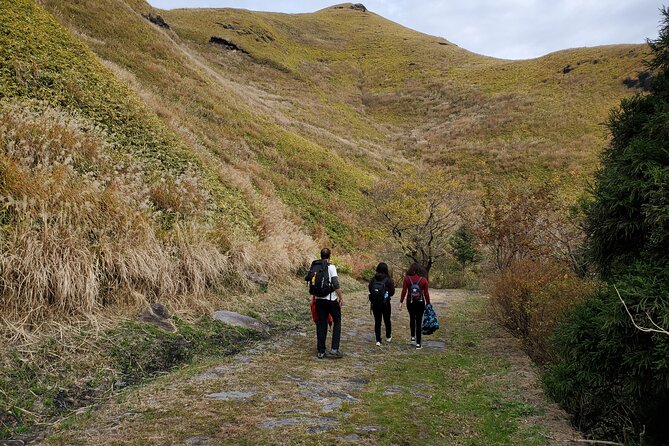
The walk itself is the heart of the experience. The old Bungo Kaido descends from the northern outer rim toward the caldera. Parts of the road retain their stone paving, while the route also passes through Aso’s grasslands and wooded sections.
This is a good setting for a guide because the details are easy to miss when you walk alone. A stone road can look like an ordinary old path until you learn where it led and why it mattered. The guide gives the route a human scale, linking the road with movement between Kumamoto and Edo and with the communities that developed in the caldera.
The descent also gives you a physical sense of place. From above, the caldera can seem like a distant panorama. As you walk down, the view changes and the basin feels less like a picture and more like a place you are entering.
The tour is described as easy to understand and enjoyable, but it still requires a moderate level of physical fitness. You should be comfortable walking for much of four hours, including a descending route and uneven stone surfaces. The provided information does not give a precise distance, number of steps, or walking pace, so ask for those details before booking if they matter to you.
Comfortable walking shoes are a sensible choice. The tour description does not promise a smooth paved path throughout, and surviving stonework can be uneven. Good weather helps, but even a dry day does not remove the need to watch your footing.
Stories of Aso’s people, beliefs, and mythology
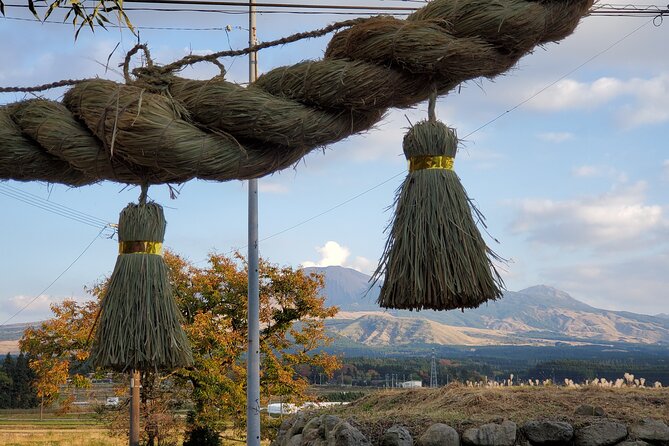
The tour’s strongest feature is the way it connects the natural setting to local culture. Aso has been home to people for more than 2,000 years, and the walk visits places linked with history, beliefs, and mythology.
One story mentioned in connection with the walk concerns the sleeping Buddha. The supplied details do not explain the full story, so you will hear more from the guide on the day. That is part of the appeal. Instead of receiving a long written explanation in advance, you encounter local stories in the places they belong.
This cultural material gives the scenery more meaning. A mountain view is pleasant on its own, but it becomes more memorable when you understand how nearby communities interpret the peaks, the caldera, and the land around them.
The historical material also makes this more than a nature stroll. You will hear about the old road, local life, and the ways people have related to the volcanic setting. If you want a strenuous mountain climb or a technical geology lesson, this may feel too gentle. If you want context while walking, it is a better fit.
A few more volcano tours around Japan worth a look
- Rotorua’s Ultimate Zipline: 6 ziplines, 400 m Tandem, Cliff Walk
★ 5.0 · 2,557 reviews - Rotorua: Hell’s Gate Outdoor Mud Spa & Guided Walk
★ 4.7 · 1,140 reviews - Hanging Bridges Walk in Arenal Volcano
★ 4.5 · 381 reviews - Volcanic Valley Self Guided Walking and Hiking at Waimangu
★ 4.5 · 248 reviews
Tea, Aso yogurt, and a pause in the grasslands
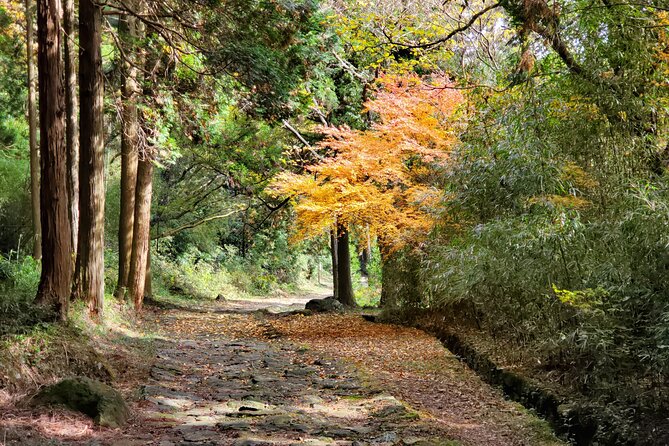
At some point on the route, the group has tea with yogurt and sweets made from Aso grassland produce. It is a small detail, but it helps distinguish this walk from a standard sightseeing transfer.
The break gives you time to rest your legs and take in the setting without rushing to the next viewpoint. It also introduces food tied to the region. The information does not specify the exact sweets, the tea, or whether dietary alternatives are available, so ask ahead if you have allergies or dietary restrictions.
I would not book this tour only for the snack. The value lies in the full combination of route, guide, history, and scenery. Still, the pause makes the afternoon feel more balanced. You get information while moving, then a chance to sit and absorb the place.
A realistic look at the $182.10 price
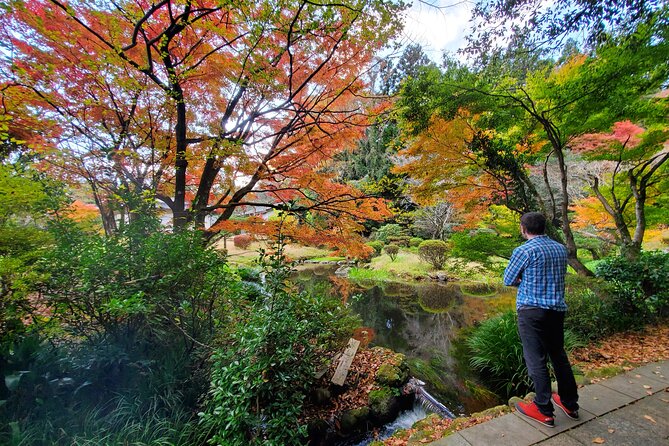
At $182.10 per person, this is a premium half-day walk. The price makes more sense if you value interpretation and local access. You are not simply paying to be taken to a viewpoint. The experience includes a guide, a historic route, explanations of Aso’s geology and culture, and a regional tea break.
The group can include up to 20 people. That is small enough to keep the tour organized, but it is not a private walk. If the departure fills, you may not have constant one-on-one time with the guide. Ask questions when you have the chance, especially during slower sections or the tea break.
Pickup is offered, and the experience is near public transportation, which may reduce the hassle of reaching the route. The details supplied do not say whether pickup is included in the price, where it operates, or how much time it adds. Confirm those points before booking. Group discounts may also change the value if you are traveling with family or friends.
For a solo visitor or couple who would struggle to understand the Bungo Kaido and local stories alone, the fee may be worthwhile. For someone mainly seeking a quick volcano photo, it is probably more than you need. You can also consider how this fits with the rest of your Aso plans. One person specifically found it useful to end with a brief visit to the crater. That is not presented as part of this tour, so treat it as a possible add-on for your own day rather than a promised feature.
Weather, fitness, and the afternoon schedule
The start time is 1:00 p.m., and the experience lasts about four hours. That makes it a useful afternoon plan, but it leaves less flexibility than a short morning stop. If you are combining it with another Aso activity, leave room for pickup, weather changes, and the possibility that the walk takes the full stated time.
Weather is important here because the experience depends on open views and outdoor walking. If poor weather forces cancellation, you receive the choice of another date or a full refund. The tour also requires a minimum number of participants. If that minimum is not reached, you are offered another date or experience, or a full refund.
The route is suitable for people with moderate physical fitness. Service animals are allowed. No other accessibility details are provided, and the stone-paved route may not suit everyone. If you have concerns about slopes, uneven surfaces, or walking duration, contact the provider before reserving.
A mobile ticket is available, which is handy if you are moving around Japan without printed documents. Confirmation is sent within 48 hours of booking, subject to availability. That timing matters if your Aso schedule is tight.
Who should book this walk
I would recommend this tour to you if you want to understand Aso rather than simply photograph it. It suits walkers who enjoy history, local beliefs, rural scenery, and an explanation of how volcanic ground shapes human life.
It also works well for families who can manage a moderate walk. One guide, Kanna, received particular praise for being kind and clear with a family group. The route offers enough variety to keep the walk from feeling like a lecture, though younger children may tire during the descent or on uneven stone.
The experience is also a good choice if you prefer a small-group activity to exploring a historic route without context. A maximum of 20 people is not intimate in the same way as a private guide, but it keeps the outing limited rather than open-ended.
You may want to skip it if your priority is visiting Mt. Aso’s crater itself. The crater is not listed as a stop. You may also want to skip it if you dislike outdoor walking, need a fully accessible path, or are looking for a low-cost sightseeing option.
Booking advice for the Bungo Kaido route
Before booking, confirm the exact meeting or pickup arrangement. The experience begins at Futae Pass, while Aso Uchinomaki Onsen is identified as the itinerary stop. Since pickup is offered, ask where you will be collected and where the walking portion ends.
Check the weather forecast, but remember that conditions can change quickly around an active volcanic area. Wear shoes suited to stone and unpaved surfaces, and bring what you need for a four-hour outdoor activity. The supplied details do not specify what equipment or refreshments are included beyond tea, yogurt, and sweets.
If you need to cancel, you receive a full refund when you cancel at least 24 hours before the 1:00 p.m. start time. Cancellations or changes inside that window are not accepted for a refund. The same 24-hour rule is based on local time.
Should you book this Aso experience?
Book it if you want a guided walk that joins Mt. Aso’s volcanic scale, an old road, local mythology, and present-day rural life. The Bungo Kaido gives the afternoon a clear sense of place, while the tea break keeps the pace comfortable.
At $182.10, it asks for a serious budget. I would choose it for the guide’s interpretation and the chance to enter the caldera on foot, not just for the view. If you want the crater, confirm a separate plan for that. If you want Aso to make more sense after you leave, this is a strong choice.
FAQ
Where does the walking tour begin?
The tour starts at Futae Pass, which overlooks the Aso Caldera and Mt. Aso. Pickup is offered, so confirm the exact arrangement when booking.
What time does the tour start?
The start time is 1:00 p.m.
How long does the experience last?
The tour lasts approximately four hours.
What is the Bungo Kaido?
The Bungo Kaido is an old road with more than 400 years of history. This section once connected Kumamoto, in Higo Province, with Edo, now Tokyo.
How many people can join the tour?
The maximum group size is 20 people.
Is the walk physically demanding?
A moderate level of physical fitness is recommended. The route descends from the northern outer rim of the caldera and includes sections of surviving stone pavement.
Is Mt. Aso’s crater included?
The crater is not listed as a stop on this experience. You can ask the provider about arranging a separate crater visit.
What food or drink is provided?
The tour includes a tea break with Aso yogurt and sweets made from grassland produce.
What happens if the tour is canceled because of weather or low demand?
If poor weather or an insufficient number of participants causes cancellation, you are offered another date or experience, or a full refund.
Just added around Japan
- Private E-MTB guided cycling around Mt. Aso volcano & grasslands★ 5.0 · 16 reviews
- Aso Caldera and Farm Experience Tour★ 5.0 · 5 reviews
- “Mt. Fuji 1-Day Private Tour with English Speaking Driver-Guide”★ 5.0 · 46 reviews
- From Tokyo: Mt Fuji and Hakone Private Day Trip★ 4.5 · 75 reviews
- Private guided tour: Mt. Aso volcano, grasslands, Aso Shrine★ 5.0 · 19 reviews
- Tokyo/Yokohama: Mt. Fuji and Hakone Private Day Tour★ 5.0 · 64 reviews
- Tokyo:Mt Fuji & Hakone Day Tour with English Speaking Driver★ 5.0 · 26 reviews
- Tokyo:Customizable Private Day Trip to Mt.Fuji & Safari Park★ 4.8 · 6 reviews
Japan Volcano Tours, compared.
Mt Fuji and Hakone 1-Day Bus Tour Return by Bullet Train
Read our review →
Mt Fuji & Hakone Cruise, Drum Show Bullet Train 1 Day from Tokyo
Read our review →
From Tokyo: Mount Fuji Full-Day Sightseeing Trip
Read our review →
Tokyo: Mt. Fuji Tour, Hakone Ropeway, Owakudani, Lake Ashi
Read our review →
Tokyo:Mt.Fuji,Kawaguchiko Oishi Park,Arakurayama Sengen Park
Read our review →
Tokyo: Mt. Fuji 5th Station & Hakone Cruise 1-Day Bus Tour
Read our review →
Private Tour to Mt. Fuji and Hakone (Fully Licenced Operator)
Read our review →
Mount Fuji Full-Day Private Tour from Tokyo (Customizable)
Read our review →Browse the lists this tour appears in