
REVIEW · TOKYO
Mt. Fuji Heritage Tour: Traditional Villages, Lakes & Shrine
The best thing about this $50 Mt. Fuji day tour is its variety. In one long day, you get a traditional thatched village, Lake Kawaguchi, seasonal gardens, a Shinto shrine, the famous Chureito Pagoda, and eight spring ponds. I like that the day gives you several different ways to see Fuji, rather than betting everything on one viewpoint.
I also like the practical guiding. Guides such as Sia, Kazi, Wanting, Alex, and Rachel have been praised for clear meeting instructions, careful timekeeping, and help with photo spots. The main drawback is the schedule: ten hours on the road means some stops feel brisk, and clouds may hide Fuji completely.
Key points at a glance

- Saiko Iyashi no Sato Nenba: Walk among traditional thatched houses with Fuji as a possible backdrop, and try local snacks near the entrance.
- Seasonal Lake Kawaguchi stops: Oishi Park is best for lavender in summer, while the Maple Corridor is the key autumn stop from October 26 to November 20.
- Chureito Pagoda climb: You must handle a long flight of steps, but the classic pagoda-and-Fuji view is the day’s signature photo.
- Oshino Hakkai springs: Spend 70 minutes around eight clear ponds, with rice crackers and wasabi ice cream available nearby.
- Coach convenience: Pickup and return are arranged at Tokyo MODE Gakuen, though traffic can make the return late.
- Bring lunch money: Food is not included, and some shops and attractions may not accept cards.
Why this makes sense as a first Mt. Fuji day
Mt. Fuji is easy to admire from a distance and surprisingly awkward to explore independently in one day. The sights sit around lakes, villages, shrines, and rural roads, so a coach tour removes much of the transport planning. You can settle in, watch the city give way to the countryside, and let the driver handle the long stretches.
The tradeoff is time. The journey from Tokyo to the Fuji area takes about two and a half hours each way. That leaves a useful day at the sights, but not a leisurely one. You are not booking a slow village stay or a quiet lakeside retreat. You are booking an efficient sampler of the region’s main photo stops.
That makes this tour a strong fit if you have limited time in Japan, especially if you want both natural scenery and cultural sites. It is less suitable if you dislike coach rides, need a flexible pace, or want long walks in one place.
The tour is shared, with explanations offered in English, Japanese, and Traditional Chinese. Guides have been praised for keeping people together, explaining where to meet, and sending useful instructions before the trip. Sia, in particular, is noted for clear timing and warm group management, while Kazi is praised for keeping the day organized and offering photo advice.
More Mount Fuji Tours in Tokyo:
- Mt Fuji and Hakone 1-Day Bus Tour Return by Bullet Train
★ 5.0 · 26,383 reviews - Mt Fuji & Hakone Cruise, Drum Show Bullet Train 1 Day from Tokyo
★ 4.0 · 7,413 reviews - Tokyo Mt Fuji 5th St & Hakone Cruise Bus Tour w/Bullet Train
★ 4.4 · 5,024 reviews
The long ride to Saiko Iyashi no Sato Nenba
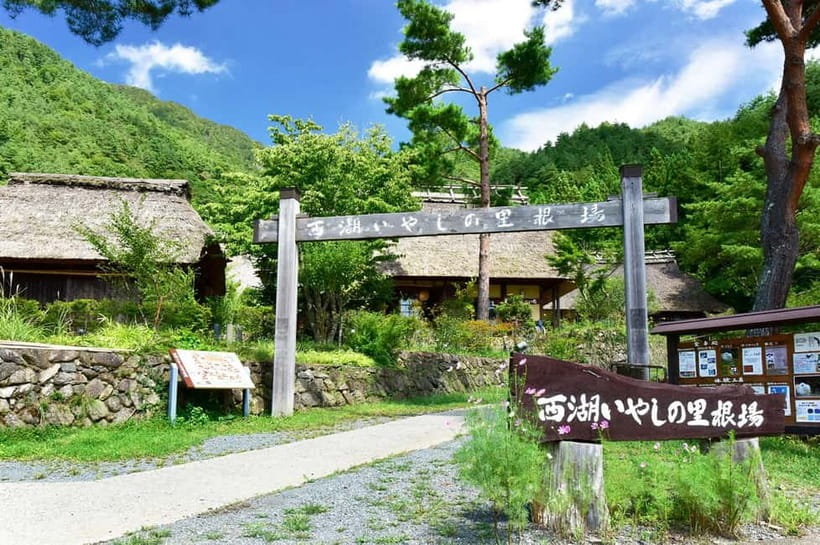
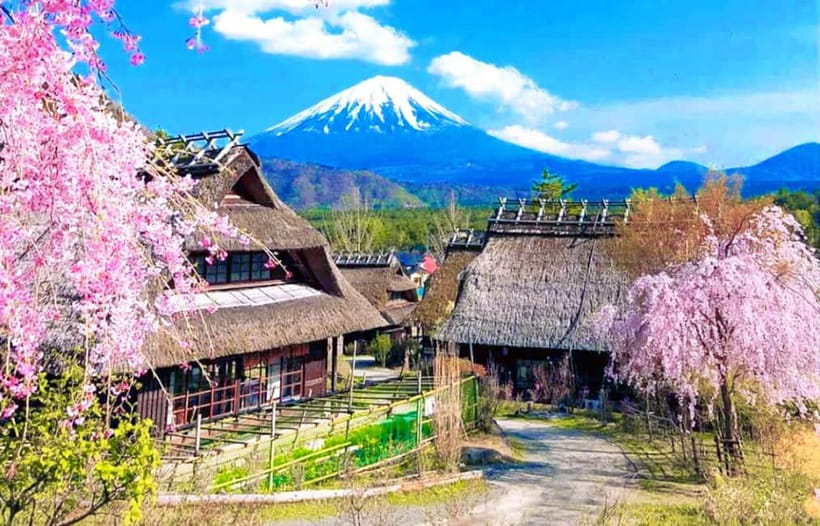
The first major stop is Saiko Iyashi no Sato Nenba, a recreated traditional village near Lake Saiko. Its thatched-roof houses give you the kind of setting that makes Fuji photos feel distinctly Japanese rather than simply scenic.
You get about an hour here, including a guided visit and time for pictures. The houses are the main draw, but do not rush past the entrance area. Japanese snacks are available there, giving you an easy first taste of local food without needing to plan a separate meal.
You can also rent a ninja costume for an extra fee. This is clearly aimed at fun photos, but it can be a pleasant choice for families and anyone who enjoys a less formal souvenir picture. You should treat it as optional, not as part of the tour price.
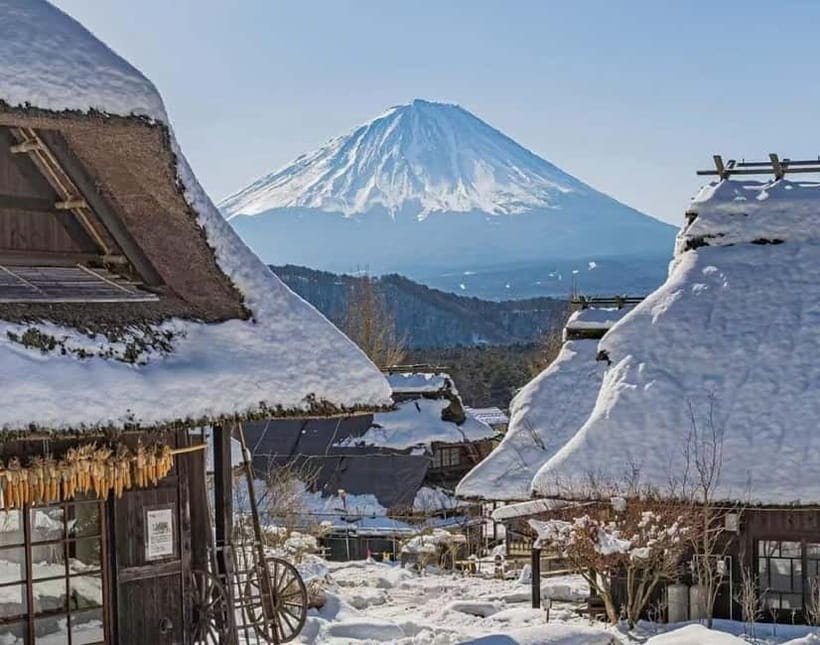
The village works especially well in clear weather, when Fuji can appear behind the roofs. On a cloudy day, the buildings still provide a worthwhile cultural stop, but the famous mountain backdrop may be missing. That weather risk follows you all day.
Lake Kawaguchi and the changing colors at Oishi Park
After roughly 25 minutes by coach, the tour reaches the Lake Kawaguchi area. The itinerary includes a short sightseeing stop at the lake, followed by about 40 minutes at Oishi Park.
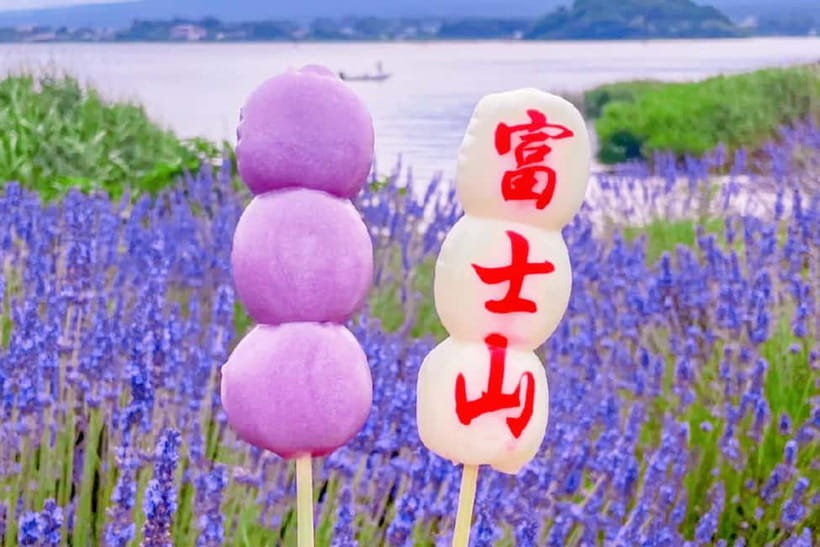
Oishi Park changes with the calendar. In summer, lavender adds color and fragrance to the fields. At other times, the park offers open views across the lake toward Fuji, assuming the clouds cooperate. I like this stop because it gives you a wider, calmer view after the tighter village setting at Saiko.
Forty minutes is enough for a walk, photos, and a quick look around. It is not enough for a long lakeside stroll or an unhurried visit to every corner. Keep your camera ready, but also watch the clock. Shared tours work best when everyone returns to the coach on time.
The schedule changes during peak autumn foliage. From October 26 through November 20, the tour goes to the Maple Corridor instead of Oishi Park. This matters when you book: you are not getting both stops during that autumn window.
Maple Corridor and the best autumn timing
The Maple Corridor is the seasonal star of the autumn version of the trip. Its red leaves frame the area around Lake Kawaguchi, and the snow-topped Fuji can make the scene especially striking on a clear day.
The stated peak period is October 26 to November 20. Nature does not follow a timetable perfectly, so exact color can vary, but this date range tells you when the tour is designed around autumn foliage. If red leaves are your main reason for booking, aim for that period and check the forecast.
You get about 40 minutes here. That is enough for the main path and photographs, but do not expect a full autumn walk. The stop is designed as a scenic snapshot within a larger day.
This seasonal substitution is sensible, but it is worth repeating: during peak autumn, Maple Corridor replaces Oishi Park. You should choose your dates based on what matters more to you, lavender and broad park views in summer, or maple color in late October and November.
More History Tours in Tokyo:
- Big Island in a Day: Volcanoes Waterfalls Sightseeing and History
★ 5.0 · 6,569 reviews - Discover Gobustan and Absheron History, Mud Volcanoes and Nature
★ 4.5 · 15 reviews - Oiso: Adventure Hike to See Mt. Fuji & Historic Coastal Walk
★ 5.0 · 10 reviews - Lanzarote: Guided Hike discover volcano history and culture
★ 5.0 · 9 reviews
The famous steps at Arakurayama Sengen Park
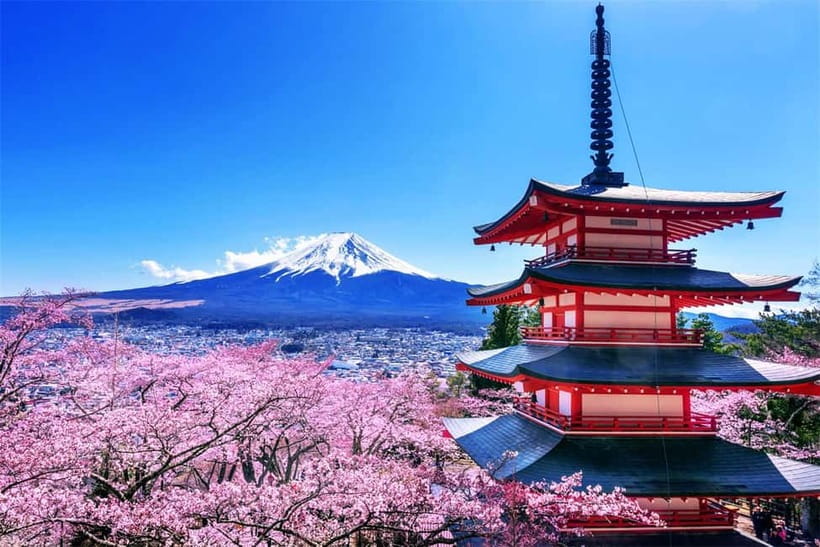
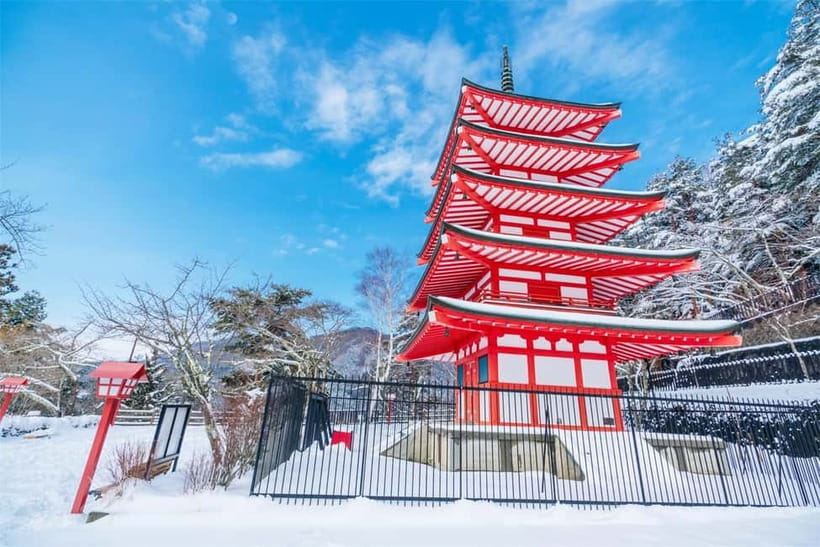
The most demanding part of the day is the visit to Arakurayama Sengen Park, home to the view of Chureito Pagoda with Fuji behind it. The coach ride from Lake Kawaguchi takes about 15 minutes, then you have around 40 minutes for the park.
The classic viewpoint requires climbing steps. That makes comfortable shoes essential, and you should expect the climb to take some effort. The reward is the postcard composition: red-and-white pagoda, wooded hillside, and Fuji rising in the distance when conditions are right.
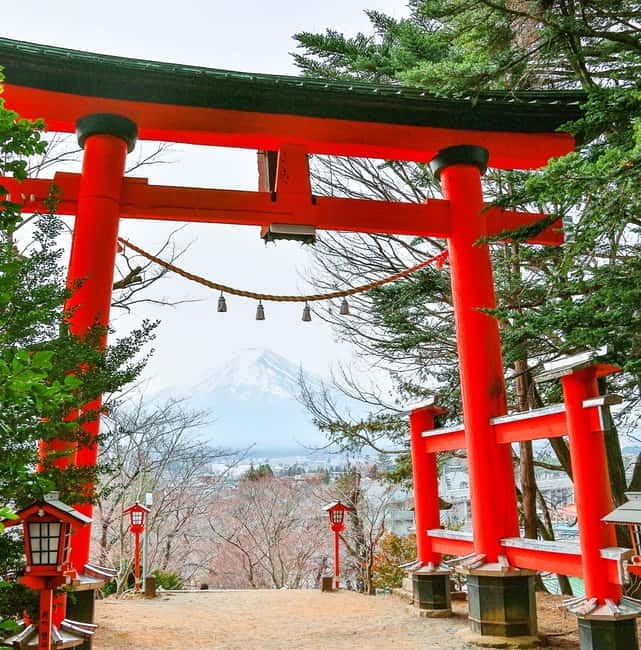
The park and shrine are treated as separate itinerary entries. You get around 15 minutes at Arakura Fuji Sengen Shrine and another 15 minutes at Chureito Pagoda, within the wider park visit. This gives you a chance to appreciate the religious setting instead of treating the pagoda as just a photo prop.
The shrine is also a good place to slow down for a moment. You can observe the setting, take respectful photographs where permitted, and notice how the sacred site and mountain view work together. The tour’s short timing means you will need to keep moving.
If you want a goshuin stamp, allow for a possible wait. One useful tip is to hand in your goshuin book before climbing the steps, since the process may take about 20 minutes. With a tight schedule, leaving this until the top can mean missing out.
Oshino Hakkai’s clear spring ponds
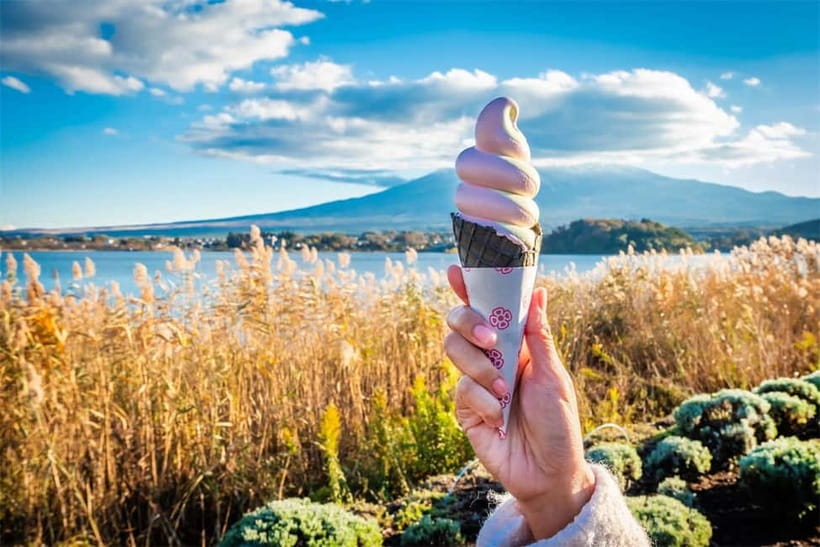
The final major stop is Oshino Hakkai, about 25 minutes from the pagoda area. You get 70 minutes here, making it one of the more generous stops of the day.
Oshino Hakkai is known for eight clear spring ponds fed by melted snow from Fuji. The water and reflections give the village a quieter feel than the pagoda viewpoint or the busier photo stops. This is a good place to put the camera down for a few minutes and simply look around.
Local food is part of the appeal. You might try freshly made rice crackers, and wasabi ice cream is available nearby for the adventurous. These are personal purchases, not included treats, so bring cash.
The setting is scenic year-round, but Fuji visibility still depends on weather. Even if the mountain is hidden, the ponds and village atmosphere give this final stop its own identity. The 70-minute visit is long enough for photographs, a snack, and a little wandering before the return journey.
Lunch, coach comfort, and the real pace of the day
Lunch is not included. The schedule allows a 40-minute break at a local restaurant, and the guide may suggest a place. You can also bring food or buy something at one of the attractions.
Do not assume the restaurant stop will match your ideal meal. Some people find the suggested lunch convenient, while others would prefer more choice. I would bring a small meal or snacks if you have dietary needs, a tight budget, or strong food preferences. Cash is important because cards may not work at every location.
The coach is the practical backbone of the tour. The long return ride to Tokyo takes about two and a half hours, and weekend or holiday traffic can extend it. Do not schedule an important evening activity immediately after the tour. The advertised ten hours is a useful guide, not a guarantee of an exact return.
The bus itself has been described as comfortable, and the day includes quiet stretches for resting. That matters because the itinerary is full. You will appreciate being able to sit down between walks, especially after the pagoda steps.
What the guides add to the experience
A good guide makes this kind of day much easier. You need clear instructions at every stop, quick reminders about bathrooms and meeting points, and enough background to understand the shrines and villages without turning every pause into a lecture.
Guide assignments can vary. Names associated with the experience include Sia, Kazi, Wanting, Alex, Rachel, Sawaki, and Feng. Sia has been praised for friendly explanations, basic Japanese lessons, and staying attentive to families. Kazi is noted for organization, photo guidance, and calm handling of delays. Wanting and Rachel have also been described as helpful and professional.
The multilingual format is useful, but it can limit the amount of commentary in any one language. Some departures may include explanations in several languages, so expect clear practical guidance rather than a long, detailed lecture at every stop.
The driver matters too. The route covers long highway stretches and busy tourist areas. Safe, smooth driving and good timekeeping make a real difference on a day with this many stops.
Weather, crowds, and footwear
Fuji visibility is never guaranteed. Clouds can cover the mountain even when the rest of the day is pleasant. You should check the forecast before leaving and set your expectations accordingly. The tour still offers villages, water, shrines, foliage, and local food when Fuji disappears, but the famous photographs depend on luck.
Comfortable shoes are essential. The Chureito viewpoint requires stairs, and you will walk between photo areas, shrine grounds, and village paths. Water is also worth carrying, especially in warmer weather.
The main sights are popular, and the schedule can be adjusted by the guide because of traffic, crowds, or weather. A stop might be shortened, changed, or canceled when conditions require it. That flexibility helps the group, but it means you should not plan around a precise number of minutes at every site.
This tour is not suitable for wheelchair users. Anyone with limited mobility should also think carefully about the steps and the amount of movement between the coach and viewpoints.
Is $50 good value?
At $50 per person, the tour offers strong value if you want transportation, a guide, driver, parking, and admission to Saiko Iyashi no Sato Nenba in one package. Paying separately for transport to several Fuji-area sites would take planning, and the route is not designed for a simple point-to-point train journey.
The price does not cover lunch, snacks, costume rental, or personal purchases. Those extras are easy to manage, but you should budget for them rather than treating the headline price as the full day’s cost.
The value is highest for first-time visitors who want broad coverage. You see five distinct types of stop in one day: a traditional village, lake and seasonal gardens, a shrine and pagoda, and spring-fed ponds. The value is lower if you want to linger, shop extensively, or spend a full day at one lake.
Who should book this Mt. Fuji tour?
Book it if you want a well-organized introduction to the Fuji region from Tokyo, especially if you are traveling with family or do not want to manage rural transport. The route gives you strong photo opportunities and enough variety to keep the day interesting.
It also suits photographers who are happy to work quickly and families who value a guide’s timing help. The village, pagoda, seasonal foliage, and Oshino food stops offer plenty of visual variety.
Think twice if you need wheelchair access, dislike long coach journeys, or want a relaxed pace. Also reconsider if seeing Fuji clearly is your only goal, since no tour can control cloud cover.
For most first-time visitors, I would book this tour on a clear-weather day with comfortable shoes, cash, and a packed lunch. Go in summer for lavender, or from October 26 to November 20 for the Maple Corridor. You will not see everything slowly, but you will come away with a broad and practical taste of Mt. Fuji’s villages, shrines, lakes, and springs.
FAQ
How long does the Mt. Fuji tour last?
The tour lasts 10 hours. The coach ride from Tokyo to the Fuji area takes about two and a half hours, and the return journey takes about the same amount of time.
Where does the tour start and finish?
The listed starting and ending point is Tokyo MODE Gakuen at 1-chōme-5-1 Marunouchi. The exact meeting point may vary depending on the option booked.
Is lunch included?
No. Lunch is not included. You can bring your own food, buy food at an attraction, or use a restaurant suggested by the guide during the scheduled break.
Which languages are available?
Live tour guidance is available in English, Japanese, and Traditional Chinese.
Does the tour visit both Oishi Park and the Maple Corridor?
Not during the peak autumn period. From October 26 to November 20, the tour visits the Maple Corridor instead of Oishi Park.
Is admission included?
Admission to Saiko Iyashi no Sato Nenba is included. Personal expenses at shops, restaurants, and other attractions are not included.
Do I need cash?
Yes, bring cash. Some locations may not accept credit cards, and you may want money for food, snacks, souvenirs, or the optional ninja costume rental.
Is the tour suitable for wheelchair users?
No. The tour is not suitable for wheelchair users, and the climb to the Chureito Pagoda also requires comfortable walking shoes.
Just added around Tokyo
- Tokyo/Yokohama: Mt. Fuji and Hakone Private Day Tour★ 5.0 · 64 reviews
- Tokyo:Mt Fuji & Hakone Day Tour with English Speaking Driver★ 5.0 · 26 reviews
- Tokyo:Customizable Private Day Trip to Mt.Fuji & Safari Park★ 4.8 · 6 reviews
- Tokyo:Fuji-Kawagu Cable Car (Ticket Inc.) Shinkurayama&Panos★ 3.9 · 7 reviews
- Tokyo: Private Day Trip to Mount Fuji and Hakone★ 4.9 · 8 reviews
- Tokyo to Mount Fuji and Hakone: Private Full-Day Tour★ 3.7 · 5 reviews
- Tokyo: Private Mount Fuji Tour with Pickup and Drop-Off★ 4.7 · 69 reviews
- Tokyo: Private Mount Fuji Day Trip with Private Guide★ 3.5 · 5 reviews
Tokyo Volcano Tours, compared.
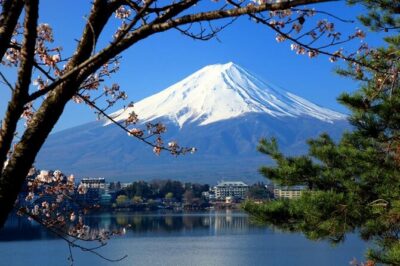
Mt Fuji and Hakone 1-Day Bus Tour Return by Bullet Train
Read our review →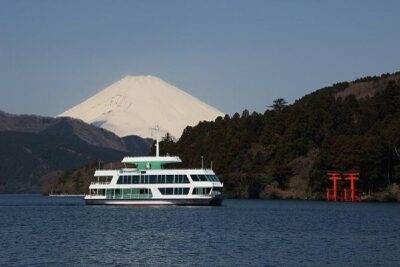
Mt Fuji & Hakone Cruise, Drum Show Bullet Train 1 Day from Tokyo
Read our review →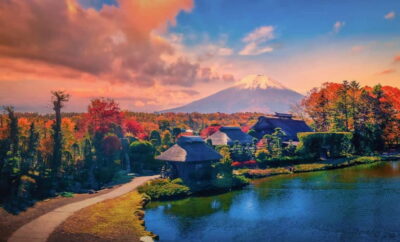
From Tokyo: Mount Fuji Full-Day Sightseeing Trip
Read our review →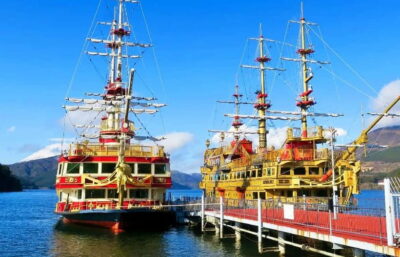
Tokyo: Mt. Fuji Tour, Hakone Ropeway, Owakudani, Lake Ashi
Read our review →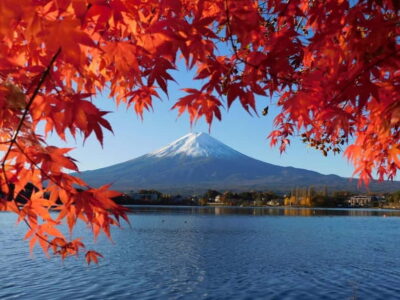
Tokyo:Mt.Fuji,Kawaguchiko Oishi Park,Arakurayama Sengen Park
Read our review →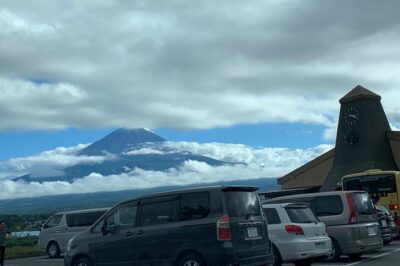
Private Tour to Mt. Fuji and Hakone (Fully Licenced Operator)
Read our review →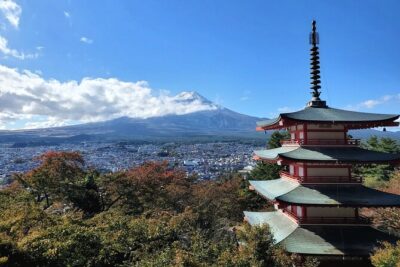
Mount Fuji Full-Day Private Tour from Tokyo (Customizable)
Read our review →
Mt Fuji & Hakone Cruise, Drum Show Bus 1 Day from Tokyo
Read our review →Browse the lists this tour appears in