
REVIEW · FUJINOMIYA
Mount Fuji E-Bike Tour: Explore Nature and History
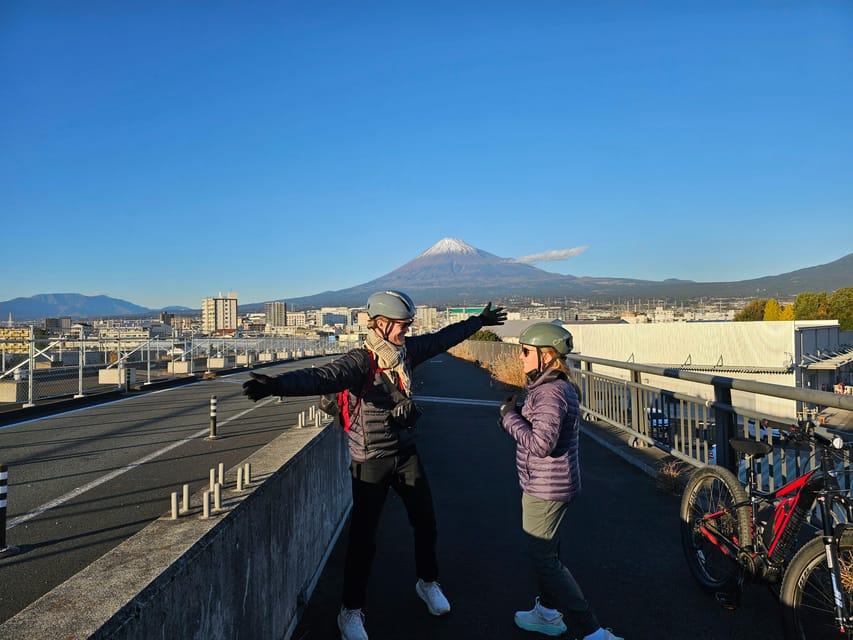
Mount Fuji is more than a postcard peak on this small-group e-bike tour. You ride through Fuji City, past coastal scenery, spring-water sites, shrines, and old lanes, while your guide explains how volcanoes, earthquakes, tea, paper, and daily life fit together. I like the mix of nature and local culture, and I like that the group is limited to five people.
The most memorable touches may come from the guides themselves. Yasu has taken riders for tea at his mother’s home and to a tea shop, while Aiko has shown visitors rice fields, small lanes, and a 1,300-year-old temple. The main consideration is physical: you need to ride a bike, stay comfortable for a 150-minute outing, and accept that clouds may hide Mount Fuji.
Key points at a glance
- Spring water from Mount Fuji: Refill your own bottle at Izuminosato Yusui Park and see how underground water supports local life.
- A personal local guide: Guides such as Yasu and Aiko add stories, photographs, tea, and neighborhood knowledge beyond the listed stops.
- A small five-person group: The compact format makes it easier to ask questions and keep a relaxed pace.
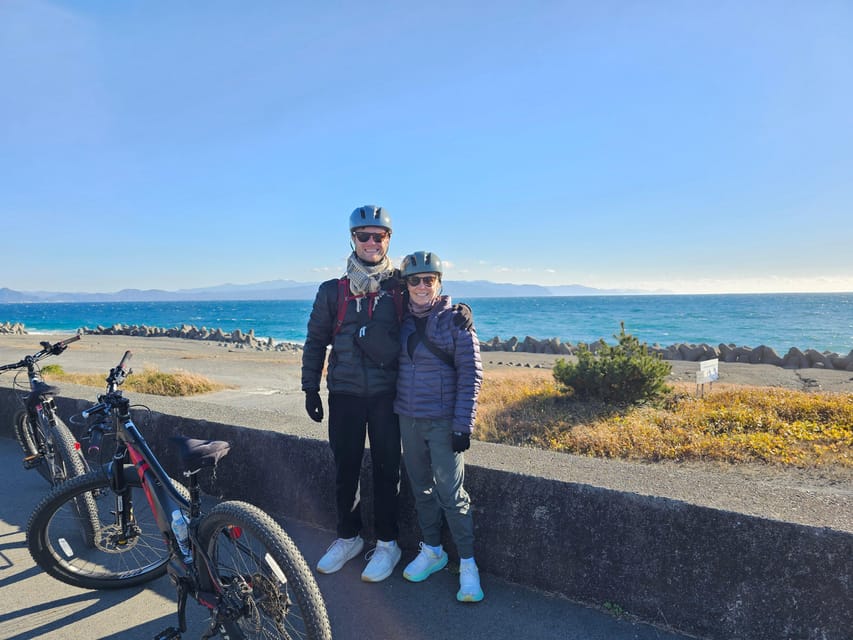
- A coastal and countryside route: Expect Suzukawaminato Park, back streets, rice fields, and views toward the mountain when weather allows.
- History with a practical edge: The tour connects tectonic movement, volcanic activity, past earthquakes, and disaster awareness.
- Easy access from Tokyo: Shin-Fuji Station is about an hour from Tokyo, making this possible as a same-day outing.
Why this ride offers more than a Mount Fuji photo
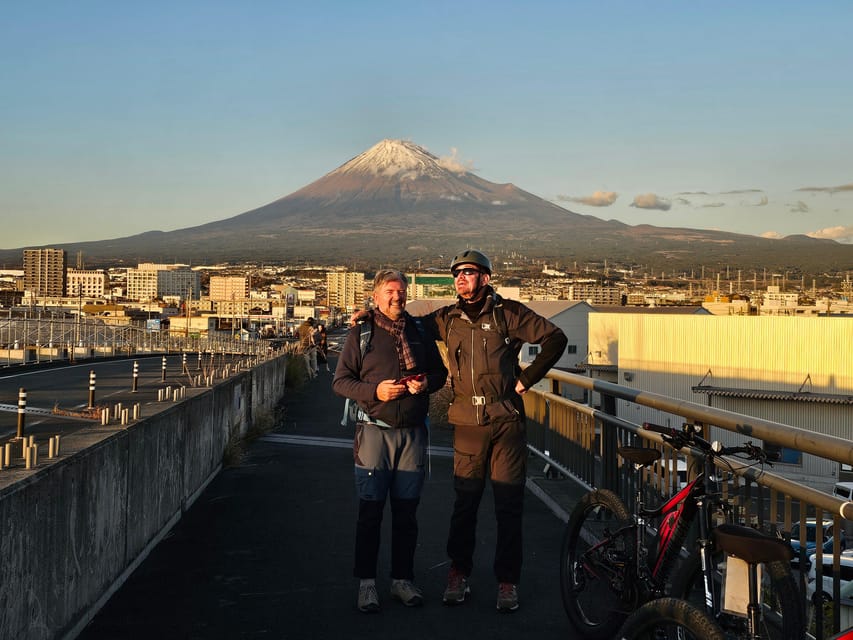
A standard Mount Fuji viewpoint gives you the mountain. This tour gives you some of the systems around it: water flowing from underground reservoirs, temples tied to local belief, farmland at the foot of the peak, and communities shaped by earthquakes and volcanic activity.
That wider view is the real reason to book. You are not simply pedaling from one photo stop to another. The guide explains why the area has developed as it has, and how Mount Fuji has influenced religious practice, work, food, and settlement.
The e-bike matters, too. It helps you cover several parts of Fuji City without making the ride a test of athletic strength. Still, this is a cycling tour, not a sightseeing bus. You should be confident on a bicycle and able to handle a few hours outdoors.
The tour costs $109 per person. That is not the cheapest way to see Mount Fuji, but the price includes the e-bike, helmet, insurance, and a live local guide. For a small group capped at five people, the value is strongest if you want conversation and context rather than a quick ride to a famous viewpoint.
More Mount Fuji Tours in Japan:
- Mt Fuji and Hakone 1-Day Bus Tour Return by Bullet Train
★ 5.0 · 26,383 reviews - Mt Fuji & Hakone Cruise, Drum Show Bullet Train 1 Day from Tokyo
★ 4.0 · 7,413 reviews - Tokyo Mt Fuji 5th St & Hakone Cruise Bus Tour w/Bullet Train
★ 4.4 · 5,024 reviews
Starting at Shin-Fuji Station
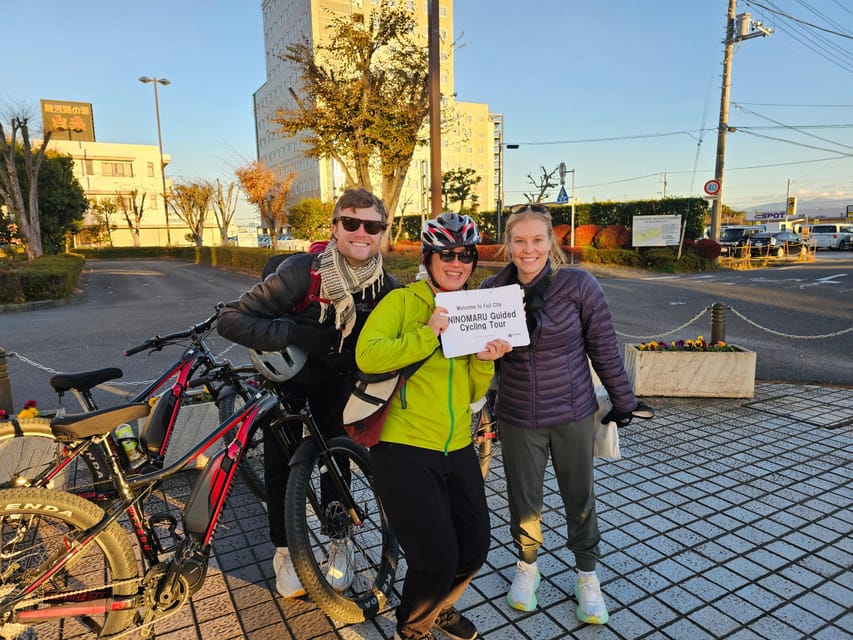
You meet at the south exit of Shin-Fuji Station. Look for the guide holding a NINOMARU Guided Cycling Tour sign. This is a useful meeting point for a day trip because Shin-Fuji is roughly one hour from Tokyo, according to the tour information.
Arrive ready to ride. Wear comfortable clothes and shoes, bring water, and carry a small backpack for personal items. You are also encouraged to bring a refillable bottle, since the route includes spring-water stops.
The tour runs for 150 minutes. English and Japanese are available, and the group size is limited to five. That small number should help the guide adjust explanations and photo stops to the group, though the ride still follows a planned route.
Cruise ship passengers at Shimizu Port are welcome, but hotel pickup and drop-off are not included. You need to arrange your own way to Shin-Fuji Station and allow enough time to find the south exit.
Suzukawaminato Park and the coastal start
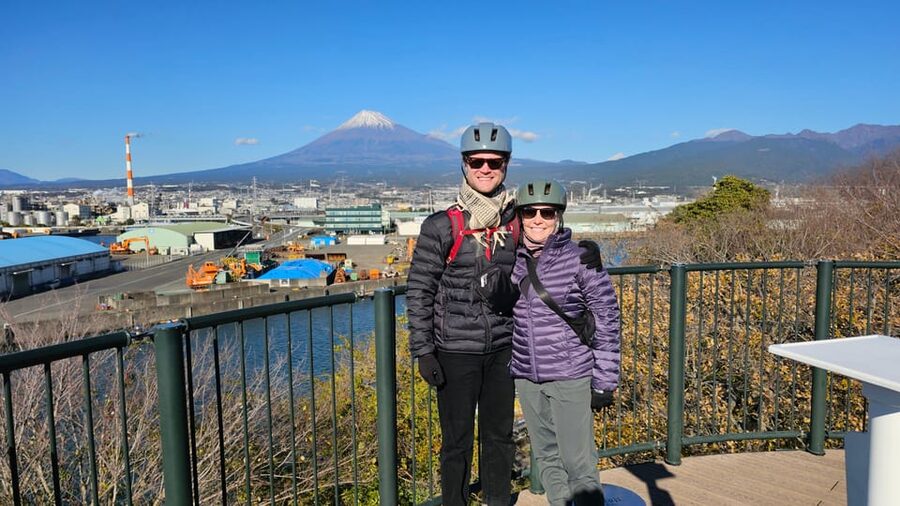
The first listed stop is Suzukawaminato Park, reached after about 15 minutes of riding. You have around 10 minutes here for a visit and photographs.
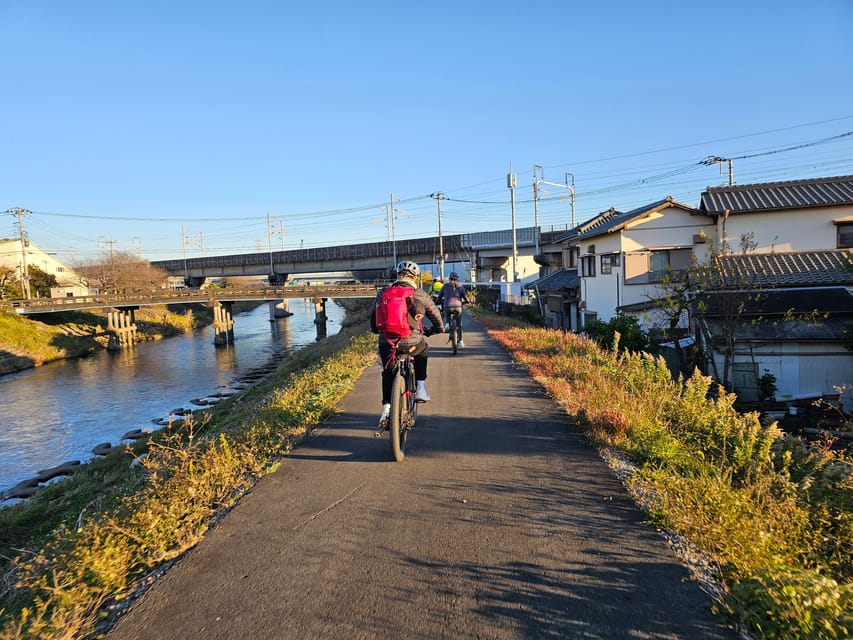
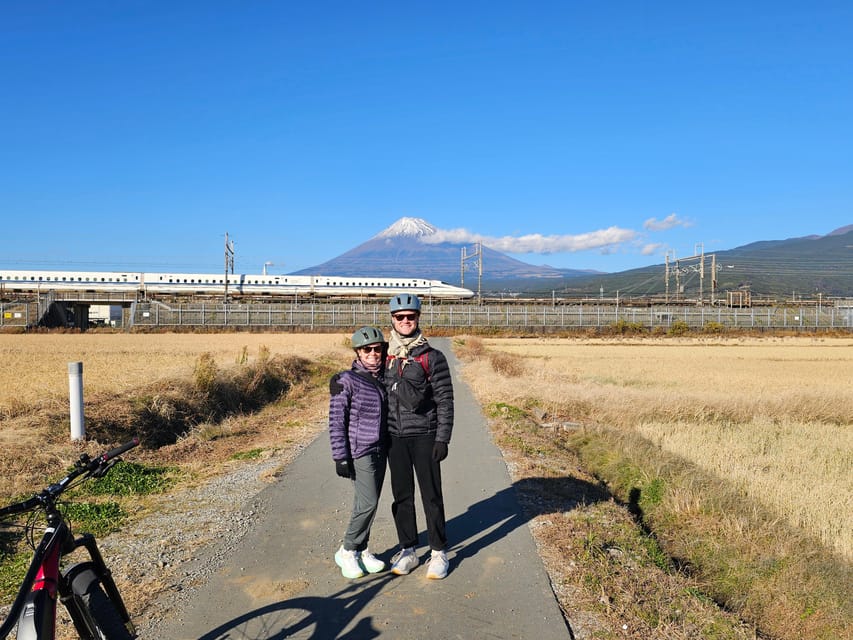
This opening section gives you a chance to settle onto the e-bike before the route moves farther inland. Coastal views are one of the strongest features of the ride. One outing was described as a beautiful cycle along the coastal path with Mount Fuji in view, although the mountain is never guaranteed.
That warning matters. Fuji often disappears behind cloud or haze, even when the rest of the day looks pleasant. You should treat the view as a bonus, not the sole reason to book. The coast, parks, streets, and guide commentary still form the core of the outing.
A short stop at 13-32 Suzukawanishichō
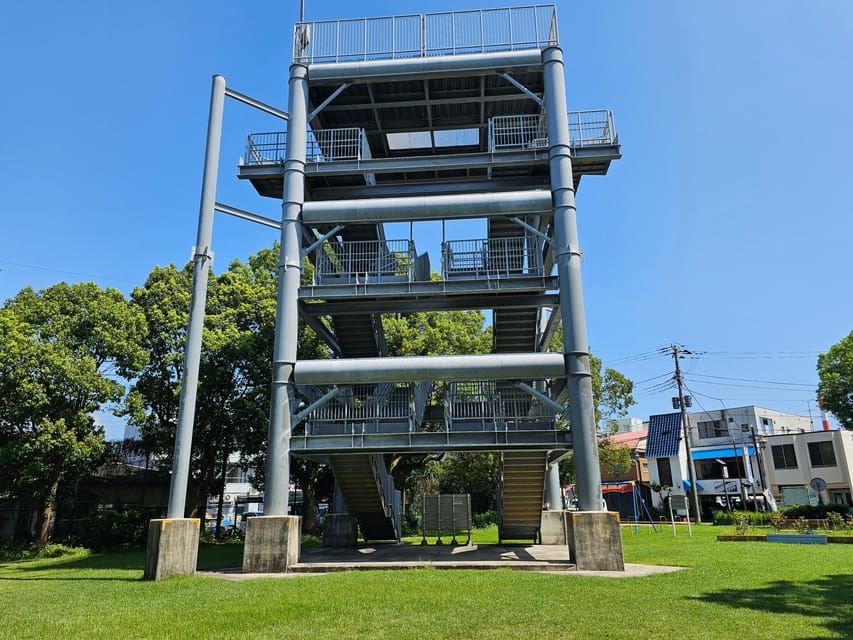
After roughly five minutes of riding, the route pauses at 13-32 Suzukawanishichō. This is a brief five-minute photo and visit stop.
The short timing suggests that this is less about a major attraction and more about seeing the area as a local route. The tour uses small streets and lanes rather than only famous sights. That can be a welcome change from the usual Japanese sightseeing circuit, where every stop has a formal entrance and a large sign.
Do not expect a long museum visit here. The value is in the setting and in what your guide points out. A local guide can explain details that would be easy to miss on your own, such as how the neighborhood relates to the coast, nearby industry, or Mount Fuji’s water supply.
A few more volcano tours around Japan worth a look
- Sakurajima Century Lava Climb Journey with E-bike
★ 4.9 · 27 reviews - Private E-MTB guided cycling around Mt. Aso volcano & grasslands
★ 5.0 · 16 reviews - Shizuoka : Private Adventure E-bike Tour around Mt Fuji
★ 5.0 · 4 reviews - Haleakala Sunrise Best Self-Guided Bike Tour
★ 4.5 · 745 reviews
Izuminosato Yusui Park and Fuji’s underground water
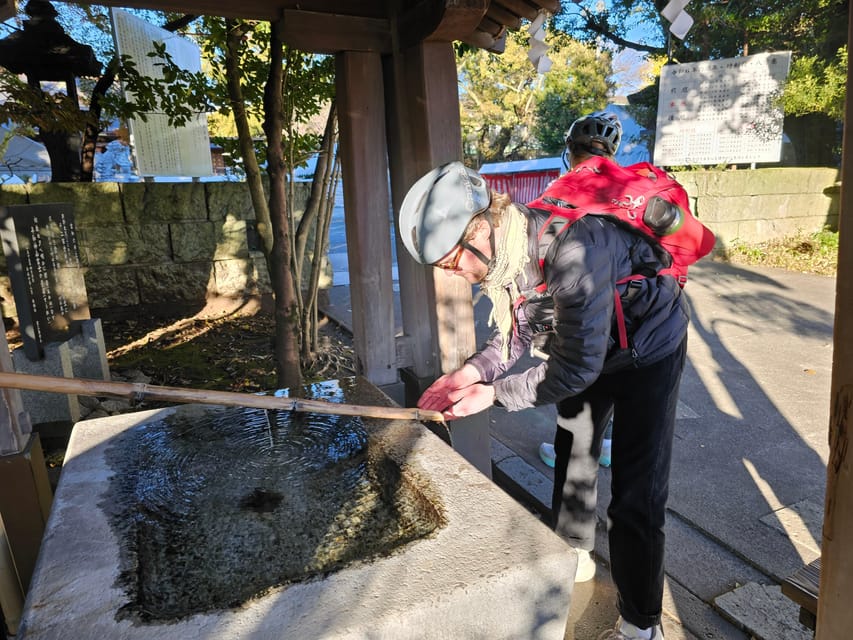
The longest ride segment comes before Izuminosato Yusui Park, with about 25 minutes of transfer time. You then have around 10 minutes to visit and take photographs.
This is one of the tour’s most distinctive stops. Mount Fuji’s snow and rain filter through layers of volcanic rock, creating underground water routes that eventually reach springs around the region. The tour presents these sites as part of the mountain’s long-standing role in supporting local communities.
Bring your own bottle. The instructions specifically encourage you to refill at the spring-water spots, so this is not just a look-and-leave stop. The spring water adds a simple physical connection to the subject: you can see the source and carry a taste of it with you.
The stop also helps explain why geology is useful rather than abstract. Tectonic forces and volcanic eruptions shaped the ground, but the result affects everyday matters such as drinking water, farming, and settlement. You get a clearer sense of how a mountain can influence a whole region without needing a technical lecture.
Hounji and the spiritual side of Mount Fuji
From the spring park, you ride for about 15 minutes to Hounji. The visit lasts around 10 minutes.
Temples and shrines around Mount Fuji are not random decorations on a sightseeing route. The mountain has long held sacred meaning, and religious sites help show how people have responded to its power and presence. At Hounji, your guide introduces that connection through the site itself.
The tour description also refers to ancient temples and shrines tied to local customs. The supplied schedule names Hounji specifically, while separate tour outings have included a 1,300-year-old temple in the Shimizu area. Exact stops and stories can vary with the guide and route, so you should regard the temple visit as a cultural stop rather than expect a full formal ceremony.
Ten minutes is enough for an introduction and photographs, but not a long religious history lesson. If you want hours inside major temples, this is not that kind of tour. If you want to see how local belief fits into a ride through the countryside, it works well.
Tea, family hospitality, and local life
The official route lists four main stops, but the human side of this outing may become the highlight. Yasu has included tea at his mother’s home and a visit to a tea shop with tasting. Aiko has introduced riders to local streets, rice fields, a temple, and Japanese customs.
These additions should not be treated as guaranteed parts of every departure. They appear in the experiences described by past participants, while the core schedule focuses on the parks, spring site, temple, and station. Still, they show what a local guide can add when timing and circumstances allow.
Tea is especially fitting here. The wider Fuji and Shizuoka region is closely associated with tea production, and one outing included a stop where visitors learned how green tea is made and served. Another included a visit to the guide’s mother’s home for tea or a traditional meal.
That kind of stop is more personal than a standard attraction. You see a slice of family life and local custom, not a staged performance. It can also make the tour less predictable, which is both the charm and the trade-off. If you prefer a strict timetable, you may want to confirm what is planned for your departure.
What the e-bike changes
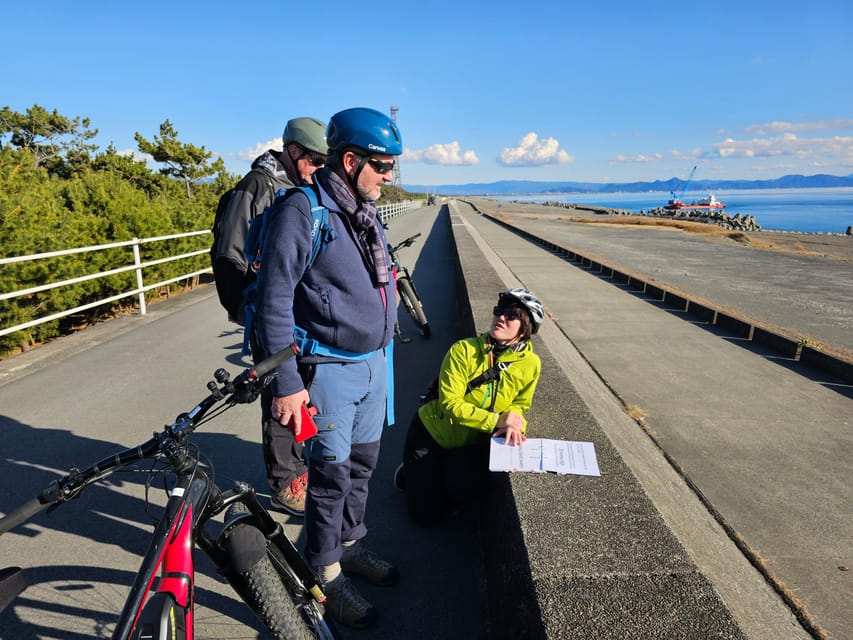
The e-bike makes the route accessible to more active visitors, but it does not remove every physical demand. You still need to balance, steer, stop, and ride for the full outing. The tour is not suitable for anyone who cannot ride a bike, and it is not designed for wheelchair users or people with mobility impairments.
The listed limits exclude pregnant women, people with back problems, people under 4 feet 9 inches, people over 65, people over 230 pounds, and people with visual impairments. These rules are part of the operator’s safety requirements, so check them carefully before paying.
Comfortable shoes are essential. You should also check the forecast and dress for the conditions. Mount Fuji visibility can change quickly, and a pleasant ride becomes less pleasant if you are poorly dressed for wind or rain.
Smoking and pets are not allowed. Meals are not included, so eat beforehand or plan around the tour. The schedule is short enough that food is not the focus, but you should not expect a restaurant stop as part of the base package.
Earthquakes, volcanoes, and life near Fuji
The tour’s geology section gives it more substance than a simple scenic ride. Mount Fuji was shaped by plate tectonics and volcanic activity over thousands of years. The guide also discusses past earthquakes and disaster preparedness.
That subject may sound serious during a leisure outing, but it is useful. Japan’s natural beauty comes with natural risks, and understanding earthquakes helps you see the country more clearly. The tour connects the forces beneath the ground to the choices people make above it.
For you, the best part is the local scale. Instead of treating geology as a list of dates, the guide relates it to water, temples, farming, streets, and the way people live near the mountain. That makes the subject easier to remember.
Is $109 a fair price?
At $109, the tour is best value for someone who wants a guided half-day outing with equipment and a very small group. Your fee includes the e-bike, helmet, insurance, and guide. You do not need to arrange a separate rental or work out a route through Fuji City.
The price is less compelling if you only want a guaranteed photograph of Mount Fuji. Weather may block the view, and the ride includes several short stops rather than a long stay at one grand viewpoint. You are paying for the whole combination of cycling, local interpretation, water sites, temples, and possible cultural encounters.
The small group helps justify the cost. With no more than five participants, you can ask questions and hear the guide without a large crowd. It also makes photo stops and pacing more manageable.
Free cancellation is available up to 24 hours before the start, with a full refund. You can also reserve now and pay later, which helps if your Japan plans are still shifting.
Who will enjoy this Fuji City ride?
I would choose this tour if you want to see an everyday side of the Mount Fuji region and are happy to be active. It suits couples, friends, and solo visitors who like small groups, local stories, and short cultural stops.
It is also useful for anyone staying in Tokyo who wants a same-day outing without committing to a long mountain excursion. Cruise ship passengers at Shimizu Port can join, but you must handle your own transport to the meeting point.
I would not choose it if you cannot ride a bicycle, need wheelchair access, have a back problem, or want a fully passive sightseeing experience. I would also skip it if your only goal is a guaranteed clear view of the summit.
Should you book it?
Book this tour if you want Mount Fuji explained through water, temples, earthquakes, and local life, not simply photographed from a distance. The e-bike keeps the route active without turning it into a race, and the small group gives the guide room to add personal touches.
The strongest reason to go is the chance of meeting the place through people such as Yasu or Aiko, with tea, family hospitality, and small neighborhood details adding warmth to the planned route. Just bring a bottle, dress for the weather, and accept that Fuji may hide behind clouds. For the right rider, $109 buys a thoughtful and unusually personal morning or afternoon.
FAQ
Where does the Mount Fuji e-bike tour begin?
Meet at the south exit of Shin-Fuji Station. Look for a guide holding a NINOMARU Guided Cycling Tour sign.
How long does the tour last?
The tour lasts 150 minutes, or two and a half hours.
How much does the tour cost?
The listed price is $109 per person.
Is Mount Fuji guaranteed to be visible?
No. Visibility depends on the weather, so a clear view of Mount Fuji is not guaranteed.
What does the price include?
The price includes insurance, a local guide, an e-bike, and a helmet. You need to provide information for insurance enrollment after your reservation is confirmed.
Are meals included?
No. Meals are not included in the tour price.
Can I bring my own water bottle?
Yes. You are encouraged to bring a bottle because you can refill it at the spring-water sites.
What languages are available?
The tour is offered in English and Japanese.
How many people are in the group?
The group is limited to five participants.
Who should not take this tour?
The tour is not suitable for pregnant women, people with back problems, mobility impairments, visual impairments, wheelchair users, people who cannot ride a bike, people under 4 feet 9 inches, people over 65, or people over 230 pounds.
More History Tours in Japan
- Mt. Fuji Heritage Tour: Traditional Villages, Lakes & Shrine
★ 4.5 · 509 reviews - Oiso: Adventure Hike to See Mt. Fuji & Historic Coastal Walk
★ 5.0 · 10 reviews - Walking through the Aso Caldera, Historical Walk along the “Bungo Kaido”
★ 4.5 · 4 reviews - Big Island in a Day: Volcanoes Waterfalls Sightseeing and History
★ 5.0 · 6,569 reviews
More E-Bikes in Japan
- Big Island: Fat Tire E-Bike Tour through Volcanoes National Park
★ 5.0 · 546 reviews - Lanzarote E-Bike Tour: Volcano Craters & Scenic Vineyards
★ 4.9 · 140 reviews - Caleta de Fuste/Corralejo: Guided E-Bike Tour & Crater Hike
★ 4.7 · 57 reviews - Fat Tire E-Bike Rental – Volcanoes National Park
★ 4.5 · 26 reviews
Just added around Japan
- Aso Caldera and Farm Experience Tour★ 5.0 · 5 reviews
- Private E-MTB guided cycling around Mt. Aso volcano & grasslands★ 5.0 · 16 reviews
- Walking through the Aso Caldera, Historical Walk along the “Bungo Kaido”★ 4.5 · 4 reviews
- “Mt. Fuji 1-Day Private Tour with English Speaking Driver-Guide”★ 5.0 · 46 reviews
- From Tokyo: Mt Fuji and Hakone Private Day Trip★ 4.5 · 75 reviews
- Private guided tour: Mt. Aso volcano, grasslands, Aso Shrine★ 5.0 · 19 reviews
- Tokyo:Mt Fuji & Hakone Day Tour with English Speaking Driver★ 5.0 · 26 reviews
- Tokyo/Yokohama: Mt. Fuji and Hakone Private Day Tour★ 5.0 · 64 reviews
Fujinomiya Volcano Tours, compared.
Tokyo: Mt. Fuji 5th Station & Hakone Cruise 1-Day Bus Tour
Read our review →

Mt. Fuji Drive Tour (Includes Visit to Local Speedway)
Read our review →
Halfway Up Mt,Fuji, Oshino Hakkai, Kawaguchiko from Tokyo
Read our review →
Tokyo: Fuji Cable Car Tour (Ticket Inc.) – Kawaguchiko Views
Read our review →
From Tokyo: Mount Fuji or Hakone+Gotemba Outlet Day Tour 10H
Read our review →
From Tokyo: Mt. Fuji, Hakone, Owakudani & Lake Ashi Bus Tour
Read our review →Browse the lists this tour appears in