
REVIEW · ROTORUA
Rotorua: Nocturnal Glow-Worm Adventure Tour with a Guide
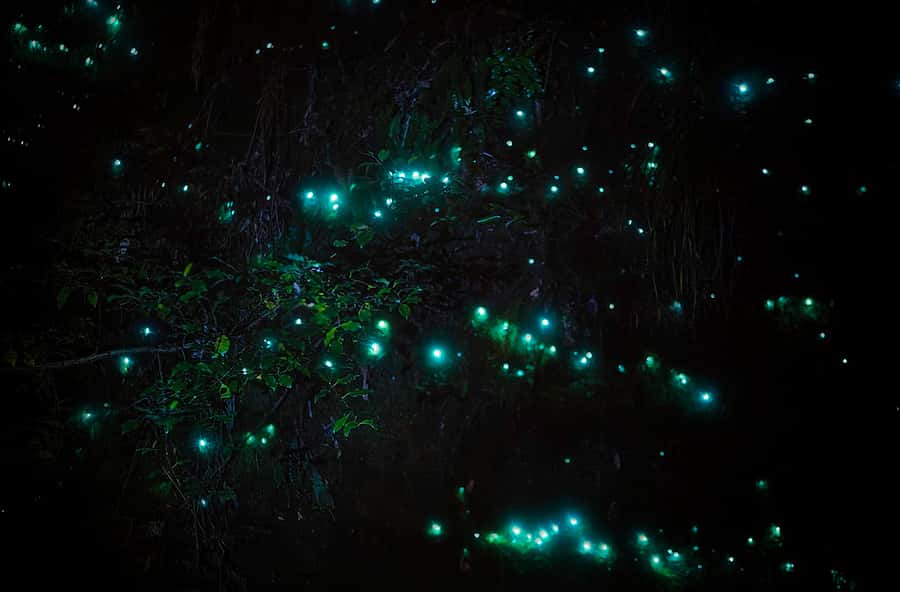
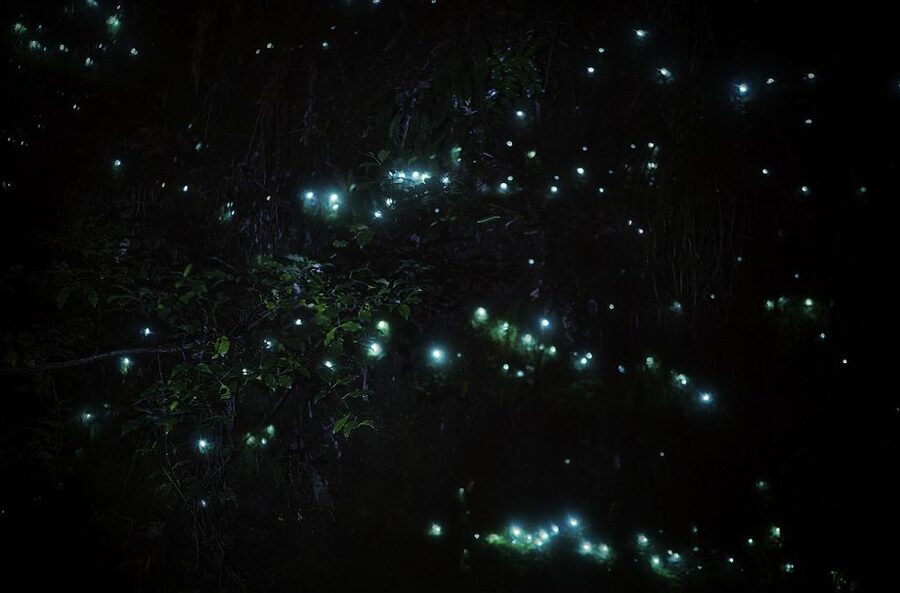
Thousands of glow worms turn a dark forest wall into a sky full of stars. That is the payoff on this small-group night walk, but the path to it matters just as much: you follow running water through native bush, past giant ferns, trees, insects, and possibly nocturnal animals.
I like two things here. First, guide Stephen brings the forest to life, pointing out details you would likely miss in the dark. Second, the tour feels personal, with no more than eight people, shared photographs, and sometimes a warm hot chocolate at the end. The main catch is practical: this is a 2-kilometer walk over roots, rocks, and slippery ground, so it is not suitable for anyone with low fitness or mobility limits.
Key points before you book
- Thousands of glow worms: You switch off your torch in the forest and look up at a natural display that can resemble a clear night sky.
- A real night walk: The experience includes native plants, insects, waterfalls, running water, and possible sightings of weta, possums, wallabies, hedgehogs, and more.
- Small groups of eight: You can hear the guide clearly and get a better chance to stop for photos and questions.
- Useful gear included: Real Rotorua supplies torches, transport, photos, and boots or wet-weather gear when conditions call for them.
- Three hours from Rotorua: A 25-minute drive each way leaves most of the evening for the forest.
- Good value at $74: You are paying for transport, equipment, a guide, photographs, and a close look at a part of New Zealand many people never see after dark.
Why this Rotorua night walk is different
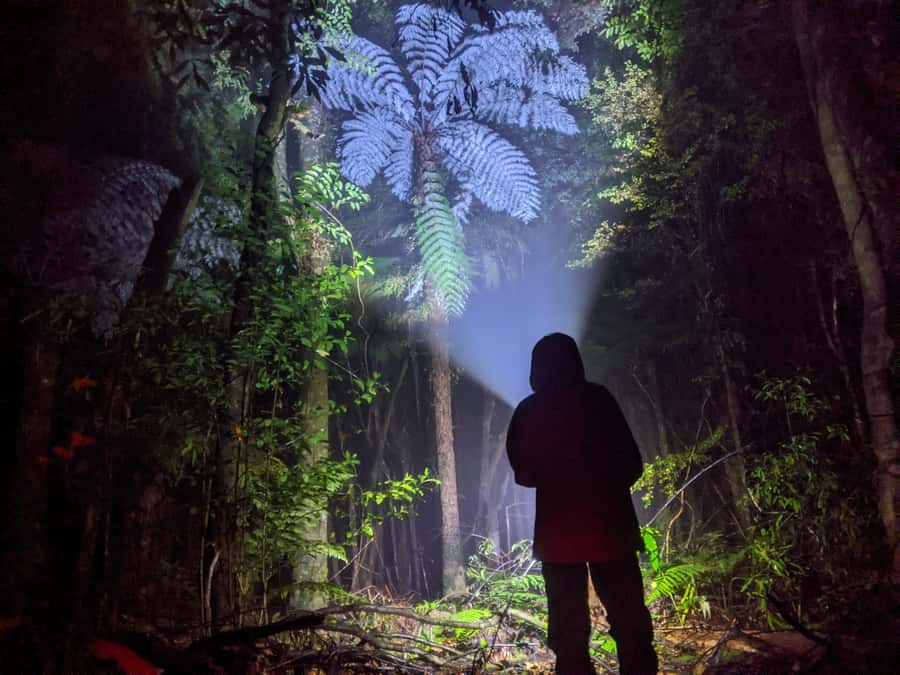
Rotorua is famous for geothermal activity, Māori culture, and big daytime attractions. This tour gives you a quieter side of the region. After sunset, the forest changes character. Familiar trees become silhouettes, small sounds seem louder, and your torch reveals only a narrow patch of ground at a time.
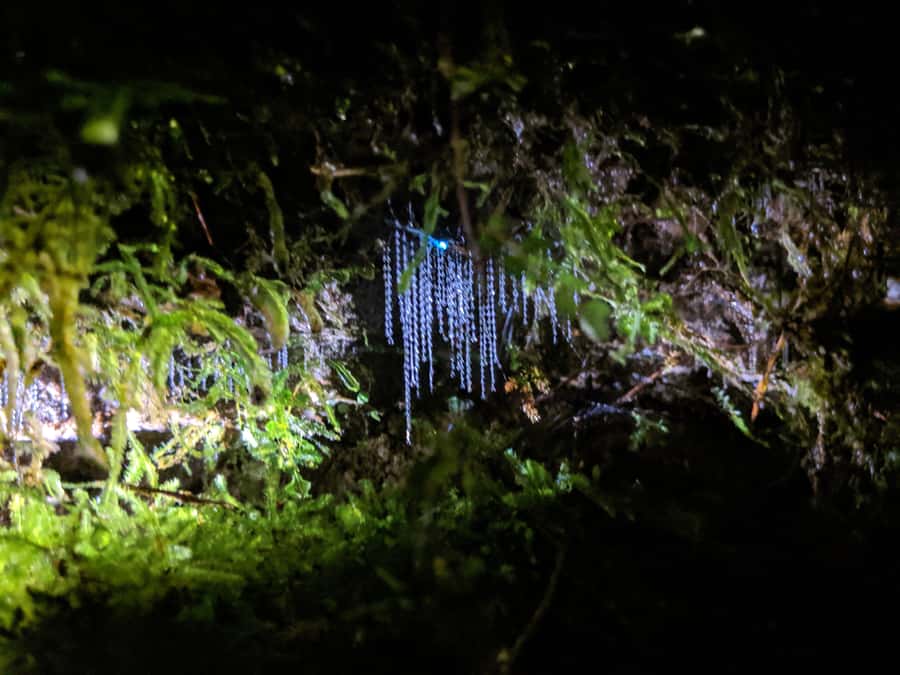
The glow worms are the headline attraction, and rightly so. The best moment comes when everyone switches off their lights. The darkness is deep enough that you may not see your own hand, then tiny points of blue-green light begin to appear along the banks and forest walls. With enough glow worms together, the effect can look like constellations scattered across the bush.
This is not a cave boat ride. You walk to the glow worms through the forest, which makes the setting feel more active and connected to the surrounding bush. If you have already seen glow worms at Waitomo or Te Anau, this gives you a different kind of experience. The walking route, night sounds, plants, and animals are part of the attraction rather than a short lead-in to a single viewing area.
More Geothermal Parks and Geysers in Rotorua
- Rotorua Canopy Tours: 2.5Hour Native Forest Zipline Adventure
★ 5.0 · 4,563 reviews - Rotorua: Wai-O-Tapu Geothermal Park Entry Ticket
★ 4.6 · 2,601 reviews - Rotorua’s Ultimate Zipline: 6 ziplines, 400 m Tandem, Cliff Walk
★ 5.0 · 2,557 reviews
Meeting your guide and leaving Rotorua
Meet your guide outside the tourist information center and look for a silver Ford Transit van marked Real Rotorua. The air-conditioned van ride to the forest takes about 25 minutes. That short transfer is useful because you do not need to arrange a car or find an unfamiliar bush track at night.
Stephen is the guide most often associated with this experience, and several departures have also been led by Steve, Kevin, or Julian. The guide does more than point out glow worms. You can expect explanations about local plants, insects, animals, forest conditions, and the wider Rotorua area during the drive and walk.
Before setting out, you receive a flashlight and any needed equipment. Boots and wet-weather gear are available when the track is muddy or rain is falling. That matters in Rotorua, where a damp evening can make the path more slippery but may also make the glow worms appear brighter.
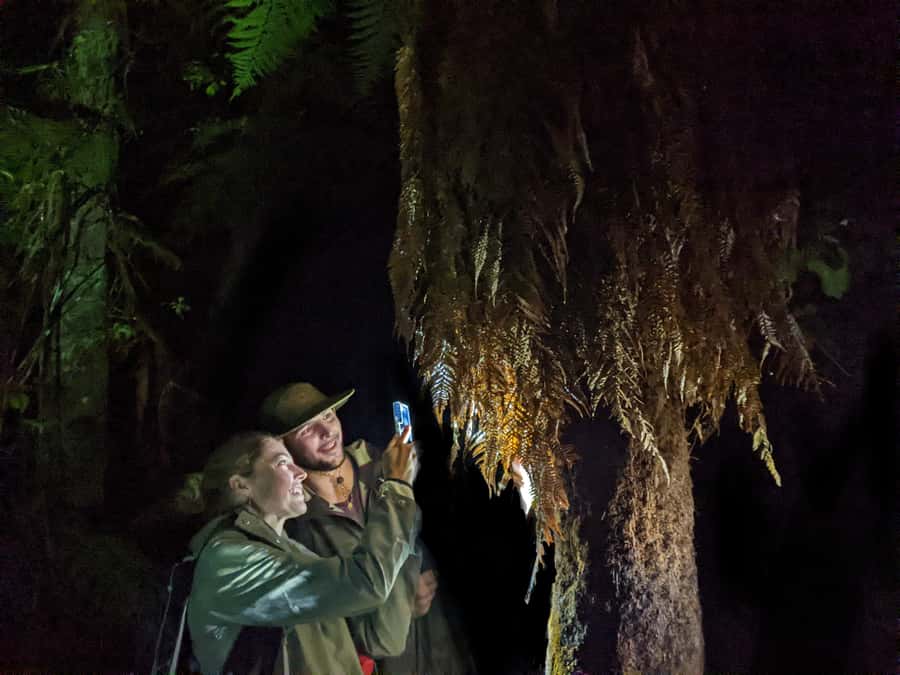
The group limit of eight is one of the tour’s strongest features. A larger crowd would make the dark viewing less peaceful and make it harder to hear quiet explanations. In a small group, the guide can stop to show you a plant or insect and help people find the best angle for a photograph.
The 2-kilometer walk through native bush
The walking section covers about 2 kilometers. It is described as a steady walk, but do not mistake that for a paved stroll. The route includes uneven ground, tree roots, rocks, and slippery surfaces. In low light, even a simple step needs attention.
Your flashlight shows the way, and the guide points out hazards as you go. Some tours have used both white and red lights, which can help with visibility while limiting the harsh glare in a dark setting. You should still keep one hand free, watch your footing, and avoid rushing.
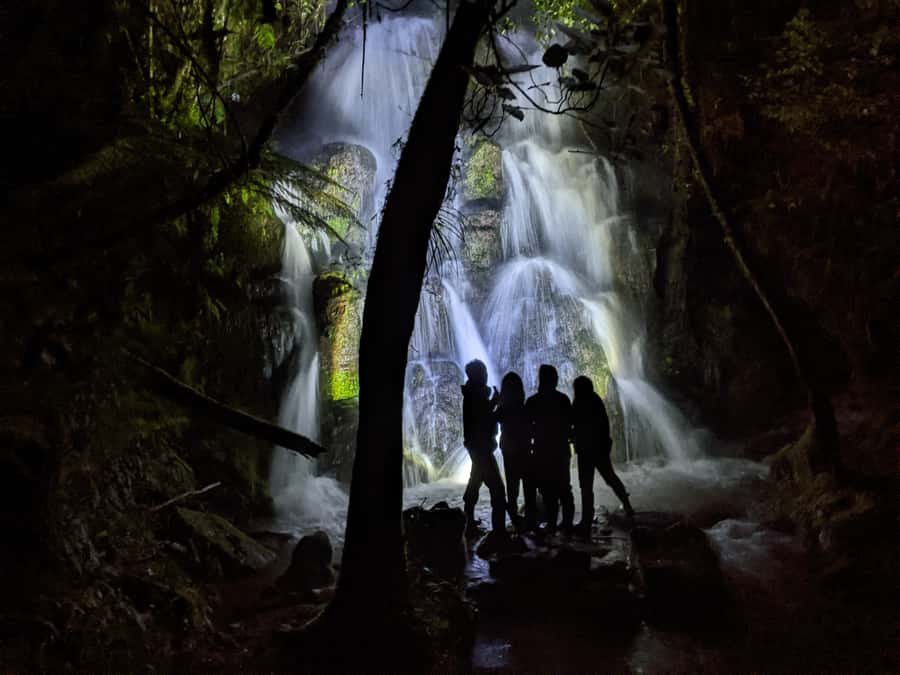
The walk follows the sound of running water. Towering banks rise beside the route, with waterfalls and tall trees adding shape to the darkness. You may pass giant ferns, silver fern, insects, spiders, weta, or other small creatures. Possible animal sightings have included possums, wallabies, and a hedgehog, but wildlife is never guaranteed. The forest itself is the dependable part of the experience.
I like this gradual approach. Instead of being driven directly to a viewing platform, you have time to adjust your eyes, hear the bush, and learn what makes the habitat work. Stephen’s talks often cover the glow worm life cycle as well as local flora and fauna, volcanic activity, Māori culture, and area history.
There are no comfort facilities during the walk. Plan ahead and use a restroom before leaving. That small detail becomes important on a three-hour evening outing with a long stretch in the bush.
The glow-worm viewing area
At the main viewing spot, the guide asks everyone to switch off their flashlights. The change is immediate. At first, the forest seems empty. Then the glow worms emerge as tiny lights along the banks, undergrowth, and walls.
The display can be extensive, with some sections described as a whole wall of lights. The number and brightness will vary with conditions, but the tour is built around reaching places where the glow worms gather in large numbers. Rain can make the track less comfortable, yet wet conditions may help the glow worms shine more strongly.
Your guide explains how the creatures produce their light and how they live. This adds useful context without taking away from the quiet. You are not simply looking at pretty dots. You are seeing a living part of the forest and learning why the dark, damp setting suits them.
Photography in near darkness is difficult with a phone. The included photos are a real benefit. Stephen has taken night photographs for each group and sent them afterward, giving you a record of the glow worms and the people in your party. He also helps with positioning and camera technique during the walk.
Keep your expectations sensible. The photos are a bonus, not a guarantee that every phone will capture the display perfectly. The best part is still what you see with your own eyes when all the torches go out.
Same volcano country, a different day out:
- Rotorua Rafting: Kaituna River White Water Rafting & Free Sauna
★ 5.0 · 1,952 reviews - Mitai Maori Village Cultural Experience in Rotorua
★ 4.5 · 1,294 reviews - Rafting Rotorua: Kaituna River White Water Experience
★ 4.9 · 1,274 reviews - Rotorua: Te Pa Tu Māori Cultural Experience with Dinner
★ 4.8 · 1,193 reviews
Wildlife, plants, and the details you could miss
A major strength of this tour is the guide’s attention to small things. In daylight, you might walk past a native plant, tree insect, spider, or silver fern without a second look. At night, the guide uses the torch beam to reveal these details one at a time.
You might learn about weta, possums, wallabies, or other nocturnal creatures. You may also hear animals without seeing them. That uncertainty is part of a night walk, and it keeps you alert. The guide can explain what you are seeing, but no responsible operator can promise a particular animal encounter.
The tour also gives you a better feel for New Zealand’s native forest than a quick roadside stop. You see how water, trees, ferns, insects, and glow worms share the same environment. For me, this makes the experience worthwhile even before the main glow-worm display.
Some guides add stories about the area’s past, volcanic activity, or Māori culture. The exact emphasis depends on the guide and the questions in your group, but the evening is clearly more than a single wildlife sighting.
Rain, darkness, and safety
Do not cancel mentally just because the forecast looks wet. Several outings have taken place in rain, with supplied wellington boots and wet-weather clothing helping people stay comfortable. Damp conditions may also produce brighter glow worms.
Still, rain changes the experience. The path can become muddy, rocks and roots get slick, and your shoes may get dirty. Wear comfortable clothing you can move in and footwear suitable for uneven ground, or use the boots provided if needed.
The operator follows a safety system audited to New Zealand standards. The guide highlights trip hazards and controls the pace. You remain responsible for watching where you step, using the flashlight properly, and staying with the group.
This is not suitable for children under six, wheelchair users, people with mobility impairments, visually impaired people, or anyone with a low level of fitness. The 2-kilometer distance is manageable for many people, but low light and rough ground make it more demanding than the number suggests.
Smoking is not allowed. Comfortable shoes and comfortable clothes are the main things to bring. A light layer is sensible for an evening outdoors, though the supplied information does not specify a required clothing list beyond comfortable wear.
The final hot chocolate and starry sky
After the walk, the evening may finish with hot chocolate and a biscuit or shortbread. This is a small touch, but it works well after a dark forest walk, especially in cool or wet weather. Some outings have also ended with a view of the stars or a full moon.
The final pause gives you time to talk about what you saw and let your eyes adjust before returning to Rotorua. It also prevents the tour from feeling like a hurried glow-worm stop followed by an immediate drive back.
The included photographs may be shared later, often by email. Ask your guide about the timing if the photos matter to you. The photo service adds value, particularly because night photography is hard without special equipment.
Is $74 a fair price?
At $74 per person, this is not the cheapest way to spend an evening in Rotorua, but it is a solid package. The price includes the guide, air-conditioned transport, flashlight, photographs, and equipment such as boots or wet-weather gear when required.
You also get a three-hour outing with a group limited to eight. Compare that with arranging transport yourself, buying or carrying suitable night-walking gear, and trying to find the glow worms without disturbing the forest or losing the route.
The value is strongest if you want a close, guided encounter rather than a large commercial attraction. It is less compelling for someone who dislikes walking on uneven ground or mainly wants a quick photograph. In that case, the 2-kilometer route may feel like work before the main event.
The perfect rating from 271 ratings reflects very strong satisfaction, especially with the guides, glow-worm display, photographs, and personal feel. I would still treat the rating as a sign of consistency, not a promise that every night will have the same weather, wildlife, or brightness.
Free cancellation is available up to 24 hours before departure, and you can reserve now and pay later. Check the available start time when booking, since the tour must begin after dark and times can vary.
Who will enjoy this most?
I would choose this tour if you want:
- A nature experience that fits into one evening in Rotorua
- A small group rather than a large coach outing
- A guide who can explain plants, insects, animals, and glow-worm biology
- A walk through forest instead of a passive viewing experience
- Included photos and transport
- A good chance to see many glow worms in one outing
It suits adults, older children over six, couples, solo visitors, and families with enough fitness for rough ground. One review described two people around age 70 managing the walk comfortably, but fitness varies, so do not use that as a guarantee for your own group.
You may prefer another activity if you need step-free access, use a wheelchair, have poor night vision, or want a completely dry and easy route. The guide works carefully, but safety assistance cannot turn a forest track into a flat path.
Should you book the Real Rotorua glow-worm tour?
Book it if the idea of walking quietly through native bush, then standing under thousands of natural lights, sounds better than simply arriving at a viewing point. The small group, strong guiding, included equipment, and photographs make the $74 price reasonable.
My best practical advice is to use the restroom first, wear clothes you can get muddy, and accept that rain may be part of the night. Choose this tour for the full forest experience, not just the glow worms. That is where the lasting value lies.
FAQ
How long is the glow-worm tour?
The tour lasts three hours, including transport between Rotorua and the forest.
How far do you walk?
The forest section covers approximately 2 kilometers.
How do I find the meeting point?
Wait outside the tourist information center and look for a silver Ford Transit van with Real Rotorua signage.
Is transport included?
Yes. Transport in an air-conditioned van is included, and the drive to the forest takes about 25 minutes.
What equipment is provided?
The guide provides a flashlight, and boots and wet-weather gear are available when needed. Photos are also included.
How many people are in the group?
The group is limited to eight participants.
Can children join the tour?
Children under six cannot join. The activity also requires a good level of fitness because of the uneven 2-kilometer walk.
Is the tour suitable for wheelchair users or people with mobility impairments?
No. The tour is not suitable for wheelchair users or people with mobility impairments. It is also not suitable for visually impaired people or people with a low level of fitness.
What should I bring?
Bring comfortable shoes and comfortable clothes. Plan to use a restroom before the walk because there is no comfort station along the route.
Can I cancel my booking?
You can cancel up to 24 hours in advance for a full refund. Reserve now and pay later is also available.
Just added around Rotorua
- Te Puia: Tuku Iho Trail with Cultural Show★ 5.0 · 5 reviews
- Te Puia: Te Pō Indigenous Combo – Tour, Dinner + Haka★ 4.4 · 52 reviews
- Te Puia: Te Rā Guided Day Tour + Haka Cultural Performance★ 4.7 · 128 reviews
- Rotorua: White Island, Mount Tarawera & Waimangu Volcanic …★ 4.4 · 5 reviews
- Rotorua: Velocity Valley – One Ride Pass★ 4.9 · 15 reviews
- Rotorua: Wai Ariki Hot Springs & Spa 1hr Restorative Bathing★ 4.8 · 16 reviews
- Rotorua: Waimangu Volcanic Valley Ticket & Self-Guided Walk★ 4.8 · 104 reviews
- Rotorua: Velocity Valley – Two Ride Pass★ 4.6 · 8 reviews
Rotorua Volcano Tours, compared.
Rotorua: Wai-O-Tapu Geothermal Park Entry Ticket
Read our review →
Mitai Maori Village Cultural Experience in Rotorua
Read our review →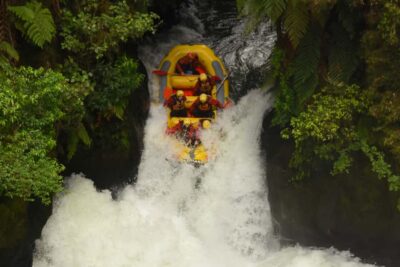
Rafting Rotorua: Kaituna River White Water Experience
Read our review →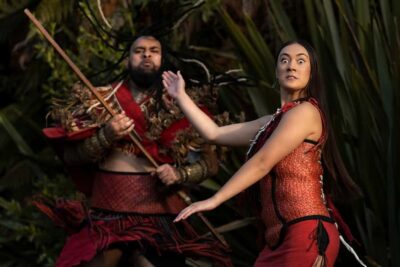
Rotorua: Te Pa Tu Māori Cultural Experience with Dinner
Read our review →
Rotorua: Hell’s Gate Outdoor Mud Spa & Guided Walk
Read our review →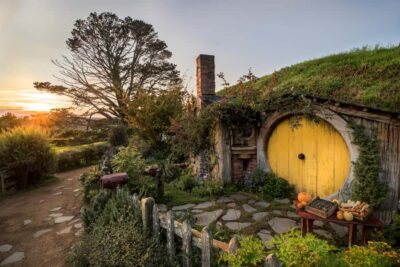
From Rotorua: Hobbiton Movie Set Tour with Festive Lunch
Read our review →
Rafting Rotorua Kaituna White Water Rafting | Kaitiaki Adventures
Read our review →
Rotorua: The National Kiwi Hatchery Kiwi Encounter Tour
Read our review →Browse the lists this tour appears in