
REVIEW · ROTORUA
Te Puia: Tuku Iho Trail with Cultural Show
Te Puia combines Rotorua’s three big draws in one well-paced outing: geothermal power, Māori culture, and kiwi conservation. You walk past geysers and hot pools, hear the story of Hatupatu, taste corn cooked in boiling geothermal water, and finish with song, poi, and haka inside a carved meeting house.
I like the practical scale of it. The guided valley walk gives you context that a quick look from a viewing platform cannot, while the kiwi centre and Māori Arts and Crafts Institute add depth. I also like the way food, legend, and living culture come together rather than being treated as separate attractions.
The main consideration is the walking. You need a moderate level of fitness for bushland trails and geothermal paths, and the experience is not suitable for wheelchair users, people with mobility impairments, or those who struggle with uneven walking surfaces. The published details also describe the experience as both two hours and two hours 45 minutes, so confirm the exact timing when you book.
Key points to know before you go
- Geothermal corn with a local legend: Taste sweetcorn cooked in an ancient boiling ngāwhā while hearing the story of Hatupatu and Kurungaituku.
- A compact Rotorua sampler: The experience brings together geothermal scenery, kiwi, Māori arts, and a cultural show in one visit.
- A proper cultural performance: Expect a pōhiri, waiata, mōteatea, poi, and haka at Te Aronui a Rua.
- Kiwi viewing is built in: The Kiwi Conservation Centre gives you a chance to see New Zealand’s famously elusive native bird.
- A walk rather than a bus tour: Bushland and sinter paths put you close to the steaming valley, but they require comfortable shoes and reasonable fitness.
- Good value at $89: The price covers the guided walk, several major Te Puia areas, and the 30-minute performance, with no separate show fee listed.
Starting at Te Puia on Hemo Road
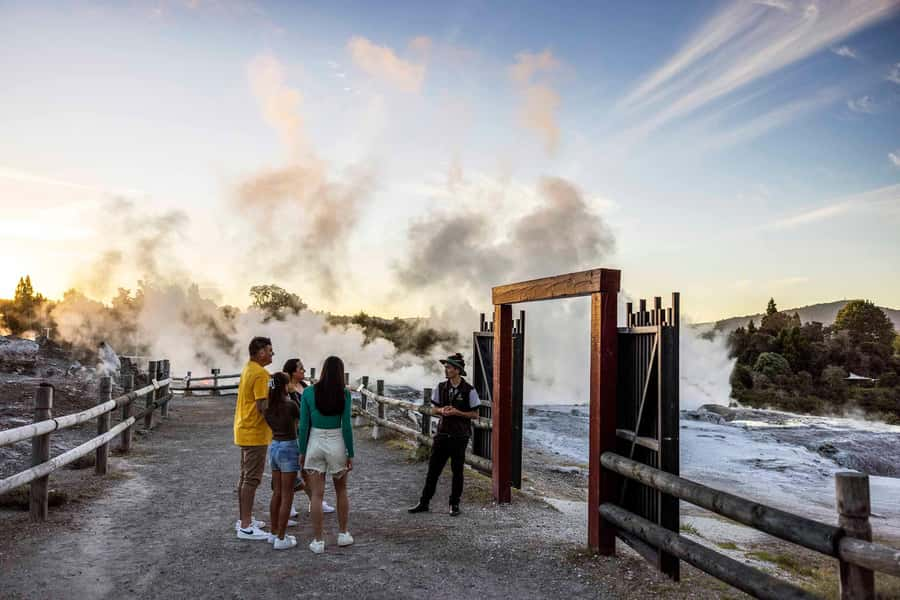
You begin at 20 Hemo Road, where you show your booking confirmation at Admissions and exchange it for your ticket. That is the only arrival step given, so allow enough time to reach the entrance without rushing.
This is a useful choice if you want one organized Rotorua activity rather than several separate bookings. In roughly one visit, you see geothermal features, Māori arts, a kiwi conservation facility, and a performance. You also avoid the problem of trying to fit these pieces together yourself.
The timing needs a small note. The detailed schedule adds up to about two hours 45 minutes: a two-hour 15-minute guided visit followed by a 30-minute dance show. Other booking information calls it a two-hour experience. Treat it as a compact half-day activity, and check the start time and expected finish before arranging transport or another appointment.
The group size also needs checking. One part of the information describes a small group limited to six people, while another says the tour is limited to 20. That difference could affect how personal the guide interaction feels, so ask Te Puia which limit applies to your selected departure.
More Geothermal Parks and Geysers in Rotorua
- Rotorua Canopy Tours: 2.5Hour Native Forest Zipline Adventure
★ 5.0 · 4,563 reviews - Rotorua: Wai-O-Tapu Geothermal Park Entry Ticket
★ 4.6 · 2,601 reviews - Rotorua’s Ultimate Zipline: 6 ziplines, 400 m Tandem, Cliff Walk
★ 5.0 · 2,557 reviews
Walking through geothermal Rotorua
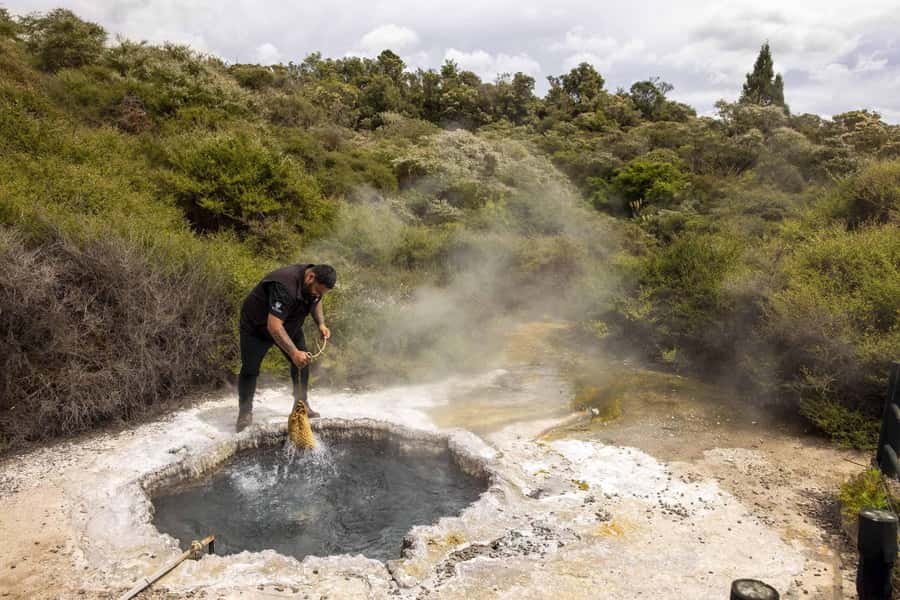
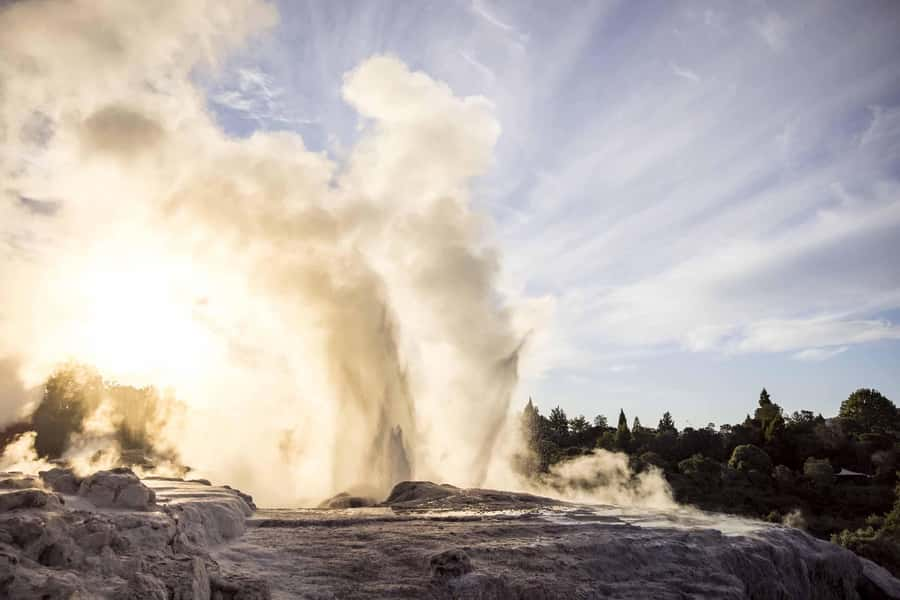
The heart of the experience is the guided walk through Te Puia’s geothermal valley. You follow bushland and geothermal sinter paths, with geysers and hot pools forming the setting around you.
Sinter is the pale mineral material left behind when geothermal water flows over the ground and deposits minerals. It gives the paths and valley a distinctive appearance, but it also explains why staying with the guide matters. This is not a casual stroll across open parkland.
The guide helps turn steam, mineral pools, and boiling water into a story about how people have used this place. Ancestors used the mineral-rich pools for cooking and bathing, and that practical connection makes the geothermal activity easier to understand. You are not simply looking at hot water. You are seeing a natural resource tied to daily life and Māori tradition.
Wear comfortable shoes with a good grip. High heels, bare feet, and unsuitable footwear are not allowed, and the walk requires a moderate level of fitness. Bring water and a camera, but keep your attention on the path as well as the view.
Sweetcorn, ngāwhā, and the story of Hatupatu
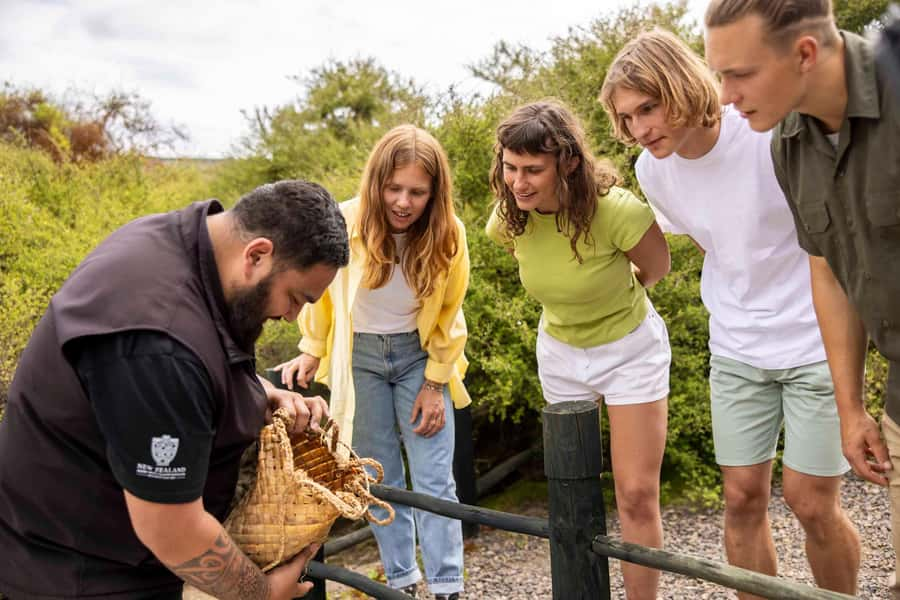
One of the most memorable details is the sweetcorn cooked in an ancient boiling ngāwhā, or hot pool. This is a small tasting, not a meal, and food and drinks beyond the included sample are not provided.
I like this part because it makes geothermal cooking tangible. You see how hot water can be useful, not only dramatic. The corn also gives the guide a natural way to talk about older ways of living in the valley.
As you taste it, you hear the story of Hatupatu, a brave warrior who escaped Kurungaituku, the mythical birdwoman. The tale includes an unexpected romantic thread, with an enchanted bond formed during the danger. It adds a touch of legend to what might otherwise be a straightforward explanation of the hot pools.
This is a good example of why a guide matters here. A photograph of a steaming pool tells you very little about its place in local tradition. The story and the food give the feature a human scale.
The Kiwi Conservation Centre
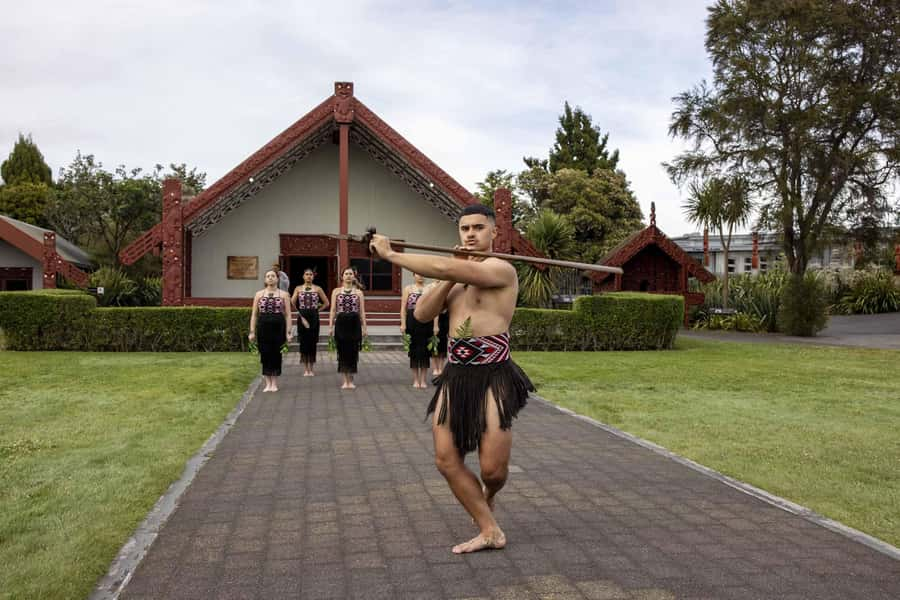
The Kiwi Conservation Centre is another strong reason to choose this experience. Kiwi are one of New Zealand’s best-known native birds, but they are difficult to spot in the wild. A conservation centre gives you a much more reliable chance to see them.
The visit is brief enough to fit into the larger route, yet it changes the pace. After walking among steam and geysers, you move into a space focused on native wildlife and conservation.
The supplied details do not promise a particular kiwi species, viewing time, or keeper talk, so do not plan around a long wildlife presentation. Think of it as one important stop within a wider Te Puia visit. If seeing a kiwi is high on your list, this built-in visit adds real value to the $89 price.
Same volcano country, a different day out:
- Rotorua Rafting: Kaituna River White Water Rafting & Free Sauna
★ 5.0 · 1,952 reviews - Mitai Maori Village Cultural Experience in Rotorua
★ 4.5 · 1,294 reviews - Rafting Rotorua: Kaituna River White Water Experience
★ 4.9 · 1,274 reviews - Rotorua: Te Pa Tu Māori Cultural Experience with Dinner
★ 4.8 · 1,193 reviews
Rotowhio marae and Māori arts
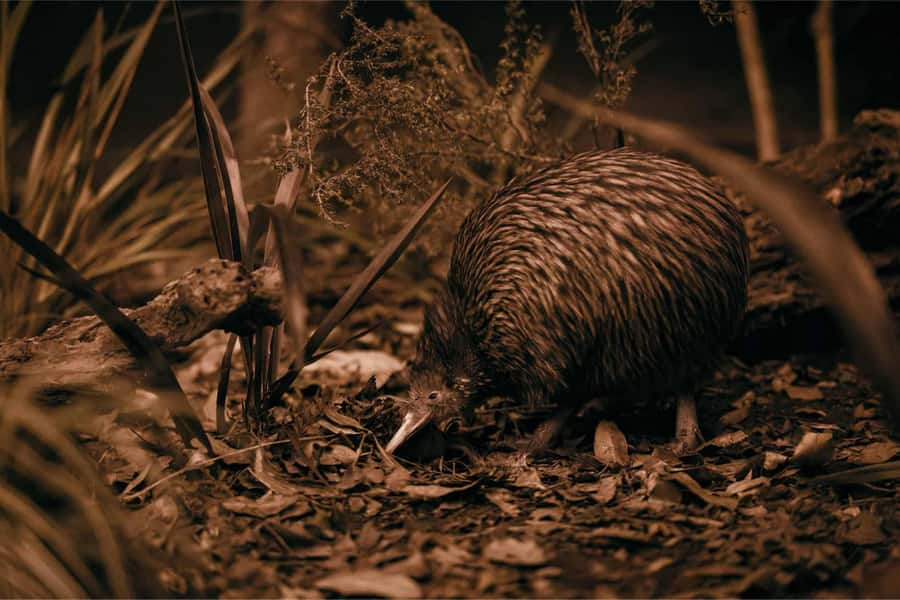
The route includes the sacred Rotowhio marae grounds and the New Zealand Māori Arts and Crafts Institute. These stops connect the natural setting with Māori design, carving, and traditional arts.
The marae grounds prepare you for the cultural performance later. A marae is not simply a decorative backdrop. It is a place connected to welcome, gathering, and ceremony, so entering this part of Te Puia gives the cultural section a clearer setting.
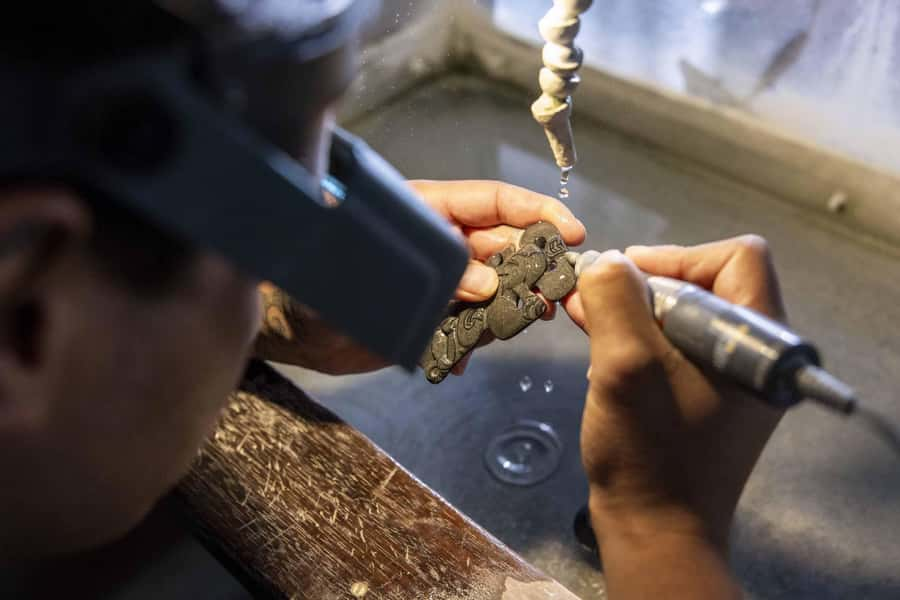
At the New Zealand Māori Arts and Crafts Institute, you can see the importance of keeping Māori artistic traditions active. The supplied details do not specify which demonstrations or artists will be present during your visit, so keep expectations broad. The value is in seeing the institute as part of a living cultural centre rather than treating Māori art as a souvenir display.
The route is especially useful if your Rotorua schedule is tight. You get a short introduction to arts and cultural spaces without needing another separate tour.
Te Aronui a Rua and the 30-minute show
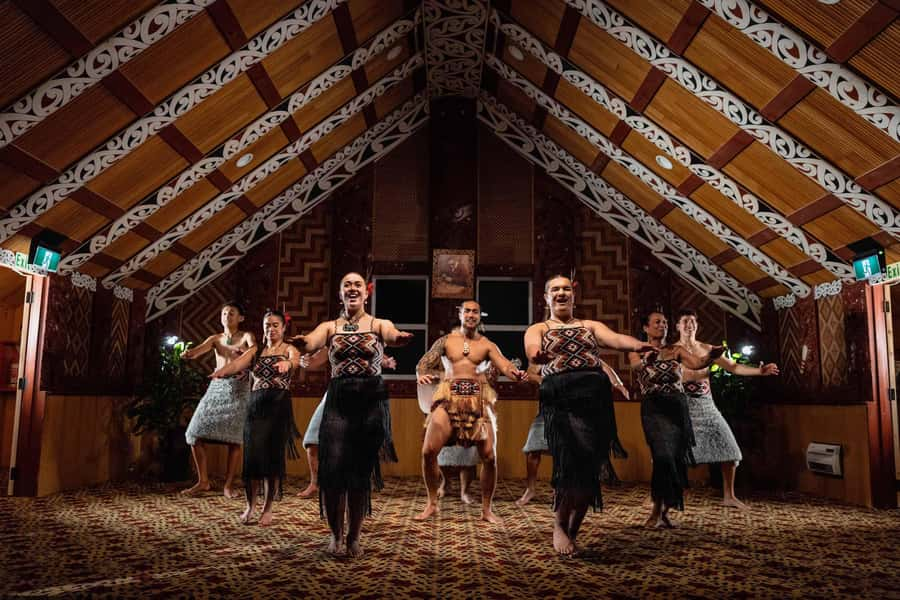
The cultural performance takes place in Te Aronui a Rua, a beautifully carved meeting house. It follows the guided valley portion and lasts about 30 minutes.
The program includes a pōhiri, or traditional Māori welcome, along with waiata, mōteatea, poi, and haka. You will see song, traditional chant, rhythmic poi movements, and the powerful energy of the haka.
This is not just a dance show added at the end for entertainment. The pōhiri gives the performance a ceremonial beginning, while the waiata and mōteatea bring different forms of Māori expression into the program. The carved meeting house also makes the setting part of the experience.
The show was described as moving by one visitor, and that matches what you should expect from the format. It is short, focused, and designed to give you a clear introduction rather than a full evening production. If you want an extended cultural concert, this will feel brief. If you want a meaningful sample after the valley walk, the 30 minutes fit well.
What $89 buys you
At $89 per person, the experience is best judged as a bundle. You are paying for a guided geothermal walk, the kiwi centre, Rotowhio marae grounds, the Māori Arts and Crafts Institute, the sweetcorn tasting, and the cultural performance.
That is strong value if you want several Rotorua highlights in one booking. A self-guided visit might let you move at your own speed, but it would not automatically provide the same explanation of geothermal cooking, Hatupatu’s story, or the cultural meaning of the performance.
The price is less attractive if you only want to see geysers. For that purpose, a shorter geothermal visit could suit you better. This experience earns its cost through variety and interpretation.
Food and drinks are not included apart from the sweetcorn sample, so bring water and budget separately for anything else you need. The activity is also not a private tour. The available information describes it as a small group, but the stated capacity varies between six and 20 people.
The guide makes a real difference
The guide leads the walk in English and explains both the geothermal features and their cultural setting. One guide specifically praised in the available feedback is Paul, who was described as fantastic and as making the experience feel complete.
Another visitor highlighted a Māori guide who explained the area and its history, cooked the sweetcorn, and connected the different parts of the visit. The guide’s role matters most during the valley walk, where a steaming pool or mineral deposit can look impressive but needs explanation to become memorable.
Do not expect the guide to turn the tour into a long academic lecture. The program has several stops to cover in a short time. You get a practical introduction, local stories, and cultural context while keeping the route moving.
Who should book this experience?
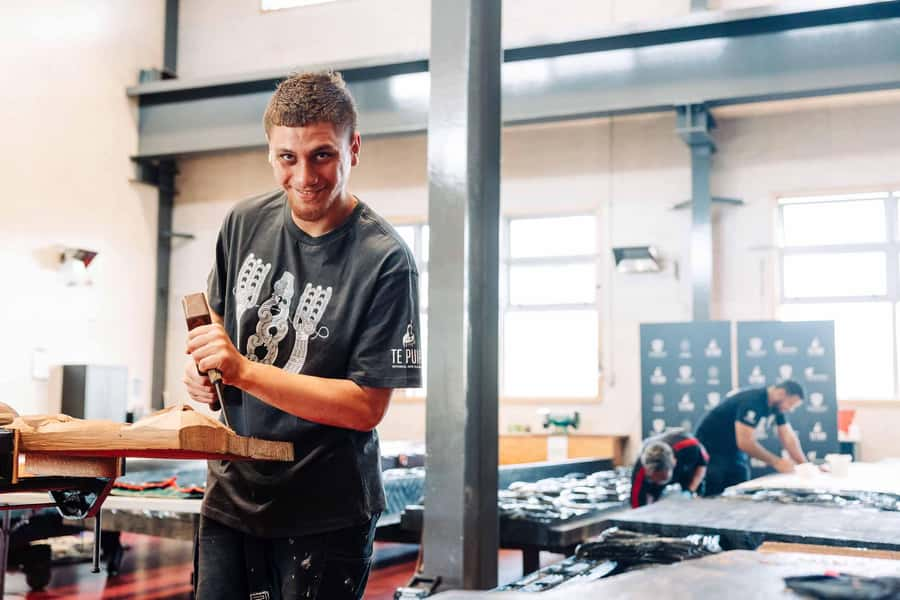
I would choose this tour if you are visiting Rotorua for a short time and want a broad introduction to Te Puia. It suits first-time visitors who want geothermal scenery, Māori culture, wildlife, and a performance without spreading those activities across several bookings.
It also suits families with older children or teenagers who can manage the walk. The corn tasting, Hatupatu story, kiwi viewing, and haka give the visit several changes of pace.
It is less suitable if you have low fitness, mobility limitations, or difficulty walking through bushland and geothermal paths. The experience is specifically not suitable for wheelchair users, people with mobility impairments, visually impaired people, or people with low fitness. Unaccompanied minors are not allowed, and the activity is not suitable for people over 95.
Smoking, vaping, alcohol, drugs, pets, electric wheelchairs, mobility scooters, and high heels are not permitted. These rules are worth checking before you arrive, especially if you need mobility equipment.
You can cancel up to 24 hours before the activity for a full refund, and the reserve-now-pay-later option keeps your plans flexible. Those terms help if your Rotorua schedule is still changing.
Should you book the Tuku Iho Trail?
Book it if you want one efficient, culture-focused Rotorua experience rather than a single geothermal attraction. The combination of hot-pool cooking, a local legend, kiwi viewing, Māori arts, and a pōhiri-led performance gives you a rounded visit for $89.
Skip it if you want a long, slow walk, a full meal, or a highly specialized wildlife visit. Also skip it if uneven paths and moderate walking are a problem.
Before paying, confirm the actual duration and group limit, since the published details give different figures. If those fit your schedule, this is a sensible way to get a strong first taste of Te Puia and the many sides of Rotorua in one compact outing.
FAQ
Where does the Tuku Iho Trail begin?
The experience begins at Te Puia, 20 Hemo Road. Show your confirmation at Admissions to exchange it for your ticket.
How long does the experience last?
The detailed schedule lists about two hours 15 minutes for the guided tour and 30 minutes for the cultural performance, or about two hours 45 minutes total. Other information describes the activity as two hours, so confirm the exact timing for your departure.
What language is the tour conducted in?
The live guided tour is conducted in English.
Is the cultural performance included?
Yes. The performance at Te Aronui a Rua is included and lasts about 30 minutes. It features a pōhiri, waiata, mōteatea, poi, and haka.
Is food included?
A sample of sweetcorn cooked in a geothermal hot pool is included. Other food and drinks are not included.
What should I bring?
Bring comfortable shoes, water, and a camera. High heels and bare feet are not allowed.
Is the tour suitable for wheelchair users?
No. The experience is not suitable for wheelchair users, people with mobility impairments, electric wheelchair users, or people using mobility scooters.
How fit do I need to be?
You need a moderate level of fitness for the walk through bushland and geothermal paths. The activity is not suitable for people with a low level of fitness.
Can I cancel the booking?
Yes. You can cancel up to 24 hours in advance for a full refund. You can also reserve your place and pay later.
More Show in Rotorua
- Mt Fuji & Hakone Cruise, Drum Show Bullet Train 1 Day from Tokyo
★ 4.0 · 7,413 reviews - Reykjavik: LAVA SHOW – Immersive Experience Entry Ticket
★ 4.8 · 3,360 reviews - Lava Show Reykjavik Admission Ticket – Optional Premium Upgrade
★ 5.0 · 3,278 reviews - Flamenco Show at Tablao El Arenal with Drink and Optional Dinner or Tapas
★ 4.5 · 1,415 reviews
Just added around Rotorua
- Te Puia: Te Rā Guided Day Tour + Haka Cultural Performance★ 4.7 · 128 reviews
- Te Puia: Te Pō Indigenous Combo – Tour, Dinner + Haka★ 4.4 · 52 reviews
- Rotorua: White Island, Mount Tarawera & Waimangu Volcanic …★ 4.4 · 5 reviews
- Rotorua: Velocity Valley – One Ride Pass★ 4.9 · 15 reviews
- Rotorua: Wai Ariki Hot Springs & Spa 1hr Restorative Bathing★ 4.8 · 16 reviews
- Rotorua: Waimangu Volcanic Valley Ticket & Self-Guided Walk★ 4.8 · 104 reviews
- Rotorua: Velocity Valley – Two Ride Pass★ 4.6 · 8 reviews
- Rotorua: Waimangu Valley Walk and Steaming Cliffs Kayak Tour★ 4.7 · 6 reviews
Rotorua Volcano Tours, compared.
Rotorua: Wai-O-Tapu Geothermal Park Entry Ticket
Read our review →
Mitai Maori Village Cultural Experience in Rotorua
Read our review →
Rafting Rotorua: Kaituna River White Water Experience
Read our review →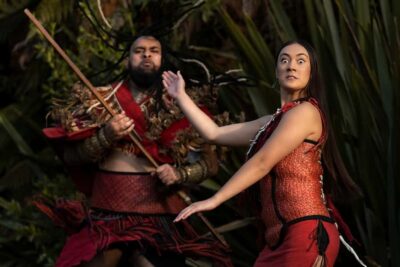
Rotorua: Te Pa Tu Māori Cultural Experience with Dinner
Read our review →
Rotorua: Hell’s Gate Outdoor Mud Spa & Guided Walk
Read our review →
From Rotorua: Hobbiton Movie Set Tour with Festive Lunch
Read our review →
Rafting Rotorua Kaituna White Water Rafting | Kaitiaki Adventures
Read our review →
Rotorua: The National Kiwi Hatchery Kiwi Encounter Tour
Read our review →Browse the lists this tour appears in