
REVIEW · ROTORUA
Rotorua: Māori Cultural Performance with Dancing
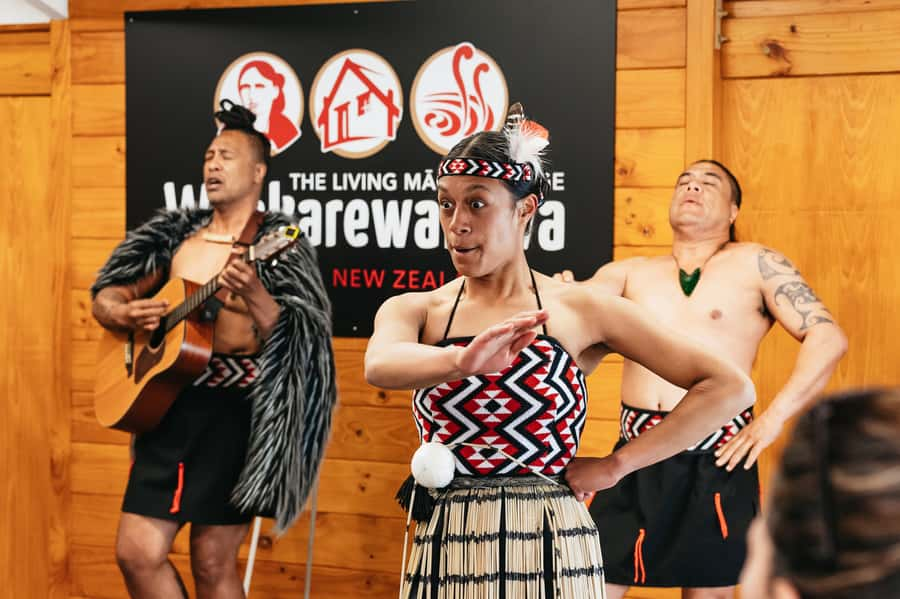
Rotorua’s Māori cultural performance puts the Haka, poi dance, and stick games on stage in a compact half-hour show. The singing is as important as the movement, with traditional melodies, explanations, and stories that give the dances a human meaning rather than presenting them as empty spectacle.
I like the low $20 price and the fact that you get a focused cultural experience without paying for a buffet dinner or a full village program. I also like the intimate setup, where limited seating and audience participation can make the performance feel warm and personal. The main trade-off is time: 30 minutes gives you a fine introduction, but it will leave you wanting more.
Key points to know before you go
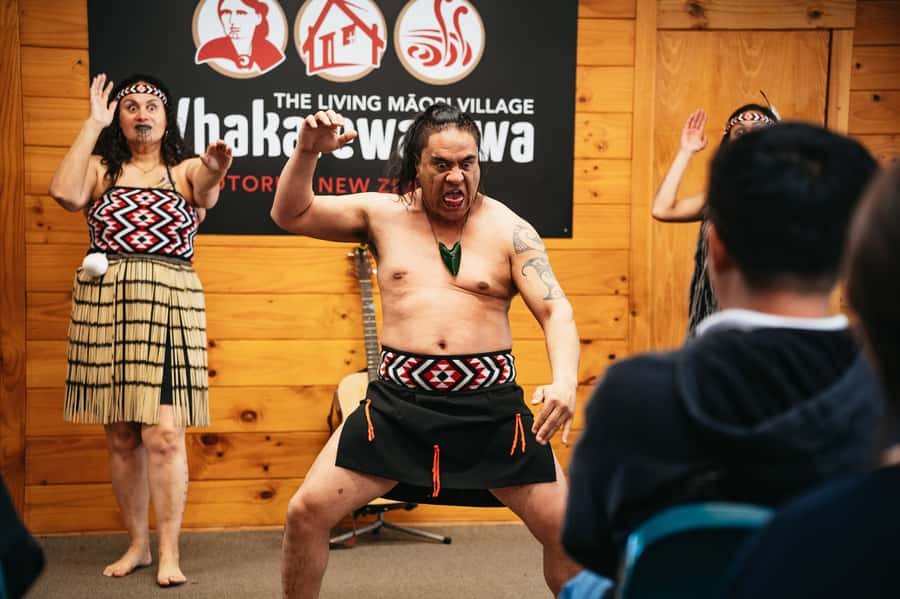
- The Haka is part of the live program, along with traditional singing and dancing.
- Poi and stick games add variety, with fast hand movements and rhythmic teamwork.
- The performance takes place at Whakarewarewa, The Living Māori Village, giving the show a clear connection to Rotorua’s Māori heritage.
- Seating is free choice, so arrive early if you want a front-row position.
- Audience participation may be included, making this more than a show you simply watch.
- The ticket covers the performance and host only, not a village tour or other activities.
What this 30-minute Māori performance is really like
This is a short cultural show designed to introduce you to Māori performing arts. You check in at the admissions building, receive your ticket, and have a host guide you to the performance area.
Once seated, you can expect a blend of singing, explanation, and dance. The performers present traditional songs and movements in a way that is easy to follow, even if you know little about Māori culture before arriving.
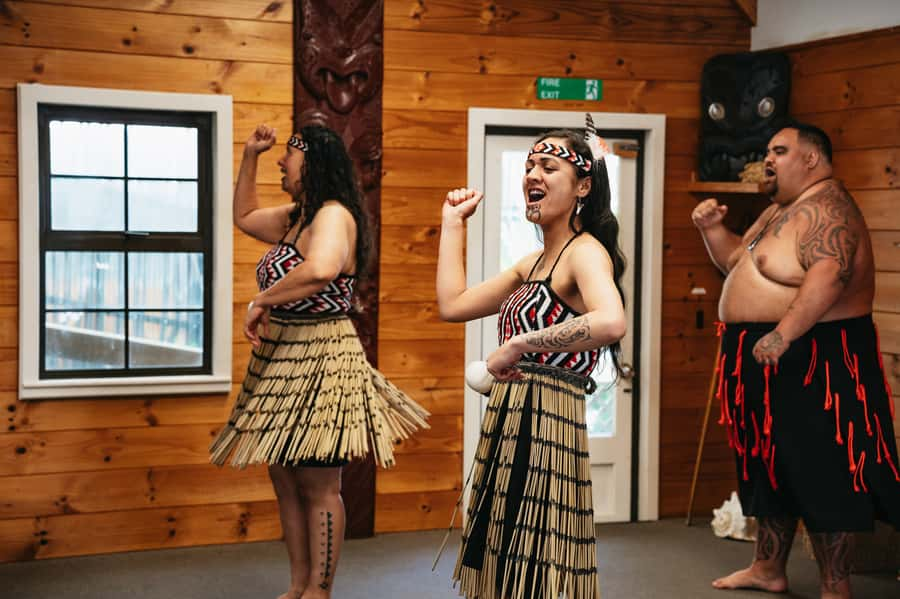
The program includes the world-famous Haka, but it is not only a Haka demonstration. You will also see poi work, stick games, and other dances, with the singers and dancers working together to create a complete presentation.
That variety matters. A Haka alone can be powerful, but it gives you only one part of Māori performance. The poi shows control and rhythm. The stick games bring speed and coordination. The songs add warmth and feeling, while the spoken explanations help you understand what you are seeing.
The show has a clear stage format, so you should think of it as a cultural performance rather than an unplanned glimpse into daily village life. That is not a criticism. A short, organized presentation makes sense for visitors with limited time, and the performers can explain the meaning and background of what they present.
More Geothermal Parks and Geysers in Rotorua
- Rotorua Canopy Tours: 2.5Hour Native Forest Zipline Adventure
★ 5.0 · 4,563 reviews - Rotorua: Wai-O-Tapu Geothermal Park Entry Ticket
★ 4.6 · 2,601 reviews - Rotorua’s Ultimate Zipline: 6 ziplines, 400 m Tandem, Cliff Walk
★ 5.0 · 2,557 reviews
Starting at Whakarewarewa, The Living Māori Village
The setting gives this performance more context than a show in a generic theater. Whakarewarewa, The Living Māori Village, is in Rotorua and is closely linked with the area’s Māori heritage.
Your ticket for this activity is for the performance itself. A village tour, other village activities, and add-on experiences are not included. You may be able to combine the show with a separate visit to the village, but you should not assume those extras come with the $20 ticket.
That distinction is useful when planning your day. If you want only a cultural performance, this is a simple and affordable choice. If you want to learn about the village’s communal lifestyle, cooking, and shared resources, you will need to arrange a separate village activity.
The performance can also work well after a guided village visit. The show gives the arts a stronger place in the wider visit, while the village tour provides more background about everyday Māori life. Just allow enough time between activities, since the performance has its own check-in and starting time.
Why the Haka is not the whole story
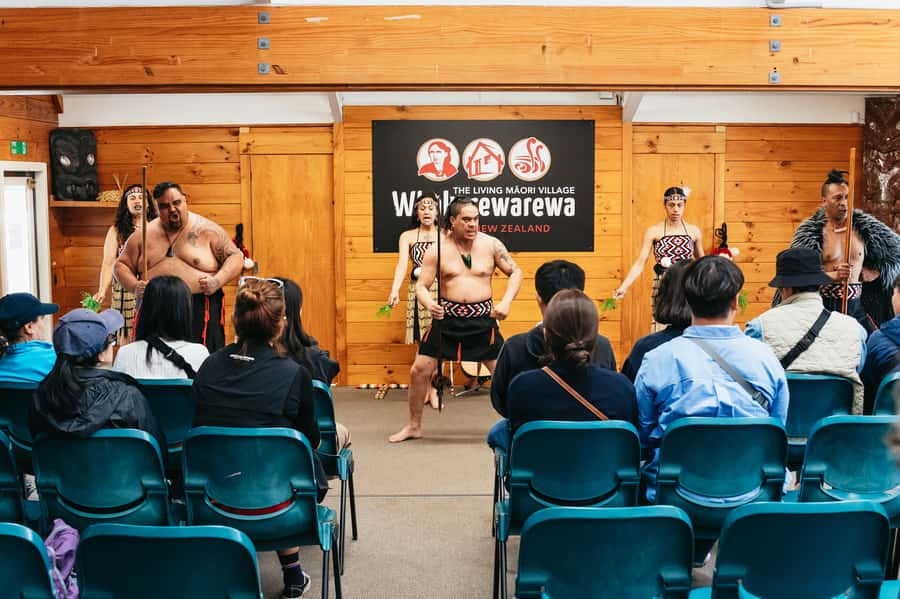
The Haka is the part many people expect, and it does not disappoint as a stage moment. Its force comes from more than facial expressions or loud voices. The posture, footwork, gestures, and group timing create a strong sense of shared purpose.
Still, I would not judge the whole experience by the Haka alone. The show is at its best when you pay attention to the contrast between the different forms.
The poi dance uses weighted balls attached to cords, swung in carefully timed patterns. It demands practice and concentration, and the movement can look light and effortless even though the performers are managing constant rhythm and spacing.
The stick games bring a different mood. They rely on timing between performers, with sticks passed or moved in coordinated patterns. They are lively to watch and help show how Māori performance can combine play, skill, music, and group discipline.
Traditional songs bring the program back to a quieter, more emotional place. The voices and harmonies are a major part of the appeal, and the performance can include explanations of the stories behind the songs.
One song connected with the program is Pokarekare Ana. Hearing the background to a song before hearing it performed gives you a better sense of why the music matters. You do not need prior knowledge of Māori language or customs to follow the presentation, since the host and performers provide information in English.
The singing gives the show its heart
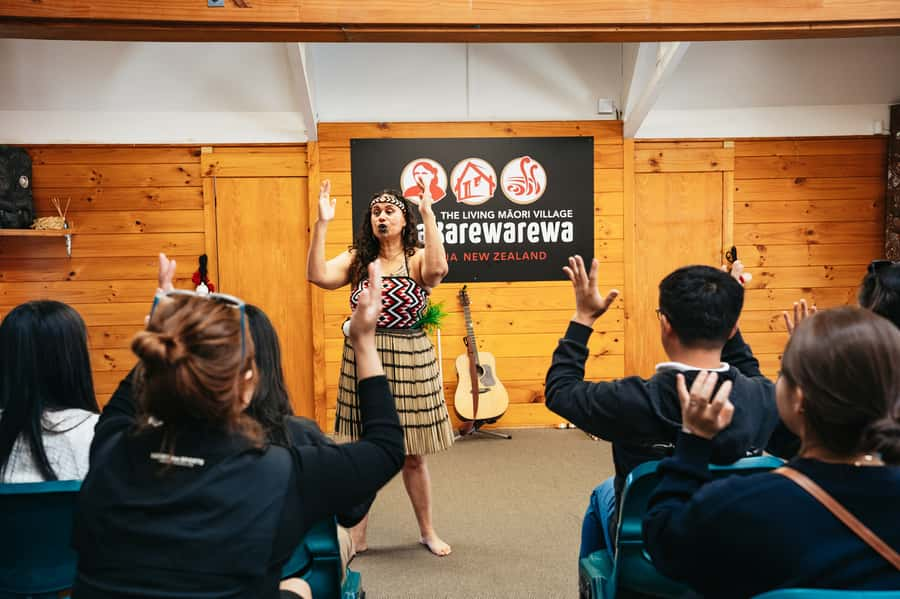
The dancing catches your eye, but the singing may be what stays with you. The melodies create a gentler counterpoint to the Haka and the sharper energy of the stick games.
The performers sing together with a strong sense of harmony. This is not background music added to a dance display. The songs carry much of the feeling of the show, and the changes in pace help the performance avoid becoming a string of similar demonstrations.
I appreciate the way music can open a door into a culture without requiring a lecture. You hear the sound first, then learn a little about its meaning. That order keeps the experience lively while still giving you useful context.
The atmosphere is also helped by the welcome from the people involved. The overall tone is warm and open, with smiles and a clear enjoyment of the performance. That makes a difference, especially for families and visitors who may feel unsure about participating.
Same volcano country, a different day out:
- Rotorua Rafting: Kaituna River White Water Rafting & Free Sauna
★ 5.0 · 1,952 reviews - Mitai Maori Village Cultural Experience in Rotorua
★ 4.5 · 1,294 reviews - Rafting Rotorua: Kaituna River White Water Experience
★ 4.9 · 1,274 reviews - Rotorua: Te Pa Tu Māori Cultural Experience with Dinner
★ 4.8 · 1,193 reviews
Audience participation keeps the show from feeling distant
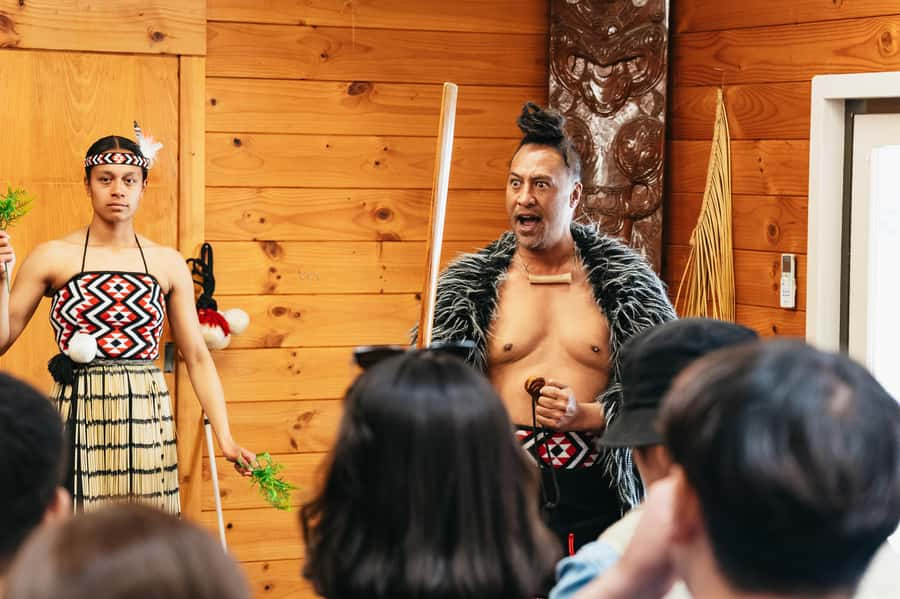
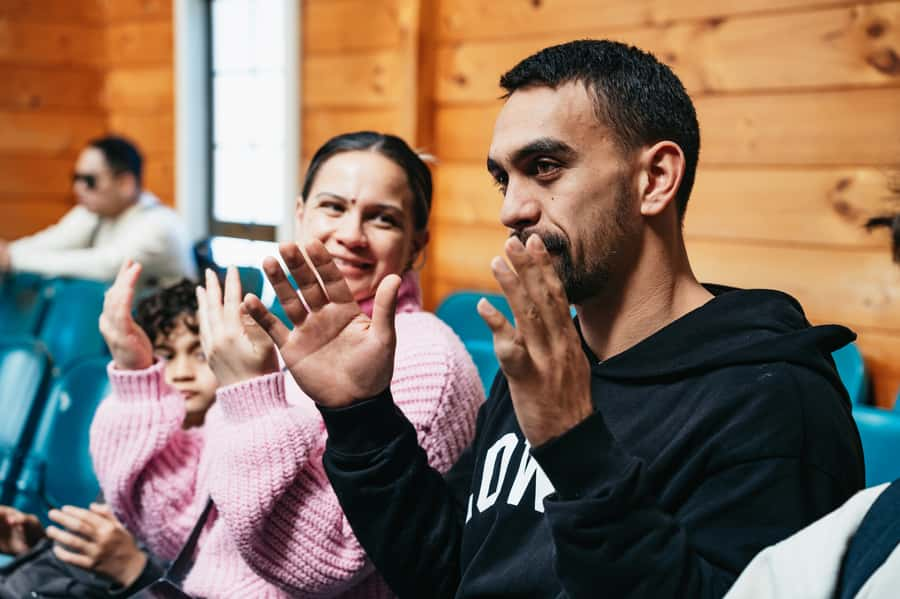
At one point, the audience may be invited to try some of the movements. This is not a demanding dance lesson, and you can take part at your own comfort level.
For children and teenagers, this can be the moment that turns a show into a memory. Adults often enjoy it too, even if their timing is not quite as polished as the performers’. The activity gives you a small taste of the coordination involved in the dances.
You should also know that participation changes the tone. The show is not a solemn presentation from start to finish. It has humor, energy, and a communal feeling, with the audience brought into the room rather than kept completely separate from the performers.
If you prefer to watch quietly, you can do that. The participation section is brief, and the performance remains easy to follow from your seat.
Finding a good seat and getting the most from the half hour
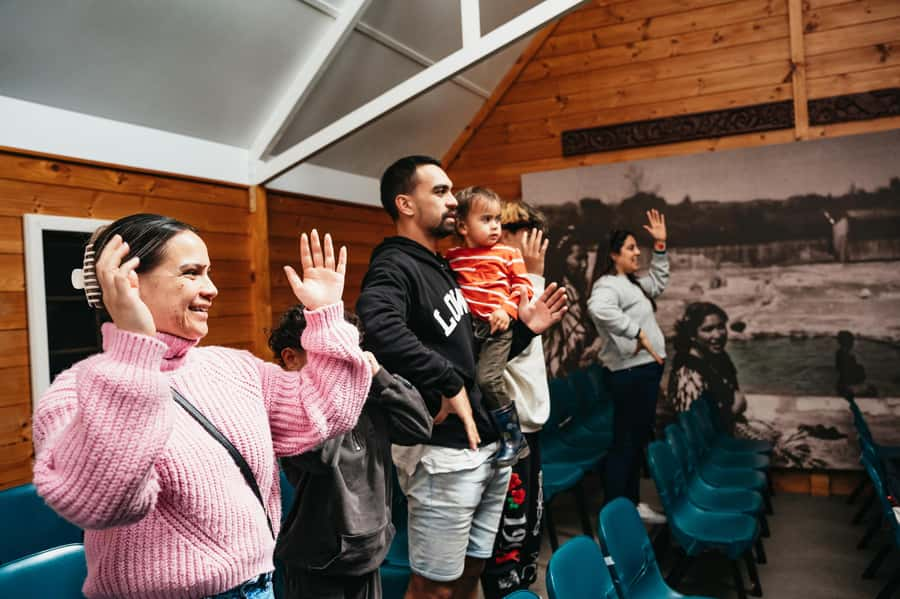
Seating is free choice, and limited seats can make the room feel pleasantly contained. Arrive early if you want the best view, especially if seeing the footwork and hand movements matters to you.
A front or central position should help you see the dancers clearly. If you arrive later, you can still follow the performance, but your view may be less direct. The check-in point is the admissions building, so do not go straight to a performance area without first collecting your ticket and receiving directions from the host.
The show lasts 30 minutes. That is long enough to cover the Haka, poi, stick games, songs, explanations, and a participation section without asking you to devote half a day to one activity.
The short format also makes this easy to fit into a busy Rotorua schedule. You can pair it with other sights, a meal, or a separate village tour. The downside is clear: the performance cannot explore each dance or song in great detail. If you want a long cultural workshop or a full day of activities, this is not that kind of ticket.
For many people, the half-hour length is a strength. You get a well-shaped introduction, and you can decide later if you want to learn more through a separate village experience.
Is $20 good value?
At $20 per person, this is one of the easier Rotorua activities to add to your plans. The price covers the live performance and a host, not transport, food, a guided village tour, or other attractions.
I see the value in the focus. You are paying for a direct look at Māori song and dance, with a professional performance and cultural explanation. There is no need to buy a dinner package if you simply want the arts.
The price is especially fair for families, couples, and anyone with only a short window in Rotorua. It also works for people who have already visited the village and want to add a performance without purchasing a larger package.
The value is less clear if you expect a full cultural day. The ticket does not include the village tour or other village activities, so adding those will increase the total cost. Read the booking details carefully and decide if you want the performance alone or a wider visit to Whakarewarewa.
Who will enjoy this most?
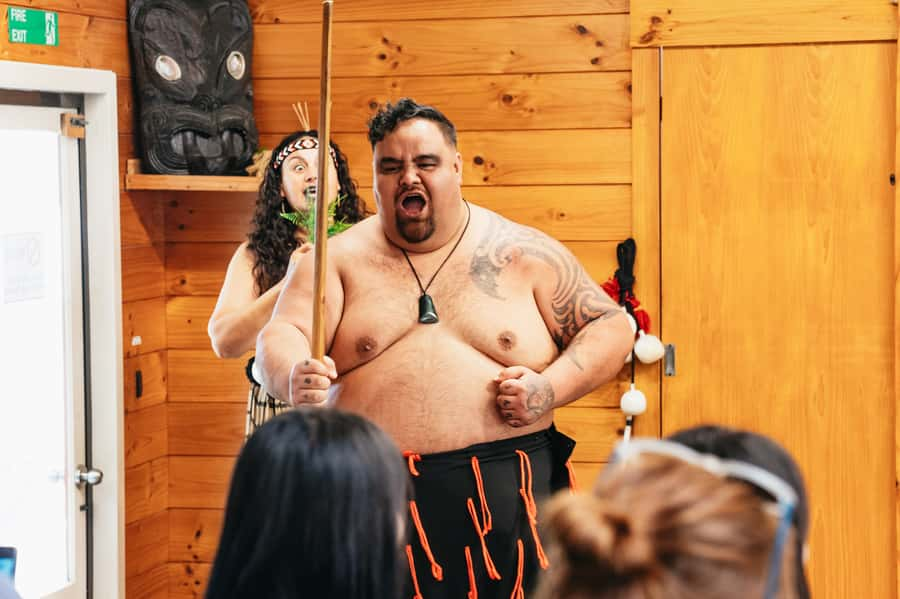
I would recommend this experience to first-time visitors who want an accessible introduction to Māori culture. You do not need background knowledge, and the English explanations make the songs and dances easier to understand.
Families should find the short length manageable. The Haka is dramatic, the poi is visually engaging, and the stick games provide motion and rhythm. The audience participation can also give teenagers a reason to pay attention.
It is a good fit for couples and solo visitors who want something meaningful without committing to a long dinner show. The singing adds an emotional side that makes the performance feel more than a checklist of famous movements.
It may be less suitable if you dislike staged performances or want a quiet, self-guided cultural visit. This is deliberately presented for an audience. The performers are on stage, the timing is set, and the experience has a clear beginning and end.
I would also be careful about calling it a complete picture of Māori culture. It offers a valuable introduction to traditional performance, but one short show cannot explain every part of Māori life, language, history, or ceremony.
Practical details that affect your choice
The host or greeter speaks English, and the performance information is presented in English. The activity is wheelchair accessible, which makes it a practical option for many visitors.
Free cancellation is available up to 24 hours before the activity for a full refund. You can also reserve now and pay later, which helps if your Rotorua schedule is still changing.
The meeting point is the admissions building, where you check in to receive your ticket. Build in a little time to find that building and be shown to the performance area, particularly if you are connecting the show with another activity at the village.
There is no mention of a photo opportunity with performers after the show. If taking a picture with the cast is important to you, do not count on it being part of the experience.
Should you book it?
Book this performance if you want a short, affordable, and well-explained introduction to Māori song and dance. The Haka, poi, stick games, strong singing, and occasional audience participation give you a good range of experiences in 30 minutes.
I would choose it as a stand-alone activity when time or budget is tight. I would also add it to a separate Whakarewarewa visit if you want the arts to complement a village tour.
Skip it only if you are looking for a full-day cultural program, a meal, or extensive time with performers. For everyone else, $20 buys a focused performance with real feeling and enough explanation to help you understand what you are watching.
FAQ
How long does the Māori cultural performance last?
The performance lasts 30 minutes.
What does the performance include?
It includes traditional singing and dancing, the Haka, poi dance, stick games, cultural explanations, and possible audience participation.
Is a village tour included with the ticket?
No. The ticket includes the performance and host, but not a tour or other village activities.
Where do I check in?
Check in at the admissions building to receive your ticket and be shown to the performance area.
Is the activity wheelchair accessible?
Yes, the activity is wheelchair accessible.
Can I cancel for a full refund?
Yes. You can cancel up to 24 hours in advance for a full refund. You can also reserve now and pay later.
Just added around Rotorua
- Te Puia: Tuku Iho Trail with Cultural Show★ 5.0 · 5 reviews
- Te Puia: Te Pō Indigenous Combo – Tour, Dinner + Haka★ 4.4 · 52 reviews
- Te Puia: Te Rā Guided Day Tour + Haka Cultural Performance★ 4.7 · 128 reviews
- Rotorua: White Island, Mount Tarawera & Waimangu Volcanic …★ 4.4 · 5 reviews
- Rotorua: Velocity Valley – One Ride Pass★ 4.9 · 15 reviews
- Rotorua: Wai Ariki Hot Springs & Spa 1hr Restorative Bathing★ 4.8 · 16 reviews
- Rotorua: Waimangu Volcanic Valley Ticket & Self-Guided Walk★ 4.8 · 104 reviews
- Rotorua: Velocity Valley – Two Ride Pass★ 4.6 · 8 reviews
Rotorua Volcano Tours, compared.
Rotorua: Wai-O-Tapu Geothermal Park Entry Ticket
Read our review →
Mitai Maori Village Cultural Experience in Rotorua
Read our review →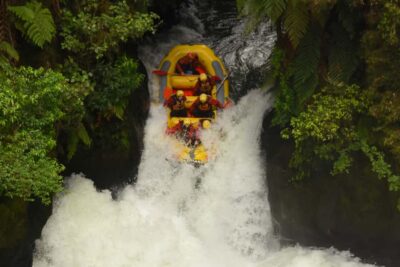
Rafting Rotorua: Kaituna River White Water Experience
Read our review →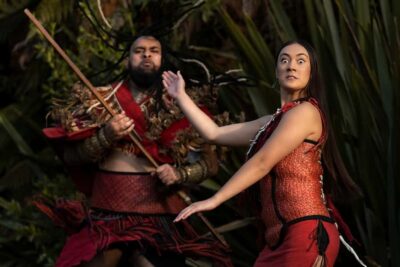
Rotorua: Te Pa Tu Māori Cultural Experience with Dinner
Read our review →
Rotorua: Hell’s Gate Outdoor Mud Spa & Guided Walk
Read our review →
From Rotorua: Hobbiton Movie Set Tour with Festive Lunch
Read our review →
Rafting Rotorua Kaituna White Water Rafting | Kaitiaki Adventures
Read our review →
Rotorua: The National Kiwi Hatchery Kiwi Encounter Tour
Read our review →Browse the lists this tour appears in