
REVIEW · ROTORUA
Rotorua: Whakarewarewa Village Guided Tour
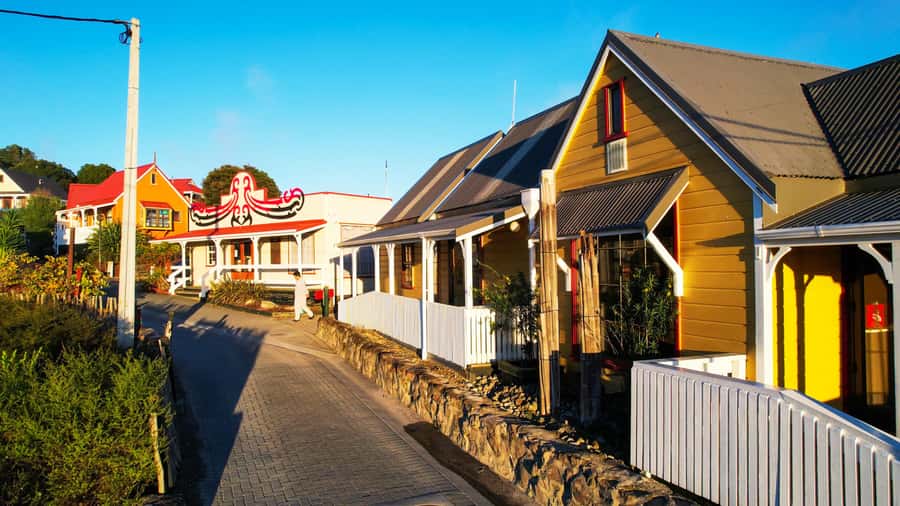
Whakarewarewa is a living Māori village built around some of Rotorua’s most dramatic geothermal activity. You’ll walk beside boiling pools, steam vents, mud features, and silica formations while learning how families have used this hot ground for cooking, bathing, and warmth for generations. The experience feels personal because the guides are direct descendants of Māori guides who helped introduce visitors to New Zealand.
I like the way the tour connects daily village life with geothermal science, rather than treating the hot pools as scenery alone. I also like the guides’ personal approach. Daniel, Faye, Teeao, and others have been praised for their humour, clear explanations, family ties, and pride in their home. The sweet corn cooked in a mineral pool is a simple but memorable bonus.
The main consideration is time. One hour passes quickly, and the tour may not include every cultural feature you hope to see. A few visitors hoped for more family contact, dancing, or a closer look at boiling mud. This is best seen as a focused village and geothermal walk, not a full-day cultural program.
Key points to know before you go
- Māori guides with family ties to the village: Guides share customs and stories connected to their own community.
- A working geothermal setting: Hot pools and steam vents are part of everyday life, not just viewing points.
- Pōhutu geyser from village lookouts: You get broad views, though the geyser’s display depends on natural conditions.
- Thermal-cooked corn included: The corn is taken from a mineral pool and served hot during the visit.
- One hour outdoors: Wear comfortable shoes and prepare for changing weather.
- Good value at $28: The price includes entry, the guided walk, and corn, with free cancellation up to 24 hours before the start.
Why Whakarewarewa feels different from a standard geothermal park
Rotorua has several places where you can see geysers, bubbling mud, and steaming ground. Whakarewarewa adds something those viewing areas often cannot: people still live with the geothermal activity as part of ordinary village life.
That changes the way you look at the pools. A boiling patch is not only a photograph. It can also be a cooking place. A warm mineral pool is not simply a natural attraction. It has a role in bathing and family life. Steam rising from the ground is part of the setting in which homes, meeting places, churches, and burial grounds sit.
The village is Māori-owned and guided, and the people leading the walk have family connections to the area. That matters. You are not just being shown a collection of natural features with a memorized speech. The guides explain how the village works and what it means to grow up among these springs and geysers.
The word manaakitanga, often translated as hospitality and care for others, is central to the tone of the visit. The guides are expected to welcome you, answer questions, and help you understand the place with respect. The strongest guides, including Daniel, Faye, and Teeao, have been praised for their humour, warmth, and ability to explain Māori customs in an easy, direct way.
More Geothermal Parks and Geysers in Rotorua
- Rotorua Canopy Tours: 2.5Hour Native Forest Zipline Adventure
★ 5.0 · 4,563 reviews - Rotorua: Wai-O-Tapu Geothermal Park Entry Ticket
★ 4.6 · 2,601 reviews - Rotorua’s Ultimate Zipline: 6 ziplines, 400 m Tandem, Cliff Walk
★ 5.0 · 2,557 reviews
Starting at the Geyser Café
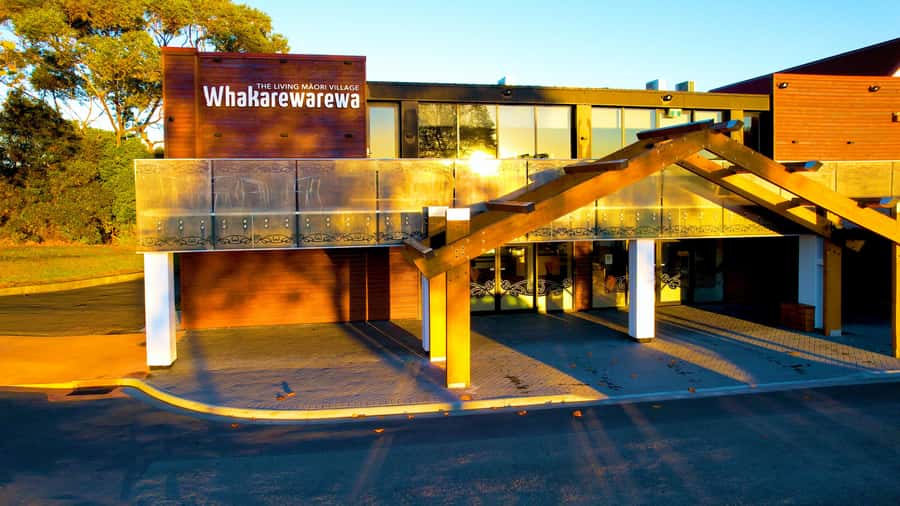
Your visit begins at the Geyser Café area. Allow time to reach the admissions building, where you exchange your voucher before the tour starts. Arriving 15 minutes early is sensible, especially if you need to find the entrance, use the facilities, or collect tickets without rushing.
The café and admissions area also give you a chance to get your bearings. Staff have been described as welcoming, and clothing and other items are available for purchase. Shopping is not the reason to come, but it can be useful if you want a Māori-related souvenir after the walk.
The tour begins with a short safety briefing of about five minutes. This is important here. Whakarewarewa is not a tame park with harmless puddles. Some pools are boiling, steam can reduce visibility, and the ground is affected by geothermal heat. Stay with the guide and follow the marked route.
The tour is wheelchair accessible, although the information provided does not describe every surface or slope. If you use a wheelchair, it is sensible to confirm route details when you arrive.
Walking through a village shaped by hot water
The most useful part of the tour is the explanation of how geothermal resources support life. You’ll see how cooking can take place in bubbling pools and steam vents, and how bathing in warm mineral water has long been part of village routines.
For you, this makes the tour more than a short list of Māori customs. It shows how people adapt to a difficult setting. The geothermal plateau is hot, active, and sometimes dangerous, yet it also offers practical resources. The village grew around those conditions rather than trying to separate daily life from nature.
The guide’s stories give the place its meaning. You might hear about family connections, the way the village is organized, and the role of shared spaces. The explanations can vary by guide, which is one reason the experience may feel different on different visits. One local visitor returned three times and still learned something new.
The strongest part of the tour is the chance to ask questions. Guides such as Faye and Teeao have been praised for giving detailed answers, while younger guides have brought plenty of energy and humour. One 19-year-old guide was described as the youngest chief in his family, a detail that shows how family roles and local leadership remain part of the visit.
The marae, churches, memorial, and sacred ground
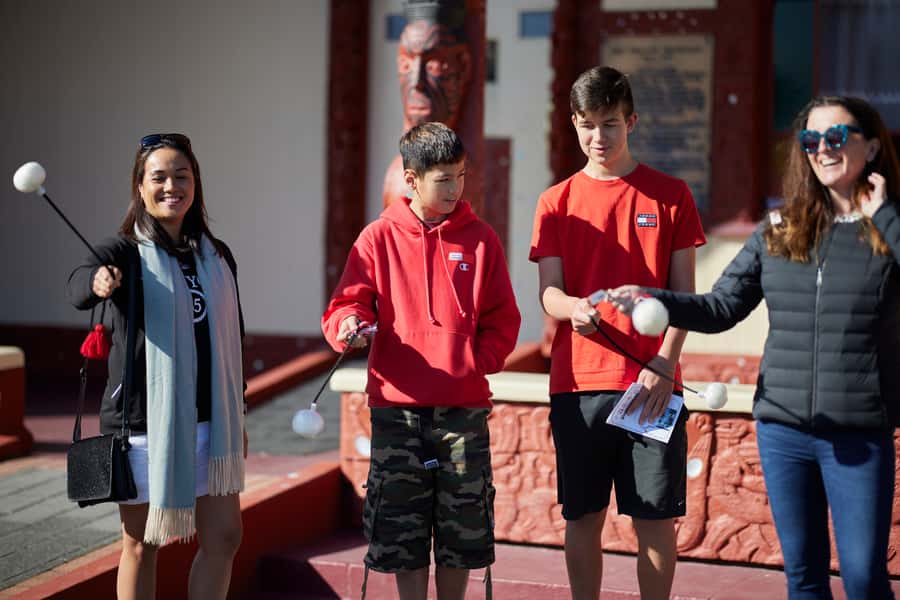
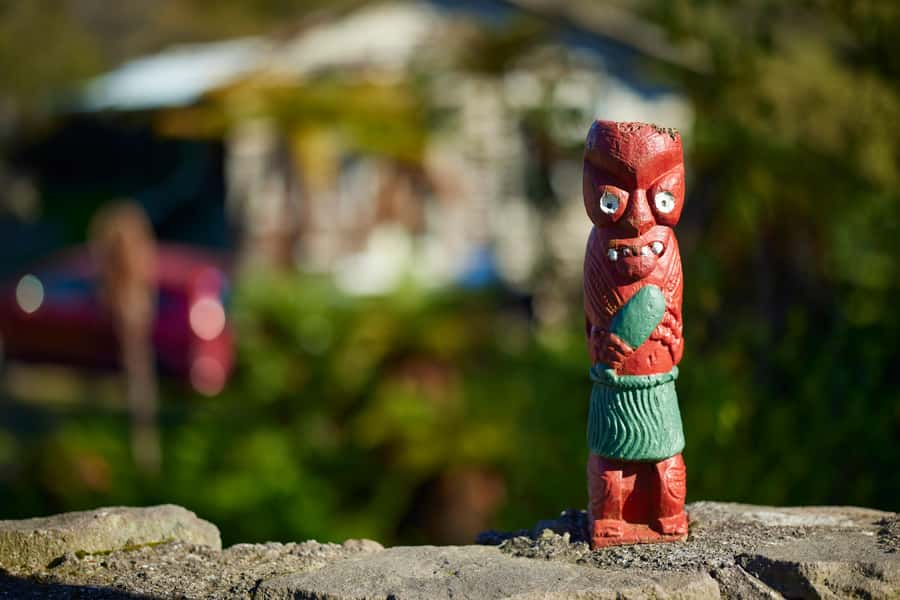
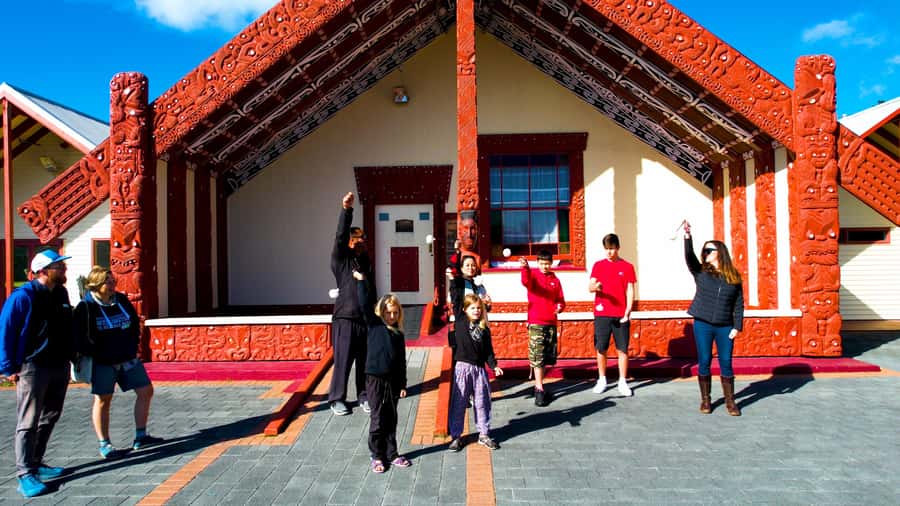
The route includes several historic and cultural landmarks. The marae is an active meeting ground and a focal point for Māori communities. It is not simply a decorative building placed along a visitor route. Its importance comes from the role it continues to play.
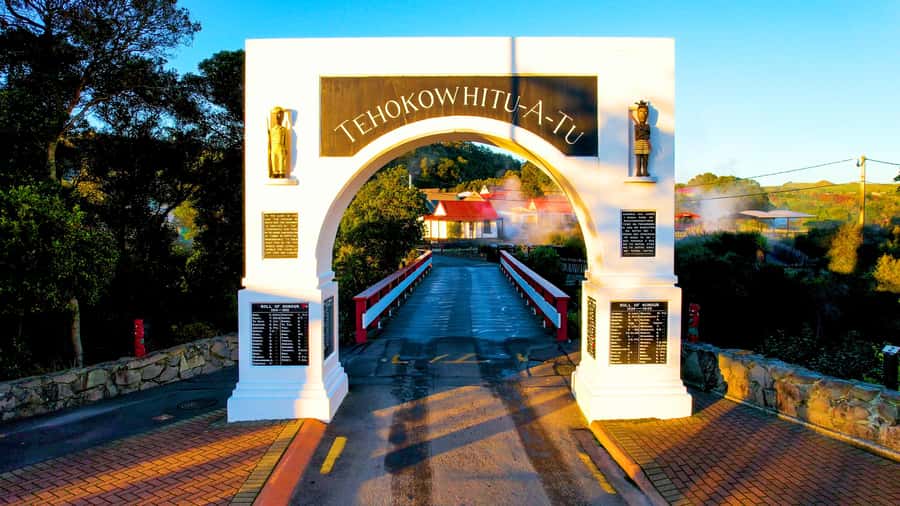
You’ll also see the WWII Memorial Archway, historic churches, and tapu burial grounds. The term tapu refers to places or things considered sacred or restricted. These locations call for respectful behaviour, and your guide explains how to understand them.
This mix of sites gives the tour a useful balance. The geysers and pools catch your eye, but the buildings and sacred places explain how a community has continued to live here. You are not only looking at the past. You are seeing a place where cultural practice and modern village life meet.
Do not expect to enter every building or spend a long time at each landmark. The tour lasts one hour, so the guide keeps moving. If you like detailed architecture or a slow visit to every site, you may want additional time at the village beyond the guided portion.
Same volcano country, a different day out:
- Rotorua Rafting: Kaituna River White Water Rafting & Free Sauna
★ 5.0 · 1,952 reviews - Mitai Maori Village Cultural Experience in Rotorua
★ 4.5 · 1,294 reviews - Rafting Rotorua: Kaituna River White Water Experience
★ 4.9 · 1,274 reviews - Rotorua: Te Pa Tu Māori Cultural Experience with Dinner
★ 4.8 · 1,193 reviews
Pōhutu geyser and the geothermal valley
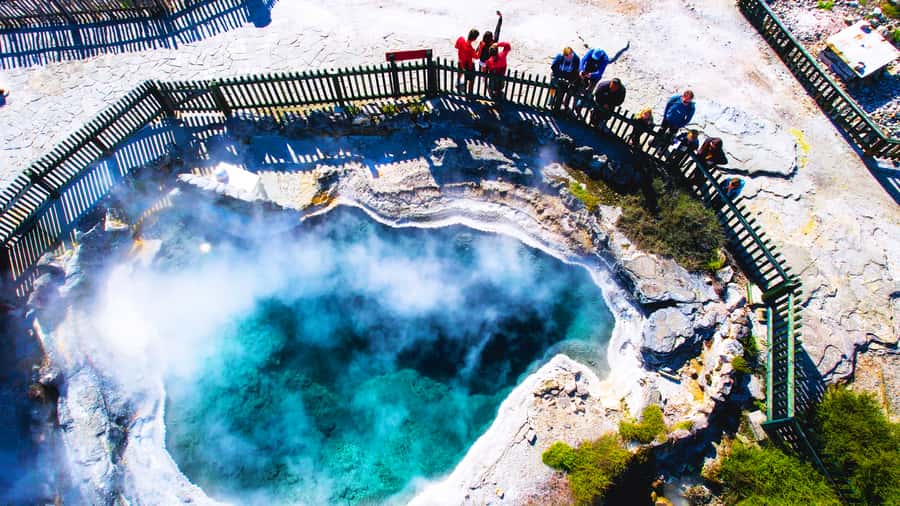
The geothermal valley includes Pōhutu, New Zealand’s best-known geyser, along with boiling mud pools, steam vents, and bubbling pools. Lookouts provide panoramic views across the geysers and valley.
Pōhutu is often the visual high point of the walk. Its eruptions are natural, so the exact timing and appearance can vary. Steam and weather can also affect what you see. One useful comparison from an experienced visitor is that another Rotorua attraction may bring you closer to a geyser, but the view from Whakarewarewa can be broader and less obstructed by steam.
That is a practical point when choosing between Rotorua’s geothermal attractions. If your main goal is the closest possible geyser view, another site may suit you better. If you want to see geothermal activity in relation to a working Māori village, Whakarewarewa offers the more connected experience.
The silica formations also deserve attention. These pale deposits are created by mineral-rich geothermal water over time. They can look delicate and sculptural, yet they are part of a very active underground system. The guide helps you notice details you could easily walk past on your own.
The boiling pools and steam vents are equally important. Some visitors have been disappointed when they did not see obvious boiling mud, so you should not assume every feature will be active or dramatic on your visit. The geothermal valley changes with conditions, and the guide’s interpretation is a major part of what you get from the stop.
The sweet corn cooked in a mineral pool
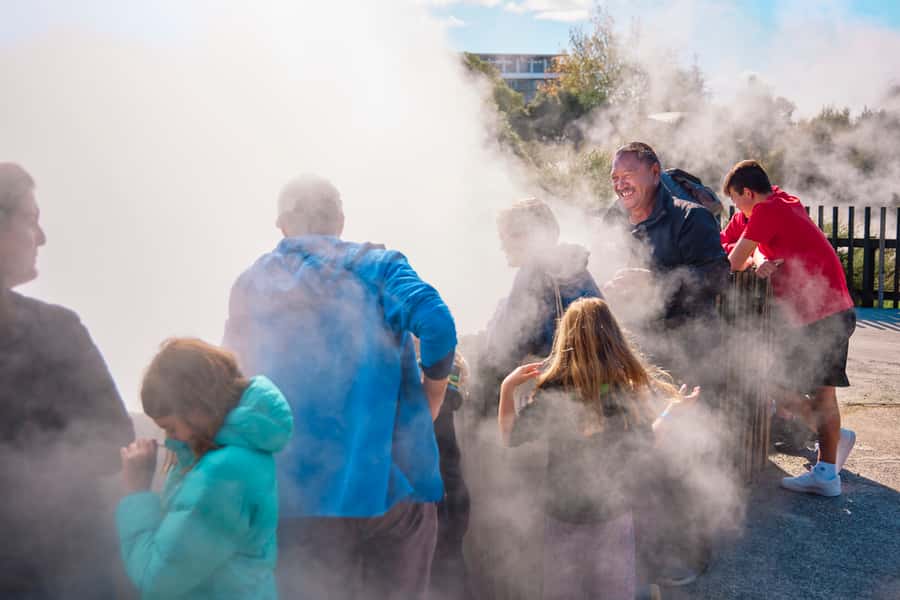
Corn on the cob is included with the tour, and it is cooked using the village’s geothermal water. The guide may pull the corn from the mineral pool in front of you before serving it.
This small tasting is one of the most memorable details of the experience. It turns an explanation into something you can see and taste. The corn is served hot, and it gives you a direct example of how geothermal heat can be used for food.
It also keeps the experience grounded. You are not only hearing that people cook in the pools. You are watching it happen. For families, this can be especially effective because children often remember the food and the bubbling water long after the names of the landmarks have blurred together.
The portion is a sample, not a meal. Plan to eat before or after the tour if you need lunch. The Geyser Café is at the starting area, so you can pair the visit with a café stop.
How much cultural performance should you expect?
Some visits have included dance or music, and individual guides may offer a blessing or song. One guide was praised for singing a beautiful blessing at the end, while another visit included an excellent dance performance.
However, the one-hour guided tour is primarily a village and geothermal walk. A dance performance is not listed as a guaranteed part of the basic admission. If cultural performance is your main reason for visiting, check whether a separate performance option is available rather than assuming it comes with this tour.
That distinction helps you set the right expectations. The guided walk offers cultural explanation, family stories, landmarks, and a look at everyday geothermal life. A performance, if offered as part of another option, would be a separate form of experience.
The pace, weather, and practical comfort
The tour lasts one hour and takes place outdoors in all weather. Rotorua can feel cool near steaming water, warm in open areas, and wet when conditions change, so dress for the forecast rather than relying on the season alone.
Comfortable shoes matter. You will be walking around active geothermal ground, and practical footwear is more useful than dress shoes. Bring a camera, but keep your attention on the path and the guide. There are plenty of visual details, from silica deposits to steam vents and lookout views.
The activity information asks you to bring a face mask or protective covering. Follow the current instructions given at the venue. The route is outdoors, but conditions around steam and shared facilities can change.
Because the tour runs in all weather, this is not an experience to save for only a perfect sunny morning. Rain may make photography harder, but mist and steam can also add atmosphere. The key issue is comfort. Bring suitable clothing so the weather does not distract you from the guide.
Is $28 good value for an hour?
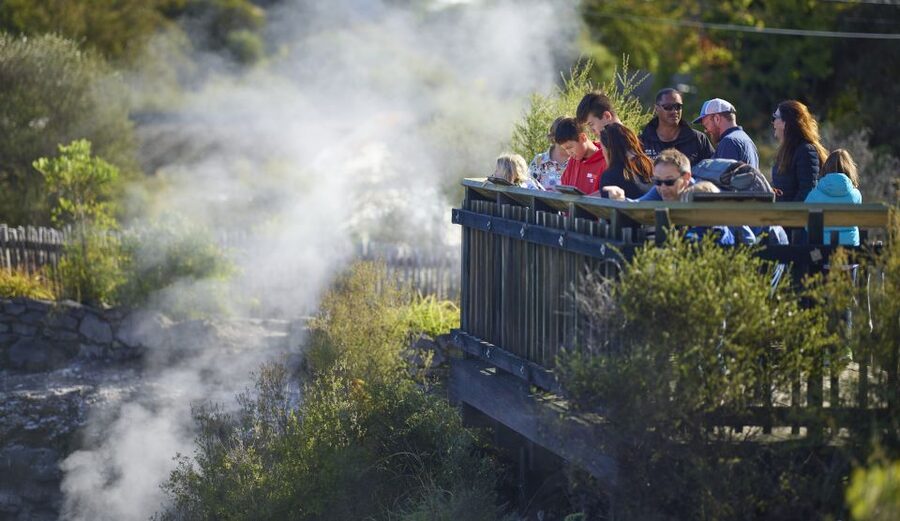
At $28 per person, the tour is reasonably priced for Rotorua. The fee includes admission, a guided tour, and the thermal-cooked corn. You are paying for access to a living village, a guide with family ties to the community, and a focused look at geothermal features that would be difficult to understand from signs alone.
The value is strongest if you care about context. A self-guided visit might show you pools, vents, and geysers, but it would not necessarily explain which parts of the village are active community spaces or how geothermal heat fits into cooking and bathing.
The price is less compelling if you want a long cultural program, a full meal, extensive time at every geothermal feature, or a guaranteed dance show. For those interests, you may need to add another experience. Still, as a compact introduction to Whakarewarewa, the cost is fair.
The reserve-now, pay-later option can help if your Rotorua plans are still shifting. You can cancel up to 24 hours before the start for a full refund, according to the activity terms.
Who will enjoy this tour most?
I would recommend it to first-time visitors who want to understand Rotorua beyond its sulphur smell and geyser photographs. It also suits families, since the corn, bubbling pools, and short duration keep the visit manageable.
It is a good choice for anyone interested in Māori culture, especially if you prefer hearing directly from local guides rather than reading display panels. The personal stories and family links are a major part of the value.
It may be less suitable if you dislike outdoor activities in uncertain weather or want a long, quiet visit with no fixed pace. The guide controls the timing, and one hour leaves limited room to linger.
For repeat visitors, the tour can still be worthwhile. The guide changes, and the stories and explanations are not identical each time. That said, you should choose it for the village and cultural context, not simply to see another geyser.
Should you book the Whakarewarewa Guided Tour?
Yes, if you want a short, direct introduction to Māori village life and Rotorua’s geothermal forces. The best reason to book is the combination of local guides, active community spaces, and practical geothermal traditions.
Go with realistic expectations. You will get an informative one-hour outdoor tour, views of Pōhutu and the geothermal valley, historic and sacred sites, and corn cooked in a mineral pool. You may not see every type of mud feature, and a dance performance is not guaranteed.
At $28, this is a good-value choice for a first visit to Rotorua. Arrive early, wear comfortable shoes, prepare for any weather, and listen closely to the guide. The steam and geysers may grab your camera, but the village stories are what make the visit worth your time.
FAQ
How long is the Whakarewarewa Guided Tour?
The guided tour lasts one hour, including a short safety briefing of about five minutes.
How much does the tour cost?
The listed price is $28 per person.
What is included in the admission?
Admission, the guided tour, and corn on the cob cooked using the village’s geothermal resources are included.
Where does the tour begin?
The starting location is the Geyser Café. You must exchange your voucher at the admissions building before the tour starts.
How early should I arrive?
Arrive 15 minutes before the scheduled start time so you have time to exchange your voucher and reach the tour departure point.
Is the tour conducted in English?
Yes. The live guide conducts the tour in English.
Is the tour wheelchair accessible?
Yes, the activity is listed as wheelchair accessible.
What should I bring?
Bring comfortable shoes, a camera, and a face mask or protective covering. The tour takes place outdoors in all weather.
Can I cancel the booking?
Yes. You can cancel up to 24 hours in advance for a full refund. You can also reserve now and pay later to keep your plans flexible.
Just added around Rotorua
- Te Puia: Tuku Iho Trail with Cultural Show★ 5.0 · 5 reviews
- Te Puia: Te Pō Indigenous Combo – Tour, Dinner + Haka★ 4.4 · 52 reviews
- Te Puia: Te Rā Guided Day Tour + Haka Cultural Performance★ 4.7 · 128 reviews
- Rotorua: White Island, Mount Tarawera & Waimangu Volcanic …★ 4.4 · 5 reviews
- Rotorua: Velocity Valley – One Ride Pass★ 4.9 · 15 reviews
- Rotorua: Wai Ariki Hot Springs & Spa 1hr Restorative Bathing★ 4.8 · 16 reviews
- Rotorua: Waimangu Volcanic Valley Ticket & Self-Guided Walk★ 4.8 · 104 reviews
- Rotorua: Velocity Valley – Two Ride Pass★ 4.6 · 8 reviews
Rotorua Volcano Tours, compared.
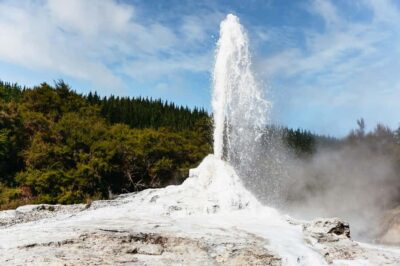
Rotorua: Wai-O-Tapu Geothermal Park Entry Ticket
Read our review →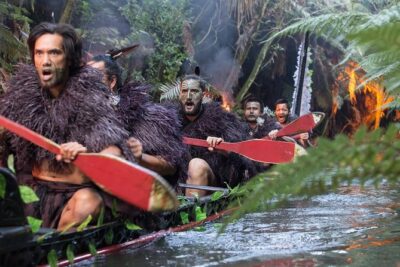
Mitai Maori Village Cultural Experience in Rotorua
Read our review →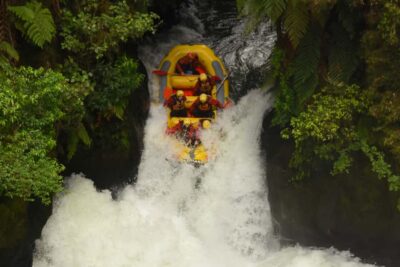
Rafting Rotorua: Kaituna River White Water Experience
Read our review →
Rotorua: Te Pa Tu Māori Cultural Experience with Dinner
Read our review →
Rotorua: Hell’s Gate Outdoor Mud Spa & Guided Walk
Read our review →
From Rotorua: Hobbiton Movie Set Tour with Festive Lunch
Read our review →
Rafting Rotorua Kaituna White Water Rafting | Kaitiaki Adventures
Read our review →
Rotorua: The National Kiwi Hatchery Kiwi Encounter Tour
Read our review →Browse the lists this tour appears in