
REVIEW · ROTORUA
Rotorua: Floatplane Flight with Orakei Korako Landing
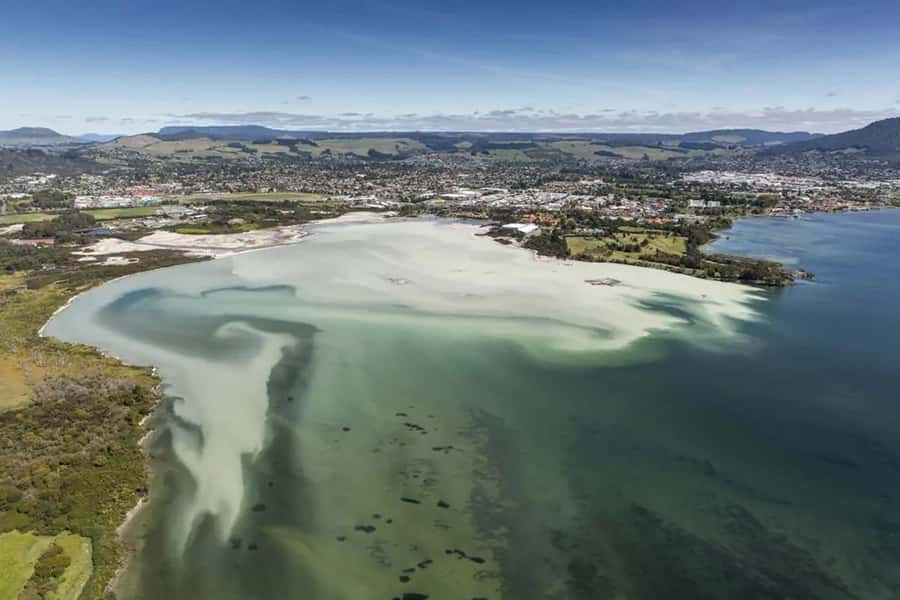
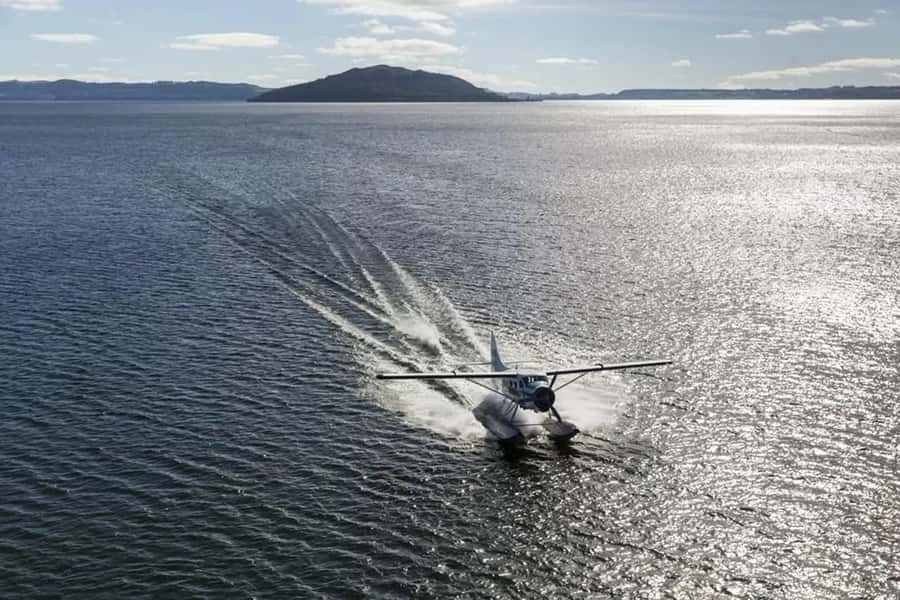
The most unusual part of this Rotorua outing is not the flight itself, but the river landing at Orakei Korako. You skim along the Waikato River, round its bends, and dock beside a geothermal park that is difficult to reach by ordinary sightseeing routes. I especially like the broad view from above, from Mokoia Island and Sulfur Bay to Mount Tarawera’s torn volcanic craters, and the one-hour walk among geysers, mud pools, silica terraces, and a thermal cave.
I also like the small six-person cabin, where the pilot’s commentary can make the geography come alive. Pilot Ben has been praised for being relaxed, friendly, clear, and confident. The tradeoff is practical: the floatplane is compact, getting in and out takes some flexibility, and the flight can be bumpy. At $505 per person, this is a special-occasion splurge, not a cheap way to tick off Rotorua’s sights.
Key points to know before booking
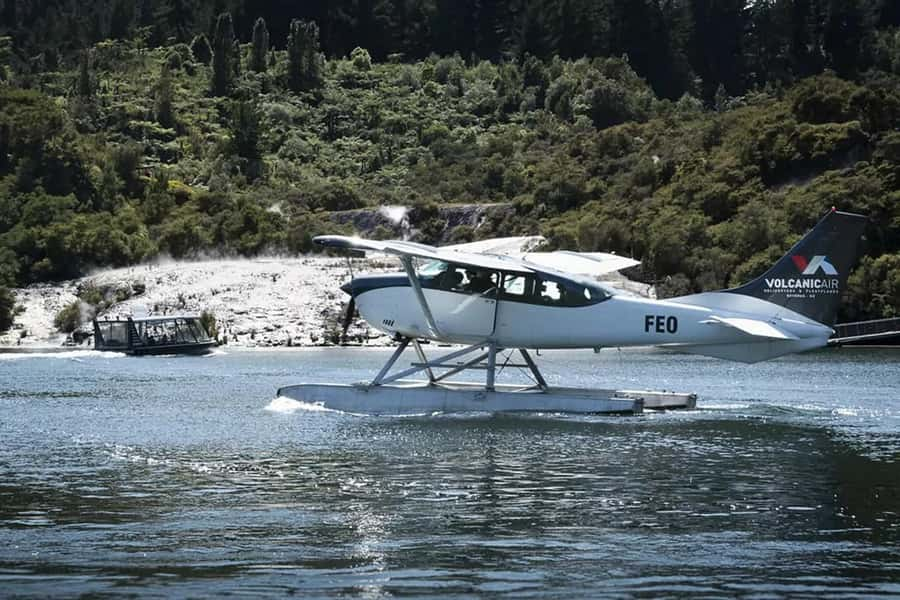
- River landing: The floatplane lands on the Waikato River at Orakei Korako, then follows the waterway back out.
- Volcanic scale: You see the 17-kilometer rift of Mount Tarawera, colorful craters, volcanic lakes, and several major geothermal parks from the air.
- Small cabin: The group is limited to six people, but the aircraft has six compact bucket seats.
- One-hour walk: Your time at Orakei Korako is self-guided, so you set your own pace through hot springs, geysers, mud pools, and silica terraces.
- Weather matters: Clear conditions help you see the craters and thermal features. Bring sun protection, water, and suitable walking shoes.
- Best for active sightseers: Pregnant women and people with back or heart problems should not take this experience.
Why this flight gives you a different Rotorua view
Rotorua is often explored from boardwalks and viewing platforms. Those places bring you close to steam, boiling water, and bubbling mud, but they can make the region feel like a collection of separate parks. From a floatplane, you see how the lakes, forests, farmland, volcanoes, and thermal valleys fit together.
The trip leaves from Volcanic Air at Lake Rotorua. The takeoff itself is part of the fun, as the plane lifts from the lake rather than a conventional runway. Once airborne, you get a broad view of Rotorua city, Mokoia Island, Sulfur Bay, and the surrounding lakes district.
The flight plan allows time for scenic views over the Rotorua district, Mount Tarawera, Waimangu Volcanic Valley, Wai-O-Tapu Thermal Wonderland, and Orakei Korako. The named stops are not separate landings. They are aerial viewing areas, with the real walking stop at Orakei Korako.
That distinction matters. You should book this for the changing views and the unusual flight experience, not because you expect to walk through every geothermal park shown below. You see Waimangu and Wai-O-Tapu from above, then explore Orakei Korako on foot.
More Geothermal Parks and Geysers in Rotorua
- Rotorua Canopy Tours: 2.5Hour Native Forest Zipline Adventure
★ 5.0 · 4,563 reviews - Rotorua: Wai-O-Tapu Geothermal Park Entry Ticket
★ 4.6 · 2,601 reviews - Rotorua’s Ultimate Zipline: 6 ziplines, 400 m Tandem, Cliff Walk
★ 5.0 · 2,557 reviews
From Lake Rotorua to the lakes district
The flight begins with a short look over Lake Rotorua and the city. From the air, Mokoia Island becomes an easy reference point, while Sulfur Bay helps you understand how close the geothermal activity is to the urban area.
You may also try to count the 14 lakes in the district. That is a pleasant challenge, though weather and your viewing angle will affect how many you can identify. The aerial perspective gives you something a road tour cannot: a sense of the water system, forest, pasture, and volcanic features in one broad view.
I like this early section because it gives you context before the more dramatic sights arrive. Rotorua is not only a thermal destination. It is also a region of lakes, native forest, working farmland, and volcanic features shaped over a large area.
The tradeoff is that aerial sightseeing moves fast. If you want a carefully framed photograph of each lake, you may find the views fleeting. Keep your camera ready, but also listen to the pilot’s commentary so you know what you are looking at.
Mount Tarawera and the 17-kilometer volcanic rift
The flight then heads toward Mount Tarawera, a dormant volcano with a major place in Rotorua’s geological story. Its eruption reshaped the area and destroyed the Pink and White Terraces, once described as the eighth wonder of the world. The terraces are now covered by volcanic lakes, so the flight gives you a way to picture the scale of what happened.
The most striking feature is the long volcanic rift, which stretches for about 17 kilometers. From above, you can see deep cuts and colorful craters running across the mountain. These shapes are easier to understand from the air than from ground level, where trees, roads, and ridges break up the view.
This section is one of the strongest reasons to choose the floatplane. A ground visit to Mount Tarawera can show you individual viewpoints, but flying over the rift lets you grasp its length and pattern. The pilot’s explanation adds value here, since the raw shapes can be hard to interpret without some guidance.
Conditions make a real difference. Cloud, haze, or rain may soften the colors and hide parts of the craters. The activity does not promise a particular kind of weather, so you need some flexibility around the flight.
Waimangu and Wai-O-Tapu from above
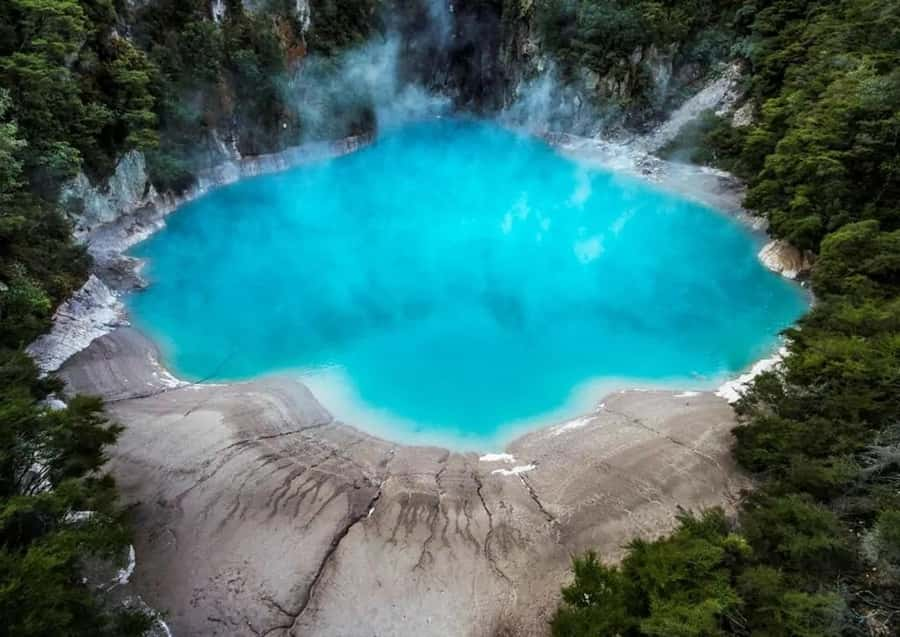
The route continues toward Waimangu Volcanic Valley, known as the youngest geothermal park on Earth. From the aircraft, you see the valley in its wider setting rather than walking its trails. The large Frying Pan Lake is a key sight, followed by the startling blue of Inferno Crater.
Those colors are part of what makes aerial viewing worthwhile. On the ground, steam and trees can limit your view. From above, the shape and color of the water bodies become much clearer, even though you lose the close smell, heat, and sound of a geothermal walk.
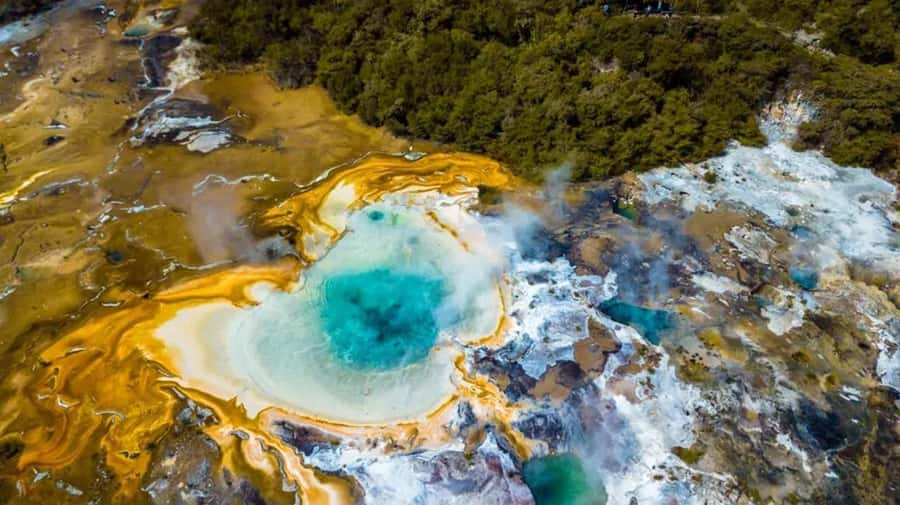
The flight also passes over Wai-O-Tapu Thermal Wonderland. Look for the Artist’s Palette and Champagne Pool, two of the area’s most recognizable thermal features. Again, this is a viewing pass rather than a stop for a walk, so think of it as an introduction or a second perspective if you have already visited from the ground.
I would not use this flight as a replacement for every Rotorua thermal park. It gives you a sharp overview of Waimangu and Wai-O-Tapu, but Orakei Korako is the place where you get time to walk among the features. The benefit is variety: several parks in one flight, followed by one carefully chosen visit on foot.
Same volcano country, a different day out:
- Rotorua Rafting: Kaituna River White Water Rafting & Free Sauna
★ 5.0 · 1,952 reviews - Mitai Maori Village Cultural Experience in Rotorua
★ 4.5 · 1,294 reviews - Rafting Rotorua: Kaituna River White Water Experience
★ 4.9 · 1,274 reviews - Rotorua: Te Pa Tu Māori Cultural Experience with Dinner
★ 4.8 · 1,193 reviews
The river approach to Orakei Korako
The approach to Orakei Korako is the moment that sets this trip apart from a standard scenic flight. The pilot descends along the Waikato River, and the plane follows the bends through native bush before touching down on the water.
A river landing feels more connected to the place than simply arriving at a roadside entrance. You are not just flying over the park and turning back. The aircraft becomes your transport along the river, and the water route adds a short sense of adventure without taking up extra hours.
Orakei Korako is described as a hidden valley, and its setting helps explain the name. The park sits away from the main Rotorua circuit, so this flight gives you access in a way that is both scenic and time-efficient. You should still expect a compact aircraft and a water landing, not the space or smooth routine of a large commercial flight.
One practical point: you need to be comfortable getting in and out of the plane. The cabin has six small bucket seats, and one detailed account specifically noted that the aircraft is very compact. That is part of the character of the experience, but it may not suit anyone who needs extra room or easy access.
One hour walking through Orakei Korako
Once the plane docks, you have about an hour for a self-guided walk through Orakei Korako. This is enough time to see the main thermal features at a steady pace, though it is not an all-day visit. Wear comfortable shoes, carry water, and bring a hat and sunscreen.
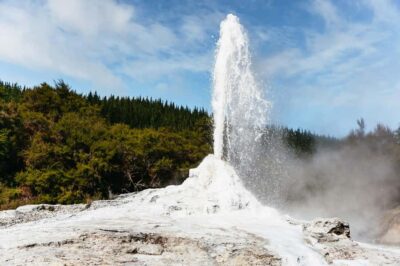
The walk includes hot springs, spouting geysers, bubbling mud pools, a thermal cave, and some of the largest silica terraces in the world. These features give you the close-up experience that the earlier aerial views cannot provide. You can pause, look at the colors and textures, and take photographs without trying to work through a moving aircraft window.
The self-guided format has both strengths and limits. You can set your own rhythm and stop when something catches your eye. You do not have a guide beside you explaining every feature, so you should read the signs and pay attention to the marked route.
The thermal cave is another reason to allow enough time rather than rushing to the plane. Geothermal areas can look similar at a glance, but the combination of terraces, steam, boiling mud, and cave formations gives Orakei Korako its own character.
You should follow the park’s paths and keep to safe viewing areas. The water and ground in geothermal regions can be dangerous, even when a surface looks calm. The supplied information does not specify the exact walking distance or terrain, so comfortable shoes are the sensible choice.
A short café break before the return flight
After the walk, you can stop at the café for coffee, tea, or local snacks. Meals and drinks are not included in the $505 price, so plan to pay separately if you want something.
This is a small detail, but it helps the two-hour schedule feel less rushed. You can cool down, have a drink, and gather your belongings before reboarding. Do not count on the café as a full meal stop, since only coffee, tea, and local snacks are identified.
The timing also means you should bring water with you. Sunscreen and a hat are useful on exposed parts of the walk, while the weather around Rotorua can change the feel of the outing quickly. Check the forecast and dress accordingly.
The return over farmland and the Paeroa range
The return flight crosses farmland and the Paeroa mountain range before heading back to Rotorua. After the geothermal sights, this change of scenery helps you see how quickly the volcanic country gives way to pasture and mountain country.
The return leg is listed at about 20 minutes of aerial views, so it is not just a quick trip back to the pier. You get another chance to photograph the region from a different angle and to place the thermal parks within the wider North Island setting.
The floatplane lands back at the Lakefront pier at Volcanic Air. Since there is no hotel pickup or drop-off, you need to make your own way to the starting point and arrange your own transport afterward.
Is $505 a fair price?
At $505 per person, this is expensive compared with a basic geothermal park admission or a standard road tour. You are paying for a two-hour flight, a six-person group, aerial views over several major sights, the river landing, and admission to Orakei Korako with its one-hour walk.
The value improves if you have limited time in Rotorua. Instead of arranging separate visits to several distant areas, you see Mount Tarawera, Waimangu, Wai-O-Tapu, and Orakei Korako in one compact outing. The flight also gives you a view of the volcanic rift and crater patterns that is hard to reproduce from the ground.
I would be less likely to recommend it to someone who dislikes small aircraft, needs a roomy cabin, or wants long visits at each park. You may also find the price hard to justify if you plan to spend several days visiting the geothermal areas by road.
The strongest value comes from the combination of experiences. A scenic flight alone would be memorable, and Orakei Korako alone would be worthwhile, but the river landing ties them together in a way that feels distinctive.
Who should book this Rotorua experience?
I would recommend it to you if you want to understand Rotorua’s volcanic region in a short time and enjoy unusual transport. It suits photographers, first-time visitors with limited time, and anyone who wants more than another coach ride between attractions.
It also works well for people who enjoy small-group outings. With no more than six participants, the setting is more personal than a large sightseeing flight. The pilot’s commentary matters, and Ben has been specifically praised for being friendly, informative, relaxed, and confident. You should not assume he will be your pilot on every departure, but the flight is conducted in English.
This is not suitable for pregnant women or people with back or heart problems. The aircraft can be bumpy, and the compact cabin requires some flexibility when boarding and leaving. Smoking is not allowed.
Bring comfortable shoes, a hat, sunscreen, water, and a camera. You can cancel up to 24 hours before departure for a full refund, and the reserve-now, pay-later option gives you some flexibility while planning.
Should you book the floatplane to Orakei Korako?
Book it if the river landing, aerial view of Mount Tarawera, and small aircraft experience sound more appealing than saving money. The flight gives you a clear sense of Rotorua’s scale, then follows it with a genuine hour on foot among some of the North Island’s most unusual thermal features.
Skip it if you need a low-cost activity, dislike bumpy flights, or want extensive walking time at Waimangu and Wai-O-Tapu. For the right person, though, the combination of volcanoes, crater lakes, geothermal parks, and a Waikato River landing makes this one of Rotorua’s most distinctive half-day-style outings, even though the scheduled experience lasts two hours.
FAQ
How long does the floatplane experience last?
The experience lasts two hours, including the scenic flight, the landing at Orakei Korako, the one-hour self-guided walk, and the return flight to Lake Rotorua.
Where does the flight start and finish?
It starts and finishes at Volcanic Air on the Lakefront at Lake Rotorua.
How many people are in each group?
The group is limited to six participants. The floatplane has six compact bucket seats.
What will I see from the air?
You can see Lake Rotorua, Mokoia Island, Sulfur Bay, the Rotorua lakes district, native forest, farmland, Mount Tarawera, Waimangu Volcanic Valley, Wai-O-Tapu Thermal Wonderland, the Paeroa mountain range, and other volcanic features.
How long do I have at Orakei Korako?
You have about one hour for a self-guided walk through the geothermal park.
Are food and drinks included?
No. Food and drinks are not included, although you can stop at the Orakei Korako café for coffee, tea, or local snacks.
What should I bring?
Bring comfortable walking shoes, a hat, sunscreen, water, and a camera. Check the weather and dress appropriately.
Just added around Rotorua
- Te Puia: Tuku Iho Trail with Cultural Show★ 5.0 · 5 reviews
- Te Puia: Te Pō Indigenous Combo – Tour, Dinner + Haka★ 4.4 · 52 reviews
- Te Puia: Te Rā Guided Day Tour + Haka Cultural Performance★ 4.7 · 128 reviews
- Rotorua: White Island, Mount Tarawera & Waimangu Volcanic …★ 4.4 · 5 reviews
- Rotorua: Velocity Valley – One Ride Pass★ 4.9 · 15 reviews
- Rotorua: Wai Ariki Hot Springs & Spa 1hr Restorative Bathing★ 4.8 · 16 reviews
- Rotorua: Waimangu Volcanic Valley Ticket & Self-Guided Walk★ 4.8 · 104 reviews
- Rotorua: Velocity Valley – Two Ride Pass★ 4.6 · 8 reviews
Rotorua Volcano Tours, compared.
Rotorua: Wai-O-Tapu Geothermal Park Entry Ticket
Read our review →
Mitai Maori Village Cultural Experience in Rotorua
Read our review →
Rafting Rotorua: Kaituna River White Water Experience
Read our review →
Rotorua: Te Pa Tu Māori Cultural Experience with Dinner
Read our review →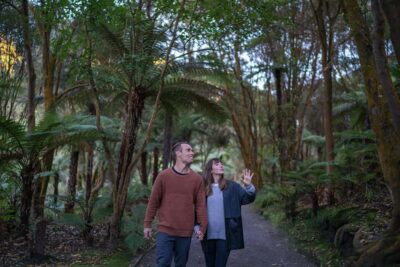
Rotorua: Hell’s Gate Outdoor Mud Spa & Guided Walk
Read our review →
From Rotorua: Hobbiton Movie Set Tour with Festive Lunch
Read our review →
Rafting Rotorua Kaituna White Water Rafting | Kaitiaki Adventures
Read our review →
Rotorua: The National Kiwi Hatchery Kiwi Encounter Tour
Read our review →Browse the lists this tour appears in