
REVIEW · ITALY
Mount Etna: Trek to the Craters of The 2002 Eruption
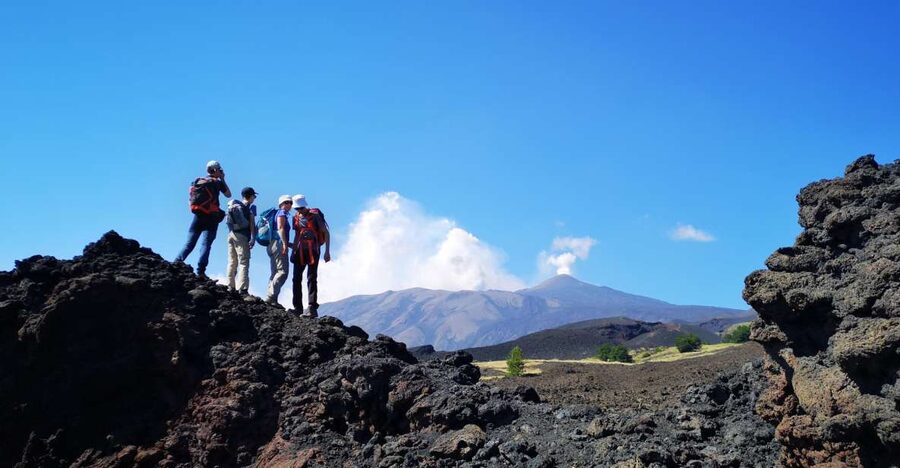
The most striking part of this Mount Etna tour is its setting on the 2002 eruptive fault, where hardened lava and blast-formed cones show the force of a real eruption up close. You are not simply looking at Etna from a road or viewpoint. You walk across the material it threw out.
I like the clear focus on volcanic geology and the fine views toward the Bay of Naxos and Calabria. I also like that the route is described as easy and family-friendly, with a guide explaining how gas, rock, and lava shaped the craters. The main caution is the exposed mountain setting: you need proper shoes, water, sun protection, a jacket, and rain gear, and the route is not suited to people with mobility problems, vertigo, or pregnancy.
Key points at a glance
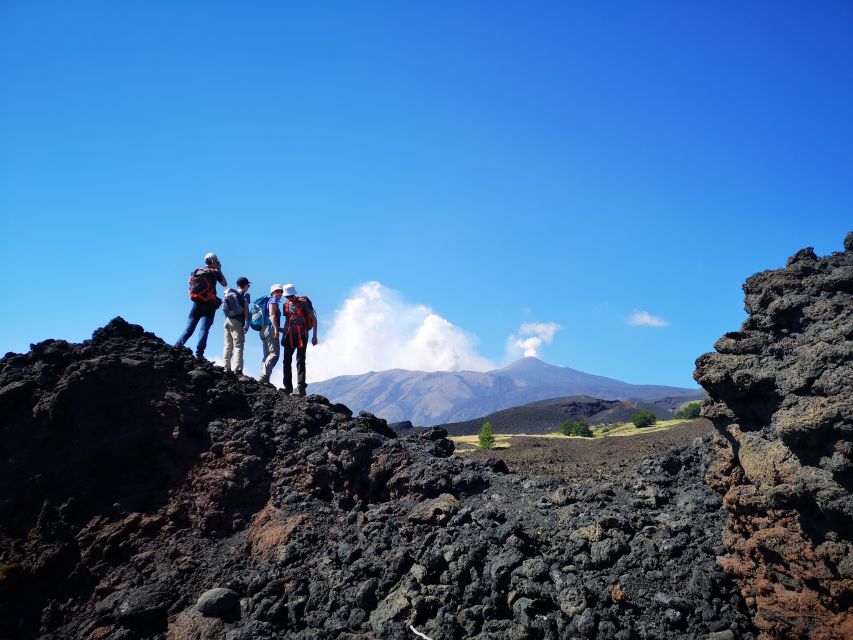
- Walk beside the 2002 eruption fault: Follow the scar on Etna’s northern flank and see lateral cones made by explosive gas and rock.
- Start at Piano Provenzana: Meet the guide at the first parking area, beside the wooden house marked Gruppo Guide Etna Nord.
- See Etna’s volcanic work up close: Walk on hardened lava and peer into impressive craters rather than viewing them from a distance.
- Learn as you walk: The guide covers eruption geology, Etna’s past, Greek mythology, and the mountain’s role in Sicilian farming.
- Expect big coastal views: On a clear day, the route looks toward the Bay of Naxos and the Calabrian coast.
- Allow around 2.5 hours: The pace follows the group, and the detailed route description allows for a walk of about three hours.
Why the 2002 eruption makes this walk special
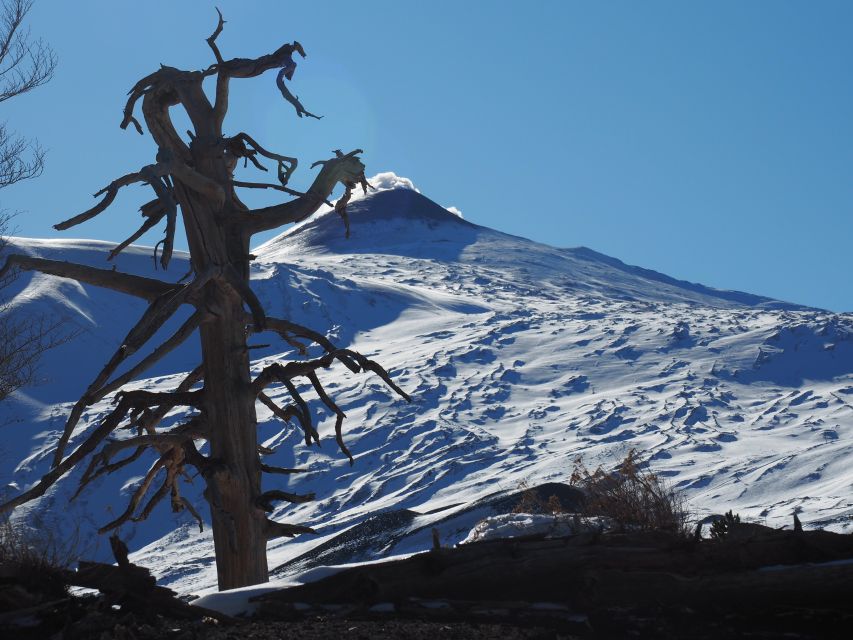
Mount Etna is one of Europe’s tallest and most active volcanoes. That matters here because you are seeing a mountain that is still part of daily life in Sicily, not a quiet volcanic relic preserved only for science classes.
The 2002 eruption gives the outing a clear story. At dawn on October 27, 2002, Etna opened an eruptive fault on its northern flank. The eruption is described as the perfect eruption, a phrase that points to the dramatic combination of lava, gas, rock fragments, and newly formed cones.
You can use that story to make sense of what you see. The hardened lava is not just dark rock underfoot. It records the path of molten material after it cooled. The lateral cones show where explosive activity pushed gas and fragments out along the fault. The craters give you a better idea of how uneven and forceful an eruption can be.
I like this approach because it gives the walk purpose. You are not merely collecting a photograph from a high mountain. You are reading the ground, with the guide helping you connect each formation to the event that made it.
More Lava and Eruption Tours in Italy
- Mount Etna: Craters of the 2002 Eruption Trekking Experience
★ 4.8 · 237 reviews - Catania: Sunset Jeep Tour of Mount Etna and Lava Flow Caves
★ 4.8 · 2,113 reviews - Catania: Morning Jeep Tour of Mount Etna and Lava Flow Caves
★ 4.7 · 774 reviews
Meeting your guide at Piano Provenzana
The tour begins at Piano Provenzana, on Etna’s northern side. The meeting point is in the first parking area, at the wooden house marked Gruppo Guide Etna Nord. That detail is useful, since mountain parking areas can feel confusing when you arrive and several vehicles or buildings look similar.
The activity ends at the same meeting point. You therefore do not need to arrange a separate pickup from the route’s finish, and you can keep your plans before and after the walk fairly simple.
The official guide speaks Italian, French, and English. Choose the language that lets you ask questions easily, since the geology is one of the best reasons to book a guided walk rather than follow a trail without context.
The route information calls the walk easy, but easy does not mean city-flat. You are on volcanic ground, with lava rock and open mountain conditions underfoot. Wear sturdy, comfortable shoes. Sandals and flip-flops are not allowed, and for good reason.
Following the northern eruptive fault
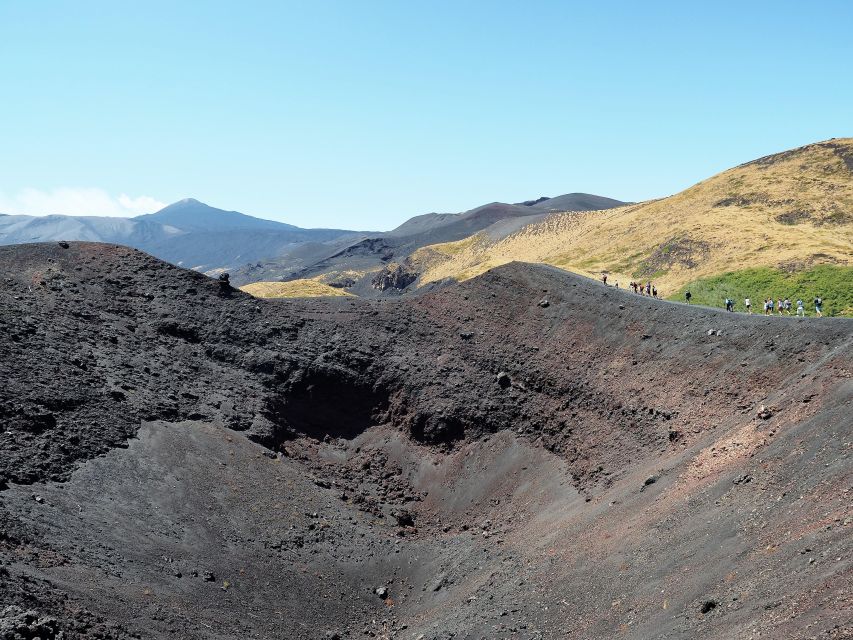
Once the walk begins, the main focus is the eruptive fault on Etna’s northern flank. This is the strongest part of the route for anyone interested in how a volcano changes its own shape.
You walk along hardened lava from the 2002 event and reach lateral cones formed by gas and rock explosions. These cones are important because they show that volcanic activity can happen along a fault rather than only at one central summit. The guide can explain how pressure below the surface works its way upward and how fragments build new forms around the openings.
I would pay attention to the difference in texture and shape as you walk. The route lets you see lava flows, cones, and craters as separate parts of one eruption. That makes the geology easier to understand than a lecture delivered far from the mountain.
The outing is also a good choice if you want Etna without committing to a long or highly demanding mountain day. The stated difficulty is easy, and the guided portion lasts approximately 2.5 hours, though the route description gives the walk as about three hours. In practice, the final timing depends on the group’s rhythm.
That timing is worth keeping in mind. Do not schedule a tight connection immediately afterward. The walk may move faster or slower depending on the pace of the people with you, and the guide may spend more time explaining a crater or formation when the group has questions.
Looking into the craters
The craters are the route’s most direct reminder that this is an active volcano. From the rim or edge, you can look into openings created by powerful eruptions and see how irregular volcanic ground can be.
You should follow the guide’s instructions closely around every crater. The supplied information does not promise a particular crater depth, trail surface, or barrier system, so you should not treat the area like a formal city attraction. The appeal is its raw volcanic setting, and that also means you need to stay alert.
For me, this is where the tour earns its price. At $39.86 per person, you are paying for a local guide who puts the formations into context and leads you through a place that can be hard to understand on your own. You are not paying for food, drinks, transport, or a long full-day program, so the value depends on how much you want interpretation and a focused walk.
If you already know Etna’s geology and only want a quick view, the price may feel less compelling. If you want to understand the eruption fault, cones, and lava instead of simply taking a picture from a roadside stop, the guided format is more useful.
More Volcano Hikes and Treks in Italy
- Mount Etna: Summit Guided Hiking Tour up to 3,400 m
★ 4.8 · 4,792 reviews - Etna: summit craters trekking with volcano guide 3350mt
★ 4.7 · 1,712 reviews - Catania: Mount Etna Trekking Tour Beyond the Tourist Trails
★ 4.9 · 1,596 reviews - Mount Etna: Summit Trekking Tour
★ 4.9 · 347 reviews
Bay of Naxos and Calabria from the mountain
The volcanic ground is the main attraction, but the views give the walk a welcome change of scale. From the upper route, you can look toward the Bay of Naxos and the Calabrian coast.
These views help explain Etna’s importance to the region. The mountain is not isolated from Sicilian life. Its fertile soils support extensive agriculture, while its eruptions continue to shape how people think about the land around them.
Weather will affect what you can see. Bring sunglasses and a sun hat, along with a jacket and rain gear. Mountain conditions can change, and the activity specifically advises carrying all of these items. Water is also essential, since food and drinks are not included.
I like the mix of close-up geology and wide coastal views. One moment you are examining rough lava or a crater. The next, you are looking outward toward the sea and mainland Italy. It gives the tour a stronger sense of place than a geology lesson alone.
Etna in Greek mythology and Sicilian life
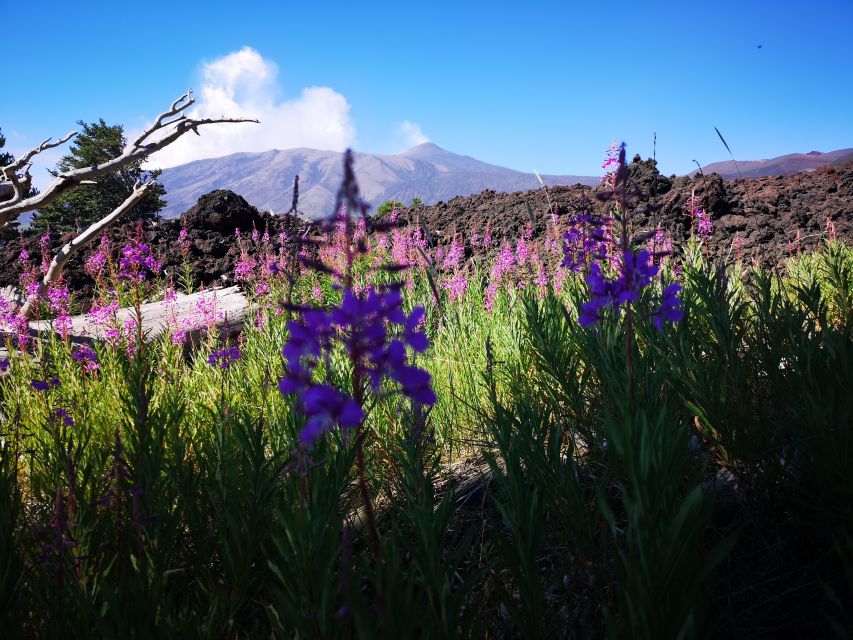
The guide also covers Etna’s place in Greek mythology and its continuing role in the region. That added context keeps the walk from becoming a list of rock types and eruption dates.
Etna has long held a powerful place in the imagination of people living around it. At the same time, the mountain has a practical role. Its fertile volcanic soils help support agriculture, so the volcano is both a source of danger and a reason the surrounding area can produce food.
I find that balance important. Etna is not just a dramatic natural feature for a day out. It affects farming, regional identity, stories, and local habits. A guide who connects the eruption site to those wider themes gives you a more useful understanding of Sicily.
The route’s focus remains the 2002 eruption, so do not expect a full survey of every period in Etna’s past. Instead, you get a compact explanation of the mountain’s geological action, cultural meaning, and place in the local economy.
What the pace and terrain mean for you
The tour is marked as easy, which should suit many people who are comfortable walking on volcanic ground. It is also described as suitable for a family outing. One direct note of praise calls it a top-notch activity for doing with the family, with particular emphasis on the guide.
Still, you should judge the route by more than the word easy. Volcanic rock can be uneven, and the activity is not suitable for people with mobility impairments or vertigo. It is also not suitable for pregnant women.
The guide adjusts the timing to the group’s rhythm. That is helpful for a mixed family group, but it means you may not know the exact finish time beyond the approximate duration. Take water and wear shoes that give you a secure footing.
The required clothing list is practical:
- Comfortable shoes, never sandals or flip-flops
- Sunglasses and a sun hat
- Water
- A jacket
- Rain gear
Food and drinks are not included, so bring what you need before setting out. The supplied details do not specify whether refreshments are available at the meeting point, so plan without relying on a meal during the walk.
Is $39.86 a fair price?
At $39.86 per person, this is a reasonably focused way to experience Etna. The cost includes the guided tour and an official English, French, or Italian-speaking guide. It does not include food, drinks, or a transfer to Piano Provenzana.
The value comes from the interpretation. A lava field can look like a pile of black stones if you do not know what you are seeing. Here, the guide explains the fault, the explosive cones, the craters, the 2002 eruption, and Etna’s role in Sicilian life.
I would compare it with your own plans. If you are already driving to Piano Provenzana and want a short, structured walk, the price is easy to justify. If you need transportation from another Sicilian town, that cost is separate and should be included in your budget.
Free cancellation up to 24 hours before the activity also reduces the risk of booking around uncertain weather or changing plans. You can reserve now and pay later, which is useful if you are building a larger Sicily itinerary and want to keep your schedule flexible.
Who should book this Etna walk?
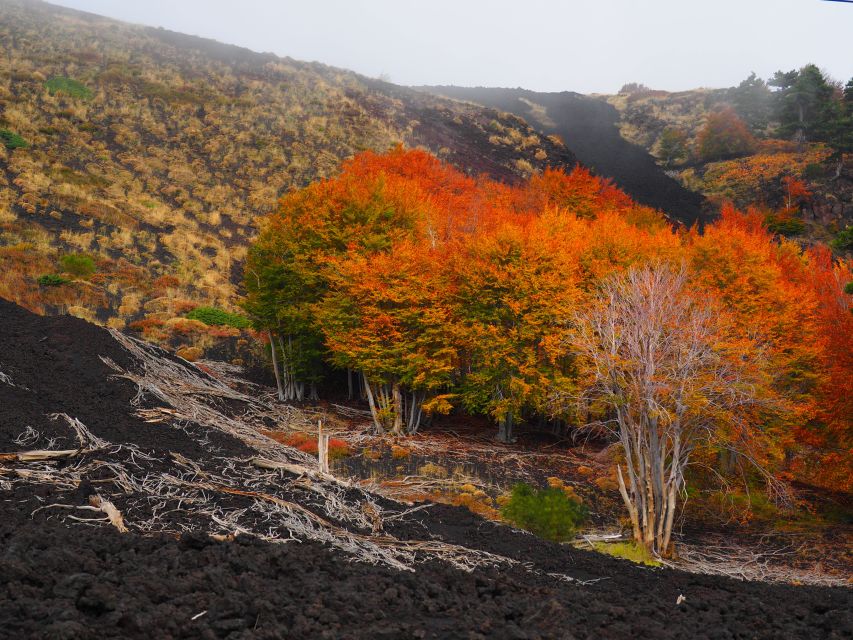
I would recommend it to you if you want a short introduction to Mount Etna with real volcanic features underfoot. It suits families and casual walkers who can manage uneven mountain terrain and want a guide to make the geology understandable.
It is also a good fit if the 2002 eruption interests you. The route has a specific story and a specific area, rather than trying to cover the entire volcano in a rushed outing.
You may want a different Etna experience if you need step-free access, feel uneasy near craters or exposed slopes, or have vertigo. It is also not the right choice if you are looking for a meal, included transport, or a full-day summit expedition. Those services are not part of this activity.
My verdict on the Piano Provenzana route
Book this tour if you want to walk on hardened lava, inspect eruption cones, and understand the forces that shaped Etna’s northern flank. The short duration keeps it manageable, while the views toward Naxos and Calabria add a strong visual reward.
I especially like the combination of a precise eruption site and a guide-led explanation. The family-friendly praise for the guide is worth noting, since a clear explanation can make the difference between seeing black rock and understanding a volcano.
Just prepare properly. Wear real walking shoes, carry water and weather protection, and allow some flexibility around the stated finish time. If those conditions suit you, this is a practical and fairly priced way to meet Mount Etna at ground level.
FAQ
Where does the Mount Etna tour start?
It starts at Piano Provenzana, in the first parking area, beside the wooden house with the sign Gruppo Guide Etna Nord.
Where does the activity finish?
The walk returns to the same meeting point at Piano Provenzana.
How long does the tour last?
The advertised duration is approximately 2.5 hours. The route description gives the guided walk as about three hours, and the actual timing depends on the group’s rhythm.
What languages does the guide speak?
The official guide speaks Italian, French, and English.
What will I see on the route?
You will walk along the 2002 eruptive fault, cross hardened lava, see lateral cones formed by explosions of gas and rock fragments, look into craters, and view the Bay of Naxos and the Calabrian coast.
Is the walk difficult?
The activity is rated easy, but it takes place on volcanic ground. Comfortable shoes are required, and sandals or flip-flops are not allowed.
What should I bring?
Bring comfortable shoes, sunglasses, a sun hat, water, a jacket, and rain gear. Food and drinks are not included.
Is the tour suitable for everyone?
It is not suitable for pregnant women, people with mobility impairments, or people with vertigo.
Can I cancel the booking?
You can cancel up to 24 hours in advance for a full refund. You can also reserve now and pay later.
More Lava and Eruption Tours in Mount Etna
- Reykjavik: LAVA SHOW – Immersive Experience Entry Ticket
★ 4.8 · 3,360 reviews - Lava Show Reykjavik Admission Ticket – Optional Premium Upgrade
★ 5.0 · 3,278 reviews - Reykjavik: Red Lava Horse Riding Tour
★ 4.8 · 2,383 reviews - The Lava Tunnel Tour – Raufarhólshellir
★ 5.0 · 2,373 reviews
More Mount Etna Tours in Mount Etna
- Mount Etna: scenic Summit Trek with a volcano Guide and Gear
★ 4.5 · 284 reviews - Mount Etna: Half-Day Guided Tour and Hike
★ 4.4 · 264 reviews - From Catania: Mount Etna Half-Day Tour and Wine Experience
★ 4.5 · 214 reviews - Mount Etna: Hike to The Highest Point With a Guide
★ 4.8 · 147 reviews
Just added around Mount Etna
- Taormina and Catania: Private Etna Exploration and Cave Tour★ 4.8 · 32 reviews
- Taormina and Catania: Private guided Etna hike by cable car★ 5.0 · 17 reviews
- Piano Provenzana: Mount Etna Hiking Trip to 3,380 Meters★ 4.8 · 54 reviews
- Mount Etna: Private Trek on the North Slope Craters★ 5.0 · 4 reviews
- Etna South: High Altitude Winter Trek with an Alpine Guide★ 4.8 · 27 reviews
- Mount Etna: Half-day Morning Jeep Tour★ 5.0 · 71 reviews
- Mount Etna: Craters of the 2002 Eruption Trekking Experience★ 4.8 · 237 reviews
- From Catania: Etna tour to the Base of the Summit Craters★ 4.9 · 35 reviews
Italy Volcano Tours, compared.
From Naples: Pompeii Ruins & Mount Vesuvius Day Tour
Read our review →
Pompeii and Mount Vesuvius Day Trip from Rome with Pizza Lunch
Read our review →
From Rome: Pompeii Day Trip with Optional Vesuvius and Lunch
Read our review →
Mount Etna: Summit Guided Hiking Tour up to 3,400 m
Read our review →
Catania: Mount Etna Morning or Sunset Day Trip with Tasting
Read our review →
Mount Etna: Trek to 3000m with cable car and 4×4
Read our review →
Pompeii & Mt.Vesuvius Day Tour from Naples with Pizza Lunch
Read our review →
Mount Vesuvius: Skip-the-Line Ticket and Smart Digital Guide
Read our review →Browse the lists this tour appears in