
REVIEW · ITALY
Mount Etna: Craters of the 2002 Eruption Trekking Experience
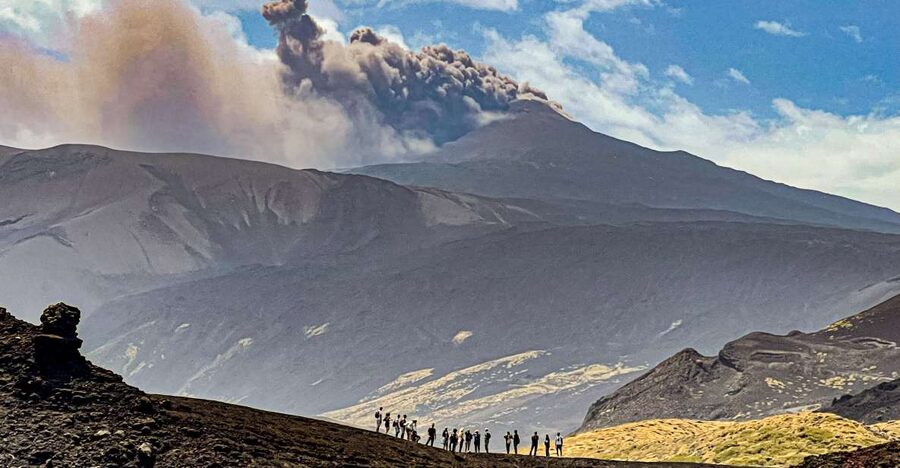
Mount Etna’s north side feels raw and close to the forces that shaped Sicily. This three-hour trek leads from Piano Provenzana across forest, black lava, cinder cones, and the huge 2002 craters that buried part of the ski area and threatened Linguaglossa. It is a real volcanic walk, not just a roadside photo stop.
I like the clear volcanic story, told through visible lava flows and eruptive cracks rather than a museum display. I also like the small details: guides such as Daniele, Davide, Vincenzo, and Niko explain the geology with humor, photographs, and personal videos from past eruptions. The main caution is physical effort. The ground can shift underfoot, the crater edges may cause dizziness, and wind can make the exposed sections feel much harder.
Key points
- Walk through the 2002 eruption zone: See the buried Hotel delle Betulle and the lava that changed Piano Provenzana.
- Study 1911 hornitos and cinder cones: The route gives you several volcanic forms to compare up close.
- Expect a moderate hike: You walk uphill, cross uneven volcanic soil, and follow crater edges.
- Enjoy views beyond Etna: From the eruptive theater, you can look toward the Calabrian Coast.
- Get an active geology lesson: English, French, and Italian-speaking guides explain how Etna’s flank eruptions work.
- Budget for rental gear: Shoes, windbreakers, snowshoes, and parking are extra.
What makes the north side of Etna special
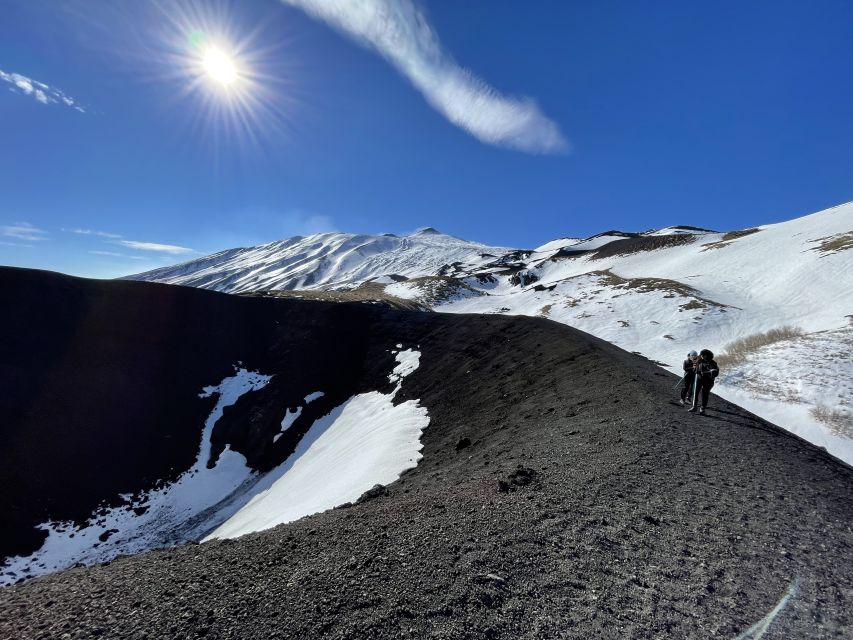
Most first visits to Mount Etna focus on the summit area or the more developed south side. This route gives you a different view. Piano Provenzana, on Etna’s north slope, was hit hard by the 2002 eruption. The remains of the Hotel delle Betulle are a sharp reminder that Etna is not simply a scenic mountain.
The walk also lets you read the volcano in stages. You pass through woodland, cross old lava streams, see cracks and small cones, then reach the broad craters formed during the 2002 activity. Instead of one dramatic viewpoint, you get a sequence of volcanic scenes that makes the mountain easier to understand.
I especially like that the walk is not built around one quick photograph. The guide pauses to explain several eruptions on the north side, including activity that threatened Linguaglossa. That context gives the black rock and red-brown cinders real meaning.
The setting is also quieter than the busiest parts of Etna. You are away from large sightseeing groups, though the route is still a proper outdoor activity with exposed ground and changing weather.
More Lava and Eruption Tours in Italy
- Mount Etna: Trek to the Craters of The 2002 Eruption
★ 4.9 · 9 reviews - Catania: Sunset Jeep Tour of Mount Etna and Lava Flow Caves
★ 4.8 · 2,113 reviews - Catania: Morning Jeep Tour of Mount Etna and Lava Flow Caves
★ 4.7 · 774 reviews
Meeting at Piano Provenzana without confusion
Your starting point is Chiosco Bar Mareneve di Ferraro Giuseppa, near the chairlift used by skiers in winter. It is the second of four buildings in the parking area. Do not go to Chiosco Bar Etna Nord in the lower parking lot.
Allow time to find the exact meeting point and attend the 15-minute safety briefing with Guide Vulcanologiche Etna Nord. The guide will explain how to move over loose volcanic soil and how the route may change if weather or volcanic conditions shift.
You need to arrange your own transport to Piano Provenzana. Parking is extra. The information provided gives different parking figures: one section lists €5 for a weekday and €8 on Sundays or public holidays, while the meeting instructions mention €3 paid after the walk. I would confirm the current charge before setting out, since this is the sort of small cost that can change.
The activity requires at least four participants. The total time can also vary with the group’s pace, so do not plan a tightly timed connection immediately afterward.
The buried Hotel delle Betulle
The first notable stop is the Hotel delle Betulle, described as the only visible structure left from the 2002 lava flow. You have about ten minutes here for a break, photographs, and an explanation from the guide.
This is an important stop because it turns a volcanic event into something human and visible. A lava flow can sound abstract until you see a building partly swallowed by it. The remains help you understand the direction and force of the flow far better than a diagram alone.
The stop is short, so it is worth listening before taking photographs. Your guide may also explain how the 2002 eruption affected Piano Provenzana and the wider north side. The exact amount of time can shift with the pace of the group and the conditions.
The 1911 Bottoniera and its small volcanic cones
Next comes the Bottoniera del 1911, a series of volcanic features linked to an earlier eruption. The stop lasts about 25 minutes and includes a guided explanation, sightseeing, walking, photographs, and some free time.
Here you begin to see how Etna creates more than one type of volcanic feature. The route includes structures called hornitos, a term meaning small ovens. These formed around openings where lava and gases escaped. You also go up along cinder cones, which are made from material thrown out during an eruption.
This section is useful for anyone who wants more than a dramatic view. Your guide can point out differences in shape, color, texture, and age. The black ground is not all the same, and the route gives you time to notice that.
The footing can be loose. Trekking poles are a smart choice, especially on uphill sections and sandy descents. One person who took the route specifically advised using the walking poles offered, and that is practical advice even if you normally hike without them.
More Volcano Hikes and Treks in Italy
- Mount Etna: Summit Guided Hiking Tour up to 3,400 m
★ 4.8 · 4,792 reviews - Etna: summit craters trekking with volcano guide 3350mt
★ 4.7 · 1,712 reviews - Catania: Mount Etna Trekking Tour Beyond the Tourist Trails
★ 4.9 · 1,596 reviews - Mount Etna: Summit Trekking Tour
★ 4.9 · 347 reviews
The 2002 fire belt and crater route
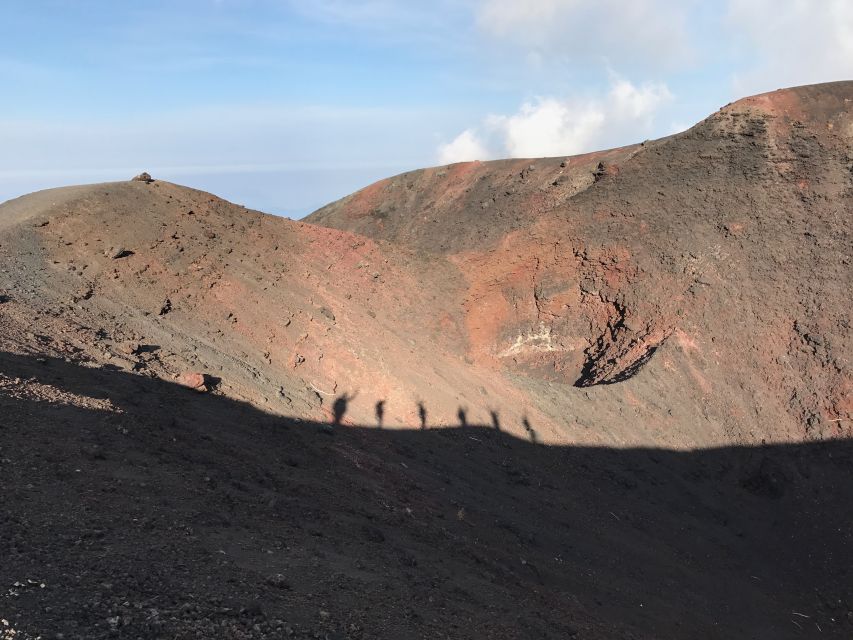
The longest part of the excursion, about an hour and a half, takes place at the Cerniera di Fuoco 2002, or the 2002 Fire Belt. This is the main reason to choose the experience.
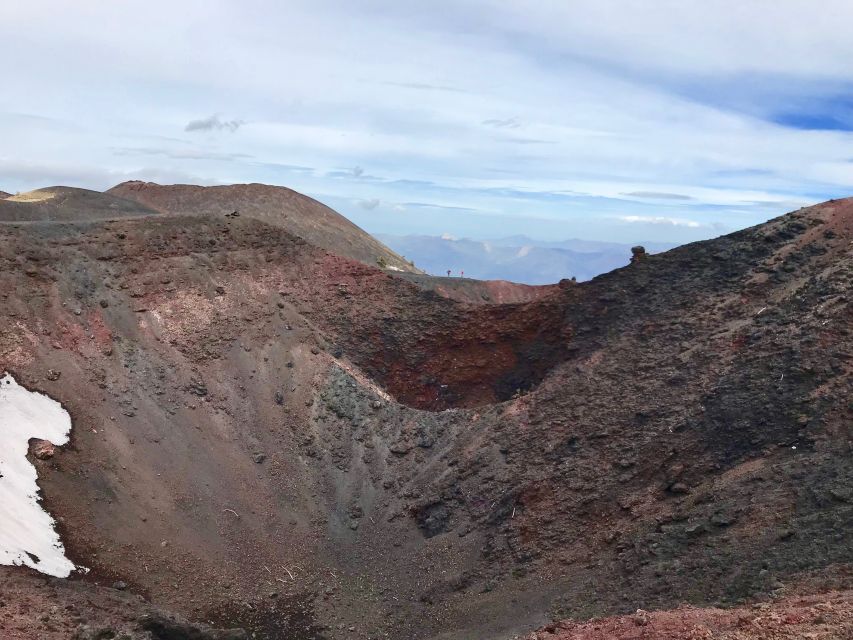
You walk among lava streams, eruptive fractures, cinder, and the large craters linked to the eruption. The route follows a dirt road from Piano Provenzana toward the summit craters, then moves across volcanic ground and around the crater edges. At the highest part, you look over the rims and later descend through a sandy channel toward the starting point.
That sounds simple, but the surface makes the walk more demanding than the three-hour time suggests. Volcanic soil can be uneven and unstable. You need to watch your feet, keep your balance, and follow the guide’s instructions. The route is intended for people with moderate training, not for anyone who avoids regular physical activity.
You also need to be comfortable near crater edges. The information for the activity warns that the ascent and walking along the rims may cause dizziness. If you have vertigo or a fear of heights, this is not the right outing. The descent through loose sand can be tiring too, particularly if your legs are already feeling the climb.
The reward is a close view of Etna’s eruptive forms. You are not merely looking at a distant volcano. You are walking across material produced by its recent activity, with fractures and lava channels under your boots.
Views toward Calabria and the eruptive theater
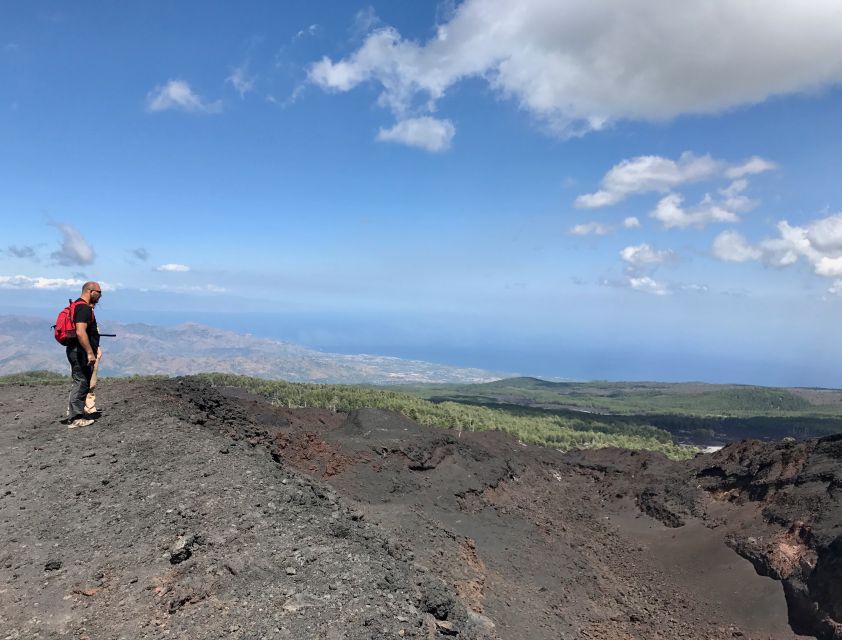
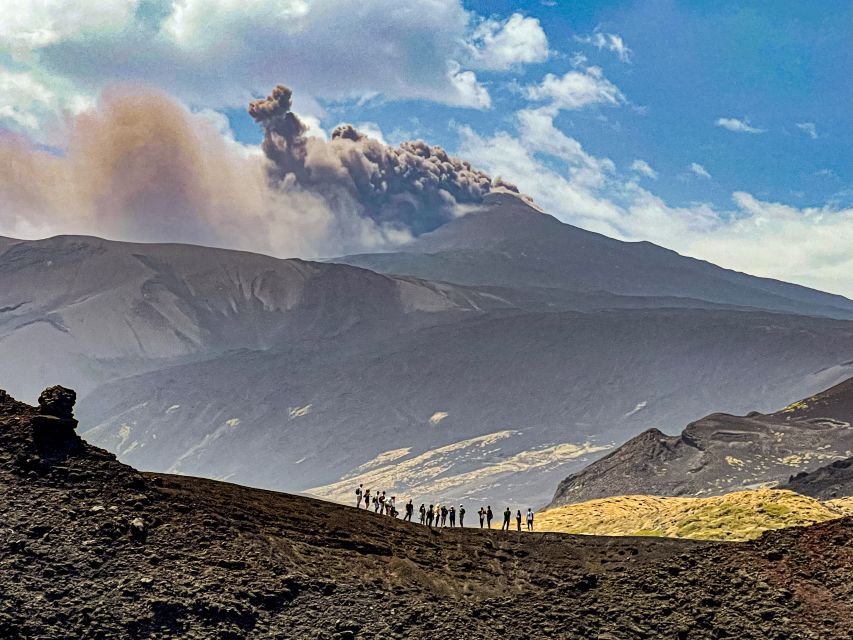
The north side opens toward a broad view of the eruptive theater and the Calabrian Coast. Conditions matter here. A clear day can give you a strong sense of Etna’s position above Sicily and the sea, while wind, cloud, or haze may reduce the view.
Wind is a real factor. One April outing was described as too windy, and exposed crater rims can feel chilly even when lower Sicily is warm. Bring a windbreaker and a jacket, not just a light shirt. Sunglasses and sunscreen also matter because the dark volcanic surface can feel bright and exposed.
This is one of the places where the guide’s role matters most. A good explanation helps you connect the view with the eruption zones below, the slope toward Linguaglossa, and the wider volcanic shape of Etna. Guides on this activity speak Italian, French, and English. Previous guides named Daniele, Davide, Vincenzo, and Niko have been praised for mixing science with humor and for taking time with questions.
How difficult is this three-hour trek?
The word trekking should be taken seriously, even though this is a shorter and lighter Etna route. One account described it as a slow and easy walk with plenty of pauses. Another noted that people in their late 60s found it hard going but worthwhile. These comments fit the official description: medium training is expected.
Your fitness is not the only issue. You should be steady on uneven surfaces, able to manage an ascent, and comfortable walking beside crater edges. The guide may keep the group together and adjust the pace, but the activity is not recommended if you do not take part in regular physical activity.
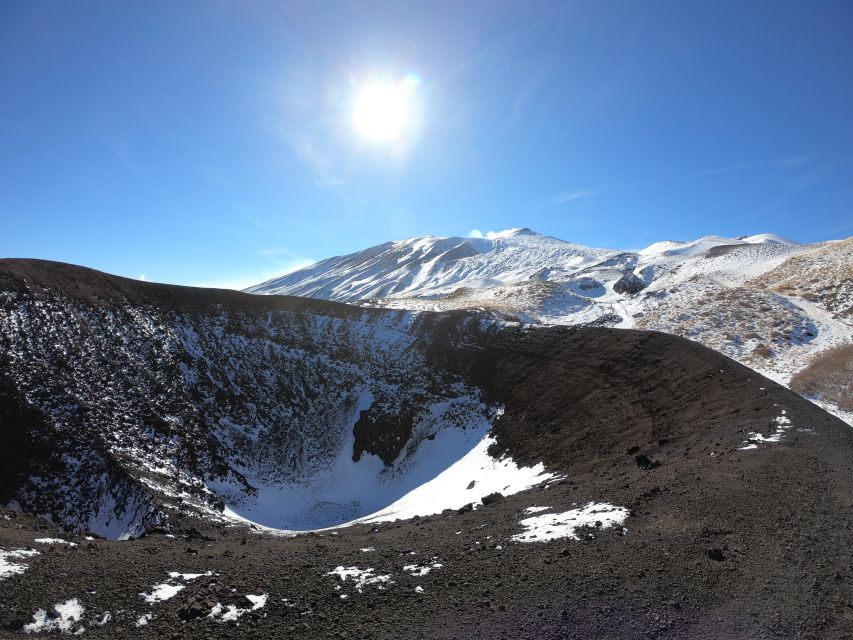
Good footwear is essential. Hiking shoes are required for insurance cover, and sandals, flip-flops, slippers, high heels, skirts, and large bags are not allowed. Shoes can be rented from an authorized rental point for €5 per pair. In winter, snowshoes are recommended or required by conditions and cost €12 per person to rent on site.
Bring a daypack with water, snacks, sunscreen, sunglasses, a windbreaker, and weather-appropriate clothing. Gloves and a hat are especially useful in winter, spring, and autumn, and they are not included. You can also rent a windbreaker for €5, but carrying your own is simpler.
What you pay for, and what you do not
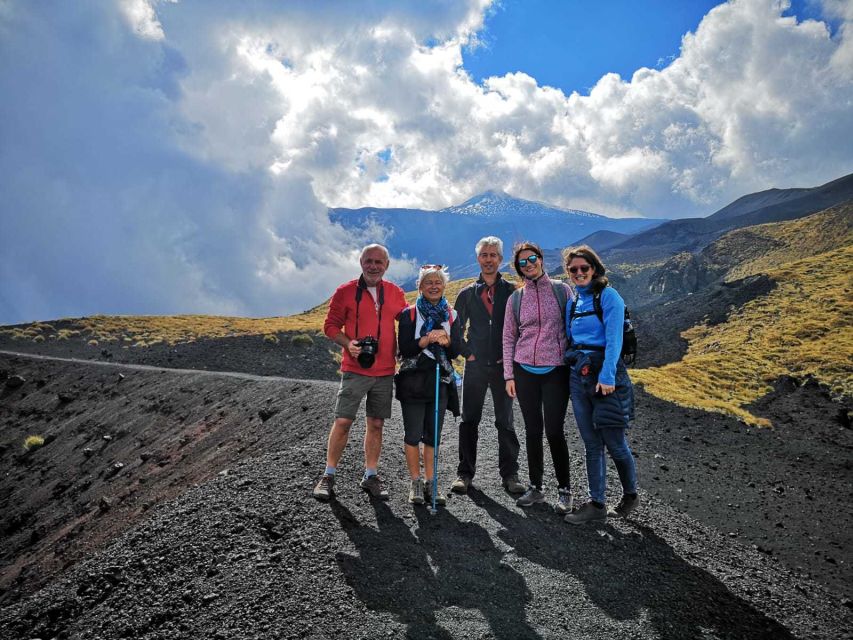
At $42 per person, the tour offers a fair price for a three-hour guided walk with an official volcano guide and accident insurance. The value comes from the interpretation. Without a guide, you would see black rock and cones, but you could miss why one formation differs from another or how the 2002 event shaped this part of Etna.
The price does not include transport to the meeting point, parking, food, water, trekking sticks, shoes, a windbreaker, gloves, a hat, or winter snowshoes. These extras can raise the final cost, especially if you arrive without proper clothing.
The rental options are helpful, but I would not rely on them for every item. Bring your own water, snacks, warm layer, and sturdy shoes if you have them. The guide may have spare clothing, as happened for one person who forgot a jacket, but that should be treated as good fortune, not part of the service.
The included accident insurance also depends on suitable footwear. Arriving in inadequate shoes can leave you without that cover, so this is not the place to cut corners.
Guide quality is part of the experience
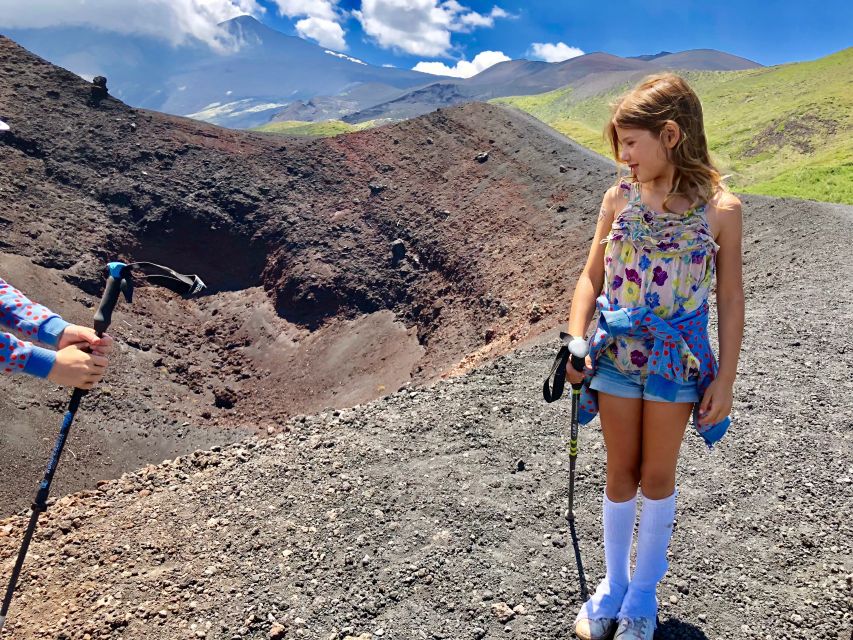
The strongest feature of this outing is the guiding. Daniele has been praised for making the walk welcoming to different ages and for using drawings in the volcanic dust to explain what happened. Davide has been described as lively and engaging, while Vincenzo has led the route in French and combined clear science with humor. Niko has also guided the lighter trail with strong knowledge of Etna and volcanoes in general.
That variety matters because the route contains long stretches of rock and cinder. A guide who only points out names would make the walk feel flat. A guide who explains the eruption, shows photographs, and answers questions keeps the route active even during slower sections.
You should also expect the language presentation to depend on the group. English, French, and Italian are available, but the guide may need to share explanations across languages. That can affect the pace and length of stops.
Weather, safety, and route changes
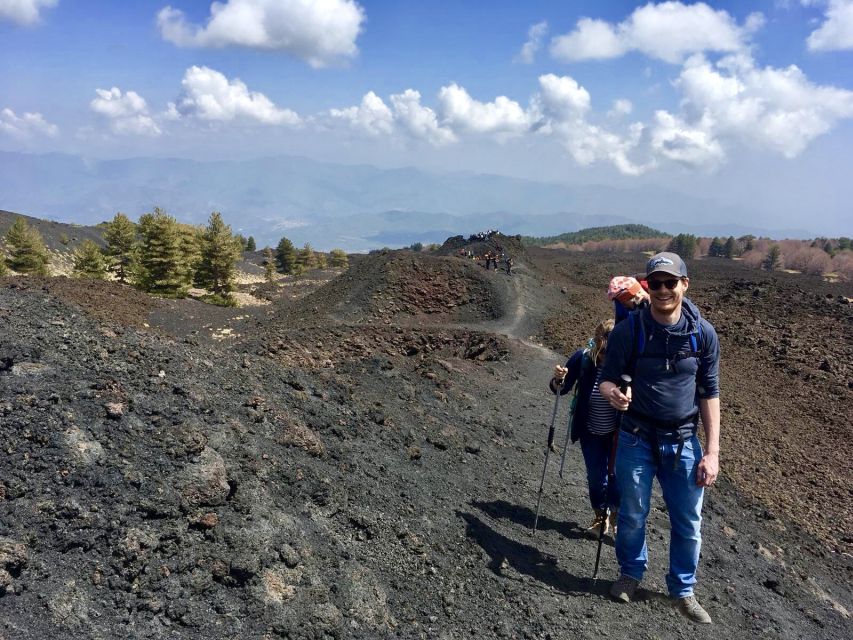
Etna has its own weather, and conditions can shift quickly. The guide may alter or stop the excursion because of wind, rain, snow, environmental concerns, or volcanic conditions. That is a sensible safety measure, not a failure of the tour.
The route can also change with the group’s general pace. You may spend more or less time at a particular feature, though the planned stops remain the buried hotel, the 1911 Bottoniera, and the 2002 Fire Belt.
The activity is not suitable for children under six, pregnant women, people with back, heart, respiratory, or mobility problems, or people with epilepsy. It is also unsuitable if you have vertigo or a strong fear of heights. These limits matter because the route includes uneven ground, climbing, crater edges, and exposed conditions.
Who should book this Etna walk?
I would choose this tour if you have three hours, want a close look at the 2002 eruption, and prefer a moderate walk to a long summit hike. It also suits you if geology interests you but you want the subject explained in plain language rather than through a formal lecture.
It is a good fit for active families with older children who meet the age requirement, couples, and independent visitors who want a guide without joining a large sightseeing outing. It can also work well late in a Sicily trip, as one person chose the lighter trail after completing more demanding activities earlier.
I would not book it if you want a purely easy stroll, have limited balance, dislike exposed edges, or need guaranteed timing. The route may feel manageable to a regular hiker but strenuous to someone unused to loose volcanic ground.
Should you book the 2002 eruption trek?
Book it if you want Etna explained through the places where it erupted. The buried hotel, the 1911 hornitos, the lava streams, and the 2002 craters give the walk a strong sense of place, and the guides add the science and local stories that make those features readable.
Skip it if you are looking for a gentle viewpoint visit or if you lack proper shoes and weather gear. For most reasonably fit hikers, though, $42 is a sensible price for a focused north-side experience with an official guide, striking views, and a direct look at one of Etna’s most powerful recent eruptions.
FAQ
How long is the Mount Etna 2002 eruption trek?
The scheduled duration is three hours. The total time may vary according to the pace of the group and changing conditions.
Where does the trek start?
It starts at Chiosco Bar Mareneve di Ferraro Giuseppa in Piano Provenzana, near the winter chairlift. It is the second house of the four buildings in the parking area.
Is Chiosco Bar Etna Nord the correct meeting point?
No. You should go to Chiosco Bar Mareneve, not Chiosco Bar Etna Nord in the lower parking area.
What languages does the guide speak?
Guides are available in Italian, French, and English.
What does the $42 price include?
The price includes an official volcano guide and accident insurance, provided you use suitable footwear.
Are shoes available to rent?
Yes. Trekking shoes can be rented from authorized rental points for €5 per pair.
Do I need snowshoes in winter?
Snowshoes may be needed during December, January, February, and March. They can be rented on site for €12 per person.
Is the trek suitable for beginners?
It is intended for hikers with medium training and is not recommended for people who do not take part in regular physical activity. The volcanic soil can be loose, and the route includes an ascent and crater edges.
Can I cancel the activity?
You can cancel up to 24 hours in advance for a full refund. You can also reserve now and pay later.
More Lava and Eruption Tours in Mount Etna
- Reykjavik: LAVA SHOW – Immersive Experience Entry Ticket
★ 4.8 · 3,360 reviews - Lava Show Reykjavik Admission Ticket – Optional Premium Upgrade
★ 5.0 · 3,278 reviews - Reykjavik: Red Lava Horse Riding Tour
★ 4.8 · 2,383 reviews - The Lava Tunnel Tour – Raufarhólshellir
★ 5.0 · 2,373 reviews
More Mount Etna Tours in Mount Etna
- Mount Etna: scenic Summit Trek with a volcano Guide and Gear
★ 4.5 · 284 reviews - Mount Etna: Half-Day Guided Tour and Hike
★ 4.4 · 264 reviews - From Catania: Mount Etna Half-Day Tour and Wine Experience
★ 4.5 · 214 reviews - Mount Etna: Hike to The Highest Point With a Guide
★ 4.8 · 147 reviews
Just added around Mount Etna
- Taormina and Catania: Private Etna Exploration and Cave Tour★ 4.8 · 32 reviews
- Taormina and Catania: Private guided Etna hike by cable car★ 5.0 · 17 reviews
- Piano Provenzana: Mount Etna Hiking Trip to 3,380 Meters★ 4.8 · 54 reviews
- Mount Etna: Private Trek on the North Slope Craters★ 5.0 · 4 reviews
- Mount Etna: Trek to the Craters of The 2002 Eruption★ 4.9 · 9 reviews
- Mount Etna: Half-day Morning Jeep Tour★ 5.0 · 71 reviews
- Etna South: High Altitude Winter Trek with an Alpine Guide★ 4.8 · 27 reviews
- From Catania: Etna tour to the Base of the Summit Craters★ 4.9 · 35 reviews
Italy Volcano Tours, compared.
From Naples: Pompeii Ruins & Mount Vesuvius Day Tour
Read our review →
Pompeii and Mount Vesuvius Day Trip from Rome with Pizza Lunch
Read our review →
From Rome: Pompeii Day Trip with Optional Vesuvius and Lunch
Read our review →
Mount Etna: Summit Guided Hiking Tour up to 3,400 m
Read our review →
Catania: Mount Etna Morning or Sunset Day Trip with Tasting
Read our review →
Mount Etna: Trek to 3000m with cable car and 4×4
Read our review →
Pompeii & Mt.Vesuvius Day Tour from Naples with Pizza Lunch
Read our review →
Mount Vesuvius: Skip-the-Line Ticket and Smart Digital Guide
Read our review →Browse the lists this tour appears in