
REVIEW · ITALY
Mount Etna: Summit Guided Hiking Tour up to 3,400 m
Mount Etna gives you something few mountain trips can: a walk across an active volcano, with black lava, steaming craters, loose volcanic sand, and views over Sicily from high above the tree line. The full route reaches about 3,400 meters, though weather and volcanic activity decide how high you actually go.
I like the choice between a moderate 3,000-meter route and a tougher summit hike. I also like the human touch: guides such as Eduardo and Giuseppe explain past eruptions, adjust their pace to the group, and help with practical matters such as boots, walking sticks, and helmets when equipment is available.
The main catch is cost and effort. The advertised $65 price does not include the cable car, or the cable car and 4×4 ride on the summit option. The upper hike can be steep, tiring, and tricky on loose gravel, especially if you have come straight from sea level.
Key points to know before you go
- Two routes, two very different efforts: Choose 3,000 meters for a moderate hike, or about 3,400 meters for a longer, more demanding walk.
- The cable car saves your legs: Both options begin at Rifugio Sapienza and rise from about 1,900 to 2,500 meters by cable car.
- The summit route adds a 4×4 ride: The vehicle reaches about 2,850 meters, leaving roughly two hours of hiking to the upper craters.
- The real cost is higher than $65: The 3,000-meter route adds a €54 adult cable car ticket, while the summit route adds €82 for cable car and 4×4 transport.
- Guides make the volcano understandable: Eduardo, Giuseppe, and other trained volcanic guides explain eruptions, lava flows, and safe routes.
- Weather can change the plan: The route, transport, and maximum altitude may change because of weather, seismic conditions, or volcanic activity.
Choosing between 3,000 and 3,400 meters
The most important decision is not the guide language or pickup location. It is the route.
The 3,000-meter option starts with the cable car from Rifugio Sapienza at roughly 1,900 meters. After reaching about 2,500 meters, you walk across lava flows from recent eruptions and pass several volcanic points of interest. The route reaches the Barbagallo Craters, a strong stopping point with views toward the summit zone and a chance to observe volcanic activity from a safe position.
This route is the better fit if you want a serious mountain outing without committing to the highest part of Etna. It still involves altitude, loose volcanic ground, steep sections, and a long walking period. It is not a casual stroll from the cable car.
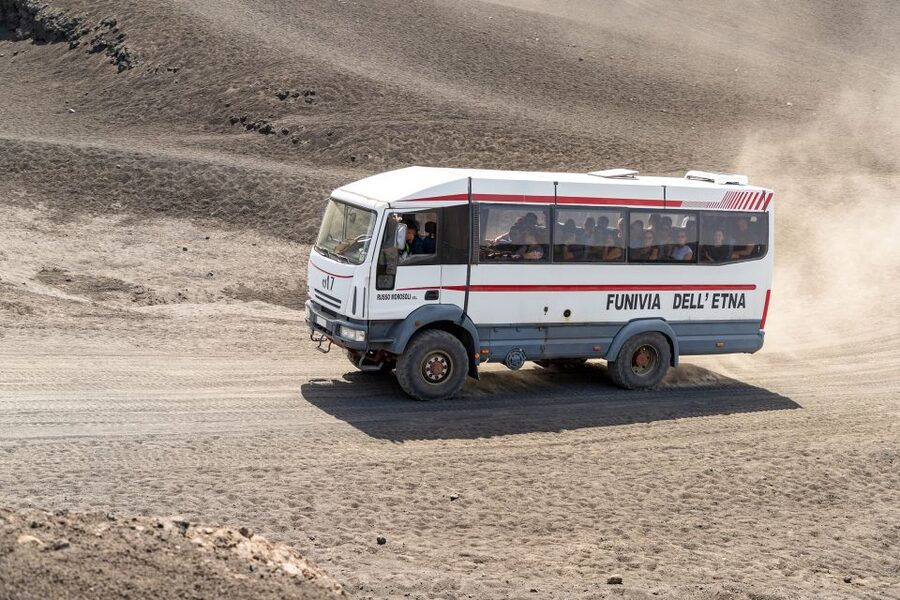
The 3,400-meter option begins in the same way, but the cable car ride is followed by a 4×4 vehicle to about 2,850 meters. From there, you hike for around two hours across lava flows and volcanic sand toward the central craters.
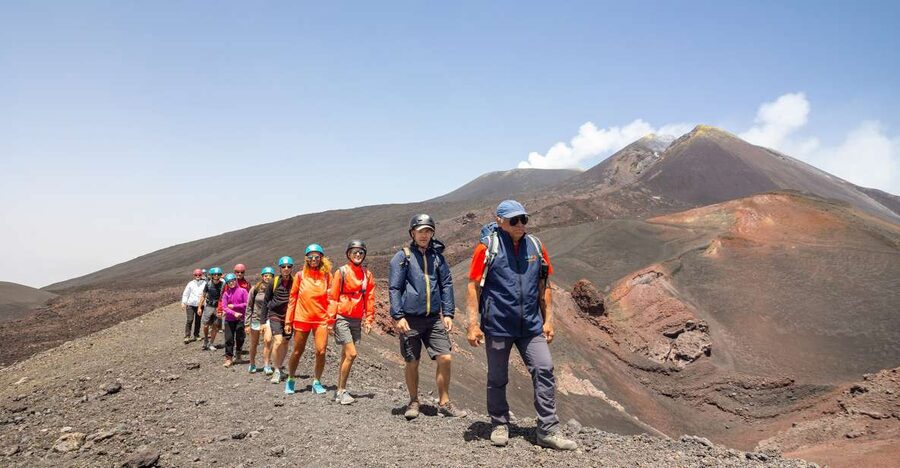
The high point is about 3,400 meters, depending on conditions. You walk along the rim between La Voragine and Bocca Nuova, then continue toward the Southeast Crater, with views reaching toward Sicily’s Ionian coast. The descent follows loose sand to about 2,900 meters before you return by cable car.
I would choose the 3,000-meter route if you are unsure about your fitness, dislike steep gravel, or want more time to enjoy the views without pushing for the highest possible point. Choose the summit option if reaching the upper craters is the main reason you came to Etna and you are ready for a more physical day.
More Volcano Hikes and Treks in Italy
- Etna: summit craters trekking with volcano guide 3350mt
★ 4.7 · 1,712 reviews - Catania: Mount Etna Trekking Tour Beyond the Tourist Trails
★ 4.9 · 1,596 reviews - Mount Etna: Summit Trekking Tour
★ 4.9 · 347 reviews
Starting at Rifugio Sapienza on Etna South
The usual meeting point is Bar Monte Gebel, on the right side of Rifugio Sapienza. This is the base area for the Etna South ascent and sits at about 1,900 meters.
If you select pickup, transport is available from accommodation in Catania. The pickup details are supplied the evening before, and the service can save you the trouble of arranging your own ride up the mountain. One pickup was reported as prompt and directly at the hotel, with a comfortable vehicle.
If you meet at Rifugio Sapienza, arrive ready for changing conditions. The mountain can feel very different from Catania. Bring comfortable sports shoes or hiking shoes, weather-appropriate clothing, and something to eat. Food and drinks are not included, and one useful suggestion is to buy a sandwich at the cafe before setting off.
The base area can also get busy. On sunny days, the cable car queue may be long, even when skip-the-line arrangements are included. Arriving early helps, though no ticket can remove every delay when many people are heading uphill at once.
The cable car ride from 1,900 to 2,500 meters
The cable car takes about 15 minutes and quickly changes the scale of the outing. You leave the developed base area and rise over Etna’s dark volcanic slopes toward the upper station.
The views are a major part of the experience. From the cabins, you can look across the broad volcanic slopes and, when visibility cooperates, toward Sicily’s coast and surrounding country. This is not merely a ride to save time. It gives you a useful sense of Etna’s size before you start walking.
The ticket is not included in the listed $65 price. For the 3,000-meter route, the round-trip adult cable car ticket costs €54, or €31 for children up to age 10. For the 3,400-meter route, the combined round-trip cable car and 4×4 ticket costs €82 for adults, or €51 for children up to age 10.
That difference matters when you compare this outing with other day trips. The guide fee may look modest, but the full price includes the ticket you pay locally. The value comes from having a trained guide on volcanic ground, not from inexpensive transport.
Lava flows and volcanic sand above the cable car
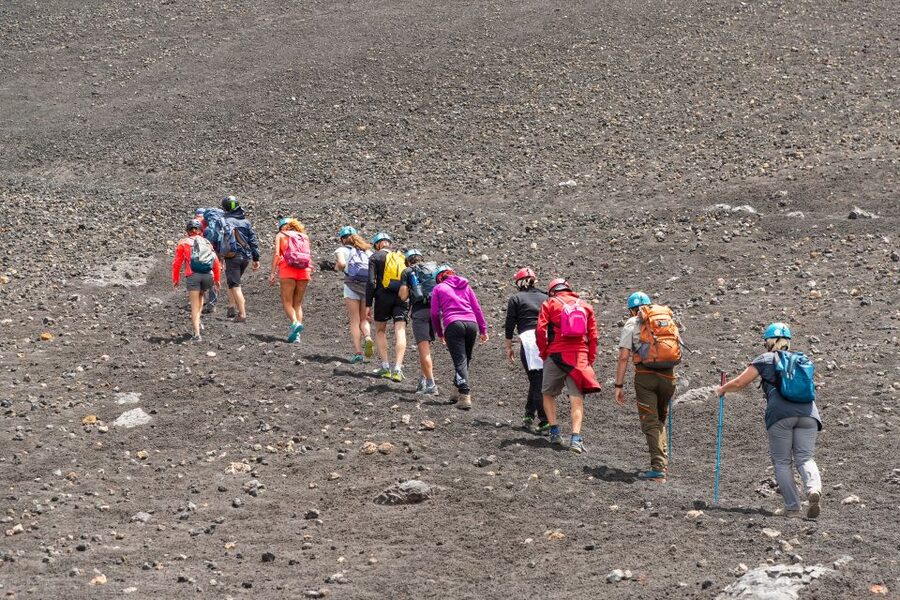
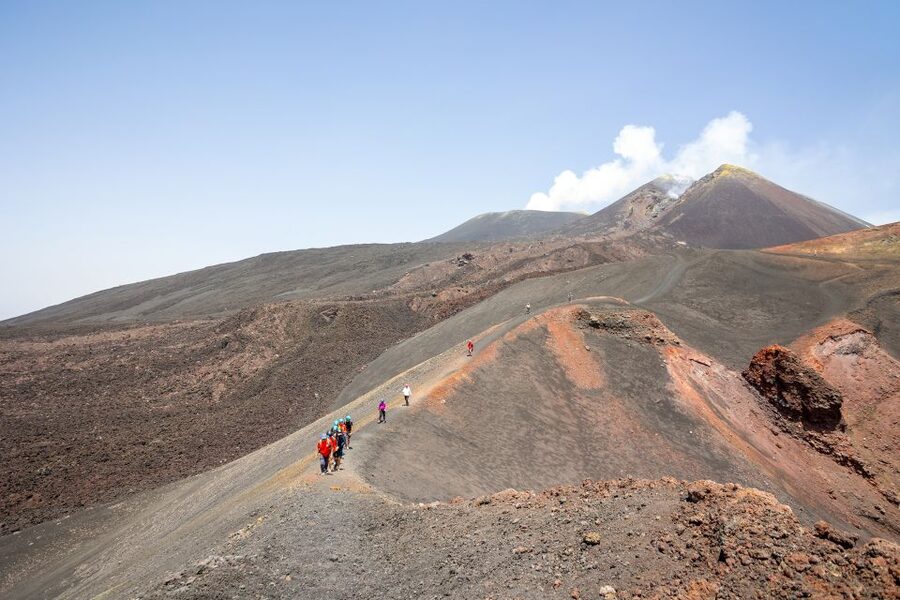
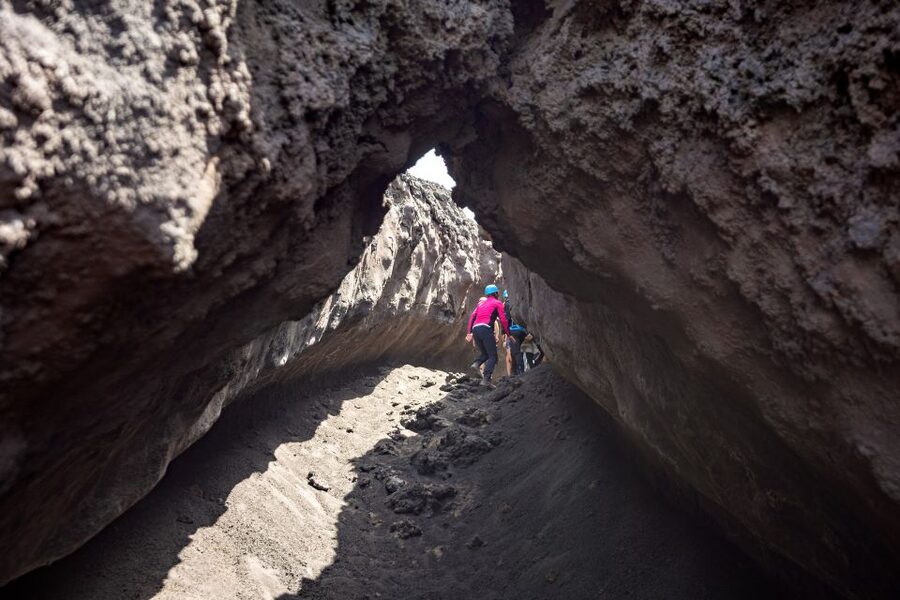
At the upper cable car station, the character of the route changes. You walk over black lava flows, ash, and volcanic sand rather than a normal mountain path. Some sections can feel firm and easy, while others give way beneath your shoes.
The 3,000-meter route continues on foot from about 2,500 meters. It passes lava from important eruptions of recent decades before reaching the Barbagallo Craters. The guides point out volcanic features and explain what you are seeing, which makes the walk far more meaningful than simply crossing dark rock.
On the summit route, a 4×4 vehicle carries you from the cable car area to roughly 2,850 meters. This is a useful trade. You avoid part of the long uphill approach, but the remaining hike is still demanding because the altitude increases and the ground becomes rougher.
The final ascent takes about two hours. You cross recent lava flows and volcanic sand toward the central craters. Loose gravel makes uphill walking tiring and downhill walking surprisingly playful, but you need to move carefully. A walking stick is useful, and equipment may be provided depending on availability.
One practical point deserves more attention than it usually gets: altitude. At roughly 3,000 to 3,400 meters, you may feel short of breath and slower than expected. If you have come directly from the coast, the change can be noticeable. Build in time, walk steadily, and do not treat the route as a race.
More Mount Etna Tours in Mount Etna:
- Mount Etna: scenic Summit Trek with a volcano Guide and Gear
★ 4.5 · 284 reviews - Mount Etna: Half-Day Guided Tour and Hike
★ 4.4 · 264 reviews - Mount Etna: Craters of the 2002 Eruption Trekking Experience
★ 4.8 · 237 reviews - From Catania: Mount Etna Half-Day Tour and Wine Experience
★ 4.5 · 214 reviews
Barbagallo Craters at about 3,000 meters
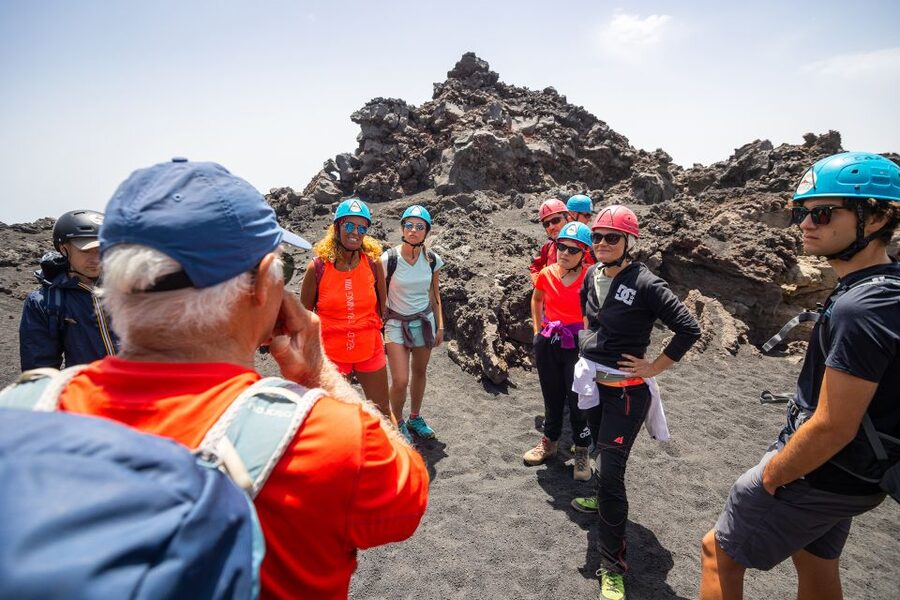
The Barbagallo Craters are the main goal of the shorter route and an important stop on the mountain day. Here, you can see the summit area and observe volcanic activity from a controlled and safe position.
The stop lasts about 30 minutes in the planned schedule. That gives you time for photographs and for the guide’s explanation of the surrounding craters and lava formations. The terrain has the stark, moon-like quality people hope to find on Etna: charcoal rock, pale ash, and wide open views beneath the sky.
The craters also make the 3,000-meter route feel complete. You are not simply stopping halfway because the full summit is too hard. You reach a substantial volcanic feature with a clear view toward the higher part of Etna.
The conditions may still be cold, windy, or snowy. A winter outing can feel like a full cold-weather expedition, even if the day started in mild Sicilian weather. Wear layers rather than relying on one heavy jacket.
The summit craters at about 3,400 meters
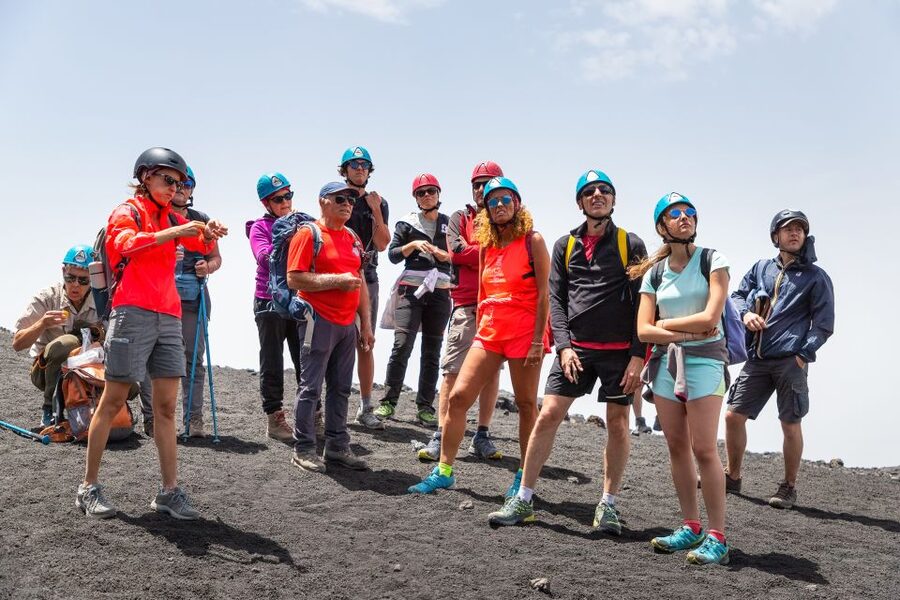
The summit route continues beyond Barbagallo toward Etna’s upper craters. The maximum altitude is approximately 3,400 meters, but that figure is not guaranteed. Your guide and the local authorities may alter the route or stop lower because of volcanic activity, seismic conditions, or weather.
At the top section, the walk follows the rim between La Voragine and Bocca Nuova, then heads toward the Southeast Crater. This is the most dramatic part of the outing, with views toward the Ionian coast and a close look at the forms created by Etna’s eruptions.
You should think of this as a demanding mountain hike, not a sightseeing stop reached by vehicle. The 4×4 gets you higher, but you still hike for around two hours over loose and uneven ground. Narrow sections and steep slopes can make the route difficult for anyone who is not comfortable on gravel.
The reward is a raw volcanic setting that feels far removed from ordinary Sicilian sightseeing. You are walking beside craters and lava formations at an altitude where the view can stretch far beyond the mountain itself.
Valle del Bove and the loose-gravel descent
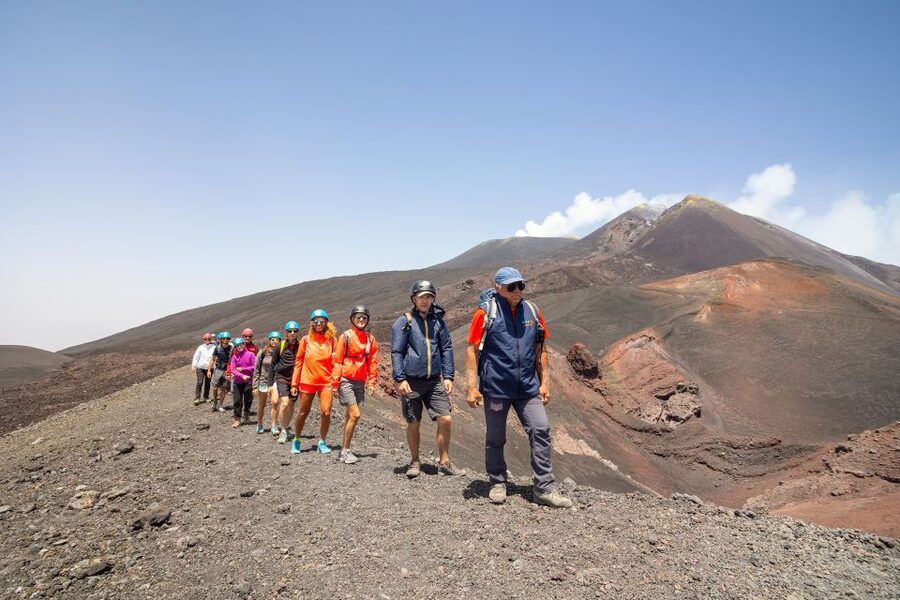
Both routes include a viewpoint over the Valle del Bove, reached during the descent. The planned stop takes about 30 minutes and gives you a chance to look across one of Etna’s most striking volcanic features.
The descent is not simply a repeat of the climb. On the 3,000-meter option, you go down volcanic ash slopes toward the viewpoint before returning to the cable car. On the summit option, the descent follows sandy slopes to about 2,900 meters.
Loose volcanic gravel can be easier on the knees than a hard paved trail, but it can also slide beneath your feet. One useful piece of advice is to shorten your steps and keep your balance rather than rushing downhill. This is where walking poles can help.
The descent is also where the effort catches up with you. The full schedule includes about three hours of guided hiking, though the exact walking time changes with the route, group pace, and mountain conditions. The full experience lasts five to six hours, including transport.
Guides, group size, and the human side of the hike
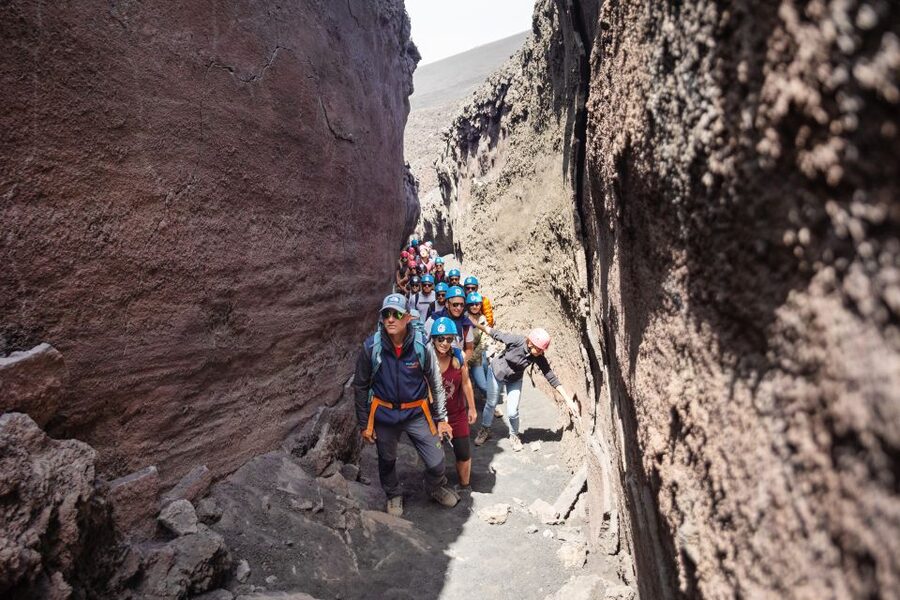
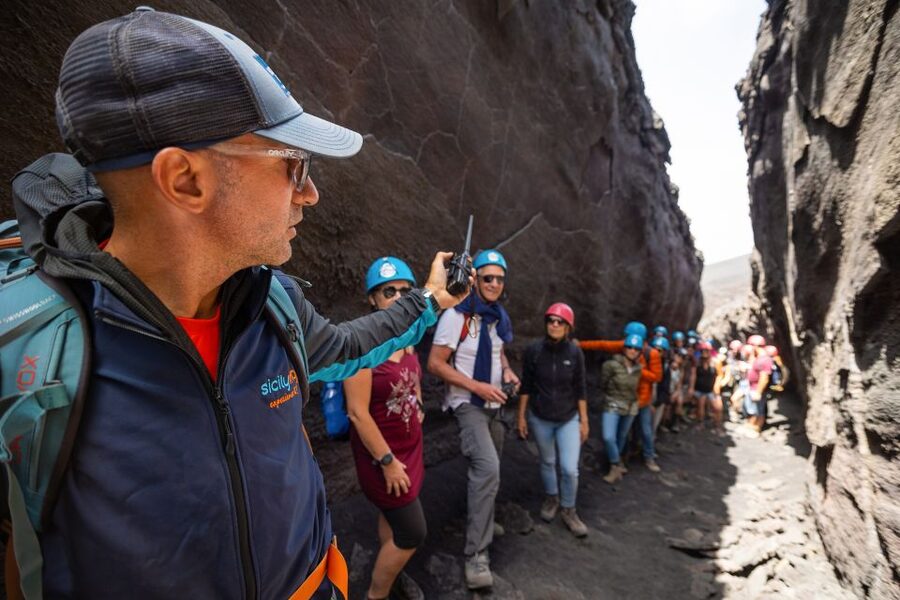
The guide is central to the value of this experience. You are not only paying someone to lead the way. A trained volcanic guide helps interpret eruption sites, chooses a safe route, watches the group, and explains why the ground looks and feels different from an ordinary trail.
Eduardo receives particular praise for staying helpful throughout the outing and making the volcano easy to understand. Giuseppe is also noted for a friendly approach, clear explanations, and care with mixed-age groups. Past groups have included children aged 11 and 15 who completed the route, though both fitness and route choice matter.
Groups can be small or private, but one group was about 20 people. That size is manageable, though it may slow the pace at narrow spots or during photo stops. If you want more personal attention, select a private or small-group option when available.
The available guide languages are English, French, and Italian. A guide may also show images of earlier eruptions, which helps connect the black rocks under your feet with Etna’s active past.
What to wear, carry, and expect from the equipment
At a minimum, bring sturdy sports shoes, warm layers, and clothing suited to the weather forecast. The supplied information recommends comfortable shoes and sports shoes, but I would favor the most secure pair you own because ash and gravel can shift underfoot.
Helmets are mandatory. Hiking equipment, including items such as walking sticks and footwear, is supplied based on availability. Some participants received hiking shoes, socks, helmets, and poles, but you should not assume every item will be available in your size.
Bring water and food. Food and drinks are not included, and there is no promise of a meal during the hike. A sandwich from the cafe at Rifugio Sapienza is a sensible choice before departure, especially since the high route can take several hours away from the base.
The tour is not suitable for children under six, pregnant women, people with heart problems, or people with respiratory issues. It is specifically prohibited for people with asthma and those with heart conditions. If you have any doubt about your ability to handle altitude or exertion, ask a medical professional before booking.
Price, timing, and the real value
The advertised price is $65 per person, with a duration of five to six hours. Pickup and drop-off from accommodation are included only if you select that option, and the guide, hike, helmet, insurance, and available equipment are included.
The added transport cost is the key calculation:
- The 3,000-meter route requires a €54 adult round-trip cable car ticket.
- Children up to age 10 pay €31 for that cable car ticket.
- The 3,400-meter route requires an €82 adult ticket for the cable car and 4×4 vehicle.
- Children up to age 10 pay €51 for the combined ticket.
That makes the summit route a more expensive half-day than the headline price suggests. Still, I think the value is fair if you want a guided volcanic experience rather than a cable car ride and an independent walk.
The guide adds practical safety, context, and route management. Pickup from Catania adds further value if you do not have a car. The experience is less attractive if you only want a short scenic stop or if you are counting every euro, since the transport tickets are a substantial extra.
You can cancel up to 24 hours before the activity for a full refund, and reserve now while paying later. Weather or volcanic conditions can still force a cancellation or change to the route.
Should you book this Mount Etna hike?
Book it if you want to walk across fresh volcanic terrain, learn how Etna erupts, and reach a serious altitude with a trained guide. The 3,000-meter route is the safer choice for a moderate but genuine hike, while the 3,400-meter option is for fit hikers who want the central craters and accept a tougher day.
I would not book it for a relaxed family outing, a simple viewpoint visit, or anyone with asthma, heart problems, respiratory issues, or limited tolerance for steep loose ground. Check the additional transport cost before you commit, bring food and warm clothing, and keep your schedule flexible in case the mountain changes the plan.
For the right person, this is one of Sicily’s most memorable outdoor experiences: not polished, not effortless, and far more interesting for exactly those reasons.
FAQ
How long does the Mount Etna tour take?
The experience lasts about five to six hours, including the cable car, ground transport, guided hiking, stops, and return journey.
What is the difference between the 3,000-meter and 3,400-meter routes?
The 3,000-meter route uses the cable car to about 2,500 meters, then continues on foot to the Barbagallo Craters. The 3,400-meter route uses the cable car and a 4×4 vehicle to about 2,850 meters, followed by roughly two hours of hiking toward the central craters.
Are the cable car and 4×4 tickets included?
No. The 3,000-meter route requires a separate round-trip cable car ticket costing €54 for adults and €31 for children up to age 10. The 3,400-meter route requires a combined cable car and 4×4 ticket costing €82 for adults and €51 for children up to age 10.
Where is the meeting point?
Meet the guide at Bar Monte Gebel, on the right side of Rifugio Sapienza. Pickup from accommodation in Catania is available if you select that option.
What should I bring?
Bring comfortable sports shoes, weather-appropriate clothing, food, and drinks. Helmets are mandatory. Hiking equipment may be available, including footwear and walking sticks, but availability is not guaranteed.
Can weather or volcanic activity change the hike?
Yes. The tour may be canceled because of bad weather, and the route, transport, or maximum altitude may change because of weather, seismic conditions, or volcanic activity.
More Volcano Hikes and Treks in Mount Etna
- Mount Etna: Hike to The Highest Point With a Guide
★ 4.8 · 147 reviews - Piano Provenzana: Mount Etna Hiking Trip to 3,380 Meters
★ 4.8 · 54 reviews - From Catania: Etna tour to the Base of the Summit Craters
★ 4.9 · 35 reviews - Etna South: High Altitude Winter Trek with an Alpine Guide
★ 4.8 · 27 reviews
Just added around Mount Etna
- Taormina and Catania: Private Etna Exploration and Cave Tour★ 4.8 · 32 reviews
- Taormina and Catania: Private guided Etna hike by cable car★ 5.0 · 17 reviews
- Piano Provenzana: Mount Etna Hiking Trip to 3,380 Meters★ 4.8 · 54 reviews
- Mount Etna: Private Trek on the North Slope Craters★ 5.0 · 4 reviews
- Mount Etna: Trek to the Craters of The 2002 Eruption★ 4.9 · 9 reviews
- Mount Etna: Half-day Morning Jeep Tour★ 5.0 · 71 reviews
- Etna South: High Altitude Winter Trek with an Alpine Guide★ 4.8 · 27 reviews
- Mount Etna: Craters of the 2002 Eruption Trekking Experience★ 4.8 · 237 reviews
Italy Volcano Tours, compared.
From Naples: Pompeii Ruins & Mount Vesuvius Day Tour
Read our review →
Pompeii and Mount Vesuvius Day Trip from Rome with Pizza Lunch
Read our review →
From Rome: Pompeii Day Trip with Optional Vesuvius and Lunch
Read our review →
Catania: Mount Etna Morning or Sunset Day Trip with Tasting
Read our review →
Mount Etna: Trek to 3000m with cable car and 4×4
Read our review →
Pompeii & Mt.Vesuvius Day Tour from Naples with Pizza Lunch
Read our review →
Mount Vesuvius: Skip-the-Line Ticket and Smart Digital Guide
Read our review →
Naples: Pompeii & Mt Vesuvius All-Inclusive Small Group w/ Lunch
Read our review →Browse the lists this tour appears in