
REVIEW · HILO
Hilo: Elite Volcano Hike
The most striking part of this Hilo day trip is that you do not just view volcano country from a roadside lookout. You walk across places changed by the 2018 eruption, from a buried highway at Mackenzie State Recreation Area to the cracked roads and huge crater of Kilauea.
I like the mix of active geological history and actual walking, plus the small group of no more than 13 people. I also like that lunch and drinks are included, so you can focus on the day rather than finding food between stops. The main catch is the long 510-minute schedule, and summer heat can make the lava hikes tiring.
Key points
- Walk the 2018 lava route: Follow the closed highway and lava flow at Mackenzie State Recreation Area.
- See Fissure 8’s eruption zone: Pass through the Leilani Estates area and visit Isaac Hale Beach Park.
- Hike in Hawaii Volcanoes National Park: Take the two-mile route toward Keanakako’i and Kilauea Caldera.
- Look into a 1,000-foot-deep crater: See the greatly enlarged Halema’uma’u Crater from the caldera.
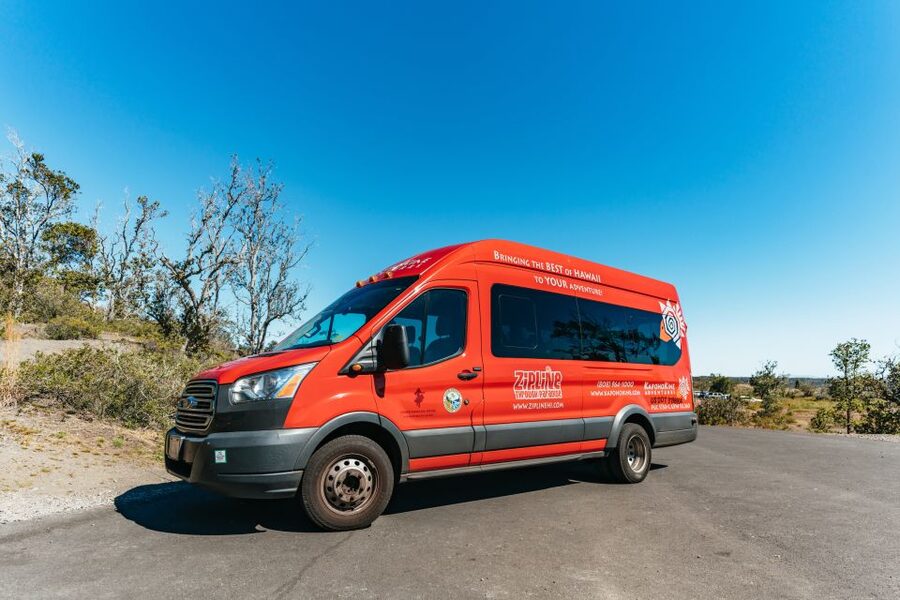
- Travel in a small group: The van carries no more than 13 participants, with hotel pickup available.
- Expect a full day outdoors: Closed-toe shoes are required, and the tour is not suitable for people with respiratory or back problems.
From Hilo to the fresh black lava at Mackenzie
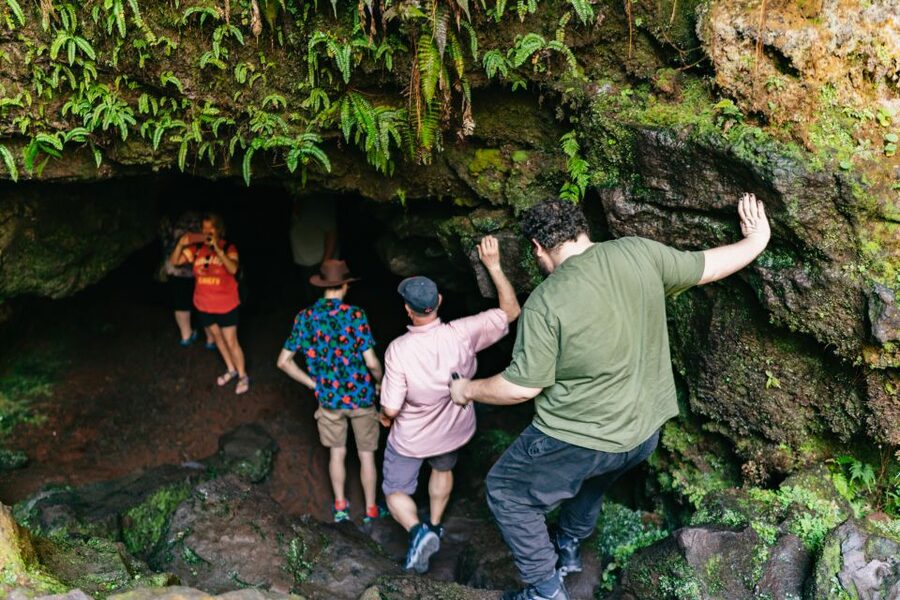
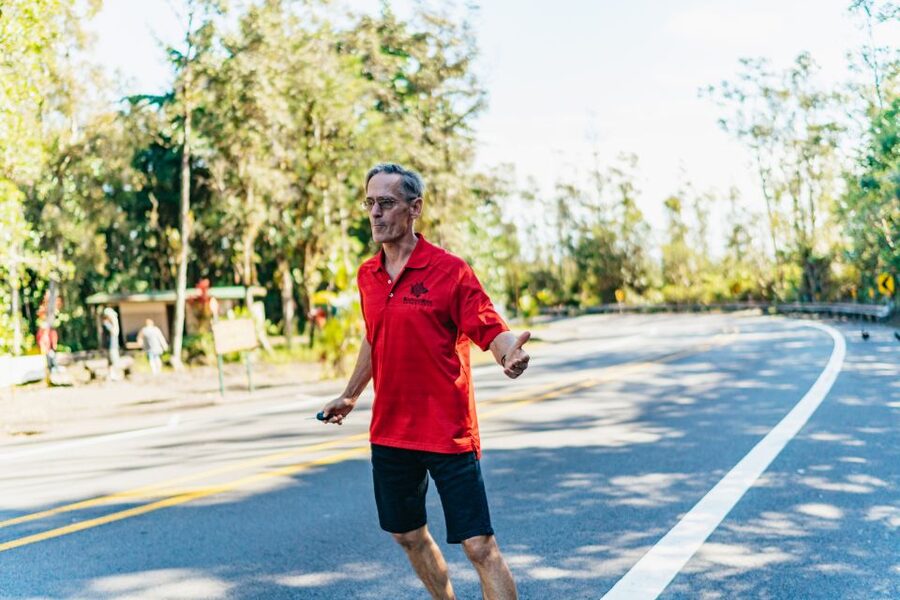
This tour begins east of Hilo along the Puna Coast, an area reshaped by the 2018 eruption. The first major stop is Mackenzie State Recreation Area, where the eruption sent a wall of rough ʻaʻā lava toward the sea and cut through the highway.
The road is now closed, which gives the stop its unusual force. You are not looking at a distant volcano from behind a railing. You walk along a highway that was overtaken and abandoned. The lava continued toward the coast, leaving behind a broad field of dark rock and a very different shoreline.
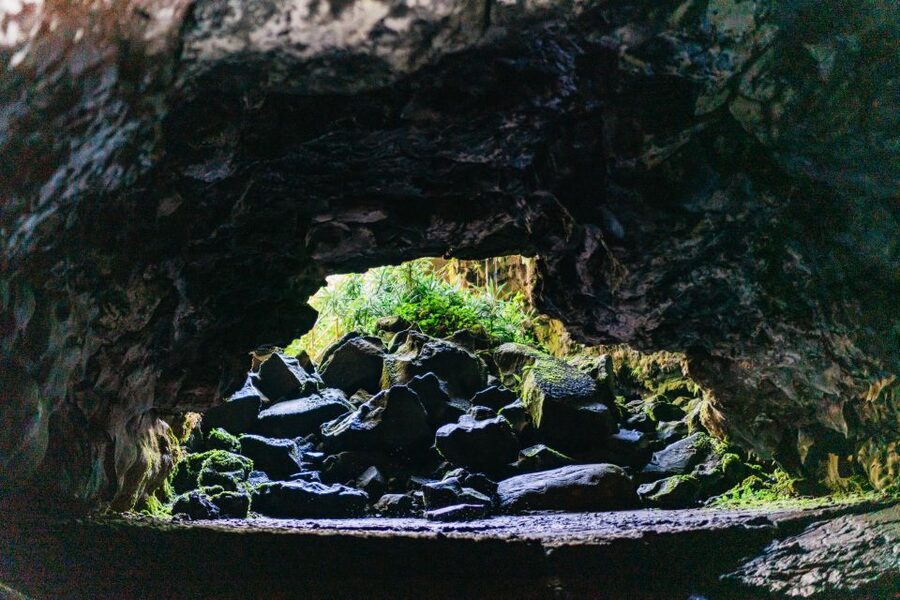
The hike then follows the lava flow through pine forest toward the altered coast. From the cliffs, you can look toward the new black sand beach. The exact feel of this walk will depend on weather and trail conditions, but you should expect uneven volcanic ground and a setting with little softness underfoot.
I like this opening because it gives you a clear picture of what an eruption does to ordinary places. A subdivision, a road, a forest, and a coastline can all be changed in one event. It is far more useful than hearing only a date and a few measurements.
Wear sturdy closed-toe shoes. The operator makes this a requirement, and open-toed footwear is not allowed. That rule is practical, since lava surfaces can be rough, sharp, and awkward to cross.
More Volcano Hikes and Treks in the USA
- Big Island GOAT Experience: Mauna Kea Summit, Sunset & Stars
★ 5.0 · 1,706 reviews - Big Island: Mauna Kea Summit and Stars Small-Group Adventure Tour
★ 5.0 · 1,545 reviews - Big Island: Mauna Kea Summit Tour with Free Night Star Photo
★ 5.0 · 1,449 reviews
Isaac Hale Beach Park and the Fissure 8 route
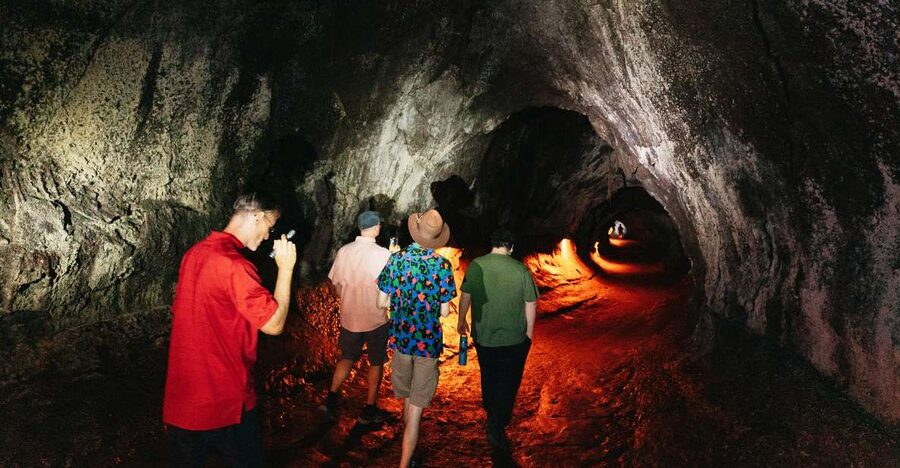
From Mackenzie, the van continues to Isaac Hale Beach Park. Along the way, you pass through the area associated with Fissure 8, the dramatic eruption opening that formed in the middle of the Leilani Estates subdivision.
This section adds a human scale to the geology. At Mackenzie, the road shows how lava can erase infrastructure. Around Leilani Estates, the eruption took place among homes and streets. The route helps connect the raw volcanic activity with the communities that were affected by it.
A picnic-style lunch is served at Isaac Hale Beach Park, weather permitting. Beverages are included as well. That matters on a full-day outing, especially after walking over lava and spending time outdoors in the heat.
The stop also gives you a break from the van and the trails. The day covers a lot of ground, so lunch is not just a pleasant extra. It helps divide the tour into two sensible parts: the 2018 eruption zone in the morning, followed by Hawaii Volcanoes National Park later.
There is one practical limitation here. Outdoor lunch depends on conditions, and the tour does not promise a restaurant meal. If rain or poor weather changes the plan, you should be ready for a more basic arrangement.
Entering Hawaii Volcanoes National Park
The tour then heads to Hawaii Volcanoes National Park, the main attraction for many people booking this experience. You first stop briefly at the Kilauea Iki Overlook, where you can see across the crater and get your bearings before walking toward Keanakako’i.
That short overlook stop has a useful purpose. It lets you see the scale of the caldera from above before you approach it on foot. You can also look down toward the route ahead, including the trail that leads into the caldera area.
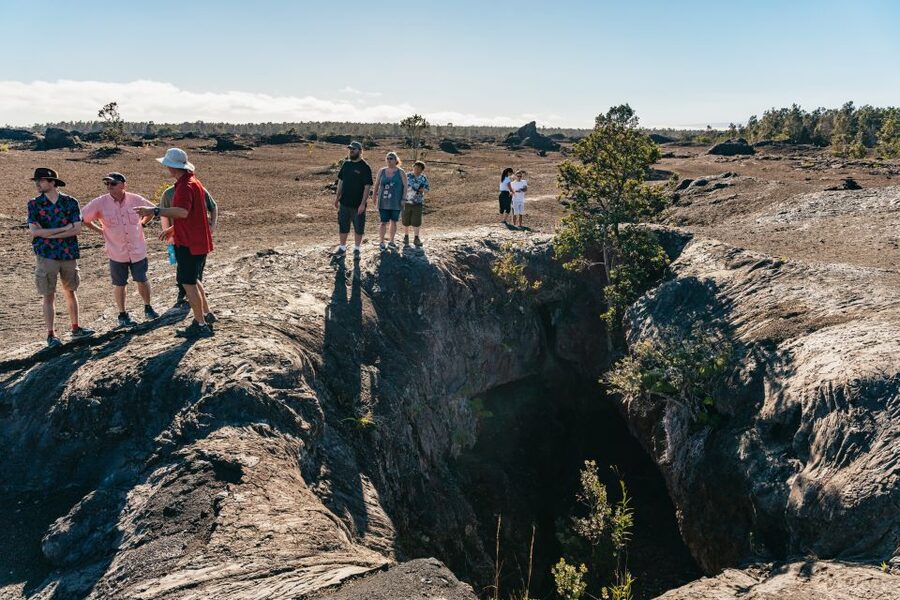
The park section is not simply a drive past a few viewpoints. You walk along the paved road toward Keanakako’i, a route shaped by the 2018 eruption. The pavement buckled, and cracks and sinkholes mark the force beneath it.
These details make the walk more than a scenic stroll. You can see where the ground moved and understand that the eruption affected the park itself, not only the distant summit. The damage is part of the story you are walking through.
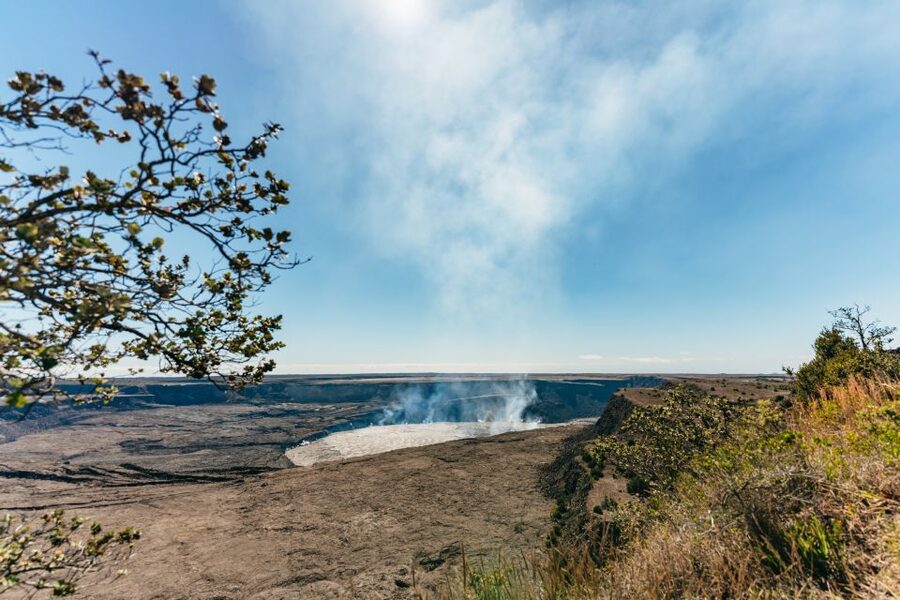
A major reward is the bird’s-eye view of Kilauea Caldera and Halema’uma’u Crater. The crater expanded during the 2018 eruption after its lava lake drained away, leaving an enormous pit about 1,000 feet deep. From above, you can also see the route that leads down toward the caldera floor.
The two-mile hike toward Kilauea Caldera
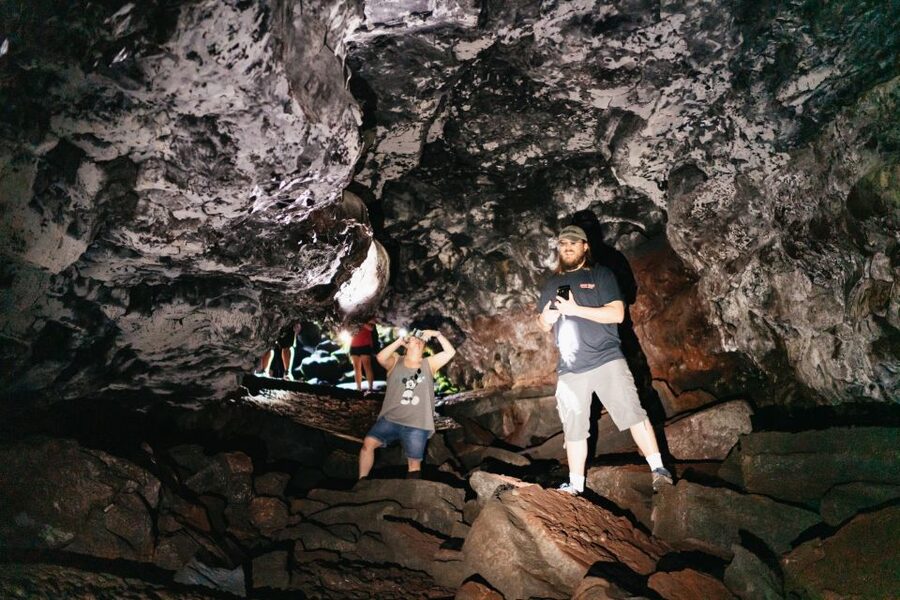
The main hike covers about two miles and includes a descent into the Kilauea Caldera area before you return to the starting point. That distance is not extreme for many active walkers, but the full day includes another walk at Mackenzie, time outdoors, and exposure to heat.
At the caldera floor, a large rock slide from the 2018 eruption is visible to the left. Halema’uma’u Crater lies ahead. The change in scale can be startling: from the overlook, the crater is a huge feature in the distance; from below, the rock walls and slide area feel much closer and more imposing.
You may also look for native birds along the way, including the yellow ʻamakihi and the red ʻapapane. Bird sightings are not guaranteed, but the guide can help you pay attention to wildlife rather than treating the route as a race from one viewpoint to the next.
Huge boulders in the area arrived during older rock slides and eruptions. Marks left by earlier visitors, including Benjamin Boyd and John Webster, add a small personal detail to the volcanic setting. These traces show that people have been moving through this place for generations, long before the modern roads and overlooks.
The best way to approach this hike is at a steady pace. You will want time to stop for the caldera, the rock slide, the crater, and possible birds. The route is also more enjoyable when you are not trying to keep up with a group while looking down at loose or uneven ground.
More Volcano Crater Hikes in the USA:
- Oahu: Diamond Head Crater Hike and North Shore Experience
★ 4.7 · 189 reviews - Big Island: Off the Beaten Path Volcano Crater Hike
★ 5.0 · 15 reviews - Mount Etna: Summit Crater Trek with Cable Car
★ 4.8 · 1,875 reviews - Etna Sunset Tour: Volcano trek, Cave & tasting from Catania
★ 4.8 · 1,290 reviews
What the guides add to a volcanic day
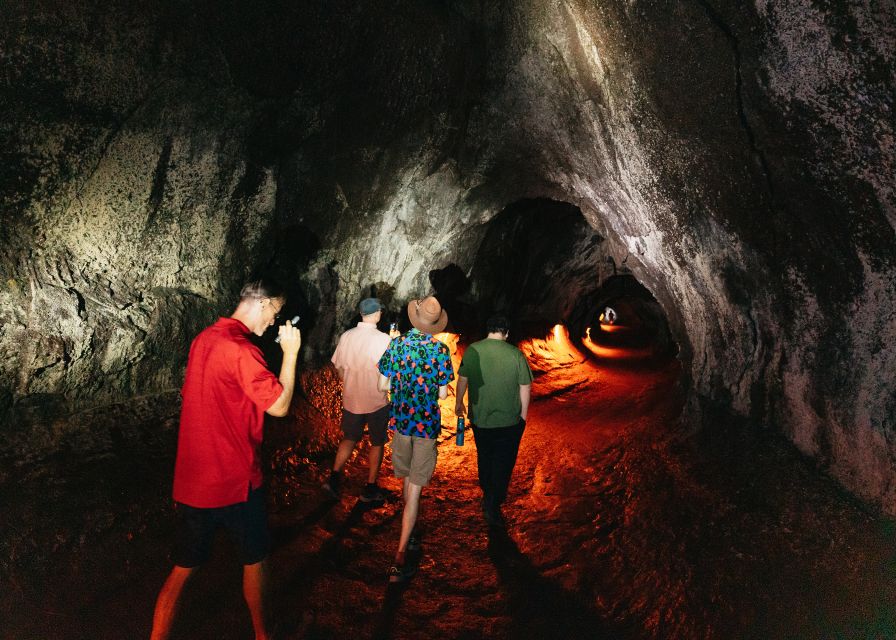
A good guide matters on this tour because the scenery can be hard to read without context. Black lava, a cracked road, and a large crater are impressive, but the guide helps explain what happened at each location and why the damage looks different from one stop to the next.
Ray received especially strong praise for his humor, energy, explanations, and ability to interact with the group. Nick is also noted for giving clear information about the island and its volcanoes, along with local stories from around the island.
That personal guiding is one of the strongest reasons to choose this tour instead of arranging a simple self-drive day. You can ask questions as you go, and the stops have a clear connection rather than feeling like unrelated photo breaks.
There is a tradeoff. If you are picked up from the opposite side of the island, the drive to Hilo can be long. One useful suggestion is to build in quiet time during the van ride instead of expecting the guide to talk nonstop. The guide may provide plenty of commentary, but a recorded presentation is not part of the tour.
The vehicle itself has been described as comfortable, which helps on a day with substantial driving. Still, comfort does not make a long transfer disappear. Check your pickup point carefully and consider the total time you will spend in the van before booking.
How hard is the hiking?
The tour is best for people who can walk on uneven volcanic ground and manage a two-mile park hike after a morning outing. You need closed-toe shoes, and you should be prepared for heat, sun, and a full day outside.
One previous participant found the walk tiring in hot weather but still felt the miles were worthwhile. That is a fair way to think about the physical side. The route is not presented as a technical climb, but it is not a passive sightseeing ride either.
The experience is not suitable for wheelchair users, pregnant women, or people with back or respiratory problems. The operator also lists back problems and respiratory issues as reasons not to take the tour. These limits matter because the day includes walking on lava, uneven ground, and outdoor exposure.
Bring the right attitude as well as the right footwear. You are coming for volcanic terrain, not a smooth park path. If you prefer short walks from a van with long seated breaks, this may feel too active. If you want to walk through the places you are seeing, the amount of hiking is a major benefit.
Small-group size, pickup, and the long day
The group is limited to 13 people. That is small enough to make questions and conversation with the guide practical, while still using a vehicle suited to a full-day route.
Hotel pickup and drop-off are included. You can also meet the operator at the KapohoKine Adventures store in the Grand Naniloa Resort at 93 Banyan Drive in Hilo. If you need a different pickup location, the supplied contact number is 808-964-1000.
The total duration is 510 minutes, or eight and a half hours. That is a major commitment, but it reflects the distance between the Puna Coast and Hawaii Volcanoes National Park, plus the time spent walking at several stops.
I would reserve this for a day when you do not have another fixed activity afterward. The schedule includes driving, lunch, two separate eruption areas, an overlook, and the caldera hike. Rushing off to dinner or an evening show could make the final part of the day stressful.
The tour operates in English. If you want detailed explanations of the volcanoes and the 2018 eruption, that language option is clear and straightforward.
Is the $189 price fair?
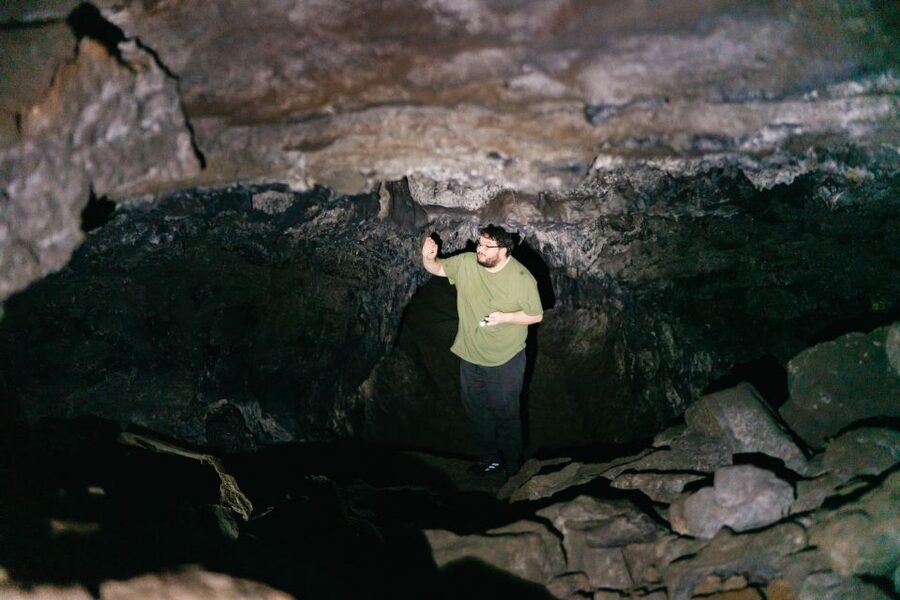
At $189 per person, this is not a bargain-priced transfer. The value comes from what is bundled into the day: hotel pickup and drop-off, transportation, a guide, lunch, beverages, and access to a route that would require considerable planning on your own.
You are also paying for interpretation. A self-drive visit to the park can be cheaper if you already have a rental car, but you would need to plan the Puna Coast stops, understand where to walk, arrange food, and connect the eruption sites into a sensible day.
The small group adds value too. With no more than 13 people, the guide can manage the walks and answer questions more easily than on a large coach excursion.
The price makes the most sense if you have only one day for volcano sights and want the logistics handled. It makes less sense if you are already staying near the park, have a car, and prefer to set your own pace. In that case, you may value independence more than included lunch and guiding.
Who should book this Hilo volcano tour?
I would recommend it to first-time visitors who want a full picture of the 2018 eruption and Kilauea in one day. It is also a good fit if you prefer a guide to explain the cracked highways, lava flows, caldera, and crater rather than reading signs on your own.
The tour suits active adults who can walk for several miles over the course of the day. It can also work well for older people who want a guided outing and comfortable transportation, provided they can manage the required walks and do not have the listed health limitations.
Younger, very adventurous hikers may find the outing less demanding than a serious backcountry trek. The route uses established access points and includes driving, an overlook, lunch, and guided interpretation. Its appeal is the combination of access, context, and variety, not extreme physical challenge.
Should you book the Elite Volcano Hike?
Book it if you want to walk through the places altered by the 2018 eruption, see Fissure 8 and Mackenzie, and finish with a guided hike toward Kilauea Caldera and Halema’uma’u Crater. The best parts are the direct contact with the lava-affected roads and coast, the large crater views, and the guides, especially Ray and Nick.
Skip it if you dislike long van rides, hot outdoor walks, or fixed schedules. Also think twice if you need a wheelchair-friendly route, have back or respiratory problems, or want a quiet day with only brief stops.
For most fit visitors with one volcano day available, the combination of transport, lunch, small-group guiding, and substantial walking gives the $189 price a reasonable value. Bring closed-toe shoes, allow the full eight and a half hours, and expect the day to be tiring as well as memorable.
FAQ
How long does the Elite Volcano Hike last?
The experience lasts 510 minutes, which is eight and a half hours. Starting times vary, so you need to check availability when booking.
What is included in the price?
Hotel pickup and drop-off, lunch, and beverages are included. The tour also includes a live English-speaking guide.
Where does pickup take place?
You can meet at the KapohoKine Adventures store in the Grand Naniloa Resort, 93 Banyan Drive, Hilo, Hawaii 96720. You can also contact KapohoKine Adventures at 808-964-1000 to ask about pickup from your location.
How much hiking is involved?
The Hawaii Volcanoes National Park portion includes a hike of about two miles toward Keanakako’i and Kilauea Caldera. The tour also includes a walk along the closed highway and lava flow at Mackenzie State Recreation Area.
What should I wear or bring?
You must wear closed-toe shoes. Open-toed shoes are not allowed.
Is the tour suitable for everyone?
No. It is not suitable for pregnant women, wheelchair users, people with back problems, or people with respiratory issues.
Just added around the USA
- Volcanoes National Park: Guided, Small-Group Hike★ 5.0 · 15 reviews
- Evening Volcano Explorer from Hilo★ 4.5 · 67 reviews
- Fat Tire E-Bike Rental – Volcanoes National Park★ 4.5 · 26 reviews
- Evening Volcano Explorer Tour from Kona★ 4.5 · 24 reviews
- Big Island Waterfalls, Blacksand Beaches, Lava Tubes & Volcanoes★ 5.0 · 24 reviews
- Expert Led Private Guided Tour Hawaii Volcanoes National Park★ 5.0 · 5 reviews
- Best of Big Island: Volcanoes, Waterfall, Blacksand Beach & Lunch★ 5.0 · 14 reviews
- Big Island Private Tour Waipio Valley Volcanoes Waterfalls★ 5.0 · 4 reviews
Hilo Volcano Tours, compared.

Hilo: Mauna Kea Summit, Sunset, & Stargazing Experience
Read our review →
Big Island: Volcanoes, Waterfalls, & Coffee Farm Day-Trip
Read our review →
Volcano Adventure: Hilo Sightseeing w/ Optional Helicopter Tour
Read our review →
Hilo Shore Excursion: Active Volcano, Lava Tube, Waterfall and Gardens
Read our review →
Big Island: Hawaii Volcanoes National Park and Hilo Tour
Read our review →
Big Island: Volcano, Black Sand Beach, Waterfall, with Lunch
Read our review →Browse the lists this tour appears in