
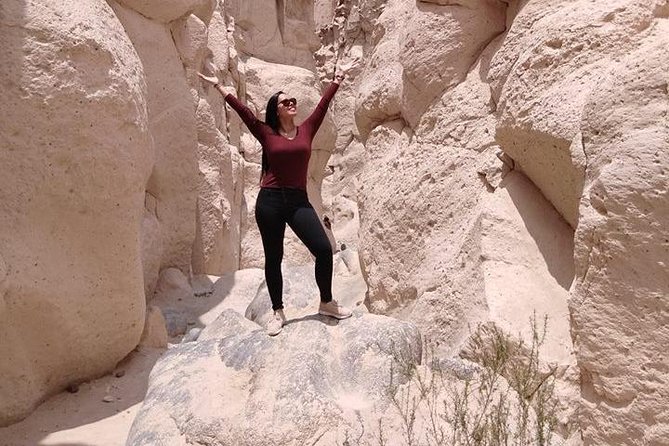
REVIEW · AREQUIPA
Sillar Route in Arequipa and viewpoint of the Volcanoes
Arequipa’s famous white buildings begin outside town, in dry volcanic quarries where workers still cut sillar by hand. This short trip takes you to that source, then into the Culebrillas canyon, where carved walls, petroglyphs, and pink-toned stone make the best photo stop.
I like the small maximum group of 15 and the low $11 price. Round-trip transport keeps the outing simple, and the 3 to 4 hour length fits neatly into a free morning or afternoon. You may also hear useful stories about Arequipa’s volcanoes and architecture from guides such as Alonso, Betsey, Jose Jose, or Christina, though the guide is not guaranteed.
The main caution is organization. Pickup times have sometimes run late, and an English booking may become multilingual, with much more time spent speaking Spanish. Bring insect repellent, sunscreen, sturdy shoes, and extra cash for the entrance fee, which is listed separately and has occasionally been higher than expected.
Key points before you book
- Culebrillas canyon is the highlight: The easy but uneven walk brings you to petroglyphs and narrow pink sillar walls.
- Sillar is Arequipa’s signature stone: You see how volcanic rock becomes blocks, carvings, walls, and grand city buildings.
- The price is unusually low: At $11, transport and a guide cost less than many half-day outings, but the service can be basic.
- Expect a small group: The tour accepts no more than 15 people, making it easier to hear the guide than on a large coach trip.
- Plan for dust, flies, and sun: The quarries are dry and exposed, and the canyon can have many insects.
- English service needs checking: The tour can operate in multiple languages, so confirm the language arrangement if that matters to you.
Why Arequipa was built from white volcanic stone
Sillar is a pale volcanic stone formed from ash and other material left by eruptions. In Arequipa, it became the practical building material for churches, mansions, courtyards, and public buildings in the historic center.
That connection gives this excursion a useful purpose. You are not simply visiting a quarry. You are seeing the raw material behind the city’s famous white appearance, then returning toward the center to compare the rough stone at the source with finished sillar architecture.
The experience also explains why Arequipa is often called the White City. The name makes more sense after you have seen the bright stone cut from a dry, almost desert-like setting.
The tour does not spend a full day in the countryside. It usually takes about three to four hours, with morning and afternoon departures. I see that as a real advantage if you are fitting Arequipa around a longer Peru itinerary.
A few more volcano tours around Arequipa worth a look
- Arequipa | Ascent to Chachani Volcano 2 days / 1 night
★ 4.9 · 10 reviews - Reykjavik: Golden Circle Full-Day Tour with Kerid Crater
★ 4.8 · 24,485 reviews - Santorini: Volcanic Islands Cruise with Hot Springs Visit
★ 4.4 · 10,869 reviews
Añashuayco quarry: stonecutting, murals, and working hands
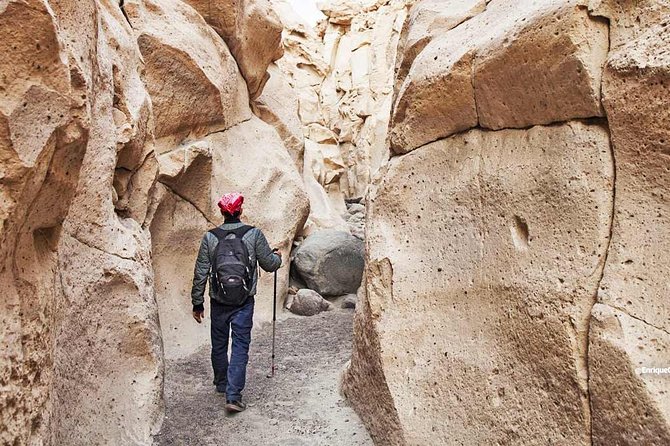
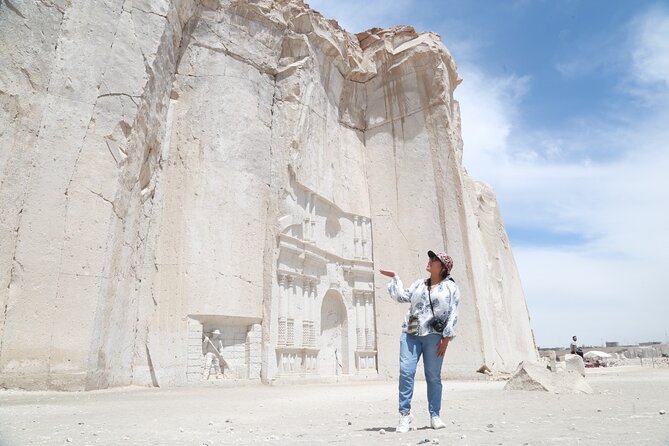
The first main stop is the Añashuayco sillar quarry, where you can watch workers cutting and shaping the stone in an artisanal way. The stop lasts about 50 minutes, enough time to see the work and look at murals carved into the quarry walls.
This is the most direct lesson in how sillar is made useful. You see the contrast between rough volcanic material and blocks prepared for construction. The work is manual, dusty, and physical, so the visit gives you a better sense of the labor behind Arequipa’s elegant facades.
The murals add visual interest, especially if you want something beyond a simple quarry visit. There are also carved figures and other stone artworks in the area. Bring a camera, but protect it from dust and keep your expectations sensible. This is an active quarry setting, not a polished museum.
One small natural curiosity is the so-called sillar cannon, a pinkish stone formation shaped like a cannon. It is a quick stop rather than a major sight, but it gives the guide something distinctive to point out while explaining how the local rock forms.
The area can be very bright and exposed. Sunscreen, a hat, and water are sensible choices. Several visitors also found insect repellent useful, especially when doors and windows remained open during the outing.
The second quarry and the cost of looking around
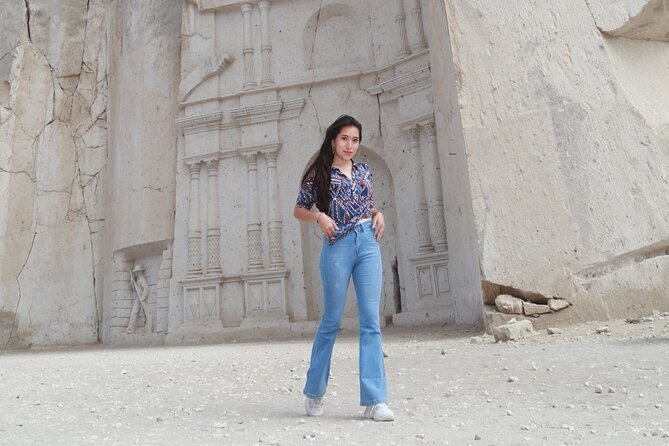
Another quarry stop gives you more time to see the protected area where sillar originates. Admission is listed as free for this part, but the overall tour also lists a $3 entrance charge separately. In practice, you should carry small cash and ask clearly which entrance payments are due at each stop.
That distinction matters because the tour price is so low. At $11, you are paying mainly for transport and guiding, not an all-inclusive package with every local fee covered. A small unexpected payment is not a large expense, but it can be annoying if you have only a limited amount of Peruvian cash.
The quarry itself may feel less impressive than the canyon. Some of the area is still a working mine, and parts can look raw rather than scenic. Dust is a real issue. A face covering is useful if you are sensitive to airborne grit, and closed shoes are a better choice than sandals.
You may also see fewer workers than expected. Stonecutting remains a demanding trade, and the amount of visible activity can vary. I would come for the chance to understand the source of the stone, not for a nonstop demonstration.
Culebrillas canyon and the petroglyph walk
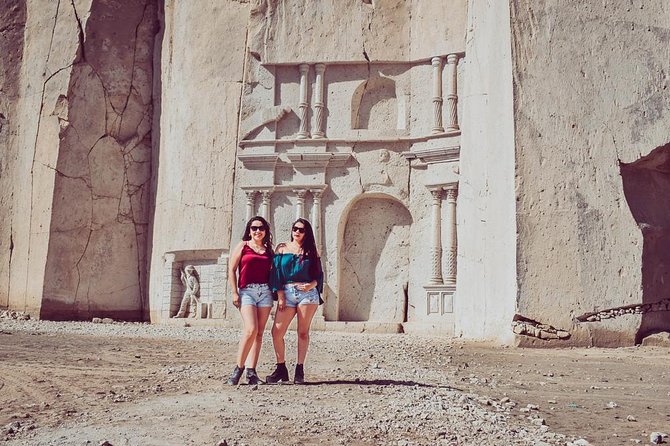
The Culebrillas section is often the strongest part of the afternoon. You walk through a dry canyon with pink and pale sillar walls, carved forms, and petroglyphs at the end of a roughly 600-meter route.
The walk is generally manageable, but the ground is uneven. Good walking shoes matter more here than fashionable footwear. One Spanish-language review specifically advised sports shoes and layers because the weather can shift from warm to cloudy, windy, and cold.
The canyon feels more natural than the quarry areas. You get a clearer sense of the stone as a geological material, rather than only as a building product. The narrow walls also create better photographs, especially when the pale rock catches the sun.
This is where insect repellent becomes especially important. Flies and other insects can be persistent. Use repellent before leaving the vehicle, and keep some with you for the walk. It is a small preparation that can make the visit far more comfortable.
The petroglyphs are not presented as a huge archaeological complex, so keep your expectations in proportion. The appeal is the combination of the walk, the canyon shape, the stone color, and the carvings. If you want one memorable stop from this half-day outing, this is probably it.
Same volcano country, a different day out:
- From Arequipa: Colca Canyon Full-Day Guided Tour with Meals
★ 4.5 · 982 reviews - From Arequipa: 2-Day Colca Canyon Trekking Tour
★ 4.8 · 243 reviews - Colca Canyon Plus
★ 5.0 · 198 reviews - From Arequipa: Full Day Tour of Colca Canyon with Meals
★ 4.4 · 146 reviews
Volcano views and the return to Arequipa
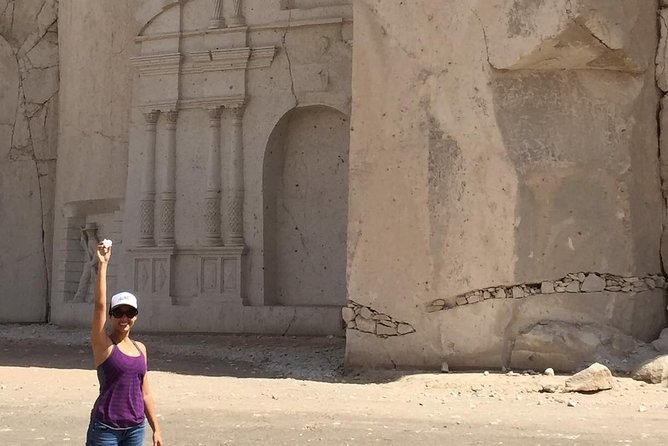
The tour description refers to views of the nearby volcanoes, and guides may point them out during the drive. The road gives you a chance to learn about the volcanic setting around Arequipa while moving between the quarry areas.
Still, I would not book this solely as a dedicated volcano viewpoint excursion. The main subject is sillar, and the volcano information works as background to the stone and the city. Visibility also depends on weather and the time of day.
On the return to central Arequipa, the tour helps connect the quarries with the buildings you have already seen in town. That final contrast is valuable. The quarry shows the stone in its rough state, while the city shows the skill of masons, builders, and sculptors who turned it into churches and historic facades.
The stated end point is the Temple of San Agustín area, two or three blocks from the Plaza de Armas. Vehicles do not enter the main plaza, so you should expect a short walk at the end rather than a drop-off directly in the square.
Guide quality and the language question
Guide quality appears to be the biggest variable in this experience. Some guides, including Alonso, Betsey, Jose Jose, and Christina, have been praised for clear explanations, local stories, and friendly service. A strong guide can turn a simple quarry visit into a useful lesson about volcanic rock, Arequipa, and the nearby peaks.
The language arrangement deserves special attention. The tour may be multilingual, and the Spanish explanation can take much longer than the English version. If you book in English, confirm how the operator will handle the language before departure.
This is not necessarily a problem for bilingual visitors. It can be frustrating if you speak only English and end up receiving short explanations after a long Spanish presentation. The quality of the English can also vary, so I would not choose this tour if detailed English interpretation is your highest priority.
Pickup communication is another weak spot. Some departures have involved long waits outside a hotel, while other bookings have gone smoothly. One serious complaint involved a missed pickup and unanswered messages. Confirm your pickup details in advance, arrive early, and keep the operator’s contact information available.
Transport, group size, and comfort
Round-trip tourist transport is included, usually in a van or minibus. A maximum of 15 people is a reasonable group size for a short outing, and it is much easier to keep the group together at a quarry or on the canyon path.
Vehicle comfort can vary. One positive account described a spacious van with air conditioning, while another found the bus too warm. Open doors and windows help with ventilation but can also let in flies and dust.
The tour is not physically extreme, and most people can take part. You should still be comfortable walking on uneven ground and standing outdoors in sun, wind, dust, and insects. The best outfit is simple: walking shoes, light layers, sunscreen, and a hat.
Because the outing lasts only part of a day, you can schedule it around a museum, a city walk, or a meal in central Arequipa. The afternoon option may work well if you want a relaxed morning in the historic center. The morning departure can leave your evening open.
Is $11 a good value?
At $11 per person, this is one of the easier Arequipa excursions to justify. You receive transport, a professional guide, several quarry and canyon stops, and a short lesson in the material that defines much of the city center.
The value is strongest if you have a spare half-day and want something outside the city without paying for a full-day trip. The tour also suits families, solo visitors, and anyone who wants a low-cost introduction to the area.
The price does come with limits. The service may feel basic, the pickup can be untidy, and the guide’s English may be limited. Entrance fees are not included, so carry at least the stated $3 and a little extra in case the local charge differs.
I would not compare this with a private specialist tour. A private guide may offer better language service, more flexible timing, and a fuller explanation of the quarry work. This group outing is aimed at convenience and price.
What to bring for a better visit
Pack light, but bring the items that protect you from the conditions:
- Walking shoes with a firm sole
- Sunscreen and a hat
- Insect repellent for the canyon
- A face covering or mask for quarry dust
- Water and light layers
- Small cash for entrance fees and optional purchases
- A camera or phone with protection from dust
Queso helado, a local frozen dessert, may be available for an extra charge. It is not included in the tour price, but it can be a pleasant local treat if offered during the outing.
The weather can change quickly. Arequipa often feels sunny and warm, but clouds, wind, and cooler conditions can arrive during the same half-day. Layers are more practical than one heavy jacket.
Should you book the Sillar Route?
Book it if you have three or four free hours in Arequipa, want to see where the city’s white stone comes from, and value a very low price. The Culebrillas canyon and petroglyph walk are the strongest reasons to go, while the quarry demonstrations add useful context.
You should think twice if you need exact pickup timing, polished customer service, or a fully English-language tour. In that case, confirm the language and pickup details before paying, or consider spending more on a private option.
For most visitors with realistic expectations, this is a worthwhile short outing. It is not a grand day trip, and the quarry areas can feel dusty and plain. But it connects Arequipa’s architecture to its volcanic source, gives you a memorable canyon walk, and offers solid value at $11.
Free cancellation is available up to 24 hours before the start time. Cancellations within 24 hours are not refunded, and poor weather may lead to a different date or a full refund.
FAQ
How long does the Sillar Route tour take?
The experience lasts approximately three to four hours, depending on the schedule and conditions.
How much does the tour cost?
The listed price is $11 per person. An entrance fee of $3 is not included, and you should carry extra cash in case the amount requested locally differs.
What is included in the price?
Round-trip tourist transportation and a professional guide are included.
Where does the tour start and finish?
The listed meeting point is C. San Agustín 102 in Arequipa. The tour ends near the Temple of San Agustín, about two or three blocks from the Plaza de Armas because vehicles do not enter the main plaza.
Is the tour available in the morning and afternoon?
Yes. You can choose between a morning or afternoon departure.
How many people can join the tour?
The maximum group size is 15 people.
Can most people participate?
Most people can participate, but you should be prepared for walking on uneven ground, quarry dust, sun, wind, and insects. The Culebrillas route includes a walk of about 600 meters.
Just added around Arequipa
- Private 3 Day Colca Canyon Trekking tour (superior Service)★ 5.0 · 58 reviews
- Full Day Tour / Colca Canyon★ 4.0 · 70 reviews
- Full Day Tour to Colca Canyon from Arequipa★ 4.0 · 34 reviews
- 3-Day Colca Canyon trek with Professional Guide★ 5.0 · 40 reviews
- 2 Day 1 Night Trek / Colca Canyon★ 4.5 · 92 reviews
- 2 Day Trek Including Transfer to Puno / Colca Canyon★ 4.5 · 38 reviews
- From Arequipa: 2-Day Colca Canyon Tour with Transfer to Puno★ 4.2 · 17 reviews
- From Arequipa: Colca Canyon Day Trip with Transfer to Puno★ 4.6 · 90 reviews
Arequipa Volcano Tours, compared.
From Arequipa: Colca Canyon Full-Day Guided Tour with Meals
Read our review →
From Arequipa: 2-Day Colca Canyon Trekking Tour
Read our review →
From Arequipa: Full Day Tour of Colca Canyon with Meals
Read our review →
From Arequipa: Colca Canyon Day Trip with Transfer to Puno
Read our review →
Browse the lists this tour appears in