
REVIEW · JAPAN
Hakone: Day Tour to View Mt Fuji & Wooden Culture Experience
Hakone is easiest to enjoy when someone else keeps an eye on the clock. This private eight-hour outing links Mount Fuji viewpoints, Lake Ashi, Owakudani, and Hakone’s old Tokaido route, then adds two worthwhile local experiences: a 200-year-old marquetry workshop and a thatched tea house in the cedar forest. I especially like the mix of scenery and working culture, and the way guide Munetaka Horiuchi, known as Taka, handles the many connections.
I also like that this is a private group for up to six people, so the day can be adjusted for your pace, weather, and interests. The main caution is the cost: $303 per group is only the guide fee, and each person still needs a Hakone Free Pass, lunch, and a few small activity charges. Clear weather matters too, since Mount Fuji may be hidden by cloud.
Key points at a glance
- Seven generations of woodcraft: Hear how yosegi-zaiku marquetry is made at a workshop run by the same family for more than 200 years.
- Five types of transport: Use Hakone’s train, cable car, ropeway, sightseeing boat, and bus network in one carefully timed loop.
- Two strong Fuji viewpoints: Look for Mount Fuji from Lake Ashi at about 700 meters and Owakudani at roughly 1,044 meters.
- A real old-road stop: Visit a 400-year-old thatched tea house along the former Tokaido Highway and try amazake.
- Private guiding by Taka: Munetaka Horiuchi is praised for detailed planning, photo stops, cultural explanations, and quick changes when weather disrupts the plan.
- A full day on your feet: Comfortable shoes, warm layers, rain gear, and some Japanese cash will make the day easier.
Why this Hakone route works so well
Hakone is not one attraction. It is a chain of mountain transport lines and scattered sights, each with its own timetable and weather concerns. You may ride from Hakone-Yumoto to a cable car, change to a ropeway, cross Lake Ashi by boat, catch a bus to the old highway, and then work your way back by train.
That is fun when it goes right and tiring when you are trying to read signs, buy the correct tickets, and keep a group together. Taka’s main service is practical: he keeps the loop moving and explains what you are seeing along the way. Several people who joined him praised his communication before the day began, including his willingness to adjust the meeting point or end-of-day plan when their arrangements changed.
The tour begins at 8:00 a.m. at the single ticket gate of Hakone-Yumoto Station, or at Odawara Station by arrangement. If you are coming from Tokyo on the same morning, plan carefully. Hakone can take about two hours by ordinary connections, while the Shinkansen from Tokyo to Odawara takes about 30 minutes. Staying in Hakone or Odawara the night before is the calmer choice.
More Mount Fuji Tours in Japan:
- Mt Fuji and Hakone 1-Day Bus Tour Return by Bullet Train
★ 5.0 · 26,383 reviews - Mt Fuji & Hakone Cruise, Drum Show Bullet Train 1 Day from Tokyo
★ 4.0 · 7,413 reviews - Tokyo Mt Fuji 5th St & Hakone Cruise Bus Tour w/Bullet Train
★ 4.4 · 5,024 reviews
The Hakone Free Pass is part of the real price
The advertised $303 price covers guiding only. You must also buy a Hakone Free Pass, listed at about ¥6,000 to ¥7,100 per adult and ¥1,500 to ¥1,600 for children ages 6 to 11, depending on the pass validity and current fare.
That pass is not a minor extra. It covers the transport used for this loop, including the train, cable car, ropeway, sightseeing cruise, and bus. It also makes the day much simpler than purchasing separate tickets at every change.
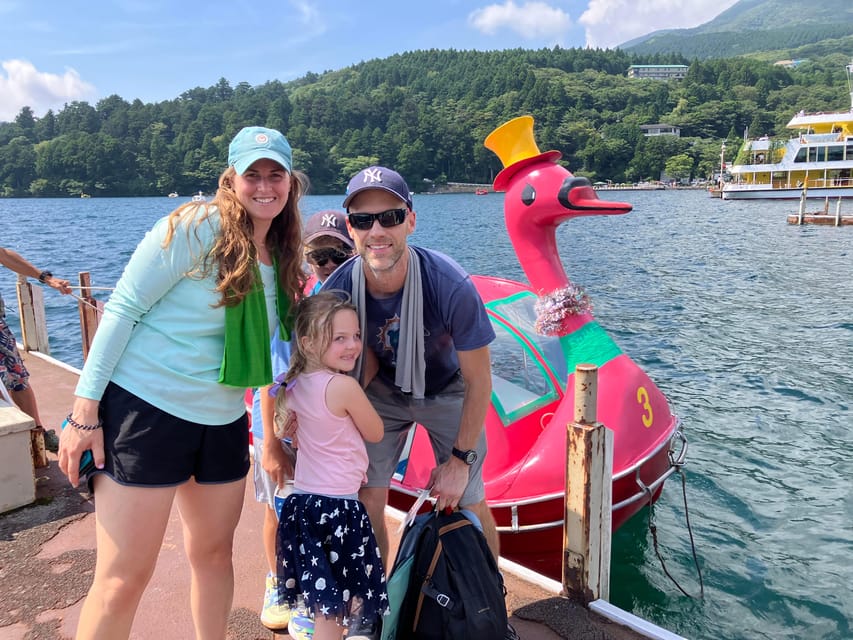
Add roughly ¥1,500 to ¥2,000 for lunch, ¥500 for amazake at the tea house, and ¥500 for four black eggs at Owakudani if you want to try them. A swan pedal boat on Lake Ashi is another optional charge, ¥1,500 for up to three people for 30 minutes.
For a full private day, the value improves as your group gets larger. Six people sharing the guide fee can make the guiding cost reasonable, but a couple paying for the same private arrangement will need to place more value on convenience and personal attention.
Yosegi woodcraft brings Hakone’s culture into focus
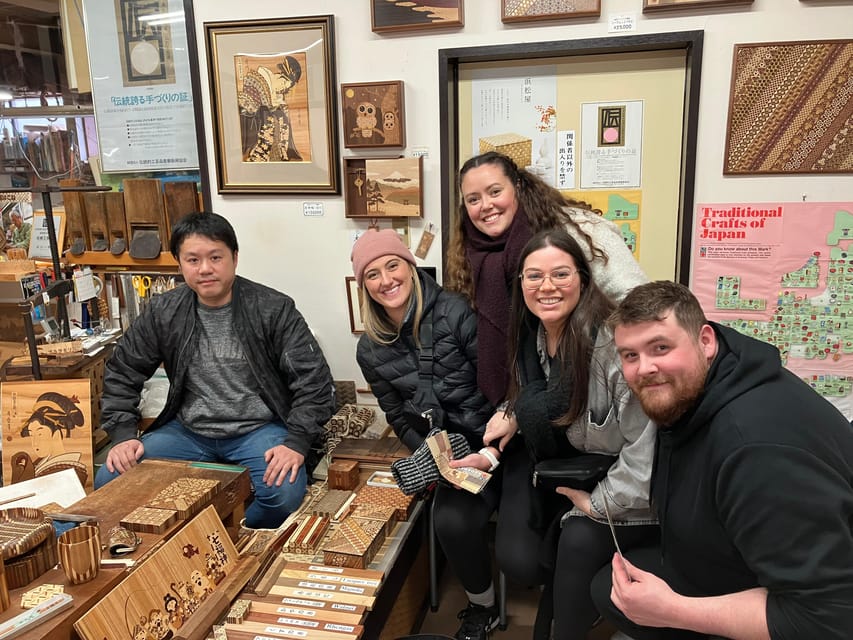
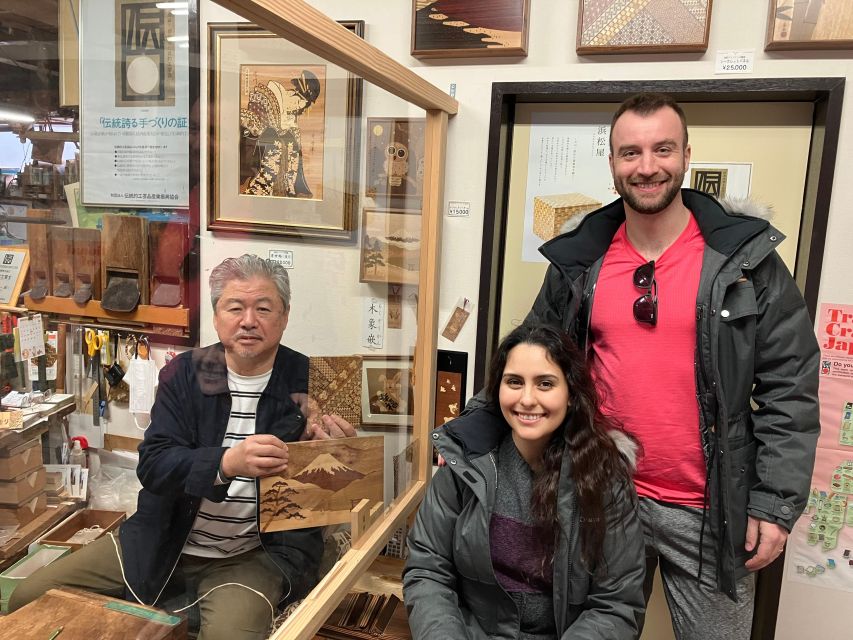
One of the best parts of the day is the visit to a yosegi-zaiku workshop. This traditional Hakone craft uses small pieces of naturally colored wood, assembled into geometric patterns and then applied to boxes and other objects.
The workshop has operated for more than 200 years and is now in its seventh generation. You will hear an explanation of the production process and see the careful work behind the finished pieces. The visit lasts about 25 minutes, so it is not a long class or a large shopping stop. That is a strength. You get a clear introduction without losing much sightseeing time.
Secret boxes are among the craft items associated with this tradition. If you like handmade objects with a strong connection to place, this stop gives you more than a generic souvenir shop. You can ask questions through Taka, and the visit gives useful context for why Hakone is known for this particular woodwork.
The schedule also lists a Hakone shopping and workshop stop of about 30 minutes. Confirm the exact arrangement with Taka before departure, since the detailed route describes the woodcraft visit and the broader itinerary also mentions the Hakone Open-Air Museum as an optional addition.
The old Tokaido tea house is the quiet pause
From the modern transport network, the route shifts to the old Tokaido Highway. This historic road once connected Tokyo and Kyoto, and in Hakone it passes through tall cedar trees and mountain country.
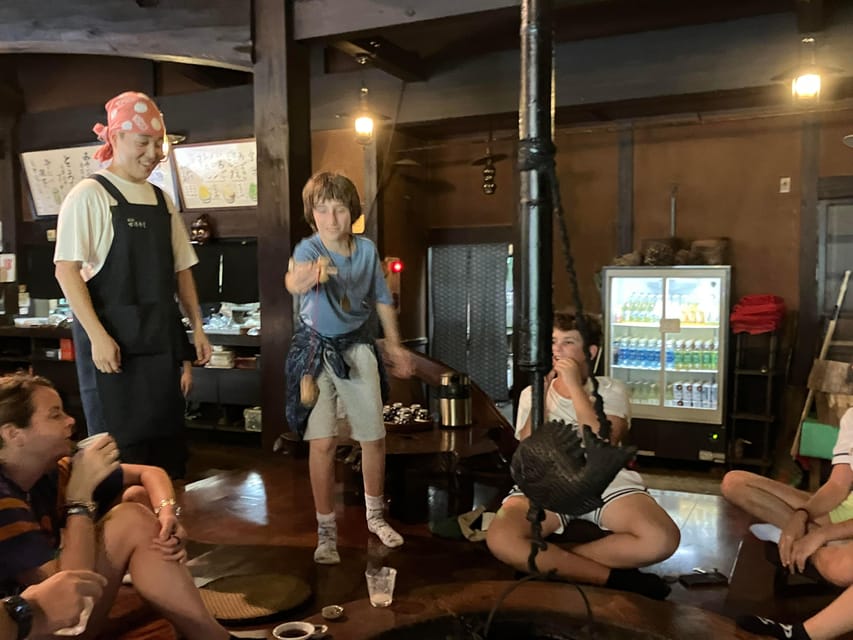
The tea house is about 400 years old and has a thatched roof. Inside, you can sit near a fired hearth and talk with the 13th-generation owner. The setting is simple and atmospheric, with a strong sense of an older Japan that you will not get from a standard city sightseeing stop.
The drink here is amazake, a non-alcoholic fermented rice drink made without added sugar. It costs ¥500 per person and is paid in Japanese cash. The visit lasts about 25 to 30 minutes. This is not a formal tea ceremony in the polished, choreographed sense, so set your expectations accordingly. It is a short cultural stop with a local drink, an old building, and time to talk.
I consider this one of the most distinctive parts of the route. The transport loop supplies the big views, while the tea house gives the day a human scale.
Same volcano country, a different day out:
- From Tokyo: Mount Fuji Full-Day Sightseeing Trip
★ 4.5 · 4,970 reviews - Tokyo: Mt. Fuji Tour, Hakone Ropeway, Owakudani, Lake Ashi
★ 4.7 · 4,002 reviews - Tokyo:Mt.Fuji,Kawaguchiko Oishi Park,Arakurayama Sengen Park
★ 4.4 · 2,682 reviews - Tokyo: Mt. Fuji 5th Station & Hakone Cruise 1-Day Bus Tour
★ 4.2 · 2,381 reviews
Lake Ashi and Hakone Shrine supply the classic photographs
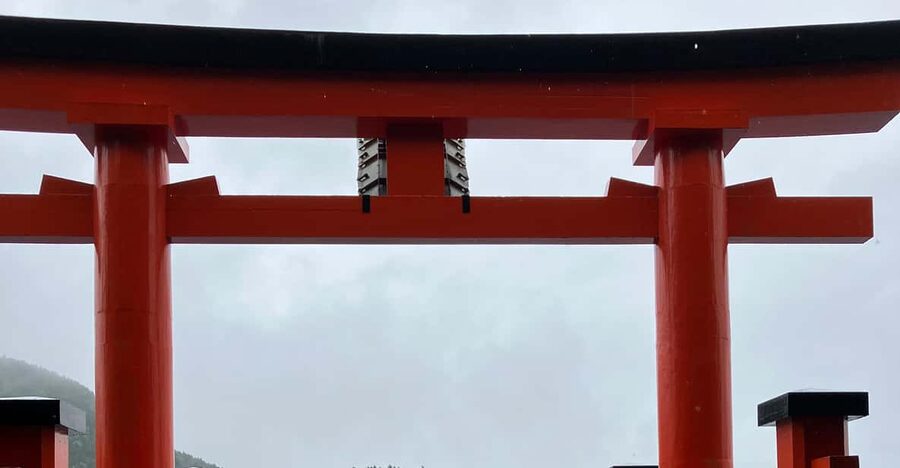
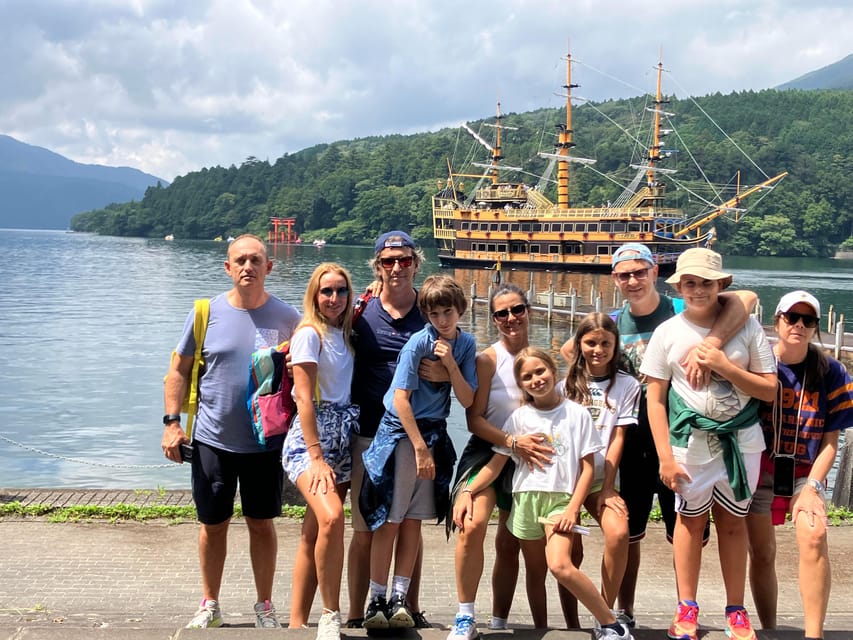
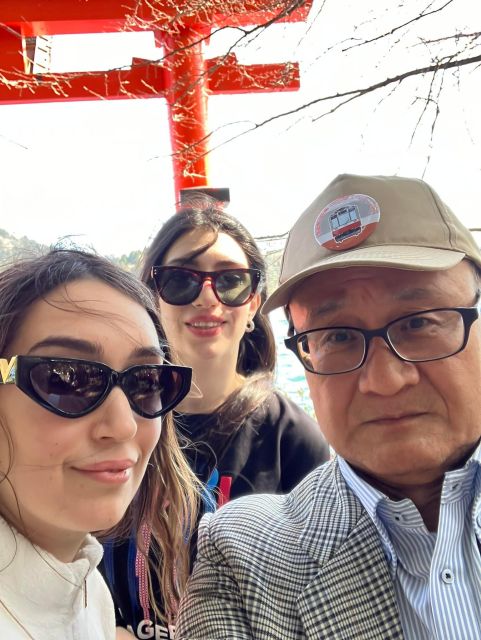
Lake Ashi sits at roughly 700 meters and is one of Hakone’s signature sights. The water, surrounding mountains, and red torii gate of Hakone Shrine create the picture most people associate with the area.
The shrine is beside the lake. Reaching it can involve about 30 minutes of walking each way, or you can choose the optional swan pedal boat for 30 minutes. The boat costs ¥1,500 for up to three people. Taka decides with you on the day, which is sensible because weather, energy, and waiting conditions can change.
Allow about 35 minutes at the shrine for a photo stop and a chance to pray for happiness. The red torii is popular, and the shoreline can be busy. Taka’s familiarity with the area is useful here, especially for finding good photo positions and avoiding unnecessary waiting when possible.
The sightseeing cruise lasts about 40 minutes. It gives you a different view of the lake and a welcome seated break after the shrine and walking. It is also one of the reasons the Free Pass earns its keep. You are not just moving between sights; the transport itself is part of the Hakone experience.
Mount Fuji can appear from Lake Ashi when the air is clear. It is important to treat that as a weather-dependent bonus, not a guarantee. Even with careful planning, clouds can cover the mountain.
Owakudani is the high point, in more ways than one
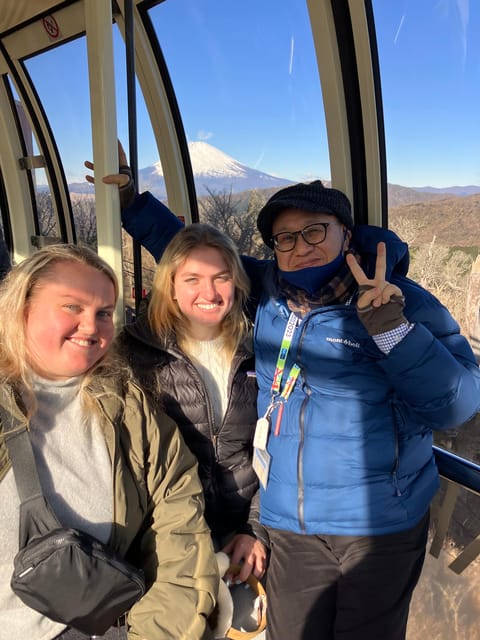
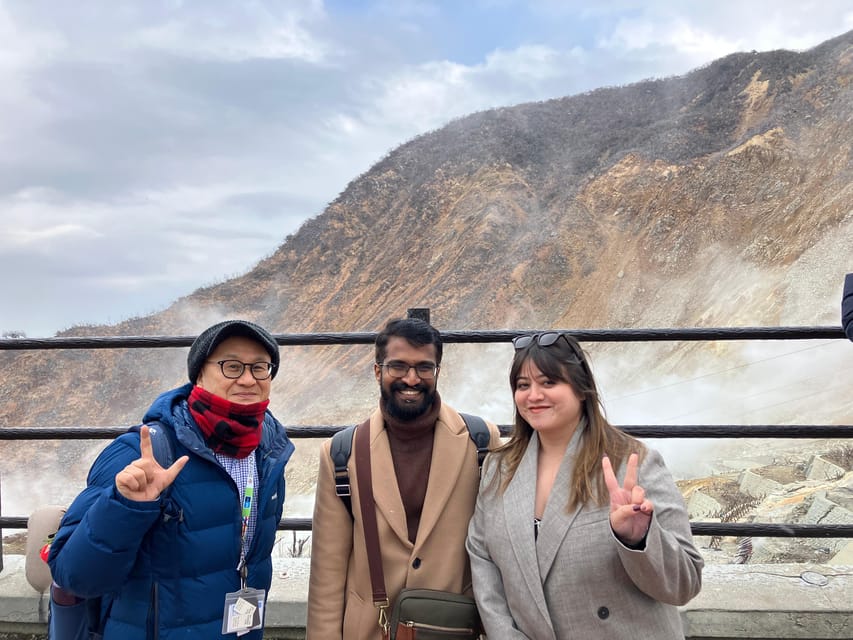
The ropeway climbs toward Owakudani Valley, reaching about 1,044 meters. This volcanic valley is known for sulfurous steam, stark mountain scenery, and the famous black eggs cooked in the naturally heated waters.
The route allows about 35 minutes for a photo stop. You can buy four black eggs for around ¥500 in cash. Local tradition says that eating one adds seven years to your life. It is a playful custom, not a reason to replace sensible health advice, but the eggs are an easy and memorable snack.
The sulfur smell is part of the experience. People with respiratory issues should not take this stop lightly, since the tour is specifically not suitable for them. Even if you have no respiratory concern, bring a charged phone, keep warm, and pack rain gear. Mountain weather can shift quickly.
This is another place where Mount Fuji may be visible if the sky is clear. The height gives you a strong viewing position, but no guide can control cloud cover. One person had a day when Fuji could not be seen at all because of bad weather, yet still enjoyed the sights and the route. That is the right way to approach Hakone: plan for a good day, but make sure the itinerary has value without a perfect photograph.
Lunch is planned at Owakudani, usually early in the day. Curry rice, a vegetable version, Japanese noodles, and tempura are listed choices. Tell Taka about allergies or dietary restrictions before the tour so he can help with the plan.
The ride home is part of the attraction
After Owakudani, you take another ropeway section and a cable car before reaching the Hakone Mountain Train. The return train takes about 40 minutes and uses switchbacks to manage the steep mountain route.
The train’s grade reaches 80 per mil, and the route is described as the world’s second-steepest mountain railway after a line in Switzerland. The switchback operation is not just a technical footnote. It explains why the train moves in repeated changes of direction as it climbs or descends the mountain.
The detailed schedule can look confusing because it lists cable car sections separately. In practice, that is one reason a guide helps. Taka handles the changes and keeps the day from turning into a ticket-and-platform puzzle.
The tour aims to return to Hakone-Yumoto around 4:00 p.m. Transport delays, weather, and crowd levels can change the exact timing. The order of stops may also shift. That flexibility is sensible, but do not book a tightly timed evening connection without leaving room for change.
What Taka adds to the day
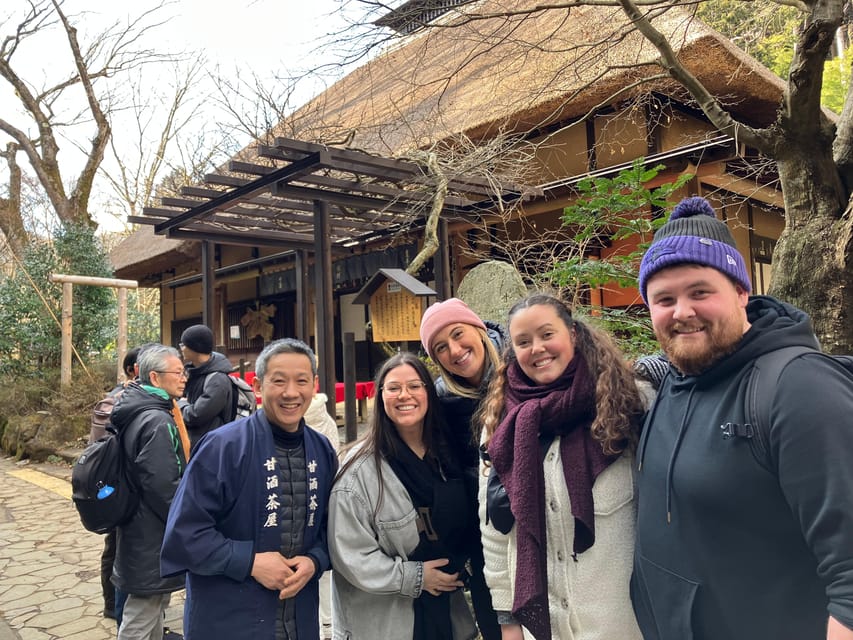
The strongest part of this experience is not simply having an English or Chinese-speaking guide. It is having one person manage a complicated day while giving the sights some meaning.
Taka has been praised for reaching out weeks in advance, giving detailed directions, suggesting easier meeting arrangements, and helping with changes at the end of the day. He also brings broad knowledge of Japanese geography, religion, history, and industry into ordinary conversations, so you can ask questions beyond the printed route.
His style appears to suit people who like a full day but do not want to feel hurried. One family with an older parent found the pace comfortable, while another group with children appreciated that he adjusted the plan and chose less predictable stops. A group caught in typhoon conditions also benefited from his ability to change the order and keep the day calm.
That does not mean every minute is slow. Eight hours with five forms of transport and several stops is a busy schedule. You need to be ready to walk, transfer, and move on when the timetable calls.
Who should book this private day?
I would choose this tour if you are visiting Hakone for the first or second time and want the major sights without learning the entire transport system yourself. It is especially useful for families, small groups, older relatives who need a sensible pace, and anyone who values conversation and cultural explanation.
It is also a good fit if you want more than the standard loop. The woodcraft workshop and old tea house add substance to a day that could otherwise become a string of viewpoints and vehicles.
You may prefer to go independently if you already understand Hakone’s transport, want to linger for hours at one attraction, or are traveling on a tight budget. The Open-Air Museum is listed as an optional stop, not a guaranteed central part of the route, so ask about it before booking if that is your priority.
Bring your passport, comfortable shoes, warm clothing, rain gear, cash, and a charged smartphone. Contact Taka after booking to settle the meeting point and the best route from your hotel.
Should you book it?
Book this private tour if you want Hakone’s full transport loop with a guide who actively manages the day, and if the shared cost works for your group. The clearest value is the time saved and the local access: a seven-generation craft workshop, a centuries-old tea house, and a guide who can change plans when mountain weather turns.
Do not book it solely for a guaranteed Mount Fuji photograph. Fuji, the Lake Ashi views, and Owakudani scenery all depend on visibility. Book it for the complete Hakone experience, then treat a clear view of the mountain as the prize.
FAQ
Where does the tour begin?
The usual meeting point is the single ticket gate at Hakone-Yumoto Station. Odawara Station may also be arranged with the guide.
How long does the tour last?
The tour lasts eight hours and is expected to finish at Hakone-Yumoto Station around 4:00 p.m.
Is hotel pickup included?
No. Hotel transfer is not included. You arrange your own way to Hakone-Yumoto or Odawara Station.
Is this a private tour?
Yes. It is for one private group, with up to six people.
Which languages does the guide speak?
Guiding is available in English and Chinese. The experience provider is Munetaka Horiuchi.
Is the Hakone Free Pass included?
No. The guide fee does not include the Hakone Free Pass. Adults should expect about ¥6,000 to ¥7,100, while children ages 6 to 11 should expect about ¥1,500 to ¥1,600.
What other costs should I plan for?
Lunch costs about ¥1,500 to ¥2,000. Amazake at the tea house costs ¥500 per person, and four black eggs at Owakudani cost about ¥500. The optional swan pedal boat costs ¥1,500 for up to three people.
Can I see Mount Fuji on this tour?
You may see Mount Fuji from Lake Ashi and Owakudani when the weather is clear. Clouds can block the mountain, so visibility is not guaranteed.
Is the Hakone Open-Air Museum included?
The detailed route lists the museum as an optional stop. Contact Munetaka separately if you want to add it.
What should I bring?
Bring your passport, comfortable shoes, warm clothing, rain gear, cash, and a charged smartphone. People with respiratory issues should not take this tour because of the conditions at Owakudani.
Just added around Japan
- Aso Caldera and Farm Experience Tour★ 5.0 · 5 reviews
- Private E-MTB guided cycling around Mt. Aso volcano & grasslands★ 5.0 · 16 reviews
- Walking through the Aso Caldera, Historical Walk along the “Bungo Kaido”★ 4.5 · 4 reviews
- “Mt. Fuji 1-Day Private Tour with English Speaking Driver-Guide”★ 5.0 · 46 reviews
- From Tokyo: Mt Fuji and Hakone Private Day Trip★ 4.5 · 75 reviews
- Private guided tour: Mt. Aso volcano, grasslands, Aso Shrine★ 5.0 · 19 reviews
- Tokyo/Yokohama: Mt. Fuji and Hakone Private Day Tour★ 5.0 · 64 reviews
- Tokyo:Mt Fuji & Hakone Day Tour with English Speaking Driver★ 5.0 · 26 reviews
Japan Volcano Tours, compared.
Mt Fuji and Hakone 1-Day Bus Tour Return by Bullet Train
Read our review →
Mt Fuji & Hakone Cruise, Drum Show Bullet Train 1 Day from Tokyo
Read our review →
From Tokyo: Mount Fuji Full-Day Sightseeing Trip
Read our review →
Tokyo: Mt. Fuji Tour, Hakone Ropeway, Owakudani, Lake Ashi
Read our review →
Tokyo:Mt.Fuji,Kawaguchiko Oishi Park,Arakurayama Sengen Park
Read our review →
Tokyo: Mt. Fuji 5th Station & Hakone Cruise 1-Day Bus Tour
Read our review →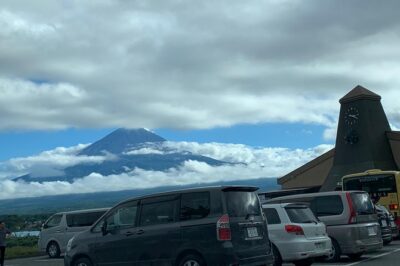
Private Tour to Mt. Fuji and Hakone (Fully Licenced Operator)
Read our review →
Mount Fuji Full-Day Private Tour from Tokyo (Customizable)
Read our review →Browse the lists this tour appears in