
REVIEW · SICILY
Etna – Trekking to the summit craters (only guide service) experienced hikers
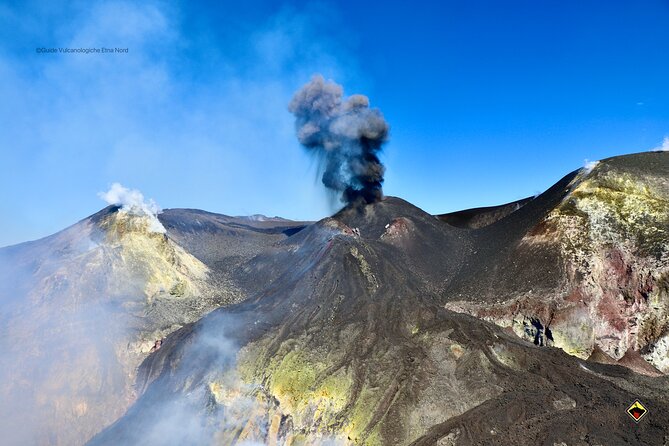
Mount Etna’s north-side summit trek takes you from a pine forest to a stark volcanic world near 3,300 meters. You ride an authorized 4×4 up through lava fields, then hike toward Etna’s main craters with a licensed volcano guide who adjusts the route to current conditions.
I like the quieter Piano Provenzana starting point and the strong guide service. Guides such as Nikos, Daniele, Poldo, and Raphael are praised for clear explanations, steady pacing, and a good sense of humor. I also like that boots, poles, helmets, jackets, socks, and an extra backpack are available, which saves you from packing a full mountain kit.
The catch is the demanding return. You may climb about 550 meters, but then descend roughly 1,500 meters on foot, often over loose ash and stone. The advertised summit height is never guaranteed, and the 4×4 transfer costs extra, so read the price details carefully before booking.
Key points at a glance
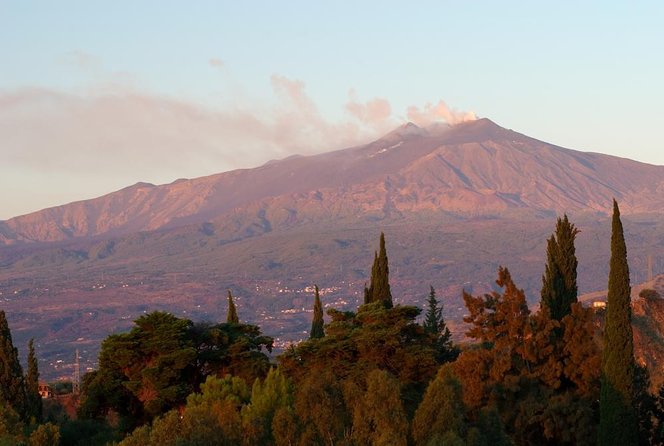
- A quieter north-side approach: Piano Provenzana is less crowded than Etna’s southern station and sits among the remains of the 2002 lava flow.
- A small-group volcano outing: The maximum group size is 12, with guides staying with you during the drive and hike.
- A serious mountain day: Expect about 12 to 13 kilometers in total, with a long, knee-testing descent.
- Four main upper craters: The route aims toward Etna’s North-East, Voragine, Bocca Nuova, and South-East crater area, subject to safety rules.
- Useful equipment is supplied: Trekking poles, shoes, helmets, warm jackets, extra socks, and backpacks are included.
- Budget for the transfer: The off-road vehicle costs €50 per person in the stated arrangements, with a different €70 charge if you choose the bus return option.
Why Etna’s north side feels different
Piano Provenzana gives you a more rugged introduction to Mount Etna. You do not begin among the busiest facilities on the southern slope. Instead, you meet at a small mountain resort surrounded by pine trees, old lava, cafés, and the rough remains of the October 2002 eruption.
That eruption destroyed the original tourist facilities at Piano Provenzana on October 27, 2002. Today, the area is part ski base, part volcanic lookout, and part practical meeting point. The paved access road makes it straightforward to reach by rental car or private vehicle, though winter visitors should carry snow chains or use winter tires.
Arrive early. The stated meeting time is 7:45 a.m., with departure around 8:00 to 8:15. You can use the toilets, buy coffee or tea, eat a pastry, and fill your water bottle before setting off. An afternoon departure around 1:00 p.m. operates from May through October, but the early start is the better choice if you want cooler conditions and a longer margin for weather changes.
Piano Provenzana has cafés, bars, souvenir shops, parking, and space for camper vans. Parking is listed at €5 for the day on weekdays and €8 on Sundays and public holidays. That small fee is easy to overlook when you calculate the tour cost.
More Volcano Hikes and Treks in Italy
- Etna excursion 3000 meters with 4×4 cable car and Trekking
★ 4.5 · 504 reviews - Mount Etna Adventurous Hiking Tour with Equipment
★ 4.5 · 439 reviews - Etna, Summit Craters
★ 5.0 · 272 reviews
The 4×4 climb from 1,800 to nearly 3,000 meters
After a short safety and equipment briefing, you board an authorized off-road vehicle. The ride follows roughly 9.5 kilometers of rough track on Etna’s northern flank, climbing from about 1,800 meters to the high point where the hike begins.
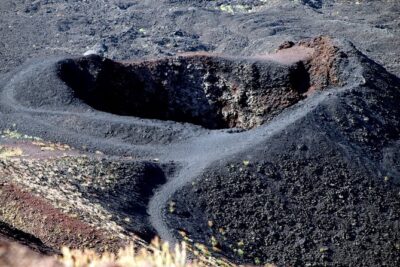
This is not just a shuttle. The route crosses forests, old and recent lava flows, eruptive cracks, lateral craters, and a lava-flow channel. Some lateral craters drop more than 40 meters, giving you an early look at how quickly Etna’s gentle lower slopes can turn into broken volcanic ground.
On clear days, the ride opens wide views across northern Sicily. You might see the Aeolian Islands, Calabria, the Strait of Messina, and both the Ionian and Tyrrhenian seas. Exceptional visibility can reveal the Madonie range, the Gulf of Catania, Syracuse, Augusta, and the huge Valle del Bove.
The 4×4 section also lets you save your legs for the high-altitude portion. That matters because the walking terrain becomes more tiring as the air thins and the ground turns soft or unstable.
There is an important cost detail here. The stated tour price is $139.13 per person, but the off-road vehicle is listed separately at €50 per person, paid locally. Another note says the public bus return from about 2,850 meters to 1,800 meters costs €70 instead of €50. Since the exact transfer arrangement can vary, confirm what is included before you pay. The extra charge is not a minor add-on when you are comparing this with other Etna outings.
The summit hike and four crater area
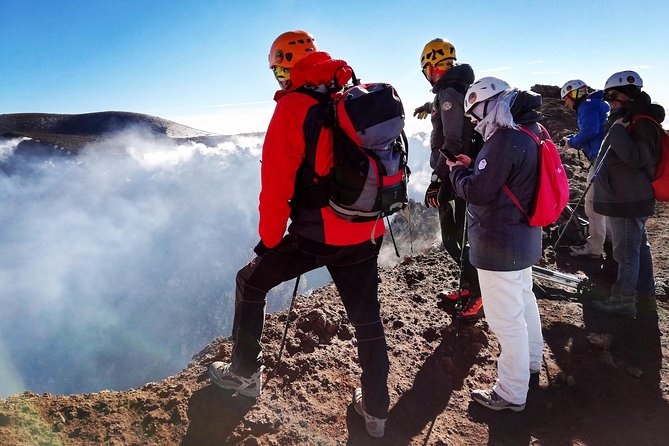
From approximately 2,960 meters, the walking route climbs toward Etna’s upper crater zone. The stated ascent is about 5 kilometers with 550 meters of uphill gain, reaching an altitude range of roughly 2,960 to 3,323 meters.
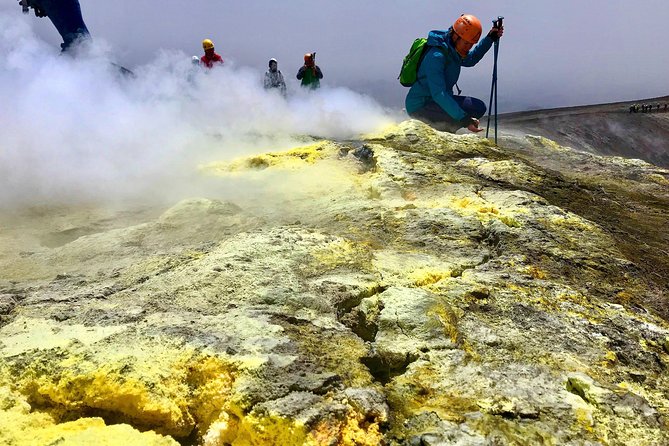
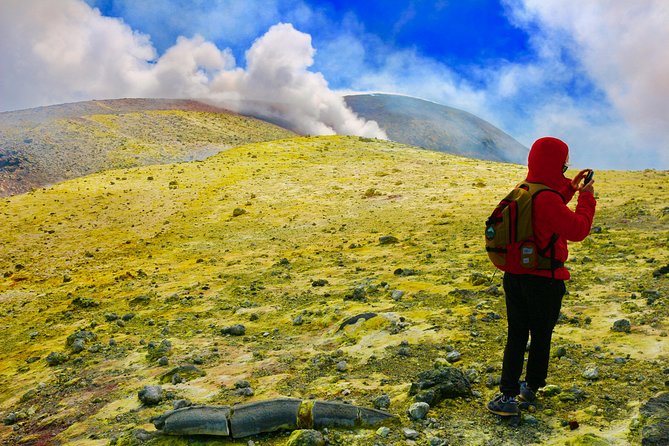
At this height, the scenery changes quickly. Green woodland disappears. You walk through black and reddish scoria, sandy gullies, fresh lava, and open ground with little shelter from sun or wind. Volcanic gases may be present, and the surface can shift under your boots. This is a real mountain hike, not a short walk from a cable-car station.
The goal is the summit area and its four principal craters: North-East, Voragine, Bocca Nuova, and South-East. You will not necessarily walk to every crater edge. Etna is active, and the guide chooses the safest route toward the most active area that can be approached without undue risk.
That flexibility is central to the outing. Heat, gas, fractures, eruptions, wind, snow, or an official restriction can change the route. You may reach around 3,000 meters rather than 3,300, or stop at another safe viewpoint. That is not a failure of the tour. It is the normal limit of walking on an active volcano.
One important point deserves plain language: no guide can promise the summit. A previous eruption closed parts of the upper area, and access limits can change. An evening message may tell you that the group will go only as high as conditions permit. If reaching a specific altitude is essential to your plans, ask about current access before the cancellation deadline.
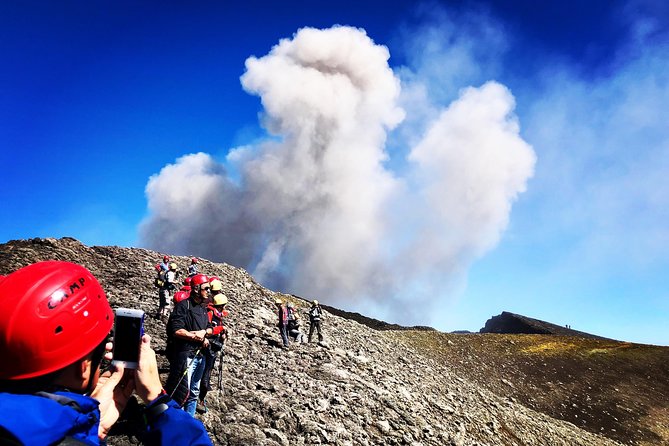
At the crater edges, you may encounter steam, gas, ash, and the deep rumble of volcanic activity. One account describes seeing an active crater throw lava bombs into the air, but that kind of display is never guaranteed and should never be treated as the purpose of the trip. The guide’s job is to give you a safe view, not to get you close to danger.
Why the descent is the real test
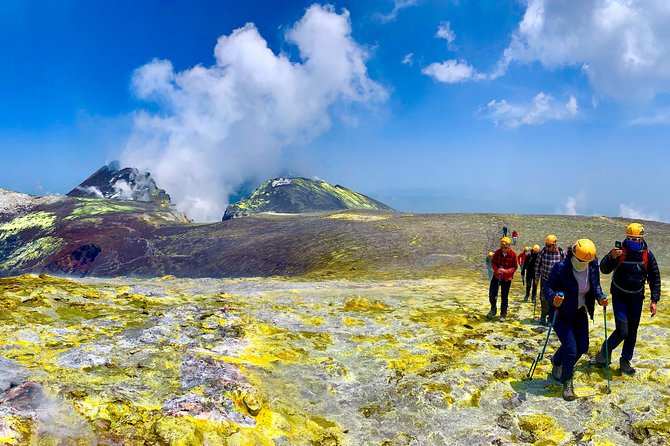
The route back is where many people misjudge this tour. After reaching the upper area, you descend from around 3,300 meters to 1,800 meters, losing roughly 1,500 meters of height over about 7 kilometers.
Loose ash and sand can make the descent feel like controlled sliding. Small volcanic stones can work into your shoes, so wear long socks and trousers that cover the tops of your boots. The path then reaches about 2.5 kilometers of ski slopes, where the surface becomes rougher and more stony before you return to the starting area.
Strong knees help more than fast climbing. You need enough balance and control to handle unstable ground for several hours. The total distance is described as approximately 12 to 13 kilometers, with the full outing often lasting closer to six hours than five and a half. One account puts the total time at around six and a half hours from meeting to return.
The guides generally set a manageable pace and stop for explanations and rest. That makes the walk possible for fit people who are not specialist mountaineers, but it does not turn the route into an easy stroll. You should be comfortable walking for several hours on steep, loose ground before booking.
More Volcano Hikes and Treks in Sicily
- Summit Etna North 3380mt: 4×4 and trekking
★ 5.0 · 98 reviews - Etna Southern Slope Guided Easy Trek
★ 4.8 · 36 reviews - Sicily: Mount Etna’s North Slope Craters Guided Hike Tour
★ 5.0 · 8 reviews
The guides and the value of a small group
The strongest feature here is the guide service. Names associated with the outing include Nikos, Daniele, Poldo, Raphael, and Vincenzo. The guide you receive will depend on the date and group, but the service is built around licensed volcano guides who explain Etna’s eruptions, lava formations, crater structure, and current activity as you go.
That commentary gives the day more meaning than a simple uphill walk. You learn why one crater is deep and dark, why another shows fresh red scoria, and how lava has reshaped the north slope. Guides also watch the group’s pace, check how people are coping, and explain changes when weather or volcanic conditions force a new route.
The maximum group size is 12. Some departures may be smaller, which makes it easier to ask questions and stay close to the guide. The compact group also matters on loose ground, where a spread-out party would be harder to manage.
A 4.9 rating from 286 published ratings, with 97 percent recommending the outing, reflects the main strengths: clear organization, strong guide support, good explanations, and dramatic scenery. Still, the high rating should not persuade you to ignore the physical demands or extra charges.
Equipment, clothing, and health requirements
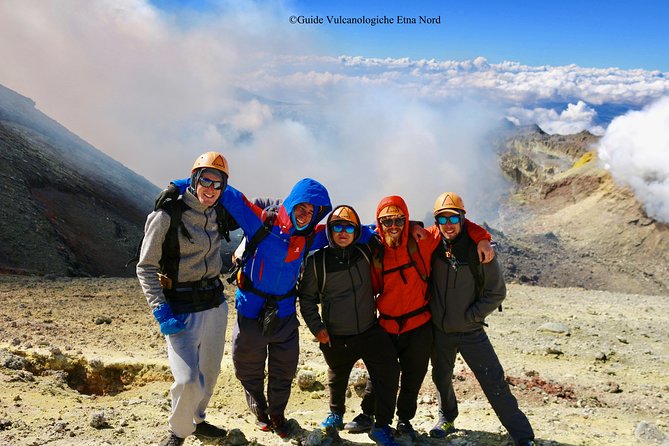
The supplied equipment is a practical advantage. The package includes a licensed volcano guide, trekking poles, trekking shoes, helmets, a warm jacket, extra socks, and an extra backpack. Without suitable shoes, the supplied insurance does not apply, so do not treat footwear as an optional detail.
Bring your own hat and gloves in autumn, winter, and spring. You should also pack water, food for the day, sunscreen, long trousers, and warm layers. The upper slopes can be cold and windy even when Sicily feels warm at sea level. One useful tip is to bring light gloves for balance on rough lava rock.
Contact lenses are discouraged because of volcanic gas and ash. People with breathing problems, hypertension, or other significant health conditions should discuss the outing with a doctor and tell the guide about relevant concerns. The activity is not suitable for children under 12, and pregnant women beyond the third month cannot participate.
The route around crater edges can cause dizziness. High altitude may bring fatigue or mild altitude symptoms, especially if you rush. Tell the guide early if you feel unwell. The route can be interrupted or altered for weather, snow, ice, volcanic activity, or official safety orders.
Price, timing, and practical value
At $139.13 per person, the base price is fair for a licensed guide, mountain equipment, insurance, and access to the upper Etna route. You are paying for a serious guided outing rather than a sightseeing drive, and the small maximum group helps justify the cost.
But the advertised base price is not the complete budget. Add the €50 off-road transfer charge, or the stated €70 bus-return option if you choose that arrangement. Add parking if you drive, plus food and any personal clothing you need. The short 4×4 ride can feel expensive, especially when it is billed separately, so compare the total rather than the headline price.
The timing also deserves attention. The listed duration is 5 hours 30 minutes, while the route description gives roughly six hours and some accounts report about six and a half hours from meeting to finish. Do not schedule a tight afternoon commitment in Catania or elsewhere.
Free cancellation is available up to 24 hours before the start time. Changes or cancellations inside that window are not accepted for a refund. Poor weather or an insufficient number of bookings can lead to a rescheduled tour or full refund, but volcanic conditions may also produce a route change rather than a cancellation.
Who should book this Etna trek?
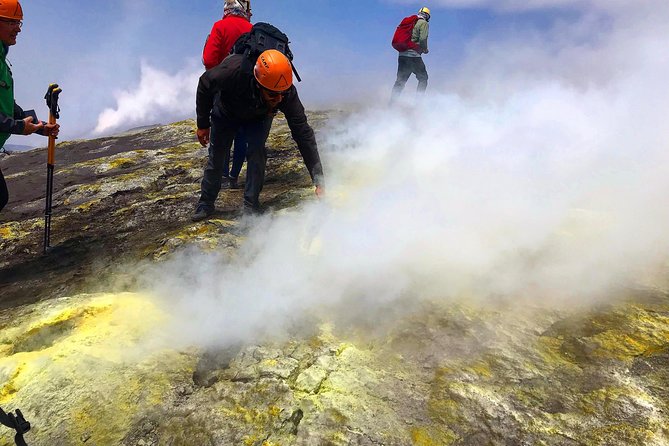
I would choose this for a fit hiker who wants to understand Etna, not just photograph it from a viewing platform. It suits you if you can handle a long uphill walk, a loose and slippery descent, wind, cold, gas, and a full day on unstable volcanic ground.
It is also a good match if you value the north side’s quieter feel. Piano Provenzana gives you forests, lava fields, old eruption traces, and fewer crowds before the high route begins. The guides add real value by explaining what you are seeing instead of simply leading you uphill.
I would not choose it for a relaxed family outing, a short scenic walk, or a fixed summit guarantee. It is not the right pick if your knees are weak, if you dislike loose slopes, or if paying an unexpected €50 transfer fee would sour the day.
Should you book it?
Book this Etna summit trek if your priority is a close, guided look at an active volcano and you are prepared for the descent. The combination of the north-side approach, small groups, supplied equipment, and strong guide service makes it one of the better ways to see Etna’s upper world.
Before booking, confirm the current maximum altitude, the exact 4×4 charge, the weather forecast, and what clothing you need. If those details suit you, this can be the highlight of a Sicily visit. Just remember: on Etna, safety rules the route, and the mountain gets the final word.
FAQ
Where does the Etna summit trek start?
The meeting point is Chiosco Bar Mareneve di Ferraro at Etna Nord, Piano Provenzana, Via Provenzana, 95015 Linguaglossa, Sicily. The activity ends back at the same meeting point.
What time should I arrive?
The stated meeting time is 7:45 a.m., with departure around 8:00 to 8:15 a.m. An afternoon departure at 1:00 p.m. operates from May through October.
How high does the hike go?
The route begins near 2,960 meters after the 4×4 transfer and may reach the summit area around 3,323 meters. The final height depends on volcanic activity, weather, official restrictions, gas, heat, and ground conditions.
How long and difficult is the hike?
The total route is about 12 to 13 kilometers and usually takes roughly six hours, although the actual duration can be longer. You need strong physical fitness, especially for the long descent of about 1,500 meters.
What equipment is included?
The tour includes trekking poles, trekking shoes, helmets, a warm jacket, extra socks, an extra backpack, a licensed volcano guide, insurance, and Mount Etna admission.
What extra costs should I expect?
The off-road vehicle from about 1,800 meters to the upper route is listed at €50 per person, paid locally. The stated bus-return option costs €70 instead of €50. Parking costs €5 on weekdays and €8 on Sundays and public holidays. Hats and gloves are not included.
Can the route be changed or canceled?
Yes. Guides may alter or stop the excursion because of weather, climate, snow, ice, volcanic activity, gas, official restrictions, or other safety concerns. If poor weather cancels the activity, you can receive another date or a full refund.
More Mount Etna Tours in Sicily
- Etna Morning Trip
★ 4.5 · 1,241 reviews - Mt. Etna nature and flavors half day Tour from Catania
★ 5.0 · 545 reviews - From Catania: Mt. Etna, Wine and Alcantara Tour
★ 4.8 · 370 reviews - Etna Morning Tour (starting from Catania)
★ 5.0 · 362 reviews
Just added around Sicily
- Sicily: Mount Etna’s North Slope Craters Guided Hike Tour★ 5.0 · 8 reviews
- Etna Southern Slope Guided Easy Trek★ 4.8 · 36 reviews
- Etna: Wine Tasting and Food Tour★ 4.7 · 201 reviews
- Enoteca dell’Etna: Iemu Spizzicannu Tasting★ 5.0 · 9 reviews
- Capo d’Orlando: Mini-cruises to Salina Panarea and Stromboli★ 3.0 · 5 reviews
- calice in cratere★ 5.0 · 6 reviews
- Catania: Etna Sunset Jeep Tour★ 4.5 · 161 reviews
- Summit Etna North 3380mt: 4×4 and trekking★ 5.0 · 98 reviews
Sicily Volcano Tours, compared.
Mt. Etna nature and flavors half day Tour from Catania
Read our review →
Etna excursion 3000 meters with 4×4 cable car and Trekking
Read our review →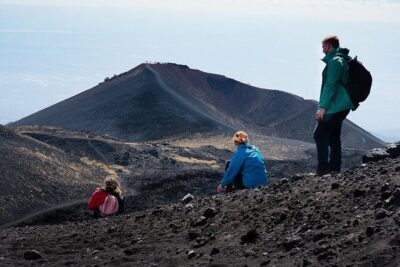
Mount Etna Adventurous Hiking Tour with Equipment
Read our review →
From Catania: Mt. Etna, Wine and Alcantara Tour
Read our review →
Browse the lists this tour appears in