
REVIEW · SPAIN
Tajogaite Volcano and Cueva de las Palomas: a geological tour.
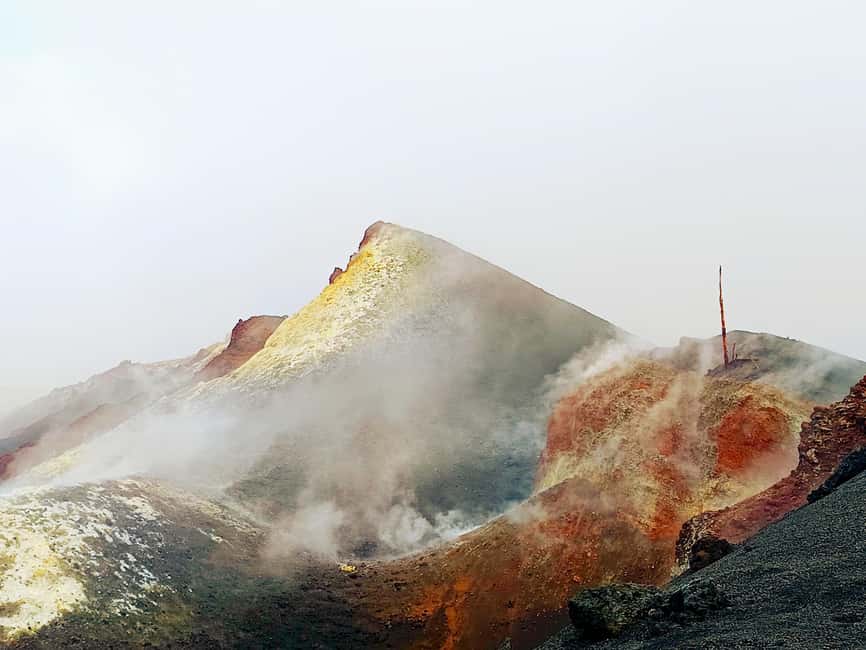
Tajogaite is not an old, silent volcano. Its 2021 eruption still shapes the ground, vegetation, wildlife, and daily life around La Palma’s Aridane Valley. This tour puts you close to that recent story, then takes you underground into Cueva de las Palomas, a volcanic tube formed in 1949.
I like the clear link between geology and human life, and I like the contrast between walking over fresh black ash and seeing the delicate formations inside an older lava tube. The local snack is a small but welcome touch after the volcano route. The main drawback is that the tour is conducted in Spanish, so you will get less from it if you cannot follow the language.
Key points at a glance
- See La Palma’s newest volcano: Walk near Tajogaite, which erupted in 2021 and altered the Aridane Valley.
- Learn how eruptions affect people: The guide covers homes, local life, plants, wildlife, and the changing ground.
- Enter a real volcanic tube: Cueva de las Palomas gives you an underground look at how lava formed hollow passages.
- Visit two volcanic cavities: The program includes Cueva de las Palomas and Cueva del Vidrio, both linked to the 1949 eruption.
- Use a strong indoor finish: The Caños de Fuego Visitor Center adds displays, a film, restrooms, vending machines, and a rooftop viewpoint.
- Plan for loose ash: Gaiters, closed shoes, sun protection, water, and weather-ready clothing will make the outing easier.
Why Tajogaite makes such a powerful first stop
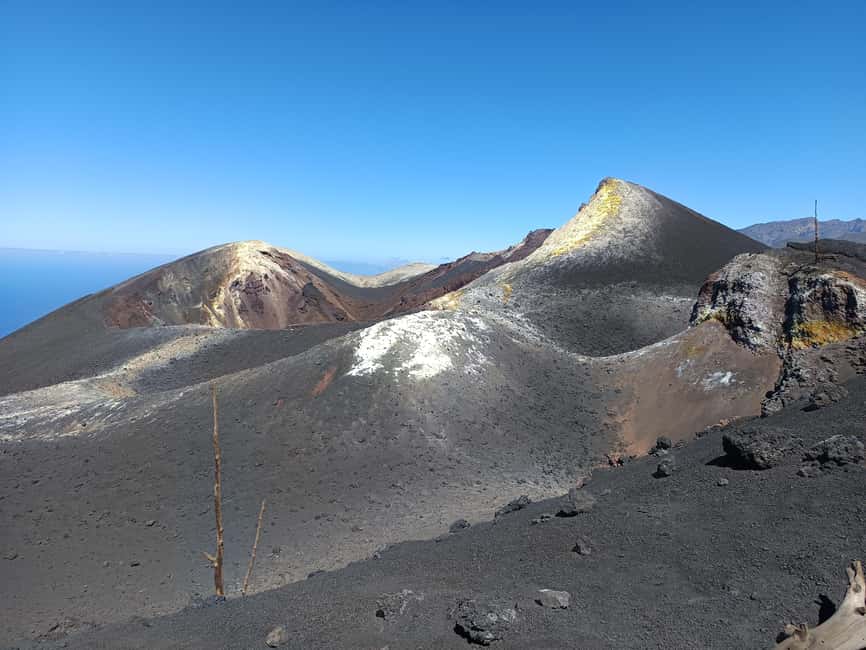
The most striking part of this outing is its sense of recency. Tajogaite is La Palma’s latest volcano, and the eruption in the fall of 2021 changed the Aridane Valley in ways you can still see. You walk across ash-covered ground and view the dark volcanic cone, rather than simply looking at a distant mountain from a road.
A guide explains what happened from a geological point of view, but the story is not limited to lava and gases. You also learn how the eruption affected vegetation, wildlife, homes, and the people living nearby. That human side matters. A volcano is not only a natural event to admire. It can alter routes, land, work, property, and the shape of an entire community.
The route also helps you read the colors and textures around the cone. From a higher point, you can take in the scale of the affected area and see contrasts in the volcanic material. The guide discusses residual activity and degassing, along with the way the ground continues to change after an eruption ends.
This is not a polished scenic walk with every surface level and paved. Loose sand and ash can get into your shoes, which is why gaiters are worth considering. Wear proper hiking shoes or closed sports shoes, not sandals or flip-flops. You should also bring water, sunscreen, a hat, and clothing suited to the day’s weather.
A few more volcano tours around Spain worth a look
- Lanzarote: Guided Off-Road Volcano Buggy Tour
★ 4.7 · 4,385 reviews - Lanzarote: Timanfaya Park, Jameos Agua, & Cueva Verdes Tour
★ 4.5 · 2,393 reviews - Lanzarote: Timanfaya National Park Volcanic Craters Tour
★ 4.3 · 2,097 reviews
A guided route with geology and local life together
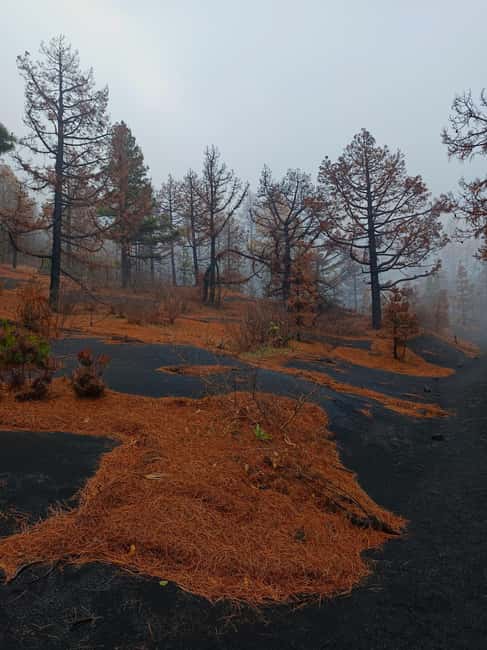
The volcano portion takes about 3 hours and 10 minutes. An arranged vehicle transports you to the start of the route, while the meeting point and final return point are at the Caños de Fuego Visitor Center near the LP-211 road.
The walk is built around explanation. Instead of merely reaching a viewpoint, you learn how the eruption produced the ground beneath your feet and how the area may continue to develop. The guide addresses plant recovery, animal life, volcanic gases, and the social effects of the eruption.
That approach is one of the tour’s strongest features. You can look at black ash on your own, but it is harder to understand what you are seeing without context. A good explanation turns a strange surface into evidence of a process.
The tour has received especially strong praise for the guides’ ability to explain both the geological and human sides. Néstor is singled out as a particularly engaging guide, and Cristina is also named among the highly appreciated guides. Another description highlights how complete and easy to follow Néstor’s explanations are. That gives you a useful expectation: the value here depends heavily on the live interpretation, not just the scenery.
The route has been described as easy and attractive, but the official restrictions still matter. This activity is not suitable for people with a low level of fitness, mobility impairments, wheelchair users, children under five, pregnant women, or people over 80. It also excludes participants over 115 kilograms. The conditions do not generally require walking poles, though you can use them if they are part of your normal hiking kit.
The view from above explains the scale
A high point along the route helps you see why a short volcanic event can have such a large effect. From there, the cone, ash fields, and altered valley fit into one picture. You get a better sense of the eruption’s reach than you would from ground level alone.
The colors are part of the lesson. Dark ash, black lava, and the cone’s changing tones show that volcanic material is not all the same. The guide also discusses degassing, the release of gases from volcanic ground after an eruption. You do not need a background in geology to follow the basic idea, but the subject adds depth for anyone interested in how volcanoes work.
This viewpoint also gives the experience a visual rhythm. You begin by walking over recent ash, then pause to look across the affected area, and later move into an older underground formation. The two parts of the tour complement each other: Tajogaite shows the open-air force of a fresh eruption, while the lava tube shows what can happen below ground as lava cools.
Do not expect a long period of quiet sightseeing with no walking. The volcano segment is the main physical part of the morning. The route is described as easy, but ash and sand can make each step less secure and may work their way into footwear. Gaiters are not required, yet they are a smart comfort item.
A local snack before going underground
After the volcano route, you stop for a refreshment made with local products. This is a simple detail, but it improves the pacing. A snack gives you time to recover before the indoor and underground portion, especially if the sun has been strong or the ash has made the walk more tiring than expected.
The snack is also in keeping with the tour’s local focus. The experience is not just a geological lecture set in a scenic place. It connects the land to the people who live and work there. The food stop is brief, but it helps keep the morning grounded in La Palma rather than turning it into a purely technical outing.
Bring your own reusable water bottle as well. Water is specifically recommended, and the center also has vending machines for drinks and food. Those facilities are useful, but you should not rely on buying everything after the hike.
Same volcano country, a different day out:
- Tenerife: Mount Teide Tour with Cable Car Ticket & Transfer
★ 4.3 · 5,094 reviews - Tenerife: Teide National Park Sunset & Stargazing Tour
★ 4.2 · 3,812 reviews - Tenerife: Sunset and Stargazing at Teide National Park
★ 4.7 · 2,826 reviews - Teide National Park Sunset & Stargazing with Dinner (Star Safari)
★ 5.0 · 2,601 reviews
Entering Cueva de las Palomas
The second main part lasts about an hour and takes place at the Caños de Fuego Visitor Center and Cueva de las Palomas. Specialized staff accompany you into the volcanic tube, explaining how underground cavities form during Canarian eruptions.
A lava tube develops when the outside of a lava flow cools and hardens while hotter lava continues moving beneath it. When the flow drains away, it can leave a hollow passage. Inside Cueva de las Palomas, the point is not just to see a dark cave. You learn to recognize the connection between an eruption on the surface and a cavity below it.
The cave was formed during the 1949 eruption. That date creates a useful contrast with Tajogaite. One stop shows a very recent eruption, while the other lets you examine a volcanic feature that has had decades to become part of the island’s story.
Expect an enclosed, uneven setting rather than a smooth visitor attraction. Closed footwear is essential, and sandals are not permitted. The activity also excludes non-folding wheelchairs, non-folding strollers, walking frames, handcarts, and baby carriages, so the underground visit is not designed for wheeled access.
Cueva del Vidrio and the Caños de Fuego center
The center adds another volcanic cavity, Cueva del Vidrio, also formed during the 1949 eruption. Including both caves gives you a wider picture of how one eruption can create different underground spaces.
Inside the main building, you can see exhibits in the showroom and watch a video. These elements are useful after the outdoor route because they give you a place to organize what you have seen. If the guide’s Spanish is difficult for you, the visual displays and film may still help, though some material is presented in its original language.
The building also has a panoramic viewpoint on the roof. A large window provides a view toward the lava from the San Juan volcano, another 1949 eruption. That makes the center more than a place to wait for the cave visit. It gives you a broad view of older volcanic activity and provides restrooms and vending machines as practical comforts.
The indoor portion is particularly helpful if the weather changes. Rain gear is recommended, along with breathable clothing and weather-appropriate layers. La Palma conditions can vary, so a morning that begins cool may feel warmer under the sun, while cloud or rain can change the comfort level quickly.
What the $42 price includes
At $42 per person, this is a good-value half-day outing if you want interpretation rather than independent sightseeing. The price covers the arranged vehicle for the start of the volcano route, the guided Tajogaite visit, the local refreshment, the Cueva de las Palomas visit, the Caños de Fuego exhibits and film, and access to Cueva del Vidrio.
You are paying for several connected experiences in one booking. A self-guided visit might let you see volcanic scenery and a visitor center, but it would not necessarily provide the same explanation of degassing, underground tube formation, local effects, and the relationship between the 2021 and 1949 eruptions.
The value is strongest for people who want a clear story. If you already have a strong geology background and prefer to explore at your own pace, the guided format may feel more structured than necessary. But for most visitors, the guide’s interpretation is the reason to choose this tour.
The stated duration is 4.5 hours, giving you enough time for the volcano route, the snack, and the cave and visitor center visit without turning the day into a full expedition. The meeting point is easy to identify: the entrance to the Caños de Fuego Visitor Center beside LP-211. Look for a guide in black or navy pants with a green or yellow shirt.
You can cancel up to 24 hours ahead for a full refund, and the reserve-now, pay-later option gives you some flexibility. Check the available starting times when booking, since the exact departure time can vary.
Who will get the most from this tour
I would choose this experience if you want to understand La Palma through its volcanic activity rather than simply photograph a cone. It suits adults and older children who can manage an ash-covered walking route and who enjoy explanations about geology, ecology, and local life.
It is also a good choice if you want access to places that may be difficult to visit on your own. One particularly useful feature is the arranged transport to the route start, followed by a guided visit to the lava tube and center. You are not left to work out how the different pieces fit together.
The tour is less suitable if you need wheelchair access, tire easily on uneven ground, dislike enclosed spaces, or need an English-language guide. The live guide language is Spanish, and some content is shown in its original language. You should be comfortable walking on loose volcanic material and entering a cave.
The activity does not allow pets, smoking, alcohol, drugs, party groups, or unaccompanied minors. These rules fit the setting. A volcanic route and underground cavity need a calm, controlled group rather than a party atmosphere.
Practical packing advice for the volcanic ground
Wear hiking shoes, sports shoes, or another pair of sturdy closed-toe shoes. The information for the outing lists several types of comfortable clothing, but the important points are simple: your footwear should protect your feet, and your clothing should let you walk comfortably.
Pack these essentials:
- Water in a reusable bottle
- Sunscreen, ideally biodegradable
- A sun hat or cap
- Weather-appropriate layers
- Rain gear
- Hiking pants or other comfortable walking clothes
- Gaiters if you dislike sand in your shoes
You can use walking poles if you are already accustomed to them, but they are not generally needed for this route. Avoid bare feet, sandals, and flip-flops. Also remember that touching plants, animals, or marine life is not allowed, although the tour is centered on volcanic ground rather than a marine activity.
Should you book Tajogaite and Cueva de las Palomas?
Book it if you want a well-organized introduction to La Palma’s volcanic past and present, especially if the human effects of the 2021 eruption interest you as much as the geology. The combination of Tajogaite, a local snack, two volcanic cavities, exhibits, a film, and a panoramic viewpoint gives you a lot for $42.
I would be most inclined to book with Néstor or Cristina if their departure is available, since the tour depends on clear guiding and both are specifically praised for friendly, complete explanations. Just remember that the tour is in Spanish, the outdoor route crosses loose ash, and the experience is not designed for visitors with limited mobility or low fitness.
If you want a gentle scenic drive with little walking, choose something else. If you want to see how a volcano changes land, wildlife, and human life, then step into a real lava tube afterward, this is one of La Palma’s more useful half-day experiences.
FAQ
How long does the Tajogaite and Cueva de las Palomas tour last?
The full activity lasts 4.5 hours. The guided Tajogaite portion takes about 3.17 hours, followed by about one hour at Cueva de las Palomas and the Caños de Fuego Visitor Center.
Where is the meeting point?
Meet at the entrance to the Caños de Fuego Visitor Center beside the LP-211 road. The guide will be in the parking lot wearing black or navy blue pants and a green or yellow shirt.
What language is the tour conducted in?
The live tour guide speaks Spanish. Some content is shown in its original language.
What does the $42 price include?
The price includes arranged transport to the start of the volcano route, the guided Tajogaite visit, a refreshment made with local products, the Cueva de las Palomas visit, the Caños de Fuego exhibits and video, and a visit to Cueva del Vidrio.
What should I wear and bring?
Wear closed-toe hiking or sports shoes and comfortable, weather-appropriate clothing. Bring water, sunscreen, a sun hat, and rain gear. Gaiters may help keep sand out of your shoes.
Is the activity suitable for everyone?
No. It is not suitable for children under five, pregnant women, people with mobility impairments, wheelchair users, people over 80, people over 115 kilograms, or people with a low level of fitness.
Just added around Spain
- Medieval Villages & La Garrotxa Volcanic Zone Hiking. Small Group Tour★ 5.0 · 11 reviews
- Tour to Timanfaya, La Geria and La Laguna Verde★ 4.5 · 48 reviews
- Kayaking tour through volcanoes of Cabo de Gata Natural Park★ 4.0 · 18 reviews
- Timanfaya National Park: Evening Tour with Volcano Dinner★ 4.4 · 129 reviews
- Tenerife: Water Jet-Ski / Teide Volcano Quad Safari Combo★ 4.5 · 6 reviews
- Tenerife: Tenerife Highlights beyond the Teide★ 4.8 · 160 reviews
- Puerto de la Cruz: Quad to Mount Teide Day or Sunset★ 4.7 · 25 reviews
- Tenerife: Teide Stargazing with an Astrophysicist★ 4.9 · 74 reviews
Spain Volcano Tours, compared.
Tenerife: Mount Teide Tour with Cable Car Ticket & Transfer
Read our review →
Tenerife: Teide National Park Sunset & Stargazing Tour
Read our review →
Lanzarote: Timanfaya Park, Jameos Agua, & Cueva Verdes Tour
Read our review →
Tenerife: Mount Teide, Masca, Icod and Garachico Day Trip
Read our review →
Arrecife: Timanfaya and Green Lagoon for Cruise Passengers
Read our review →
Lanzarote: Timanfaya Park and Jameos del Agua Full-Day Tour
Read our review →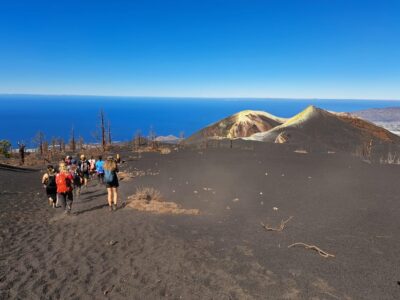
Browse the lists this tour appears in