
REVIEW · BIG ISLAND
Private Tour: Hawaii Volcanoes National Park Eco Tour
Kilauea is not a place you simply look at and understand. Steam rises from the ground, old lava flows cut across the island, and a short walk can shift from native rainforest to bare volcanic rock. This private tour puts a guide beside you to explain what you are seeing, from the 1959 eruption at Kilauea Iki to the cultural meaning of the volcano.
I like the private format, which lets your guide adjust the balance between walking, driving, geology, plants, and Hawaiian culture. I also like the range of stops: a lava tube, sulphur banks, crater overlooks, rainforest trails, and the coast all fit into one outing.
The main consideration is transportation. You drive between areas of the park, so this is not a continuous walking tour. The price is $160 per person, plus the $30 National Park entrance fee per vehicle, and the value depends on how much you want expert interpretation rather than simply seeing the sights on your own.
Key points to know before you book
- Private guide service: Your group tours alone, with a maximum of 25 people per booking and a minimum of two.
- Flexible three to six hours: You can discuss your preferred departure time and interests with Kilauea EcoGuides after booking.
- Science and culture together: Expect geology, geochemistry, native plants, birds, Hawaiian culture, and park history.
- Many short walks: The outing combines brief hikes with drives along Chain of Craters Road.
- Eruption viewing is not guaranteed: Keanakako‘i Overlook is the best listed viewing point when lava is visible, but conditions change.
- Family-friendly learning: Guides can help children complete the Junior Ranger program at the visitor center.
Why a private Kilauea tour can be worth the price
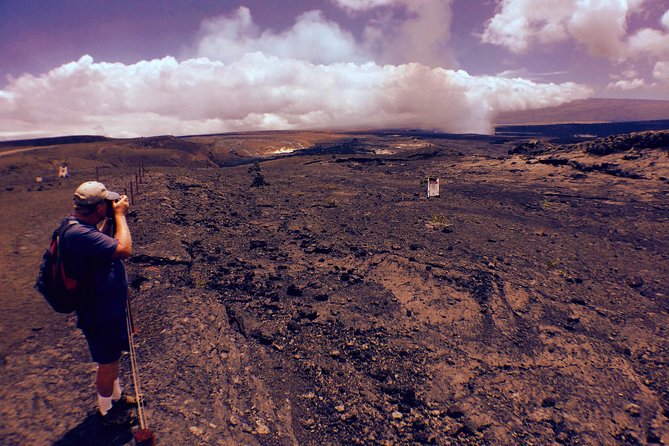
Hawaii Volcanoes National Park is easy to enter but not always easy to read. A black rock surface may be a fresh flow, an older weathered deposit, or part of a much larger eruption story. Steam vents, sulphur deposits, native forest, pit craters, and lava tubes each reward a different kind of attention.
That is where a private guide earns the fee. Erik, Jay, Michelle, Justin, Tyson, Chris, and other guides are described as personable, adaptable, and strong on geology, plants, animals, and Hawaiian culture. Jay brings experience as a retired park ranger and former park worker, while Erik’s background in geochemistry is useful if you want detailed explanations of volcanic processes.
You can ask questions as you go instead of waiting for a fixed group presentation. Families have used the tour with children and older adults, and guides have adjusted the pace and route around flight times, hiking preferences, and park closures.
The tradeoff is simple. If you only want to drive to a few viewpoints, you can visit the park independently for less. If you want to understand why the ground looks the way it does, or you want someone to help choose worthwhile stops during a short visit, the private setup makes more sense.
More Volcano National Parks in Big Island
- Hilo Shore Excursion: Volcanoes National Park & Black Sand Beach
★ 4.5 · 2,338 reviews - Big Island: Fat Tire E-Bike Tour through Volcanoes National Park
★ 5.0 · 546 reviews - Big Island, Hawaii: Volcanoes National Park Safari
★ 4.5 · 545 reviews
Starting at Volcano House and the summit area
The tour begins at the historic Volcano House hotel inside the park. From there, the early stops focus on the summit area, where you can walk to steam vents and sulphur banks and feel geothermal heat coming from below.
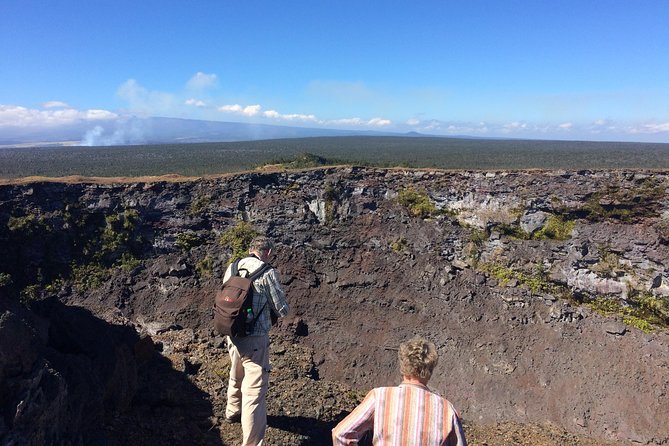
Steam vents are a good first lesson in Kilauea. They make the volcano feel active even when no lava is visible. At Sulphur Banks, your guide can explain geochemistry and the way native plants adapt to volcanic gases. The area is considered safe to explore because gas concentrations are low, but you should still follow the guide’s directions and stay on the route.
The nearby Halemaumau Trail adds geology, native plants, native birds, and Hawaiian cultural context. The listed walk is short, about 15 minutes, but the value comes from stopping to look and listen rather than covering distance.
The summit caldera is the central subject here. Its appearance and access can change with volcanic activity, so your exact view depends on current park conditions. This is one reason the flexible private format helps, since your guide can shape the day around what is open and visible.
Thurston Lava Tube and the old-growth forest
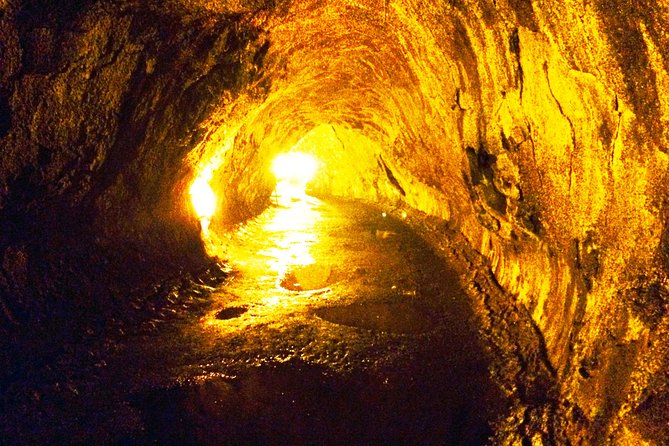
Nahuku, also called Thurston Lava Tube, is one of the park’s most memorable short stops. You walk through an old-growth native forest to reach a lava tube formed about 500 years ago.
Inside, the focus is not just on the tunnel itself. Your guide explains how lava tubes form and points out features created as molten rock moved through the ground. The walk is listed at about 15 minutes, so it is manageable for most people who can participate in ordinary park walks.
This stop works especially well for families. A tunnel formed by flowing lava is easier to picture than an abstract explanation of volcanic plumbing. Children can connect the dark passage to the eruption stories they hear elsewhere in the park.
The trail is one of the places where footwear and a light layer matter. The tour information does not promise any particular weather, so pack for changing conditions rather than assuming the summit will be warm. Bring water, and remember that the route includes several walks instead of one long hike.
Kilauea Iki Trail and the 1959 eruption
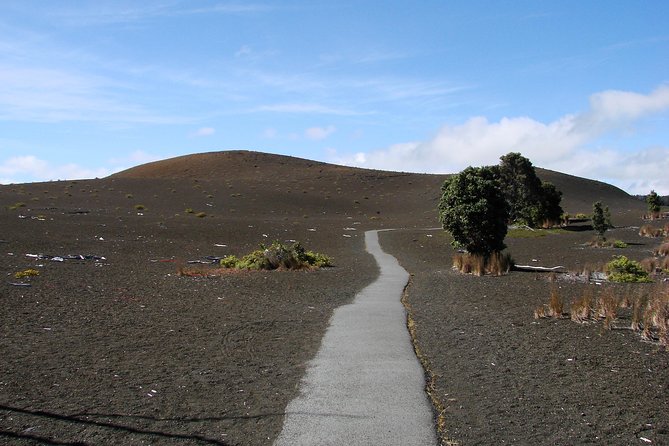
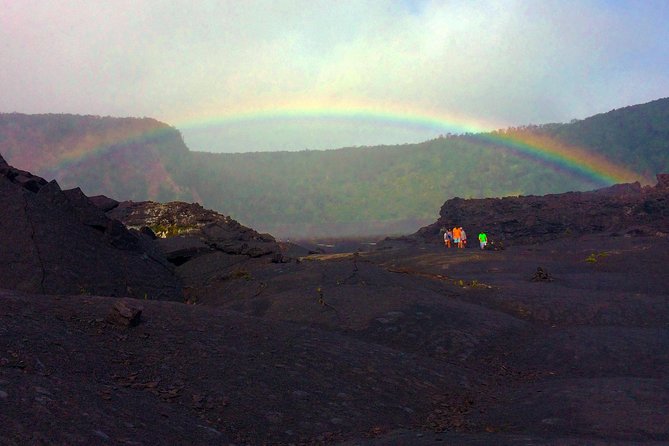
Kilauea Iki Trail is presented as the park’s most popular trail and one of the tour’s strongest walking sections. The guide discusses the 1959 eruption, including its exceptionally high lava fountains, and the trail’s volcanic surface can feel almost lunar.
The listed stop is only about 15 minutes, but the actual balance depends on your chosen tour length and the day’s route. A three-hour outing must move briskly, while a five or six-hour booking gives more room for hiking and questions.
I would tell you not to judge this stop by the clock alone. The useful part is learning how an eruption changed the area and how the forest has responded since then. A guide can connect the bare rock, plant growth, eruption deposits, and nearby crater views into one story.
This is also a good place to tell your guide what you want. If you prefer more walking than driving, that can be discussed when you arrange the departure. If your group includes older adults or children, you can ask for a lighter route. Several guide names appear in the experience details, but specific assignments are not guaranteed.
More Volcano National Parks in the USA
- Small-Group Big Island Tour: Hawaii Volcanoes National Park and Kona Coffee Farm
★ 5.0 · 343 reviews - Volcano National Park Adventure From Kona
★ 5.0 · 339 reviews - Hawaii Volcanoes National Park Experience from the Big Island
★ 4.5 · 102 reviews - Kilauea: Volcanoes National Park Guided Hike
★ 4.8 · 61 reviews
Devastation Trail and volcanic remains
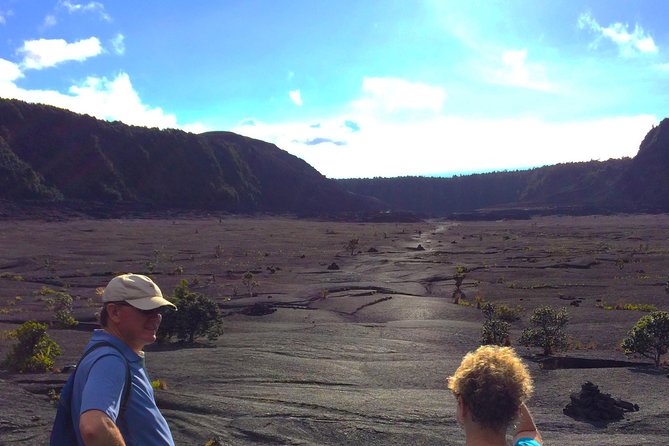
Devastation Trail shows what happened when the 1959 eruption buried native rainforest in volcanic debris. The route is short, about 30 minutes, but it offers a clear look at destruction and recovery.
Your guide may point out Pele’s tears, olivine crystals, and other unusual rock formations. These details are easy to miss when you are simply walking across dark ground. They also give you a reason to slow down and examine the surface rather than treating it as scenery.
This is one of the better stops for visitors who want tangible evidence of an eruption. You can see how ash and debris changed the forest, then compare that with areas where plants have returned. The guide’s explanation of native vegetation adds a living element to what could otherwise feel like a field of rocks.
Chain of Craters Road and the coast
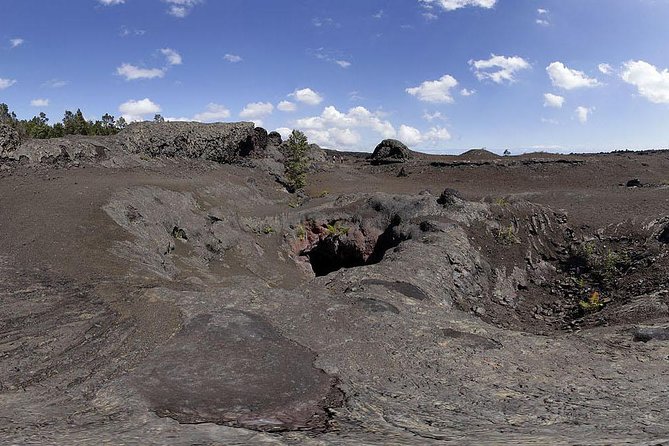
Chain of Craters Road provides the driving spine for the longer version of the tour. Along the route, you stop at volcanic formations and discuss features such as pit craters. Lua Manu is one listed stop.
The road takes you through older volcanic terrain and lets you compare different stages of Kilauea’s activity. This is also the part of the day that most clearly shows why transportation is needed. You cover more ground than you could comfortably walk in a few hours, but you are spending time in a vehicle between short walks.
At the coast, Holei Sea Arch gives you an easy walk and a strong photo stop. Your guide can also discuss native seabirds. The coastal section changes the mood of the tour: after steam, sulphur, forest, and crater rock, you see where the volcano reaches the ocean.
The arch is a quick stop, listed at about five minutes, so do not expect a long coastal hike. It works as part of a larger day rather than a stand-alone coastal excursion.
Keanakako‘i Overlook and eruption viewing
Keanakako‘i Overlook is identified as the best place in this tour plan to see an active summit eruption when lava is visible. Guides may provide binoculars or spotting scopes for a closer look.
This wording matters. Lava viewing depends on current eruption conditions, and no tour can promise a glowing crater on a particular date. The park can also close areas or restrict access when seismic activity or eruptive conditions require it.
If lava is visible, this is likely to become the emotional high point of your visit. If it is not, the tour still has plenty to offer through the steam vents, crater trails, lava tube, forest, and coastal road. I would book this experience for the park as a whole, not only for the chance of seeing lava.
Visitor center, Junior Rangers, and Volcano Art Center
A short stop at Kilauea Visitor Center can be added for maps, park books, Hawaiian culture titles, and Junior Ranger materials. If you are traveling with children, the guide can help them complete the program and receive an official badge.
That small detail makes the tour more useful for families. The children get a clear task, while adults receive help connecting the park’s science and culture to what they have already seen.
The Volcano Art Center Gallery offers another change of pace. You can also see the original Volcano House hotel, described as the oldest hotel in the state. This stop is brief, but it adds an artistic and historic side to a day otherwise focused on geology.
Three hours or six hours?
The available duration is roughly three to six hours. The shorter version is enough for a strong introduction, especially if you want the summit area, a lava tube, a few trails, and an explanation of the park’s main features.
The longer version gives you more room for Chain of Craters Road, coastal stops, extra walking, and questions. Several people who chose three hours found the time passed quickly and wished they had booked longer. That is useful advice if you are eager to walk or want a slower pace.
A three-hour tour may suit a tight island schedule or a group with mixed ages. Choose closer to six hours if this is your main visit to Hawaii Volcanoes National Park and you want a fuller look at both the summit and coast.
There is no fixed public departure time stated here. After booking, contact the operator to choose your preferred time and discuss the route. Morning and afternoon options are available.
Price, park fees, and what you receive
The tour costs $160 per person. That includes a professional guide, private service, taxes, fees, and handling charges. It does not include food, drinks, transportation to and from the park, or the National Park entrance fee of $30 per vehicle.
The meeting point is 1 Crater Rim Drive at Hawaii Volcanoes National Park, and the tour ends there. You need to arrange your own way to the park and between stops. The guide is not providing a separate hotel pickup service.
For two people, the guide fee is a meaningful expense. For a larger private group, the per-person value can improve, especially since the group shares one guide and can keep the outing focused on its own interests.
I would compare the price with what you want from the day. Independent visitors can reach the park’s roads and trails on their own, but they must research the route, interpret the geology, watch for closures, and decide how to spend limited time. This tour charges for that preparation and personal attention.
Practical advice for a smoother day
Bring water and snacks. There may not be a convenient place for a proper lunch during the park portion, and stopping for packaged snacks is not the same as having a meal.
Tell the operator your preferred departure time and interests after booking. You can discuss more hiking, more driving, family needs, or a shorter route. Confirmation arrives within 48 hours, subject to availability, and at least two people are required per booking.
Expect walking on several short trails, but the exact amount depends on your chosen length and preferences. Most people can participate, yet you should still be honest about your group’s pace before setting the route.
Book ahead if your island schedule is fixed. The experience averages booking about 46 days in advance, which suggests that last-minute availability may be limited during busy periods.
The cancellation policy allows a full refund when you cancel at least 24 hours before the experience. English is the offered language, and the ticket is mobile.
Who should book this private volcano tour?
I would choose this for first-time visitors who want more than a series of viewpoints. It is also a strong fit for families, mixed-age groups, couples, and anyone curious about geology, native plants, birds, or Hawaiian culture.
The private format helps if your group has a strict end time. One guide adjusted a route for people catching a flight, and another helped a family make the most of a shorter booking. That flexibility is hard to get on a large bus tour.
I would think twice if you dislike driving between stops or prefer to explore silently at your own pace. The guide talks throughout the experience, and the price is higher than visiting independently. You are paying for interpretation, route planning, and a private pace.
Should you book it?
Book this tour if you want Kilauea explained, not simply photographed. The strongest parts are the private attention, the combination of summit and coastal sites, and the guides’ focus on science, native life, and Hawaiian culture.
Choose the six-hour option if you have time and want the broadest route. Choose three hours if you need a compact introduction. Just keep your expectations realistic: an eruption may or may not be visible, and you will drive between parts of the park.
For a visitor who values learning and personal guidance, $160 per person can be fair value. For a visitor who only wants to see the main overlooks, self-guided exploration may be the better buy.
FAQ
Where does the private Hawaii Volcanoes National Park tour begin?
The tour begins at 1 Crater Rim Drive inside Hawaii Volcanoes National Park, near the historic Volcano House hotel. It ends back at the meeting point.
How long does the tour last?
The experience lasts approximately three to six hours. You can discuss your preferred departure time and itinerary with the local operator after booking.
Is the National Park entrance fee included?
No. The National Park entrance fee is listed separately at $30 per vehicle. The tour price includes the professional guide, private tour, taxes, fees, and handling charges.
Is lava guaranteed to be visible?
No. Summit eruption viewing depends on current eruption conditions. Keanakako‘i Overlook is used for viewing when lava is visible, and guides may provide binoculars or spotting scopes.
Can children participate?
Most people can participate, and children can take part in the Junior Ranger program at the visitor center. The guide can help children complete the program and receive a badge.
Is hotel pickup included?
No. Hotel pickup and drop-off are not included, and transportation to and from the attractions is not provided. You meet the guide inside Hawaii Volcanoes National Park.
Just added around Big Island
- Volcanoes National Park: Guided, Small-Group Hike★ 5.0 · 15 reviews
- Evening Volcano Explorer from Hilo★ 4.5 · 67 reviews
- Fat Tire E-Bike Rental – Volcanoes National Park★ 4.5 · 26 reviews
- Evening Volcano Explorer Tour from Kona★ 4.5 · 24 reviews
- Big Island Waterfalls, Blacksand Beaches, Lava Tubes & Volcanoes★ 5.0 · 24 reviews
- Expert Led Private Guided Tour Hawaii Volcanoes National Park★ 5.0 · 5 reviews
- Big Island Private Tour Waipio Valley Volcanoes Waterfalls★ 5.0 · 4 reviews
- Private – All Inclusive Big Island Volcano & Waterfalls Tour★ 5.0 · 8 reviews
Big Island Volcano Tours, compared.
Big Island in a Day: Volcanoes Waterfalls Sightseeing and History
Read our review →
Hilo Shore Excursion: Volcanoes National Park & Black Sand Beach
Read our review →
Big Island GOAT Experience: Mauna Kea Summit, Sunset & Stars
Read our review →
Small Group Big Island Twilight Volcano and Stargazing Tour
Read our review →
Big Island: Mauna Kea Summit and Stars Small-Group Adventure Tour
Read our review →
Big Island: Mauna Kea Summit Tour with Free Night Star Photo
Read our review →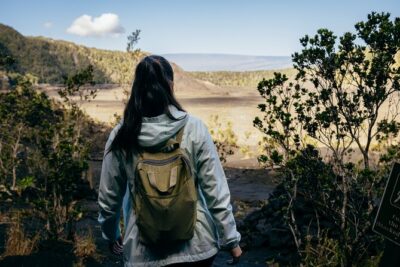
Big Island Highlights: Coffee, Volcano, Black Sands & Waterfall
Read our review →
Deluxe Volcano Experience with Restaurant Dinner
Read our review →Browse the lists this tour appears in