REVIEW · BIG ISLAND
Big Island GOAT Experience: Mauna Kea Summit, Sunset & Stars
At nearly 13,800 feet, Mauna Kea gives you a sunset above the clouds followed by one of the clearest night skies in Hawaii. The evening combines a 4×4 ride, Hawaiian cultural stories, astronomy, and a professional night photo in one long outing. The summit sunset and the star show are the main prizes.
I like the way the tour takes care of the hard parts: your guide drives the mountain road, and the company provides parkas, gloves, hot drinks, snacks, and a telescope. I also like the mix of science and culture. Guides such as Kella, Tay, John, Chris, Val, and Tom have been praised for explaining constellations, volcanic geology, Polynesian navigation, and the legends of Poli’ahu. The cold and altitude are the chief drawbacks, and poor weather can cut the stargazing short.
Key points to know before you book
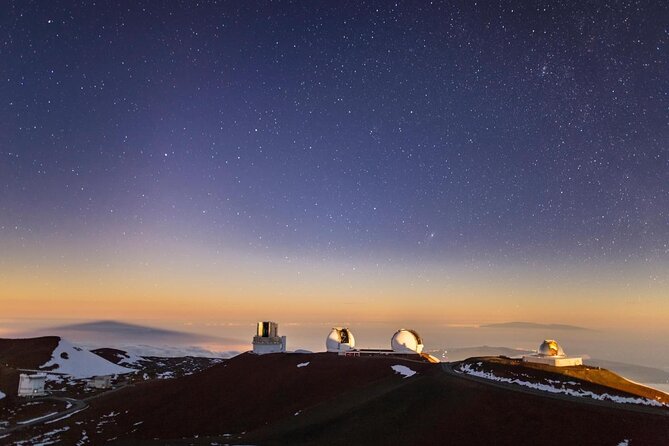
- Sunset at 13,796 feet: You watch the sun drop from near Mauna Kea’s summit, often above a blanket of clouds.
- Stargazing usually happens lower down: The astronomy stop is commonly near the 9,200-foot visitor center area, where you use a Celestron telescope.
- Warm clothing is supplied, but bring layers: Parkas and gloves help, though your hat, socks, shoes, and base layers matter just as much.
- Small-group format: The advertised maximum is 14 people, though some departures may use two vans and feel larger.
- A long evening for $289: The price makes sense if you value the guide, transport, equipment, photo, and careful mountain driving.
- Weather controls the show: Clouds may hide the stars, but the tour can still deliver a memorable sunset and mountain visit.
Why Mauna Kea makes such a powerful evening
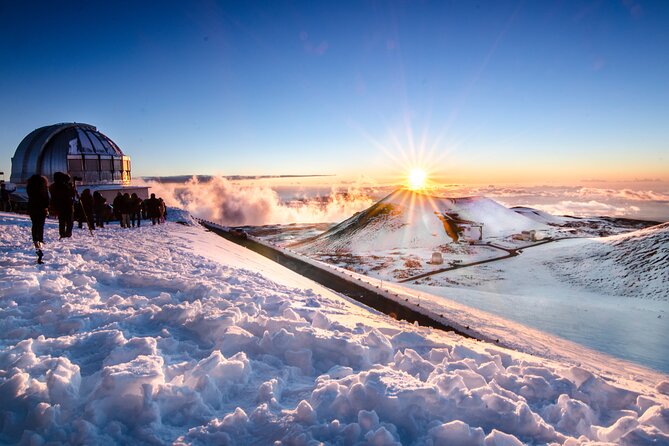
Mauna Kea is not simply a high viewpoint. Its summit reaches 13,796 feet, or 4,205 meters, and its upper slopes rise above much of the island’s weather. That height gives you wide views at sunset and a dark sky after nightfall.
The mountain also has deep meaning in Hawaiian culture. Maunakea is linked with Poli’ahu, Lilinoe, and Waiau. Ancient Hawaiians regarded the summit as the realm of the gods, and access was once kapu, or restricted, except for high chiefs and priests. Queen Emma made the difficult journey to the summit in 1881.
Your guide may explain this history alongside the modern astronomy story. Mauna Kea is home to 13 international observatories, which is why scientists from many countries work here. You do not tour the large research telescopes or look through them, but you see the observatories and learn why the summit is so useful for studying the sky.
That combination gives the outing more substance than a simple sunset drive. You are not only looking outward at the Pacific and the clouds. You are also hearing how the mountain fits into Hawaiian traditions, volcanic geology, navigation, and modern astronomy.
More Volcano Hikes and Treks in Big Island
- Big Island: Mauna Kea Summit and Stars Small-Group Adventure Tour
★ 5.0 · 1,545 reviews - Big Island: Mauna Kea Summit Tour with Free Night Star Photo
★ 5.0 · 1,449 reviews - Hidden Craters Hike of Kona
★ 5.0 · 156 reviews
The ride from Hilo, Waikoloa, or Kona
Pickup is offered from selected locations in Hilo, Waikoloa Village, and Kailua-Kona. Choose your pickup point carefully when you book. If you need to change it later, you must contact the local operator using the phone number on your ticket.
The trip lasts about seven to eight hours. Much of that time is spent in the van, especially if you are starting from Kona or Hilo. That is worth understanding before you pay $289. This is not a quick sunset stop. It is a full evening built around a distant, high-altitude destination.
The 4×4 van matters. You leave the driving to someone who knows the route and can watch road and weather conditions while you look out the windows. Guides also use the ride to explain lava types, island geology, local beaches, Hawaiian stories, and what to expect at high altitude.
The group is advertised at a maximum of 14 people. That is a comfortable size for conversation and telescope viewing, but the actual setup can vary. One account described about 30 people spread across two vans, with some crowding on the return ride. Ask about the vehicle and group arrangement if having a truly small group is important to you.
Halepōhaku and the 9,200-foot adjustment stop
The Onizuka Center for International Astronomy, also called Halepōhaku, sits around 9,200 feet. This mid-mountain stop helps break up the climb and gives you a place to learn more about the mountain before going higher.
The altitude change is real. You may notice thinner air, slower movement, or mild discomfort. You should be in moderate physical condition, and the experience is not suited to people with heart problems, serious medical conditions, pregnancy, or poor health related to high altitude. Children under 13 are not allowed.
This is also where the evening’s practical side shows. Use the restroom when you have the chance. Restrooms are available at the visitor center, and portable facilities may be available near the summit, but conditions can be basic and facilities may not always be convenient.
The mid-level stop is often the best place for the main stargazing session. After the summit sunset, the group may return to this lower elevation for a longer astronomy talk. That arrangement makes sense. You get the dramatic sunset at the top, then a more comfortable, more workable setting for the telescope.
The summit sunset above the clouds
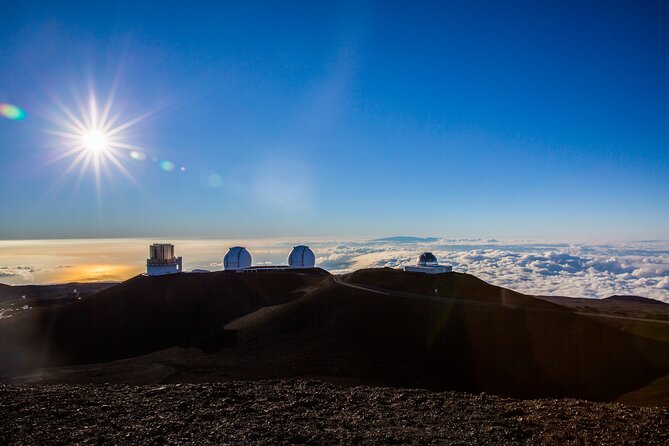
At the summit, your guide helps you prepare for the cold. Coats and gloves are supplied, and the guides hand out a snack bag and a hot drink, often hot chocolate. These small comforts matter when you are standing still in wind and near-freezing temperatures.
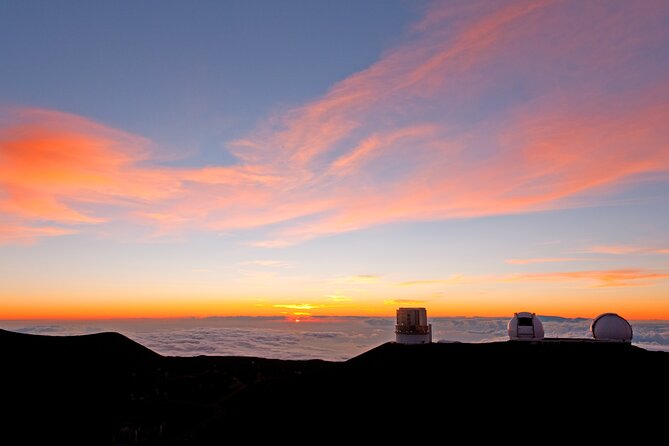
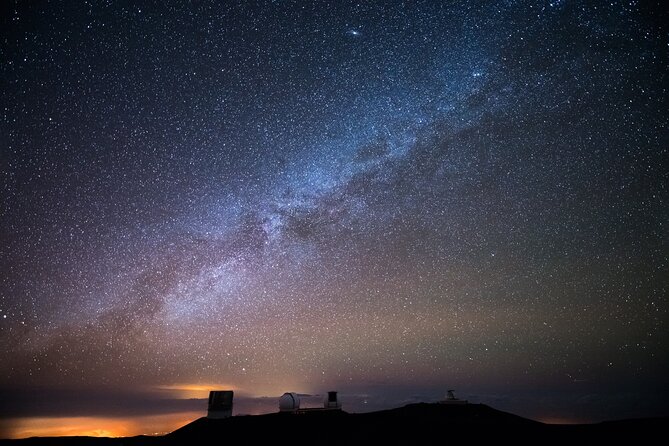
The view changes quickly as the sun drops. Clouds below can turn gold, pink, or orange, while the summit observatories become dark shapes against the sky. On one winter outing, snow covered the summit after a recent storm, adding another layer to the scene. Snow is not guaranteed, but it shows how different Mauna Kea can feel from the beaches below.
The summit is not a place for a long casual walk. Some people have found even short uphill walking difficult at this elevation. Move slowly, listen to your guide, and do not treat the mountain like an ordinary scenic overlook.
The jackets supplied by the company are useful, but they are not a complete winter wardrobe. Some coats are one-size-fits-all, and individual items may show wear. Bring warm layers underneath, a knit hat, thick socks, and closed shoes. Several people found that their hands and feet became cold even with the supplied gear. A small personal pair of gloves and toe or hand warmers can be worthwhile.
More Volcano Hikes and Treks in the USA
- Kilauea: Volcanoes National Park Guided Hike
★ 4.8 · 61 reviews - Big Island: Hawai’i Volcanoes National Park Guided Hike
★ 4.9 · 30 reviews - Volcanoes National Park: Guided, Small-Group Hike
★ 5.0 · 15 reviews - Big Island: Off the Beaten Path Volcano Crater Hike
★ 5.0 · 15 reviews
Stargazing with a laser pointer and telescope
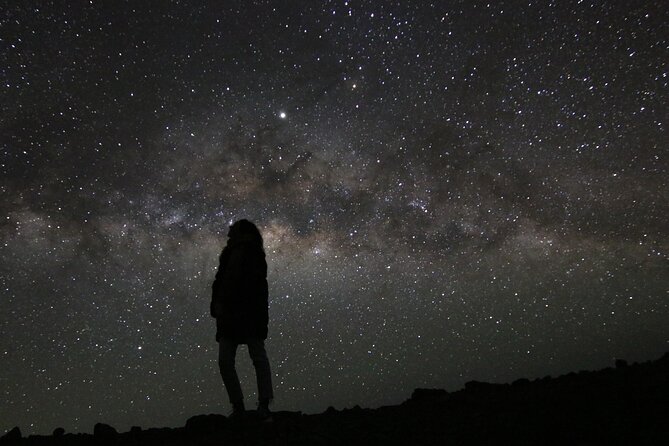
After sunset, your guide uses a laser pointer to identify stars, constellations, planets, galaxies, and nebulae. The exact sights depend on the season, moon, clouds, and luck. On a clear evening, you may see the Milky Way, Andromeda, the International Space Station, or Starlink satellites. The telescope can bring distant objects into view in a way that unaided stargazing cannot.
The telescope is a professional Celestron model, used when weather permits. This is not access to the giant observatories. You get a guided look through a tour telescope, with an explanation of what you are seeing and why it matters.
The strongest astronomy sessions combine facts with stories. Guides have explained how Polynesian navigators used the stars, how constellations fit into Hawaiian culture, and how the night sky changes across the year. That human connection keeps the session from feeling like a list of technical names.
Weather is the great unknown. A cloudy night may give you only brief breaks in the sky, or none at all. One smart feature of the experience is that the guides may wait for a gap in the clouds when conditions allow. Still, you should book this as a mountain and sunset outing with stargazing as a major possibility, not an absolute promise.
A full moon can also change the mood. It may wash out some faint stars, but a moonrise over the mountain can become its own highlight. A three-quarter moon once made the area bright enough for easy walking, while the telescope still offered memorable views.
Guides, photos, snacks, and the human touch
The guides are central to the value. Names associated with this tour include John, Chris, Kella or Kellah, Tay, Val, Valerie, and Tom. Your guide will vary by date, but the strongest guide style is clear: explain the place, keep an eye on comfort, tell a few good stories, and make the long drives feel useful.
The included snack bag is not dinner. Food is not sold at the mountain, so bring a packed meal if you need something substantial. You also receive a hot drink, which is especially welcome after standing outside in the wind.
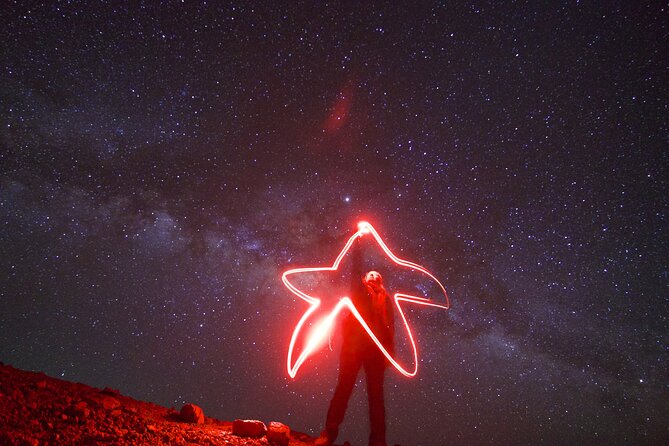
A professional night photo is included. This gives you a better chance of keeping a clear image of yourself beneath the stars than relying on a phone. The photo is delivered through a link, so save it promptly and check that you can open it on your phone before too much time passes.
The photo is a nice bonus, but do not confuse it with a private photo session. The main value remains the transport, guiding, equipment, and access to a difficult place at a difficult time of day.
Is $289 a fair price?
At $289 per person, this is expensive compared with a simple drive to a viewpoint. You are paying for a seven to eight-hour commitment, round-trip transport, a 4×4 vehicle, guides, warm gear, snacks, hot drinks, a telescope, and a professional photo.
The price is easier to justify if you do not want to drive a mountain road after dark, do not have suitable four-wheel-drive transportation, or want help understanding what you are seeing. It also saves you from planning a sunset stop and a separate astronomy program.
The value drops if you dislike long van rides, expect a private tour, or need guaranteed telescope viewing. One person felt most of the evening involved sitting in the van and only a short time at the telescope. That is a fair warning. The natural setting is the star of the show, and nature does not promise a clear sky.
The experience is best for couples, friends, and families with older teenagers who want a major Big Island outing. It suits curious people who enjoy astronomy, Hawaiian culture, geology, photography, and big views. It is less suitable for anyone who struggles with cold, altitude, cramped transport, or long periods of waiting outdoors.
Practical ways to make the night better
Bring more warm clothing than you think you need. Pack a beanie, personal gloves, thick socks, long pants, and several thin layers rather than one bulky item. The supplied parka helps your torso, but it may not keep your fingers and feet warm.
Wear sturdy shoes. You are not taking a long hike, but loose gravel, wind, and short uphill walks can make flimsy footwear unpleasant. Keep a small bag with extra clothes, and bring your own dinner if you do not want to wait until you return.
Take altitude seriously. Walk slowly, drink water, and tell your guide if you feel unwell. The group may return to a lower elevation if wind or conditions become unsafe. One guide team made a long detour to return the group safely after Saddle Road closed, so flexibility is part of the deal.
Finally, leave room in your schedule the next morning. This is a late, tiring outing, especially after a long ride back to Hilo, Kona, or Waikoloa.
Should you book the Mauna Kea sunset and stars tour?
I would book it if Mauna Kea is high on your Big Island wish list and you want the mountain explained rather than simply photographed. The sunset, Hawaiian stories, astronomy talk, telescope, and night photo make a strong package, and the guides often add real warmth and humor.
I would skip it if you need a guaranteed clear sky, a private vehicle, a short excursion, or a warm evening. Check the group setup before booking, pack serious cold-weather layers, and accept that the telescope session may be shortened by clouds.
The tour offers free cancellation up to 24 hours before departure. If weather cancels the outing, you can choose another date or receive a full refund. That policy helps, but it does not remove the basic risk: Mauna Kea gives you a remarkable setting, not a scheduled performance.
FAQ
Where can I be picked up for the tour?
Pickup is available from selected locations in Hilo, Waikoloa Village, and Kailua-Kona. Select the correct pickup option when booking.
How long does the experience last?
Plan on about seven to eight hours, including transportation, the summit visit, the mid-level stop, sunset, and stargazing.
How high is the Mauna Kea summit?
The summit is 13,796 feet, or 4,205 meters, above sea level. The visitor center area is around 9,200 feet, or 2,800 meters.
Are coats and gloves provided?
Yes. Jackets and gloves are supplied, but you should still bring warm layers, a hat, thick socks, and suitable shoes.
Is dinner included?
No. Snacks and a hot beverage are included, but you should bring your own packed dinner because food is not available for purchase at the mountain.
Do I use the large observatory telescopes?
No. The large observatories are operated by universities and organizations from several countries. The tour may use a professional Celestron telescope for night-sky viewing.
Can children join the tour?
People under 13 are not allowed to participate.
Is the tour suitable for people with medical conditions?
The tour is not recommended for people with heart problems, serious medical conditions, pregnancy, back problems, or poor health affected by high altitude. Moderate physical fitness is advised.
What happens if the weather is bad?
The experience requires good weather. If the operator cancels because of poor conditions, you can choose another date or receive a full refund.
More Evening Tours in Big Island
- Evening Volcano Explorer from Hilo
★ 4.5 · 67 reviews - Big Island: Evening Volcano Explorer from Hilo
★ 4.7 · 31 reviews - Evening Volcano Explorer Tour from Kona
★ 4.5 · 24 reviews - Big Island: Evening Volcano Explorer From Kona or Kohala
★ 5.0 · 5 reviews
Just added around Big Island
- Volcanoes National Park: Guided, Small-Group Hike★ 5.0 · 15 reviews
- Evening Volcano Explorer from Hilo★ 4.5 · 67 reviews
- Fat Tire E-Bike Rental – Volcanoes National Park★ 4.5 · 26 reviews
- Evening Volcano Explorer Tour from Kona★ 4.5 · 24 reviews
- Big Island Waterfalls, Blacksand Beaches, Lava Tubes & Volcanoes★ 5.0 · 24 reviews
- Expert Led Private Guided Tour Hawaii Volcanoes National Park★ 5.0 · 5 reviews
- Best of Big Island: Volcanoes, Waterfall, Blacksand Beach & Lunch★ 5.0 · 14 reviews
- Big Island Private Tour Waipio Valley Volcanoes Waterfalls★ 5.0 · 4 reviews
Big Island Volcano Tours, compared.
Big Island in a Day: Volcanoes Waterfalls Sightseeing and History
Read our review →
Hilo Shore Excursion: Volcanoes National Park & Black Sand Beach
Read our review →
Small Group Big Island Twilight Volcano and Stargazing Tour
Read our review →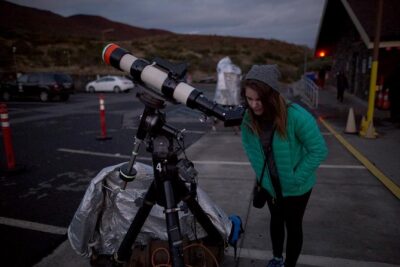
Big Island: Mauna Kea Summit and Stars Small-Group Adventure Tour
Read our review →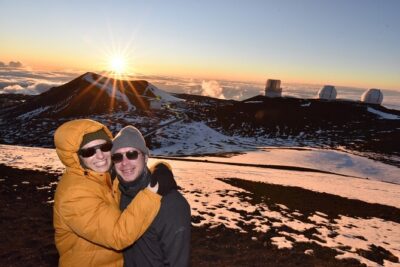
Big Island: Mauna Kea Summit Tour with Free Night Star Photo
Read our review →
Big Island Highlights: Coffee, Volcano, Black Sands & Waterfall
Read our review →
Deluxe Volcano Experience with Restaurant Dinner
Read our review →