
REVIEW · AZERBAIJAN
Gobustan, Mud volcanoes, Fire temple, Fire mountain PRIVATE TOUR
A hillside that burns without a campfire, mud volcanoes that bubble like a science experiment, and prehistoric drawings cut into stone: this tour gives you a quick, memorable look at the forces and beliefs that shaped Azerbaijan. You move from Gobustan’s ancient rock art to Zoroastrian fire worship and the oil fields around Baku.
I like the private format, which lets your guide adjust the pace and explain details rather than rushing a large group. I also like the mix of natural and cultural sights, especially the Soviet-era Lada ride to the mud volcanoes and the stop at Bibi-Heybat Mosque. The main drawback is the packed schedule and the extra entrance fees, which are not included in the $79 price.
Key points to know before booking
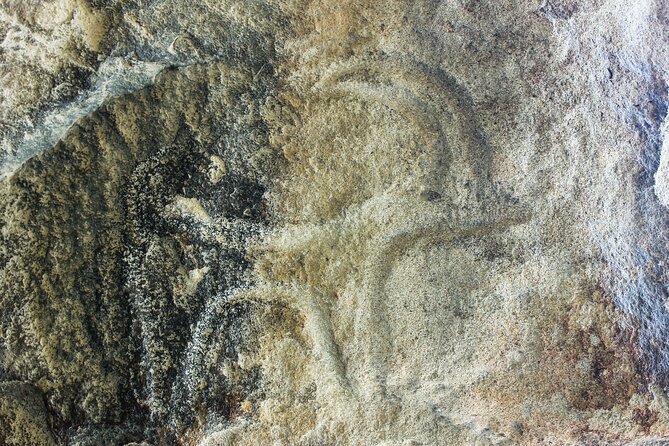
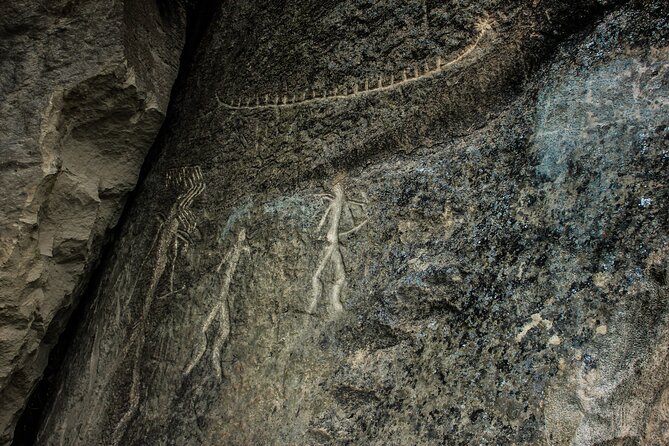
- Gobustan’s petroglyphs show hunting, boats, animals, people, and daily life carved into rock.
- Mud volcanoes are reached in a Soviet-era Lada, adding a rough-and-ready touch to the outing.
- Bibi-Heybat Mosque and nearby oil wells connect religious life with Azerbaijan’s early oil industry.
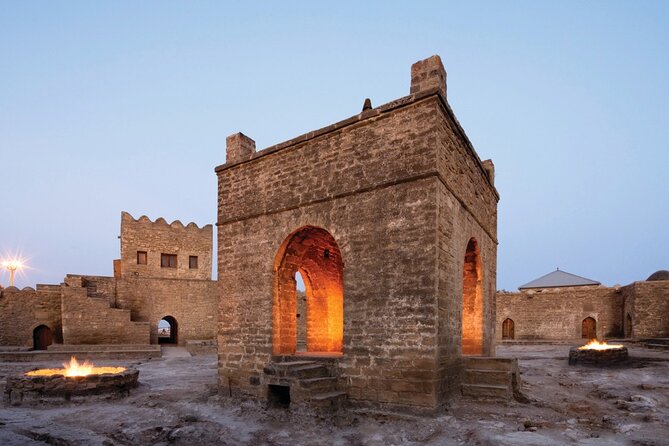
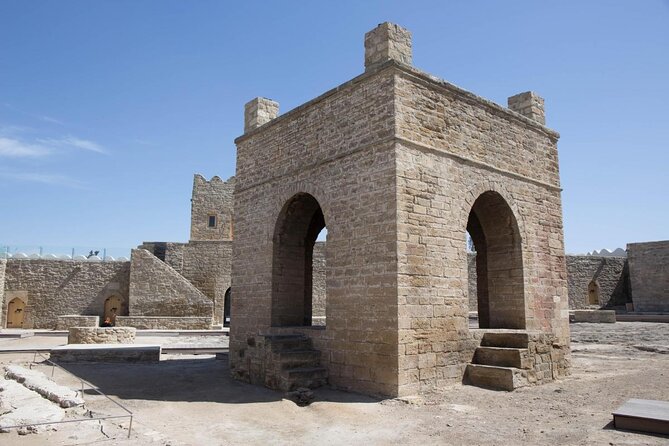
- Ateshgah Fire Temple explains the country’s Zoroastrian and Hindu connections.
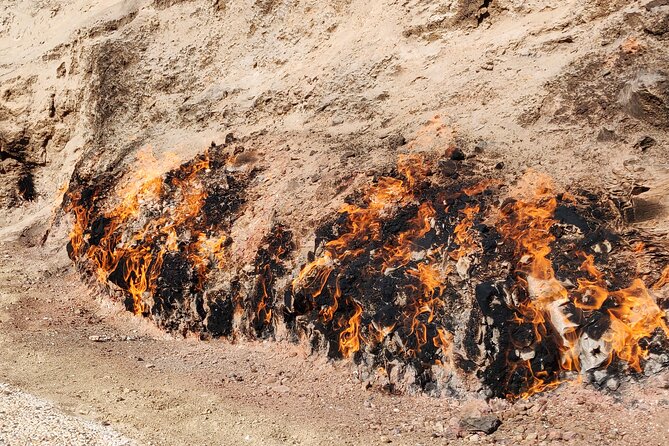
- Yanardag burns naturally on a hillside, but the fire site itself is a short visit rather than a full-day attraction.
- The $79 price covers transport, a guide, and water, but not admission tickets or lunch.
Gobustan brings prehistoric Azerbaijan into view
Your morning begins at 9:30 am from the meeting point on Aşurlu in Baku, with pickup offered as part of the service. Confirm the exact pickup arrangement before setting out, since the listed starting point is in the city and the tour ends there as well.
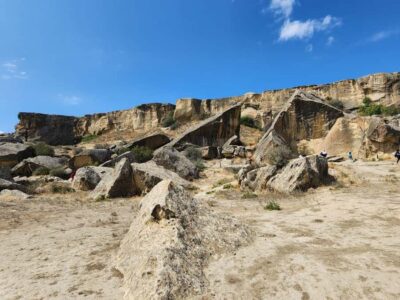
Gobustan is about 60 kilometers from Baku, roughly an hour by road. The area combines an indoor museum with an outdoor rock-art site. Plan on about an hour and 50 minutes here, including the guide’s explanation of the drawings and the surrounding archaeological setting.
The petroglyphs are the main reason to come. Ancient people carved scenes into cave walls and rock surfaces, leaving images that offer clues about work, belief, movement, and daily life. You may see figures of people and animals, hunting scenes, boats, and other marks linked to the early communities of the region.
What I value here is the way the site gives context to Azerbaijan before modern Baku, oil wealth, and grand city architecture. The drawings are not just decorative pictures. They help you think about how people lived, what they watched, and what they considered worth recording.
Your guide matters most at Gobustan. Names associated with this tour include Kamal, Abid, Valeh, Aga, Turel, and Elvin, though the guide assigned to your departure can vary. Specific praise has focused on clear explanations, archaeological knowledge, friendly conversation, and the ability to connect ancient customs with modern Azerbaijan. If you are particularly interested in archaeology, ask at booking if a guide with that background is available.
The tradeoff is that Gobustan is only one part of a long day. You get a useful introduction rather than an extended archaeological study. The admission ticket is also extra, so include that cost in your budget.
More Private Tours in Baku:
- BEST Gobustan, Volcanoes & Absheron Fire Tour (Group or Private)
★ 5.0 · 1,254 reviews - Mud Volcanoes & Gobustan tour (Group & Private)
★ 4.5 · 59 reviews - Gobustan, Mud volcanoes, Fire temple, Fire mountain PRIVATE TOUR
★ 5.0 · 47 reviews
The mud volcanoes feel like a different planet
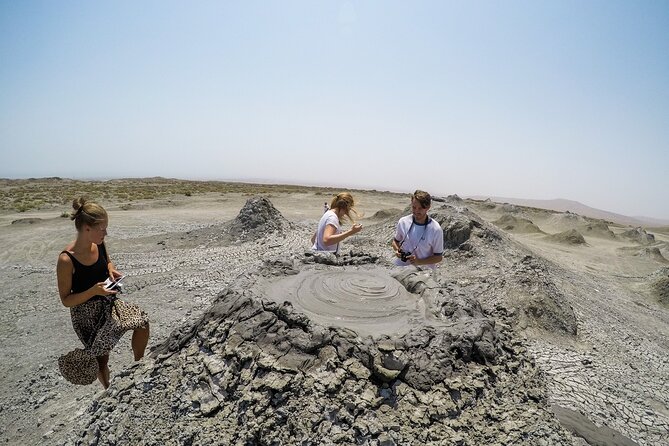
From Gobustan, the tour heads toward the coastal area where Azerbaijan has hundreds of mud volcanoes. The volcanoes are about 25 kilometers from the Gobustan preserve, and the whole section, including the road journey, takes around an hour. You spend at least 30 minutes at the site itself.
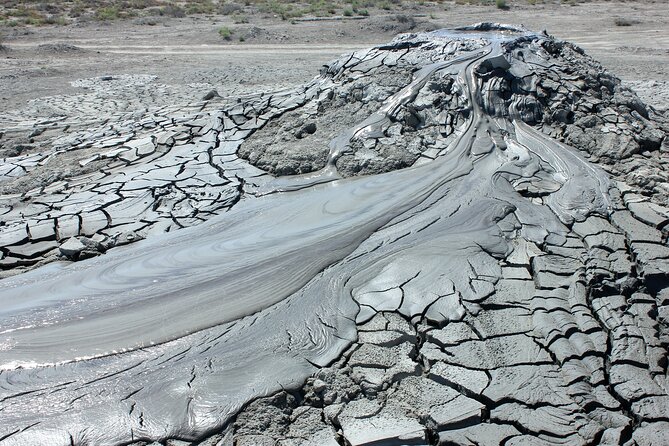
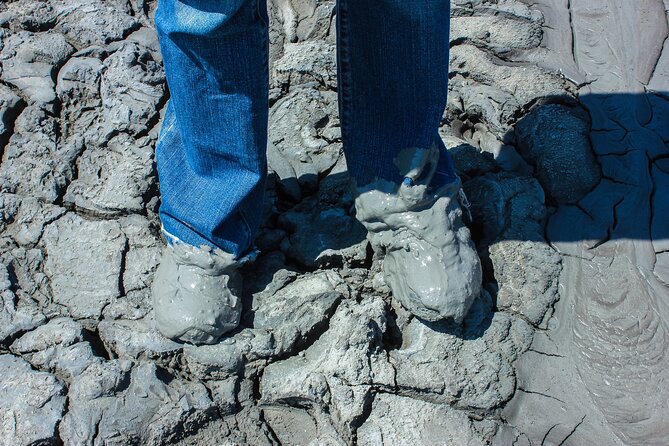
This is where the tour takes on a more unusual tone. Instead of lava and red-hot rock, you see mud, gas, and small eruptions bubbling from low cones. The ground can look stark and otherworldly, which explains the common comparison to Mars.
The ride in a Soviet-era Lada is part of the appeal. It is not polished sightseeing transport, and that is precisely why it fits this stop. The rougher vehicle helps you reach a place that feels far removed from the city, while adding a small piece of local character to the outing.
Keep expectations sensible. The volcanoes are a natural curiosity, not a dramatic show with guaranteed eruptions at a set time. Weather, ground conditions, and activity can affect what you see. Wear shoes you do not mind using outdoors, and stay close to the guide’s instructions around wet mud and uneven ground.
The stop is short, but it adds variety. After the museum and ancient carvings, you get a geological sight that seems almost comical at first, then surprisingly powerful as you watch gas and mud push through the earth. I consider it one of the tour’s most distinctive features because it is difficult to reproduce elsewhere in a standard Baku sightseeing day.
Bibi-Heybat links faith, oil, and modern Baku
After the volcanoes, the route returns toward Baku and stops at Bibi-Heybat Mosque. The visit takes about an hour and 30 minutes, including the nearby oil well area and time for lunch.
Bibi-Heybat is presented as a religious and historical stop. Your guide explains Islam in Azerbaijan and the background of the mosque, then connects the area to the country’s early oil industry. Seeing a holy site close to industrial oil remains makes the stop especially useful: it shows two forces that have shaped Baku, religious tradition and petroleum wealth, in the same part of town.
The mosque visit also breaks up the long drive. After the open terrain around Gobustan, you return to a built environment with a stronger connection to present-day Azerbaijan. Dress respectfully for the religious setting and follow any instructions given by your guide.
Lunch can be arranged at a local restaurant, or you can use a takeaway option. Azerbaijani dishes are available, but the meal is not listed as included in the tour price. Ask about the plan for lunch if you have dietary needs or want to keep the day moving.
This stop is less visually strange than the mud volcanoes and less ancient than Gobustan, but it gives the day balance. Without Bibi-Heybat, the tour would be mostly about rocks and fire. With it, you get a clearer sense of how religion, urban growth, and oil production overlap in the Baku area.
Ateshgah explains the fire connection
The afternoon continues to Ateshgah, often called the Fire Temple. The site is linked to Zoroastrian fire worship and to the Baku-based Hindu community, including people connected with Sikh traditions. The complex has a distinctive pentagonal form with an altar in the center, where worshippers once gathered.
The temple is not simply a building with an interesting name. It helps explain why Azerbaijan became known as a land of fire. Natural gas once reached the surface in parts of the Absheron Peninsula, creating flames that could burn for long periods. Those fires attracted worshippers and shaped the religious importance of places such as Ateshgah.
Your guide provides the religious and historical setting, including the role of Zoroastrians in Azerbaijan over roughly 300 years. The complex is a good place to ask questions about how fire worship, pilgrimage, trade, and different communities met around Baku.
I would allow enough time to look beyond the central altar. The building’s shape, surrounding cells, and arrangement make more sense when you understand that it served pilgrims rather than being designed only as a monument for modern visitors.
Ateshgah is one of the tour’s strongest cultural stops, but admission is extra. It is worth checking the total cost of all tickets before booking, especially if you are comparing this private outing with a cheaper group option.
A few more volcano tours around Baku worth a look
- Baku: Gobustan, Mud Volcano, Fire Mount, Temple Lunch Entry
★ 4.9 · 3,246 reviews - Baku: Gobustan, Volcanoes, Fire Temple and Yanardag Day Trip
★ 4.7 · 433 reviews - Gobustan-Mud Volcan-Fire Temple and Mountain Tour/Entrance inc
★ 5.0 · 267 reviews - Baku:Gobustan Mud Volcanoes Temple & Entry tickets included
★ 4.8 · 178 reviews
Yanardag keeps the day burning
The final major stop is Yanardag, or Fire Mountain, on the Absheron Peninsula near the Caspian Sea. Here, natural gas burns continuously on a hillside. The site is state protected, and the flame is the simple but striking focus of the visit.
Yanardag works best after Ateshgah. The temple shows how people built beliefs and pilgrimage practices around fire. Yanardag shows the natural force itself. Together, the two stops give you a clear explanation for Azerbaijan’s long association with flames.
You should keep the scale in mind. Yanardag is not a vast mountain range or an all-day wilderness visit. It is a short stop at a burning hillside, and one direct account of the experience advises keeping expectations modest while combining it with the Fire Temple. That is exactly how I would use it: as the final piece of a fire-themed afternoon, not as the sole reason to book a tour.
The planned program ends after Yanardag, followed by the return to the original meeting point in central Baku. The complete outing lasts about seven to eight hours, depending on road conditions, time at each stop, and lunch.
What the $79 price really covers
At $79 per person, this tour offers good value if you want several outlying sights in one day and prefer a private vehicle. The price includes an air-conditioned vehicle, a guide, and bottled water. A private departure also means only your own group participates, which is useful for families, couples, and small groups with different interests.
The price does not include admission to Gobustan’s mud volcano area, Gobustan Rock Art, Ateshgah, or Yanardag. Lunch is also separate. These additions may not be large individually, but they affect the final cost. Ask for the current entrance prices when booking so you can compare the full amount with other options.
The strongest value comes from the transport and the range of stops. Gobustan and the mud volcanoes are not practical to combine easily by public transport in a single day, especially if you also want Bibi-Heybat, Ateshgah, and Yanardag. You are paying for a guide who can connect the sights and for a vehicle that handles the long route.
A private tour can also become better value when shared by several people. Group discounts are offered, so the per-person cost may work well for a family or a small group of friends. If you are alone, compare the price with a group tour before deciding.
The guide can shape the whole experience
The route is fixed, but the explanations are not. The guide’s work is especially important at Gobustan, Bibi-Heybat, and Ateshgah, where the sites need context to become meaningful.
Several guides associated with the experience are described as friendly, punctual, flexible, and strong on Azerbaijani history and customs. Valeh, also written as Valah in some accounts, has been singled out for archaeological expertise, while Kamal, Abid, Aga, Turel, and Elvin have also been praised for clear explanations and helpful service.
Do not assume you will receive a particular guide unless the operator confirms it. Still, you can make your interests clear at the start. Tell your guide if you care most about archaeology, religion, oil history, photography, or local food. The private format gives you a better chance of getting useful answers than a large coach group.
The driving is another practical strength. The route covers a lot of ground, and having transport arranged keeps the day manageable. Large bags are not allowed, so bring only what you need for the outing.
Who should book this private Baku day trip?
I would recommend it to you if you want a broad introduction to the area outside Baku in one day. It suits first-time visitors who want ancient art, unusual geology, religious sites, and the famous fire locations without arranging several separate trips.
It is also a good choice for anyone who likes history but does not want a museum-only day. Gobustan and Ateshgah supply the cultural depth, while the mud volcanoes and Yanardag keep the route visually varied.
You may want another plan if you prefer slow travel. Seven or eight hours is a long day, and the schedule includes several drives. The tour gives you a taste of many places rather than hours at one site. It may also disappoint you if you expect Yanardag or the mud volcanoes to be large natural spectacles. Their appeal is unusualness, not scale.
The route works well for most participants, and the information provided says most people can take part. Weather can affect the experience, especially at the outdoor sites. If poor weather cancels the tour, you can be offered another date or a full refund.
Cancellation is free when made at least 24 hours before the 9:30 am start. Changes or cancellations inside that window are not accepted for a refund, so keep the deadline in mind.
Should you book it?
Book this tour if you want the most varied single day you can get near Baku: prehistoric carvings, bubbling mud, a mosque, an ancient fire temple, and a naturally burning hillside. The private vehicle, guide, water, and possible group discount make the $79 starting price reasonable, provided you add the entrance fees and lunch to your calculation.
Skip it if you want a quiet, slow visit or if your main interest is only Yanardag. For most first visits to Baku, though, this is a practical way to see the region’s strongest oddities and understand why Azerbaijan is linked with both ancient fire worship and modern oil wealth.
FAQ
How long does the tour last?
The tour lasts approximately seven to eight hours, including transport between Baku and the various sites.
What time does the tour start?
The scheduled start time is 9:30 am.
Where does the tour start and end?
The listed meeting point is on Aşurlu in Baku. The tour ends back at the original meeting point in the city center.
Is hotel pickup available?
Pickup is offered, but you should confirm the exact pickup arrangement and location before the tour.
Is this a private tour?
Yes. Only your own group participates in the private activity.
What is included in the price?
The price includes an air-conditioned vehicle, a guide, and bottled water.
Are entrance tickets included?
No. Entrance fees for Gobustan Mud Volcanoes, Gobustan Rock Art, Ateshgah Fire Temple, and Yanardag are not included.
What happens if bad weather cancels the tour?
If poor weather causes cancellation, you will be offered another date or a full refund.
Just added around Baku
- Gobustan Rock Art & Mud Volcanoes Tour★ 5.0 · 36 reviews
- Qobustan rock arts, Mud Volcanoes, Fire temple Ateshgah, Yanardag★ 5.0 · 30 reviews
- Mud Volcanoes & Gobustan Private Tour★ 5.0 · 9 reviews
- Gobustan National Park & Mud Volcanoes Tour★ 5.0 · 17 reviews
- Gobustan and Mud volcanoes PRIVATE TOUR★ 4.5 · 12 reviews
- Gobustan and Mud volcanoe GROUP TOUR★ 5.0 · 13 reviews
- Mud Volcanoes & Gobustan tour (Group & Private)★ 4.5 · 59 reviews
- Gobustan Rock Art and Mud volcanoes PRIVATE TOUR★ 5.0 · 9 reviews
Azerbaijan Volcano Tours, compared.
Baku: Gobustan, Mud Volcano, Fire Mount, Temple Lunch Entry
Read our review →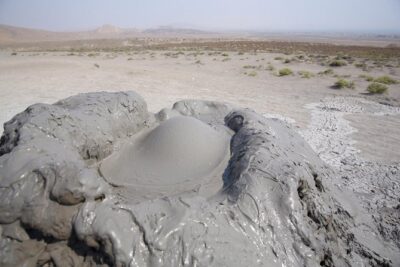
BEST Gobustan, Volcanoes & Absheron Fire Tour (Group or Private)
Read our review →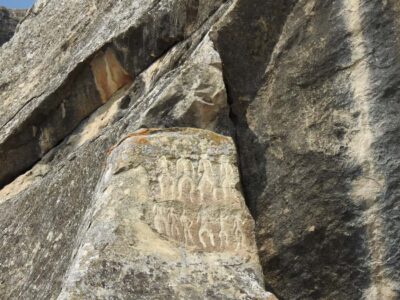
Baku: Gobustan, Volcanoes, Fire Temple and Yanardag Day Trip
Read our review →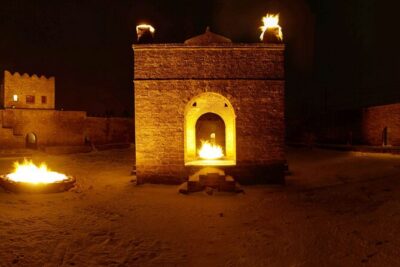
Gobustan-Mud Volcan-Fire Temple and Mountain Tour/Entrance inc
Read our review →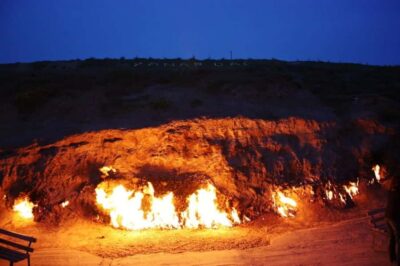
Baku:Gobustan Mud Volcanoes Temple & Entry tickets included
Read our review →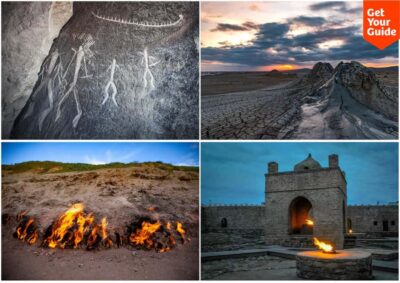
Baku: Gobustan/Absheron guided tour with lunch and tickets
Read our review →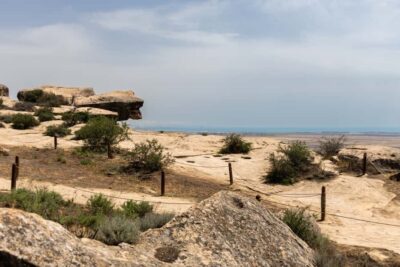
Baku: Half-Day Gobustan and Mud Volcanoes Tour with Entry
Read our review →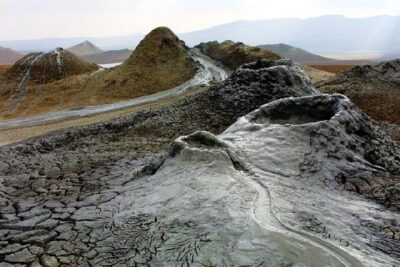
Browse the lists this tour appears in