REVIEW · REYKJAVIK
Reykjavík: Volcano Eruption Site and Reykjanes Hiking Tour
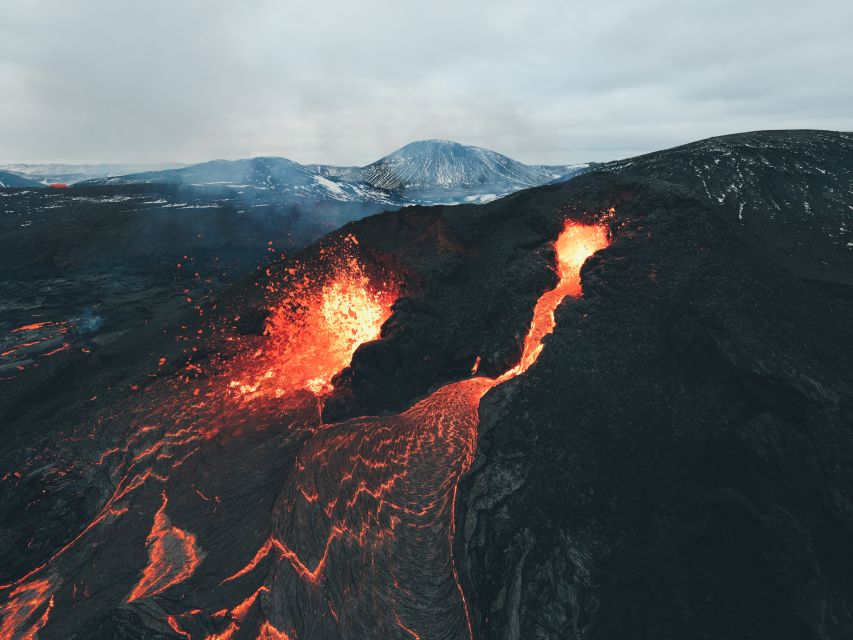
The most memorable part of this day is the walk toward recent volcanic lava fields near Geldingadalur, Meradalir, and Fagradalsfjall. You are not simply looking at an old crater from a roadside viewpoint. You walk across raw ground shaped by Iceland’s latest eruptions, with the possibility of seeing smoking lava, warm rock, or fresh geothermal activity, depending on conditions and access.
I like the excellent mix of geology and scenery, especially the black shore of Lake Kleifarvatn and the steam-filled ground at Gunnuhver. I also like the way the guides, including Omar, Ottar, HBO, Colin, and James, add local stories and practical safety advice. The drawback is clear: the hike takes about two hours each way and can become hard work in wind, rain, ice, or poor visibility.
Key points to know before booking
- The volcano hike is the main event: Plan on roughly two hours each way over uneven ground.
- The route can change: Your guide will choose the safest available viewing point rather than promise a fixed route.
- The volcano area is still active: As of the August 9 update, new lava at Litli-Hrutur had stopped, but the area was still smoldering.
- You get a full Reykjanes circuit: The day also includes Kleifarvatn, Seltún, Gunnuhver, Reykjanes Lighthouse, and the Bridge Between Continents.
- Weather matters greatly: Bring hiking shoes, rain gear, water, and a packed lunch. Jeans are a poor choice.
- This suits fit walkers, not casual sightseers: Children under 12 and people with mobility impairments cannot join.
Why the Reykjanes volcano hike is worth your day
At $126 per person, this is not a cheap quick outing. It is a full nine-hour excursion with transport from Reykjavík, a guide, several major sights, and a substantial hike that would be difficult to organize safely on your own.
I see the value in the combination. A self-drive day could reach the same peninsula, but you would need to watch road conditions, understand changing volcano access, find each stop, and judge how close you can safely approach the active ground. Here, the guide handles the driving and adjusts the route when conditions shift.
The strongest part is the contrast between old and new Iceland. You see ancient moss-covered lava fields, boiling mud, a black volcanic lake, sea cliffs, and very recent lava in one day. That gives the peninsula a sense of ongoing change. The earth here is not a museum exhibit behind glass.
The experience also depends heavily on the guide. Omar is praised for humor and clear explanations, while Ottar is described as upbeat and good at keeping the group together. HBO has been noted for Icelandic stories, geology, and music, and Colin has shown good judgment when high winds made the planned route unsafe. These details matter because a long hike feels much better when the person leading it explains what you are seeing and watches the group’s pace.
More Lava and Eruption Tours in Iceland
- Reykjavik: LAVA SHOW – Immersive Experience Entry Ticket
★ 4.8 · 3,360 reviews - Lava Show Reykjavik Admission Ticket – Optional Premium Upgrade
★ 5.0 · 3,278 reviews - Reykjavik: Red Lava Horse Riding Tour
★ 4.8 · 2,383 reviews
From Reykjavík to black sand at Kleifarvatn
Pickup is available from selected hotels, official central bus stops, and the cruise port. Some central streets cannot be reached by tour buses, so you may be sent to a nearby official stop. The meeting information identifies bus stop number 12, where you should look for a BusTravel Iceland jacket or vest, the company bus, and a tour sign.
The first drive takes about 40 minutes. Your first major stop is Lake Kleifarvatn, the largest lake on the Reykjanes Peninsula. Its black beach and bare mountains give you an early taste of the area’s volcanic character.
The lake is especially useful as a visual introduction. You can see how stark Iceland can look before reaching the more dramatic eruption zone. Underwater hot springs add another geological detail, although you should not expect a long visit. The scheduled photo stop is about 10 minutes, enough for pictures and a quick look rather than a lakeside walk.
After that comes the Seltún Geothermal Area, with roughly 15 minutes for viewing and walking. Here the ground is marked by geothermal color, steam, and hot earth. It prepares you for Gunnuhver later in the day, but on a smaller scale.
These early stops are brief. That is helpful if the volcano hike is your priority, but it also means you should not expect leisurely time at either site. Keep your camera ready and listen for the guide’s explanation before the group moves on.
The long walk toward Geldingadalur and Litli-Hrutur
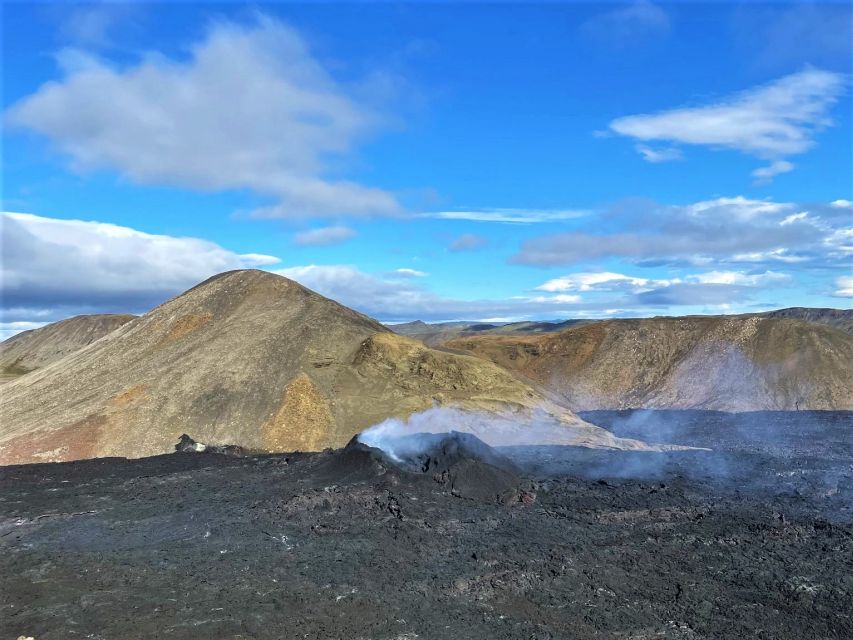
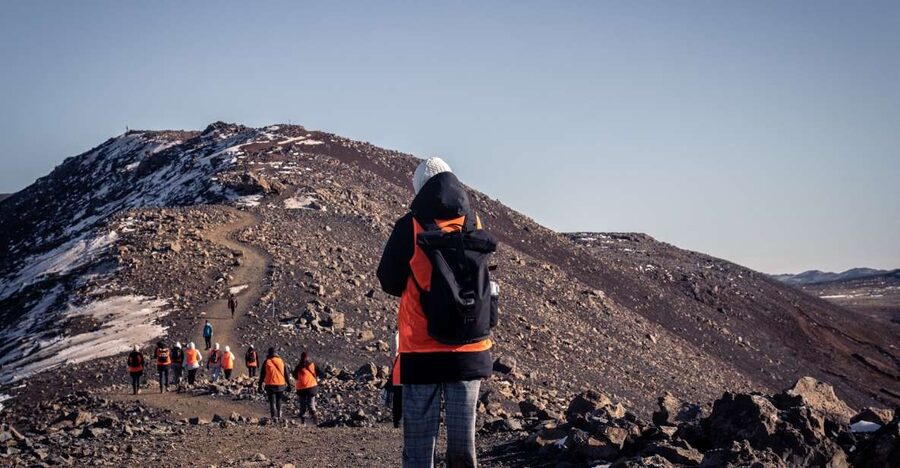
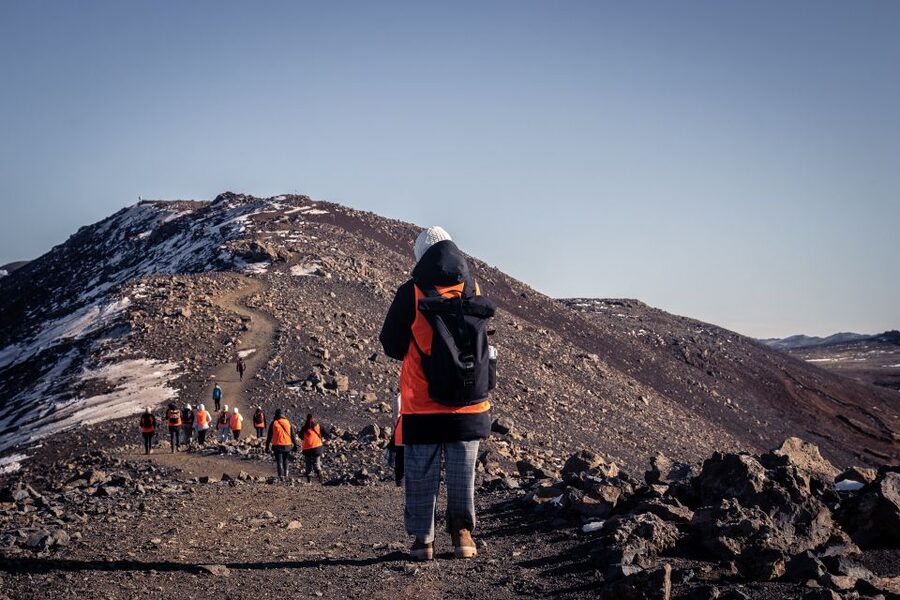
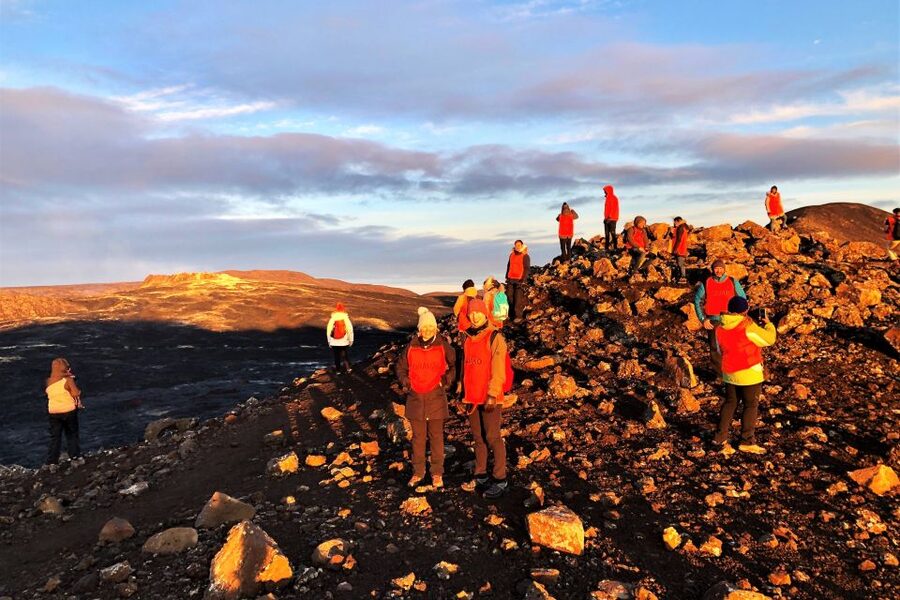
The hike is the heart of the outing. The route heads toward the eruption areas near Meradalir and Fagradalsfjall, with Litli-Hrutur to the north of Meradalir. The listed hiking and sightseeing time is about three and a half hours, while the practical warning is more specific: expect around two hours each way to the volcanic area.
That is a serious walk. The route can involve rough ground, changing weather, wind, snow, ice, and limited visibility. One person described the hike as relatively easy when the path was clear, while others found it demanding. Both impressions can be true. Your experience depends greatly on the day, your footwear, and how comfortably you walk for several hours.
You do not need to be an athlete, but you should be able to walk a reasonable distance without trouble. The tour is not suitable for people with mobility impairments, and children under 12 are excluded. A guide may keep a steady pace and help the group stay together, but this is not a gentle stroll with frequent cafés and benches.
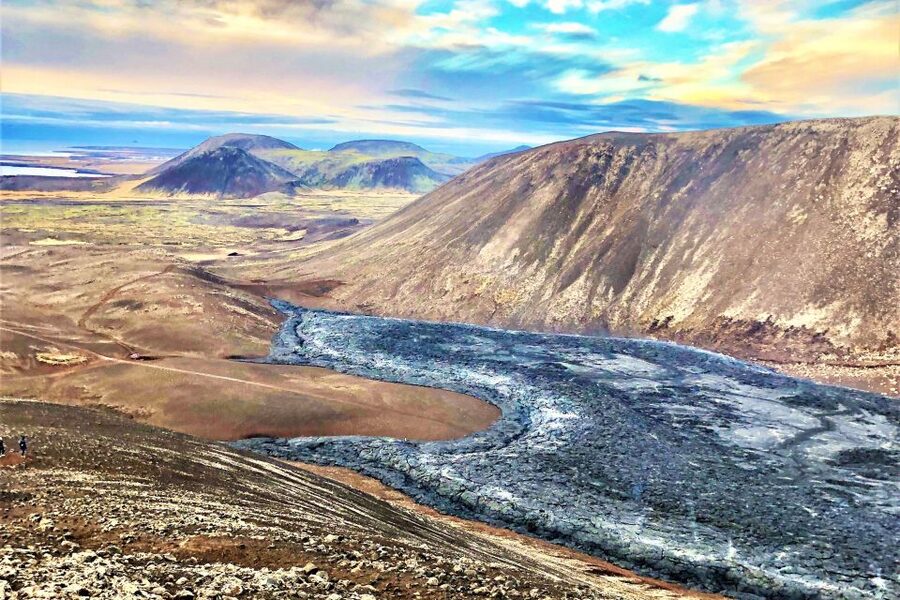
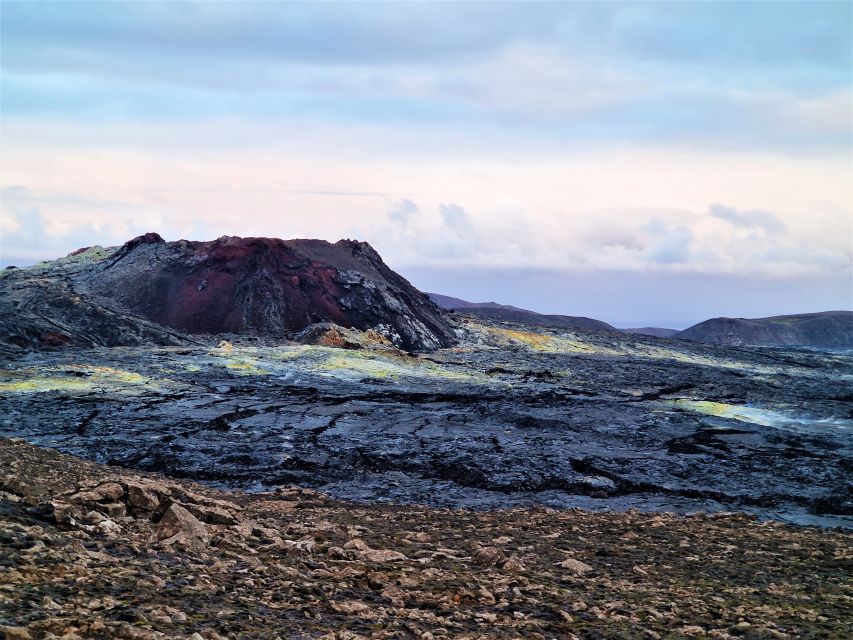
The reward is the ground itself. Recent lava has a rough, black, folded texture unlike the soft green moss covering older flows. You may see solidified rivers of lava, fresh formations, warm rock, or small signs of geothermal activity. Some departures have seen active eruption, while other visits have found the flow stopped and the area still smoldering. No eruption can be promised, and the safest viewing point may be some distance from the most recent activity.
That uncertainty is part of the experience. Volcanic access can change quickly, and the guide may use a different route from the one described. In September, one group turned back because high winds made it unsafe, then visited a nearby valley and recent lava fields instead. That is exactly the kind of change you should accept when booking a volcanic hike.
Eat your packed lunch during this section. Food and drinks are not included, and there is no indication of a café at the eruption site. Carry enough water for the full walk, not just a small bottle for the bus.
What the recent lava reveals
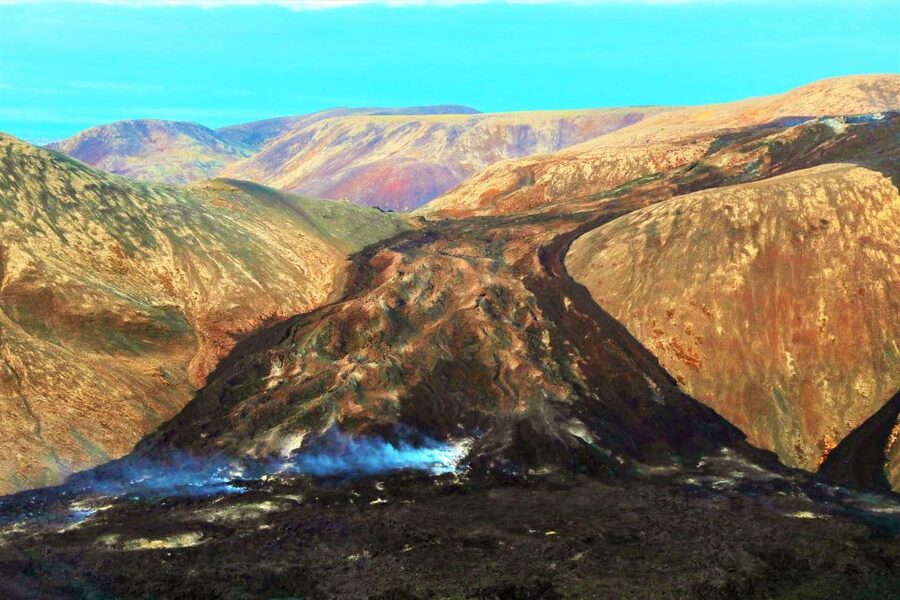
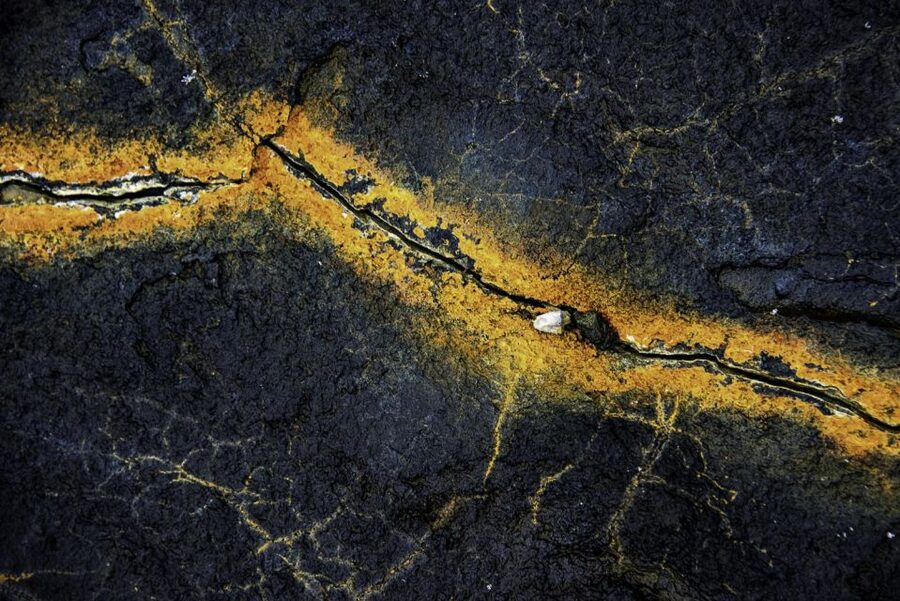
A visit here is most rewarding if you pay attention to scale. A lava field can look like a pile of dark rocks from a distance, but close up it records the path of the molten flow. Ridges, bubbles, cracks, and twisted surfaces show how the material cooled.
The recent eruptions also make the visit feel immediate. You are not only learning about eruptions that happened centuries ago. You are seeing places altered within the past few years. The exact condition of the lava changes over time, so the appearance of the site may differ from photographs taken during an earlier eruption.
As of the supplied August 9 update, the new lava flow at Litli-Hrutur had stopped, though the area was still smoldering. Treat that information as a snapshot, not a guarantee for your departure date. Your guide will decide what is safe and what can be seen.
This is where a good guide adds real value. The better guides explain the volcanic activity without turning the day into a technical lecture. They also connect geology with daily life in Iceland, including the fact that people live and work around ground that can change beneath them.
More Lava and Eruption Tours in Reykjavik
- The Lava Tunnel Tour – Raufarhólshellir
★ 5.0 · 2,373 reviews - From Reykjavík: Icelandic Horse Riding Tour in Lava Fields
★ 4.7 · 1,356 reviews - Reykjavik: Snæfellsnes Day Trip with Vatnshellir Lava Cave
★ 4.7 · 1,108 reviews - From Reykjavik: Raufarhólshellir Lava Tunnel by Bus
★ 4.6 · 793 reviews
Gunnuhver: steam, mud, and a smell of sulfur
After the hike, the tour continues through the Reykjanes Geopark to Gunnuhver Hot Springs. The visit is short, about 10 minutes, but the area is intense. Bubbling mud pots and hissing steam vents show that heat remains close to the surface.
You may notice the sulfur smell before you reach the viewing area. That is normal for geothermal ground, but stay on marked paths and follow instructions. Hot mud and steam are not harmless photo props.
Gunnuhver works well after the volcano hike because it shows a different kind of volcanic activity. The eruption site presents solidified lava and large-scale change. Gunnuhver shows heat escaping in smaller, noisier, more concentrated forms.
Reykjanes Lighthouse and the Atlantic edge
The Reykjanes Lighthouse stop lasts about 20 minutes. The lighthouse is described as Iceland’s oldest, and its setting gives you a welcome change from the inland volcanic ground.
Here, the Atlantic is the main force. At Valhnúkamöl Boulder Ridge, waves have shaped cliffs and sea stacks along the coast. The air is sharp and open, and the view gives the day a sense of scale after hours spent looking down at rocks and steam.
This is another brief stop, so use the time well. Walk, take photographs, and watch your footing near exposed ground. The coast can be windy even when Reykjavík feels calm.
Crossing the rift at the Bridge Between Continents
The final sightseeing stop is the Bridge Between Continents, a 15-meter footbridge over a rift between the Eurasian and North American tectonic plates. You can walk across it and take the expected photograph with one foot on each side.
The bridge is a simple structure, but the idea behind it is memorable. The Reykjanes Peninsula sits in a zone where the plates are moving apart, and the crack is a visible reminder that Iceland is still being shaped by geological forces.
Do not expect a long walk here. The stop lasts about 20 minutes and is mainly for viewing, photographs, and a short explanation. It is a fitting final stop because it turns the day’s geology into something you can physically cross.
Transport, timing, and the feel of the day
The total excursion lasts about nine hours. There is a 40-minute outbound drive and a 70-minute return journey in the stated schedule, with the rest divided among the stops and the hike.
Transport is by bus or coach, with onboard WiFi and pickup and drop-off included. Several people have found the ride comfortable, while one person described parts of the driving as bumpy. Expect Icelandic roads and access tracks, not a perfectly smooth city transfer.
The number of passengers can vary. Some departures have felt small and personal, while others include people with a wide range of ages and walking speeds. That variety can be pleasant, but it may also affect the pace. Be on time at pickup because a late start can squeeze the hiking or sightseeing schedule.
Guides are central to the experience. Their style varies, but the strongest pattern is clear: the guide explains the geology, shares Icelandic stories, drives, watches safety, and adjusts the plan. One useful criticism concerned microphone volume at the back of the bus, so sit near the front if hearing every explanation matters to you.
The tour returns to a wide range of Reykjavík drop-off points, including the BSÍ Bus Terminal, Hallgrímskirkja, Harpa, City Hall, Perlan, selected hotels, and official bus stops. Confirm your exact pickup and drop-off details after booking, especially if you are arriving by cruise ship.
What to wear and carry for the hike
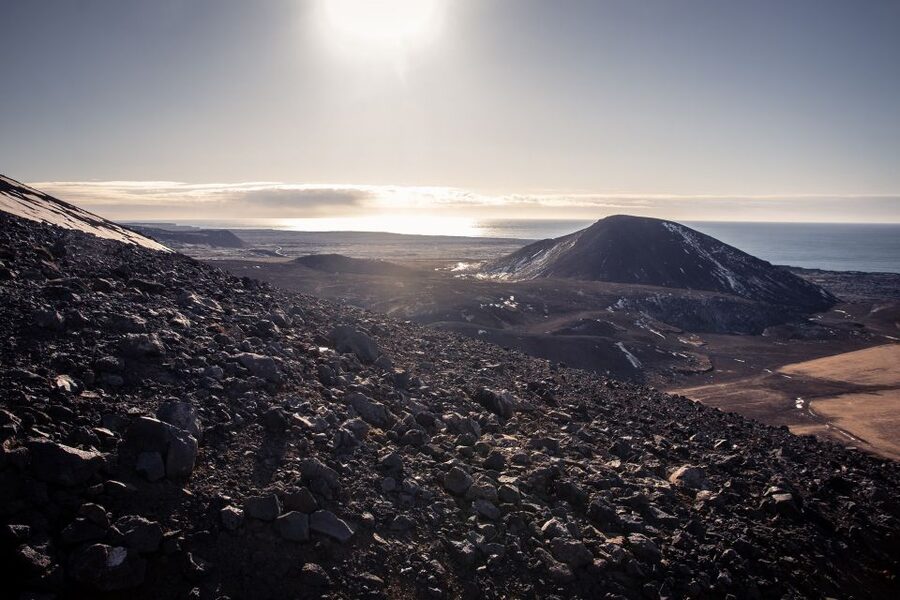
Take the preparation warning seriously. Weather on the peninsula can shift quickly, and the hike is exposed.
Bring:
- Hiking shoes with good grip
- Water
- A packed lunch
- Waterproof rain gear
- Warm layers
- A headlamp if required
- Clothing that lets you walk comfortably
Jeans are specifically discouraged. They become cold and uncomfortable when wet, and they do not help on a long walk over rough or icy ground.
In winter, ice can make the path much harder. Some departures have used traction equipment under shoes, while others have faced snow and slippery sections. Ask the guide what is available, but do not rely on borrowed equipment to replace proper footwear.
The supplied details say a headlamp is included if required. That is useful during darker departures, but you should still dress for cold and low visibility rather than assuming the light solves every problem.
Who should book this Reykjanes tour?
I would choose this tour if you want volcanic ground to be the main attraction and you also want the convenience of a guide and bus. It suits people who enjoy walking, outdoor weather, geology, and a full day with several short stops.
It is also a good choice if you are uneasy about visiting an eruption area alone. The route can change, and a guide can make a safer call when wind, ice, or volcanic conditions alter the plan.
I would not choose it for a relaxed sightseeing day. The hike is long, the stops are fairly short, and the weather can make the walk tough. If you mainly want a lighthouse, hot springs, and a few photographs, a shorter Reykjanes outing may fit better.
The $126 price feels fair if you make full use of the day. You receive transport, pickup, a guide, WiFi, and access to a difficult-to-organize volcanic area, plus five other major stops. Bring your own lunch and gear, and remember that the most dramatic sight, active lava, is never guaranteed.
Should you book it?
Book this tour if you can comfortably walk for four hours, accept a route that may change, and want to see Iceland’s newest volcanic ground rather than only its famous waterfalls and lagoons. The volcano hike is the reason to go, while Kleifarvatn, Gunnuhver, the lighthouse, and the tectonic bridge make the long day feel complete.
Skip it if you need easy access, indoor comfort, or a guaranteed eruption. For the right person, this is one of the most direct ways to feel the Reykjanes Peninsula as a living volcanic region, not just a collection of scenic stops.
FAQ
How long is the Reykjavík volcano and Reykjanes tour?
The tour lasts about nine hours, including transport, the volcano hike, and sightseeing stops around the Reykjanes Peninsula.
How long is the hike to the eruption area?
The walk takes around two hours each way. The route and final viewing point can change according to weather, volcanic conditions, and safety.
Is the volcano still erupting?
The supplied August 9 update says that new lava at Litli-Hrutur had stopped for the time being, although the area was still smoldering. Eruptions and access conditions can change, so active lava is not guaranteed.
What should I bring?
Bring comfortable hiking shoes, water, rain gear, warm clothing, and a packed lunch. Jeans are not recommended. A headlamp is provided if required.
Are children allowed on the tour?
Children under 12 are not permitted. The hike is moderate to hard and is not suitable for people with mobility impairments.
Where does pickup take place?
Pickup is available from selected hotels, official bus stops in central Reykjavík, and the cruise port. The listed meeting point is bus stop number 12. Confirm your exact pickup instructions with the provider after booking.
More Volcano Hikes and Treks in Reykjavik
- Small Group Volcano Hike with a Professional Geologist
★ 4.5 · 142 reviews - Volcano Hike and Blue Lagoon Including Admission Small Group Tour
★ 4.5 · 139 reviews - Volcano Hike and Grindavík Visit from Reykjavik
★ 4.5 · 120 reviews - Landmannalaugar, Hekla, Sigoldugljufur 4×4 tour with Hiking
★ 4.5 · 37 reviews
More Volcano Hikes and Treks in Iceland
- Reykjavík: Guided Afternoon Hiking Tour to New Volcano Site
★ 4.4 · 934 reviews - From Reykjavík: Fagradalsfjall Volcano Hike with Geologist
★ 4.8 · 780 reviews - Iceland Hiking Tour to Fagradalsfjall Volcano with Local Guide
★ 5.0 · 573 reviews - Reykjavik: Thrihnukagigur Volcano Guided Hiking Day Trip
★ 4.9 · 564 reviews
Just added around Reykjavik
- Small Group Golden Circle Tour w/ Kerid & Tomato Farm Visit★ 4.5 · 13 reviews
- Reykjavik: Volcano Express Entry Ticket at Harpa★ 4.4 · 62 reviews
- Reykjavík: Volcano Hike, Visit Grindavík and Blue Lagoon★ 4.5 · 19 reviews
- Reykjavik: Whale Watching in Faxaflói Bay & Live Lava Show★ 4.4 · 29 reviews
- Reykjavik: Small-Group Horse Volcano Riding Tour with Pickup★ 4.7 · 196 reviews
- Golden Circle & Kerid Crater Small Group Tour from Reykjavik★ 4.7 · 22 reviews
- Reykjavik: Silfra Snorkeling & Lava Tunnel Adventure Combo★ 4.6 · 205 reviews
- Reykjavik: Lava Field Buggy Adventure★ 4.9 · 23 reviews
Reykjavik Volcano Tours, compared.
Reykjavik: Golden Circle Full-Day Tour with Kerid Crater
Read our review →
From Reykjavik: Golden Circle, Kerid, & Secret Lagoon Tour
Read our review →
Small-Group Golden Circle, Blue Lagoon with Ticket & Kerid Crater
Read our review →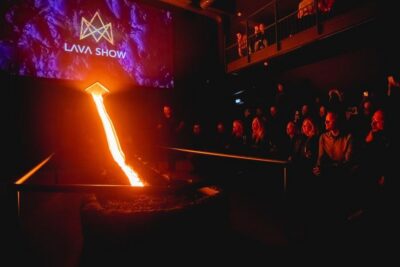
Reykjavik: LAVA SHOW – Immersive Experience Entry Ticket
Read our review →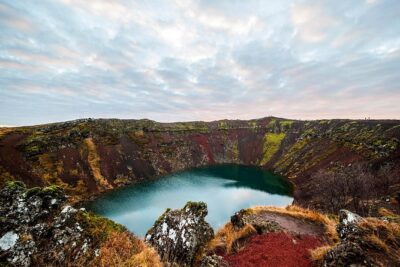
Golden Circle with Kerid Volcanic Crater Day Tour from Reykjavik
Read our review →