
REVIEW · REYKJAVIK
From Reykjavik: Raufarhólshellir Lava Tunnel by Bus
Raufarhólshellir is the kind of place that makes Iceland’s volcanic past feel close enough to touch. You walk through the path of lava from the Leitahraun eruption roughly 5,200 years ago, beneath a ceiling broken by skylights and along walls streaked with mineral colors. The cave feels raw and physical, not like a polished museum exhibit.
I like the tidy three-hour schedule and the fact that transport from Reykjavik is handled by bus. I also like the guides’ mix of geology and humor. Alex, Dimitri, and Juan are among the guides praised for turning a chilly walk into an entertaining lesson. The main drawback is the footing: parts of the tunnel are uneven, slippery, and awkward for anyone with limited mobility.
Key points to know before booking
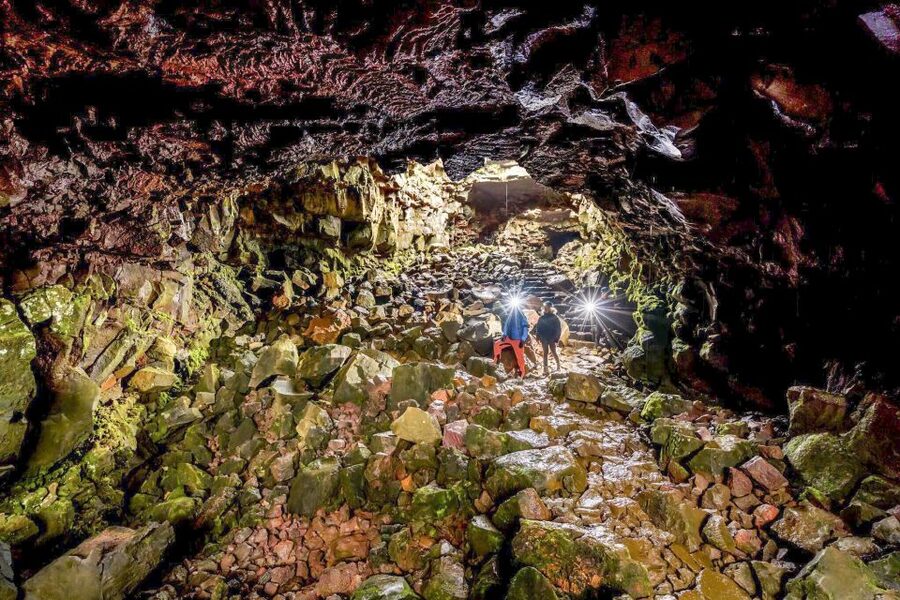
- A real lava tube: Walk about 500 meters through volcanic rock formed by an ancient lava flow.
- Light changes the cave: Skylights brighten the entrance, while electric lights and helmet lamps reveal the darker sections.
- A one-hour cave walk: The full outing lasts three hours, including the bus ride from Reykjavik and back.
- Cold, damp conditions: Wear warm layers, a waterproof jacket, gloves, and sturdy ankle-high shoes.
- Guides make the difference: Alex, Dimitri, Juan, and other English-speaking guides combine geology, safety advice, and humor.
- Good value for a short outing: At $129 per person, the price is reasonable if you want a focused half-day activity with transport included.
Why Raufarhólshellir feels different from a standard cave tour
Many Iceland excursions show you what volcanoes have built. Raufarhólshellir lets you walk inside the plumbing system that carried molten rock across the ground.
The tunnel formed when the outside of a lava flow cooled and hardened while hotter lava continued moving beneath it. When the eruption ended, the channel emptied and left a long hollow passage. You are not simply looking at a cave shaped by water. You are walking through the route of an ancient river of fire.
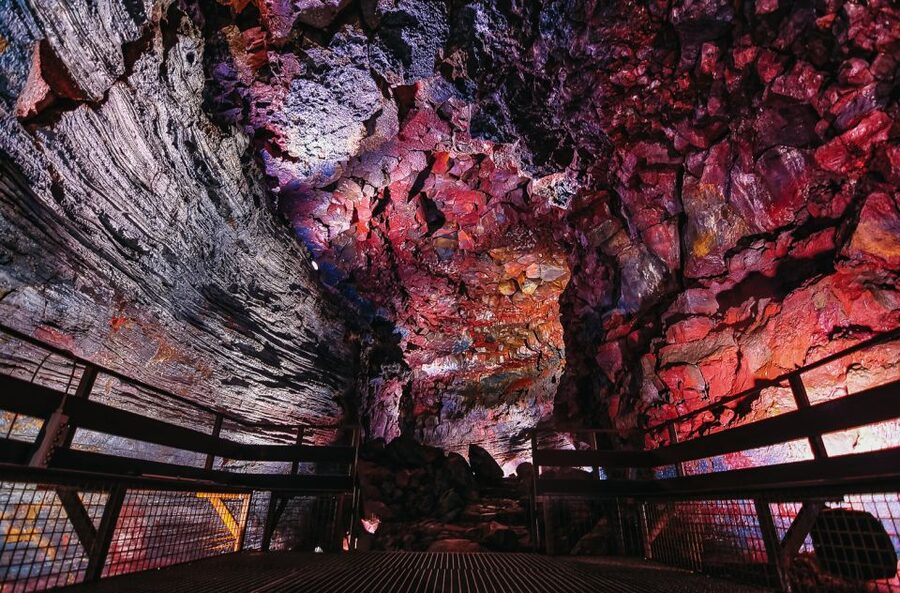
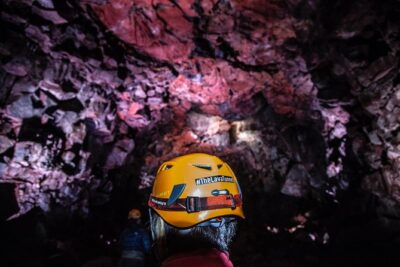
That difference gives the experience its strength. The walls are not uniform. Mineral deposits create bands and patches of red, orange, brown, black, and other muted shades. Lava formations cling to the ceiling and sides, and the collapsed roof near the entrance allows daylight to fall through in tall shafts.
The setting also has a cinematic connection. Raufarhólshellir was used as a filming location for the movie Noah, starring Anthony Hopkins. That detail adds a little Hollywood interest, but the geology is the real reason to come.
More Lava and Eruption Tours in Iceland
- Reykjavik: LAVA SHOW – Immersive Experience Entry Ticket
★ 4.8 · 3,360 reviews - Lava Show Reykjavik Admission Ticket – Optional Premium Upgrade
★ 5.0 · 3,278 reviews - Reykjavik: Red Lava Horse Riding Tour
★ 4.8 · 2,383 reviews
Leaving Reykjavik from BSI Bus Terminal
The outing begins at Reykjavik’s BSI Bus Terminal. You should arrive at least 15 minutes before departure, since the bus leaves on schedule. Hotel pickup is not included, so plan your route to BSI in advance.
The drive to the tunnel takes about 30 minutes. The climate-controlled bus gives you a dry, warm place to travel, and complimentary Wi-Fi is available on board. That matters in Iceland, where a short outdoor activity can feel much less appealing if you are already cold and wet before it begins.
The transport is simple rather than scenic in the grand touring sense. You are not spending the day crossing the country. The point is to reach the cave quickly, spend meaningful time underground, and return to Reykjavik with much of the day still available.
Some drivers have dropped people near their accommodation after the activity, but that should be treated as a bonus, not part of the promised service. The stated meeting point remains BSI Bus Terminal, and hotel pickup is not included.
Getting ready at the lava tunnel
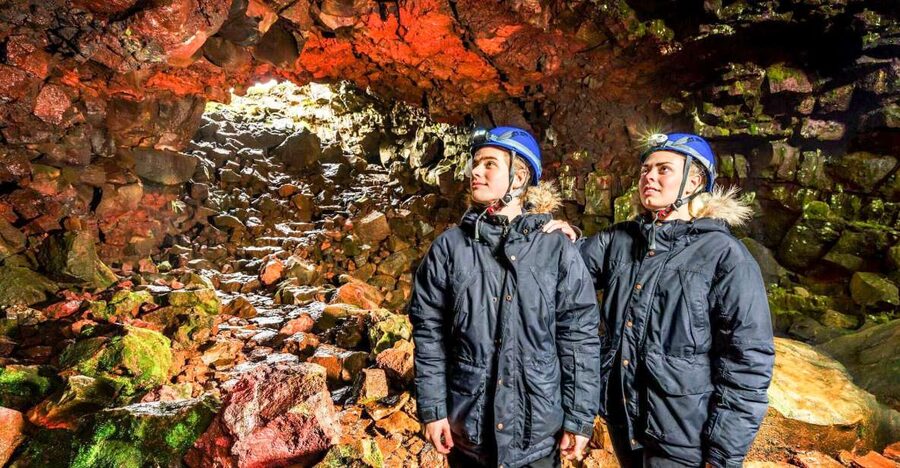
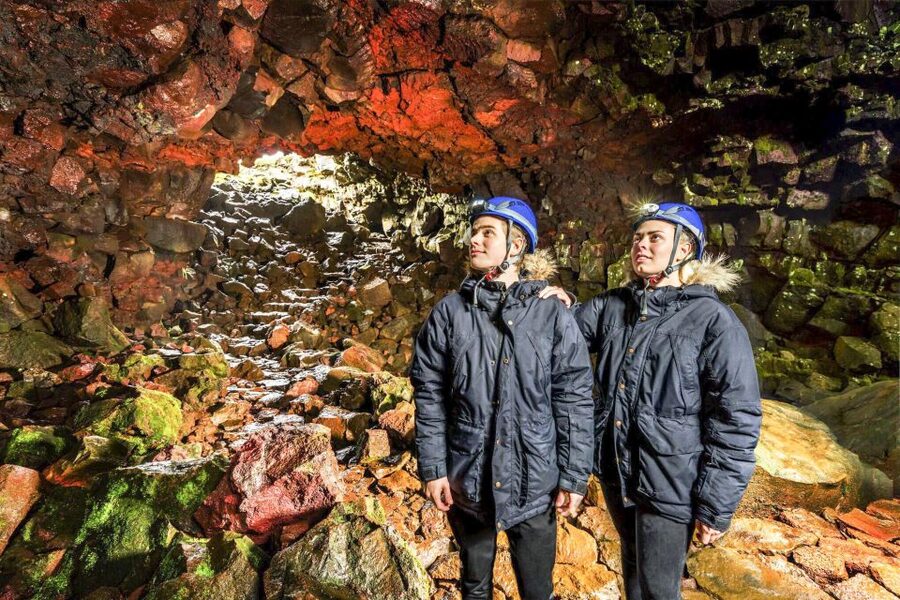
At the site, you receive a protective helmet and flashlight before entering. The helmet light becomes especially useful once the artificial lighting fades, and the equipment lets you look closely at the rock without relying only on the fixed lights inside.
Crampons and walking poles have also been available when conditions call for extra grip or support. Do not assume the ground will be easy simply because the walk lasts about an hour. Parts of the route use a raised metal walkway and stairs, but other parts cross exposed rock.
I would dress for a cold, damp environment even in summer. The tunnel gets colder farther inside, and several people have found themselves seeing their breath in July. A warm waterproof jacket, gloves, and sturdy footwear with good soles are sensible. Water can drip from the ceiling, so a normal city coat is not the best choice.
The practical rule is simple: dress for the cave, not for the temperature you see in Reykjavik when you leave.
The first section: skylights, columns, and open rock
Near the entrance, the collapsed roof creates dramatic openings where daylight enters the tube. These shafts of light illuminate rock columns and give the first part of the walk a spacious, almost cathedral-like feel.
This is also where you begin to see how the tunnel formed. The roof did not collapse everywhere, so the remaining sections retain the rounded shape of the original lava passage. The guide points out textures and colors that are easy to miss if you simply walk forward with a camera.
This first area is the easiest place to stop for photographs because the light is more generous. You can see the scale of the openings and the contrast between the pale daylight above and the dark rock below.
Your guide will explain the eruption, the cooling process, and the mineral colors in plain English. The best guides, including Alex and Dimitri according to the supplied guide information, add jokes without letting the geology become an afterthought. The tour works best when you listen for a few minutes, then take time to look closely.
More Lava and Eruption Tours in Reykjavik
- The Lava Tunnel Tour – Raufarhólshellir
★ 5.0 · 2,373 reviews - From Reykjavík: Icelandic Horse Riding Tour in Lava Fields
★ 4.7 · 1,356 reviews - Reykjavik: Snæfellsnes Day Trip with Vatnshellir Lava Cave
★ 4.7 · 1,108 reviews - Reykjavík: Volcano Eruption Site and Reykjanes Hiking Tour
★ 4.6 · 1,066 reviews
Moving farther inside, where the cave gets colder
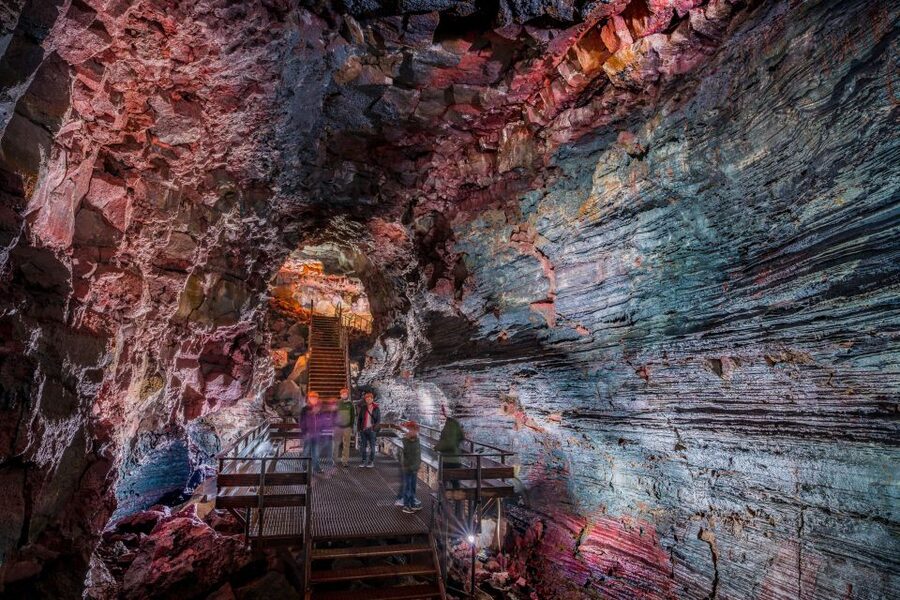
The tunnel becomes more enclosed as you continue. Electric lights reveal sections of the route, but the cave still feels dark and enclosed. The temperature drops, and the uneven floor requires more attention.
The walk covers roughly 500 meters on the standard one-hour visit. That is not a long distance, but the surface makes it more demanding than a flat city stroll. You may need to step over or around rough rock, and slippery patches can appear, especially in colder conditions.
A metal walkway makes much of the route easier. It also gives you a clear path through sections that would otherwise require more scrambling. Still, the walk is not completely smooth. If you are unsteady on your feet, walking poles can help, and you should tell the guide if you need a slower pace or extra support.
The guide keeps the group together and explains the formations along the way. Juan has been singled out for combining clear explanations with humor, while other guides have made a point of waiting for slower walkers and answering questions. That personal attention is important in a cave, where the group needs to move safely without rushing.
The two minutes of total darkness
One of the most memorable moments comes when the guide switches off the lights. For a short time, the tunnel becomes completely dark.
This is not a special effect. It is a quick lesson in how little light reaches an underground space. Your eyes do not adjust in the usual way because there is no faint glow to work with. You hear the cave and the people around you, but you cannot see the rock, the walkway, or your own hand.
Some guides invite the group to make a sound and listen to the way it carries through the tunnel. That small activity makes the cave feel less like a viewing platform and more like a living acoustic space. It is also the point where you understand why the flashlight matters.
The darkness lasts only briefly, but it gives the tour an emotional center. The colored rock is interesting, yet the absence of light is what many people remember most.
What the guides add to the experience
The cave itself is remarkable, but the guide shapes how much you take from it. A good explanation turns a wall of rough lava into evidence of temperature, flow, cooling, and mineral change.
The guide at the tunnel is separate from the bus driver, so you receive two different parts of the service. The bus staff handles the journey and basic arrival instructions. The cave guide leads the walk, manages safety, and explains the geology.
Alex is repeatedly described in the supplied material as funny, warm, and energetic. Dimitri is praised for keeping the group engaged while making sure everyone was safe. Juan is noted for adding background information without making the walk feel like a classroom lecture. Names and staff can change, but the pattern is clear: the cave guides are a major part of the value.
The English-language presentation suits most international visitors. You do not need a specialist interest in geology. The explanations cover how lava tubes form, why the rocks have different colors, and what the tunnel reveals about Iceland’s volcanic past.
How difficult is the walk?
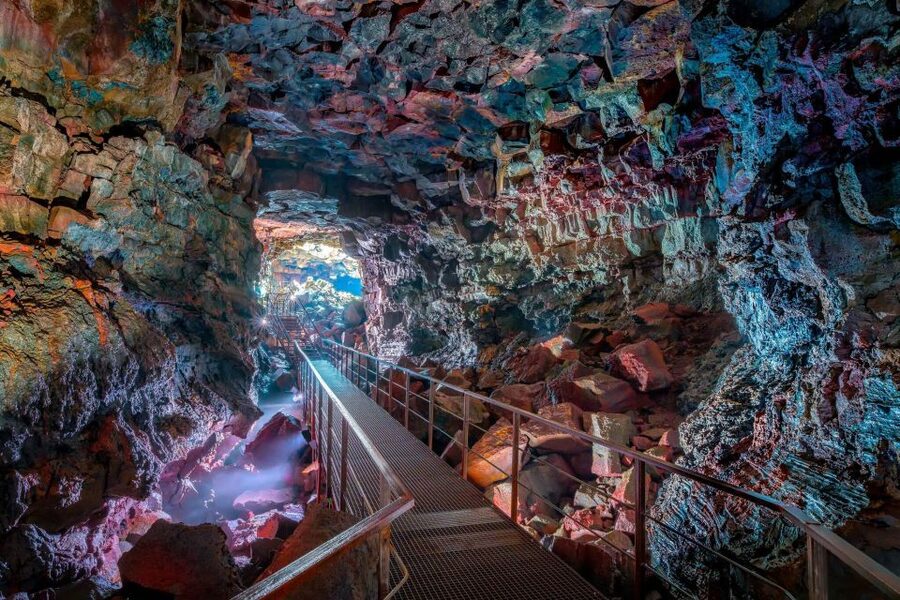
This is a short activity, but it is not fully accessible for every body. The route includes uneven rock, slippery surfaces, stairs, and some sections without a smooth walkway. A reasonable level of balance and confidence on rough ground is useful.
People with limited mobility may find parts of the route difficult or may need to turn back. The supplied equipment can include crampons and walking poles, but those tools do not remove every challenge.
Children have taken part, including an eight-year-old, but the activity provider’s rules about very young children should be checked before booking. One family received conflicting information about bringing a baby, so do not rely on assumptions. Ask directly if you plan to bring an infant.
You should also remember that this is not a warm indoor attraction. The cave is cold even during summer, and wet surfaces can make the footing less secure. Good shoes matter more than stylish clothes here.
Is $129 a fair price?
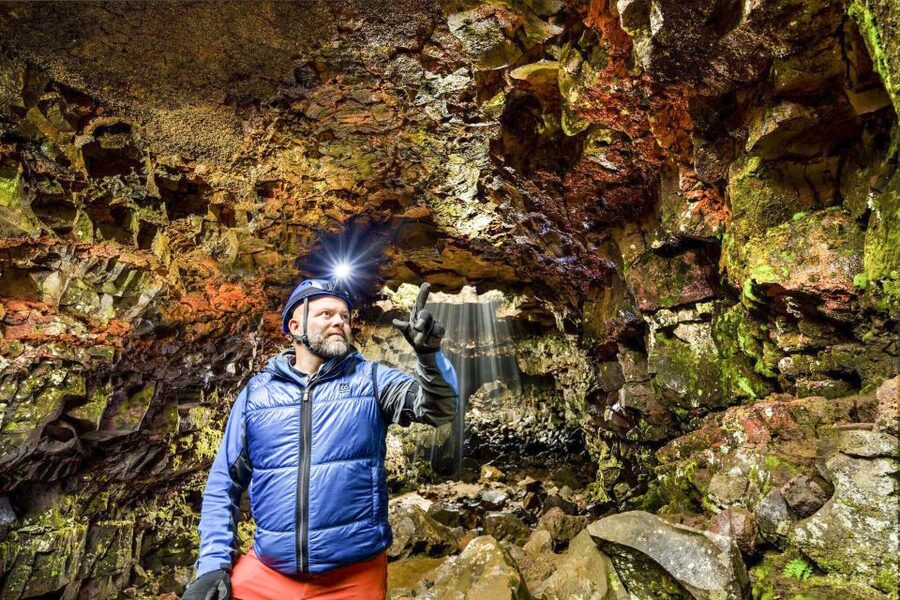
The price is $129 per person. That includes the bus from Reykjavik, the guided one-hour cave tour, helmet, flashlight, and Wi-Fi on the bus. Food and drinks are not included, and you must make your own way to BSI Bus Terminal.
The price is not cheap for a three-hour outing. You are paying for transport, equipment, a trained guide, and access to a site that would be difficult to visit as a casual stop without your own vehicle. The guided explanation also matters because the tunnel’s scientific story is easy to miss if you only walk through and take pictures.
I see the value most clearly if you have a free morning or afternoon in Reykjavik and want a focused activity rather than a full-day tour. If you already have a rental car and prefer to explore independently, the included bus transport may feel less important. If you want an easy, organized way to visit a major lava tube, the package is more convincing.
The one-hour standard cave walk also helps with time. You get a strong sense of the tunnel without committing an entire day underground. A longer version may be available separately, but this booking covers the one-hour guided visit.
Who should book this Reykjavik lava tunnel trip?
I would recommend it to you if you enjoy geology, unusual natural sites, photography, or short activities with a clear start and finish. It suits people who want something different from waterfalls, hot springs, and coastal viewpoints.
It is also a good fit after a long flight. One person described it as the right activity level after an overnight flight, and I understand why: the outing is active enough to feel like an adventure, but it does not take all day.
Families with older children can enjoy it, provided everyone can manage rough ground and cold conditions. You do not need technical caving experience, but you should be comfortable walking carefully over uneven surfaces.
I would think twice if you have significant mobility concerns, dislike confined spaces, or want a polished attraction with completely level flooring. The tunnel has platforms and lighting, but it remains a natural volcanic passage.
Booking and practical details
The tour lasts three hours, with about 30 minutes of travel each way and a one-hour cave walk. Starting times vary, so you need to check availability for your date.
English is the tour language, and the activity is led by a live guide. Cancellation is free up to 24 hours before departure, and the reserve-now, pay-later option can help if your Iceland schedule is still shifting.
Bring your own food and drink if you need them, since they are not included. Most important, arrive at BSI 15 minutes early, wear warm layers and sturdy shoes, and keep a waterproof outer layer within reach.
Should you book Raufarhólshellir?
Book this tour if you want to understand Iceland from the inside, not just photograph it from the roadside. The combination of ancient lava, colored mineral walls, skylights, cold air, and total darkness gives the outing more depth than its short length suggests.
At $129, it is best value for a visitor without a car who wants a reliable half-day activity from Reykjavik. The uneven footing is the main warning, so honest self-assessment matters. If you can walk carefully on rough ground and dress warmly, Raufarhólshellir is a memorable and well-contained addition to an Iceland itinerary.
FAQ
Where does the tour depart from?
The tour departs from BSI Bus Terminal in Reykjavik. You should arrive 15 minutes before the scheduled departure.
How long does the activity last?
The complete outing lasts three hours. This includes the bus journey and a guided cave tour lasting about one hour.
How far is the lava tunnel from Reykjavik?
Raufarhólshellir is about 30 minutes from Reykjavik by bus.
What equipment is provided?
The activity includes a protective helmet and flashlight. Crampons and walking poles may also be available when extra grip or support is needed.
Is the tour conducted in English?
Yes. The live tour guide speaks English.
What should I wear?
Wear warm clothing and sturdy footwear. A waterproof jacket, gloves, and shoes with good traction are especially useful because the cave is cold, damp, uneven, and sometimes slippery.
Is hotel pickup included?
No. Hotel pickup is not included. You must make your own way to the BSI Bus Terminal.
Can I cancel the booking?
You can cancel up to 24 hours before the activity for a full refund. A reserve-now, pay-later option is also available.
Just added around Reykjavik
- Small Group Golden Circle Tour w/ Kerid & Tomato Farm Visit★ 4.5 · 13 reviews
- Reykjavik: Volcano Express Entry Ticket at Harpa★ 4.4 · 62 reviews
- Reykjavík: Volcano Hike, Visit Grindavík and Blue Lagoon★ 4.5 · 19 reviews
- Reykjavik: Whale Watching in Faxaflói Bay & Live Lava Show★ 4.4 · 29 reviews
- Reykjavik: Small-Group Horse Volcano Riding Tour with Pickup★ 4.7 · 196 reviews
- Golden Circle & Kerid Crater Small Group Tour from Reykjavik★ 4.7 · 22 reviews
- Reykjavik: Silfra Snorkeling & Lava Tunnel Adventure Combo★ 4.6 · 205 reviews
- Reykjavik: Lava Field Buggy Adventure★ 4.9 · 23 reviews
Reykjavik Volcano Tours, compared.
Reykjavik: Golden Circle Full-Day Tour with Kerid Crater
Read our review →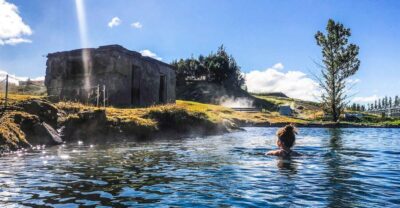
From Reykjavik: Golden Circle, Kerid, & Secret Lagoon Tour
Read our review →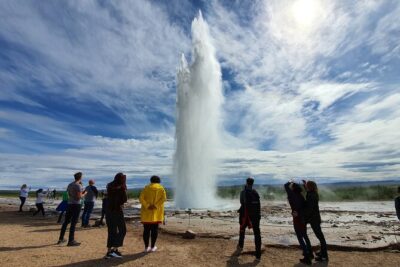
Small-Group Golden Circle, Blue Lagoon with Ticket & Kerid Crater
Read our review →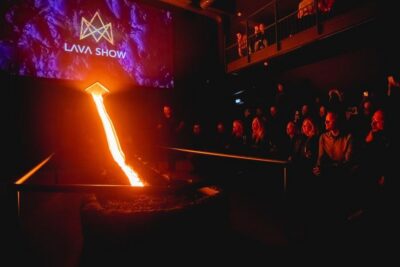
Reykjavik: LAVA SHOW – Immersive Experience Entry Ticket
Read our review →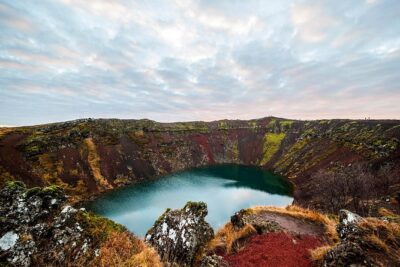
Golden Circle with Kerid Volcanic Crater Day Tour from Reykjavik
Read our review →
Golden Circle, Volcano Crater and Blue Lagoon Small-Group Tour
Read our review →Browse the lists this tour appears in