
REVIEW · LA PALMA
La Palma: Tour to the new Tajogaite volcano 360º.
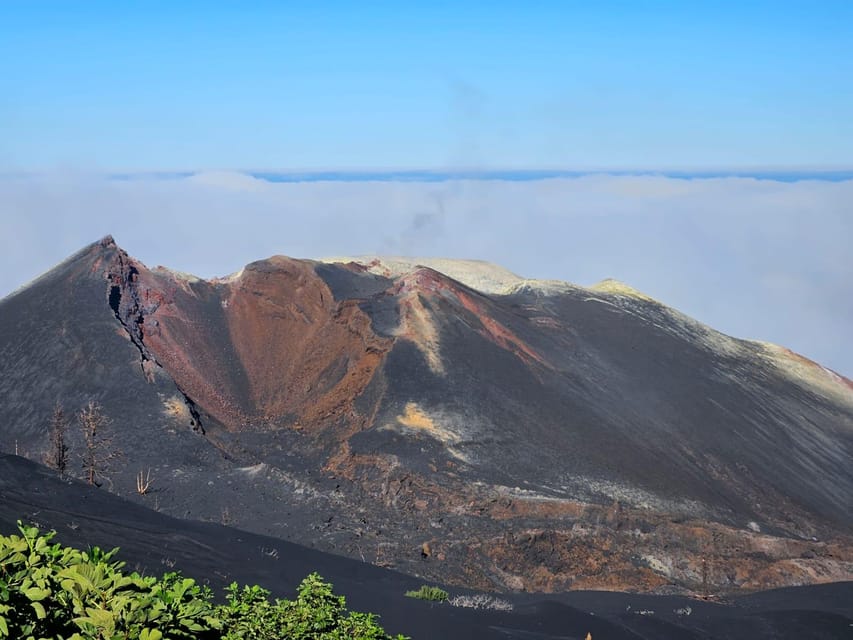
Tajogaite is still a young volcano, and this new 360-degree trail lets you walk from its north side to its south side rather than viewing it from a distance. The route passes over ash and lapilli, approaches the crater, and ends in Las Manchas, one of the places most affected by the September 2021 eruption.
I like the close crater views and the way the walk shows nature recovering, from fig and chestnut trees returning near the rim to Canary pines pushing back across the black ground. I also like the guides’ strong focus on volcanic science. Henry, in particular, has earned praise for clear explanations in German and for making the subject easy to follow.
The catch is the fitness requirement. Although the route is mostly downhill, it is still a medium to high-level hike on loose volcanic material. You should also allow more than the advertised three hours, since the practical information describes the hike as roughly three to three and a half hours.
Key points to know before you book
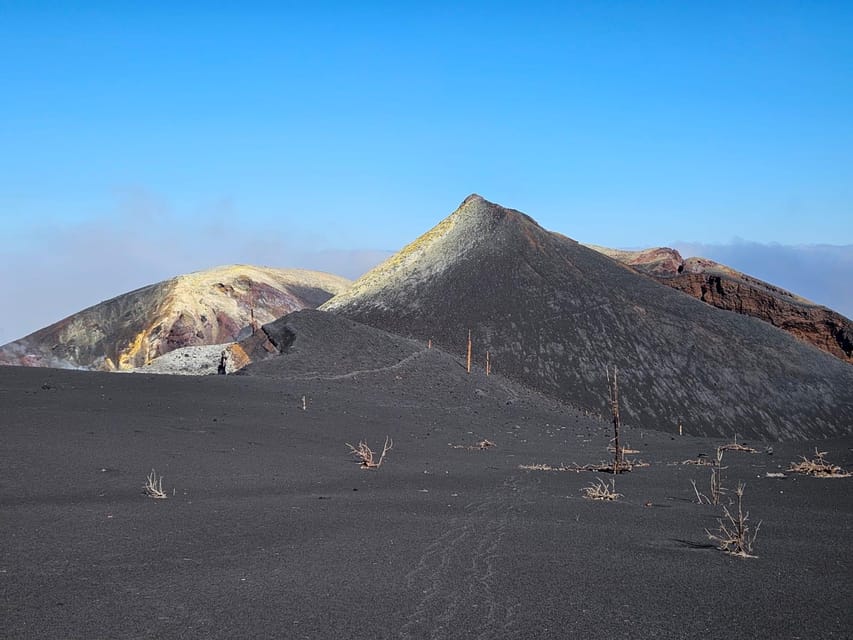
- The route crosses 6.6 kilometers of fresh volcanic terrain, moving from Llano del Jable toward Las Manchas.
- The walk loses about 630 meters in height, with only 20 meters of uphill gain, but ash and lapilli can make footing tiring.
- You approach the crater much more closely than earlier viewing routes allowed, with changing angles around the volcano.
- Guides explain active monitoring work, including the instruments still used to study the eruption.
- Hotel pickup and return transport are included, along with a bus or minibus transfer.
- The tour suits fit hikers aged 10 and older, but not people with mobility, heart, respiratory, or recent-surgery concerns.
Why Tajogaite feels different from an older volcano
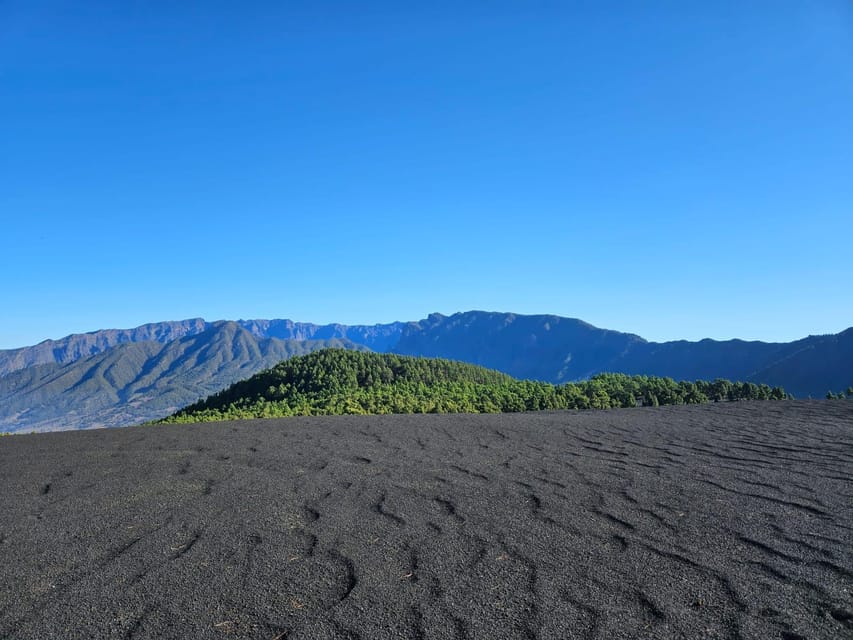
La Palma has plenty of volcanic scenery, but Tajogaite offers something more immediate. The eruption began in September 2021, so the ground here is not a distant relic from prehistory. The black ash, fresh cones, monitoring devices, and damaged settlements all belong to a recent event that changed the island in a matter of weeks.
That recent date gives the walk a human scale. You are not simply looking at a crater and taking a photograph. You are following a route through a place still being studied and still changing.
The tour’s name, 360 degrees, refers to the changing views as you move around the volcano. You do not remain at one lookout. You begin near Llano del Jable on the northern side, walk across the volcanic material, and finish near Las Manchas to the south. Each section gives you a different angle on the crater and the surrounding slopes.
I find that movement important. A single viewpoint can make a volcano look like a picture. A route around it helps you understand its size, shape, and effect on the nearby area.
A few more volcano tours around La Palma worth a look
- La Palma: Tajogaite Volcano Guided Trek
★ 4.8 · 1,810 reviews - La Palma: Cueva de Las Palomas Volcanic Tube
★ 4.7 · 527 reviews - La Palma: Tajogaite Volcano Guided Hike
★ 4.8 · 275 reviews
Starting at Llano del Jable
The outing begins at Llano del Jable, with transport arranged through La Palma Transfer & Tours. Look for a bus marked with the company name. Hotel pickup and return transfer are included, which removes one of the more awkward parts of visiting a volcanic zone: figuring out where to leave a car and how to arrange transport at the other end.
The exact pickup time depends on the date and availability, so check it carefully when booking. The bus transfer also means you should arrive ready to walk, rather than treating the first part of the morning as a casual sightseeing stop.
From Llano del Jable, the route heads toward the volcano on a trail created to reach a permitted viewpoint closer to the crater. Until this route opened, the volcano could only be viewed from roughly 300 meters away. The new access changes the feel of the visit, putting you closer to the crater and its rough, dark slopes.
This first section is a good place to settle into the pace. The guide explains what you are seeing and sets the scene for the eruption. The most useful part of a guided walk here is not simply naming volcanic features. It is understanding why the ground looks different from one stretch to the next and how the eruption altered roads, vegetation, and nearby communities.
Walking over ash and lapilli toward the crater
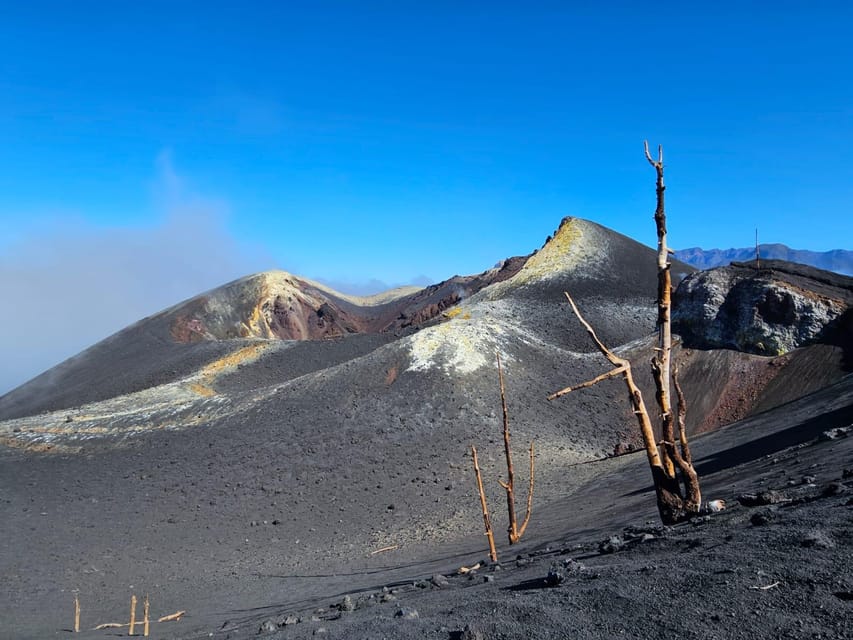
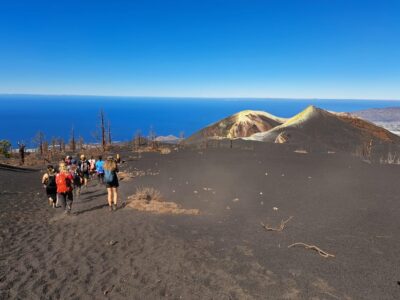
The route covers about 6.6 kilometers and includes ash and lapilli underfoot. Lapilli is small volcanic rock thrown from an erupting vent. It can look firm but shift beneath your shoes, so proper hiking footwear matters more than casual trainers.
The route has about 20 meters of positive elevation gain and 630 meters of descent. That sounds easy on paper, and the downhill direction does make the walk less demanding than a route of the same length with a long climb. Still, descending over loose material can work your knees and ankles. A steady pace and closed shoes with good grip are sensible choices.
As you cross the volcano’s northern side, the views change gradually. You see the crater from different positions rather than getting one fixed look. The route’s real appeal is this steady change in perspective. The crater becomes a physical feature with depth and scale, not just a dark mound in the distance.
Your guide also points out control and measurement equipment used to continue studying the eruptive process. These instruments add an important present-day element. The volcano is not simply an attraction left behind after an eruption. Scientists are still watching it, and the equipment shows that this work continues.
That is one reason I would choose a guided walk over a quick photo stop. You can take in the shapes and colors on your own, but a guide gives the equipment and terrain a purpose.
The closer crater viewpoint
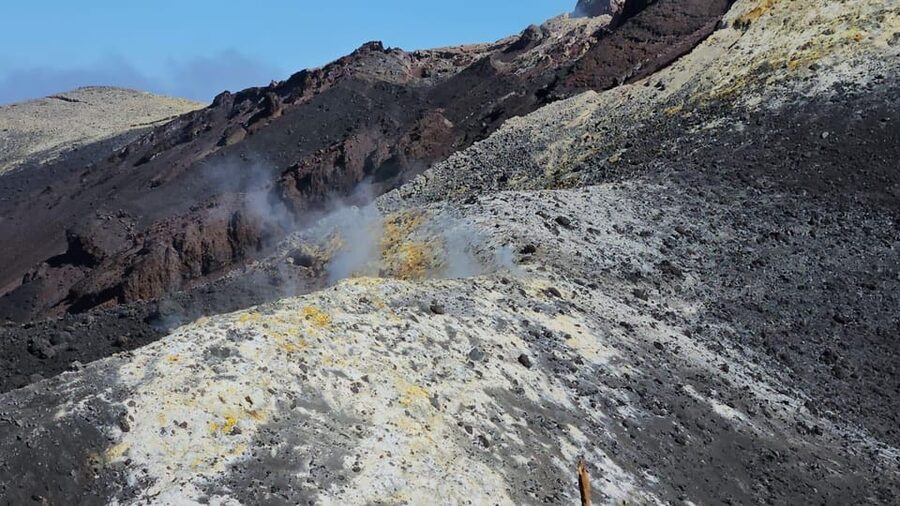
The main visual moment comes when the trail reaches the enabled viewpoint near the crater. The route does not promise that you will enter the crater, and you should not expect an unstructured climb onto the cone. You follow the authorized trail with a guide and view the crater from the designated area.
At this point, the volcano feels much larger than it does from a distant lookout. The closer position lets you study the rough surface, the layers of dark material, and the way the volcanic cone rises against the rest of the island.
Take your time with photographs here, but keep your attention on your footing. Ash can be dusty, and loose stones can make stopping or turning less comfortable than it appears from a picture. A jacket is useful because exposed volcanic ground can feel cool or windy even when the lower parts of La Palma are warm.
This is also where the 360-degree idea makes the most sense. Instead of looking only toward the crater, turn around and notice how the volcano sits within the wider terrain. The trail gives you front, side, and rear views as you continue south.
Same volcano country, a different day out:
- La Palma: Wildlife Viewing and Cumbre Vieja Boat Tour
★ 4.5 · 232 reviews - Tajogaite Volcano: the official route with a certified local guide
★ 5.0 · 231 reviews - La Palma: Guided Tour to Tajogaite Volcano with Transfer
★ 4.8 · 177 reviews - La Palma: Caldera de Taburiente National Park Guided Hike
★ 4.8 · 140 reviews
Plant recovery around the black ground
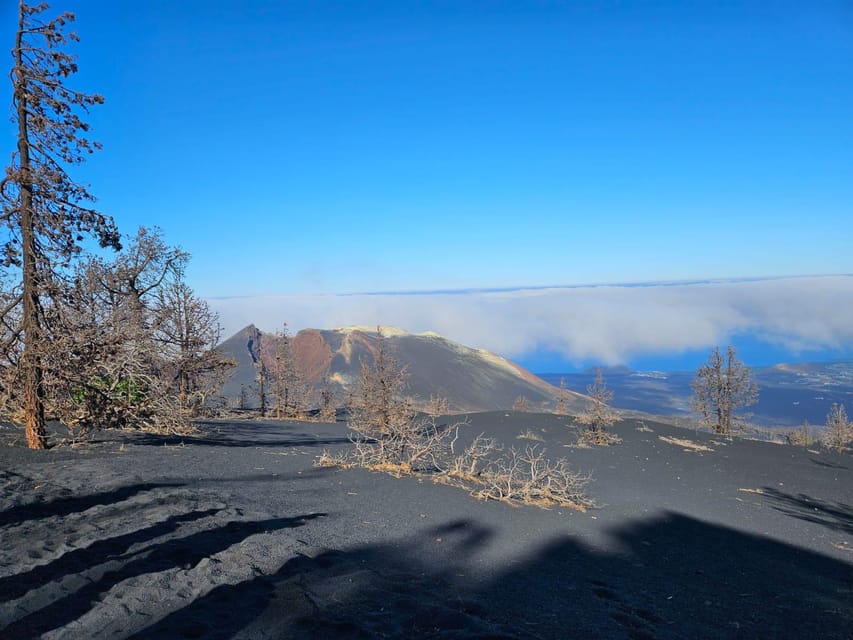
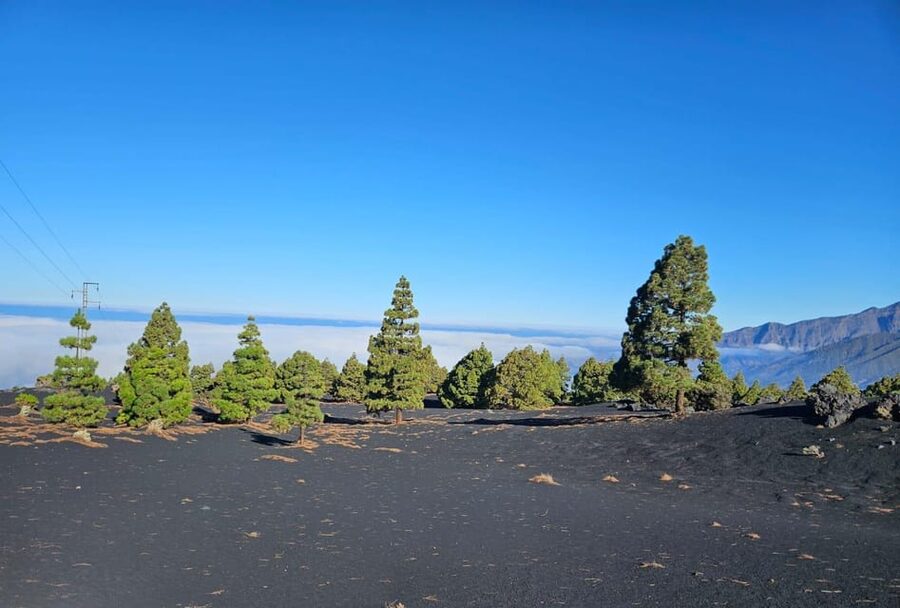
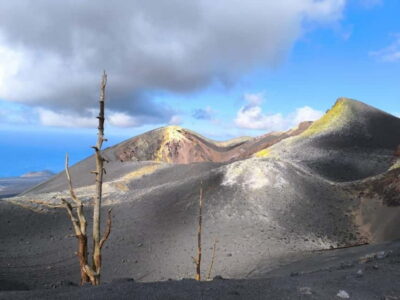
The eruption left a harsh-looking surface, but the route also shows how quickly vegetation can begin to return. Fig and chestnut trees are regrowing along the edges of the volcano. Canary pines are also coming back, continuing a familiar pattern of recovery after natural disasters on the island.
I like this part because it keeps the walk from becoming only a lesson in destruction. You see the damage, but you also see the first stages of regrowth. A young tree beside black ash can say more about time and recovery than a long explanation.
Do not expect a fully green route. The striking feature is the contrast between dark volcanic material and patches of returning plant life. The guide helps you notice small details that are easy to miss when you are focused only on the crater.
The recovery also adds value to the excursion. You are not just paying for transport to a viewpoint. You are following a changing ecological story, one that is still in its early chapters.
Descending to Las Manchas
The final section leads down toward Las Manchas, where the volcano was born and where the eruption caused some of its most serious effects. This gives the route a clear beginning and ending. You start in the upper volcanic terrain, circle toward the crater, and finish in a community directly tied to the event.
The 630-meter descent makes this section physically easier than a climb but not necessarily effortless. If you have weak knees, balance concerns, or trouble walking on loose ground, this is the part to consider most carefully. Trekking poles could be useful, although they are not listed as included equipment, so bring your own only if you already use them.
Las Manchas also gives the tour an important human context. The volcano is not isolated wilderness. Its eruption changed places where people lived and worked. Ending here keeps the focus on the effects of the eruption rather than presenting Tajogaite as a scenic feature without consequences.
The exact sequence of stops and pauses may vary with conditions and group pace. The published duration is about three hours, while the practical guidance allows approximately three and a half hours for the hike. I would keep a generous part of the day free rather than scheduling a tight lunch or another timed activity immediately afterward.
The guides make the science easier to follow
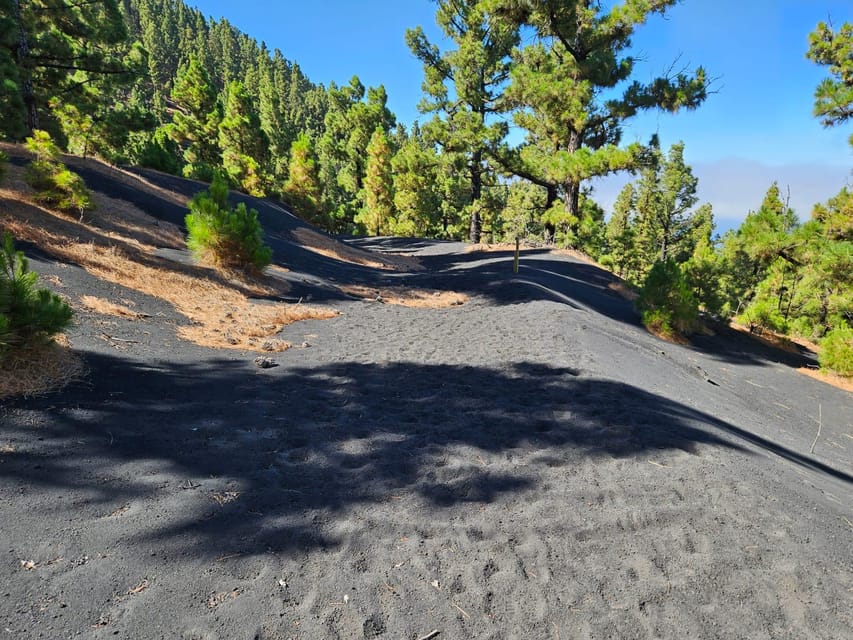
The strongest part of the tour is the guiding. The available guide languages are English, German, and Spanish, and the explanations cover both the eruption and La Palma’s wider volcanic story.
Henry is specifically identified as one of the guides, and he has been praised for clear, engaging explanations in German. A Dutch guide has also led the route, giving detailed information about the island and volcano. The important point for you is that the experience depends heavily on who leads your group and which language you select, so confirm your preferred language when checking availability.
Good guiding matters here because volcanic features can look repetitive. One patch of black rock can resemble another. A guide helps you understand what makes each section different, explains the monitoring instruments, and connects the crater with the route’s final stop in Las Manchas.
The explanations are not only technical. The most useful approach combines geology, recent events, vegetation, and local impact. That mix makes the walk easier to remember and gives the scenery meaning without turning the outing into a classroom lecture.
What to wear and carry
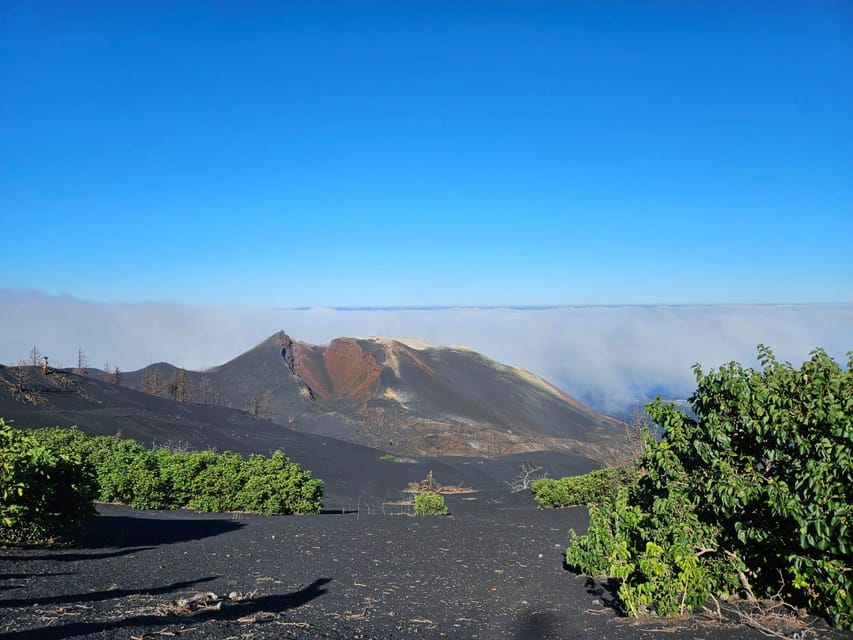
Treat this as a real hike, not a short walk from a bus. Wear hiking shoes or another closed-toe shoe with a firm sole. Sandals, flip-flops, open-toed shoes, and bare feet are not allowed.
Bring comfortable clothing, hiking trousers, a hat, a jacket, and a charged smartphone or camera. The jacket is worth packing even if the weather at your hotel feels warm. Volcanic slopes can be exposed, and conditions may feel different at the starting point.
Food is not included, and food is not allowed in the vehicle. The practical advice is to eat before pickup and carry only what the operator permits on the walk. One useful timing point is that eating and bathroom pauses may not be available during the main section, so plan ahead before setting out.
Plastic bottles are not allowed, and littering is prohibited. Check the current packing rules carefully rather than assuming a normal daypack is acceptable in every form. Oversize luggage, bikes, handcarts, alcohol, smoking materials, and vaping are also not permitted.
Who should book this volcano walk?
I would recommend this tour to fit adults and older children who want a close look at Tajogaite and prefer a guide to explain what they are seeing. It is especially useful if you do not have a rental car or do not want to arrange a one-way route between Llano del Jable and Las Manchas.
The tour is not suitable for children under 10, pregnant people, wheelchair users, or anyone with mobility limitations. It is also unsuitable for people with heart, respiratory, or blood-pressure problems, epilepsy, recent surgery, serious back problems, motion sickness, or a low level of fitness.
The stated weight limit is 100 kilograms, or 220 pounds, and the upper age limit is 95. These restrictions may feel strict, but they reflect the loose ground, downhill route, transport rules, and need to keep the group moving safely.
If you are unsure about your fitness, focus on the descent rather than the small uphill figure. Downhill walking can be uncomfortable even when the route has very little ascent. Proper shoes and confidence on uneven ground are essential.
Is $47 a fair price?
At $47 per person, the tour offers solid value if you need hotel transport and want an authorized guided route near the crater. The price includes the bus, transfer to and from your hotel, and a live guide in English, German, or Spanish.
You are paying for more than access to a walking trail. The transport solves the one-way route problem, the guide adds scientific and local context, and the group follows a trail created for closer access to the volcano. For an independent hiker with a car and strong knowledge of the area, the value may feel less clear. For someone without those advantages, the package is more appealing.
Food is not included, so plan your meal before or after the outing. Free cancellation up to 24 hours before departure and the option to reserve now and pay later also reduce the risk of committing too far ahead, especially if your schedule on La Palma may change.
The practical verdict
Book this Tajogaite volcano tour if you want the closest authorized look at the crater currently offered on this route, appreciate clear guiding, and can handle a six-plus-kilometer downhill walk over loose volcanic ground.
Skip it if you need frequent breaks, dislike uneven surfaces, or want a relaxed sightseeing trip with little physical effort. The excursion is short in clock time but serious enough in footing and descent to require preparation.
For the right person, the combination of fresh volcanic terrain, monitoring equipment, returning trees, crater views, and Las Manchas at the finish makes this one of La Palma’s more meaningful half-day outings. Just wear proper shoes, eat beforehand, leave room in your schedule, and arrive ready to walk.
FAQ
How long does the Tajogaite volcano tour last?
The advertised duration is about three hours. The practical information describes the hike as approximately three and a half hours, so you should allow extra time for the walking portion and transfers.
Where does the hike begin and end?
The hike begins at Llano del Jable and ends in Las Manchas. The route covers approximately 6.6 kilometers and includes about 20 meters of uphill gain and 630 meters of descent.
Is hotel transportation included?
Yes. The package includes transfer to and from your hotel, as well as bus transport. Look for a bus carrying the La Palma Transfer & Tours sign.
Which languages are available?
The live guide service is available in English, German, and Spanish. Henry is one of the named guides, and the route has also been led by a Dutch guide.
What should I wear and bring?
Wear hiking shoes, closed-toe shoes, comfortable clothes, hiking trousers, and a jacket. A hat, camera, charged smartphone, and suitable walking shoes are also recommended.
Is the tour suitable for children or people with limited mobility?
Children under 10 are not accepted. The tour is not suitable for wheelchair users or people with mobility impairments, low fitness, serious back problems, heart or respiratory conditions, recent surgery, pregnancy, or several other listed health concerns.
Just added around La Palma
- Tajogaite Volcano VIP Experience: Private Tour with a Certified Guide★ 5.0 · 8 reviews
- Tajogaite Volcano: the official route with a certified local guide★ 5.0 · 231 reviews
- La Palma: San Antonio and Teneguia Volcanos Tour by 4×4 Bus★ 4.8 · 120 reviews
- La Palma: Volcano Route Buggy Tour (Price Per Vehicle) 2 PAX★ 4.7 · 115 reviews
- La Palma Tour: Santa Cruz, Cumbrecita and Volcanic Landscape★ 3.5 · 74 reviews
- La Palma: Caldera de Taburiente National Park Guided Hike★ 4.8 · 140 reviews
- La Palma: Guided Tour to Tajogaite Volcano with Transfer★ 4.8 · 177 reviews
- La Palma: Guided trekking tour to volcanoes south★ 4.9 · 44 reviews
La Palma Volcano Tours, compared.
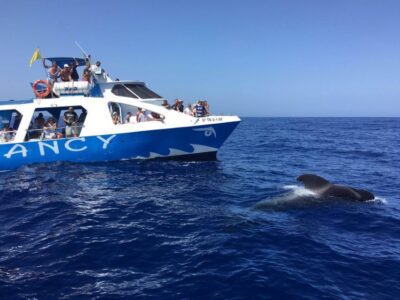
La Palma: Wildlife Viewing and Cumbre Vieja Boat Tour
Read our review →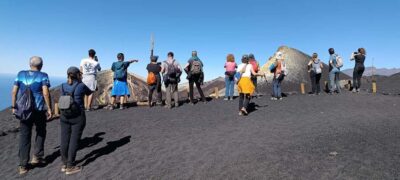
Tajogaite Volcano: the official route with a certified local guide
Read our review →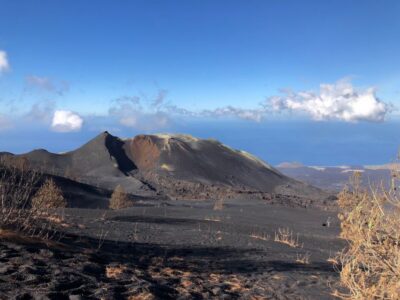
La Palma: Guided Tour to Tajogaite Volcano with Transfer
Read our review →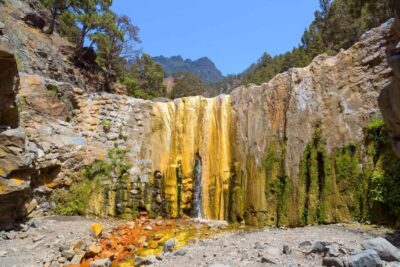
La Palma: Caldera de Taburiente National Park Guided Hike
Read our review →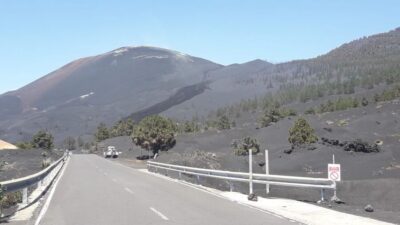
La Palma: San Antonio and Teneguia Volcanos Tour by 4×4 Bus
Read our review →Browse the lists this tour appears in