
REVIEW · HILO
Hilo: Mauna Kea Summit, Sunset, & Stargazing Experience
Mauna Kea gives you two big spectacles in one evening: a sunset from nearly 14,000 feet, followed by a sky packed with stars. You may watch the sun drop through clear air above the clouds, then see nebulae, galaxies, and star clusters through a telescope. Tay, Val, John, Jess, and other guides are praised for making the science and Hawaiian sky stories easy to follow.
I like the practical care here. You get a warm parka, gloves, snacks, hot chocolate, and night photos, so you do not need to assemble a mountain expedition from your hotel room. I also like that you do not have to drive the steep mountain road after dark. The main caution is the altitude: this is a demanding outing, not a casual sunset stop, and the summit has about 40 percent less oxygen than sea level.
Key points to know before booking
- Sunset above the clouds: Mauna Kea can put you above a blanket of cloud as the sky turns orange, pink, and gold.
- A serious altitude change: The summit reaches about 14,000 feet, and strong physical condition is required.
- Astronomy with a human touch: Guides explain constellations, Hawaiian navigation, mythology, geology, and the research telescopes.
- A telescope after dark: Weather permitting, you may see nebulae, galaxies, clusters, or planets in much more detail than with the naked eye.
- Warmth is built in: Parkas, gloves, hot chocolate, and snacks matter when temperatures drop and wind picks up.
- Photos are included: Your guide takes night portraits and sends the images by email after the trip.
Why Mauna Kea sunset feels different
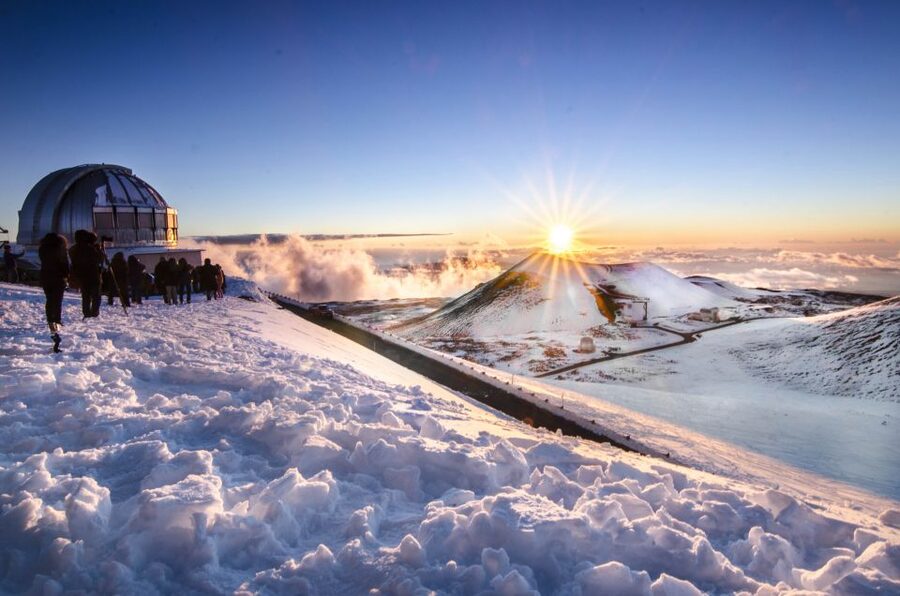
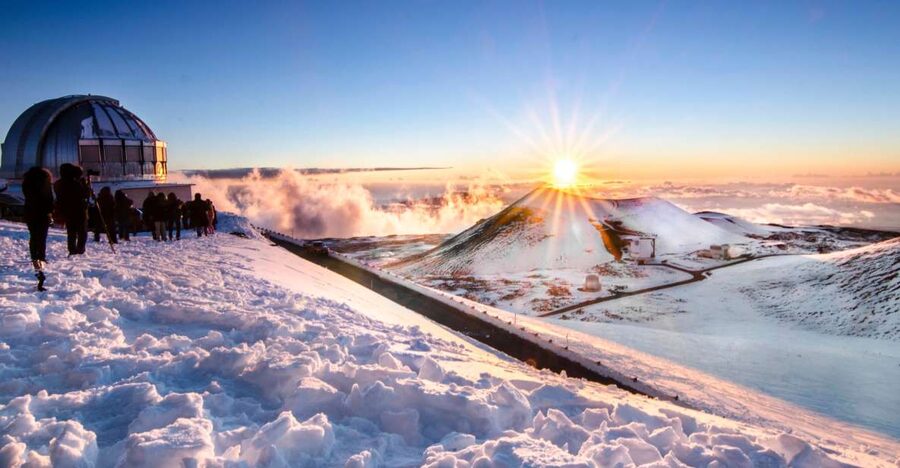
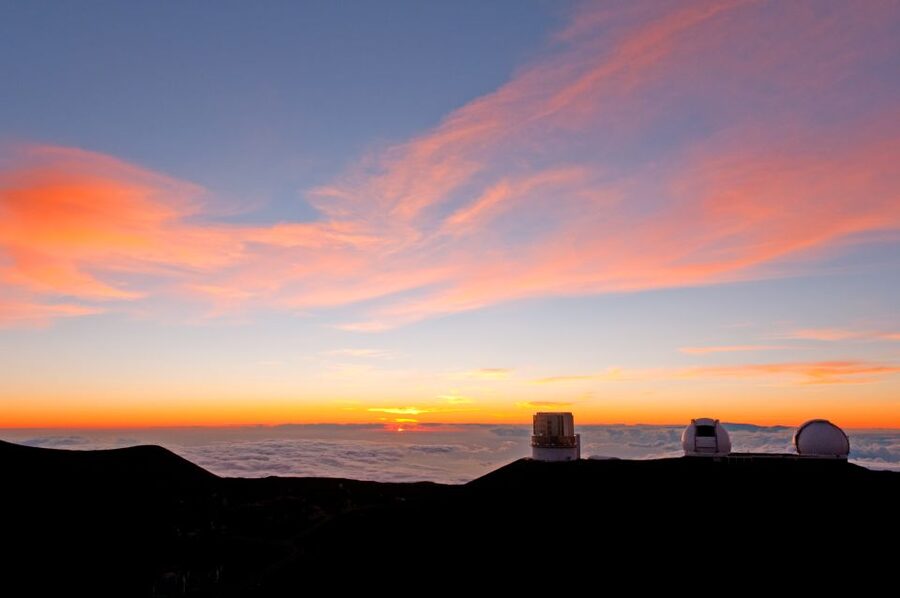
A sunset from Mauna Kea is not simply a prettier version of the view from sea level. You are high enough to look across and above cloud cover, with the Pacific horizon often stretching far beyond the mountain. The observatories add a distinctly scientific backdrop to the scene, while the changing light gives you a few minutes of pure drama.
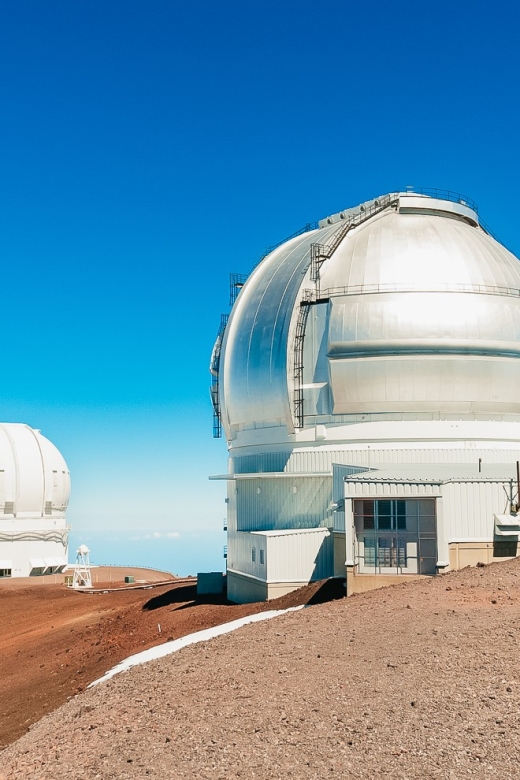
The summit area is also a place of serious research. You will see part of the world’s largest collection of research telescopes, including two of the eight instruments involved in taking the first photograph of a black hole. You will not be touring every facility, but seeing these giant structures in their working environment gives the mountain a purpose beyond scenery.
I especially like the contrast between the sunset and the night sky. At the top, the mountain feels exposed and bright with fading daylight. Later, the group moves to a darker, somewhat lower area for stargazing, where artificial light is limited and the stars take over.
Clear weather matters enormously. Clouds, wind, ice, or poor visibility can change the evening, and the telescope portion is specifically weather permitting. If conditions close the summit road, a reschedule or refund may be offered, as happened to one person whose first outing was stopped by ice.
More Volcano Hikes and Treks in the USA
- Big Island GOAT Experience: Mauna Kea Summit, Sunset & Stars
★ 5.0 · 1,706 reviews - Big Island: Mauna Kea Summit and Stars Small-Group Adventure Tour
★ 5.0 · 1,545 reviews - Big Island: Mauna Kea Summit Tour with Free Night Star Photo
★ 5.0 · 1,449 reviews
The ride from Hilo to the mountain
Pickup and drop-off are offered at selected Hilo locations, including the Bank of Hawaii, Starbucks, and the Grand Naniloa Hotel Hilo, a DoubleTree by Hilton. Your exact meeting point depends on the option you book, so check it closely and arrive at least 10 minutes early.
The full outing lasts about 390 to 450 minutes, or roughly six and a half to seven and a half hours. That is a large block of your day, but the long duration makes sense once you allow for hotel-area pickups, the climb, time to adjust at elevation, sunset, stargazing, and the return ride.
The van ride is one of the useful parts of booking a guided trip. Guides such as Mitch, James, Bean, John, and Val have used the drive to explain Hawaiian history, volcanic rocks, plants, animals, and the shape of the island. Some outings include Hawaiian music during the ride, which helps the trip feel connected to place rather than like a simple transfer uphill.
You may be in a small group vehicle, and seating matters because the drive is long. Several accounts describe comfortable vans with good visibility. Still, this is not a luxury coach tour with room to stretch out whenever you wish. If you get carsick or dislike long drives, take that into account.
Making the altitude change safely
The tour pauses before the summit so your body can adjust. The route may include time at the visitor center before continuing upward, and the stargazing stop is normally below the summit at roughly 9,000 to 12,000 feet, depending on conditions and the evening plan.
That pause is not filler. Mauna Kea’s summit is about 14,000 feet, where oxygen levels are around 40 percent lower than at sea level. You can feel short of breath, light-headed, tired, or uncomfortable even if you are fit at home. Supplemental oxygen is available if needed, but it is not a reason to ignore the health restrictions.
This outing is limited to ages 13 through 80. Do not book if you are pregnant or have heart, lung, respiratory, or serious back problems. It is also unsuitable for people with mobility impairments, altitude sickness, or anyone who has scuba dived within the previous 24 hours.
Take the warnings seriously. Wear long pants and comfortable shoes, drink water, move slowly, and tell the guide if you feel unwell. The tour is designed to help you manage the conditions, but no guide can remove the physical effects of high altitude.
Reaching the summit before sunset
The summit stop is the visual high point of the first half of the evening. You will see the observatories, look across the island from a remarkable height, and watch the sun sink through a wide horizon. On a clear evening, the cloud layer below can resemble a white sea.
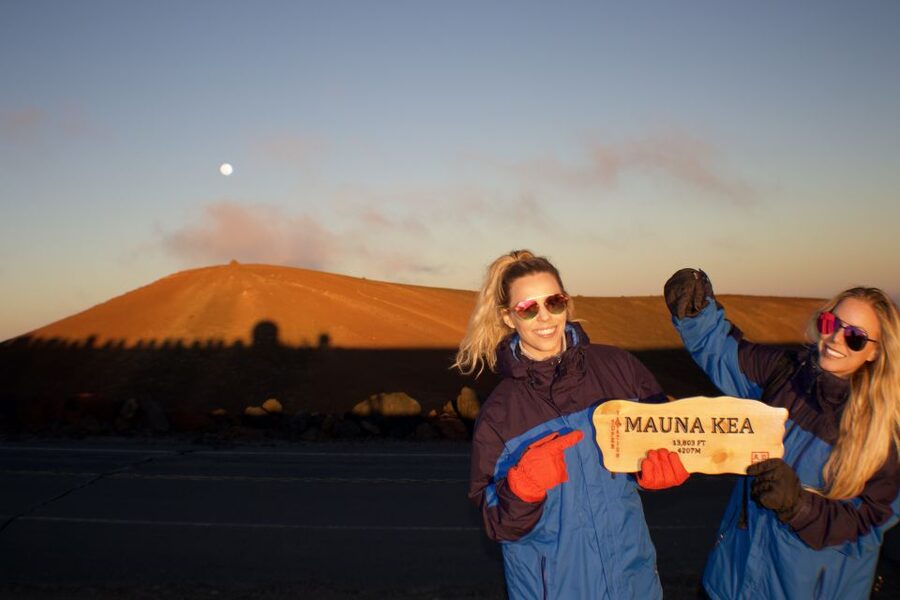
You will have time for photos, and the guides take pictures of your group as well. The supplied floral or colorful parkas have become part of the experience. They are practical in the cold and make cheerful portraits against the dark volcanic surroundings.
Wind can be the spoiler. Conditions may feel mild in Hilo, then turn cold and sharp at the summit. Bring a sweater or light jacket to wear beneath the provided parka, along with warm socks and perhaps a beanie. One useful tip from past outings is to bring a water bottle and sturdy, warm shoes. The parka helps, but it does not replace proper footwear or layers.
The observatories are impressive, but this is not an indoor museum visit. You are viewing them from the mountain environment, with the guide explaining their role and pointing out notable facilities. If your main goal is a technical observatory tour, this experience may feel limited. If you want context, views, and a safe way to see the summit, it works well.
Same volcano country, a different day out:
- Big Island in a Day: Volcanoes Waterfalls Sightseeing and History
★ 5.0 · 6,569 reviews - Hilo Shore Excursion: Volcanoes National Park & Black Sand Beach
★ 4.5 · 2,338 reviews - Maui: Haleakala Sunrise Spectacular with Local Breakfast
★ 4.5 · 2,155 reviews - Small Group Big Island Twilight Volcano and Stargazing Tour
★ 5.0 · 1,619 reviews
Hot chocolate, snacks, and the move into darkness
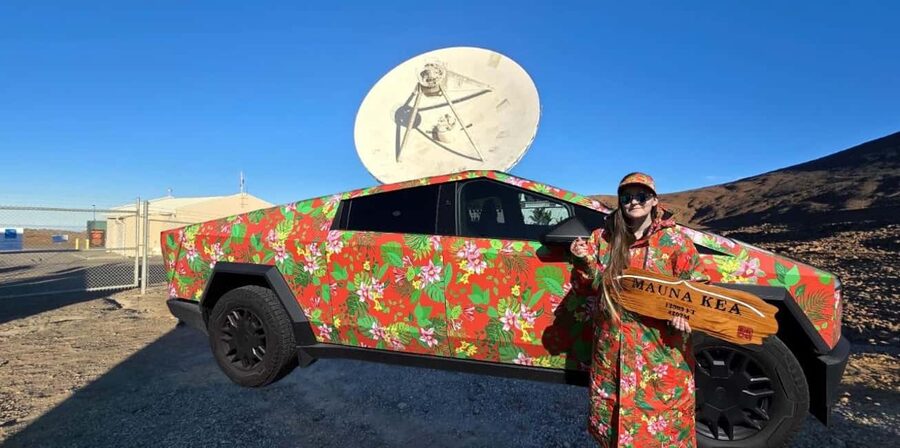
After sunset, the group heads to a darker location for the star portion. The lower elevation is usually less windy and more comfortable than the summit, while still high enough to offer excellent night-sky conditions.
This is when the parka, gloves, and hot drink earn their place in the packing list. Hot chocolate and oatmeal are provided during stargazing, and snack bags may include chips, crackers, candy, or similar treats for the drive. These are welcome at altitude, especially after several hours on the road.
The food is basic rather than a meal. Dinner is not included, so eat before departure or plan food around the pickup schedule. One fair criticism is that the snacks can feel more like standard road-trip treats than Hawaiian specialties. Macadamia nuts, dried pineapple, or another local option would fit the setting better.
Still, the refreshments are not being sold as dinner. Their real value is comfort and energy during a cold evening. You are paying for transport, equipment, guiding, safety, and access to the mountain experience, not a restaurant meal.
The star talk: science, stories, and navigation
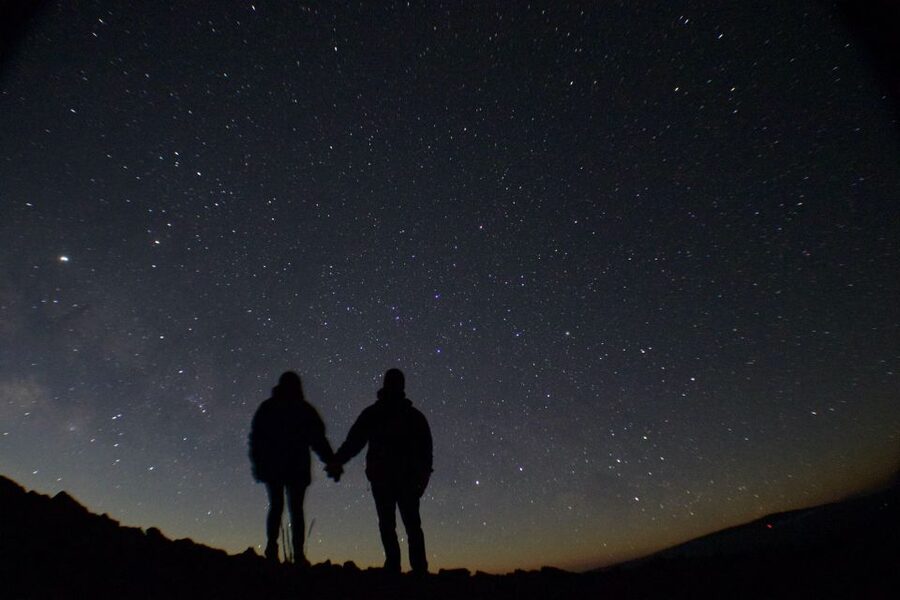
The guides do more than point at bright stars. Tay, in particular, has been praised for explaining astronomy, geology, geography, Hawaiian culture, and the way Polynesian navigators used the sky. Other guides, including Val, John, Rob, Jess, Zac, and Mitch, are also known for clear explanations and warm personalities.
The best part of the talk is the mix of traditions. You may hear Greek stories connected to familiar constellations, then learn how Hawaiian culture interpreted and used the stars. The guides also explain major constellations and stars, along with ways people used the sky for navigation.
This makes the activity accessible even if you do not know Orion from Andromeda. The guide can give you a structure for looking upward, rather than leaving you to stare at a black sky and wonder what you are supposed to find.
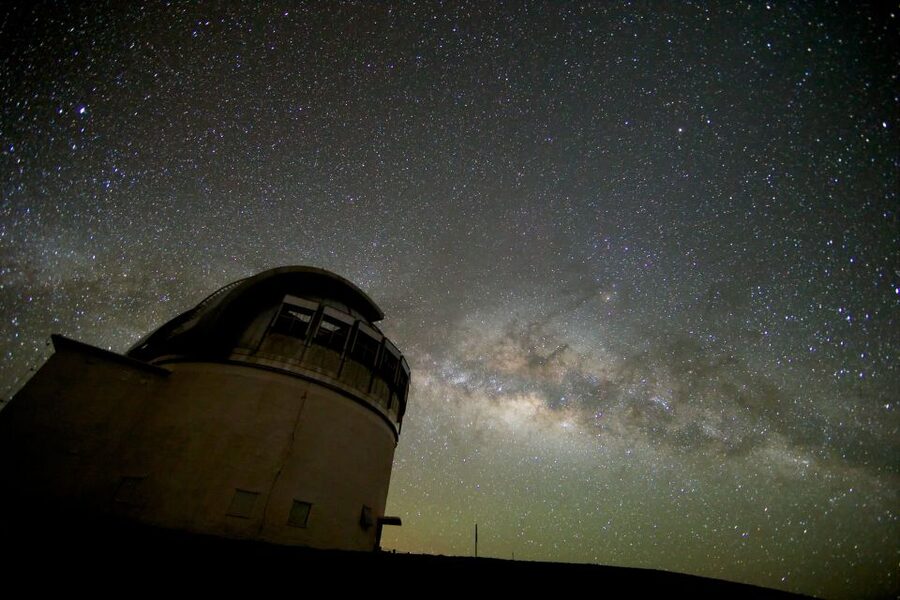
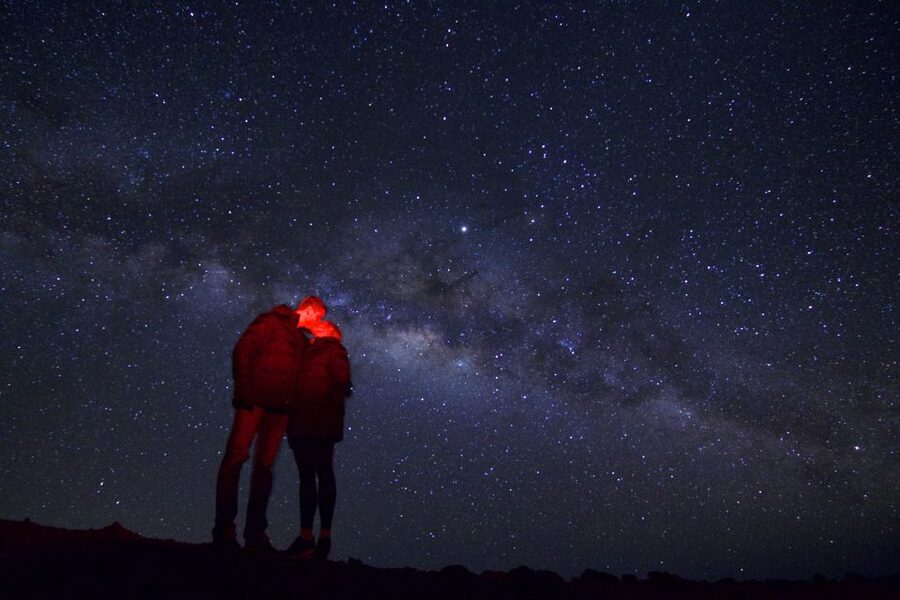
On clear nights, the Milky Way can appear as a broad band rather than a faint smudge. You might see shooting stars, a moonrise, or planets, depending on the date and conditions. One outing included views of Orion’s Nebula and entire galaxies, while another used the telescope to show three nebulae. Those targets vary, but the point is that the sky changes with season, weather, and equipment.
What the telescope adds
The professional telescope gives the evening a focal point. Looking at a bright object through glass is different from seeing a field of stars with your eyes. You may notice the shape of a nebula, the form of a star cluster, or details on a planet that would otherwise remain invisible.
The telescope program depends on weather and visibility. Clouds, wind, moisture, or poor conditions can reduce what you see. You should book this for the full mountain-and-sky experience, not as a guarantee of one particular galaxy or nebula.
The guides also take photos of the night sky and your group. The finished images are sent by email for you to download. This is a useful extra because ordinary phone cameras often struggle with a very dark sky, and getting a person and the Milky Way into the same frame takes special equipment and timing.
Do not expect an observatory research session. You will share the telescope with the group, and the viewing time for each object is limited. The value comes from having the guide find targets, explain them, and help you connect what you see through the eyepiece with the much larger story of the universe.
Is the $289 price fair?
At $289 per person, this is one of the more expensive evening activities on the Big Island. I would not call it a bargain in the simple sense. You are paying for a full half-day-plus outing, transportation, a driver-guide, summit access logistics, cold-weather gear, snacks, hot drinks, telescope use, and photography.
The price becomes easier to justify if you would not be comfortable driving Mauna Kea yourself. The road, darkness, changing weather, altitude, and need to manage the return drive make professional transport valuable. One person described seeing a vehicle that had gone off the road and strongly advised against rushing the descent. That is a useful reminder, even though conditions differ from night to night.
The included photos also add real value. You leave with more than memories and a few blurry phone shots. The guide handles portraits and night-sky images, then emails them later.
For a family group, the cost can add up quickly. For a couple who wants one major Big Island evening, it may be worth the splurge, especially if astronomy is a genuine interest. If you only want a sunset and are not eager to spend hours in a cold van or at high altitude, choose a lower, simpler viewpoint instead.
Who should book this experience
I would recommend it to adults and older teenagers who enjoy scenery, astronomy, geology, and cultural stories. It also suits anyone who wants a major Big Island memory without handling the summit drive alone.
You should be comfortable with a long evening, a group setting, cold weather, and a fair amount of standing and walking. The tour is not a good fit for anyone with the listed health conditions, limited mobility, pregnancy, or recent scuba diving.
Bring long pants, comfortable shoes, a warm layer, tall socks, a beanie if you have one, and a water bottle. Leave alcohol and drugs at home, and note that non-folding wheelchairs are not permitted.
The experience is in English. Guides vary by departure, but names repeatedly associated with strong outings include Val, Tay, John, Jess, Rob, Mitch, Zac, James, and others. A good guide can make the difference between simply looking at stars and understanding what you are seeing.
Should you book the Mauna Kea evening?
Book it if you want the full combination: sunset above the clouds, giant observatories, Hawaiian sky stories, a telescope session, hot chocolate, and photographs without driving yourself up and down the mountain.
Skip it if you dislike high places, cold weather, long vehicle rides, or uncertain conditions. The summit is not guaranteed to be clear, and the telescope is weather dependent. But if the forecast looks promising and you meet the health requirements, this is a strong use of one Big Island evening. The cost is substantial, yet the planning, safety support, equipment, and setting make it easier to understand where the money goes.
FAQ
Where does the Mauna Kea tour depart from?
Pickup options include the Bank of Hawaii, Starbucks, and the Grand Naniloa Hotel Hilo, a DoubleTree by Hilton. The meeting point depends on the option booked.
How long does the experience last?
The tour lasts about 390 to 450 minutes, or roughly six and a half to seven and a half hours.
Is transportation included?
Yes. Pickup and drop-off at selected locations are included. The exact pickup and return location depends on the booking option.
Is dinner included?
No. Snacks and hot chocolate are included, but dinner is not.
What clothing should I bring?
Bring comfortable shoes and long pants. A warm sweater or light jacket, warm socks, and a beanie can also help because the summit may be cold and windy. Parkas and gloves are provided.
Is the telescope experience guaranteed?
No. Telescope viewing is weather permitting. Cloud, wind, ice, or other conditions may affect the stargazing portion or summit access.
Who cannot join this tour?
The activity is not suitable for children under 13, adults over 80, pregnant women, people with heart, lung, respiratory, or back problems, people with mobility impairments or altitude sickness, or anyone who scuba dived within the previous 24 hours.
How do I receive the tour photos?
The guide takes complimentary night photos, and the images are emailed to you after the experience.
More Evening Tours in the USA
- Evening Volcano Explorer from Hilo
★ 4.5 · 67 reviews - Maui: Sunset & Dinner Tour to Haleakala National Park
★ 4.4 · 56 reviews - Big Island: Evening Volcano Explorer from Hilo
★ 4.7 · 31 reviews - Maui: Haleakala Sunset and Stargazing Tour with Dinner
★ 4.5 · 30 reviews
Just added around the USA
- Volcanoes National Park: Guided, Small-Group Hike★ 5.0 · 15 reviews
- Evening Volcano Explorer from Hilo★ 4.5 · 67 reviews
- Fat Tire E-Bike Rental – Volcanoes National Park★ 4.5 · 26 reviews
- Evening Volcano Explorer Tour from Kona★ 4.5 · 24 reviews
- Big Island Waterfalls, Blacksand Beaches, Lava Tubes & Volcanoes★ 5.0 · 24 reviews
- Expert Led Private Guided Tour Hawaii Volcanoes National Park★ 5.0 · 5 reviews
- Private – All Inclusive Big Island Volcano & Waterfalls Tour★ 5.0 · 8 reviews
- Best of Big Island: Volcanoes, Waterfall, Blacksand Beach & Lunch★ 5.0 · 14 reviews
Hilo Volcano Tours, compared.
Big Island: Volcanoes, Waterfalls, & Coffee Farm Day-Trip
Read our review →
Volcano Adventure: Hilo Sightseeing w/ Optional Helicopter Tour
Read our review →
Hilo Shore Excursion: Active Volcano, Lava Tube, Waterfall and Gardens
Read our review →
Big Island: Hawaii Volcanoes National Park and Hilo Tour
Read our review →
Big Island: Volcano, Black Sand Beach, Waterfall, with Lunch
Read our review →
Browse the lists this tour appears in