
REVIEW · TAURANGA
6.5 hour Small-Group Rotorua Naturally Shore Excursion – Tauranga
Rotorua’s geothermal heart is the star here. You’ll see boiling mud, steaming lakes, and warm pools, then walk high among giant redwoods and into a purpose-built glow worm cave. The day packs a lot into a six-and-a-half-hour cruise excursion.
I like the small-group format, which makes the long drive from Tauranga more pleasant and gives guides such as Simon, Richie, and Alistair room to explain New Zealand’s geology and Māori culture. I also like the mix of free outdoor sights and included attractions, especially the Redwoods Treewalk and Glow Worm Cave.
The main drawback is the pace. Rotorua is about an hour from Tauranga each way, so the tour covers a lot of ground. Some stops are brief, the minivan can feel tight for taller passengers, and the geothermal areas are public sites rather than a full commercial geothermal park.
Key points to know before you book
- Rotorua is about 60 to 70 minutes from Tauranga each way, so expect a full port-day outing with plenty of driving.
- Kuirau Park includes a free foot bath, with towels supplied, plus bubbling mud and steaming pools.
- The Redwoods Treewalk and Glow Worm Cave are included, and the tree walk rises about 20 metres above the forest floor.
- The tour stops at Whakarewarewa Village for a snack, but entry into the village itself is not included.
- Commercial geothermal parks are not part of the price, so this is a highlights tour rather than a full geyser-and-hot-pool admission package.
- The group can reach up to 20 people, with air-conditioned transport and a guide providing live commentary.
From Tauranga port to Rotorua’s geothermal basin
This tour begins at the Port of Tauranga, close to where cruise ships berth at Mount Maunganui. Pickup is planned around ship arrival and departure times, and the activity returns to the same meeting point.
That port focus matters. You are not trying to find an unrelated city meeting point or arrange your own transport to Rotorua. The operator has run these excursions for many years and keeps the return trip tied to the ship schedule. Still, you should not treat the timing casually. A late ship arrival, slow walkers, traffic, or crowding at the Treewalk can affect the day.
The road to Rotorua takes roughly an hour to 70 minutes in each direction. A good guide makes this drive useful rather than dull. Simon is known for giving clear explanations of science, local culture, and New Zealand history, with enough humor to keep the commentary moving. Richie is particularly good with families, while Alistair is often praised for his driving and friendly style.
The vehicle is air-conditioned and usually a minivan or small coach. A small group feels more personal than a large shore bus, but the seating is not necessarily spacious. One passenger found the knee room tight in some seats, so taller people may want to board promptly and choose carefully.
More Geothermal Parks and Geysers in New Zealand:
- Rotorua Canopy Tours: 2.5Hour Native Forest Zipline Adventure
★ 5.0 · 4,563 reviews - Rotorua: Wai-O-Tapu Geothermal Park Entry Ticket
★ 4.6 · 2,601 reviews - Rotorua’s Ultimate Zipline: 6 ziplines, 400 m Tandem, Cliff Walk
★ 5.0 · 2,557 reviews
Kuirau Park: Rotorua’s free geothermal introduction
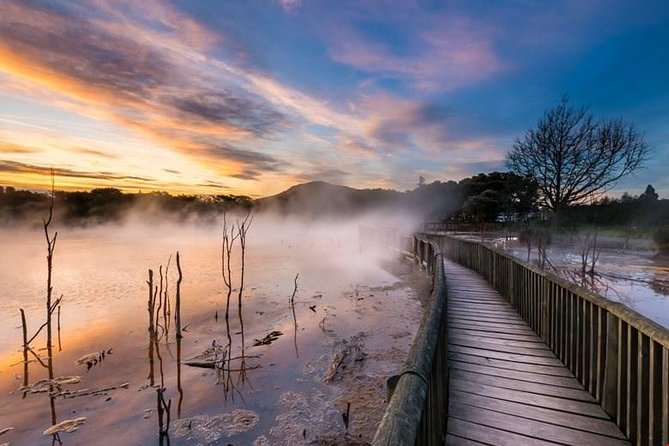
Kuirau Park is the first major stop and one of the best-value parts of the outing. No separate admission is needed. You walk along paths beside steaming pools, bubbling mud, and warm water emerging from beneath Rotorua.
This is a good place to understand why Rotorua smells and feels different from other New Zealand towns. Geothermal activity is not confined to a distant national park. It appears in the middle of the city, in a public park used by local residents.
The walk is fairly short, around 30 minutes, but your guide gives the stop meaning. You’ll hear about the way Māori communities have used geothermal heat for cooking, bathing, and daily life for centuries. The point is not simply to snap a photo of mud bubbling in a pool. It is to see how volcanic heat has shaped local life.
The foot-bathing area is a pleasant touch. You can sit with your feet in naturally warm water while looking across the park, and towels are provided. Bring a spare pair of socks if you dislike putting damp feet back into your shoes.
Kuirau Park is not the same as Yellowstone or a paid geothermal reserve. You will not find a grand geyser show or a large collection of manicured pools. The appeal is its ordinary, public setting and the chance to see geothermal activity without an entry fee.
Sulphur Point and the warm waters of Lake Rotorua
The next short stop is Sulphur Point, on the edge of Lake Rotorua. The geothermal activity affects the lake, and the warm waters attract native birds.
This is a quick photo and explanation stop, usually around 15 minutes. You’ll get a sense of Rotorua’s broad volcanic basin and see how the thermal activity extends beyond isolated mud pools.
Do not expect a long lakeside walk. The value is in the setting and the guide’s explanation, not in the amount of time spent there. If you prefer a tour built around extended walks, this stop may feel too brief. If you like seeing several different sides of a place during a port call, it fits the day well.
Government Gardens and Rotorua’s bathing tradition
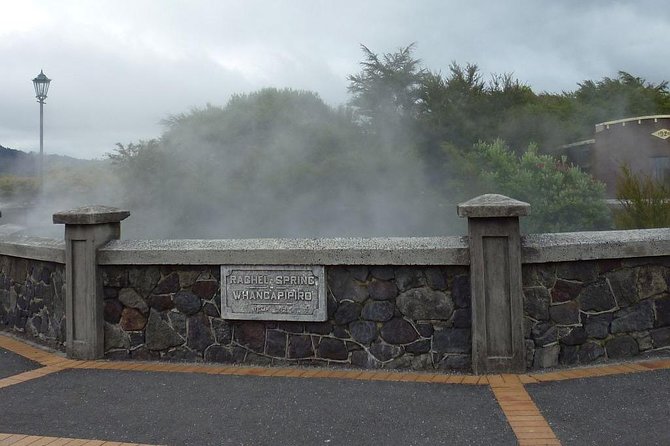
Government Gardens provides another short look at Rotorua’s use of thermal water. The area includes the historic Rotorua Bathhouse and Museum, the Blue Baths, and Rachel’s Spring, which supplies geothermal water to the Polynesian Spa.
The stop lasts about 10 minutes, so you should think of it as an orientation visit rather than museum time. You may see the buildings and hear how Rotorua developed as a bathing destination, but museum admission is not listed as part of the tour.
This stop helps connect the natural features with the town’s modern identity. Rotorua did not simply happen to have hot water underground. The springs shaped its tourism, public baths, and local economy.
More Shore Excursions in New Zealand:
- Tauranga Shore Excursion: Rotorua Highlights
★ 4.5 · 427 reviews - Shore Excursion: Half-Day Auckland Volcanoes Tour
★ 5.0 · 39 reviews - Hilo Shore Excursion: Volcanoes National Park & Black Sand Beach
★ 4.5 · 2,338 reviews - From Milazzo: Panarea & Stromboli Cruise Excursion
★ 4.4 · 597 reviews
Whakarewarewa Village and the quick hangi-style snack
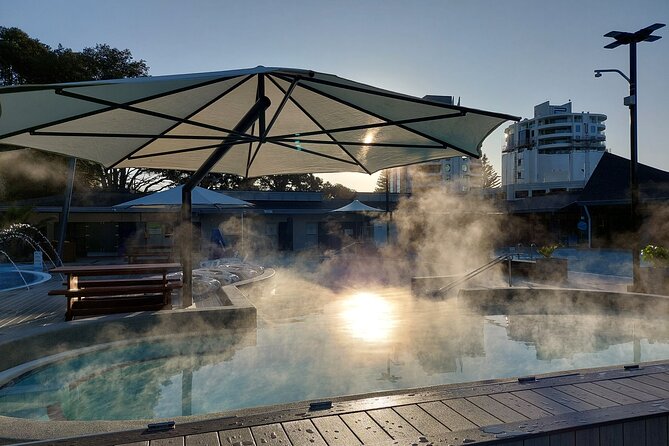
The tour pauses at Whakarewarewa Village for a light snack. The food is a hangi-inspired meat or vegetable pie, a practical choice when the schedule is tight. Special dietary arrangements may be possible, as one gluten-free meal was provided, but you should state your needs when booking rather than rely on a last-minute substitution.
This is not a full lunch. Drinks, additional food, and souvenirs are not included. The snack is designed to keep the group moving so you have time for the Redwoods Forest later in the day.
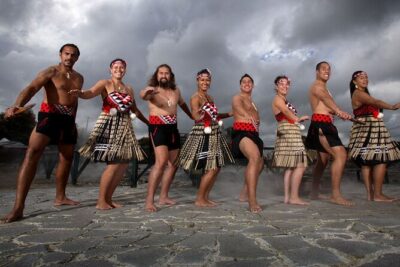
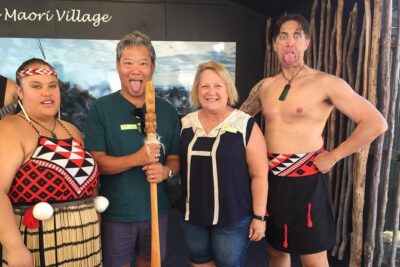
You can also get a brief look at the living Māori village, but full village admission is not included. That distinction matters. If your main goal is a formal Māori cultural performance, extended village visit, or detailed cultural program, this excursion will not replace a dedicated Whakarewarewa tour.
Still, the short stop adds an important human element to the geothermal story. You are not only looking at hot pools as natural curiosities. You are seeing them in a place where geothermal heat and Māori life have long been closely linked.
The Redwoods Treewalk: the day’s main attraction
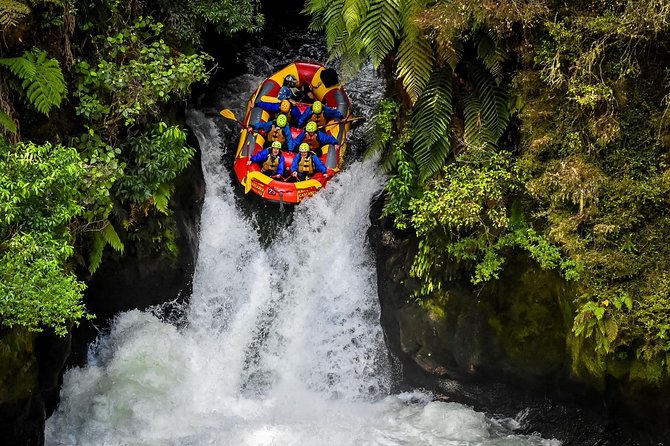
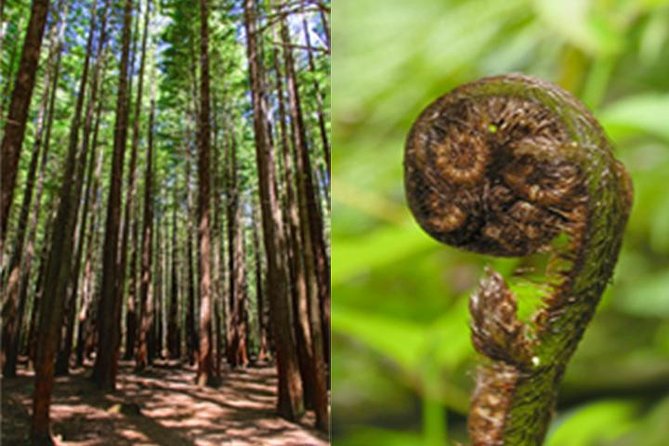
The Redwoods Treewalk is the strongest part of the outing for many people, and I can see why. Instead of viewing the forest from ground level, you follow a raised network of rope swing bridges among the redwood trees.
The walkway reaches roughly 20 metres above the forest floor. You’ll see tall trunks, tree ferns, and the forest from a different angle. The bridges are purpose-built and secure, but they still give you the sensation of moving through the canopy.
Access begins with a gentle spiral ramp, which is useful for people who cannot manage a long staircase. However, the attraction also notes that some areas include steps and that good mobility is needed. If you use a wheelchair, walk slowly, or have a strong fear of heights, check the current access details before booking.
The included visit lasts about an hour. That is enough time to enjoy the bridges without turning the stop into a rushed photo opportunity. The forest setting also offers a welcome change after the geothermal sites, shifting from steam and volcanic mud to cool shade and towering trees.
Some people may find the elevated bridges more exciting than the geothermal stops. That is worth keeping in mind when choosing this excursion. The tour is not mainly a volcano tour with a token forest visit. The Treewalk is one of its central attractions.
A purpose-built Glow Worm Cave
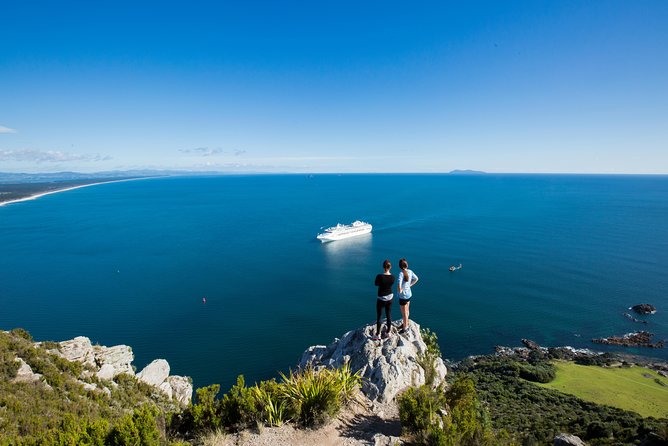
The Redwoods stop also includes a short guided visit through a purpose-built Glow Worm Cave. This adds another distinct experience without requiring a second long drive or a separate admission fee.
The cave is not described as a vast natural cavern. It is designed for viewing glow worms, so keep your expectations focused. The appeal is the unusual contrast between the open redwood canopy and the dark cave environment.
The glow worm visit is a newer part of the program. Older descriptions of the tour may not include it, and the price has been adjusted to reflect its addition. Confirm the current inclusions when you book, especially if you are comparing older shore-excursion information.
Together, the Treewalk and cave make a strong pair. One gives you height, light, and forest views. The other gives you a short, enclosed look at a very different natural feature.
Rotorua city, Mount Maunganui, and the kiwi fruit country
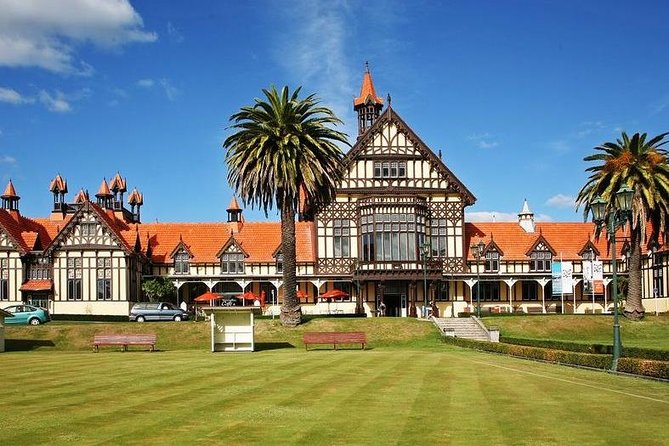
The tour also includes sightseeing from the vehicle through Rotorua. You may see more of the city during the 45-minute portion of the route, with your guide pointing out local features and explaining the large volcanic basin around town.
On the return to Tauranga, the route passes through Te Puke, the centre of New Zealand’s kiwifruit-growing region. The area produces about 85 percent of the country’s kiwifruit crop, and you’ll see extensive orchards from the road.
The final drive includes Tauranga and Mount Maunganui. Mount Maunganui is one of New Zealand’s best-known beach suburbs and one of its most expensive residential areas. You will see the coastal setting from the vehicle rather than stop for a beach visit or summit walk.
These driving sections help you see more of the region, but they also explain why the day can feel full. You are combining two towns, geothermal sites, a Māori village area, a forest attraction, and a port return in one schedule.
What the $135.91 price delivers
At $135.91 per person, this is not the cheapest way to see Rotorua, but it includes the parts that can quickly add up. Your price covers port pickup and return, the guide, transport, the Redwoods Treewalk, the Glow Worm Cave, the foot-bathing experience, towels, and a light snack.
The value is strongest if you want the Treewalk and cave. Buying those attractions separately, then arranging transport from Tauranga, would remove much of the convenience that makes this excursion work.
The value is weaker if you mainly want a major geothermal reserve. Admission to commercial geothermal parks is not included. You will see real geothermal activity at public sites, but not the full paid experience found at Rotorua’s larger specialist reserves.
I would also factor in the time saved. A cruise passenger can see a broad selection of Rotorua without renting a car, navigating unfamiliar roads, or watching the clock alone. The guide handles the route and provides context while you focus on the day.
Timing, comfort, and who should book
This excursion suits you if you want variety more than depth. You’ll see geothermal features, a lake, historic bathing buildings, a Māori village area, redwoods, glow worms, kiwifruit orchards, Tauranga, and Mount Maunganui.
It is also a good fit for families. Richie and other guides are used to explaining things to children, and the Treewalk gives the day an active element. The foot bath is easy to enjoy, and the snack keeps the stop simple.
You should have moderate physical fitness. The geothermal walks are not described as strenuous, but the Treewalk involves raised bridges, ramps, and some steps. Wear comfortable shoes, dress in layers, and bring a hat and sunscreen. The tour runs in all weather, so rain protection is sensible.
The group can include up to 20 people. That is smaller than a standard cruise coach, though not necessarily a tiny private tour. Departure times may change if a ship arrives early or late, and the order of stops may be reversed to keep the food break at a sensible point in the day.
The operator allows free cancellation up to 24 hours before the start time. Poor weather or failure to reach the minimum number of participants can also lead to a new date, another experience, or a full refund.
Should you book this Tauranga shore excursion?
I would book this tour if you want a practical first look at Rotorua and place high value on the Redwoods Treewalk and Glow Worm Cave. The guides, especially Simon, Richie, and Alistair, add real value during the long road sections, and the small-group setup is more comfortable than a large bus tour.
I would choose something else if you want a full commercial geothermal park, a long Māori cultural program, or a slow day at one location. This is a broad highlights tour, not a deep visit to one attraction.
For most cruise passengers, the strongest plan is simple: book it for the combination of included attractions, reliable port transport, and local commentary. Just expect a full schedule, limited time at some stops, and a minivan seat that may feel snug.
FAQ
How long does the tour last?
The experience lasts approximately 6 hours and 30 minutes, including travel between Tauranga and Rotorua.
Where does the tour start and end?
It starts at Port of Tauranga, at 2 Salisbury Avenue in Mount Maunganui, and ends back at the same meeting point.
Is admission to a geothermal park included?
No. Admission to commercial geothermal reserves is not included. The tour visits free public geothermal areas such as Kuirau Park and Sulphur Point.
Is the Redwoods Treewalk included?
Yes. Admission to the Redwoods Treewalk and the guided Glow Worm Cave is included in the tour price.
Is food included?
A light hangi-inspired snack, such as a meat or vegetable pie, is included. Lunch, drinks, souvenirs, and other personal expenses are not included.
Is the tour suitable for people with limited mobility?
The Treewalk uses a gentle spiral ramp, but some areas include steps and raised rope bridges. Good mobility is needed, and the tour recommends a moderate level of physical fitness.
Just added around New Zealand
- Waitomo Glow Worm Caves & Te Puia (Rotorua) Private Tour★ 5.0 · 13 reviews
- Waitomo Glow Worm Caves & Te Puia – Rotorua’s Geothermal Valley★ 5.0 · 9 reviews
- Private Tour to Rotorua’s Natural wonders and Māori Arts & craft.★ 5.0 · 4 reviews
- TRIPLE DEAL Wai-O-Tapu, Redwood Forest & Blue Springs Ex Auckland★ 5.0 · 20 reviews
- Sunset kayak tour to Rangitoto Island★ 5.0 · 168 reviews
- Volcanic Rotorua Day Trip from Auckland★ 5.0 · 4 reviews
- Small Group Waitomo and Rotorua including Te Puia Tour★ 5.0 · 4 reviews
- Private Transfer From Auckland Airport To Rotorua★ 5.0 · 5 reviews
Tauranga Volcano Tours, compared.
Rotorua Geothermal Living Maori Village Tour Whakarewarewa 6.5hours Tour
Read our review →
Rotorua Geothermal Wonderland Tour – Departs Tauranga
Read our review →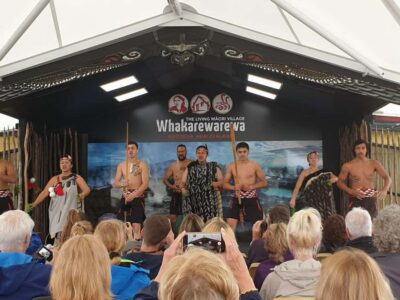
Tauranga: Rotorua Redwoods Tour & Maori Village Experience
Read our review →
Browse the lists this tour appears in