
REVIEW · ICELAND
Volcano Exhibition and Cinema – Lava Centre Iceland
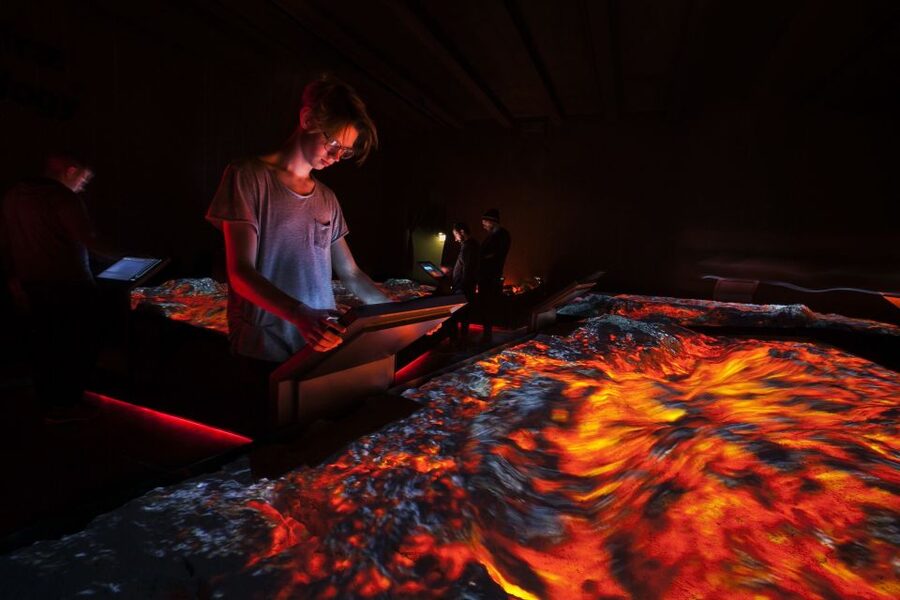
Iceland’s volcanoes are not just distant peaks on the horizon. At Lava Centre, you can watch magma move beneath the earth, feel a simulated earthquake, follow recent eruptions in Grindavík and around the Blue Lagoon, then step outside to see real volcanoes from the observation deck. It is a smart stop for turning Iceland’s dramatic scenery into something you understand.
I especially like the earthquake simulator, which gives the science a physical jolt, and the cinema, where recent eruptions are shown with impressive force. The displays also explain why Iceland has black sand, geysers, and oddly colored mountains, so the rest of your South Iceland drive begins to make more sense.
The main drawback is scale. This is an exhibition rather than a full-day attraction, and many people will see the main displays and film in about an hour. At $42 per person, it offers good value if you enjoy science and natural history, but it may feel expensive if you only want a quick viewpoint.
Key points to know before you go
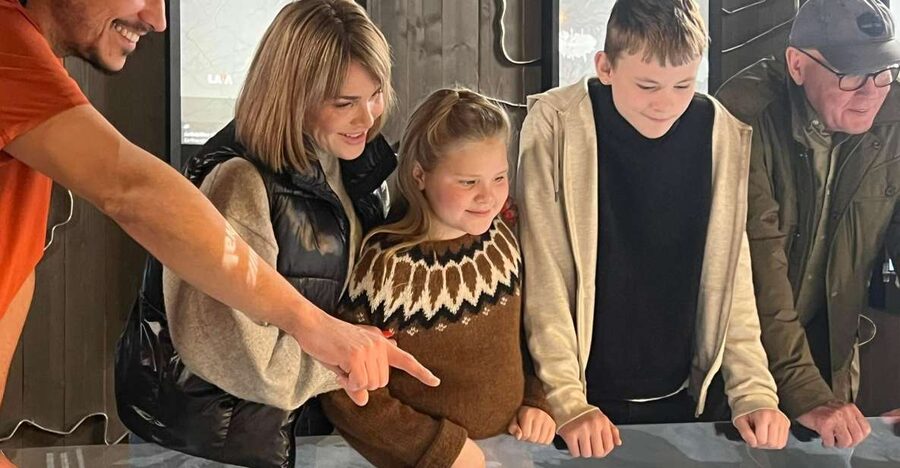
- See four major volcanoes from one observation deck: Eyjafjallajökull, Katla, Hekla, and nearby volcanic islands are part of the view when conditions cooperate.
- Feel a simulated earthquake: The Trembling Earth section turns Iceland’s frequent seismic activity into a short, memorable experience.
- Watch recent eruptions on screen: The cinema covers eruptions in Grindavík and around the Blue Lagoon.
- Follow Iceland’s volcanic story: Interactive stations explain tectonic plates, magma, lava, tephra, and the island’s changing terrain.
- Allow about one hour: The exhibition is easy to fit into a South Coast day, though you can spend longer with the displays.
- Wheelchair access is provided: The site is wheelchair accessible, with ear muffs, flashlights, and support teddy bears available for young children.
Why Lava Centre makes sense on a South Iceland day
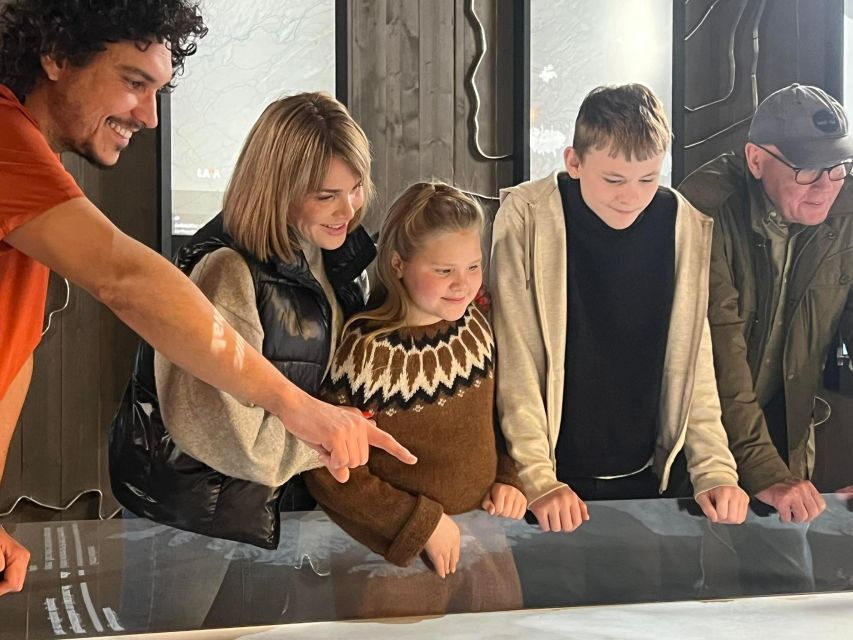
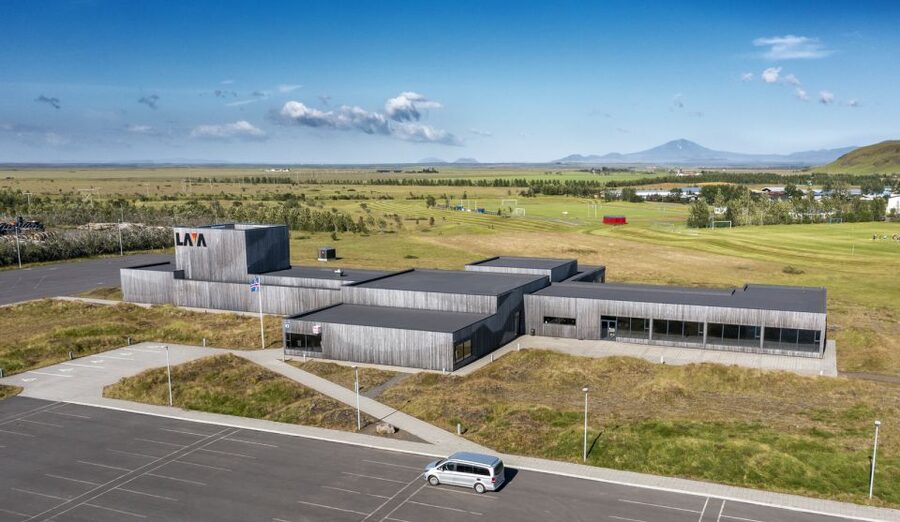
Lava Centre sits in southern Iceland, surrounded by some of the country’s best-known volcanoes. The location matters. You are not learning about eruptions in an ordinary city museum. You are looking toward Eyjafjallajökull, Katla, and Hekla, with volcanic islands also visible from the building and viewing deck.
That setting gives the exhibition a useful sense of scale. A display can explain a volcano in a few minutes, but seeing a real volcanic mountain outside helps you connect the diagram with the land around you. On a clear day, the observation platform is one of the simplest parts of the visit, yet it may be the image you remember best.
I would place Lava Centre on a day that already includes the South Coast. It works well as a break between major outdoor stops, especially when rain, wind, or poor visibility makes a long walk less appealing. There is no need to treat it as a separate expedition unless volcanoes are your main interest.
The admission covers the exhibition, cinema, and observation deck. Food and drinks are not included, so plan to eat elsewhere or treat this as a focused stop rather than a complete outing.
More Lava and Eruption Tours in Iceland
- Reykjavik: LAVA SHOW – Immersive Experience Entry Ticket
★ 4.8 · 3,360 reviews - Lava Show Reykjavik Admission Ticket – Optional Premium Upgrade
★ 5.0 · 3,278 reviews - Reykjavik: Red Lava Horse Riding Tour
★ 4.8 · 2,383 reviews
Entering the Fiery Heart of Iceland
The exhibition begins with the forces that created Iceland. The central idea is simple: Iceland sits along a diverging tectonic plate boundary, where plates pull apart and magma rises from below. A hot spot, or mantle plume, beneath the central highlands adds another source of volcanic activity.
This is the basic reason Iceland has so many volcanic features in one country. Magma rises through the earth’s crust, and when it reaches the surface, it becomes lava. Airborne fragments are called tephra, which can range from fine ash to larger pieces thrown out during an eruption.
The Fiery Heart of Iceland display helps connect these terms. You are not simply memorizing definitions. You are seeing how pressure, heat, gases, and moving plates work together to shape the country.
I like this early section because it gives you the vocabulary needed for the rest of the visit. Without it, words such as magma, lava, tephra, volcanic system, and mantle plume can blur together. Here, each term has a role.
Iceland has about 30 volcanic systems, and they do not all behave in the same way. Some produce broad lava fields, some build steep mountains, and others interact strongly with water or ice. That variety helps explain why Iceland’s scenery changes so sharply from one region to another.
The Trembling Earth and the earthquake simulator
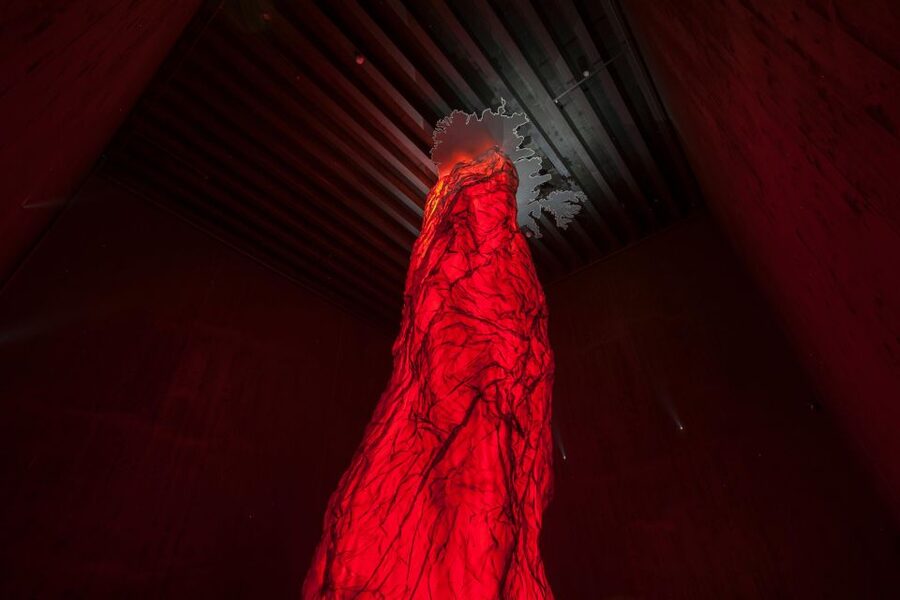
The Trembling Earth section focuses on earthquakes and the movement of the tectonic plates. Iceland’s position along a plate boundary means earthquakes are a regular part of the country’s geology, even when no eruption is taking place.
A live earthquake map shows seismic activity, giving you a real-time sense of how the ground is monitored. This is one of the more useful displays for visitors who have seen earthquake alerts or heard about volcanic activity during an Iceland trip. The map makes the process feel current rather than ancient.
Then comes the simulator. It is brief, but it gives the science a physical edge. You can read about plates shifting, but feeling the ground move makes the idea easier to remember. Families may find this section especially effective, and younger children have access to support teddy bears if the sudden movement feels unsettling.
The simulator is not a replacement for an actual geological field trip, of course. It is a controlled teaching tool. Still, it breaks up the reading and video, which keeps the visit from becoming a string of display panels.
If you are sensitive to loud sounds or sudden movement, take note of the available ear muffs. They are provided as part of the visit, along with flashlights. These small touches make the experience more manageable for families and for anyone who prefers a gentler approach.
Magma Learning Center: how volcanoes take shape
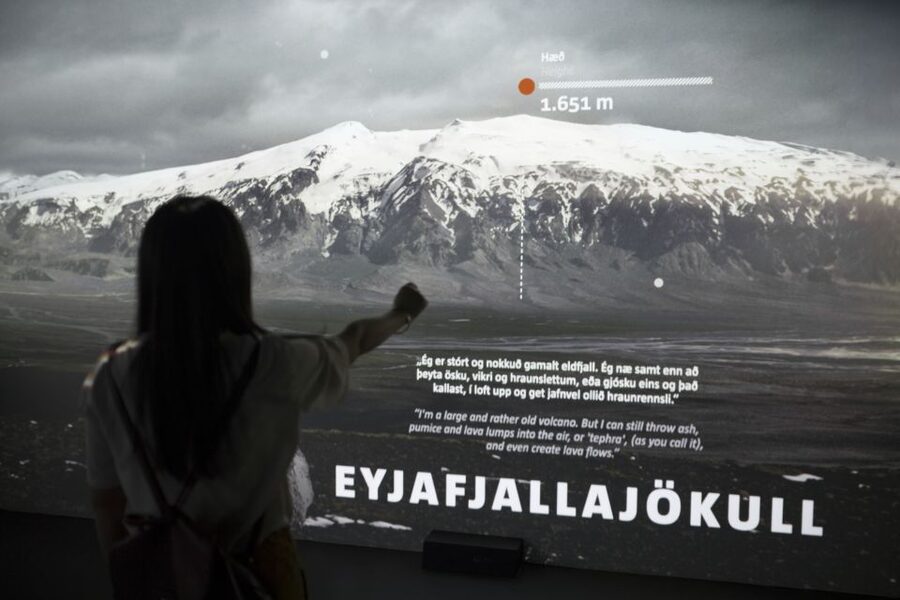
The Magma Learning Center looks at volcanic structures and the different forms they can create. This is where the visit moves beyond the familiar image of a cone-shaped volcano.
Magma can behave differently depending on its composition, temperature, and gas content. When it meets water or ice, or when it is especially viscous, it can break into fragments and form tephra. Those fragments may spread across a wide area, helping build new layers of ground and altering the shape of the country.
This section helps explain why Iceland’s black sands are black and why some mountains have unusual colors and forms. The point is not only that volcanoes erupt, but that each eruption leaves a different mark depending on the conditions at the time.
I would give this area more attention than a quick walk-through if you are interested in geology. The interactive design makes it easier to follow than a traditional scientific display, and the structure of the exhibition lets you move from basic ideas to more complex ones without needing specialist knowledge.
The subject can still feel technical in places. If your group includes young children, they may spend more time with the simulator and visual elements than with the explanations of volcanic structures. That is fine. You do not need to read every panel for the visit to work.
Same volcano country, a different day out:
- Reykjavik: Golden Circle Full-Day Tour with Kerid Crater
★ 4.8 · 24,485 reviews - From Reykjavik: Golden Circle, Kerid, & Secret Lagoon Tour
★ 4.8 · 6,009 reviews - Small-Group Golden Circle, Blue Lagoon with Ticket & Kerid Crater
★ 5.0 · 5,631 reviews - Reykjavik: Golden Circle, Kerid Crater, & Blue Lagoon Tour
★ 4.9 · 5,270 reviews
The cinema and recent eruptions in Grindavík
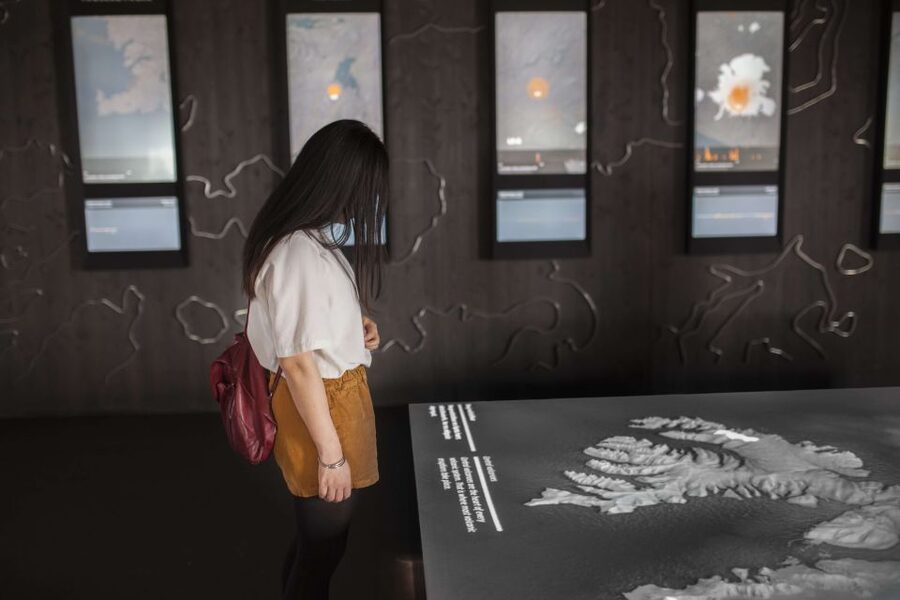
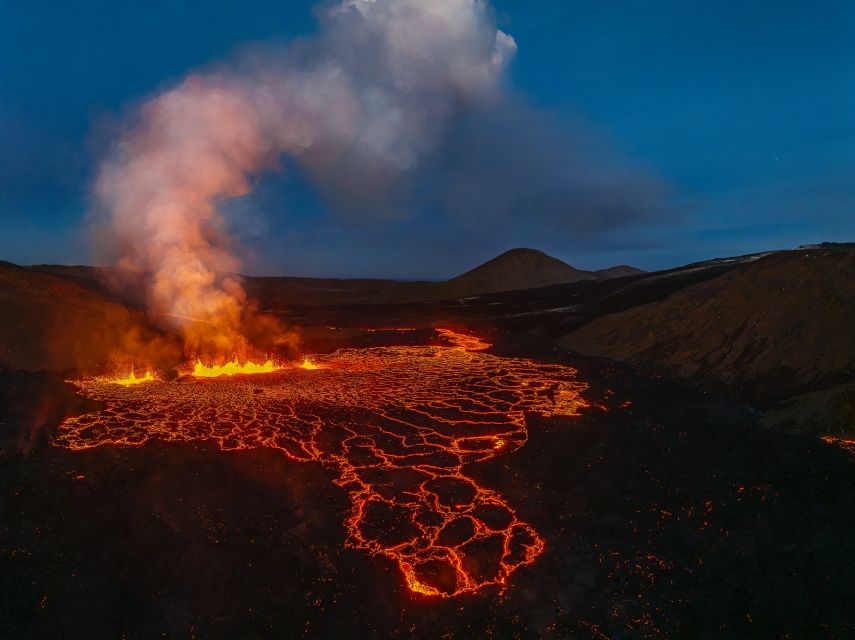
The cinema is one of the strongest parts of Lava Centre. It shows the latest eruptions, including events in Grindavík and around the Blue Lagoon. These eruptions are part of Iceland’s present story, not a distant chapter from a textbook.
The film gives you a better sense of an eruption’s scale than most roadside viewpoints can provide. From the ground, you may see steam, lava fields, or a dark ridge. On screen, you can follow the motion and force of the event in a way that is easier to grasp.
This also adds useful context if you have heard about activity on the Reykjanes Peninsula but have not been able to visit the affected areas. The cinema brings those events into the wider story of Iceland’s volcanic systems.
The film is likely to be the most dramatic part of the experience. It is also why I would not rush in, even if you plan to spend only an hour at Lava Centre. Give yourself time to watch it properly rather than arriving just before your next scheduled stop.
The cinema does not turn the visit into an adventure tour. You are observing recorded eruptions in a controlled indoor setting. That makes it suitable for families and for anyone who wants a clear introduction without hiking over rough ground or waiting for volcanic activity.
The volcano views from the observation deck
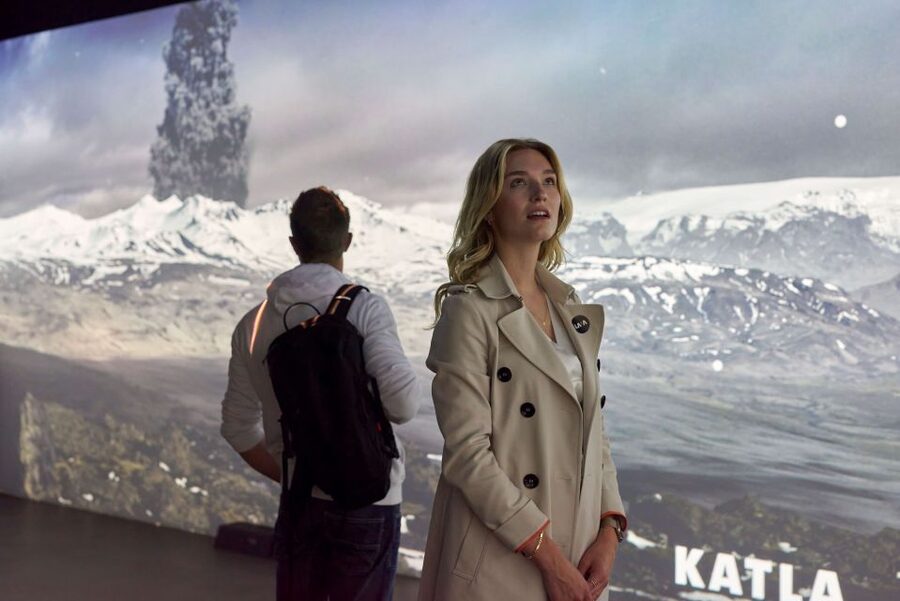
After the indoor displays, step outside for the view. The observation deck looks toward four large, active but currently dormant volcanoes, along with a group of volcanic islands.
Eyjafjallajökull is familiar to many people because of its 2010 eruption and the ash cloud that disrupted air travel across Europe. Katla is another major Icelandic volcano, and Hekla is among the country’s best-known volcanic peaks. Seeing these names as real mountains rather than labels on a map gives the exhibition a satisfying finish.
Weather will shape this part of the visit. Iceland’s skies can change quickly, so you may get a broad panorama or only partial views. The deck is worthwhile, but do not choose Lava Centre solely for the viewpoint. The indoor material remains the reliable part of the experience.
The view also helps you compare volcanic forms. The four volcanoes are not identical, and the surrounding islands add another reminder that eruptions can build land in different ways. If you have already visited black beaches, lava fields, or geothermal areas, you may find yourself identifying the forces you learned about inside.
How long should you allow?
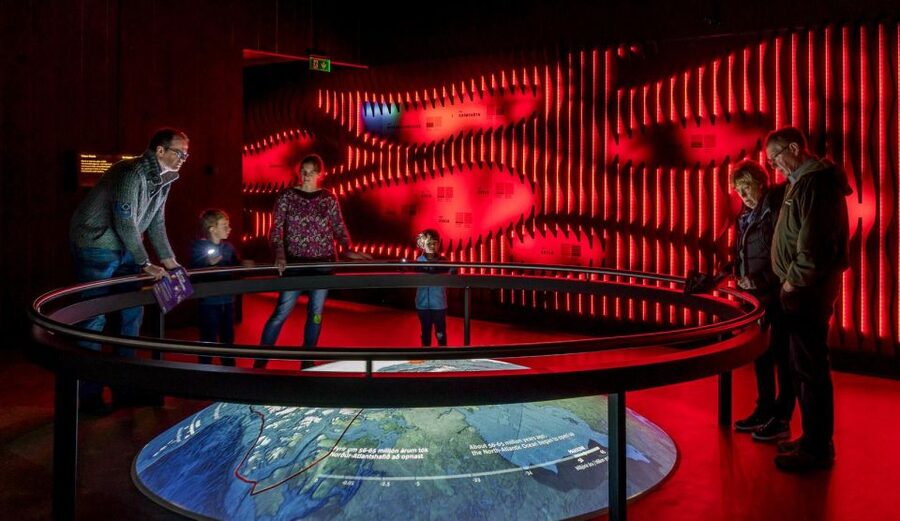
The admission is valid for one day, so you do not need to treat the site like a timed ride. For most people, about one hour is a sensible starting point. That allows time for the main interactive stations, the film, the earthquake section, and a look from the observation deck.
You can stay longer if you read every explanation or have children who want to repeat the hands-on parts. The experience does not appear designed to fill an entire day, though. Its value comes from fitting a concentrated lesson into a larger South Iceland route.
I would allow extra time for the cinema and outdoor platform rather than adding a vague buffer to the whole visit. If the weather is clear, you may want to linger outside. If the conditions are poor, the indoor sections carry most of the visit.
The site offers support for younger children, including ear muffs, flashlights, and teddy bears. Those details suggest a family-friendly setup, though children who dislike loud sounds or simulated motion may prefer to watch parts of the experience rather than take part.
Is $42 a fair price?
At $42 per person, Lava Centre is not a cheap quick stop. The value depends on how much use you make of the exhibition.
I think the price is easier to justify if you have a strong interest in Iceland’s geology, want an indoor activity during uncertain weather, or are visiting with children who learn best through movement and visual displays. You get three linked elements: the interactive exhibition, the eruption cinema, and the observation deck.
It is less convincing if you only want to see a volcano from a platform. The views are a bonus, not the entire product. You are paying for the explanations and the presentation of Iceland’s volcanic story.
Compared with a long guided excursion, the attraction also gives you control over your pace. You can move quickly through familiar material or pause at the sections that interest you. English and Icelandic are supported, and there is no requirement to keep up with a group leader.
I would see it as a useful educational stop rather than a must-buy attraction for every itinerary. If you are already planning several museums and indoor sites, you may want to compare priorities. If your day is mostly waterfalls, beaches, and outdoor viewpoints, Lava Centre adds a welcome change of pace.
Who will get the most from Lava Centre?
I would recommend it most strongly to:
- Families who want a practical introduction to volcanoes
- Visitors curious about the eruptions around Grindavík and the Blue Lagoon
- Anyone driving through South Iceland in uncertain weather
- People who want to understand black sand, geysers, lava, and volcanic mountains
- Visitors who prefer interactive displays to long guided lectures
- Anyone who wants to see major volcanoes from an accessible viewing platform
It is also a good choice for those who want more context before visiting other volcanic areas. You may look at a black beach differently after learning how lava and tephra form. A geothermal field becomes easier to interpret when you understand the heat below the crust.
I would be more cautious about recommending it to someone with very limited time who only wants outdoor scenery. In that case, the South Coast’s waterfalls, beaches, and mountain views may come first. Lava Centre earns its place when you want to understand what you are seeing.
Practical details that matter
The experience is wheelchair accessible, which makes the indoor exhibition and observation deck available to a wider range of visitors. Wheelchairs are included among the available facilities.
English and Icelandic are the stated languages, and a host or greeter is available in those languages. No named guide is provided, since this is primarily a self-guided exhibition rather than a walking tour led by one person.
Food and drinks are not included. Plan around that, especially if you are building the visit into a longer driving day.
You can cancel up to 24 hours in advance for a full refund, and reserve now while paying later. The admission is valid for one day, with starting times based on availability.
Should you book Lava Centre?
Book it if you want Iceland’s volcanic story explained in a way you can see, hear, and feel. The strongest parts are the earthquake simulator, the recent eruption film, and the clear connection between the displays and the real volcanoes outside.
Skip it if your Iceland schedule is already packed and you are interested only in outdoor views. At $42, it deserves more than a quick glance. For the right visitor, though, about an hour here can make the rest of South Iceland far more understandable.
FAQ
Where is Lava Centre located?
Lava Centre is in the Southern Region of Iceland, surrounded by major volcanoes including Eyjafjallajökull, Katla, and Hekla.
How much does admission cost?
The listed price is $42 per person.
How long does the visit take?
The admission is valid for one day, but you can plan about one hour for the main exhibition, cinema, and observation deck.
What is included in the admission?
Admission includes the Lava Centre exhibition, cinema, and observation deck.
Are food and drinks included?
No. Food and drinks are not included.
Can I see real volcanoes from Lava Centre?
Yes. You can view four large, active but dormant volcanoes and a group of volcanic islands from the Local Volcano section or observation deck.
Does Lava Centre show recent eruptions?
Yes. The cinema includes footage of recent eruptions in Grindavík and around the Blue Lagoon.
Can I experience a simulated earthquake?
Yes. The Trembling Earth section includes an earthquake simulator and a live earthquake map.
Is Lava Centre wheelchair accessible?
Yes. The experience is wheelchair accessible.
What languages are available?
English and Icelandic are available, including host or greeter support.
Can I cancel my booking?
You can cancel up to 24 hours in advance for a full refund.
More Museums in Iceland
- Tokyo: Mt. Fuji, Owakudani, Hakone Shrine, & Open-Air Museum
★ 4.7 · 25 reviews - Tenerife: MUNA Museum Admission Ticket and Teide Legend Tour
★ 4.6 · 10 reviews
Just added around Iceland
- Private Tour Tailor Made Tour from Akureyri e.g Lake Myvatn, Godafoss, Dettifoss★ 4.5 · 6 reviews
- Lake Mývatn and Goðafoss Shared Shore Excursions★ 4.5 · 57 reviews
- Small-Group Lake Mývatn Tour from Akureyri★ 4.5 · 5 reviews
- Lake Mývatn Private Tour★ 4.5 · 7 reviews
- Full-Day Lake Mývatn & Goðafoss Small Group Tour★ 5.0 · 12 reviews
- Lake Mývatn and Goðafoss Shore Excursion★ 4.5 · 14 reviews
- Myvatn Nature Baths & Goðafoss Waterfall Akureyri Shore Excursion★ 4.5 · 75 reviews
- Group: Lake Myvatn and Godafoss Tour From Akureyri Port★ 5.0 · 9 reviews
Iceland Volcano Tours, compared.
Reykjavik: Golden Circle Full-Day Tour with Kerid Crater
Read our review →
From Reykjavik: Golden Circle, Kerid, & Secret Lagoon Tour
Read our review →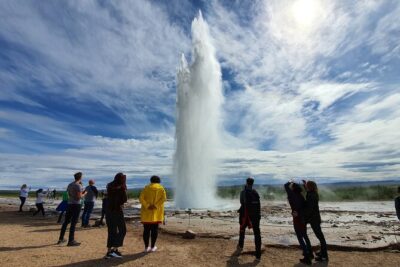
Small-Group Golden Circle, Blue Lagoon with Ticket & Kerid Crater
Read our review →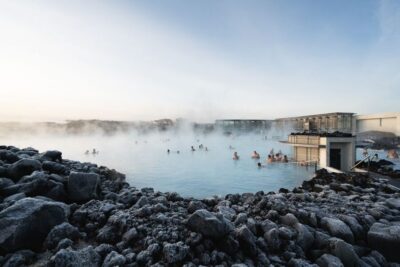
Reykjavik: Golden Circle, Kerid Crater, & Blue Lagoon Tour
Read our review →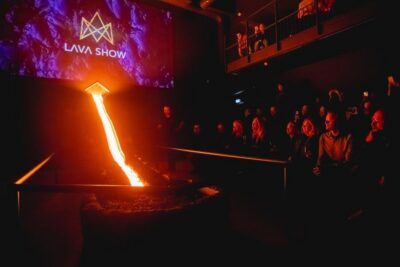
Reykjavik: LAVA SHOW – Immersive Experience Entry Ticket
Read our review →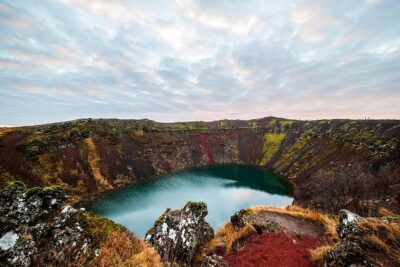
Golden Circle with Kerid Volcanic Crater Day Tour from Reykjavik
Read our review →
Browse the lists this tour appears in