
REVIEW · TOKYO
Tokyo: Mt.Fuji & Lake Kawaguchiko 1-Day Bus Tour w/Optional Lunch
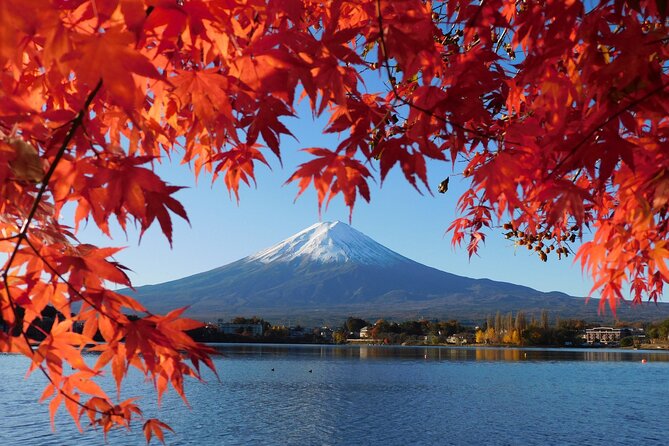
Mt. Fuji is the star, but the best part of this day trip is seeing it from several very different angles. You climb to Chureito Pagoda, stroll beside Lake Kawaguchiko, photograph flowers at Oishi Park, and finish in a traditional thatched-roof village beside Lake Saiko.
I like the simple transport from central Tokyo and the mix of famous views with a bit of rural Japan. I also like the guides, especially names such as Mitsuko, Eric, Chen, and Omar, who are often praised for clear explanations and friendly help with photos. The catch is the schedule: this is a long, popular bus trip, and clouds, traffic, or a busy day can reduce your viewing time.
Key points to know before booking
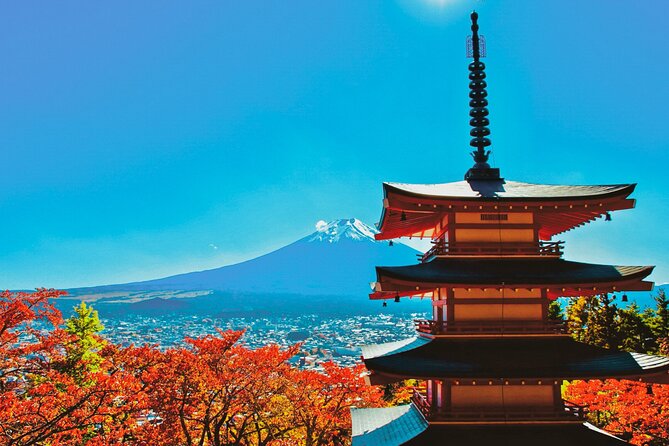
- Chureito Pagoda requires 398 steps: The famous pagoda and Mt. Fuji view are worth the climb, but this is not a flat sightseeing day.
- Four distinct sightseeing stops: You get a shrine and viewpoint, lake scenery, flower gardens, and a historic-style village.
- Lunch is optional: Choose a lunch package when booking, or pay for your own meal at Kawaguchiko Craft Park.
- Mt. Fuji is never guaranteed: Even on a clear-looking day in Tokyo, clouds can cover the mountain near the lakes.
- The bus returns to Shinjuku: Hotel pickup is not included, and the only listed drop-off is the Shinjuku Station West Exit area.
- Plan for a full day: The tour lasts about 9 to 10 hours and can run late because of road traffic.
Why this Tokyo day trip works
At $77.96 per person, this is priced as a practical way to reach the Mt. Fuji area without piecing together trains, buses, and local connections. You get an air-conditioned vehicle, live commentary, admission to Saiko Iyashi no Sato Nenba, and several carefully chosen viewing points.
The value comes from the route rather than from long stays at one attraction. You see more in one day than you could comfortably manage on your own, especially if you are new to Japan and do not want to work out the transport system around the Fuji Five Lakes.
Still, you should know what kind of experience you are buying. This is a sightseeing circuit, not a quiet countryside retreat. The bus may carry up to 94 people, and the most famous stops can feel busy. The schedule gives you enough time for photos and a walk, but not the freedom to linger for hours.
The strongest feature is variety. At Chureito, you get the classic Japan postcard. At Kawaguchiko, the mountain meets open water. Oishi Park adds flowers and seasonal color. Saiko Iyashi no Sato Nenba gives the day a cultural finish, with thatched roofs and traditional-style buildings.
More Mount Fuji Tours in Tokyo:
- Mt Fuji and Hakone 1-Day Bus Tour Return by Bullet Train
★ 5.0 · 26,383 reviews - Mt Fuji & Hakone Cruise, Drum Show Bullet Train 1 Day from Tokyo
★ 4.0 · 7,413 reviews - Tokyo Mt Fuji 5th St & Hakone Cruise Bus Tour w/Bullet Train
★ 4.4 · 5,024 reviews
Meeting the bus in Shinjuku
You make your own way to the Shinjuku Post Office at 1-chōme-8-8 Nishishinjuku. This is in the Shinjuku Station West Exit area, and it is the starting point as well as the only listed return point.
Arrive at least 10 minutes early. This matters. The bus leaves on time, and late arrivals or people at the wrong meeting point are not refunded. The guide holds the flag shown in the booking material, and you should confirm your name when you arrive.
There is no hotel pickup. That keeps the price down, but it means you need to allow extra time to reach Shinjuku. Keep your booking details and the correct QR code ready, since the operator assigns buses and guides by meeting point.
The drive from Tokyo is part of the day’s uncertainty. Traffic can be heavy, and the transfer times are only estimates. Do not schedule a restaurant reservation, airport transfer, cruise, or other fixed activity immediately after the tour. The stated return time is useful for planning dinner, but it is not a guarantee.
Chureito Pagoda and the 398-step climb
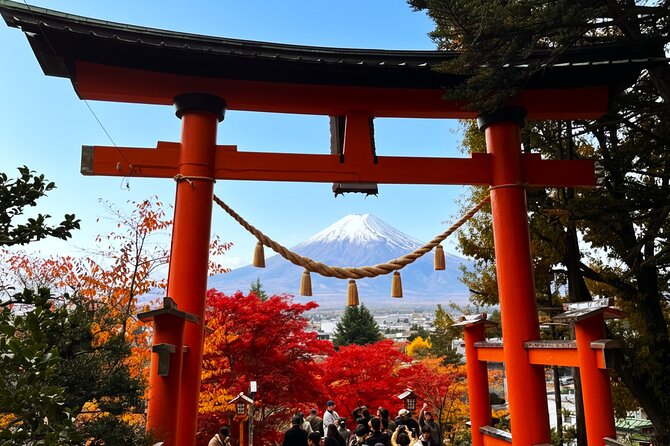
The first major stop is Arakurayama Sengen Park, home to the famous Chureito Pagoda view. From the observation area, the five-story pagoda sits in front of Mt. Fuji, with the city and surrounding hills below. In spring, cherry blossoms add the detail that made this view famous around the world.
Getting there takes effort. The Niikurayama Asama Park Observation Deck sits high on the slope, and the route includes 398 steps. You do not need special climbing equipment, but you should be comfortable with stairs and uneven walking. Take your time, especially if you are visiting in cold weather or carrying a heavy camera bag.
This stop is likely to be the day’s most photographed location. It is also the place where time can feel tight. You need to climb, take in the view, photograph the pagoda, and return to the bus within the assigned hour. I would wear shoes with a good grip and keep water handy.
The site also connects the view to local religious history. Shinkura Fuji Sengen Shrine was founded in 750, and its pagoda is part of the shrine setting. You are not just looking at an isolated photo point. You are seeing a shrine complex tied to the long cultural importance of Mt. Fuji.
The main limitation is weather. The pagoda can be perfectly visible while Mt. Fuji disappears behind cloud. The tour operates in poor weather unless the operator tells you otherwise, so do not book this day only on the assumption that the mountain will appear.
Kawaguchiko Craft Park and the lunch choice
The route then moves to the northern side of Lake Kawaguchiko and Kawaguchiko Craft Park. This is the main mid-day stop, with about two hours assigned to the area.
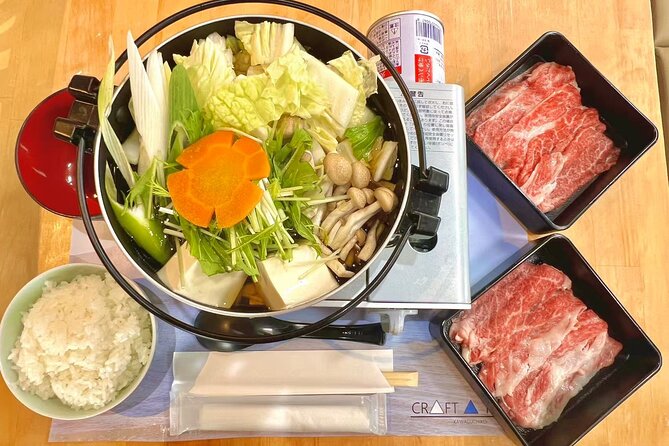
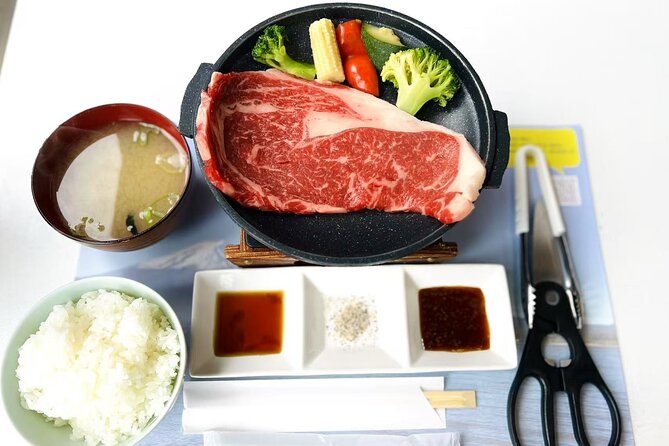
You can stroll near the lake, enjoy views toward Mt. Fuji, and choose lunch. The lunch upgrade offers different options, and the supplied examples include regional dishes, noodles, and Kobe beef. Some meals are praised for flavor, though portions may feel modest to anyone expecting a large feast.
If you skip the lunch option, you pay for your own meal. That gives you more control, but you should keep an eye on the departure time. A preselected meal is convenient on a tightly timed bus tour, particularly if you do not want to spend part of the stop searching for food.
The craft park adds a local-production angle to a day otherwise built around scenery. You can look around the craft setting and take a lakeside walk. The lake is often calmer than the first stop, and the view changes from the pagoda composition to a broad look across open water.
Several other attractions sit around Lake Kawaguchiko, including the Music Forest, Itchiku Kubota Art Museum, Oishi Tsumugi Traditional Craft Museum, and the Mount Fuji Museum. They are not presented as scheduled stops on this tour, so you should not expect time to visit them. Their presence does explain why this lake area is more than a single photo stop.
A few more volcano tours around Tokyo worth a look
- Tokyo: Mt Fuji Area Guided Tour with Traditional Lunch
★ 4.8 · 118 reviews - Tokyo: Mount Fuji Private Tour with Scenic Lunch Experience
★ 4.5 · 16 reviews - Pompeii and Mount Vesuvius Day Trip from Rome with Pizza Lunch
★ 4.5 · 6,151 reviews - From Rome: Pompeii Day Trip with Optional Vesuvius and Lunch
★ 4.6 · 5,067 reviews
Oishi Park and seasonal flowers
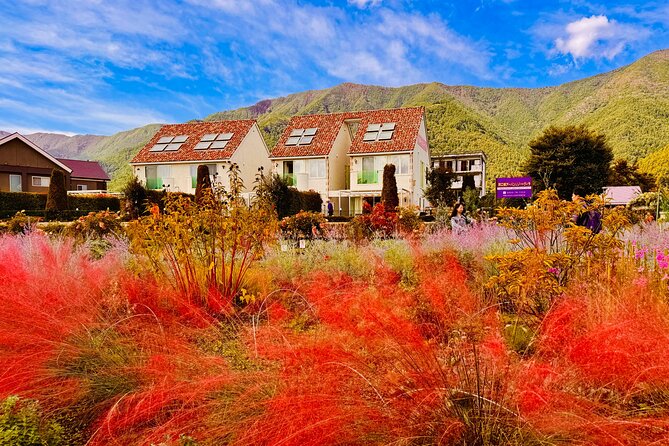
Oishi Park is a short but worthwhile stop, with about 30 minutes to walk and take photos. It sits along Lake Kawaguchiko, where flowers line the paths and Mt. Fuji may appear across the water.
The park is at its best when you use the time simply. Walk the lakeside path, look for flower-and-mountain compositions, and check the water for a reflection if conditions are calm. The scenery changes through the year, so the exact colors depend on your date.
Nearby Fuji Oishi Hana Terrace keeps its shops low and spacious so they do not overpower the natural setting. The Kawaguchiko Natural Living Center also offers souvenirs, including blueberry-related products. These additions make the stop useful if you want a small purchase, but half an hour passes quickly.
Oishi Park can be a weaker stop if the mountain is hidden or if you prefer museums to gardens. It is also another popular photo location, so do not expect complete solitude. Its value is that it provides a different view of the area after the pagoda and lake visit.
In November, the route changes slightly to include a foliage corridor with more than 400 maple trees. This seasonal adjustment is a good reason to consider an autumn departure, though the exact appearance depends on timing and weather.
Saiko Iyashi no Sato Nenba’s thatched roofs
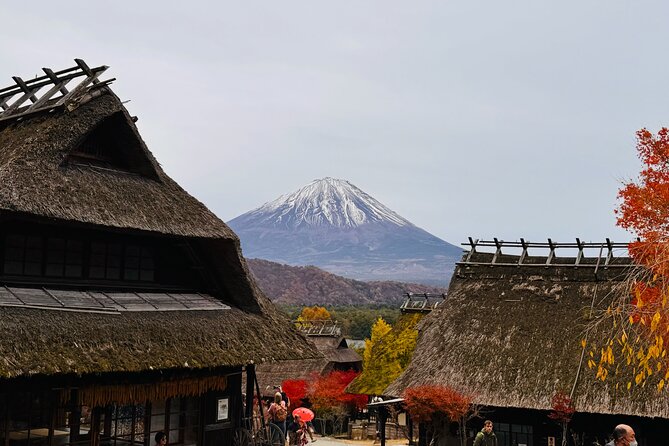
The final sightseeing stop is Saiko Iyashi no Sato Nenba, a traditional village beside Lake Saiko. You get about an hour to walk among thatched-roof houses and see a recreated picture of rural Japanese life.
After the busy viewpoint and commercial lake area, this village gives the day a more settled ending. The buildings, mountain setting, and local goods create a stronger sense of place than a standard souvenir stop. You can browse traditional-style items, snacks, and gifts, while still having time to look around at your own pace.
The village is especially useful for anyone who wants some cultural context but does not have time for a separate rural excursion. It is not a substitute for a museum visit or a long stay in a historic town, yet it gives you something beyond mountain photographs.
Some people will like this stop best because it feels distinct from the rest of the route. Others may find the village too reconstructed or commercial. I would treat it as a pleasant final stop, not the sole reason to book the tour.
Guides, commentary, and the bus experience
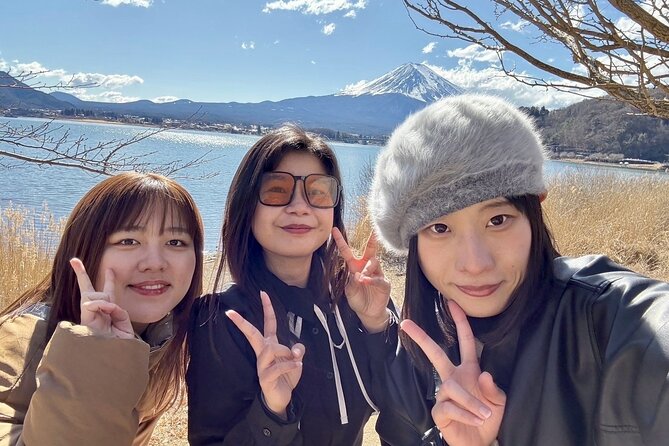
The tour includes live commentary on the bus. Guide quality can shape a long day, and the named guides associated with this departure include Mitsuko, Eric, Chen, Omar, Kogi, Yuki, and Mizuki. The strongest descriptions focus on warmth, language ability, time management, local explanations, and practical photo advice.
Mitsuko is praised for her energy and personal attention, including helping solo participants with photographs. Eric is noted for explaining Mt. Fuji and caring for families. Chen is described as fluent in English and Chinese, while Omar is singled out for humor and useful information. Mizuki is appreciated for pointing out less crowded photo spots and affordable treats.
Your assigned guide may be someone else, and the exact language arrangement depends on the group. English and Chinese commentary may be given on the same bus. That can be helpful for mixed groups, though it may also mean that commentary takes a little longer at times.
The vehicle is air-conditioned, modern, and described as clean. That matters because the day involves a substantial amount of road time. The driver handles the mountain roads and Tokyo return, while you can relax between stops instead of watching train connections and bus timetables.
What the $77.96 price really covers
The fare is reasonable if you value convenience and want several Fuji-area stops in one day. It covers transport, taxes, handling charges, live commentary, and admission to the thatched village. The air-conditioned bus also saves you the cost and effort of arranging separate regional transport.
Lunch is not automatically included. If you want the meal package, select it when booking. Otherwise, budget for food at Kawaguchiko Craft Park. Hotel pickup and drop-off are also excluded, so your day begins and ends in Shinjuku.
The price becomes less attractive if you want a slow, private experience or only care about one exact Fuji viewpoint. A self-planned visit could give you more control over timing, but it would require more research and a willingness to manage public transportation.
The group may be as large as 94 people. That is a major practical detail. You should expect a standard coach excursion, not a small-group tour where the guide can adjust the schedule for each person.
Weather, clothing, luggage, and timing
Mt. Fuji visibility depends on weather, and no tour operator can guarantee a clear view. A cloudy day can still give you the pagoda, lake, village, and mountain foothills, but the central photo may be missing.
Check the forecast, but do not assume it is perfect. Conditions around the mountain can change quickly. The best strategy is to value the complete route rather than treating the tour as a single chance to photograph the summit.
Wear comfortable shoes for the 398 steps and walking around the parks and village. Bring a layer for the cooler mountain area, especially if Tokyo feels warm. Keep valuables and anything you need during the day with you.
One piece of luggage is allowed per person. Trunk luggage must stay within a combined height, width, and depth of 155 centimeters, and items stored below the bus cannot be reached between stops. For a normal day bag, this is simple. For larger luggage, check the size before booking.
Free cancellation is available up to 24 hours before the start time. Changes or cancellations inside that window are not refunded, and the operator may offer another date or a full refund if the minimum number is not reached.
Who should book this tour?
I would choose this tour if you have one free day in Tokyo and want a broad introduction to Mt. Fuji country without managing regional buses yourself. It suits first-time visitors, families comfortable with stairs, solo visitors who appreciate help with photos, and anyone who wants scenery plus a little traditional culture.
It is also a good fit if your priority is variety. You get four main stops, several mountain viewpoints, a lake walk, seasonal flowers, and a thatched village in one day.
I would hesitate if stairs are difficult for you, if you need a guaranteed return time, or if you dislike group schedules. You may also prefer a smaller excursion if 94 people feels too large.
FAQ
Where does the Mt. Fuji tour start and end?
The tour starts and ends at the Shinjuku Post Office in the Shinjuku Station West Exit area. This is the only listed drop-off point, and hotel pickup is not included.
How long does the tour last?
The experience lasts approximately 9 to 10 hours. Road conditions can cause delays, so avoid booking a time-sensitive activity immediately afterward.
Is lunch included?
Lunch is included only if you select the lunch option when booking. If you do not select it, lunch is at your own expense at Kawaguchiko Craft Park.
How difficult is the Chureito Pagoda stop?
The observation deck requires climbing 398 steps. A moderate level of physical fitness is recommended, and comfortable shoes are sensible.
Will I definitely see Mt. Fuji?
No. Visibility depends on weather conditions, and the mountain may be covered by clouds. The tour operates unless the local operator tells you otherwise.
Is transportation included?
Yes. The tour uses an air-conditioned vehicle from the Shinjuku meeting point and includes live commentary on board.
Can I bring luggage?
One piece of luggage per person is allowed. Luggage stored in the trunk must not exceed 155 centimeters in combined height, width, and depth, and you cannot access it between stops.
Should you book it?
Book this tour if you want an efficient first look at Mt. Fuji, Lake Kawaguchiko, and the surrounding countryside from Tokyo. The strongest reasons are the varied route, easy bus transport, helpful guides, and the chance to see Chureito Pagoda and Saiko Iyashi no Sato Nenba in the same day.
Just keep your expectations realistic. The bus may be large, the schedule can feel brisk, and Mt. Fuji may hide. If you can accept those limits, $77.96 buys a useful, well-packed day that gets you beyond Tokyo and back in time for an evening meal, traffic permitting.
More Day Trips in Tokyo
- Mt Fuji & Hakone Cruise, Drum Show Bus 1 Day from Tokyo
★ 4.0 · 1,287 reviews - Mt Fuji and Hakone 1-Day Bus Tour Return by Bus
★ 4.5 · 929 reviews - Tokyo: Mt. Fuji, Kamakura, Big Buddha, & Lake Ashi Day Trip
★ 4.5 · 867 reviews - Mt. Fuji Day Trip from Tokyo with English Speaking Driver Guide
★ 5.0 · 443 reviews
Just added around Tokyo
- Tokyo/Yokohama: Mt. Fuji and Hakone Private Day Tour★ 5.0 · 64 reviews
- Tokyo:Mt Fuji & Hakone Day Tour with English Speaking Driver★ 5.0 · 26 reviews
- Tokyo:Customizable Private Day Trip to Mt.Fuji & Safari Park★ 4.8 · 6 reviews
- Tokyo:Fuji-Kawagu Cable Car (Ticket Inc.) Shinkurayama&Panos★ 3.9 · 7 reviews
- Tokyo: Private Day Trip to Mount Fuji and Hakone★ 4.9 · 8 reviews
- Tokyo to Mount Fuji and Hakone: Private Full-Day Tour★ 3.7 · 5 reviews
- Tokyo: Private Mount Fuji Tour with Pickup and Drop-Off★ 4.7 · 69 reviews
- Tokyo: Private Mount Fuji Day Trip with Private Guide★ 3.5 · 5 reviews
Tokyo Volcano Tours, compared.
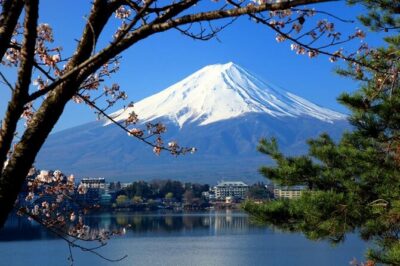
Mt Fuji and Hakone 1-Day Bus Tour Return by Bullet Train
Read our review →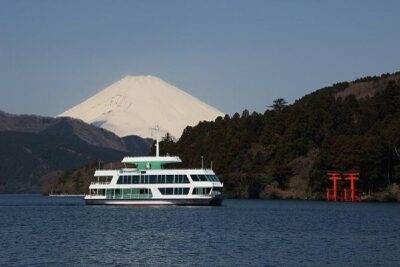
Mt Fuji & Hakone Cruise, Drum Show Bullet Train 1 Day from Tokyo
Read our review →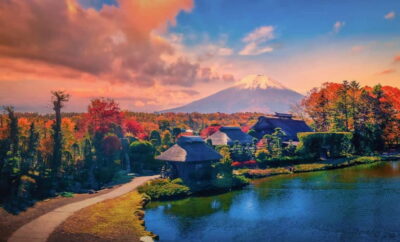
From Tokyo: Mount Fuji Full-Day Sightseeing Trip
Read our review →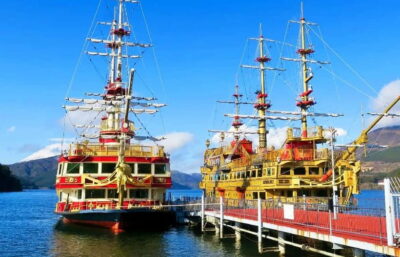
Tokyo: Mt. Fuji Tour, Hakone Ropeway, Owakudani, Lake Ashi
Read our review →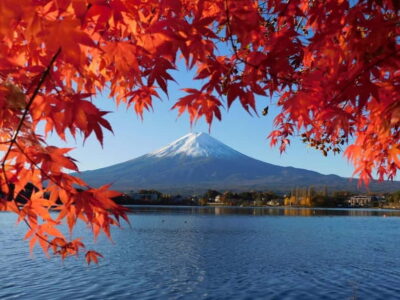
Tokyo:Mt.Fuji,Kawaguchiko Oishi Park,Arakurayama Sengen Park
Read our review →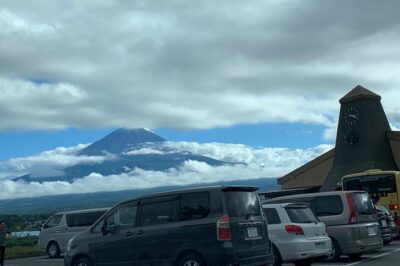
Private Tour to Mt. Fuji and Hakone (Fully Licenced Operator)
Read our review →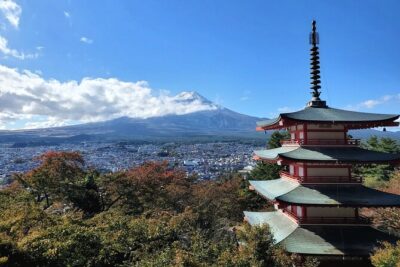
Mount Fuji Full-Day Private Tour from Tokyo (Customizable)
Read our review →
Mt Fuji & Hakone Cruise, Drum Show Bus 1 Day from Tokyo
Read our review →Browse the lists this tour appears in