
REVIEW · ITALY
Pompeii: Archeological Tour & Wine Tasting at Mt. Vesuvius
Pompeii gives you the morning’s drama: an ancient city stopped in its tracks by Vesuvius. You’ll walk through the original Porta Marina, the Forum, Roman restaurants, frescoed homes, and streets worn smooth by daily life. Then the same volcano provides the setting for lunch and wine at Casa Setaro Winery. The history and food connect neatly, which is what makes this more than a standard ruin visit.
I like the small group of no more than 10, since it gives guides such as Ricardo, Roberta, Enrica, and Sonia room to explain details and answer questions. I also like the practical mix of archaeology and local food: you spend two focused hours at Pompeii, then sit down to several wines, Neapolitan pasta, caponata, and tiramisù.
The main drawback is time. Two hours covers the key sights, but Pompeii is enormous, and you won’t see everything. The winery transfer also means you cannot simply stay behind to wander the ruins after the guided visit.
What makes this Pompeii and Vesuvius tour worth considering
- Start at Porta Marina Superiore: Enter Pompeii through the main ancient gate, with a direct route into the archaeological park.
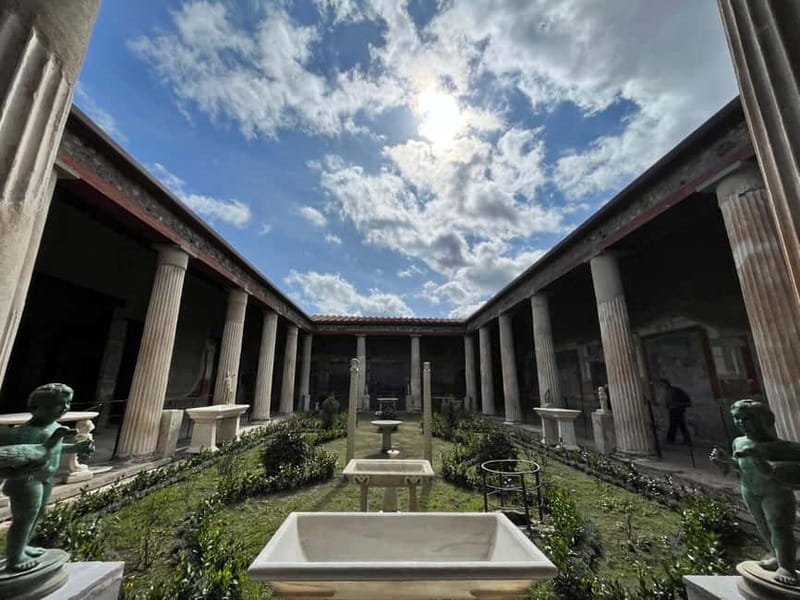
- See recently opened Roman homes: Frescoes and mosaics add a close look at domestic life, not just grand public buildings.
- Learn from an archaeologist: Guides explain the city’s layout, daily routines, religion, commerce, and famous discoveries.
- Eat at Casa Setaro Winery: The 100-minute stop combines Vesuvian food, four wines, vineyard traditions, and a view toward Mount Vesuvius.
- Keep the group personal: With up to 10 people, you can usually hear the guide clearly and ask questions.
- Plan for official ID: Pompeii tickets are issued in each participant’s full name, so bring the original passport or identity card.
Pompeii in two hours: a brisk but useful introduction

The tour begins at Porta Marina Superiore, where you should meet your guide 10 minutes before the scheduled start. This matters because the Pompeii Archaeological Park now uses named tickets. You must provide the full name and surname of every participant, including children, and carry the original passport or identity card.
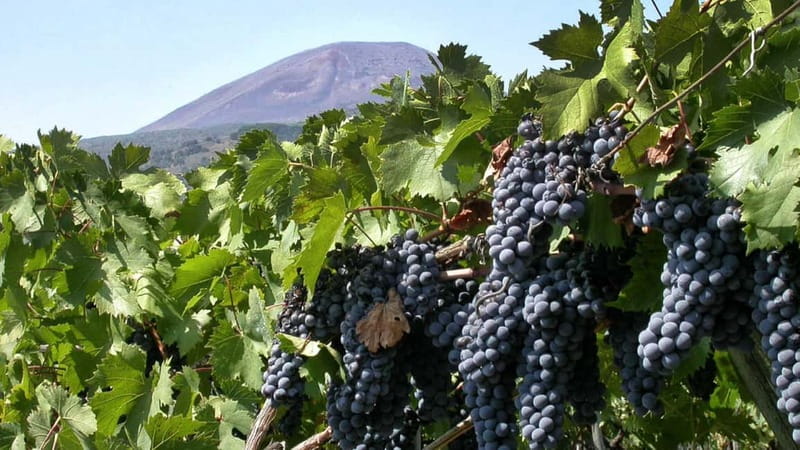
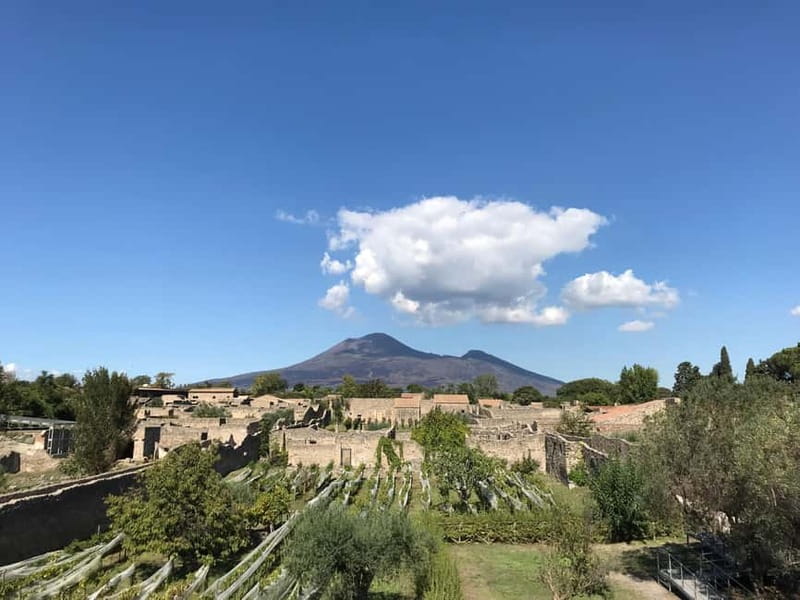
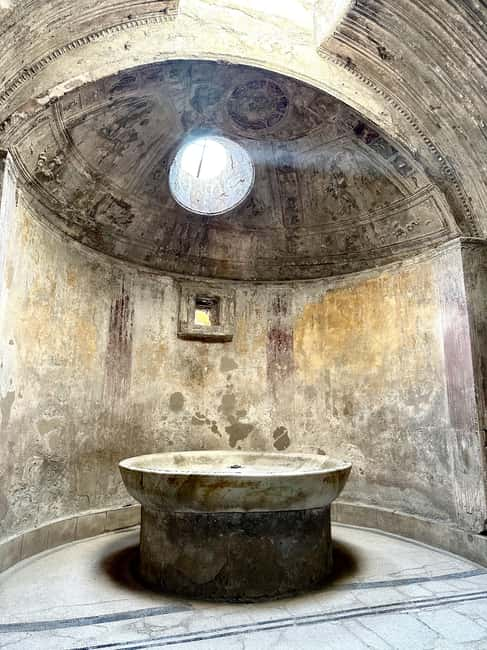
From the gate, the guide helps you get your bearings before leading you into the ancient city. Mount Vesuvius is visible as you pass through the old Porta Marina and approach the Suburban Bath. That first view gives the whole visit its setting: this was a working Roman city living beneath an active volcano.
The route continues to the Basilica, Forum, market, and major temples. These are the places where Pompeii’s public life took shape. Your guide can explain how the religious, political, and commercial parts of town fit together, which is far more useful than simply seeing one impressive ruin after another.
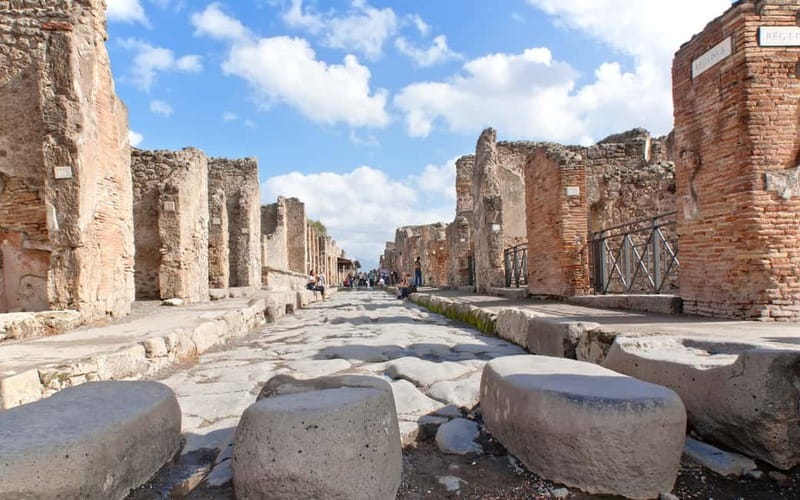
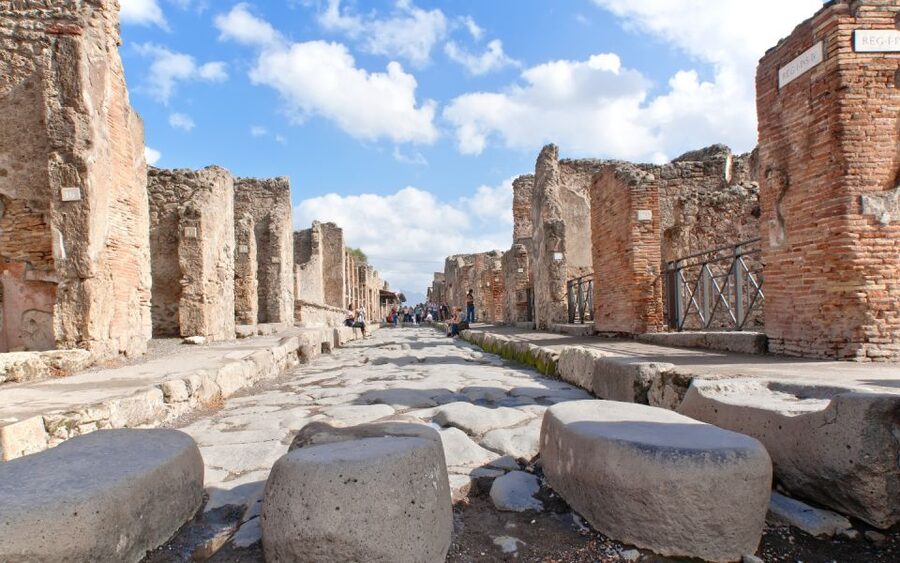
You’ll also walk along the Decumanus Major, one of the city’s principal streets. Shops, restaurants, and other commercial spaces help turn Pompeii from a collection of walls into a place where people bought food, conducted business, worshipped, and met friends.
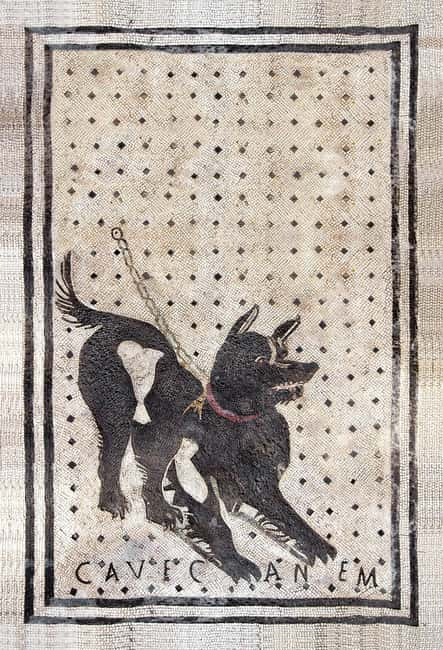
One stop includes the famous Roman sign connected with sexuality. It is an arresting reminder that Pompeii was not a sanitized museum. The city’s signs, paintings, kitchens, workshops, and houses show ordinary life in unusually direct form.
More Vesuvius and Pompeii Tours in Italy:
- From Naples: Pompeii Ruins & Mount Vesuvius Day Tour
★ 4.3 · 11,459 reviews - Pompeii and Mount Vesuvius Day Trip from Rome with Pizza Lunch
★ 4.5 · 6,151 reviews - From Rome: Pompeii Day Trip with Optional Vesuvius and Lunch
★ 4.6 · 5,067 reviews
Frescoes, mosaics, shops, and Roman homes
The tour includes several domus, or Roman houses, with frescoes and mosaics. Some of these homes have only recently reopened, so their inclusion can give the visit a fresher feel than a route limited to the usual headline sights.
I find the houses especially valuable because they show how Pompeii’s residents organized their private world. Public monuments tell you about power and religion. A home tells you about taste, status, decoration, and the way rooms connected.
The guide also points out shops, Roman restaurants, and other small spaces along the streets. Look for the practical clues: counters, entrances, paving, and the relationship between commercial rooms and houses. These details make the city feel lived in rather than frozen in a textbook illustration.
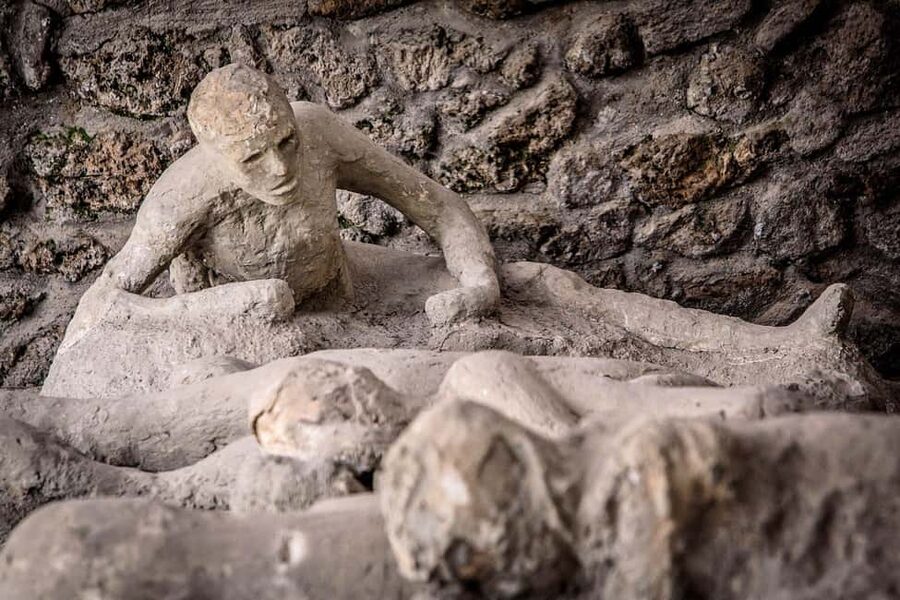
The plaster casts of victims are among Pompeii’s most emotional sights. Their condition can vary depending on which areas are open, and one account of the tour specifically wished for more time with the casts. Keep your expectations flexible, since Pompeii changes access to individual buildings and areas during maintenance.
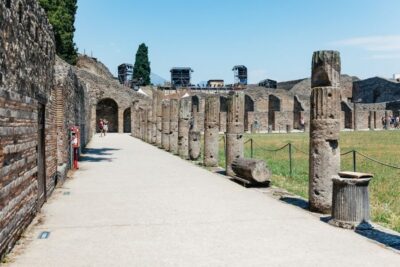
The theater and Gladiators Barracks may also be included when open. The theater offers a sense of public entertainment, while the barracks connect the city to the spectacle of gladiatorial combat. The tour description notes that the theater can close for maintenance, so treat these stops as subject to conditions on the day.
Why the guide makes or breaks the Pompeii visit
Pompeii can overwhelm you. Without context, you see broken columns, painted walls, and streets without knowing how they fit together. A strong guide gives the ruins a sequence and a human scale.
The guides named in the tour feedback include Ricardo, Roberta, Enrica, Sonia, Nenna, Livio, and Kyra. Ricardo is described as especially strong on Roman history and culture, while Roberta is praised for balancing facts with clear explanations and for seeking shade during a hot visit. Enrica is noted for fitting a great deal into a short visit and using headsets so the group could hear her in larger spaces.
Those details matter. Pompeii is often hot, exposed, and crowded. A guide who adjusts the pace, finds shade, and uses a microphone or headset can make the difference between an absorbing visit and two tiring hours under the sun.
The tour is offered in English or Italian, with a maximum of 10 participants. That size is a real advantage at Pompeii, where larger groups can block narrow streets or make it difficult to hear. Still, two hours is an overview, not a full archaeological study. If Pompeii is your main reason for visiting Campania, you may want a longer standalone visit on another day.
The 15-minute ride to Casa Setaro Winery
After the Pompeii portion, your guide takes you to the free shuttle service for the short ride to the winery. The stated transfer time is about 15 minutes each way. Hotel pickup and public transportation tickets are not included, so you need to reach Porta Marina Superiore on your own.
The transfer is functional rather than a major part of the experience. One person found the van ride satisfactory but felt uneasy because the driver spoke very little English and it was not immediately clear how long the ride would take. Pay attention to the meeting instructions and stay with the group during this changeover.
The winery stop lasts about 100 minutes. That is enough time for a structured tasting and a substantial meal, but it is not a long vineyard walk or an open-ended afternoon. You’ll learn about wine production carried on by more than three generations of wine makers, then sit down to taste the local Lacryma Christi selection.
More Wine Tours in Italy:
- Naples: Pompeii and Mt. Vesuvius with Lunch and Wine Tasting
★ 4.5 · 2,454 reviews - Etna, Wine and Alcantara Tour – From Taormina
★ 5.0 · 464 reviews - Taormina: Guided Etna Wine Tasting Half-Day Tour
★ 4.7 · 444 reviews - Private 6-Hour Tour of Three Etna Wineries with food&wine tasting
★ 5.0 · 417 reviews
A Vesuvian lunch with four wines
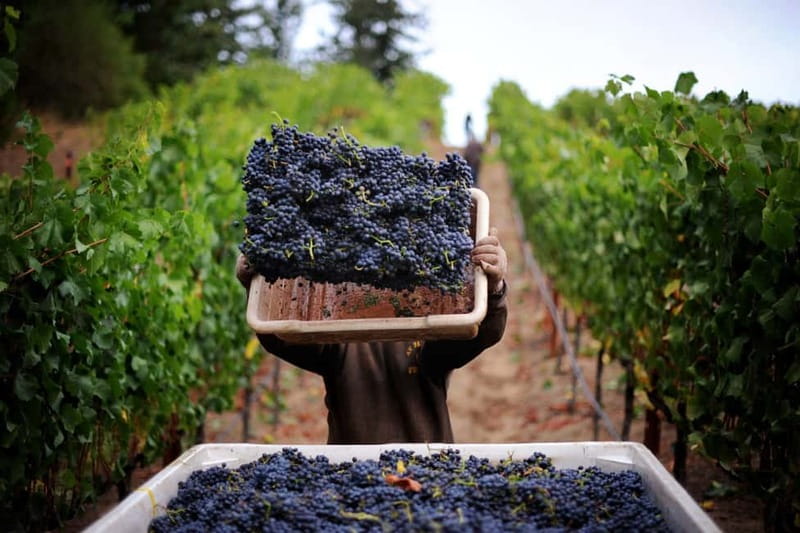
The meal is one of the strongest reasons to choose this package. It begins with an aperitif and three small finger foods, followed by handmade bread, buffalo butter, local anchovies, and olives. The menu then moves into an antipasto, Neapolitan ragù with local pasta, and a large caponata made with red and yellow tomatoes.
The food is generous enough to function as lunch rather than a token pairing plate. The wines are served alongside the courses, giving you a chance to notice how the flavors change with the food instead of tasting four unrelated glasses.
The meal finishes with tiramisù and a limoncello shot. This is classic Campania territory: strong local flavors, a relaxed table, and a meal that takes its time even within a fixed tour schedule.
Gluten-free menus are available, but you must tell the operator in advance. Do not wait until the day of the tour, especially if your diet is medically important.
The winery itself offers a calmer change of pace after Pompeii’s uneven paving and open sun. You can sit, eat, and look toward Vesuvius while the morning’s history settles into place. Several people also found the wines good enough to buy bottles for home, and the winery can be a pleasant stop even if you are not a serious wine collector.
How much value do you get for $135.94?
At $135.94 per person, this is not the cheapest way to enter Pompeii. The price includes the archaeological park ticket, a guided visit with an archaeologist and licensed guide, transport between Pompeii and the winery, lunch, and the wine tasting.
The value depends on how you would otherwise arrange the day. If you would pay separately for a Pompeii guide, admission, transport, a winery visit, and a full lunch, the package brings several moving parts together. You also avoid the ticket-office queue through a priority entrance.
The strongest value is convenience with substance. You are not simply paying for a meal after Pompeii. You get a guide who explains the site, named admission, a small group, a shuttle to the winery, several wines, and a proper local menu.
The weaker value is the limited Pompeii time. If you want the Villa of the Mysteries, extended time with the casts, or a slow look at many houses, two hours will feel short. You are paying for a balanced half-day, not an exhaustive archaeological visit.
Who will enjoy this five-hour experience most?
I would choose this tour if you want a clear introduction to Pompeii but also care about food and wine. It suits first-time visitors, couples, small groups, and anyone with only part of a day available in the Pompeii area.
It also works well for people who prefer a guide to build a route through a huge site. Pompeii rewards preparation, and the professional guide helps you spend your limited time on the Forum, major streets, houses, shops, theaters, and key discoveries.
Families can manage it, and one group included two children. Still, children need comfortable shoes, sun protection, and patience for a history-heavy morning followed by a long meal.
This is less suitable for someone who wants to hike Mount Vesuvius itself. The tour goes to a winery at the foot of the volcano, not to the summit trail. It is also not designed for wheelchair users, and electric wheelchairs are not permitted. One exceptional case received help from the company, but you should not assume that access can be arranged.
Practical preparation for Pompeii and the winery
Wear shoes with firm soles. Pompeii’s ancient streets are uneven, and you will spend much of the archaeological visit walking outdoors.
Bring sunscreen, an umbrella, rain gear, and comfortable clothes. Campania weather can change, and there is limited shelter across the ruins. In summer, add a hat and consider a small personal fan. One guide adjusted the route to find shade during a hot day, but you should still prepare as if much of the visit will be in direct sun.
Bring the original passport or identity card for every person in your party. The ticketing system requires full names on the tickets, and late arrival can be a problem because the tickets are personal.
The tour ends back at the Pompeii meeting point after the return van ride. It does not include hotel pickup, hotel drop-off, or public transportation tickets, so allow time to reach Porta Marina Superiore.
You can cancel up to 24 hours before the activity for a full refund, and the reserve-now, pay-later option keeps payment flexible. Check the available starting times before booking, since your onward plans depend on the five-hour schedule.
Should you book this Pompeii wine tour?
Book it if you want Pompeii plus a real Campanian meal, rather than Pompeii alone. The small group, strong archaeological guiding, named entrance, and Casa Setaro lunch make the day easy to manage and varied enough to avoid the usual ancient-site fatigue.
Skip it if you want several hours to roam Pompeii at your own pace or if the archaeological park is your main focus. Two hours gives you a well-chosen introduction, but it cannot cover a city this large.
For most first-time visitors with a free half-day, the combination is convincing. You get the Forum and Roman streets in the morning, then local wine and food with Vesuvius in view. Just arrive early, bring identification, wear sturdy shoes, and accept that this is a carefully paced overview rather than the final word on Pompeii.
FAQ
Where does the tour begin?
Meet your guide at Porta Marina Superiore at the Pompeii Ruins. You should arrive 10 minutes before the scheduled start.
How long does the experience last?
The full activity lasts five hours. The Pompeii guided visit takes about two hours, each van transfer takes about 15 minutes, and the winery stop lasts about 100 minutes.
What is included in the price?
The price includes Pompeii Archaeological Park admission, the guided Pompeii visit, an archaeologist and licensed guide, transportation from Pompeii to the winery, a Vesuvian lunch, and wine tasting.
Are hotel pickup and public transportation included?
No. Hotel pickup, hotel drop-off, and public transportation tickets are not included. You must reach the Pompeii meeting point yourself.
Which languages are available?
The live tour guide service is available in English and Italian.
How many people are in the group?
The activity uses a small group format with a maximum of 10 participants.
Do I need to bring a passport or identity card?
Yes. Pompeii tickets require the full name and surname of every participant, including children. Bring the original passport or identity card, and arrive on time because the tickets are personal.
Is a gluten-free meal available?
Yes, gluten-free menus are available if you notify the operator in advance.
Is the tour suitable for wheelchair users?
The activity is listed as not suitable for wheelchair users, and electric wheelchairs are not allowed. Accessibility arrangements should not be assumed.
More Food & Drink in Italy
- Catania: Mount Etna Morning or Sunset Day Trip with Tasting
★ 4.8 · 4,028 reviews - Etna Sunset Tour: Volcano trek, Cave & tasting from Catania
★ 4.8 · 1,290 reviews - Catania: Etna Morning Excursion with Tasting and Pickup
★ 4.8 · 1,224 reviews - From Catania: trek on Mount Etna, Lava Cave & tasting Tour
★ 4.8 · 563 reviews
Just added around Italy
- Enjoy Pompeii And Vesuvius from Amalfi Coast★ 5.0 · 13 reviews
- Vulcano, Panarea and Stromboli from Lipari★ 4.5 · 6 reviews
- Boat Tour from Lipari between Volcanoes and Uncontaminated Landscapes 4/6 pax★ 5.0 · 26 reviews
- Boat Tour to Panarea and Stromboli from Lipari★ 4.5 · 55 reviews
- Sunset excursion on the Stromboli volcano★ 4.5 · 5 reviews
- Exclusive tour of Stromboli island, Boat tour with Pasqualo★ 4.5 · 13 reviews
- TICKET VESUVIUS SKIP THE LINE WITH SUPPORT ASSISTANCE★ 3.9 · 22 reviews
- Vesuvius National Park Skip-the-Line Ticket★ 3.8 · 221 reviews
Italy Volcano Tours, compared.
From Naples: Pompeii Ruins & Mount Vesuvius Day Tour
Read our review →
Pompeii and Mount Vesuvius Day Trip from Rome with Pizza Lunch
Read our review →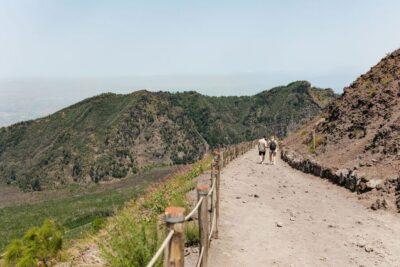
From Rome: Pompeii Day Trip with Optional Vesuvius and Lunch
Read our review →
Mount Etna: Summit Guided Hiking Tour up to 3,400 m
Read our review →
Catania: Mount Etna Morning or Sunset Day Trip with Tasting
Read our review →
Mount Etna: Trek to 3000m with cable car and 4×4
Read our review →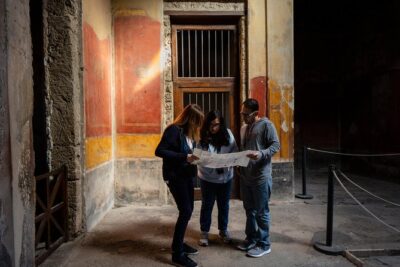
Pompeii & Mt.Vesuvius Day Tour from Naples with Pizza Lunch
Read our review →
Mount Vesuvius: Skip-the-Line Ticket and Smart Digital Guide
Read our review →Browse the lists this tour appears in