
REVIEW · AUCKLAND
AKL: Te Puia Maori Haka, Kiwi Birds, Redwood & Blue Springs
Te Puia’s Pōhutu Geyser and Māori haka give this long day its real character. You see Rotorua’s boiling mud, steam, and sacred cultural traditions in one well-organized visit, then add two striking nature stops: the Redwood Forest and Putāruru Blue Spring.
I like the efficient route from Auckland, especially the quirky Tirau coffee stop and the chance to see a kiwi at the Kiwi Conservation Centre. I also like that the Te Puia visit includes both a guided geothermal tour and a proper cultural performance, not just a quick photo stop.
The drawback is the length. You leave Auckland before 6:00 AM and return around 6:00 PM, with much of the day spent on the road. The guiding can also vary: Manaki earned praise for detailed, warm explanations, while another experience used prerecorded commentary and felt more like a bus transfer.
Key points to know before booking

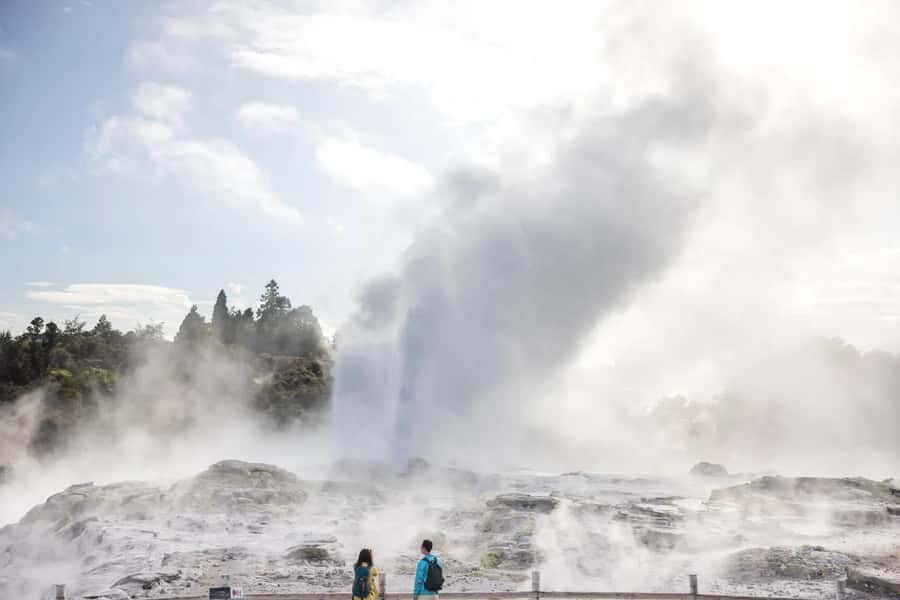
- Pōhutu Geyser is the day’s main event: Te Puia brings you close to Rotorua’s most famous geothermal feature, along with mud pools and steaming vents.
- The Māori performance is more than a haka: Expect a pōhiri welcome, waiata, mōteatea, poi, and haka inside the carved Te Aronui a Rua meeting house.
- You get three very different stops: Tirau adds a quick rural-town break, Redwood Forest offers tall trees and fern trails, and Blue Spring brings clear turquoise water.
- The Auckland pickup saves planning time: Collection is available from Auckland CBD and airport hotels, with return to those areas.
- The price reflects the long route: At $226 per person, you pay for transport, Te Puia entry, guiding, and the performance, but lunch and drinks are extra.
- This is a full day, not a relaxed outing: Early pickup, a 12-hour schedule, and several hours on the road make comfortable shoes and realistic expectations important.
Why Te Puia is worth the long ride from Auckland
Rotorua is roughly three hours from Auckland by the route used here, so this is not a quick side trip. You spend about two hours reaching Tirau, another hour continuing to Rotorua, and then make the return journey after the sightseeing stops.
That sounds demanding, but the route works because Te Puia brings several major Rotorua experiences together. In one place, you get geothermal activity, Māori arts, a cultural show, and the Kiwi Conservation Centre. If you have only one day available beyond Auckland, that concentration of sights has real value.
The day begins with pickup around 5:45 to 6:00 AM from Auckland CBD, or 6:15 to 6:30 AM from Auckland airport hotels. You need to be waiting at the hotel entrance at least 10 minutes early. Look for a vehicle marked ENZOY TOURS or use the vehicle number supplied before departure.
The early start is practical rather than glamorous. It helps fit Rotorua into one day, but you should eat beforehand or bring water and a small snack. Lunch is available at Te Puia at your own cost, and coffee and food stops are built into the day.
More Geothermal Parks and Geysers in Auckland
- Waitomo Caves & Rotorua – Te Puia Small-Group Tour from Auckland
★ 4.5 · 681 reviews - Auckland: Hobbiton, Rotorua and Wai-O-Tapu Day Tour
★ 4.8 · 458 reviews - Hobbiton & Rotorua including Wai-O-Tapu – Small Group Tour from Auckland
★ 5.0 · 450 reviews
Tirau adds a useful first break
After about two hours on the road, the bus stops in Tirau for roughly 15 minutes. This small Waikato town is known for corrugated iron sculptures and buildings shaped like a dog and a sheep.
Tirau is not a major sightseeing stop, and you will not have time for a long wander. Its value is simple: stretch your legs, use the bathroom, and buy a coffee before the longer run to Rotorua. For a day with so much sitting, that short pause matters.
Keep your expectations in check. This is a refreshment stop, not a full guided visit. If you want breakfast, plan to move quickly because 15 minutes disappears fast.
Inside Te Puia, geothermal power meets Māori culture
Te Puia is the centerpiece of the day. The guided experience lasts about 90 minutes, though the full Te Puia visit is listed at roughly 2.5 hours when the performance and free time are included.
The geothermal area gives you a direct look at Rotorua’s volcanic character. You pass bubbling mud pools, steaming vents, and the powerful Pōhutu Geyser, described as the largest geyser in the Southern Hemisphere. The steam, sulfurous air, and restless ground make this feel very different from a standard nature walk.
A guide adds context that you would miss while simply following a path. The stories connect the geothermal features with Māori heritage and the significance of the area. The quality of that explanation matters here. Manaki was singled out for detailed information, humor, and clear respect for Māori culture, which is exactly the sort of guiding that helps this stop feel like more than a collection of hot pools.
You should also note that all Te Puia experiences are now guided. Arrive 15 minutes before your scheduled entry time so you do not delay the group or miss the start.
The haka performance gives Te Puia its emotional center
The cultural presentation takes place in Te Aronui a Rua, an ornately carved meeting house. It begins with a traditional pōhiri welcome and includes waiata songs, mōteatea chants, poi dancing, and the haka.
The haka is the part many people expect, but the full sequence gives it meaning. You see how song, movement, welcome, and formal speech work together in Māori performance. The poi dance offers a different rhythm and mood, while the haka brings the force and physical energy most visitors associate with Māori culture.
I would not treat this as a short entertainment add-on. It is one of the strongest reasons to choose Te Puia over a basic geothermal stop. At the same time, remember that this is a scheduled group performance, so the experience has a set format rather than the intimacy of a small community visit.
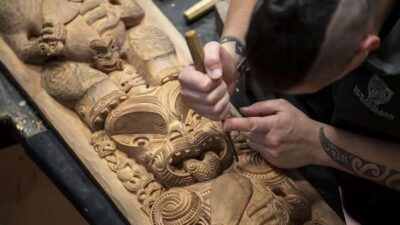
The meeting house is also worth looking at beyond the stage. Carved details help explain why Māori art is central to Te Puia, rather than something displayed separately from daily cultural life.
Same volcano country, a different day out:
- Rotorua Highlights Tour from Auckland with Optional Extras
★ 5.0 · 373 reviews - From Auckland or Rotorua: Hobbiton & Waitomo Tour with Lunch
★ 4.9 · 281 reviews - Rotorua Small-Group Day Tour from Auckland
★ 4.5 · 235 reviews - Auckland: Waitomo Caves & Rotorua – Te Puia Small-Group Tour
★ 4.8 · 223 reviews
The Kiwi Conservation Centre offers a rare close look
New Zealand’s kiwi is nocturnal and difficult to see in the wild. At Te Puia’s Kiwi Conservation Centre, you have a much better chance of seeing the national bird up close.
The centre fits naturally into the visit because it adds living wildlife to the geothermal and cultural program. You are not only looking at rocks, steam, and carved wood. You also get a chance to understand the work involved in protecting one of New Zealand’s best-known species.
The information provided does not promise how long the kiwi will be visible or how active it will be. Go in with patience. The viewing area may be dark, and your experience can depend on what the birds are doing at that time.
Te Puia also includes the New Zealand Māori Arts and Crafts Institute. Skilled carvers and weavers continue traditional practices there, giving you another way to see Māori culture in action. This is an important counterpoint to the performance: you see both staged cultural presentation and working artistic traditions.
Lunch at Te Puia needs a little planning
Lunch is not included. You can eat at the Te Puia café or restaurant, but the time available depends on the day’s schedule and the group’s movement through the site.
For a smoother day, carry a water bottle and have something small with you. Coffee and food breaks are available during the wider trip, but you should not expect a long restaurant meal in every stop. The early departure also makes a proper breakfast useful.
Personal expenses are extra, including food and drinks. That is worth adding to the $226 price when you work out the real cost.
Redwood Forest is a short but beautiful change of pace
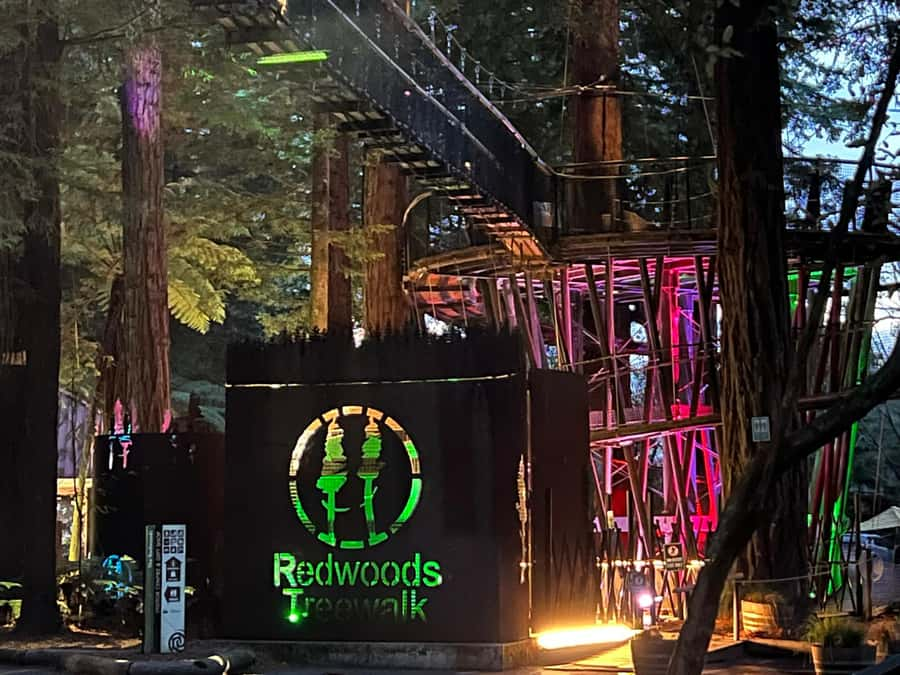
After Te Puia, the route includes a drive through Rotorua and a stop at Whakarewarewa Forest, commonly called the Redwood Forest. You get about 30 minutes for a free walk and photographs.
The forest is known for tall Californian redwoods, green ferns, and quiet paths. The vertical scale changes the mood completely after Te Puia’s steam and sulfur. Look upward as well as along the trail. The trunks create strong lines for photographs, while the fern growth keeps the forest floor soft and shaded.
You need to understand the limits of this stop. Thirty minutes is enough for a taste of the forest, not a long hike or the complete treetop experience. One booking description refers to a skywalk among the trees, but the listed itinerary specifically provides a free walk and photo stop. Do not book this day expecting a separate paid canopy attraction unless the operator confirms it directly.
The short visit suits you if you want variety. If Redwood Forest is your main reason for visiting Rotorua, you would need more time than this tour allows.
Blue Spring brings the quietest scenery of the day
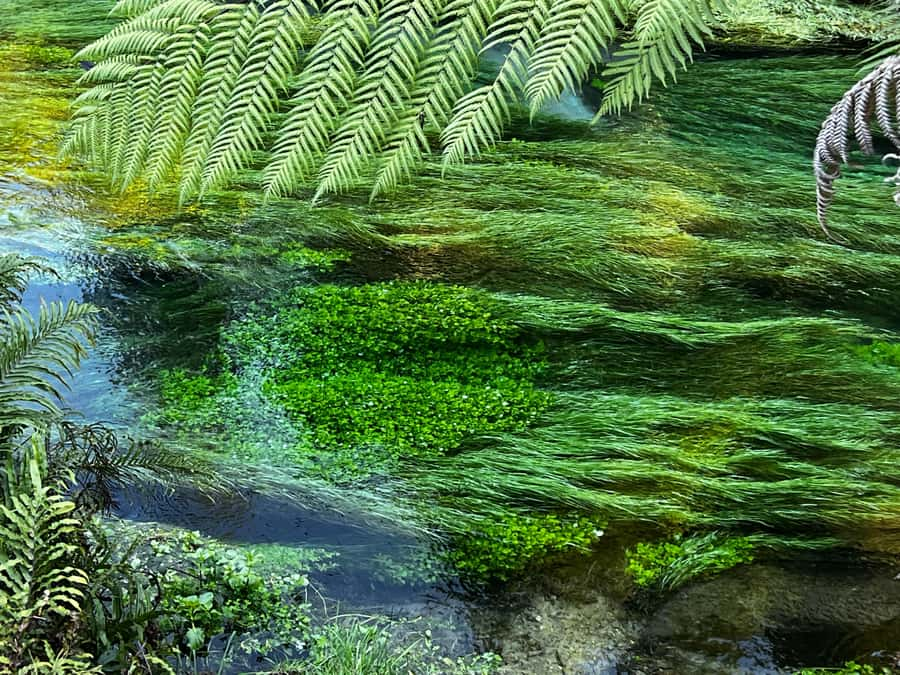
The final major stop is Putāruru Blue Spring, reached via the Te Waihou Walkway. The water is famous for its clear turquoise color and is filtered through underground rock for up to 100 years. It remains about 11 degrees Celsius year-round.
You get roughly 30 minutes here, enough for a short walk and photographs. The spring feeds the Waihou River, and the route offers views of bush, farmland, and wetlands. After the crowds, roads, and geothermal activity, this is the calmest stop of the day.
The water looks striking because it is so clear, but do not plan on swimming. The information provided describes a viewing walk and photo stop, not a swimming activity. Bring a camera, but keep your phone or equipment secure near the water.
Blue Spring is also where the short schedule becomes most noticeable. You may wish you had longer to follow the walkway. The tour gives you a clear sample of the place, not an extended river walk.
Transport, guiding, and the reality of a 12-hour day
The bus takes care of the hardest part of this trip: getting from Auckland to Rotorua and back without arranging a rental car. Pickup and drop-off are available at Auckland CBD and airport hotels, which is useful if you are staying near the airport or connecting through Auckland.
The route is long enough that the vehicle matters. One experience included a change to an older vehicle on the return journey, with a less convenient step. That is not necessarily typical, but it is a reminder to expect practical transport rather than luxury touring.
Guiding can also differ by departure. Manaki received strong praise for detailed explanations, humor, and obvious care in presenting the subject. Another guide, Sid, was described as friendly and considerate with regular coffee, food, and bathroom breaks, but the commentary relied partly on prerecorded audio and felt less personal.
That contrast is useful when setting expectations. You are booking a group tour with a live English-speaking guide, not a guaranteed private interpretation. Some departures may feel highly personal, while others may focus more on getting the group from stop to stop.
The tour is listed as wheelchair accessible, but the same information says it is not suitable for wheelchair users. That contradiction needs clarification before you pay, particularly because the day includes a bus, uneven outdoor paths, and short walking stops. It is also not recommended for people with back problems.
What the $226 price really covers
At $226 per person, this is not a cheap transfer to Rotorua. The value comes from combining round-trip transport, Te Puia admission, geothermal guiding, the Māori performance, and the Kiwi Conservation Centre in one day.
You also get the Redwood Forest and Blue Spring without having to arrange separate transport. For someone based in Auckland who does not want to rent a car or spend a night in Rotorua, that package can make sense.
The weaker part of the value is time. You pay for access to several places, but the Redwood Forest and Blue Spring stops are both short. Much of the day belongs to driving. If you prefer slow walks, long meals, or time to explore Rotorua independently, an overnight stay would likely give you more breathing room.
The cancellation terms reduce some booking risk: you can cancel up to 24 hours ahead for a full refund, and you can reserve now and pay later. Those are useful if your New Zealand schedule is still shifting, but they do not change the basic tradeoff between convenience and a long day.
Who should book this Auckland to Rotorua day trip?
I would choose this trip if you want a broad first look at Rotorua and have only one free day from Auckland. It is especially suitable if you care about Māori performance, geothermal sights, kiwi conservation, and varied scenery more than independent wandering.
It also works well for anyone who does not want to drive. The early pickup, direct route, and return to Auckland remove much of the planning burden.
I would think twice if you dislike long bus rides, need a slow pace, or want deep time at the forest and spring. You should also clarify the accessibility issue before booking and tell the operator your correct hotel address and contact details.
Wear comfortable shoes, bring sunscreen, a hat, water, a camera, and clothing suited to the weather. A local SIM or international roaming, plus WhatsApp, may help the operator contact you during the day.
Should you book it?
Book this tour if you want the most important Rotorua highlights compressed into one Auckland day, with Te Puia as the clear centerpiece. The haka, geyser, kiwi centre, Māori arts, redwoods, and Blue Spring give you a strong range of experiences for the price.
Skip it if you want a relaxed Rotorua visit or if the thought of roughly 12 hours on the move outweighs the convenience. The best reason to book is not simply the number of stops. It is the chance to combine Māori culture and geothermal Rotorua with two very different natural settings, without renting a car or arranging the route yourself.
FAQ
Where does the tour pick up and drop off?
Pickup and drop-off are available at Auckland CBD and Auckland airport hotels. You should wait at your hotel entrance at least 10 minutes before the scheduled pickup time.
What time does pickup begin?
Auckland CBD pickup is scheduled for about 5:45 to 6:00 AM. Auckland airport hotel pickup is about 6:15 to 6:30 AM. Exact availability depends on the booking date.
How long is the tour?
The full experience lasts about 12 hours, with return to Auckland around 6:00 PM.
Is lunch included?
No. Lunch, coffee, and personal expenses are not included. You can buy lunch at the Te Puia café or restaurant.
What happens at Te Puia?
You receive a guided visit covering Pōhutu Geyser, mud pools, steaming vents, the Kiwi Conservation Centre, and the New Zealand Māori Arts and Crafts Institute. You also attend a Māori cultural performance with a pōhiri, waiata, mōteatea, poi, and haka.
Can I cancel the booking?
You can cancel up to 24 hours before the experience for a full refund. Reserve now and pay later is also available.
Just added around Auckland
- Waitomo Glow Worm Caves & Te Puia – Rotorua’s Geothermal Valley★ 5.0 · 9 reviews
- Waitomo Glow Worm Caves & Te Puia (Rotorua) Private Tour★ 5.0 · 13 reviews
- Private Tour to Rotorua’s Natural wonders and Māori Arts & craft.★ 5.0 · 4 reviews
- TRIPLE DEAL Wai-O-Tapu, Redwood Forest & Blue Springs Ex Auckland★ 5.0 · 20 reviews
- Sunset kayak tour to Rangitoto Island★ 5.0 · 168 reviews
- Volcanic Rotorua Day Trip from Auckland★ 5.0 · 4 reviews
- Small Group Waitomo and Rotorua including Te Puia Tour★ 5.0 · 4 reviews
- Private Transfer From Auckland Airport To Rotorua★ 5.0 · 5 reviews
Auckland Volcano Tours, compared.
Waitomo Caves & Rotorua – Te Puia Small-Group Tour from Auckland
Read our review →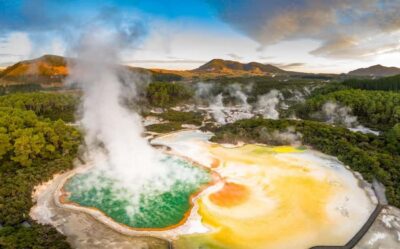
Auckland: Hobbiton, Rotorua and Wai-O-Tapu Day Tour
Read our review →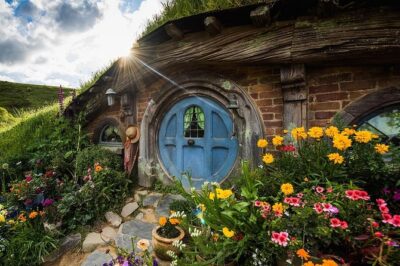
Hobbiton & Rotorua including Wai-O-Tapu – Small Group Tour from Auckland
Read our review →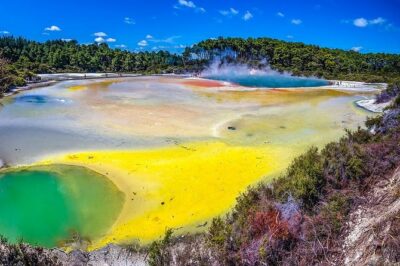
Rotorua Highlights Tour from Auckland with Optional Extras
Read our review →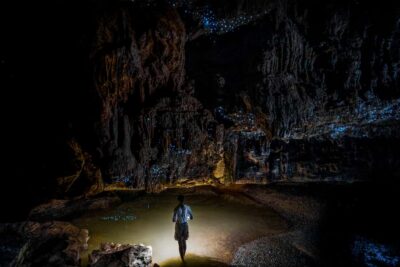
From Auckland or Rotorua: Hobbiton & Waitomo Tour with Lunch
Read our review →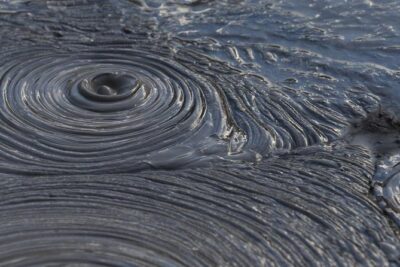
Auckland: Waitomo Caves & Rotorua – Te Puia Small-Group Tour
Read our review →
Hobbiton & Rotorua Small Group Tour including Te Puia from Auckland
Read our review →Browse the lists this tour appears in