
REVIEW · POMPEII
From Castellammare di Stabia Combo Tour_Pompeii & Vesuvius
Pompeii and Vesuvius make a powerful pair: one shows the Roman city buried by the volcano, while the other lets you look into the crater that caused the disaster. This 5.5-hour combo tour handles the transport between both sites, a useful benefit in busy Campania.
I like the free time at each stop, since you can set your own pace instead of following a guide’s flag. I also like the multilingual audio guide, which gives you a way to make sense of Pompeii’s houses, streets, brothel, frescoes, and amphitheaters. The main drawback is time: two hours at Pompeii is enough for a strong first look, but not enough for every corner.
Key points
- Two major sights in one morning: Visit Mount Vesuvius first, then Pompeii, with transfers between them.
- Crater walk at 1,000 meters: The final approach is on foot and rewards you with views of the Gulf of Naples, Sorrento Coast, Capri, and Ischia.
- Independent Pompeii visit: Choose from suggested routes and explore with a multilingual audio guide.
- Small-group minibus transport: The outing uses a comfortable minibus rather than leaving you to arrange separate buses.
- Skip-the-line access: Entry arrangements reduce one common source of wasted time at Pompeii.
- Weather backup: If Vesuvius National Park closes because of bad weather, the route changes to Herculaneum.
Why this Vesuvius and Pompeii pairing works
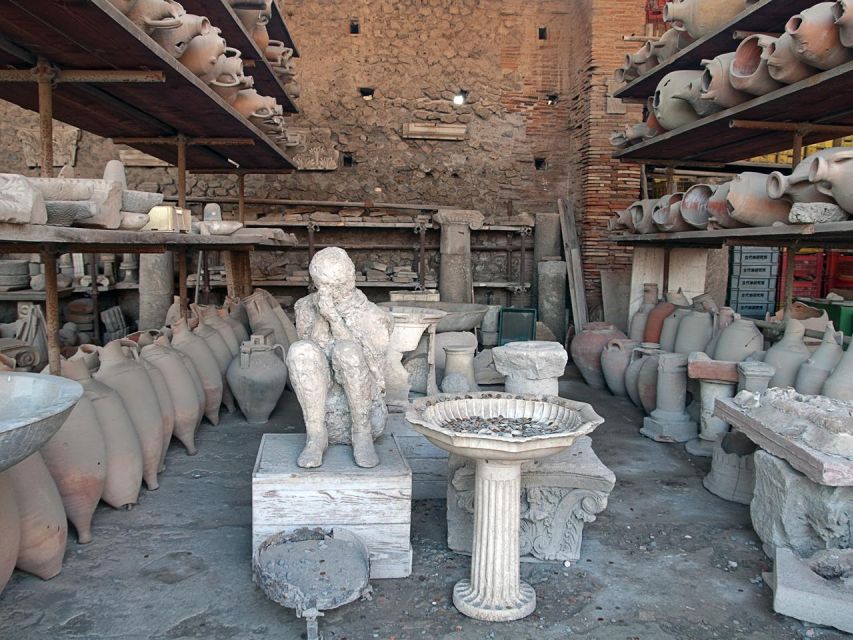
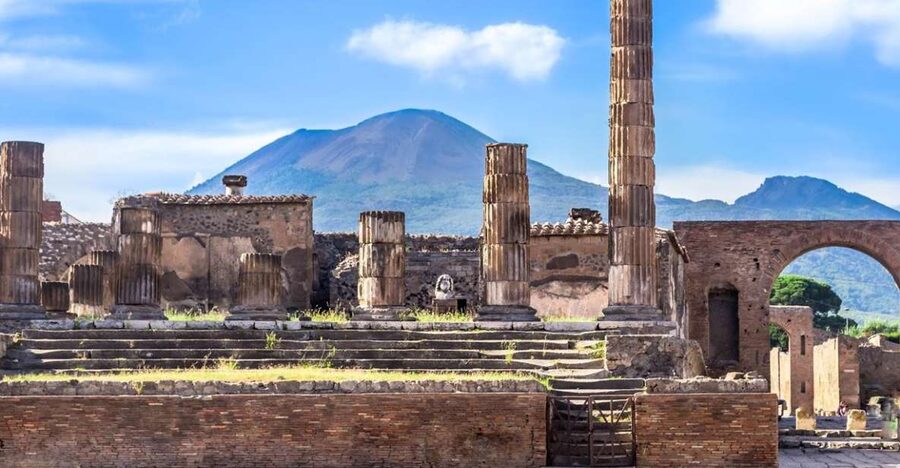
This outing is built around contrast. At Vesuvius, you see the force of nature from the volcano’s own slopes. At Pompeii, you walk through the human consequences: homes, public buildings, painted rooms, and streets preserved under ash after the eruption of AD 79.
I find that order sensible. You see the volcano first, then visit the city it buried. By the time you reach Pompeii, the site has a clearer meaning. You are not just looking at old walls. You have already seen the mountain above them.
The tour lasts about five and a half hours, including roughly 55 minutes to reach Vesuvius, 105 minutes at the volcano, 45 minutes to Pompeii, two hours inside the archaeological site, and about 20 minutes to return to Piazza Papa Giovanni XXIII. That is a full morning, but it avoids the wasted time that comes with arranging two separate visits.
The strongest part of the plan is its simplicity. You do not need to work out a bus connection from Castellammare di Stabia to Vesuvius, then another route to Pompeii. You meet the vehicle, ride with a small group, and handle the major sights in one continuous trip.
More Vesuvius and Pompeii Tours in Pompei Campania:
- Naples: Pompeii and Mt. Vesuvius with Lunch and Wine Tasting
★ 4.5 · 2,454 reviews - From Pompeii: Bus Transfer to Vesuvius with Park Entry Fee
★ 4.4 · 1,205 reviews - From Pompeii/Naples: Vesuvius Easy Transfer and Entry Ticket
★ 4.3 · 660 reviews
Meeting at Piazza Papa Giovanni XXIII
The starting point is the bus stop at Piazza Papa Giovanni XXIII in Castellammare di Stabia. The precise coordinates are 40.6954345703125, 14.47964859008789.
That detail matters. A large Italian town can have several nearby squares, stations, and pickup points, so do not rely on the general name alone. Go to the bus stop itself and allow enough time to identify the meeting place before departure.
The initial pickup arrangement takes you to the meeting point, where you join a small group and board the minibus. The driver speaks English. No named guide is provided, so you should expect transport assistance rather than a continuously led walking tour.
That distinction shapes the whole experience. You receive help getting from place to place, but the sightseeing is largely your responsibility. For many people, that is a benefit. You can stop when something catches your eye, skip a room that does not interest you, and move faster than a formal group tour.
Walking up Mount Vesuvius
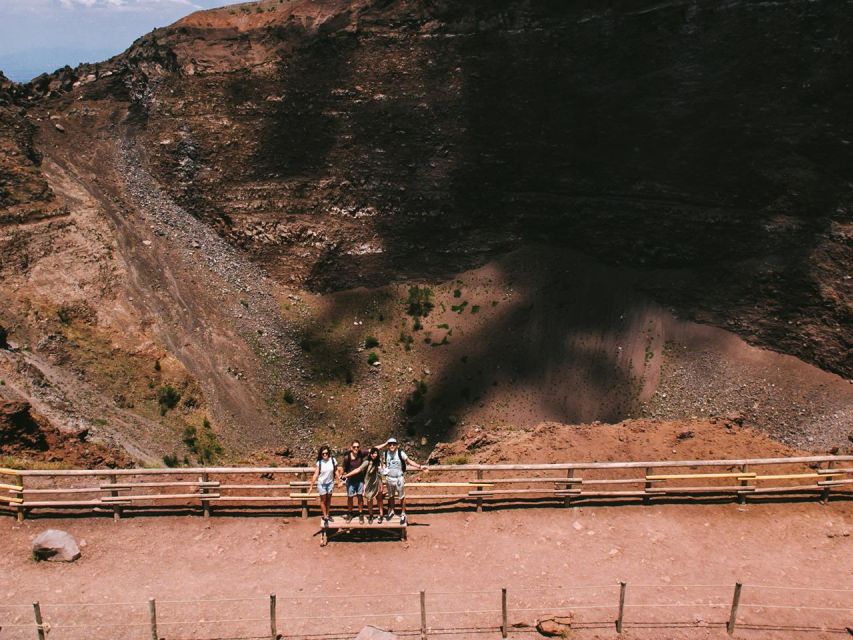
The ride to Vesuvius takes about 55 minutes. When the vehicle reaches roughly 1,000 meters above sea level, you leave the minibus and continue on foot toward the crater.
The walk is the most physically demanding part of the morning. Comfortable shoes and comfortable clothes are listed as essentials, and that advice is worth taking seriously. The access route is not a bus-door-to-viewpoint visit. You must walk uphill to reach the crater rim, and the tour is specifically listed as not suitable for people with mobility impairments.
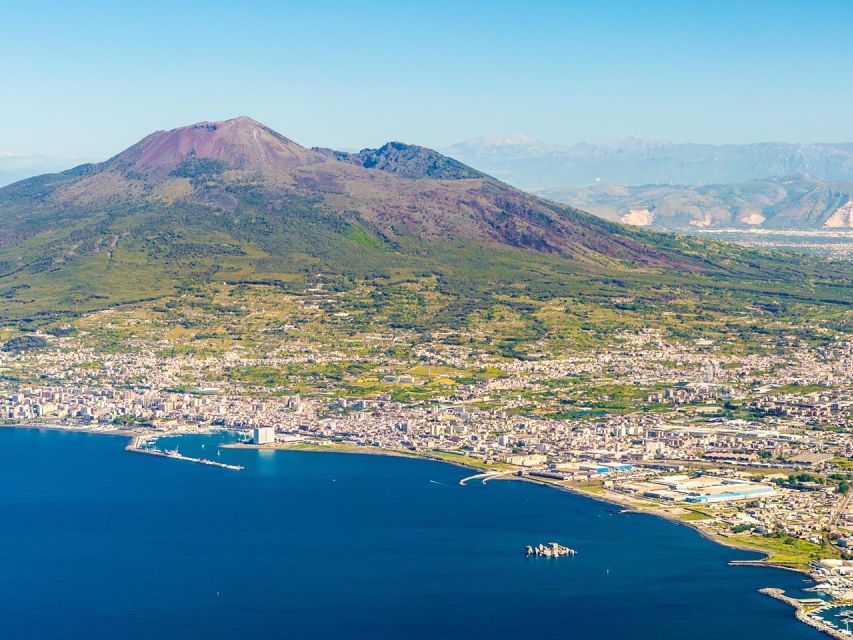
At the top, the reward is a direct look at Vesuvius itself. You also get a broad view across the Gulf of Naples, the Sorrento Coast, Capri, and Ischia. The panorama is one of the outing’s best features, especially because the volcano gives you a sense of scale that photographs cannot provide.
The 105-minute stop gives you time for the crater visit and the surrounding views without turning the morning into a long mountain excursion. Still, the exact experience depends on weather. Cloud, wind, or poor visibility can change what you see from the summit.
The park fee deserves special attention. If you cancel, the €12 Mount Vesuvius National Park entry fee is nonrefundable. That means the advertised free-cancellation policy does not necessarily return every part of your payment. If bad weather closes the park, the planned replacement is a visit to the Herculaneum excavations.
That substitution is a sensible one. Herculaneum is another Roman site affected by the eruption, though it is not the same experience as walking around a volcano. If Vesuvius closes, you still receive an archaeological visit, but you should not book this outing expecting the mountain portion to be guaranteed in every weather condition.
The road from Vesuvius to Pompeii
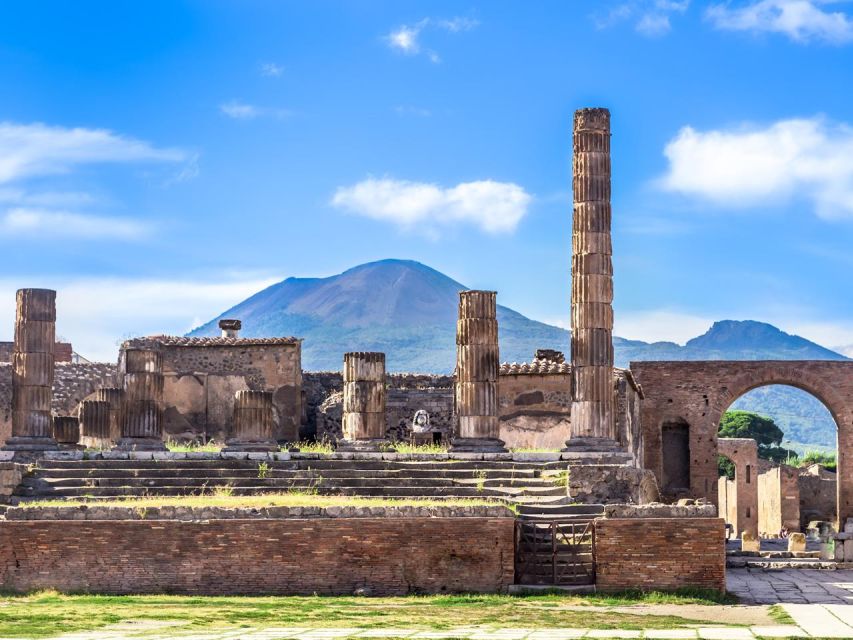
After the volcano, the minibus takes about 45 minutes to reach Pompeii. This transfer keeps the day moving and saves you from finding a second connection on your own.
The change of setting is striking. Vesuvius is open, exposed, and shaped by wind and elevation. Pompeii is enclosed by ancient streets and buildings, with details that draw you into ordinary Roman life. The combination gives you both the broad view and the close-up view.
The timing is also important. Since Pompeii comes after the mountain, you may be ready for food, water, or a short rest by the time you arrive. Bring what you need for the morning, but remember that large bags and luggage are not allowed. A small day bag is the practical choice if permitted under the site’s current rules.
Same volcano country, a different day out:
- Pompeii: Mount Vesuvius Crater Transfer with Ticket
★ 4.0 · 541 reviews - Pompeii: Day Tour of Pompeii and Vesuvius with Bus Transfer
★ 4.2 · 250 reviews - From Pompeii: Mount Vesuvius Hike & Tour by Bus
★ 4.2 · 187 reviews - Mount Vesuvius and Pompeii with Round-Trip Transfer
★ 4.0 · 107 reviews
Two hours inside Pompeii
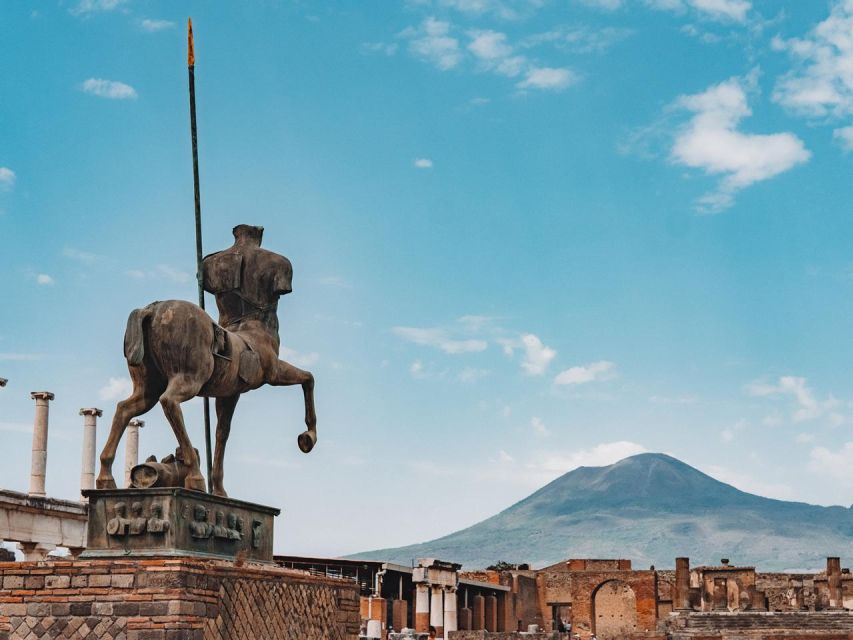
Before you enter the archaeological site, the tour team presents different itinerary choices. You then explore independently with an audio guide. This gives you structure without forcing you into one fixed route.
Pompeii can feel confusing at first because it is much larger than a single monument. Streets branch in several directions, and many buildings appear similar until you understand what you are seeing. The route suggestions are useful because they help you spend two hours wisely rather than wandering until your time runs out.
The audio guide is available in Chinese, Dutch, English, French, German, Hebrew, Italian, Portuguese, Russian, and Spanish. You need to bring a valid passport or ID card to rent it. That requirement is easy to miss, so keep your identification with you even if you normally leave it locked at your accommodation.
The site itself offers several kinds of Roman remains:
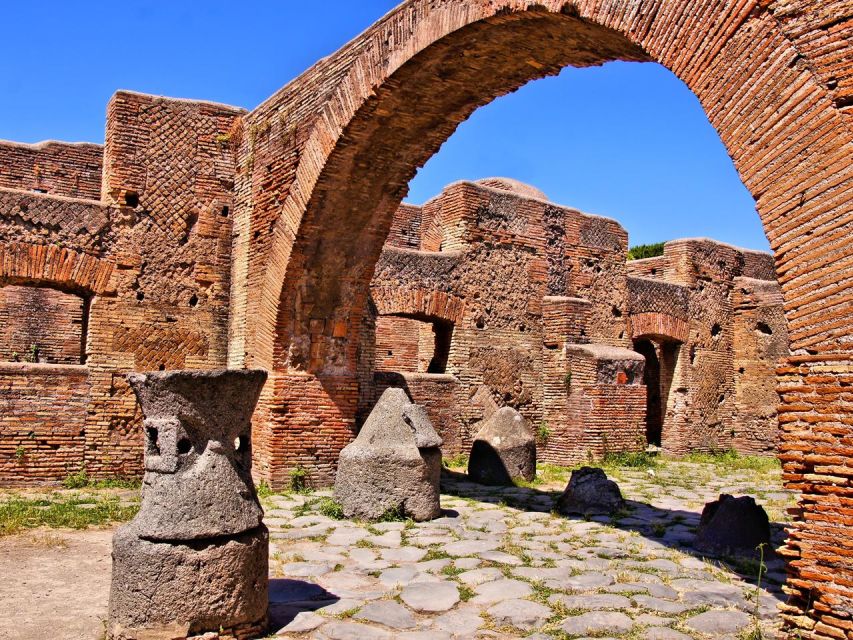
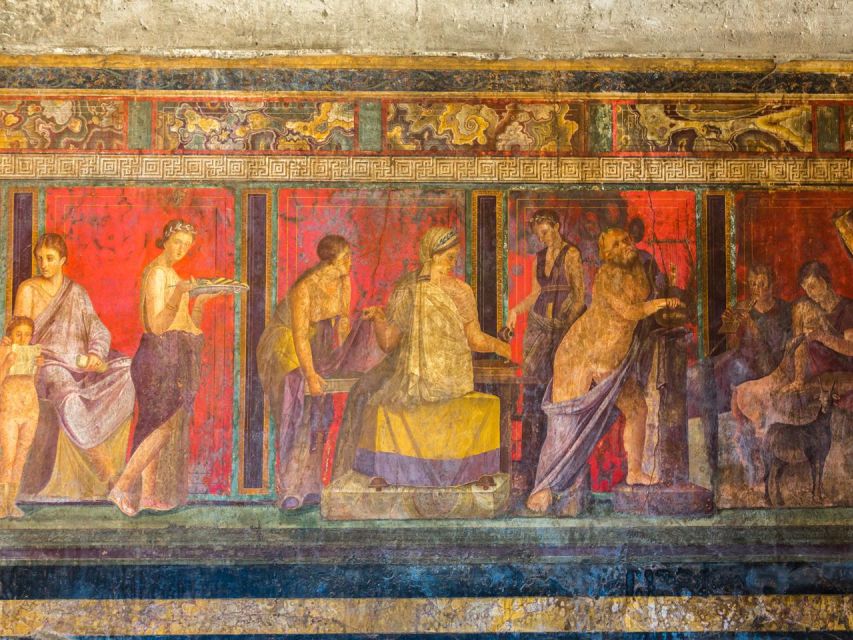
- Frescoed domus: Private homes show how wealthy residents decorated walls and organized domestic space.
- The ancient brothel: This is one of Pompeii’s more unusual stops and helps explain the less polished side of Roman city life.
- Amphitheaters: Large public structures reveal the scale of entertainment and civic life.
- Ancient streets: Wheel marks, paving, building fronts, and side lanes help you picture movement through the city.
- Buried interiors: Rooms and painted surfaces make the eruption feel personal rather than distant.
Two hours is enough for a focused visit, but it is not enough to see everything. I would choose an itinerary before entering and resist the urge to cover every possible lane. Concentrate on the houses, public buildings, and features that interest you most.
The audio guide also changes the pace. You can pause to look closely at a fresco, then continue when you are ready. That works better for independent visitors than a spoken group explanation, but it requires you to manage your own time.
What the audio-guided format really means
This is not a traditional guided tour with an archaeologist walking beside you. The driver handles the transport, the team helps with the Pompeii route choices, and the audio guide provides the commentary.
I see that as a good fit for visitors who enjoy freedom and a poor fit for anyone who wants detailed, continuous interpretation from a live expert. You will not be tied to another person’s pace, but you will also need to pay attention to the audio guide and map your own progress.
The range of languages is a real advantage for international visitors. English is available, along with nine other languages. The driver’s working language is English, so basic communication around transfers should be manageable for English speakers.
The independent format also means you should plan your energy. Vesuvius requires an uphill walk, and Pompeii involves substantial time on ancient streets. The tour is marked wheelchair accessible, yet it is also listed as not suitable for people with mobility impairments. Those statements point to a practical need: contact the provider before booking if you have mobility concerns, since accessibility at the transport level may not make the crater walk or archaeological site comfortable.
Timing, group size, and comfort
The minibus is described as comfortable and the group as small. That should make the transfers easier than using a large coach, though the supplied details do not give a maximum group size.
The schedule is tight but reasonable. Vesuvius receives 105 minutes, Pompeii receives two hours, and the rest goes to road travel. You get the headline experience at both places, not an exhaustive study of either one.
The main compromise is depth. A separate Pompeii visit could give you longer inside the ruins. A dedicated Vesuvius trip could allow more time around the mountain. This combo is for seeing both in one outing, not for becoming an expert in either.
I particularly like the autonomy because it softens that time limit. You can choose a shorter Pompeii route if the morning has worn you out, or move quickly through familiar sections and spend more time on the frescoed homes and public buildings.
Is the tour good value?
No tour price is provided here, so I cannot judge value by comparing the exact fee with other options. The useful question is what the fee includes: transport between Castellammare di Stabia, Vesuvius, and Pompeii; the volcano visit; access arrangements at Pompeii; and a multilingual audio guide.
That package can be good value if you want both sites and would otherwise pay for separate transport. It also saves planning time, which matters in Campania, where a short distance on a map can take much longer by road.
The value is weaker if you want a slow, specialist visit to Pompeii. Two hours goes quickly, and independent audio touring does not provide the same level of detail as a dedicated archaeological guide.
The skip-the-line feature is useful on a busy day, but it does not remove the need for careful time management. You still need to be ready at the meeting point, return to the vehicle on schedule, and bring the correct identification for the audio guide.
Who should book this outing?
I would recommend it to you if you are staying in or near Castellammare di Stabia and want a straightforward way to see the two defining sights of the area. It suits first-time visitors, couples, families with older children, and independent sightseers who like commentary but dislike being herded from room to room.
It is also a good match for anyone who values a small-group minibus and wants to avoid piecing together local transport. The positive reaction to the overall outing is easy to understand: the plan is efficient, the views are memorable, and the pairing of mountain and ruins has real impact.
I would think twice if you have limited mobility, dislike uphill walking, need a slow pace, or want a fully guided Pompeii experience. The volcano walk and large archaeological site demand physical effort, and the schedule leaves little room for delays.
Practical advice before you go
Bring a valid passport or ID card. You need it to rent the audio guide, and forgetting it could affect the Pompeii portion of the visit.
Wear comfortable shoes and clothes. The volcano requires a walk from the 1,000-meter drop-off point to the crater, while Pompeii involves extended walking over an ancient site.
Do not bring luggage or large bags. Pack lightly and keep the morning simple.
Keep the weather in mind. If Vesuvius National Park closes because of bad conditions, the tour changes to Herculaneum. The €12 national park entry fee is nonrefundable if you cancel, even though cancellation up to 24 hours before departure otherwise allows a full refund.
Should you book the Castellammare di Stabia combo?
Book it if your priority is seeing Vesuvius and Pompeii in one well-organized half-day, with transport and independent sightseeing already arranged. The crater views, the Roman ruins, and the freedom to choose your Pompeii route make a strong package.
Skip it if you need a fully guided archaeological visit or cannot manage the uphill volcano walk. For everyone else, this is a practical Campania outing that gives you the essential volcano-and-city story without asking you to solve the transport puzzle yourself.
FAQ
Where does the tour start?
It starts at the bus stop in Piazza Papa Giovanni XXIII in Castellammare di Stabia. The meeting point coordinates are 40.6954345703125, 14.47964859008789.
How long does the experience last?
The total duration is about 5.5 hours.
How long is the visit to Mount Vesuvius?
The Vesuvius stop lasts about 105 minutes. You leave the vehicle at roughly 1,000 meters above sea level and walk to the crater.
How long is the Pompeii visit?
You have about two hours at the Pompeii Archaeological Site.
Is transport included?
Yes. The experience includes transfers by minibus between Castellammare di Stabia, Mount Vesuvius, Pompeii, and the return point.
Is an audio guide included?
Yes. A multilingual audio guide is included for Pompeii. Available languages are Chinese, Dutch, English, French, German, Hebrew, Italian, Portuguese, Russian, and Spanish.
Do I need identification?
Yes. Bring a valid passport or ID card because it is required to rent the audio guide.
What happens if Vesuvius closes because of bad weather?
The tour replaces the Vesuvius visit with a visit to the Herculaneum excavations.
Is the experience suitable for people with mobility impairments?
The activity is listed as wheelchair accessible but also as not suitable for people with mobility impairments. Since the Vesuvius visit includes a walk to the crater, you should confirm your specific needs with the provider before booking.
Just added around Pompei Campania
- Sunset tour: Mount Vesuvius Entry + Transfer★ 3.4 · 13 reviews
- Pompeii&Vesuvius tour★ 4.1 · 16 reviews
- Pompeii: Ruins Tour and Mount Vesuvius Horseback Ride★ 4.9 · 42 reviews
- Pompeii & Vesuvius★ 4.3 · 12 reviews
- Pompeii, Herculaneum, and Vesuvius: Full-Day Tour★ 3.7 · 21 reviews
- Pompeii: Mount Vesuvius Night Horseback Ride and Italian BBQ★ 5.0 · 10 reviews
- Pompeii, Herculaneum and Vesuvius Tour★ 3.4 · 9 reviews
- Mount Vesuvius and Pompeii with Round-Trip Transfer★ 4.0 · 107 reviews
Pompeii Volcano Tours, compared.

From Pompeii: Bus Transfer to Vesuvius with Park Entry Fee
Read our review →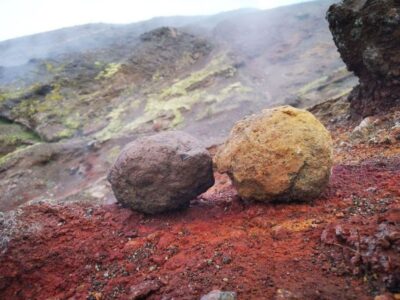
From Pompeii/Naples: Vesuvius Easy Transfer and Entry Ticket
Read our review →
Pompeii: Mount Vesuvius Crater Transfer with Ticket
Read our review →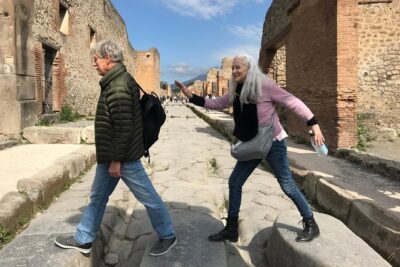
Pompeii Guided Tour & Horse Riding on Vesuvius with Lunch
Read our review →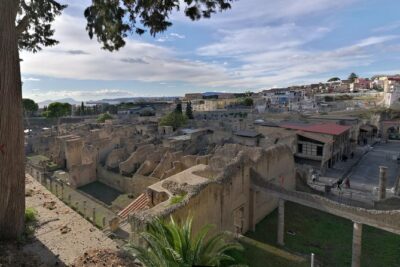
Private Day Tour to Vesuvius, Herculaneum & Pompeii with Pick Up
Read our review →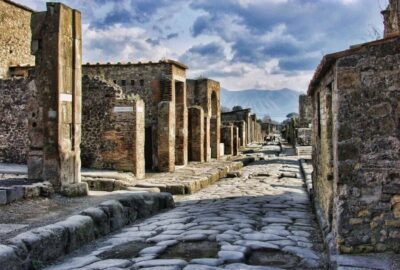
Pompeii: Day Tour of Pompeii and Vesuvius with Bus Transfer
Read our review →
From Pompeii: Mount Vesuvius Hike & Tour by Bus
Read our review →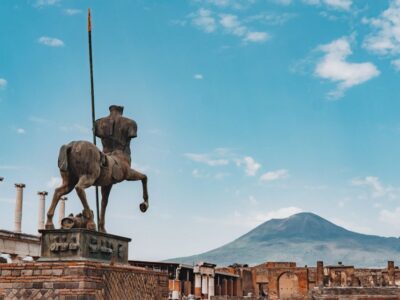
Mount Vesuvius and Pompeii with Round-Trip Transfer
Read our review →Browse the lists this tour appears in