REVIEW · TENERIFE
Tenerife: Sunset and Stargazing at Teide National Park
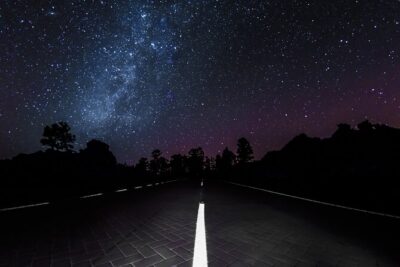
The best part of this Tenerife evening comes after the beaches empty: you climb into the volcanic highlands, watch the sun drop toward La Gomera, La Palma, and El Hierro, then see the Milky Way and planets appear in a remarkably dark sky. Guides such as Peter, Phil, Roland, and Dani use laser pointers, stories, and a large telescope to make the heavens easy to follow.
I like the small-group format, which gives you a fair turn at the telescope instead of leaving you in a long queue. I also like the thoughtful extras: Cava at sunset, hot chocolate on colder nights, and a free portrait showing you under a blanket of stars.
The catch is the temperature. At altitude, winter nights can feel close to freezing, with wind making it sharper still. Bring proper warm clothing, and remember that there are no toilets at or near the viewing points.
Key points to know before booking
- Sunset above the clouds: Watch the sky change color from about 1,400 meters, with volcanic scenery and views toward three neighboring islands.
- Astronomy made simple: Guides point out Polaris, Ursa Major, Andromeda, Pegasus, planets, and seasonal constellations with a laser.
- A serious telescope: The 12-inch Dobsonian telescope can show Saturn’s rings, Jupiter’s moons, galaxies, nebulae, and star clusters when conditions and timing cooperate.
- Small groups matter: Groups of about eight people give you more time at the telescope and make it easier to ask questions.
- Warmth is not optional: Bring layers, long trousers, warm shoes, and a real jacket. VIP participants may receive warm jackets.
- Two ways to join: Choose pickup and drop-off in southern Tenerife, or drive your rental car to the meeting point and follow the guides to the night location.
A sunset stop beside Tenerife’s volcanic past
The evening begins with a drive of roughly 45 minutes from the pickup area or meeting point. The route takes you away from the coast and into Tenerife’s volcanic interior, where black lava, high viewpoints, and Mount Teide replace resort streets and palm trees.
The sunset stop is usually at Mirador de los Poleos, or another nearby viewpoint confirmed by WhatsApp on the day. The exact meeting time changes with the season, so do not rely only on the generic time printed on your ticket.
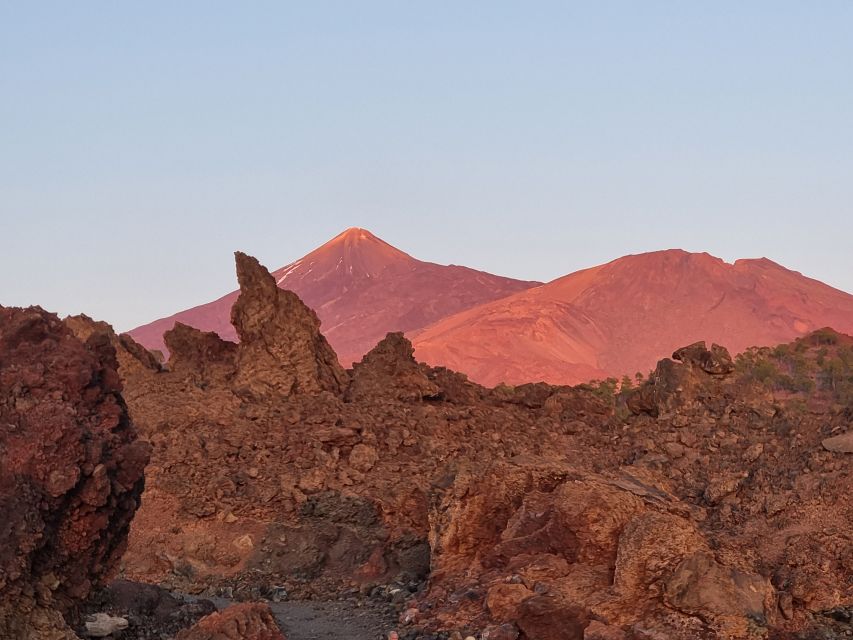
This first stop sits near a lava flow linked with the 1492 eruption recorded in Christopher Columbus’s ship log. That detail gives the view more meaning than a simple photo stop. You are looking at terrain shaped by a volcanic event witnessed during one of the most famous voyages in European history.
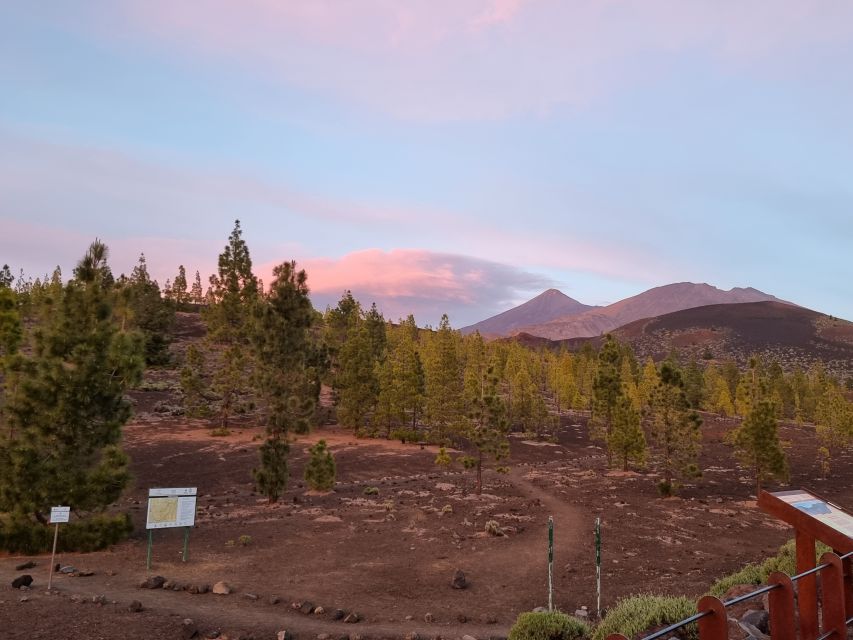
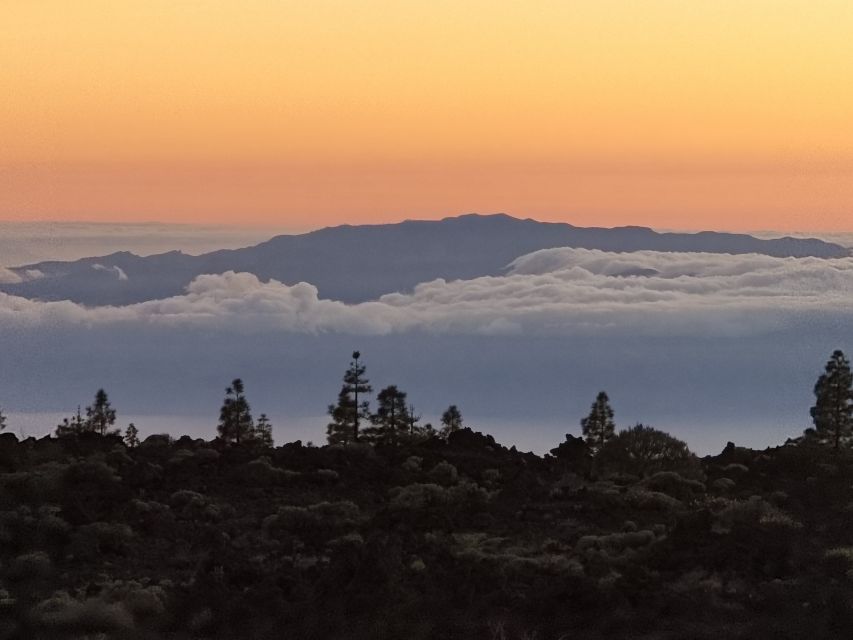
At around 1,400 meters, the view can open above a sea of clouds. On a clear evening, the sun sinks toward La Gomera, La Palma, and El Hierro. Mount Teide and the surrounding lava fields catch the last warm light, and the colors change quickly as the sun drops.
You receive a glass of Cava or a non-alcoholic drink. It is a small touch, but it suits the pause. You have time to take photographs, enjoy the view, and watch the sky turn from gold to pink, red, and blue.
The sunset segment lasts about 45 minutes. One practical point: the group may wait for the right light, and one person found the opening pause a little long without much explanation. I would treat this as a scenic stop rather than a nonstop guided talk. Bring your camera, enjoy the silence, and do not expect a packed lecture from the first minute.
Parking can be limited at the sunset viewpoint. If you drive yourself, arrive 15 to 20 minutes early. The later stargazing point generally has better parking, but the first stop can fill up.
More Volcano National Parks in Spain
- Tenerife: Teide National Park Sunset & Stargazing Tour
★ 4.2 · 3,812 reviews - Teide National Park Sunset & Stargazing with Dinner (Star Safari)
★ 5.0 · 2,601 reviews - Teide National Park: Sunset & Stargazing Safari with Dinner
★ 4.6 · 2,115 reviews
Following the guides to a darker sky
After sunset, the self-drive group follows the guides in its own vehicle for about five minutes to another public viewpoint. This is important: the activity does not take you onto Mount Teide itself, and it does not include the cable car or Teide Observatory.
The guides choose the second location based on wind, clouds, and temperature. If conditions are poor, they may remain at the lower viewpoint. That is not a failed evening. The lower location is already suitable for stargazing, and moving higher is only useful if the sky and weather make it worthwhile.
Once darkness settles in, the difference from the coast becomes clear. Southern Tenerife’s resort areas have plenty of artificial light, but the volcanic heights offer a much darker setting. You can see far more stars than from the beach or hotel balcony.
The guided session lasts about two hours and 15 minutes. It is not just a quick look through a telescope followed by a return trip. The guides spend time explaining how to read the sky, where to look, and why the objects above you matter.
Finding Polaris and Andromeda without a phone
The most useful part of the talk is learning how to find objects with your own eyes. The guide can show you Polaris, the North Star, by using the familiar pattern of Ursa Major. You also learn to locate the Andromeda galaxy from the Great Square of Pegasus.
These lessons give you a way to keep looking after the tour ends. Instead of hearing a string of names that vanish from memory, you get simple reference points. The guides also bring in Greek mythology, which helps connect the constellations into stories rather than isolated dots.
The presentation is in English. Guides including Peter, Phil, Roland, Dani, Jamie, Jaimy, and Phil have been praised for clear explanations, humor, and enthusiasm. The exact guide team can vary, but the experience depends heavily on their ability to explain complicated astronomy in plain terms. The strongest sessions turn the sky into a conversation, not a school lesson.
You should also expect some waiting between telescope views. The small groups help, but the sky objects need to be found and the equipment needs to be adjusted. With groups of around eight, the wait is generally manageable and you have room to ask questions.
What the 12-inch telescope can reveal
The supplied telescope is a 12-inch Dobsonian. That is a substantial instrument for a casual evening activity, and it allows you to see more than bright stars alone.
The exact view depends on the date, cloud cover, moonlight, and the position of the planets. Possible sights include:
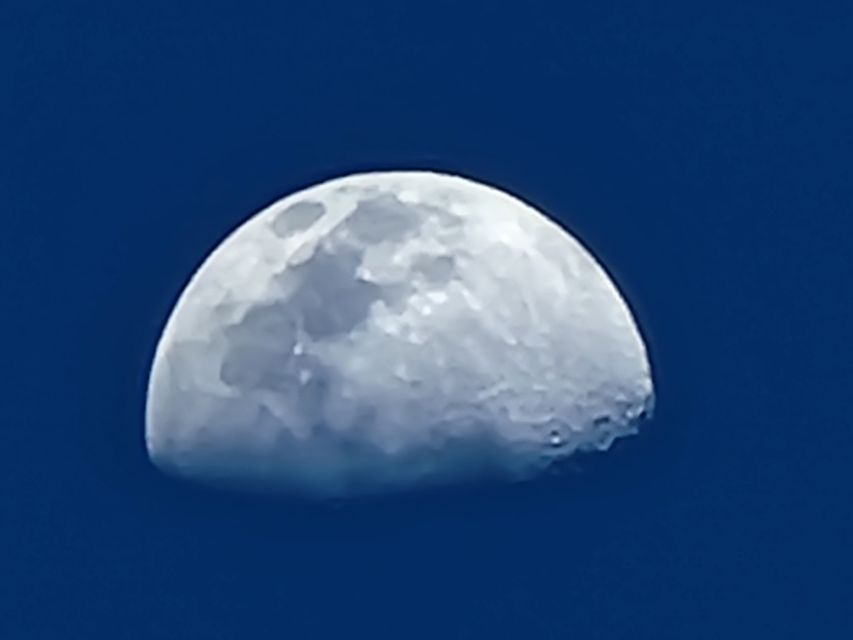
- The Moon, especially near full moon
- Saturn and its rings when visible
- Jupiter and its Galilean moons during suitable summer and autumn dates
- The Pleiades, also called the Seven Sisters, during winter
- Galaxies, nebulae, and star clusters
- Seasonal constellations and other deep-sky objects
Do not book this expecting a fixed checklist. Astronomy changes from month to month, and clouds can erase part of the program. That variation is part of the appeal. A winter visit may bring the Pleiades and other star clusters, while summer or autumn can offer better chances for Jupiter and Saturn, depending on their position.
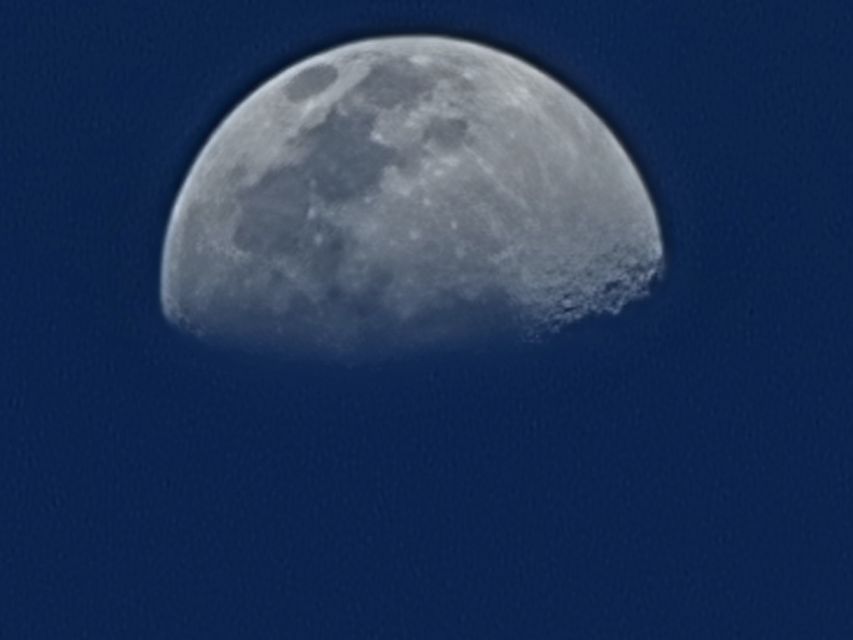
The Moon is a special case. A bright full moon makes a fine telescope subject, but it also washes out some faint stars and galaxies. If your main goal is the Milky Way and dim deep-sky objects, a night near the new moon, or before moonrise, is a better choice. If you want a detailed lunar view, choose a date when the Moon is prominent.
The telescope cannot guarantee every object. Weather, visibility, and seasonal timing decide what appears. Still, the combination of a dark site, a large telescope, and patient instruction gives this activity more substance than a simple star-themed photo stop.
More Volcano National Parks in Tenerife
- Tenerife: Teide National Park Full-Day Tour with Pickup
★ 4.5 · 1,613 reviews - Tenerife: Quad Adventure Tour in Teide National Park
★ 4.7 · 1,492 reviews - Tenerife: Teide National Park Guided Buggy Tour
★ 4.7 · 609 reviews - Small Group Teide National Park Volcanic and Forest Wonders
★ 5.0 · 402 reviews
The cold is the main practical issue
Tenerife’s coast may be warm while the mountain viewpoints feel like another climate. Several visitors found winter conditions much colder than expected, with some describing temperatures around 2 degrees Celsius and a strong wind.
I would pack for a cold outdoor evening, not a mild island night:
- Long trousers
- A long-sleeved shirt
- A proper winter jacket
- Warm shoes
- Several layers
- A hat or gloves if you feel the cold easily
Comfort matters because you spend several hours outside, often standing while looking through the telescope. The VIP option includes warm jackets, and some departures have also provided blankets or hot chocolate, but you should not depend on those extras as your only protection.
There are no toilet facilities at or near the stargazing locations. Use a toilet before leaving the coast, especially if you are traveling with children or plan to drink the Cava. Children under five are not allowed on the VIP option, though they can join with the self-drive option.
A free portrait under the stars
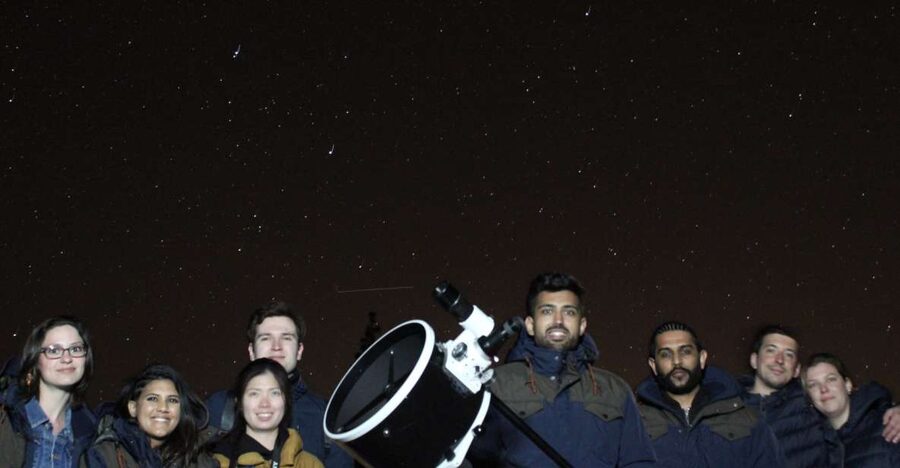
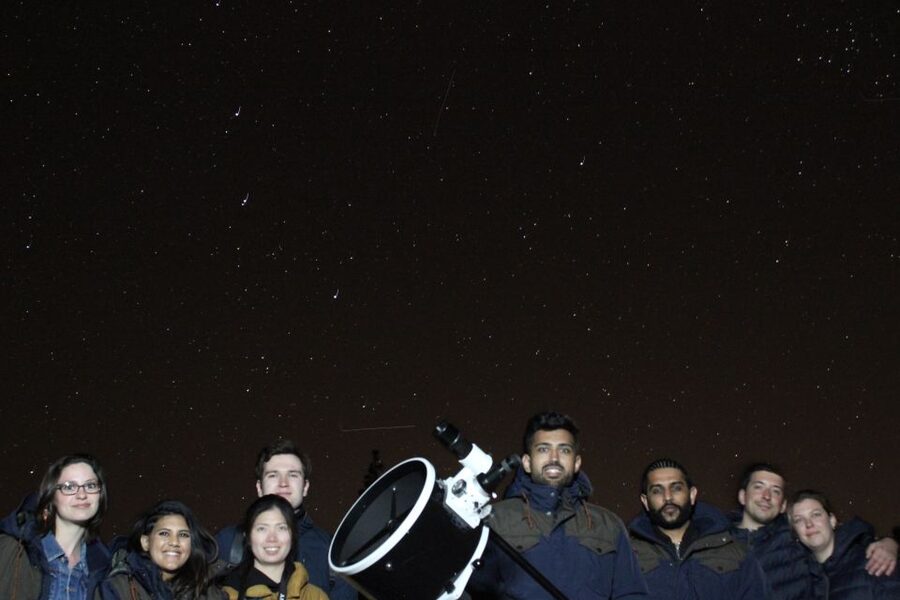
The guides take an individual photograph using astrophotography techniques. The result is designed to show you with the star-filled sky behind you, rather than producing a standard snapshot with a flash.
This is a useful extra because normal phone cameras struggle in very dark conditions. You can take your own sunset photos, but the night portrait gives you a proper souvenir of the setting.
The photograph should be seen as a bonus, not the main reason to book. The timing and final image depend on the weather and photography conditions. The strongest reason to choose this tour is the astronomy itself, with the portrait adding a personal memory afterward.
Small group, pickup, or self-drive?
You have two basic ways to join.
The VIP option includes pickup and drop-off at accommodation or a nearby point in southern Tenerife, generally between El Médano and Los Gigantes, with some exceptions. Pickup times are confirmed by WhatsApp on the day and can differ substantially from the generic time on the booking confirmation. Give the exact accommodation address at least 24 hours ahead.
This option makes the evening easy. You do not have to drive unfamiliar mountain roads after dark, and you can enjoy the Cava without worrying about driving. The smaller group setup also suits couples, families with older children, and anyone who prefers a more personal explanation.
The self-drive option requires your own rental car. Public transport and taxis do not work for this arrangement because you must follow the guides from the sunset viewpoint to the stargazing point. You also need to be comfortable with a mountain road, limited parking at the first stop, and a late drive back down.
Pickup is not offered from northern Tenerife. If you stay in Puerto de la Cruz or elsewhere in the north, this tour may be inconvenient even if the activity itself appeals.
Communication is important. You need a working WhatsApp number and must watch for the same-day message with the exact meeting or pickup time. If the operator cannot reach you because the number is wrong or the message is missed, the booking may be treated as a no-show.
Is $47 good value?
At $47 per person, the basic experience offers a lot for a three to four-hour evening. You get transport if that option is selected, a sunset viewpoint, a drink, a guided astronomy session, telescope time, an English-speaking starlight-certified guide, and an individual astrophotography portrait.
The value is strongest if you want both sunset and night sky in one outing. A simple viewpoint visit would cost less, but it would not provide the telescope, explanations, or guided search for constellations and planets. A larger astronomy event may include dinner or more facilities, but the small group here can mean less waiting and more direct time with the guides.
The $47 price does not include food, so eat before you leave. It also does not include the cable car, Teide Observatory, or a hike. This is a sunset and stargazing activity, not a volcano summit tour.
The VIP option may cost more than the base price, but it adds convenience rather than a different astronomical program. If you have no rental car, dislike mountain driving, or want hotel pickup, that extra cost may be sensible. If you already have a suitable rental car and prefer flexibility, self-drive is the practical choice.
Who will enjoy this most?
I would choose this tour if you like clear explanations, scenic stops, and outdoor experiences that do not require hiking. It works especially well for couples, older children, teenagers, and adults who want a first introduction to astronomy without signing up for a technical observatory program.
It also suits you if you have already visited Tenerife’s beaches and want to see a quieter side of the island. The volcanic interior, sea of clouds, sunset, and stars create a strong contrast with the resort coast.
I would think twice if you dislike cold weather, standing outdoors, or waiting for changing sky conditions. It is not suitable for people with altitude sickness, and there is no toilet access at the viewing points. You should also avoid booking it on the same night as an afternoon flight arrival, since delays could make the pickup impossible.
Should you book the Teide sunset and stargazing tour?
Yes, if you want a reasonably priced evening that combines Tenerife’s volcanic scenery with real astronomy. The best features are the small groups, the patient use of the 12-inch telescope, the guides’ ability to explain the sky, and the chance to see objects such as Saturn, Jupiter, the Moon, star clusters, and galaxies.
Book with realistic expectations. The weather may force the group to stay at the lower viewpoint, the exact stars change by season, and the mountain cold is serious. Bring winter clothing, check your WhatsApp messages, and arrive early if you drive yourself.
For the best dark-sky experience, choose a night with little moonlight. For planets, check what is visible during your travel season. If you can handle the cold and want more than a quick sunset photograph, this is one of the better-value evening activities in southern Tenerife.
FAQ
How long does the sunset and stargazing experience last?
The activity lasts about three to four hours. The usual plan includes around 45 minutes of driving to the first viewpoint, about 45 minutes for sunset, a short transfer, and roughly two hours and 15 minutes of guided stargazing.
Where does the tour take place?
The activity uses public viewpoints in Tenerife’s volcanic highlands. It is not held on Mount Teide itself and does not include the cable car or Teide Observatory.
Can I choose hotel pickup?
Yes. The VIP option provides pickup and drop-off at accommodation or a nearby point in the permitted pickup area of southern Tenerife, generally from El Médano to Los Gigantes, with some exceptions.
Can I join without hotel pickup?
Yes. With the self-drive option, you must use your own rental car. Public transport and taxis are not suitable because you follow the guides in your car from the sunset meeting point to the stargazing location.
What can I see through the telescope?
Depending on the season and conditions, you might see the Moon, Saturn’s rings, Jupiter and its Galilean moons, the Pleiades, galaxies, nebulae, and star clusters.
Is the tour suitable for children?
Children under five are not allowed on the VIP option. They can join with the self-drive option. The tour is conducted in English.
Is food included?
No food is included. A glass of Cava or a non-alcoholic drink is provided, and some departures may offer hot chocolate, but you should eat before the activity.
Are toilets available at the viewpoints?
No. There are no toilet facilities at or near the sunset and stargazing locations.
What should I wear?
Bring warm layers, a jacket, long trousers, warm shoes, and weather-appropriate clothing. Mountain temperatures can be close to freezing, particularly in winter, and wind can make it feel colder.
More Evening Tours in Tenerife
- Sunset & Stargazing Experience From Teide
★ 4.5 · 1,129 reviews - Tenerife: Teide Quad Trip (day/sunset) with jet ski option
★ 4.7 · 932 reviews - From Santiago del Teide: Sunset Quad Trip to Mount Teide
★ 4.8 · 735 reviews - Tenerife: Morning or Sunset Teide Buggy Tour
★ 4.9 · 404 reviews
More Mount Teide Tours in Tenerife
- Tenerife: Mount Teide Tour with Cable Car Ticket & Transfer
★ 4.3 · 5,094 reviews - Tenerife: Mount Teide, Masca, Icod and Garachico Day Trip
★ 4.5 · 2,065 reviews - Teide by Night: Sunset & Stargazing with Telescopes Experience
★ 4.5 · 1,492 reviews - Teide: Guided Sunset & Stargazing Tour by Night with Dinner
★ 4.7 · 1,339 reviews
Just added around Tenerife
- Tenerife: Water Jet-Ski / Teide Volcano Quad Safari Combo★ 4.5 · 6 reviews
- Tenerife: Tenerife Highlights beyond the Teide★ 4.8 · 160 reviews
- Puerto de la Cruz: Quad to Mount Teide Day or Sunset★ 4.7 · 25 reviews
- Tenerife: Teide Stargazing with an Astrophysicist★ 4.9 · 74 reviews
- Teide: Small Group Sunset Adventure with Picnic & Stargazing★ 4.6 · 231 reviews
- Tenerife: Teide National Park Sunset Quad Tour★ 4.1 · 164 reviews
- Tenerife: Teide National Park and Volcano Buggy Tour★ 4.0 · 39 reviews
- Tenerife: Teide National Park & Teno Rural Park Private Tour★ 5.0 · 35 reviews
Tenerife Volcano Tours, compared.
Tenerife: Mount Teide Tour with Cable Car Ticket & Transfer
Read our review →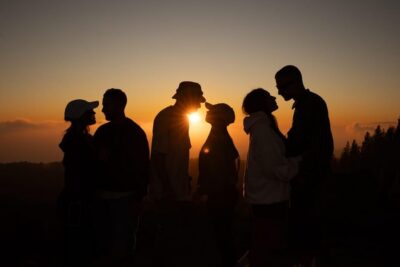
Tenerife: Teide National Park Sunset & Stargazing Tour
Read our review →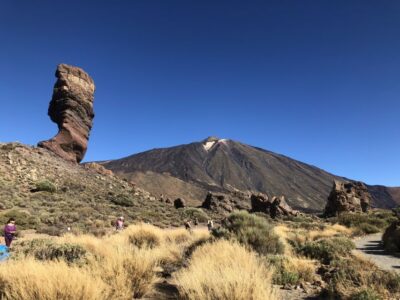
Tenerife: Mount Teide, Masca, Icod and Garachico Day Trip
Read our review →
Tenerife: Teide National Park Full-Day Tour with Pickup
Read our review →
Tenerife: Quad Adventure Tour in Teide National Park
Read our review →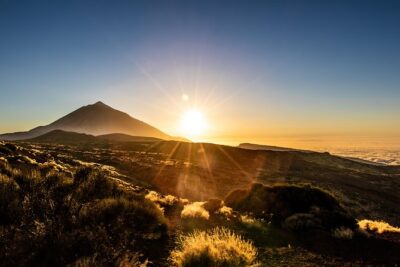
Teide by Night: Sunset & Stargazing with Telescopes Experience
Read our review →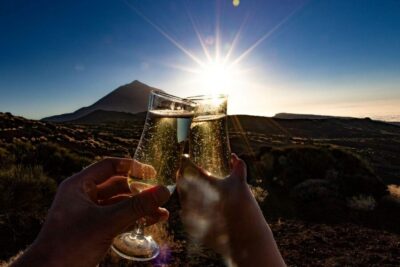
Teide: Guided Sunset & Stargazing Tour by Night with Dinner
Read our review →