
REVIEW · CATANIA
Special trekking on the most authentic and wild side of Etna
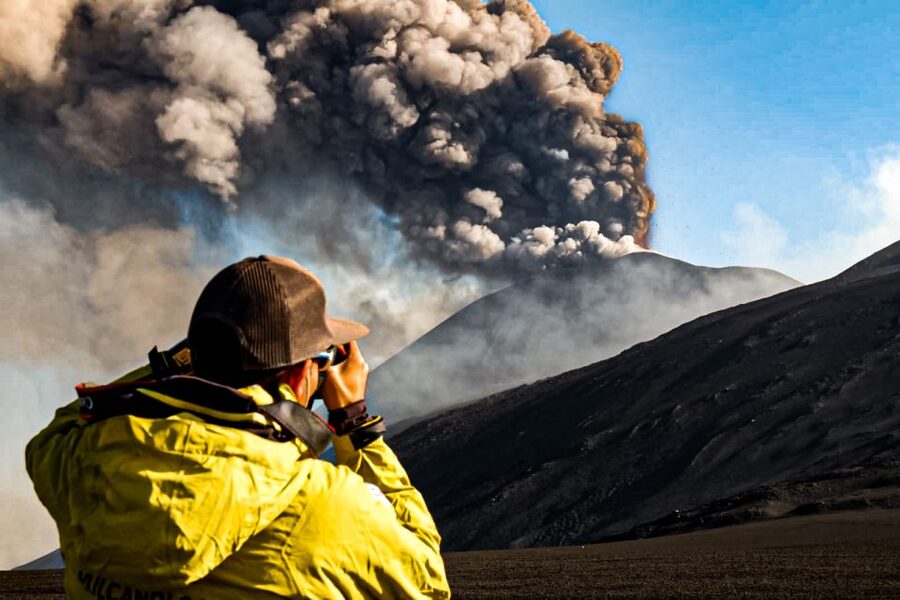
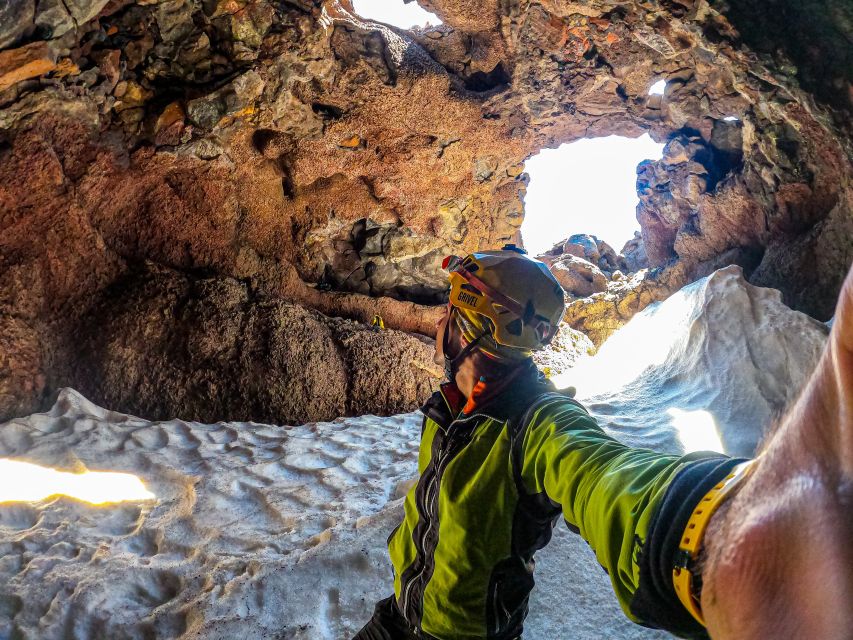
Etna’s wild north side gives you a far more geological outing than a quick viewpoint stop. You ride a 4×4 up rough volcanic terrain, then walk among craters, lava fractures, old flows, and the remains of eruptions most visitors never see. At one point, you put on a helmet and enter an intact volcanic chimney.
I like the mix of expert explanation and real walking. The guide begins teaching on the 4×4 climb, then brings the volcano to life on foot, explaining how lava escaped through cracks and how eruptions shaped each cone. I also like the broad views toward Taormina, the Aeolian Islands, Sicily, and Etna’s summit craters.
The main catch is cost and effort. The advertised price of $62.63 covers the guide service, but you pay another 50 euros per person on site for the 4×4 vehicles, plus 3 euros for parking. The route is high, exposed, and steep in places, so it is not a casual walk.
Key points to know before booking
- A 50-euro 4×4 supplement is required: The advertised price does not include the mountain transport.
- You walk down from about 2,900 meters: The route covers roughly 6 kilometers through ash, craters, and old eruption sites.
- The volcanic chimney is a rare stop: You enter a preserved cone with a protective helmet and see where lava once moved.
- The north side is quieter and wilder: This route avoids the busiest feel of Etna’s main summit access.
- Safety rules control the route: Guides take you only as high as current volcanic conditions allow.
- You need moderate fitness: High altitude, crater edges, loose ash, dizziness, and exposed ground make this unsuitable for many casual walkers.
Why Etna’s north side feels different
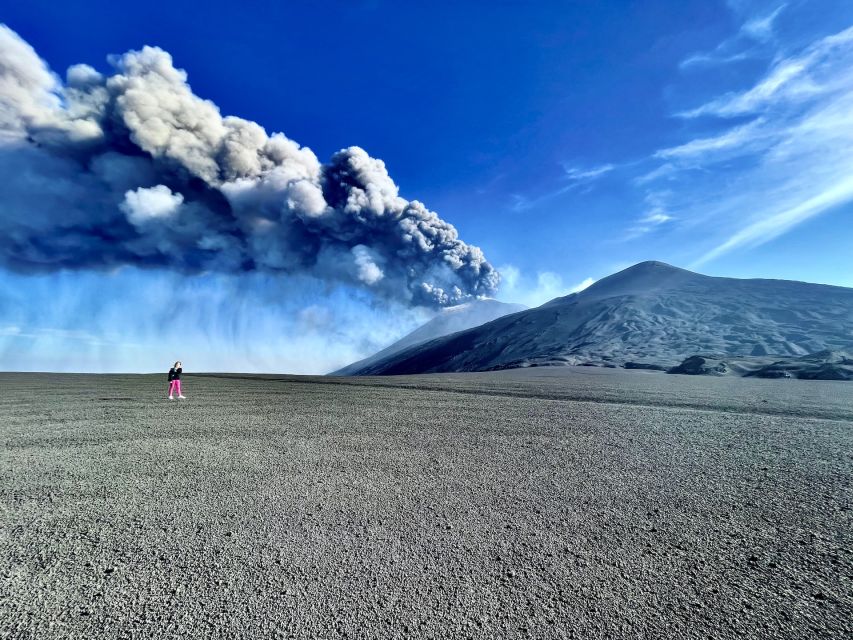
Etna is not one single sightseeing stop. It is a huge active volcano with summit craters, side cones, lava fields, fractures, and old eruption routes spread across several slopes. The north side near Piano Provenzana feels less developed and less crowded than the better-known southern approach.
That matters because this experience is about reading the volcano itself. Instead of simply looking at a large crater from a platform, you move through the evidence of eruptions. You see where the ground split, where lava poured out, and where explosive activity built new cones from ash and rock.
The route also works as a substitute when the summit craters are closed because of volcanic risk. That is not a small detail. Access on Etna changes according to Civil Protection notices and the instructions of authorized volcanological guides. If the highest craters are off-limits, this trek still gives you a serious high-altitude experience without ignoring safety rules.
The route begins at the Chiosco Bar Mareneve, beside the winter ski chairlift at the north-side parking area. The meeting point is the second of four buildings in the lot. Arrive early enough to find the bar and organize your equipment without rushing.
More Volcano Hikes and Treks in Catania
- Mount Etna: Guided Trek 3,000 Meters to the Summit
★ 4.8 · 1,407 reviews - Etna Sunset Tour: Volcano trek, Cave & tasting from Catania
★ 4.8 · 1,290 reviews - Catania: Mount Etna Adventurous Hiking Tour with Equipment
★ 4.7 · 784 reviews
The 4×4 climb from 1,800 to 2,800 meters
The first major part of the outing is not on foot. A special 4×4 vehicle carries you from around 1,800 meters to the high volcanological observatory at about 2,800 meters, covering roughly 8 kilometers of rough volcanic road.
This ride is part transport and part introduction. Your guide explains what you are seeing along the way, so the vehicle is not dead time. The road itself can be extremely rough, and the 4×4 is necessary for the steep, uneven route. If you expect a smooth shuttle, adjust your expectations before you arrive.
The 50-euro vehicle charge is paid locally and is separate from the $62.63 guide price. For two people, that means the transport adds 100 euros to your shared cost. Add the 3-euro parking ticket, paid after the outing, and budget for the real price rather than relying only on the online figure.
At 2,800 meters, conditions can feel very different from the coast. Wind, cold, bright sun, and fast weather changes are all possible. The operator provides warm jackets, trekking shoes, extra socks, backpacks, helmets, and walking poles, but you should still arrive in long trousers and bring a windbreaker, sunscreen, sunglasses, drinks, and food.
The first walk toward 2,900 meters
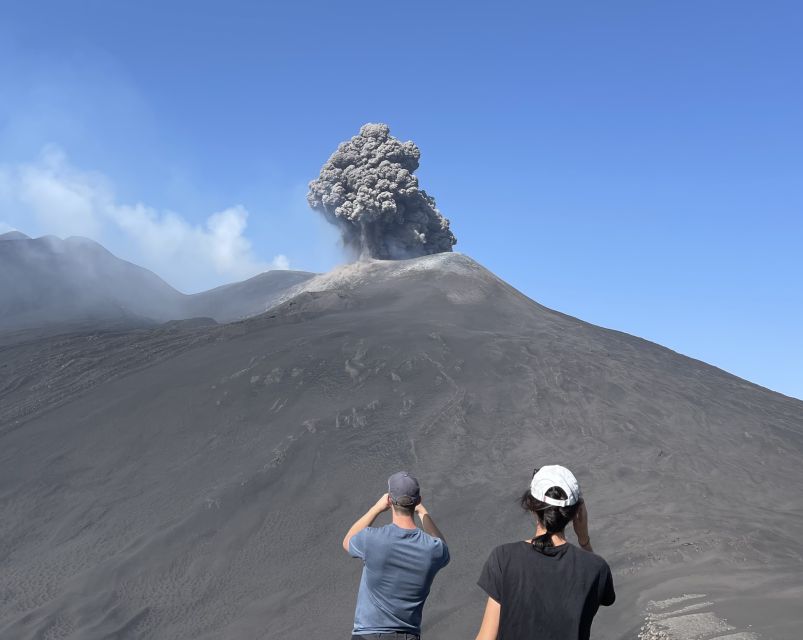
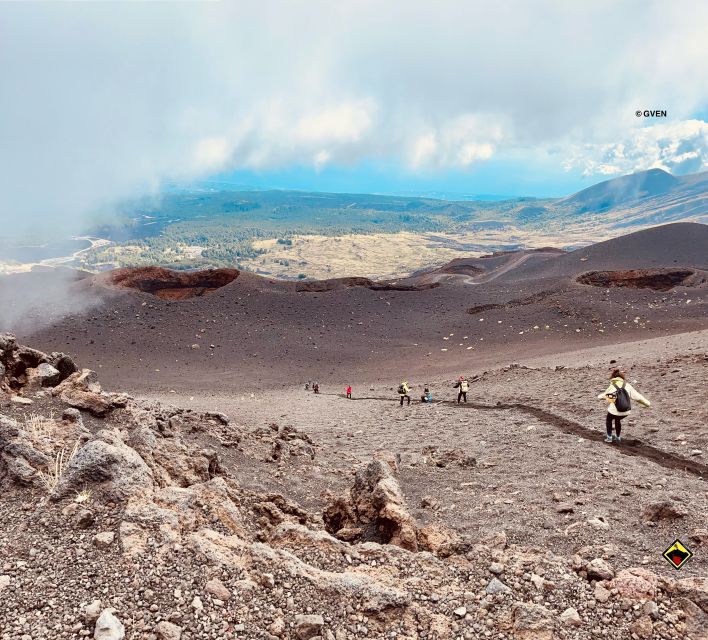
After reaching the observatory, you begin a shorter walk from about 2,800 to roughly 2,900 meters. This section leads to a panoramic point with views toward the summit craters, recent lava flows, and the wider island.
Visibility depends entirely on weather. On a clear day, you may see toward Taormina and the Aeolian Islands, with Sicily spread below you. In cloud or strong wind, the outlook can shrink quickly. The volcano still offers plenty to study at close range, but do not book this only for a guaranteed panorama.
This first walk is also where you learn how altitude affects your pace. The route is not described as a technical climb, but high elevation makes ordinary uphill movement harder. Stop when needed, drink water, and tell the guide about health concerns before setting out.
The summit craters remain part of the view rather than the destination when current rules close them. That is a sensible arrangement. You get a clear sense of the active upper volcano without being taken into an area the authorities have restricted.
Craters, fractures, and the 1947 eruption
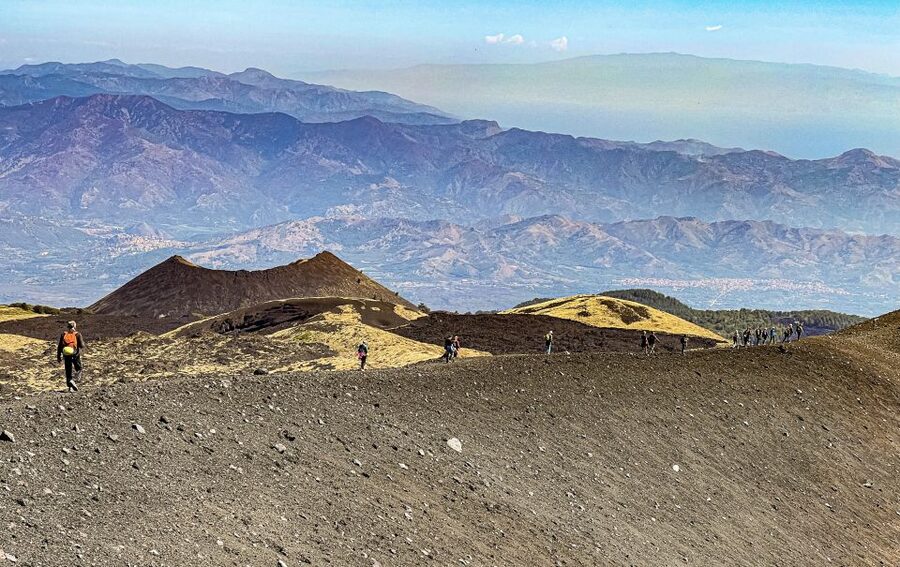
The 4×4 then takes you to the north side of one of Etna’s large craters. From here, the longer walk begins. The main route continues on foot back toward the initial area, eventually reaching Piano Provenzana.
One of the most interesting stops is the north-side Rift, a large fracture associated with the volcano’s system of openings. A crack in the ground may sound less dramatic than a smoking crater, but fractures are central to how Etna releases magma. They help explain why eruptions can appear on the flank rather than only at the summit.
You also visit the craters formed during the February 24, 1947 eruption. This gives the walk a firm date and a clear connection to Etna’s recent activity. The cones are not just scenic mounds. They record a specific eruption and show how material built up around an opening.
The guide’s explanations are especially useful here. A good volcanological tour helps you distinguish an explosive crater from a lava outlet and understand why some cones are broad and ash-covered while others have a more defined rim. Guides speak French, Italian, and English, and groups are divided by language and size to avoid creating one large mass on the trail.
More Volcano Hikes and Treks in Italy
- From Catania: trek on Mount Etna, Lava Cave & tasting Tour
★ 4.8 · 563 reviews - Etna Volcano: South Side Guided Summit Hike
★ 5.0 · 311 reviews - Mount Etna: North Upper Craters Guided Tour by 4×4 with Trek
★ 4.6 · 243 reviews - Catania: Mount Etna Sunset Trekking with Wine Tasting
★ 5.0 · 140 reviews
Inside an intact volcanic chimney
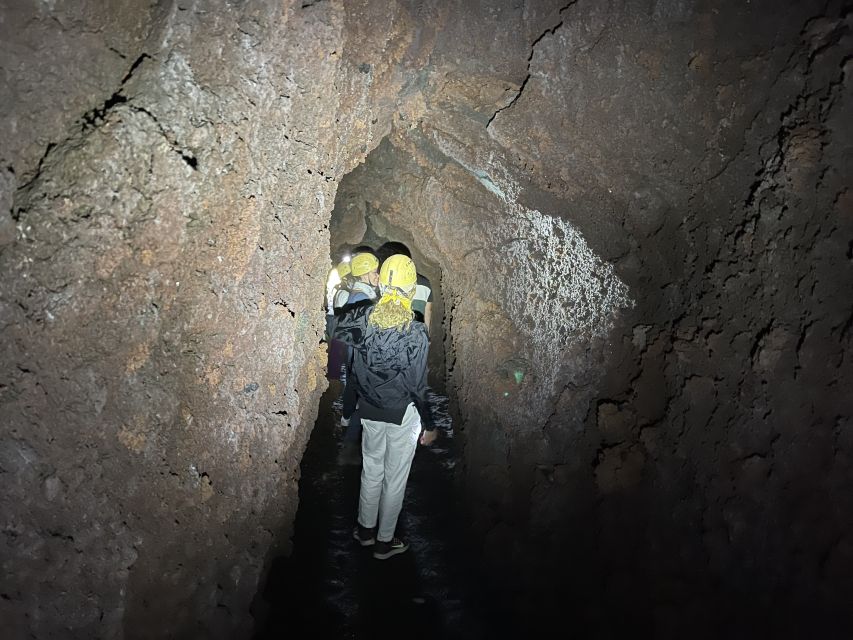
The most unusual section takes you inside the chimney of a volcanic cone. You wear a protective helmet and enter the preserved opening through which molten material once rose.
This is the kind of stop that makes the route different from a standard volcano viewpoint. You are not only standing beside a crater. You are looking into the internal passage of a cone and getting a physical sense of how an eruption used the mountain as a pipe.
The space is also why the excursion is not suitable for people with claustrophobia. The activity information also rules it out for people with serious heart, respiratory, back, or mobility problems, as well as people with epilepsy, recent surgery, altitude sickness, or a low fitness level. If you are uneasy around enclosed volcanic spaces or narrow ground, ask the guide before entering.
The helmet is supplied, as are walking poles and suitable footwear. Still, bring the right attitude: this is a working volcanic environment, not a polished visitor center. Ash gets into places, footing changes, and the ground may feel unstable even when the route is safe.
Walking the eruption route to Piano Provenzana
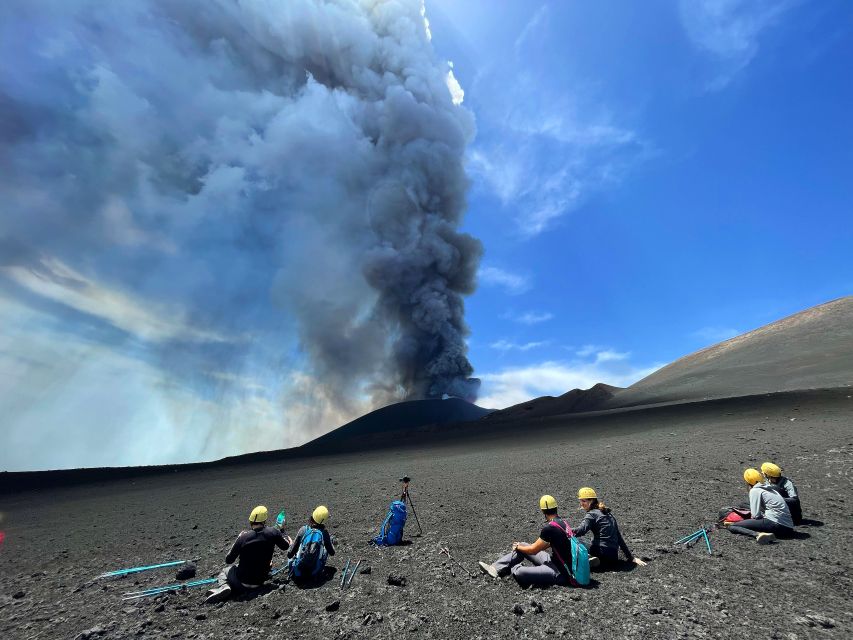
The longer section covers about 6 kilometers and passes the craters of several lateral eruptions. The listed dates include 1809, 1874, 1879, 1911, 1923, 1914 to 1924, 1974 to 1975, and 2002.
That sequence gives the route unusual depth. You are not looking at one isolated eruption. You are moving through a record of repeated activity across more than a century. Each small cone and ash slope helps show how Etna keeps rebuilding its sides.
The path includes descents over volcanic ash. Ash is loose, so walking downhill can be harder than the distance suggests. Trekking poles are useful here, especially if your knees are sensitive or you are not used to loose ground. Wear long trousers and closed hiking shoes. Sandals, flip-flops, open-toed shoes, and high heels are not allowed, and insurance does not cover you without adequate footwear.
The route eventually reaches Piano Provenzana, completing the walk back toward the starting area. The activity is described as four hours, though the exact pace depends on weather, group size, safety limits, and how much time the guide spends explaining the sites. Plan your morning or afternoon around the full block rather than trying to squeeze in another fixed appointment immediately afterward.
What the guides add to the walk
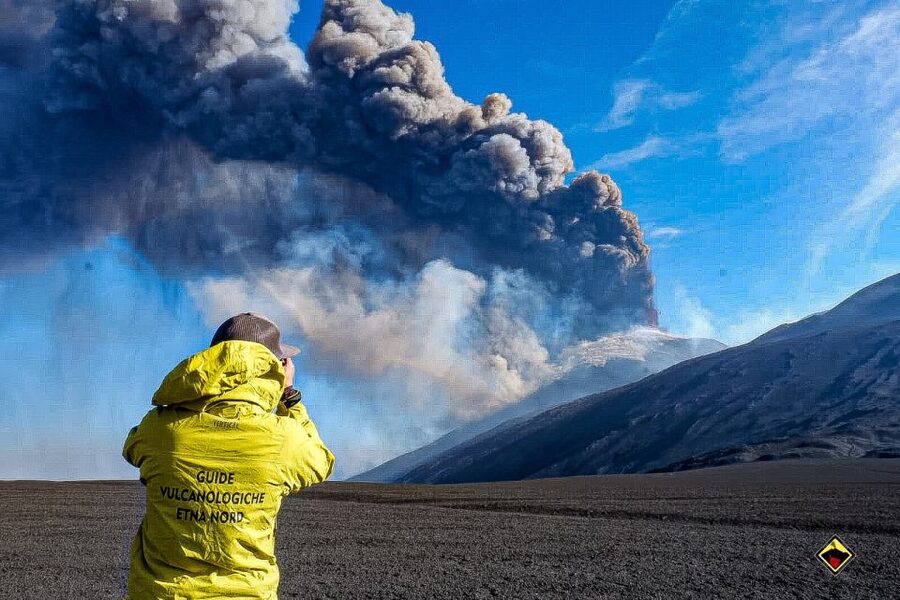
The guide is not simply there to lead the way. Authorized volcanological guides operate under the current instructions of Civil Protection and can change the route or maximum altitude when conditions require it.
That authority matters on Etna. A guide can explain what you are seeing, but also decide when a crater edge, high section, or exposed path is no longer sensible. You should treat a change in route as part of the experience, not as a failure to deliver the promised outing.
A guide named Ciccio has led an outing on this route, giving detailed explanations during the 4×4 ride and the walk. The strongest part of the guiding style is the connection between science and place. Instead of offering abstract facts about magma, the guide can point to a fracture, a lava channel, or the interior of a cone and explain what happened there.
The tour provider splits groups according to numbers and language. That helps keep the walking line manageable and gives the guide more room to answer questions. The advertised languages are English, Italian, and French.
What is included and what you still need
The guide service includes accident insurance, trekking poles, helmets, trekking shoes, warm jackets, extra socks, and a backpack. Those supplies are useful because high Etna conditions can catch you out, especially if you arrive from a warm coastal town wearing light clothing.
The 4×4 transport is not included. Pay 50 euros per person on site for the climb from 1,800 to 2,800 meters and the later vehicle section from 2,800 to about 2,500 meters. The parking ticket costs 3 euros for the whole day.
You need to bring water, snacks, and a packed lunch if you want one. Bottled water, snacks, lunch, a rain jacket, and hotel transfers are not included. The provided clothing does not remove the need for personal layers. Bring a windbreaker, jacket, sunscreen, sunglasses, comfortable clothes, and long pants.
The activity requires at least eight participants in total. If that number is not reached, it can be cancelled. Bad weather can also force a cancellation or postponement. You can cancel up to 24 hours in advance for a full refund, and the reserve-now, pay-later option helps keep plans flexible.
Who should book this Etna trek?
I would choose this outing if you want geology, old eruption sites, and a real walk rather than a short photo stop. It suits moderately fit hikers who are comfortable with high altitude, loose ash, crater edges, wind, and changing weather.
It is also a strong choice if the summit craters are closed. You still reach the highest point safely allowed with guides and spend time among volcanic features instead of simply accepting a reduced visit.
I would not choose it for a relaxed family stroll, a mobility-friendly excursion, or a person who wants guaranteed clear views. It is also a poor match if you dislike enclosed spaces, heights, dizziness, rough vehicle rides, or exposed volcanic ground.
The activity is not suitable for people over 95, people without hiking experience, or people with the medical conditions listed by the operator. Be honest about your fitness and tell the guide about relevant health concerns before the walk begins.
Is the $62.63 price good value?
The base price is reasonable for a four-hour guided volcano outing with specialist guiding, equipment, insurance, and access to a route that is difficult to arrange independently. The guide’s explanations and the protected access to the volcanic chimney add real value.
But the final cost is higher than the headline price. The required 50-euro 4×4 charge is substantial, and parking adds another 3 euros. Lunch, drinks, and transport from your accommodation also come out of your pocket.
I still think it can be good value if you care about the geology and want an organized route on Etna’s less visited north side. If you are mainly seeking a summit photo, compare the total cost with other Etna options before booking.
Should you book it?
Book this trek if you want Etna explained from the inside out: fractures, cones, lava outlets, ash slopes, eruption dates, and a preserved volcanic chimney. The north-side route offers a more physical and less polished look at the volcano, while the guide keeps the outing within current safety limits.
Skip it if you need an easy walk, dislike rough transport, or cannot manage high-altitude paths. Before booking, add the 50-euro vehicle charge to your budget, check the forecast, and arrive ready for wind and loose ash. For the right hiker, this is one of the most rewarding ways to see Etna when the summit craters are unavailable.
FAQ
Where does the Etna trek start?
The meeting point is Chiosco Bar Mareneve near the chairlift used by skiers in winter. It is the second of four buildings in the parking area.
How long does the activity last?
The excursion lasts about four hours. Starting times vary, so check availability when booking.
Does the price include the 4×4 vehicle?
No. The advertised price covers the guide service, while the 4×4 transport costs 50 euros per person, paid on site.
How much is parking?
Parking costs 3 euros for the whole day and is paid after the excursion.
What languages are available?
The live guide service is available in English, Italian, and French.
What equipment is provided?
The activity provides trekking poles, protective helmets, trekking shoes, warm jackets, extra socks, accident insurance, and a backpack.
What should I bring?
Bring a windbreaker, sunglasses, snacks, drinks, sunscreen, a jacket, comfortable clothing, long pants, and hiking shoes. A packed lunch and rain jacket are also recommended.
Can the summit craters be closed during this excursion?
Yes. The route is designed as an alternative when the summit craters are closed because of volcanic risk. Guides follow current Civil Protection rules and take you only to the highest safe altitude.
Can I cancel the booking?
You can cancel up to 24 hours in advance for a full refund. The excursion may also be cancelled or postponed because of bad weather or if the minimum of eight participants is not reached.
More Mount Etna Tours in Catania
- Catania: Mount Etna Morning or Sunset Day Trip with Tasting
★ 4.8 · 4,028 reviews - Catania: Sunset Jeep Tour of Mount Etna and Lava Flow Caves
★ 4.8 · 2,113 reviews - Sicily: Etna and Alcantara Gorges Full-Day Tour with Lunch
★ 4.8 · 1,766 reviews - Catania: Etna Sunset Tour with Pickup and Drop-off
★ 4.8 · 1,348 reviews
Just added around Catania
- Etna walking tour, visit of a lava tunnel, Arancino tasting★ 5.0 · 25 reviews
- Mount Etna & Taormina Multi-language Tour from Palermo★ 4.3 · 8 reviews
- Mount Etna: trek with vintage car, tasting sicilian produtcs★ 5.0 · 5 reviews
- Mount Etna: Sunrise Excursion with an expert Local Guide★ 5.0 · 8 reviews
- Mount Etna Tour to 1900m from Taormina★ 4.9 · 11 reviews
- Mount Etna South:Summit Craters Tour in Cable Car & 4×4 Jeep★ 4.9 · 15 reviews
- Mount Etna: Return Funivia dell’Etna Cable Car Ticket★ 4.0 · 240 reviews
- Mount Etna: North Upper Craters Guided Tour by 4×4 with Trek★ 4.6 · 243 reviews
Catania Volcano Tours, compared.
Catania: Mount Etna Morning or Sunset Day Trip with Tasting
Read our review →
Catania: Sunset Jeep Tour of Mount Etna and Lava Flow Caves
Read our review →
Sicily: Etna and Alcantara Gorges Full-Day Tour with Lunch
Read our review →
Mount Etna: Guided Trek 3,000 Meters to the Summit
Read our review →
Catania: Etna Sunset Tour with Pickup and Drop-off
Read our review →
Etna Sunset Tour: Volcano trek, Cave & tasting from Catania
Read our review →
Catania: Etna Morning Excursion with Tasting and Pickup
Read our review →
Mt. Etna and Taormina village full day tour from Catania
Read our review →Browse the lists this tour appears in