
REVIEW · ADDIS ABABA
3 Day Danakil Depression Dallol & Ertale Tours
The most striking part of this trip is the sharp contrast between Dallol’s yellow sulfur pools and Erta Ale’s red glow after dark. In three days, you move from salt caravans and Afar mining sites to one of Ethiopia’s most severe volcanic settings.
I like the strong range of sights, from camel-loaded salt blocks at Ragad to the low basin of Lake Assal. I also like the practical all-in setup: guides, drivers, cooks, camping equipment, permits, security support, meals, and unlimited bottled water are included. The drawback is plain: this is a physically demanding trip, with long rough drives, basic camping, heat, and a steep walk to Erta Ale.
Key points before you book
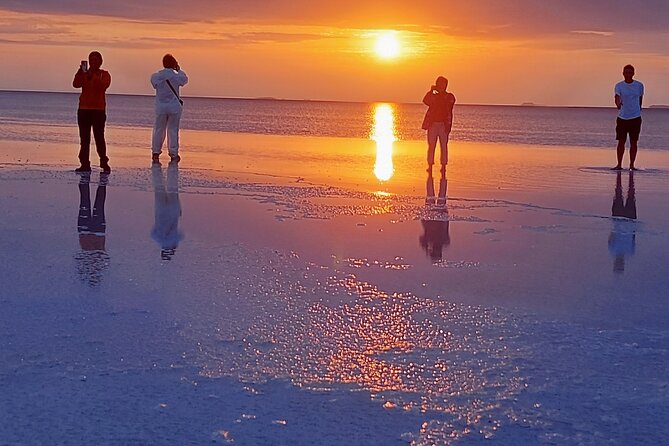
- Salt is still cut by hand at Ragad, shaped into blocks, and loaded onto camels.
- Dallol sits about 116 meters below sea level, among sulfur colors and volcanic formations.
- Erta Ale requires a rough 80-kilometer drive and a demanding walk to its summit area.
- Two nights are spent camping, with cooks, cooking gear, and camping equipment supplied.
- The $390 price covers the main practical costs, including transport, fuel, entry fees, food, water, and security support.
- Afar culture is part of the experience, especially around the salt trade and camel caravans.
Why this three-day Danakil trip is so unusual
The Danakil Depression is not a gentle sightseeing destination. It is a harsh volcanic basin where salt, heat, sulfur, and black rock shape nearly every view. That difficulty is also the reason the trip feels so different from a standard Ethiopian tour.
You begin from Bole International Airport in Addis Ababa, with pickup offered at the airport meeting point. The price is $390 per person, and the package covers a great deal: private transportation, a guide, entrance fees, fuel and driver allowances, cooks, cooking materials, camping equipment, police support, unlimited bottled water, and six meals.
That matters here. Remote desert travel is expensive and complicated when arranged piece by piece. Having food, water, drivers, equipment, and local support organized in advance gives you a much better chance of focusing on the scenery instead of solving every practical problem yourself.
The trip is often booked well ahead, around 51 days in advance on average. I would not wait until the last moment if your dates are fixed. At the same time, confirm the transport arrangement before paying if you are particular about traveling privately, since the experience allows up to 30 people.
More Danakil and Erta Ale Tours in Addis Ababa:
- 12 Days SIMIEN MOUNTAIN-LALIBELA-DANAKIL-TIGRAY CHURCHES
★ 5.0 · 45 reviews - 3 Day Danakil Depression Ertale and Dallol Tours
★ 5.0 · 44 reviews - 5 DAYS Lalibela, Axum, Tigray churches and Danakil
★ 5.0 · 34 reviews
Day one: salt blocks, camel caravans, and Dallol
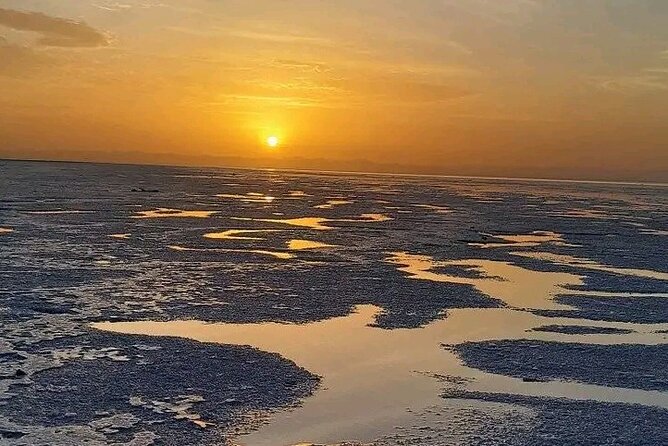
The first day begins with a drive to Ragad, also called Asebo. This is where salt workers break salt from the ground, cut it into rectangular pieces, and load the blocks onto camels.
That scene gives the Danakil a human scale. Dallol can seem like another planet, but the salt trade shows how local communities have long used this difficult place for work and transport. Watch how the blocks are handled and how the camel loads are arranged. This is not a staged cultural stop. It is part of the local economy.
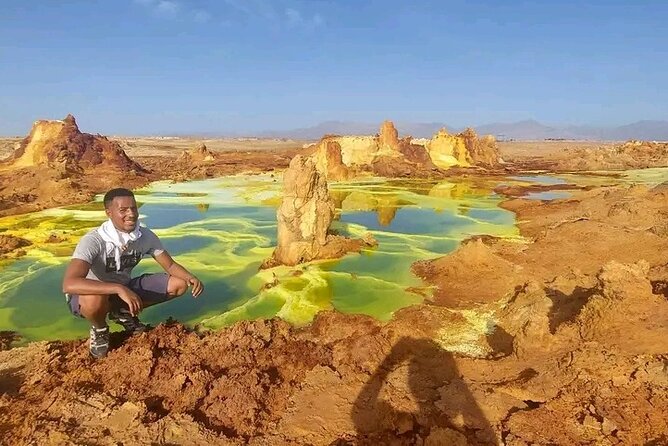
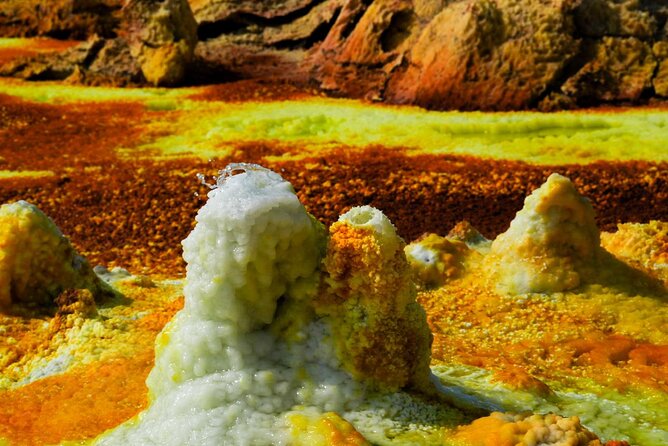
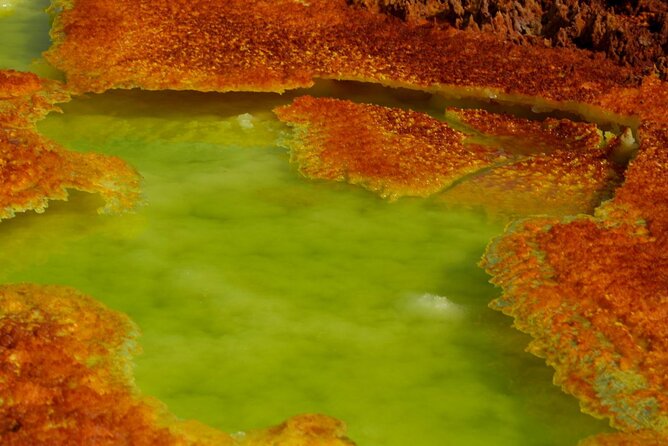
From Ragad, the route continues toward Dallol and Lake Assal. Dallol lies about 116 meters below sea level, making it one of the lowest places on Earth. The area is known for mineral colors and volcanic formations, with sulfur pools and salt deposits creating a mix of yellow, green, white, and orange tones.
You will walk with Afar people during part of the visit. That contact is one of the most valuable parts of the day, but you should approach it with respect. This is a working environment, not just a photo stop. Ask before taking close photographs, and keep your attention on the people as well as the unusual colors.
The route also follows camel caravans. Their presence makes the salt flats easier to understand than a geology lecture would. In July, August, and early September, camel caravans may not be present, so the timing of your visit affects what you see.
After Dallol and Lake Assal, you drive to Hamadella for the night. Camping here means keeping expectations realistic. You are paying for a remote expedition, not a hotel stay. The supplied camping equipment and cooking team are important comforts, but the setting remains basic.
Dallol’s colors come with real conditions
Dallol is photogenic, but it is not simply a colorful park. Volcanic activity and mineral deposits create the striking colors, and the area can be hot, exposed, and demanding underfoot.
Wear sturdy shoes and protect your feet from sharp salt and rough ground. Use the bottled water supplied by the tour and follow the guide’s instructions around geothermal features. The tour includes a guide and police support, which is reassuring in such a remote setting, but you still need to stay close to the group.
The best way to enjoy Dallol is to slow down enough to notice the small details. A broad view of the sulfur fields is memorable, yet the real pleasure comes from looking at the crust, mineral edges, salt textures, and changing colors. You do not need to rush from one photo point to the next.
Day two: the rough road to Erta Ale
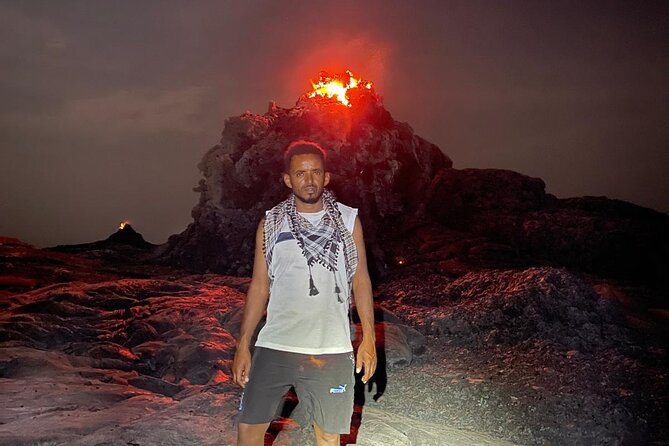
Day two shifts from salt and sulfur to volcano country. The destination is Erta Ale, whose name means smoky mountain in the Afar language.
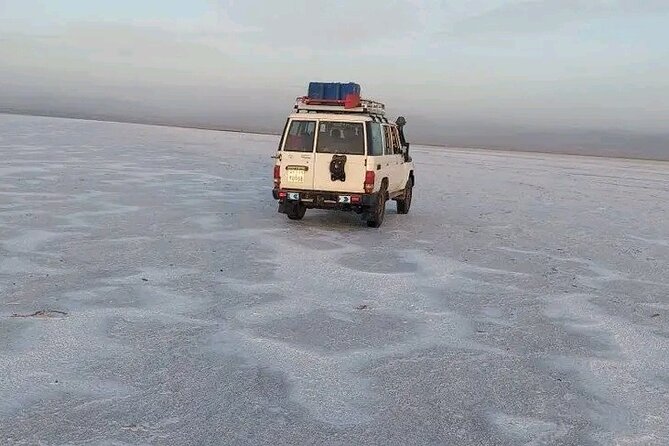
The drive begins toward Dodom, at the base of the volcano. The stated distance is about 80 kilometers, but the journey can take around six hours because the road is extremely rough. That ratio tells you what kind of day this is. You may cover a modest distance, but the surface and remote terrain make the drive slow.
This is one of the tour’s main drawbacks. Long hours in a vehicle over rough ground can be tiring, particularly after the first day in the heat. If you need a smooth road, regular facilities, or easy access, this is not the right trip.
From Dodom, you walk toward Erta Ale. The volcano rises to about 613 meters and has a summit caldera roughly one kilometer across. Its permanent lava lake is the great prize, though the exact viewing conditions can vary.
The climb is physically challenging, and the tour specifically requires a strong fitness level. The supplied information does not give a precise walking time, so you should not judge the effort by the volcano’s modest elevation alone. Heat, rough ground, darkness, and the remote setting all add to the work.
You camp near Erta Ale. The reward comes after sunset, when the lava lake may glow within the crater. Seeing molten rock in a natural volcanic setting is the kind of experience that justifies the difficult road and basic camp. It is also the moment when patience matters. You may find that the best part is not a constant dramatic eruption, but the shifting red light and the sheer fact that you are looking into an active volcanic crater.
Guides and drivers play an important role here. The company’s organizer, Sahlie, is associated with arranging the tour, while the wider team includes guides, drivers, cooks, and local support staff. Do not expect the experience to work like a self-guided hike. Follow the group instructions, especially near the crater.
A few more volcano tours around Addis Ababa worth a look
- 2-Night 3-Day Danakil Depression Tour without Flights
★ 4.8 · 31 reviews - 3-Day Danakil Depression A Journey into Earth’s Fiery Heart
★ 4.6 · 6 reviews - Surabaya or Malang: Tumpak Sewu Bromo & Ijen 3-Day Trip
★ 4.8 · 672 reviews - 3Days – Tumpaksewu Bromo Ijen Adventure via Malang or Surabaya
★ 5.0 · 405 reviews
Day three: sunrise, crater pits, and the road back
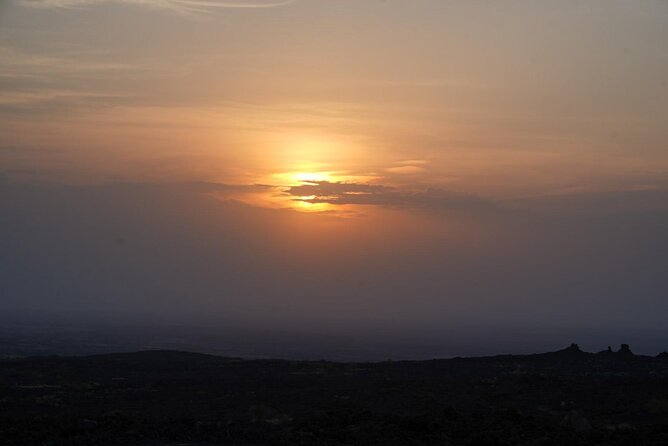
The third day begins early, with sunrise near the northern crater area. The main pit crater is described as about 200 meters deep and 350 meters across, with a three-tiered form. Smaller southern and central pits can be reached with a short walk of about five minutes.
This early start is worth taking seriously. Sunrise changes the crater walls and volcanic rock, and the cooler morning is easier for walking than the middle of the day. After breakfast, the plan is to descend from Erta Ale around 9:00 a.m., with an earlier departure from camp if conditions allow.
You should expect some flexibility. In a remote volcanic area, driving times and departure times can shift. The schedule gives target times, not a guarantee that every stage will run like a city tour.
After reaching Dodom, the route may continue toward Lake Giulietti, also called Lake Afrera. This stop is optional and may not be available during summer. Since the information does not promise the visit, treat it as a possible extra rather than a central reason to book.
The tour then returns toward Semera and ends back at the meeting point. The activity information identifies Bole International Airport in Addis Ababa as the start and says the experience ends at the meeting point, so confirm the exact return arrangement if you have a flight or another tour immediately afterward.
What the $390 price really covers
At $390 per person, this is a strong value if you want the Danakil experience without arranging every part yourself.
The included items cover the costly basics:
- Private transportation
- Guide services
- Entrance fees
- Fuel and driver allowances
- Cooks and cooking materials
- Camping equipment
- Police support
- Unlimited bottled water
- Three lunches
- Two dinners
- Two breakfasts
That list is more important here than a comparison with ordinary day tours. The Danakil requires vehicles, fuel, water, food, equipment, and local coordination. A cheaper headline price could become less attractive if you had to add those items later.
Alcoholic drinks, tips, and personal expenses are not included. Bring money for those if needed, but do not expect a full range of facilities in the remote sections of the trip.
The phrase private transportation deserves a quick check before booking, especially because the maximum group size is 30. Ask whether your booking uses a private vehicle for your party or joins a larger departure. That one question can shape your comfort level on the long road to Erta Ale.
Food, camping, and the human side of the trip
Meals are cooked on the road, with cooking materials and cooks provided. Several people who have taken longer Ethiopian trips with this company have singled out the food and the care from the cooks, drivers, and guides. That is useful context because meals matter more when you are camping in a hot, isolated area.
You should still pack personal snacks if you have special dietary needs, since no dietary arrangements are stated. Do not assume that a remote camp can provide a substitute at short notice.
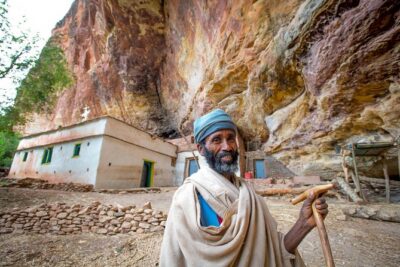
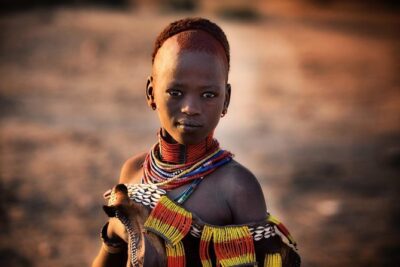
The Afar connection gives the trip more meaning than a quick series of scenic stops. Salt workers, camel handlers, and local guides help you see how people live and work in one of the world’s most severe environments. The experience is at its best when you treat that contact as an exchange, not as a backdrop.
Safety, fitness, and timing
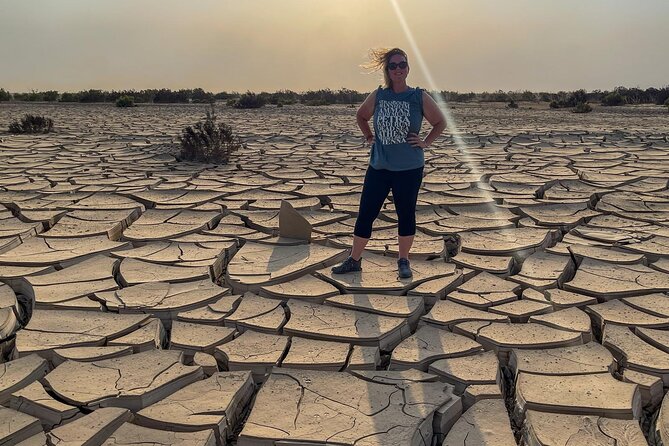
The tour requires a strong physical fitness level. That warning is not decorative. You face long drives, rough roads, hot open ground, camping, and a demanding walk to Erta Ale.
You should be comfortable spending three days with limited comfort and a schedule shaped by terrain. Good walking shoes, sun protection, practical clothing, and personal water or electrolyte supplies are sensible additions, even though unlimited bottled water is included.
The company provides police support, a guide, drivers, and fuel allowances. That is valuable in an isolated region. Still, conditions in northern Ethiopia can change, and one past account described checking the security situation before visiting. You should confirm current regional conditions before departure rather than relying on an old report.
The tour is often booked far ahead, which may help with planning. Its free cancellation policy allows a full refund when you cancel at least 24 hours before the start time. Inside that window, the amount paid is not refunded, and changes are not accepted.
Who should book this adventure
I would recommend this trip to you if you want unusual geology, are curious about Afar life, and can accept hard travel in exchange for rare sights. It suits people who see a rough road as part of the story rather than an unfortunate interruption.
It is also a good choice if you value an organized package. You do not need to source a vehicle, hire cooks, carry camping equipment, arrange entry fees, or plan every meal separately.
I would hesitate to recommend it if you dislike camping, struggle with long drives, need easy access to services, or have limited fitness. The word breathtaking can make a hard trip sound easy. Here, the beauty and the discomfort arrive together.
Should you book the Danakil Depression tour?
Book it if Dallol’s sulfur colors, Afar salt work, camel caravans, and Erta Ale’s lava lake all appeal to you more than comfort does. The $390 fee is reasonable because it includes the transport, staff, equipment, meals, water, entry costs, fuel, and local support that make this remote trip possible.
Before paying, confirm the exact vehicle arrangement, current security conditions, the expected walking demands, and whether Lake Afrera is available during your dates. If those points suit you, this is a focused three-day adventure with an excellent mix of geology, culture, and raw desert travel.
FAQ
Where does the tour start?
Pickup is offered at Bole International Airport in Addis Ababa, Ethiopia. The listed meeting point is at the airport.
How long does the Danakil tour last?
The experience lasts approximately three days and ends back at the meeting point.
What places are visited?
The route includes Ragad, also called Asebo, Dallol, Lake Assal, Hamadella, Dodom, and Erta Ale. Lake Giulietti, also called Lake Afrera, is optional and may not be available during summer.
Is the tour physically demanding?
Yes. A strong physical fitness level is required. The trip includes rough, lengthy drives and a demanding walk to Erta Ale.
Are meals and camping equipment included?
Yes. The package includes three lunches, two dinners, two breakfasts, cooking materials, cooks, and camping equipment.
Is bottled water provided?
Yes. Unlimited bottles of water are included in the tour price.
What is the cancellation policy?
You can receive a full refund if you cancel at least 24 hours before the experience begins. Cancellations or changes made within 24 hours are not accepted, and the payment is not refunded.
Just added around Addis Ababa
- 9 Days Tours To Danakil Depression, Simen MNP, Lalibela With Omo Valley Tribes★ 5.0 · 11 reviews
- A day trip to Wench crater Lake★ 5.0 · 4 reviews
- Addis City Tour & Crater Lakes excursions in Debreziet!★ 5.0 · 8 reviews
- Day Trip To Wonderful Crater Lake of Wenchi & Ancient Church★ 5.0 · 8 reviews
- Danakil Depression and Lalibela 5 Days Tours★ 5.0 · 28 reviews
- 5 DAYS Axum, Lalibela, Tigray churches and Danakil★ 4.5 · 22 reviews
- 8 Days Lalibela,Danakil Depression and Omo Vally Tours★ 5.0 · 10 reviews
- 5 Days Lalibela-Danakil Tour★ 4.5 · 11 reviews
Addis Ababa Volcano Tours, compared.
12 Days SIMIEN MOUNTAIN-LALIBELA-DANAKIL-TIGRAY CHURCHES
Read our review →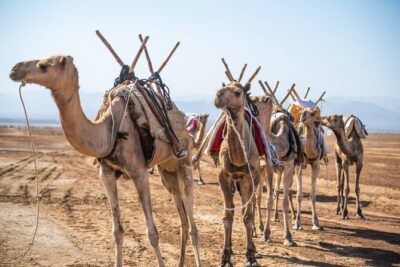
3 Day Danakil Depression Ertale and Dallol Tours
Read our review →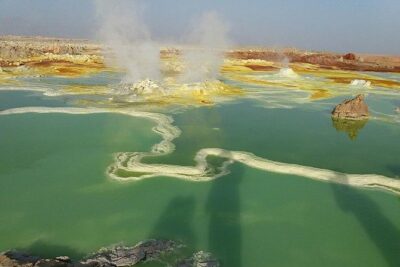
5 DAYS Lalibela, Axum, Tigray churches and Danakil
Read our review →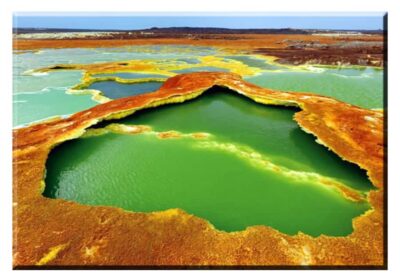
2-Night 3-Day Danakil Depression Tour without Flights
Read our review →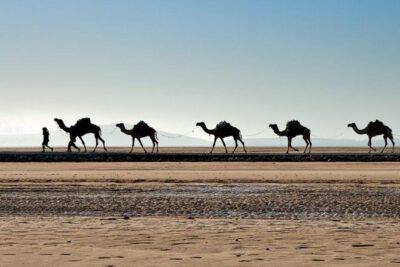
5 DAYS Axum, Lalibela, Tigray churches and Danakil
Read our review →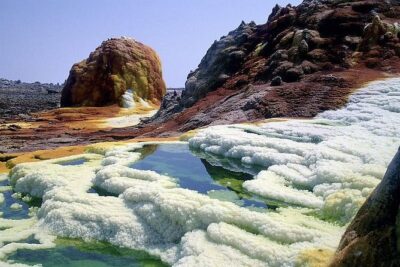
9 Days Tours To Danakil Depression, Simen MNP, Lalibela With Omo Valley Tribes
Read our review →Browse the lists this tour appears in