
REVIEW · FUJIYOSHIDA
Tokyo: Mt. Fuji Summer Trip 5th Station & Lake Kawaguchi
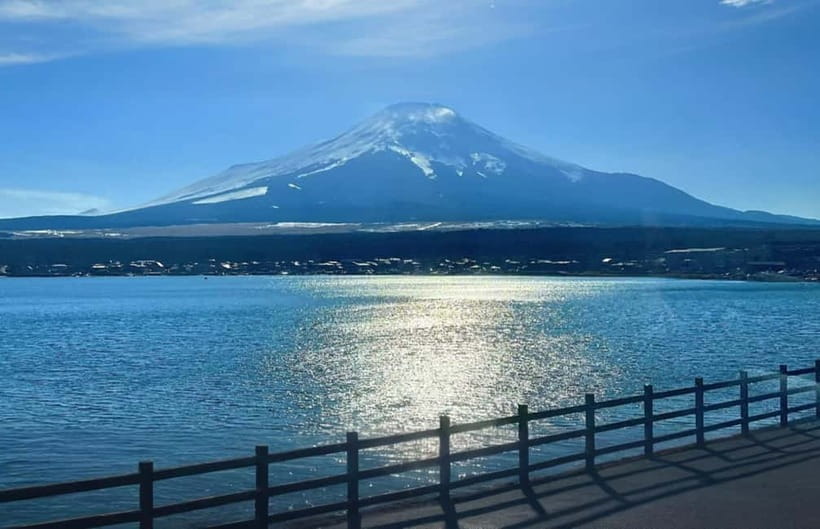
The best part of this day trip is the variety of Fuji viewpoints packed into one outing. You may see the mountain from 2,300-meter Fifth Station, a clear spring at Oshino Hakkai, the shore of Lake Kawaguchi, and the famous street near Hikawa Clock Shop. I like the strong mix of scenery and photo stops, and I like that guides such as Christy and Adam have been praised for keeping people comfortable and on schedule. The main drawback is time in transit: traffic can make this a long day, and one unhappy customer found the bus time outweighed the time spent at Mt. Fuji.
I also like the low price, $63 per person, for round-trip transport, fuel, tolls, and a guide. You will need to pay for food and personal expenses, and the tour gives only basic guidance rather than a full guided visit at every stop. If Fuji views are your main goal, book with clear weather in mind, but remember that no refund is offered simply because clouds block the mountain at the Lawson photo stop.
Key points to know before booking
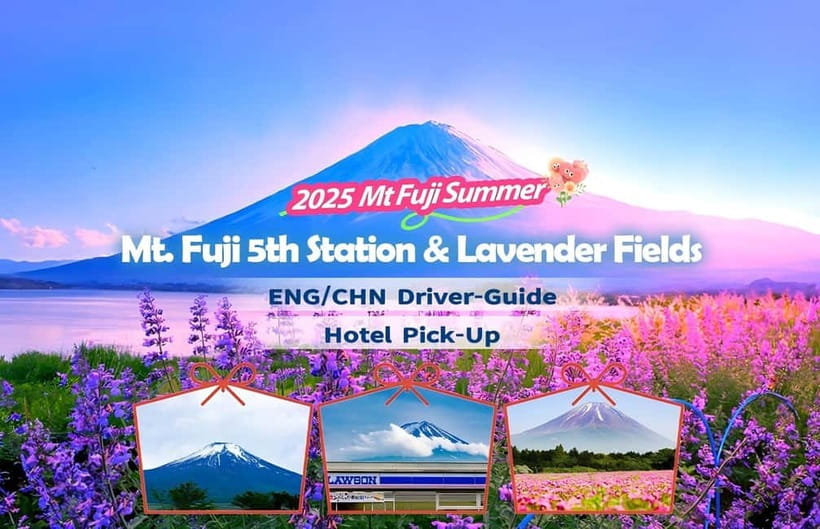
- Fifth Station reaches about 2,300 meters: This is a scenic halfway point on Mt. Fuji, not the summit, with views toward the Fuji Five Lakes and Lake Yamanakako.
- Oshino Hakkai includes eight clear springs: The stop combines water, old village character, legends, and a built-in lunch break.
- The day is made for photographs: Ōishi Park, Lawson Kawaguchiko, Hikawa Clock Shop, and possibly Arakurayama Sengen Park offer very different Fuji views.
- The tour is bilingual, not a full guided walk: English, Chinese, and Japanese support is available, with commentary at key places and help with basic logistics.
- Summer traffic can change the return: A scheduled 5:30 p.m. arrival may slip toward 8 p.m. on busy July and August weekends.
- Seasonal options can change the feel of the day: Depending on the date, the route may include an onsen or Gotemba Outlets instead of one of the listed photo stops.
What this $63 Fuji day trip really offers
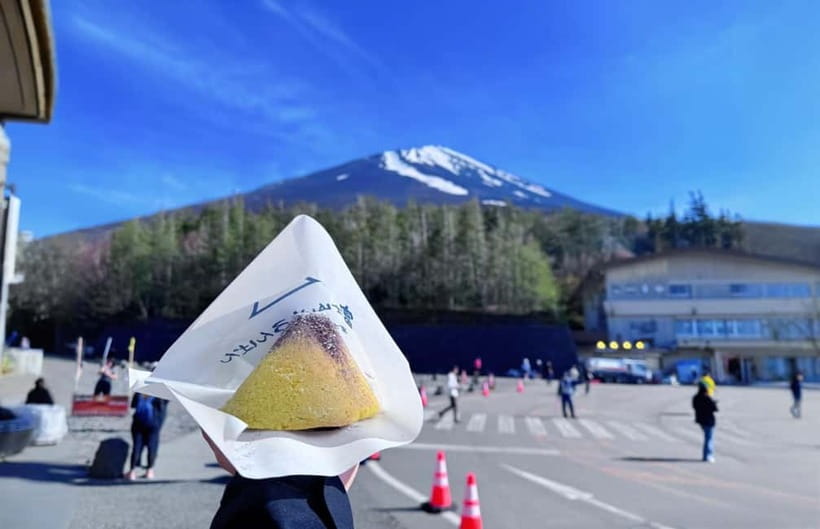
At $63, this is a transport-focused way to reach the Mt. Fuji area from central Tokyo. You get round-trip transportation, fuel, tolls, and a driver-guide, but not meals, attraction tickets, or optional activities.
I see the value in this for anyone who does not want to arrange trains, buses, local connections, and weather-sensitive stops alone. The tour links several places that would take more planning to combine independently. You can sit back while someone else handles the roads, which matters around Fuji because traffic can be heavy and the route changes with conditions.
The tradeoff is the tour’s format. This is not a private mountain guide or a slow cultural excursion. The guide provides commentary at key points and basic logistics help, then gives you time to explore. If you want detailed explanations at every spring, shrine, park, and viewpoint, you may find the guidance light.
The daily rating of 3.8 from 28 ratings reflects that split. Some people have enjoyed a full day of clear Fuji views, friendly help, and an onsen. One person felt the day involved too much bus time, eating, and shopping compared with the short time at the mountain. Both reactions make sense. Your satisfaction will depend heavily on traffic, weather, and how much you value having many stops in one organized day.
More Mount Fuji Tours in Fujiyoshida:
- From Tokyo: Full-Day Mount Fuji Tour in English or Spanish
★ 4.7 · 101 reviews - Tokyo: Mount Fuji & Hakone Private Car Day Tour Lowest Price
★ 5.0 · 31 reviews - Tokyo: Private Mt. Fuji Luxury Day Tour – Fully Customizable
★ 4.9 · 17 reviews
Leaving Tokyo from Marunouchi North Exit
The meeting point is at Tokyo Station’s Marunouchi North Exit. You should arrive 15 minutes early because the vehicle leaves strictly on time, and latecomers are not promised a wait.
The guide sends a photograph of the meeting point by email the day before. The guide also contacts you through WhatsApp or LINE the night before, so install the relevant apps before departure and watch for updates about the meeting time.
The listed departure is 8 a.m., with a planned return around 5:30 p.m. The route may start later or change with the season, traffic, or weather, so the final message matters more than the general schedule. Bring comfortable shoes, a towel, and cash. Food and drinks are not allowed inside the vehicle, so plan to eat during the scheduled lunch period rather than on the road.
Fifth Station at 2,300 meters
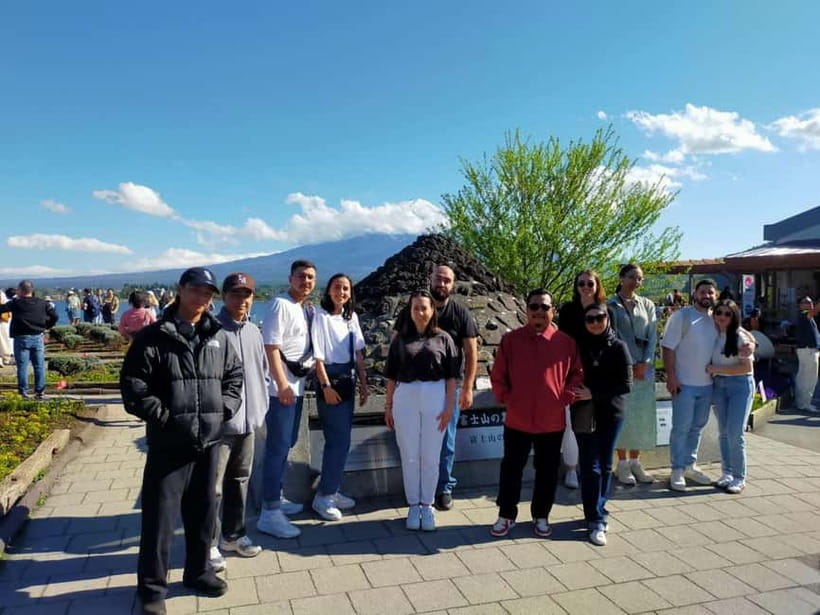
The first major stop is Mt. Fuji’s Fifth Station, scheduled for 50 minutes. This is a rest and viewing area partway up the mountain, not the summit. At roughly 2,300 meters, it gives you a very different sense of Fuji from the views around the lakes.
From here, you may see the sea of clouds, the Fuji Five Lakes, and Lake Yamanakako. The small Koyama Otake Shrine and its viewing deck add a cultural stop to the mountain scenery. I would use the time for a quick look around, photographs, and a moment to take in the height of the road above the surrounding area.
Fifty minutes is enough for a compact visit, but not for a serious mountain outing. You are not climbing Fuji on this tour. If the road to Fifth Station closes because of weather or another road problem, the visit changes to Lake Yamanakako. That is a sensible safety adjustment, but it means the exact first stop is not guaranteed.
The high elevation also makes comfortable footwear useful. You should not expect a long, strenuous hike here, but you will be moving around a mountain rest area rather than strolling on level city pavement.
Oshino Hakkai and its eight springs
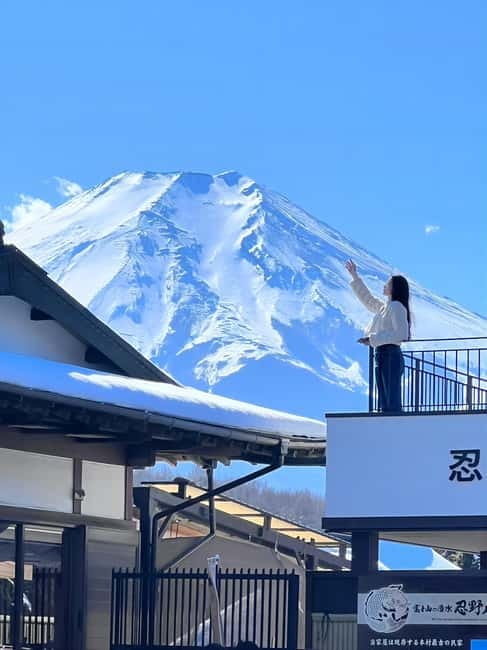
Around noon, the bus reaches Oshino Hakkai for 70 minutes. Lunch time is included in this stop, though food itself is not part of the price.
Oshino Hakkai formed when snowmelt from Mt. Fuji filtered through underground layers and emerged as eight clear springs. The appeal is not only the water. You also get a village setting, traditional details, old stories, and a calmer pace after the first mountain viewpoint.
This is one of the most worthwhile stops for people who want more than a Fuji photograph. The springs connect the mountain to the local environment in a visible way. Look closely at the water, then take time to walk through the village rather than treating the stop as only a lunch break.
Seventy minutes passes quickly. You need to divide the time between eating, seeing the springs, and taking photographs. Since the guide offers logistics rather than a full walking tour, you should pay attention to the meeting instructions and keep track of the return time.
Same volcano country, a different day out:
- Mount Fuji Private Day Tour customized with English driver
★ 4.7 · 15 reviews - Mount fuji and Hakone full day private tour with English gui
★ 4.9 · 12 reviews - From Tokyo: 5 Best Mount Fuji Photo Spots Private Day Trip
★ 4.9 · 12 reviews - Fuji/Hakone Private Tour, English speaking guide, Photograph
★ 4.8 · 11 reviews
Lawson Kawaguchiko and the limits of the perfect photo
The 20-minute stop at Lawson Kawaguchiko is brief and highly focused. The blue-and-white convenience store sits between Mt. Fuji and Lake Kawaguchi, creating the familiar contrast of a Japanese shop with the mountain rising behind it.
This is a useful stop if you want a quick, easy photograph with a recognizable Japanese detail in the foreground. You can also use the convenience store for a small purchase, although food and drinks cannot be taken onto the vehicle.
Do not treat this as a guaranteed Fuji portrait. The operator does not refund the tour if bad weather blocks the photograph. Clouds may hide the mountain, and the stop still remains part of the day. I would enjoy it as a short photo opportunity, not as the reason to book the entire excursion.
Ōishi Park beside Lake Kawaguchi
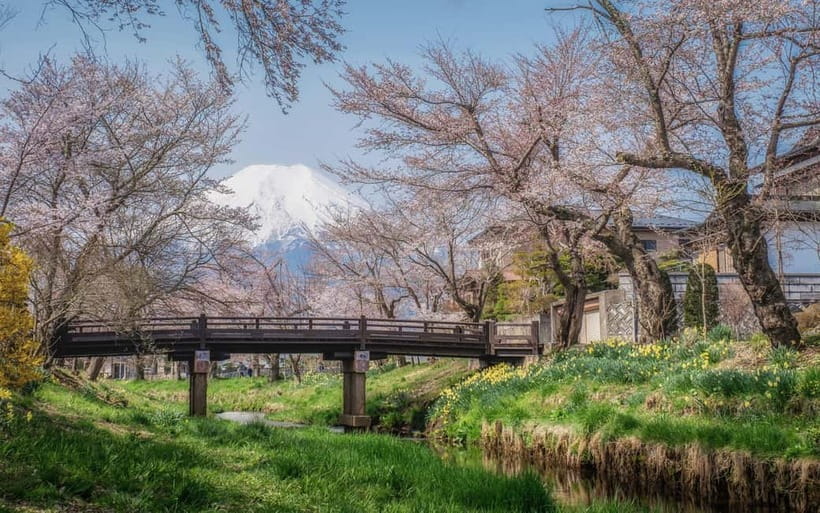
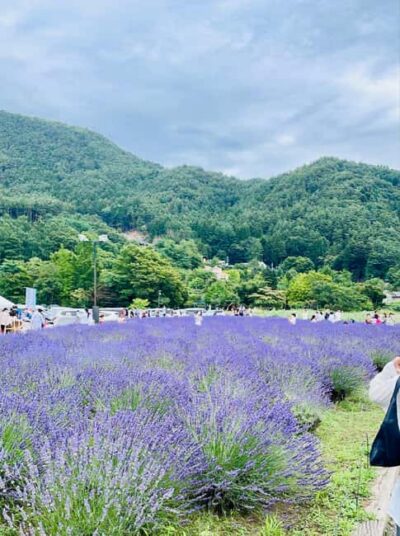
At 2:10 p.m., you spend 50 minutes at Ōishi Park. The park sits beside Lake Kawaguchi, with a broad view toward Mt. Fuji and seasonal flowers adding color near the shore.
The flower display changes through the year:
- Lavender is at its best from June through July.
- Begonias and cosmos are associated with July through September.
- Kochia appears in October.
You may also find cherry blossoms in spring and snowy surroundings in winter, but flower quality depends on weather. This is a pleasant place to slow the pace, walk a little, and frame Fuji with the lake and plants rather than with buildings.
Fifty minutes gives you time for photographs and a short stroll, though not a long lakeside visit. If you are hoping for a particular flower, check the season carefully and keep expectations modest. A hot summer can affect blooms, while clouds can still hide the mountain.
Hikawa Clock Shop and the classic street view
The 20-minute stop at Hikawa Clock Shop comes late in the afternoon. The shop is on a traditional street with low wooden eaves, and Mt. Fuji appears at the far end when the view lines up.
This is one of the most distinctive photo settings on the route because it joins everyday town architecture with the mountain beyond. The scene feels less like a formal park and more like a real street where Fuji happens to dominate the horizon.
The stop is short, so you need to move efficiently and respect the street around you. It is best for a few carefully composed photographs, not for browsing shops or spending a relaxed hour in the neighborhood.
The schedule describes the location as Nikkawa Clock Shop in one place and Hikawa Clock Shop in another. Treat the names as referring to the same planned street stop and follow the guide’s instructions on the day.
Arakurayama Sengen Park, hot springs, and seasonal changes
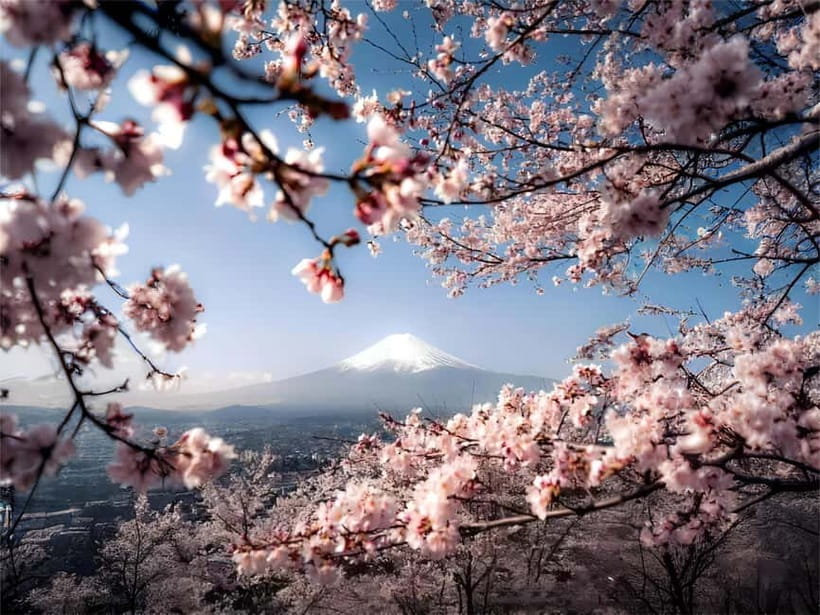
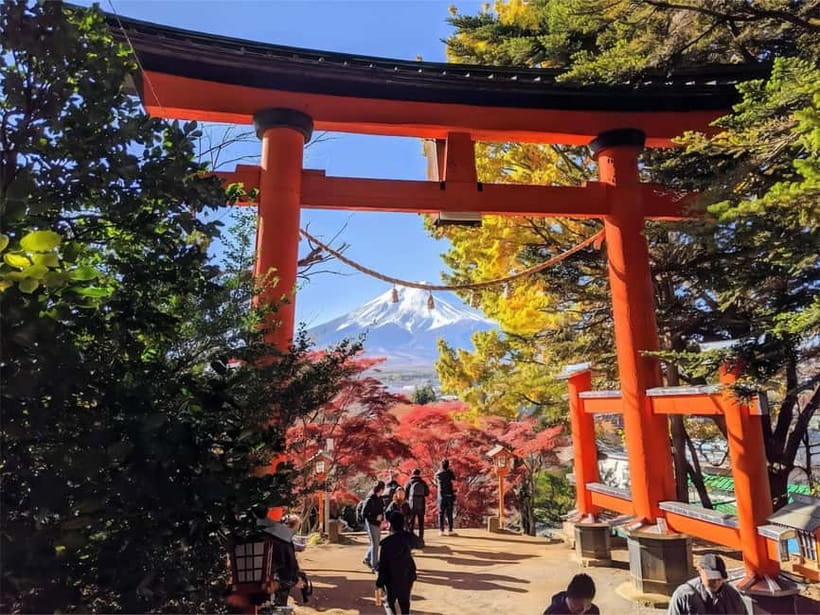
The tour description also highlights Arakurayama Sengen Park, with its famous view toward Mt. Fuji and the pagoda. Some departures may use Sengen Park as an alternative to Fifth Station, and the exact seasonal program can vary.
If Arakurayama is included, expect a photo-heavy stop with a shrine, a pagoda, and a view that has become one of the area’s most recognizable images. Reaching the best viewpoint involves stairs, so comfortable shoes are especially important. The supplied schedule does not give a fixed duration for this alternative, so your guide’s timing will control the visit.
Some seasonal versions include Konohana No Yu, an outdoor hot spring, or Gotemba Outlets. These options suit different interests. The onsen gives you a chance to rest in warm water surrounded by nature, while the outlet stop is better for shopping. One family enjoyed splitting up, with some people shopping and others using the onsen, which shows the value of this flexibility.
Japanese hot springs are generally enjoyed without swimwear. Tattoos are usually not allowed, though you may cover them with bandages or pay extra for a private bath if that option is available. Bring a towel, and check the final route so you know whether an onsen is actually included on your date.
Guides, language, and the tour’s level of help
The tour operates in English, Chinese, and Japanese. The guide provides commentary at key locations, explains basic logistics, and helps the group stay together. You should not expect a detailed lecture at every site or a personal guide beside you for the entire day.
Guide quality can shape this kind of outing. Christy has been praised for being warm, thoughtful, patient, and careful about making quieter people feel included. She also kept the schedule moving while allowing different family members to choose shopping or an onsen. Adam has been described as caring, dynamic, and helpful, including assisting someone who could not find the meeting point. Ana has also been noted for being helpful.
That does not guarantee a particular guide on your date, but it tells you what good support can look like on this route. You should still keep the WhatsApp or LINE contact available and listen closely to meeting times. A friendly guide cannot recover time lost by a late arrival.
Traffic, timing, and the real length of the day
The official return time is about 5:30 p.m. with drop-off at the original meeting point. In good traffic, you might arrive 30 to 60 minutes early.
The important warning concerns July and August weekends, when heavy traffic around Fuji can push the return toward 8 p.m. The operator’s historical data puts one to two-hour delays on 68 percent of summer weekend tours. I would not schedule a dinner reservation, theater ticket, airport transfer, or other fixed evening activity after this tour.
Traffic affects more than the final arrival. A slow road can shorten the time available at the parks and viewpoints, even if the guide works hard to keep the group on schedule. The route is best for someone who can accept a flexible day and does not need every stop to run exactly as printed.
Who will get the most from this outing?
I would recommend this tour to you if you want a simple Fuji day from Tokyo, especially if you prefer several viewpoints to one long stop. It suits photographers, first-time visitors to the Fuji area, families who want a mix of scenery and optional activities, and anyone who does not want to manage regional transport.
The trip also works well for people who want a gentle introduction to an onsen, provided the seasonal route includes one and you are comfortable with Japanese bathing customs. The bilingual format is useful if you want basic help in English or Chinese without paying for a private guide.
I would hesitate if you want a quiet, slow day with long walks, detailed cultural interpretation, or a guaranteed view of Mt. Fuji. I would also hesitate if you have a fixed evening commitment. The tour covers a lot of ground, and that means bus time, short visits, and exposure to weather and traffic.
Pregnant women should not book this experience according to the stated restrictions. Anyone with mobility concerns should also ask the operator directly about the particular seasonal route, since Arakurayama’s stairs and changing stops may affect comfort.
Should you book the Mt. Fuji summer trip?
Book it if your priority is seeing many of the classic Fuji-area photo spots for $63 without arranging transport yourself. The combination of Fifth Station, Oshino Hakkai, Lake Kawaguchi, Ōishi Park, and Hikawa Clock Shop gives you more variety than a single viewpoint, and a good guide can make the day feel friendly and well organized.
Skip it if your ideal Fuji visit means guaranteed clear skies, long time at the mountain, or a precise return hour. The strongest practical advice is to choose a weekday with a favorable forecast when possible, keep your evening free, wear comfortable shoes, and check the final WhatsApp or LINE message for the exact route. With those expectations, this is a useful, affordable introduction to Mt. Fuji from Tokyo.
FAQ
Where does the tour start?
Meet your guide at Tokyo Station’s Marunouchi North Exit. A photograph of the meeting point is sent by email the day before the trip.
What time does the tour leave Tokyo?
The listed departure time is 8 a.m. You should arrive 15 minutes early because the vehicle leaves strictly on time.
Is Mt. Fuji’s Fifth Station the summit?
No. Fifth Station is a rest and scenic area partway up Mt. Fuji at about 2,300 meters. It is not the summit.
What happens if Fifth Station is closed?
If road conditions or another issue closes Fifth Station, the visit changes to Lake Yamanakako.
Is food included in the price?
No. Food and drinks are not included. The Oshino Hakkai stop includes lunch time, and food and drinks cannot be consumed inside the vehicle.
Is this a fully guided tour?
No. It is a bilingual guided tour with commentary at key locations and basic logistics assistance rather than full guiding at every stop.
Which languages are available?
The tour operates in English, Chinese, and Japanese.
Can I use an onsen during the tour?
Some seasonal routes include Konohana No Yu, but the exact itinerary can change. Japanese hot springs are generally used without swimwear, and tattoos are usually not permitted unless covered or accommodated through a private bath for an additional fee.
How late might the tour return to Tokyo?
The planned return is around 5:30 p.m., but traffic can cause delays. On busy July and August weekends, the return may be as late as around 8 p.m.
Just added around Fujiyoshida
- Tokyo to Mount Fuji A Full Day Private Tour From Tokyo★ 3.8 · 4 reviews
- Tokyo: Mt-Fuji & Hakone Private Custom Tour English Driver★ 5.0 · 4 reviews
- Tokyo: Mt. Fuji and Hakone tour with English Speaking Driver★ 5.0 · 7 reviews
- Tokyo: Mount Fuji & Hakone Private Customized Full Day Tour★ 4.4 · 7 reviews
- Private Mount Fuji sightseeing Day trip with English Guide★ 5.0 · 8 reviews
- Mt. Fuji Private Tour With Hotel Pick Up From Tokyo★ 5.0 · 8 reviews
- Mt Fuji Private Day Tour with English Speaking Driver★ 4.0 · 4 reviews
- Mount Fuji Full Day Private Tour from Tokyo Full Customized★ 4.0 · 9 reviews
Fujiyoshida Volcano Tours, compared.
From Tokyo: Full-Day Mount Fuji Tour in English or Spanish
Read our review →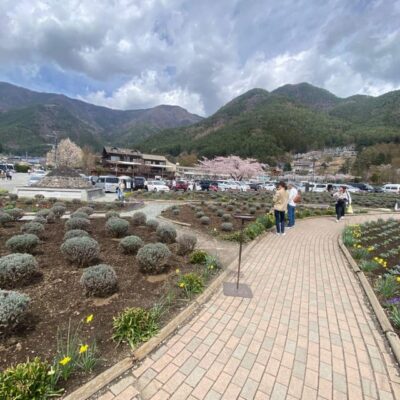
Tokyo: Mount Fuji & Hakone Private Car Day Tour Lowest Price
Read our review →
Tokyo: Private Mt. Fuji Luxury Day Tour – Fully Customizable
Read our review →
Mount Fuji Private Day Tour customized with English driver
Read our review →
From Tokyo: 5 Best Mount Fuji Photo Spots Private Day Trip
Read our review →
Mount fuji and Hakone full day private tour with English gui
Read our review →
Fuji/Hakone Private Tour, English speaking guide, Photograph
Read our review →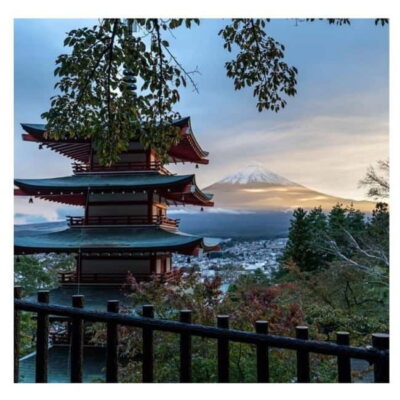
Mount Fuji Full Day Private Tour from Tokyo Full Customized
Read our review →Browse the lists this tour appears in