
REVIEW · TENERIFE
Tenerife: Teide Stargazing with an Astrophysicist
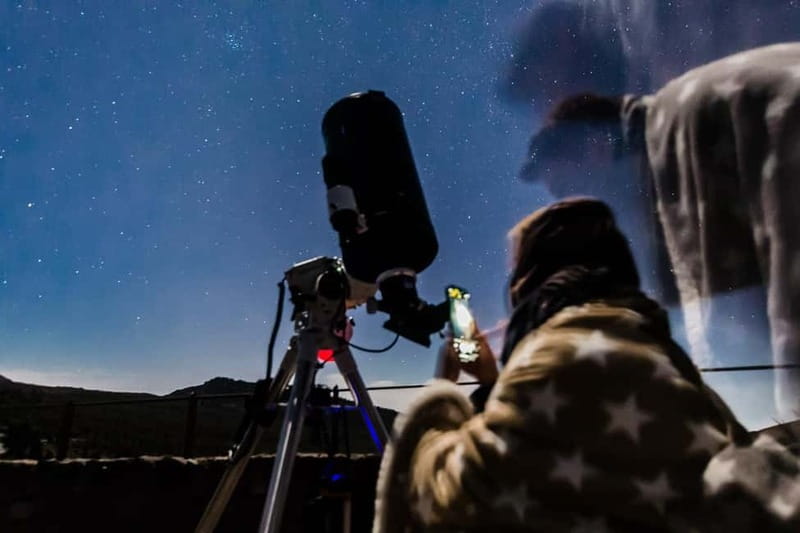
Teide National Park is one of the world’s finest places for looking up, and this small-group stargazing session makes good use of that dark mountain setting. A local astrophysicist guides you through constellations, mythology, telescope equipment, and current astronomy, then points the 8-inch instrument toward the night’s best sights. I like the personal scale, with no more than 10 people, and I like that the guide explains how the telescope works instead of treating it as a magic box.
I also like the mix of serious science and easy conversation. Guide Adal is repeatedly praised for making complex ideas clear to children, beginners, and keen amateurs alike. The main caution is location: the meeting point is beside the Parador hotel, and one evening had enough nearby light to limit the darkness. You also need your own car or a taxi, and mountain weather can cancel the session.
Key points before you book
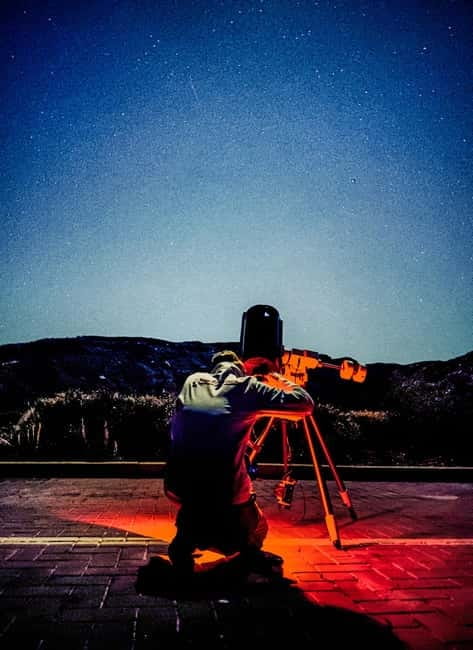
- An 8-inch telescope: See objects such as star clusters, binary stars, nebulae, galaxies, the Moon, Jupiter, Saturn, and possibly Neptune, depending on the night.
- A genuine astronomy lesson: The guide covers constellations, mythology, telescope setup, the history of science, and current astrophysical research.
- No more than 10 people: The small group gives you a better chance to ask questions and reach the telescope without a long wait.
- Adal’s warm teaching style: He is praised for clear explanations, humor, patience, and a contagious interest in astrophysics.
- High-altitude conditions: Bring serious warm clothing. Temperatures may fall to 0 to 4 C from October through March and 10 to 15 C from April through September.
- A self-drive outing: Transport, food, and drinks are not included. You must get to the Parador de Cañadas del Teide yourself.
Meeting the stars at the Parador de Cañadas del Teide
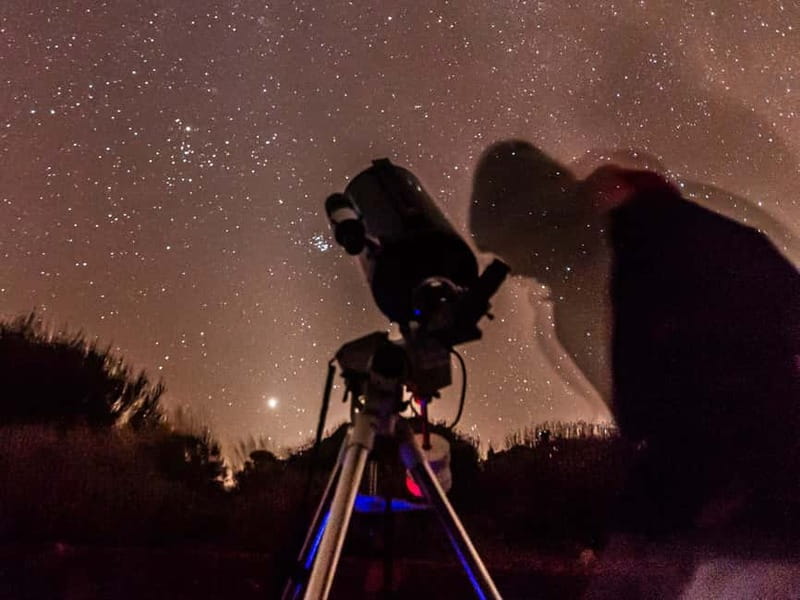
Your evening starts at the outdoor patio or entrance of the Parador de Cañadas del Teide in Las Cañadas del Teide. This is both the meeting point and the place where the full 1.5-hour session takes place, so you will not be riding between several viewpoints or attractions.
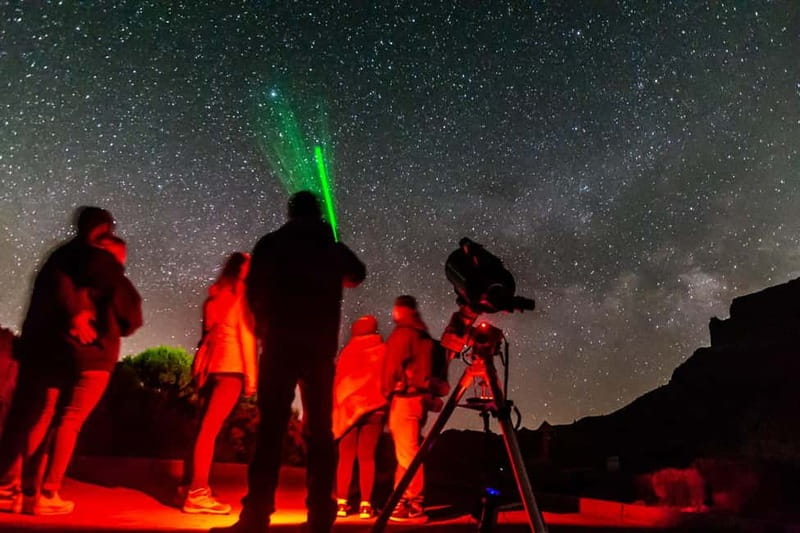
That simplicity is useful. Once you arrive, you can focus on the sky rather than keeping track of a moving group. The guide provides a lantern, a laser pointer for identifying stars and constellations, and the professional 8-inch telescope.
You need to plan the drive carefully. There is no included transport, and the instructions specifically require your own vehicle or a taxi. That makes this a better fit for visitors already exploring Tenerife by car. If you are staying on the coast and have not arranged transport, do that before booking rather than assuming a hotel pickup is available.
The hotel setting is practical, but it is not the darkest possible position in the national park. One participant felt that moving farther from nearby road or hotel light would have improved the view. That is a fair point to keep in mind. The location is convenient for the guide and easy to identify, but the amount of darkness can vary with the exact setup and conditions.
More Mount Teide Tours in Tenerife:
- Tenerife: Mount Teide Tour with Cable Car Ticket & Transfer
★ 4.3 · 5,094 reviews - Tenerife: Teide National Park Sunset & Stargazing Tour
★ 4.2 · 3,812 reviews - Tenerife: Sunset and Stargazing at Teide National Park
★ 4.7 · 2,826 reviews
What happens during the 90-minute astronomy session
The guide begins by helping you get oriented under the night sky. You will learn how to identify constellations and hear the myths connected with them. This gives the session a human side, since the stars are not presented only as distant scientific objects but also as part of the stories people have told for centuries.
The laser pointer is especially useful here. In a large open sky, it can be hard for a beginner to understand which stars form a pattern. A guided beam helps connect the explanation to what you are actually seeing. You may arrive knowing only a few familiar names and leave with a better sense of how the sky is arranged.
The session then turns toward the telescope. The guide explains the equipment and shows you how it is set up, rather than simply asking everyone to take a quick look through the eyepiece. That small teaching step matters. You begin to understand why different targets need different adjustments and why the view changes as the guide selects objects.
The telescope is an 8-inch, or 20-centimeter, model. That is a substantial size for a compact public observing session, and it allows the guide to show more than bright points of light. Depending on the date, visibility, and weather, you might see a family of stars, a false binary system, a reflection nebula, a galaxy, or a planet.
Past sessions have included Jupiter and Saturn, with Saturn’s rings and some of its moons visible. The Moon can also be impressive through the telescope, particularly when its craters are picked out in sharp relief. Neptune has been shown on at least one clear evening, though you should not treat any particular object as guaranteed. The guide will adapt the program to the conditions and to what is visible that night.
The final part is not just about looking. You can ask questions about astrophysics, the equipment, the history of astronomy, and what scientists are studying today. The guide’s role is part lecturer, part interpreter, and part host. That combination is what makes this more useful than simply driving up to Teide and hoping for a good sky.
Why the astrophysicist matters
The strongest part of this experience is the guide’s teaching. Adal is the name most often associated with the sessions, and he is praised for explaining the same subject at different levels. Families with children aged 9 and 13 found the material engaging, while adults with a stronger interest in astronomy also found enough substance to enjoy.
That range is not easy to manage. A guide can lose beginners with too much technical language, or frustrate enthusiasts with a basic presentation. Here, the approach appears to be conversational and flexible. You can ask what might feel like a simple question without being made to feel out of place, while the discussion can still reach astrophysical research and the workings of the telescope.
I particularly value the explanation of what you can and cannot see. Looking at the sky through a telescope is exciting, but it can also raise practical questions. Why does one object look sharp while another appears faint? Why are some stars seen as a pair? What makes a nebula different from a star cluster? The guide’s job is to connect the view in the eyepiece with the science behind it.
The teaching also has a human tone. Several sessions are described as funny, friendly, and full of personal enthusiasm. That matters during a short evening activity. You are standing outdoors in the cold, often after a long day of sightseeing, so a dry lecture would not be enough. The guide needs to keep the group involved, and Adal seems to do that well.
What you might see through the 8-inch telescope
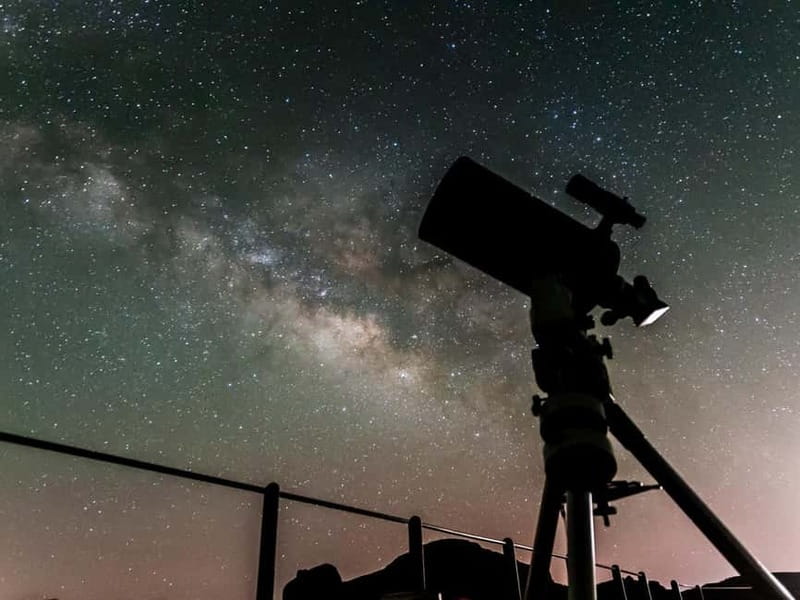
The exact list changes from night to night. Clouds, moonlight, the season, and the position of planets all affect the program. You should book this for the chance to explore the night sky, not for a promise that one named planet will appear.
The range of reported targets gives you a useful idea of the session’s scope:
- Star clusters: These can look like dense gatherings of points, with older and younger groups offering different views of how stars develop.
- Binary and false binary stars: Two stars may appear close together even when they are not physically linked, which makes a good lesson in perspective.
- Reflection nebulae: These are faint, glowing regions that show how starlight interacts with surrounding material.
- Galaxies: A distant galaxy may appear as a subtle object rather than a bright, detailed picture. The guide can help you understand what you are seeing.
- The Moon: Craters and surface shadows are often easier to appreciate through the telescope than with the naked eye.
- Jupiter and Saturn: The major planets can provide the most immediate thrill, with Saturn’s rings and some moons visible on suitable nights.
- Neptune: It may be included when conditions and its position in the sky allow.
The point is not to collect a checklist. The value comes from seeing an object, hearing its story, and understanding why it looks the way it does. A brief view of a cluster can become memorable when you know what kind of stars it contains and how far away it is.
Same volcano country, a different day out:
- Teide National Park Sunset & Stargazing with Dinner (Star Safari)
★ 5.0 · 2,601 reviews - Teide National Park: Sunset & Stargazing Safari with Dinner
★ 4.6 · 2,115 reviews - Tenerife: Mount Teide, Masca, Icod and Garachico Day Trip
★ 4.5 · 2,065 reviews - Tenerife: Teide National Park Full-Day Tour with Pickup
★ 4.5 · 1,613 reviews
Small groups make the telescope time better
The maximum group size is 10 people, and that is one of the strongest practical features. Telescope activities can become frustrating when a large crowd gathers around one eyepiece. You may wait a long time, lose your place, or feel rushed when your turn arrives.
A group of 10 still means that everyone must share the equipment, but the pace should be more manageable. You have room to ask questions, and the guide can check that people understand the explanation. The small group also suits couples and solo visitors who want a social evening without joining a large coach party.
The sessions are single-language, with English and Spanish available. Check the language when choosing your date, since a focused presentation in one language is easier to follow than a repeated bilingual talk. Private sessions can be arranged on other days, which may suit a family or couple wanting a more personal format.
The regular group sessions are held on Tuesdays and Fridays. The supplied information does not promise a particular telescope target for each day, so treat the schedule as a planning guide rather than a calendar of different astronomy themes.
Cold mountain air and the right clothing
Do not dress for the temperature at your beach hotel. Teide is high, and the activity takes place at night. From October through March, you should prepare for temperatures between 0 and 4 C. From April through September, the stated range is 10 to 15 C.
Bring layers, thermal clothing if you have it, warm shoes, and a proper jacket. Comfortable clothing and water are also advised. The guide supplies a lantern, but you should not rely on that as a replacement for bringing suitable personal clothing.
The cold is not a minor detail. You will spend 90 minutes outside, and standing still beside a telescope can feel colder than walking. Warm clothes also make it easier to concentrate on the guide instead of counting the minutes until you can return to the car.
Weather is another firm consideration. Mountain conditions can change, and the activity may be canceled if the sky or conditions are unsuitable. If the provider cancels, you receive a full refund. If you cancel within the final 24 hours, however, there is no refund, so keep the forecast in mind when planning other activities around this evening.
Is $47 good value?
At $47 per person, this is fairly priced for a 1.5-hour specialist session with a local astrophysicist, a professional 8-inch telescope, a laser-guided explanation, and a group limited to 10. You are paying for interpretation and access to equipment, not just for a place to stand under the stars.
The price looks especially reasonable if you would otherwise visit Teide at night without knowing what to look for. The guide adds structure and meaning, and the telescope gives you sights that you would not see clearly with your unaided eyes.
It is less compelling if you want a long photographic session, a private observatory visit, transport from your hotel, or a full evening with food included. None of those are part of the package. This is a focused astronomy lesson, not a dinner outing or an all-in-one mountain excursion.
You should also add the cost and effort of reaching the Parador. Since you need your own vehicle or a taxi, the real budget is higher than the ticket alone. For a couple already renting a car, that may be easy. For someone relying on public transport, it may be the hardest part of the plan.
Who will enjoy this most?
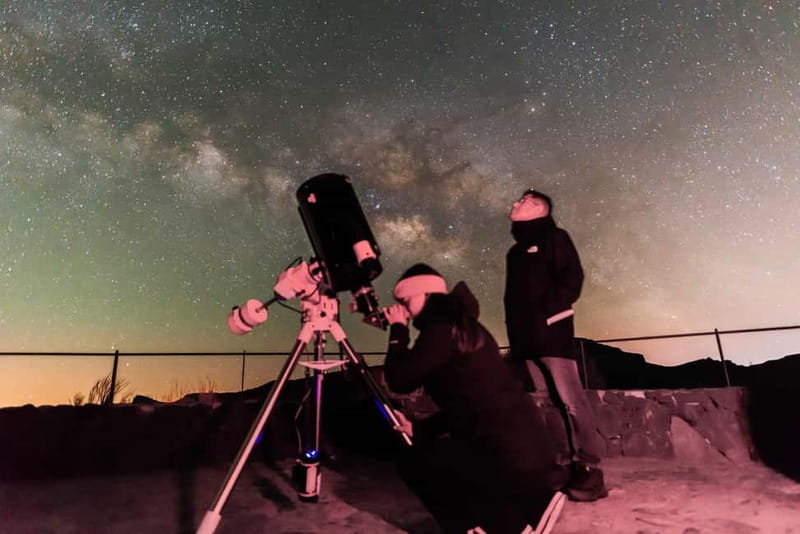
I would choose this for anyone curious about astronomy, even with no prior experience. The presentation is designed to work for beginners, and the guide can explain basic ideas without making the session feel childish.
It is also a strong family option for children around 8 and above, provided they can handle the cold and a late outdoor activity. Children under 8 are not considered suitable, and babies under 1 year are excluded. The experience appears especially good for older children who ask questions and enjoy seeing science in action.
Couples may appreciate the quiet setting and the shared discovery of planets and star clusters. Solo visitors can also fit comfortably into a group of 10. Serious amateur astronomers may enjoy the equipment and the chance to discuss astrophysics, though they should remember that this is a public outreach session rather than advanced observing time.
Practical booking advice
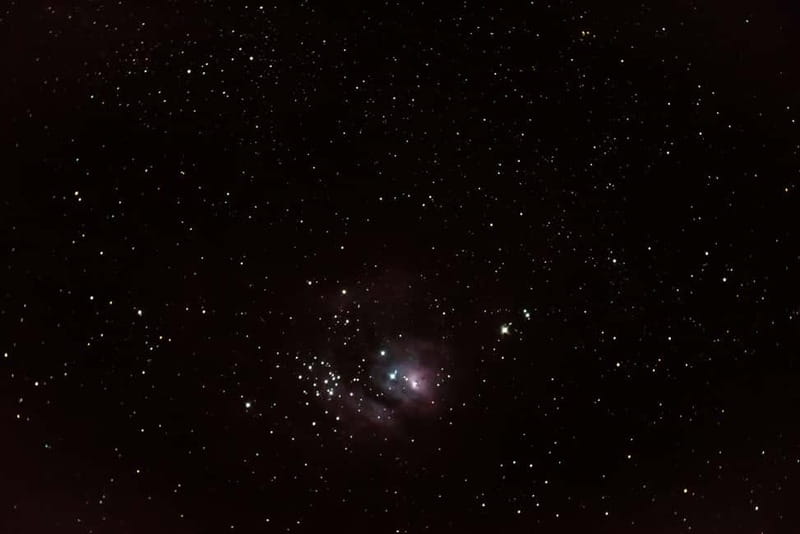
Choose a night with a favorable forecast, but understand that the provider has the final call on weather. Keep the evening flexible enough to handle a last-minute cancellation, and make sure your booking details are easy to access in case the guide contacts you.
Arrive at the entrance or outdoor patio of the Parador de Cañadas del Teide. Bring water, warm layers, and shoes that are comfortable on outdoor ground. Food and drinks are not included, so eat beforehand or make your own plan around the session.
Free cancellation is available up to 24 hours before the start time, and you can reserve now and pay later. Check the available start time for your chosen date, since the exact schedule is not fixed in the general description.
Should you book the Teide stargazing session?
Book it if you want a compact, personal introduction to the night sky and you can manage the mountain drive, cold, and weather risk. The combination of a trained astrophysicist, a small group, and an 8-inch telescope gives this more substance than a basic lookout stop.
I would be more cautious if your main goal is the darkest possible observing site. The Parador meeting point is convenient, but nearby light can affect the view. I would also skip it if you need included transport or prefer a warm indoor activity.
For most visitors who are already planning a Teide outing, though, this is a smart addition. You get planets, stars, and science explained in plain language, with enough flexibility to suit both a curious beginner and an enthusiastic amateur.
FAQ
Where does the stargazing session start?
It starts at the entrance or outdoor patio of the Parador de Cañadas del Teide Hotel in Las Cañadas del Teide, Santa Cruz de Tenerife, Spain.
How long does the activity last?
The guided stargazing session lasts 1.5 hours.
What languages are available?
The live guide is available in English and Spanish. Sessions are conducted in a single language.
How many people can join the group?
The group is limited to a maximum of 10 participants.
Is transport included?
No. You need your own vehicle or must arrange a taxi to reach the Parador.
What equipment is provided?
The activity provides an 8-inch telescope, a laser-guided experience, and a lantern.
What should I wear?
Bring warm, weather-appropriate clothing, comfortable clothes, warm shoes, and thermal clothing. Temperatures may be 0 to 4 C from October through March and 10 to 15 C from April through September.
Is the activity suitable for young children?
The activity is not suitable for children under 8 years old or babies under 1 year. High-mountain conditions may also make it unsuitable for some children aged 7 to 9.
What happens if the weather cancels the session?
The activity may be canceled because of mountain weather. If the provider cancels, you receive a 100 percent refund. You can also cancel up to 24 hours in advance for a full refund.
Just added around Tenerife
- Tenerife: Water Jet-Ski / Teide Volcano Quad Safari Combo★ 4.5 · 6 reviews
- Tenerife: Tenerife Highlights beyond the Teide★ 4.8 · 160 reviews
- Puerto de la Cruz: Quad to Mount Teide Day or Sunset★ 4.7 · 25 reviews
- Teide: Small Group Sunset Adventure with Picnic & Stargazing★ 4.6 · 231 reviews
- Tenerife: Teide National Park and Volcano Buggy Tour★ 4.0 · 39 reviews
- Tenerife: Teide National Park & Teno Rural Park Private Tour★ 5.0 · 35 reviews
- Tenerife: Teide National Park Sunset Quad Tour★ 4.1 · 164 reviews
- Tenerife: Teide National Park Buggy Tour with Hotel Transfer★ 4.5 · 145 reviews
Tenerife Volcano Tours, compared.
Tenerife: Mount Teide Tour with Cable Car Ticket & Transfer
Read our review →
Tenerife: Teide National Park Sunset & Stargazing Tour
Read our review →
Tenerife: Mount Teide, Masca, Icod and Garachico Day Trip
Read our review →
Tenerife: Teide National Park Full-Day Tour with Pickup
Read our review →
Tenerife: Quad Adventure Tour in Teide National Park
Read our review →
Teide by Night: Sunset & Stargazing with Telescopes Experience
Read our review →
Teide: Guided Sunset & Stargazing Tour by Night with Dinner
Read our review →
Browse the lists this tour appears in