
REVIEW · TENERIFE
Tenerife. Stargazing in Teide National Park
Teide National Park turns night into the main event. At about 2,000 meters, away from much of Tenerife’s artificial light, you can look through a powerful telescope at planets, star clusters, nebulae, galaxies, and double stars. Roberto, the Starlight-accredited guide, keeps the science clear and the mood relaxed.
I like the small group format, which gives you real time at the telescope instead of a quick glance and a shuffle aside. I also like the free night-sky portraits, plus practical touches such as blankets, water, and chocolate when needed.
The main drawback is the cold. Even when Tenerife feels warm by the coast, the mountain can be around 3 to 12 Celsius at night, with wind making it feel colder. Bring proper layers, trousers, sturdy shoes, and a warm coat.
Key points
- Teide after sunset: Meet beside Ermita de las Nieves 40 minutes after sunset, in one of the world’s better places for dark-sky viewing.
- A powerful telescope: See planets, galaxies, nebulae, clusters, double stars, and the Moon at different magnifications.
- Roberto’s clear teaching: Expect astronomy, sky mythology, star navigation, and explanations in English or Spanish.
- Small-group attention: Groups are usually around 10 to 12 people, leaving room for questions and repeated turns at the equipment.
- Free keepsake photos: Roberto takes night-sky portraits, sometimes with Teide behind you and playful lightsaber effects.
- Cold-weather planning: Blankets, water, and chocolate may be available, but they are no substitute for your own warm clothing.
Why Teide is so good for looking at stars
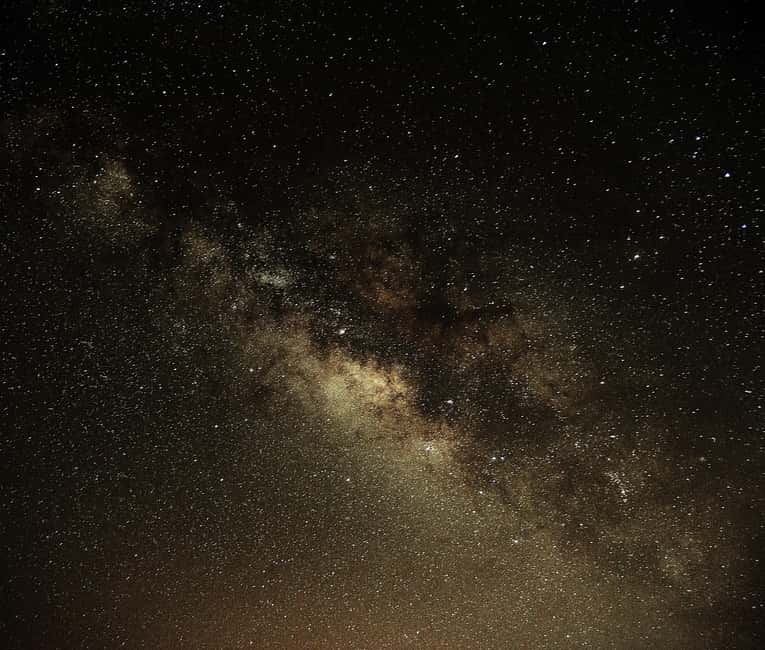
Teide National Park is the right setting for this kind of evening because the activity is not just about pointing a telescope at a bright object. You first get a sense of the whole sky. The mountain setting, high elevation, and reduced light pollution help the stars appear sharper and more numerous than they do from a resort town.
The session begins 40 minutes after sunset. That timing matters. You arrive while the last light is fading, then watch the sky shift from a colorful evening backdrop into a field of stars. The exact objects available change with the month, so you may see different planets, constellations, clusters, or galaxies depending on the date.
You are not simply handed a telescope and left to guess what you are seeing. Roberto explains how the celestial sphere appears to move, how to recognize major constellations, and how to distinguish important stars. He also brings in the stories and mythology attached to the sky, giving you something memorable to connect with the science.
I like this balance. Pure astronomy can feel technical if you are new to it, while mythology alone can leave you with a pretty story but little understanding. Here, the two approaches help you remember what you are looking at.
More Volcano National Parks in Spain
- Tenerife: Teide National Park Sunset & Stargazing Tour
★ 4.2 · 3,812 reviews - Tenerife: Sunset and Stargazing at Teide National Park
★ 4.7 · 2,826 reviews - Teide National Park Sunset & Stargazing with Dinner (Star Safari)
★ 5.0 · 2,601 reviews
Meeting Roberto beside Ermita de las Nieves
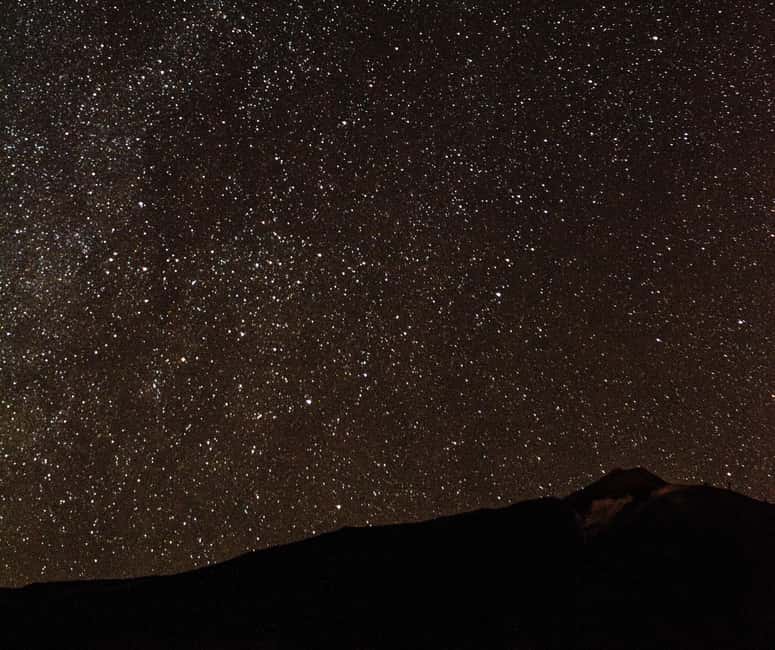
The meeting point is beside the Ermita de las Nieves in Teide National Park. You make your own way there, as transport is not included. A rental car is the practical choice for most people booking this experience, though the activity information does not include a transfer service.
Give yourself time to reach the meeting point. The roads can be busy around sunset, with people driving up for views and other evening activities. Arriving early also gives you a chance to stop at viewpoints on the way, though you should not let a scenic stop make you late.
Roberto waits at the meeting point and sets up the equipment before the session begins. Communication before the activity is one of its useful features. He has been praised for sending clear information about the meeting place and warning people about the mountain cold, which is exactly the sort of notice you want before a nighttime outing.
There is parking at the location according to the supplied information, but you should still plan your route carefully. Mountain roads take longer than a map may suggest, especially near sunset.
The two-hour session: what actually happens
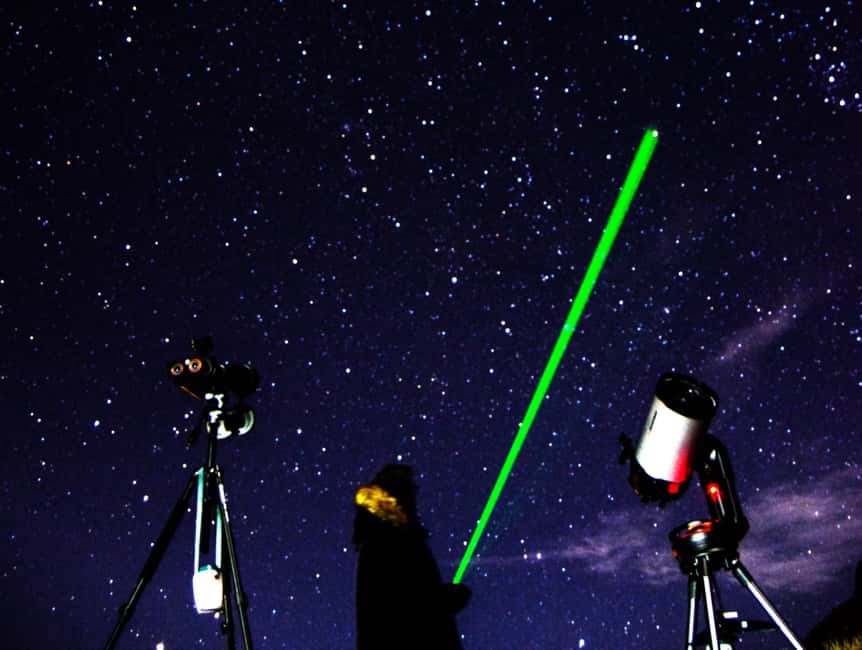
The evening is built around observation, explanation, and questions rather than a rushed set of stops. Roberto introduces the night sky and helps you get your bearings. He may use laser technology to point out stars and constellations, making it easier to connect what you see with the explanations.
You learn about the movement of the sky and the positions of important stars. That sounds basic, but it changes the experience. Instead of seeing a mass of bright points, you begin to identify patterns and understand why different parts of the sky appear during different seasons.
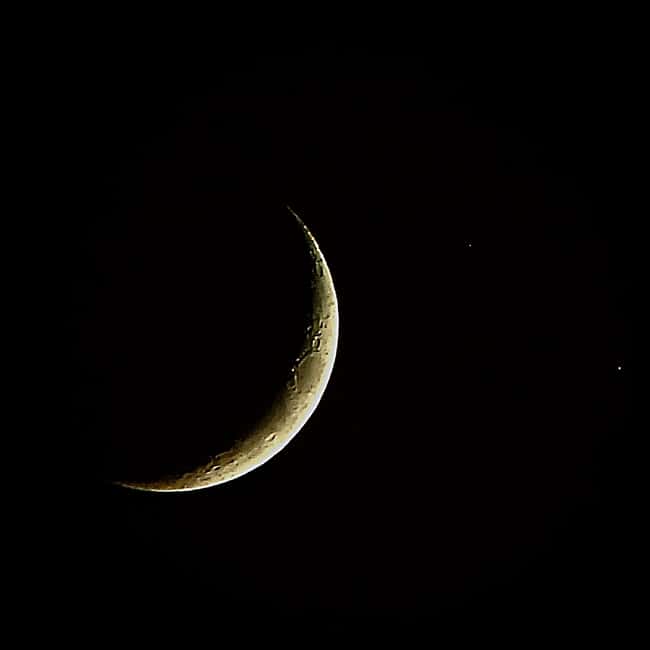
The telescope is the main attraction. The exact targets depend on the sky at the time of your visit, but the equipment has been used to show planets, the Moon, nebulae, galaxies, star clusters, and double stars. Saturn and its rings have been visible on some evenings, while other sessions have included Neptune, Andromeda, comets, and shooting stars.
Do not expect every object to look like a colorful space photograph. Telescopes show real celestial objects, and what you see depends on the object, magnification, sky conditions, and your own eyesight. The reward is the directness of it: you are looking through an optical instrument at something unimaginably far away, with the guide explaining what makes it special.
The experience also includes astronomical binoculars on a tripod according to one detailed account of the equipment. These offer a wider view and can be useful between telescope observations. Roberto makes sure each person gets a turn at the main viewing points, which is especially important in a group with children or people who have never used a telescope.
Why the small group matters
The group is described as small, commonly around 10 or 11 people and sometimes closer to 12. That size is large enough to create a pleasant social atmosphere, but small enough for questions and personal attention.
I would choose this format over a large coach-based stargazing event. Astronomy needs patience. You may want to look twice at Saturn, ask why a star has a particular color, or check whether a faint patch is a galaxy or a cluster. A compact group gives you more breathing room.
The format also works well for families. Children as young as nine have enjoyed the explanations, and Roberto adjusts his approach so complex subjects remain understandable. Teenagers can follow the planets and galaxies without needing an advanced astronomy background, while adults who already know a little can ask more detailed questions.
The bilingual format is another plus. Roberto guides in English and Spanish, often explaining the same idea in both languages. That is useful for mixed-language groups and for visitors who understand one language better than the other.
More Volcano National Parks in Tenerife
- Teide National Park: Sunset & Stargazing Safari with Dinner
★ 4.6 · 2,115 reviews - Tenerife: Teide National Park Full-Day Tour with Pickup
★ 4.5 · 1,613 reviews - Tenerife: Quad Adventure Tour in Teide National Park
★ 4.7 · 1,492 reviews - Tenerife: Teide National Park Guided Buggy Tour
★ 4.7 · 609 reviews
The guide’s teaching style
Roberto is central to the quality of this experience. The strongest part of his approach is not simply that he knows astronomy. He explains it in plain terms, uses humor, welcomes questions, and keeps the group involved for the full two hours.
You will hear about the science of stars and planets, but also about orientation, constellations, mythology, and astrology. The activity information is clear that astrology forms part of the cultural discussion of the sky, so this is not presented as a science-only lecture.
His style suits beginners particularly well. You do not need to know the names of stars before arriving. He starts from the basics and builds up, while still offering enough detail for people who already own a telescope or follow astronomy at home.
That flexibility is important. A poor guide can make a stargazing session feel like a school lesson. Roberto’s use of stories, questions, and practical demonstrations helps keep it lively without turning the evening into a noisy show.
The free photos are more useful than a standard souvenir
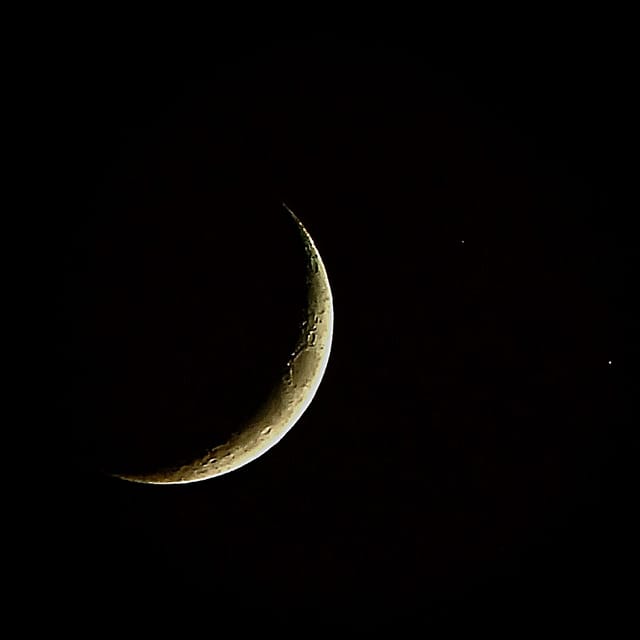
At the end of the evening, Roberto takes photos of participants beneath the stars. These are included in the price, with no separate photo charge.
This is a smart addition because night photography is difficult. Phone cameras often turn the sky into a dark blur, and getting both a person and a starry background properly exposed takes equipment and patience. Roberto has a proper camera and has also helped people try their own astrophotography.
Some photos include Teide in the background. A playful lightsaber effect has also been used, which adds a bit of fun without taking over the astronomy. If you need to leave early, it is worth telling Roberto, since photos may be handled separately.
Treat the photos as a bonus rather than the main reason to book. The telescope time and teaching are the substance of the activity. Still, the pictures give you a lasting reminder of an evening that would otherwise be hard to capture.
Cold, wind, and what to bring
The temperature is the biggest practical issue. The mountain can feel dramatically colder than the coast, especially once the sun has gone down. One evening was reported at about 3 Celsius with strong wind, while other visits were closer to 10 or 12 Celsius.
Bring more than you think you need:
- A warm coat or insulated jacket
- Several layers, including a fleece
- Long trousers
- Sturdy shoes or trainers
- Clothing suited to wind and changing mountain conditions
Blankets and extra fleece jackets may be available, and Roberto has provided water and chocolate during some sessions. Those touches are welcome, but you should arrive dressed for a stationary outdoor activity. You will spend time standing around the telescope, and you cannot warm up by walking quickly between indoor stops.
This is also why the outing may not suit very young children. Babies under one year are specifically not accepted. Older children can enjoy the activity, but parents should judge their child’s ability to remain outside in the cold for two hours.
The tour is wheelchair accessible according to the activity information. Even so, mountain conditions and the exact viewing surface can affect comfort, so anyone with specific mobility needs should confirm details before booking.
Price, timing, and overall value
The price is $41 per person for two hours. That is a fair rate if you value the complete package: a Starlight-accredited guide, high-end telescope equipment, laser explanations, a small group, and free photographs.
You are not paying for a transfer, meal, or drink. That keeps the price lower, but it also means you must arrange transport and bring anything else you need. Water and chocolate have sometimes been supplied, yet they are not listed as guaranteed inclusions.
The value is strongest for people who would not otherwise have access to a serious telescope or a guide who can explain the sky properly. Buying or transporting comparable equipment would cost far more, and simply driving into the park without guidance would not teach you how to identify what you are seeing.
The experience also offers free cancellation up to 24 hours before the start time and a reserve-now, pay-later option. Those terms are useful when cloud or mountain conditions may affect your plans, though you should still check the forecast and dress for the cold.
A current score of 4.9 from 319 verified bookings suggests unusually consistent satisfaction, and the repeated praise focuses on the same practical strengths: Roberto’s teaching, the small groups, the telescope, and the photos. The common warning is also consistent: the mountain gets cold.
Who should book this stargazing experience?
I would recommend it to first-time stargazers, families with older children, couples looking for a quiet evening, and anyone curious about astronomy but unsure where to begin. You do not need technical knowledge, and the two-hour length is long enough to feel substantial without taking up an entire night.
It also suits more experienced hobbyists. One participant who already owned telescopes appreciated the quality of the eight-inch Go-To scope, the astronomical binoculars, and the range of objects shown. The value for an experienced observer depends on the date and targets available, but the dark sky and local guidance make it more than a basic introduction.
I would think twice if you dislike cold, standing outdoors, or driving mountain roads after sunset. It is also not the right choice if you want a short photo stop with guaranteed views of one specific planet. The sky changes, and the program works best when you are happy to follow the night as it unfolds.
Should you book Astroguide Tenerife?
Yes, if you want an accessible, well-led introduction to the stars in Teide National Park. The strongest reasons are Roberto’s clear explanations, the real time at quality equipment, the small group, and the included photos.
Book it with realistic expectations. Bring serious warm clothing, allow plenty of driving time, and understand that the objects visible will depend on the date and conditions. If you do that, $41 buys more than telescope views. It gives you a better sense of how to read the sky, plus a memorable night above Tenerife.
FAQ
Where does the stargazing activity meet?
The guide waits beside the Ermita de las Nieves in Teide National Park.
When does the session begin?
The activity starts 40 minutes after sunset. Exact starting times vary, so you should check availability for your chosen date.
How long does the stargazing experience last?
The session lasts two hours.
Is transport included?
No. Transfer to and from Teide National Park is not included.
Which languages does Roberto speak?
The live tour is available in English and Spanish.
What can I see through the telescope?
Depending on the date and conditions, you may see planets, the Moon, star clusters, nebulae, galaxies, double stars, and other celestial objects.
Is the activity suitable for beginners?
Yes. The guide explains the sky from the basics, including constellations, stars, mythology, and the movement of the celestial sphere.
Are photographs included?
Yes. Free photos of the experience are included, and the guide may take portraits beneath the starry sky.
What should I wear?
Bring weather-appropriate clothing, with warm layers, a coat, long trousers, and sturdy shoes strongly recommended because the mountain can be very cold and windy at night.
Can I cancel the booking?
You can cancel up to 24 hours in advance for a full refund. A reserve-now, pay-later option is also available.
More Mount Teide Tours in Tenerife
- Tenerife: Mount Teide Tour with Cable Car Ticket & Transfer
★ 4.3 · 5,094 reviews - Tenerife: Mount Teide, Masca, Icod and Garachico Day Trip
★ 4.5 · 2,065 reviews - Teide by Night: Sunset & Stargazing with Telescopes Experience
★ 4.5 · 1,492 reviews - Teide: Guided Sunset & Stargazing Tour by Night with Dinner
★ 4.7 · 1,339 reviews
Just added around Tenerife
- Tenerife: Water Jet-Ski / Teide Volcano Quad Safari Combo★ 4.5 · 6 reviews
- Tenerife: Tenerife Highlights beyond the Teide★ 4.8 · 160 reviews
- Puerto de la Cruz: Quad to Mount Teide Day or Sunset★ 4.7 · 25 reviews
- Tenerife: Teide Stargazing with an Astrophysicist★ 4.9 · 74 reviews
- Teide: Small Group Sunset Adventure with Picnic & Stargazing★ 4.6 · 231 reviews
- Tenerife: Teide National Park and Volcano Buggy Tour★ 4.0 · 39 reviews
- Tenerife: Teide National Park & Teno Rural Park Private Tour★ 5.0 · 35 reviews
- Tenerife: Teide National Park Sunset Quad Tour★ 4.1 · 164 reviews
Tenerife Volcano Tours, compared.
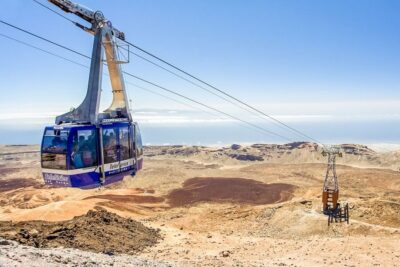
Tenerife: Mount Teide Tour with Cable Car Ticket & Transfer
Read our review →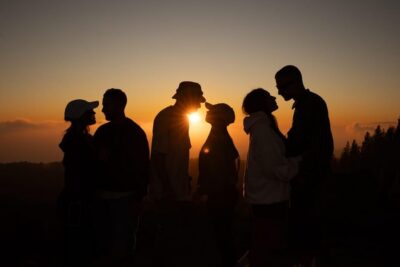
Tenerife: Teide National Park Sunset & Stargazing Tour
Read our review →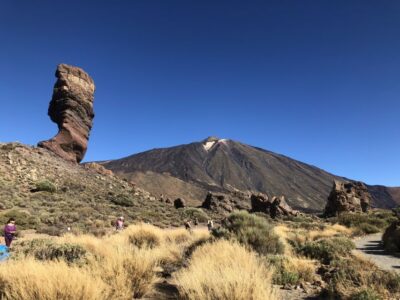
Tenerife: Mount Teide, Masca, Icod and Garachico Day Trip
Read our review →
Tenerife: Teide National Park Full-Day Tour with Pickup
Read our review →
Tenerife: Quad Adventure Tour in Teide National Park
Read our review →
Teide by Night: Sunset & Stargazing with Telescopes Experience
Read our review →
Teide: Guided Sunset & Stargazing Tour by Night with Dinner
Read our review →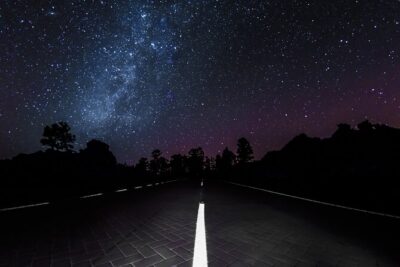
Browse the lists this tour appears in