
REVIEW · TENERIFE
Tenerife: Guided Hike to the Peak of Mount Teide
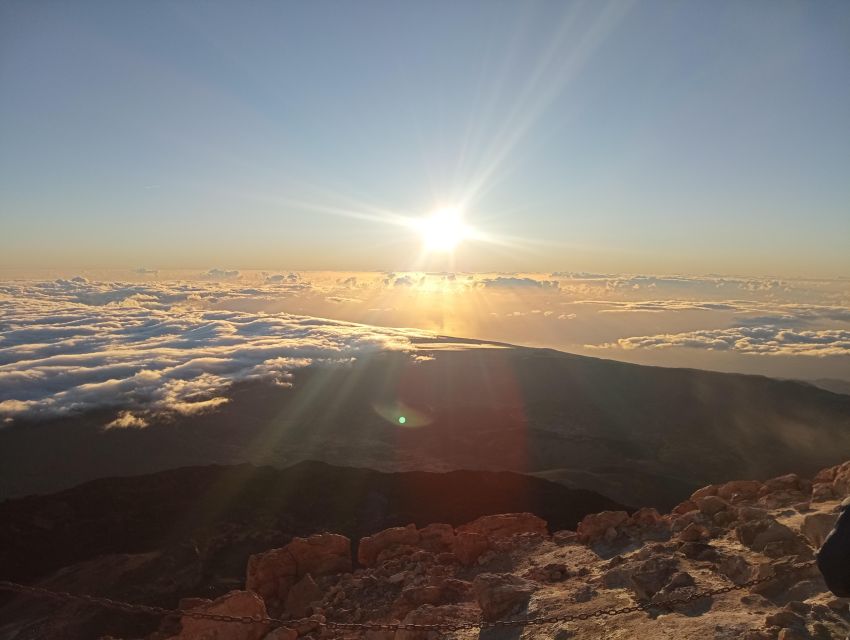
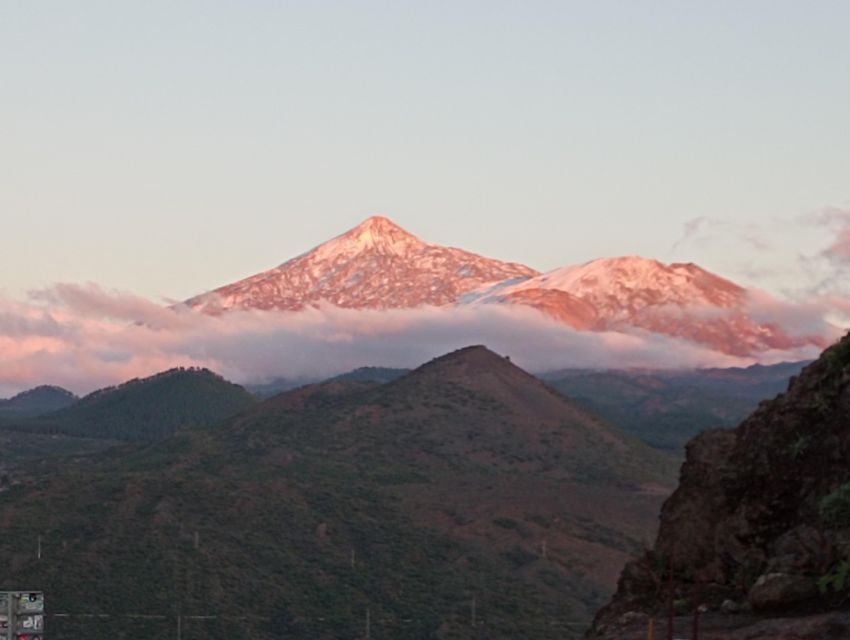
Mount Teide gives you Tenerife at its most dramatic: a long volcanic climb ending at Spain’s highest point, 3,715 meters above sea level. Start early enough and you may walk beneath a star-filled sky, then watch sunrise over Tenerife and the Atlantic islands from the summit.
I like the small group, limited to six people, and the practical gear supplied by the guide: poles, gloves, and a headlamp. I also like that guides such as Almos keep a measured pace and make regular stops. The catch is simple: this is a serious mountain day, not a gentle park stroll. The 1,500-meter ascent can feel tough, altitude can slow you down, and the cable car ride back is not included or guaranteed.
Key points to know before booking
- The summit sits at 3,715 meters: The 10 km climb gains about 1,500 meters, so good physical condition is essential.
- Sunrise is a major part of the appeal: An early start can mean walking in darkness, with a headlamp and stars overhead.
- The descent depends on the weather: The cable car runs only in suitable conditions, including wind below 35 km/h.
- You may need to walk the full route: If the cable car is closed, the total distance becomes about 20 km.
- The group stays small: A maximum of six participants makes it easier for the guide to adjust the pace and provide help.
- The cable car costs extra: Budget 22 euros per person for the ride down, and carry enough food and water for the longer version of the hike.
Starting near the Teleférico del Teide
You meet in the car park near the Teide cable car, at 793H+X7 Paradores Cañadas del Teide. There is no hotel pickup or drop-off, so you need to arrange your own way to this meeting point.
The morning briefing is practical. The guide checks the equipment, explains the route, and gets the group ready for a climb that usually takes five to six hours to reach the summit. The full activity is listed as seven hours, but the exact timing can change with pace, stops, weather, and the descent method.
This is also when you should be honest about how you feel. Mount Teide is high enough for altitude to matter, even if you are fit at sea level. The guide can set a steady pace and stop for breaks, but no guide can remove the physical demands of a 1,500-meter climb.
The group limit of six is a real advantage. On a climb like this, a large party can become a slow-moving chain of people with different abilities. In a small group, you can ask questions, stop to catch your breath, and stay in closer contact with the guide.
More Volcano Hikes and Treks in Spain
- Tenerife: Mount Teide Summit Hiking Adventure with Cable Car
★ 4.3 · 688 reviews - From South Tenerife: Mount Teide Hiking Day Trip & Cable Car
★ 4.8 · 482 reviews - Tenerife: Teide Night Hike to Watch Sunrise and Shadow
★ 5.0 · 91 reviews
Walking through volcanic country before sunrise
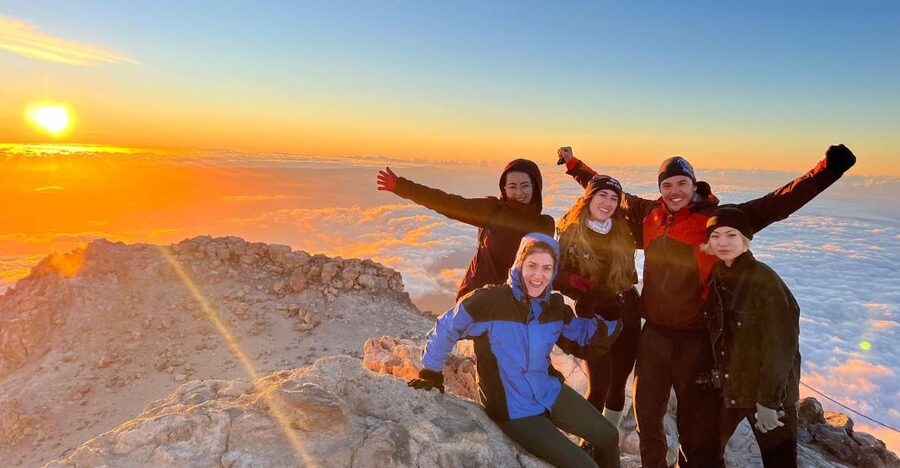
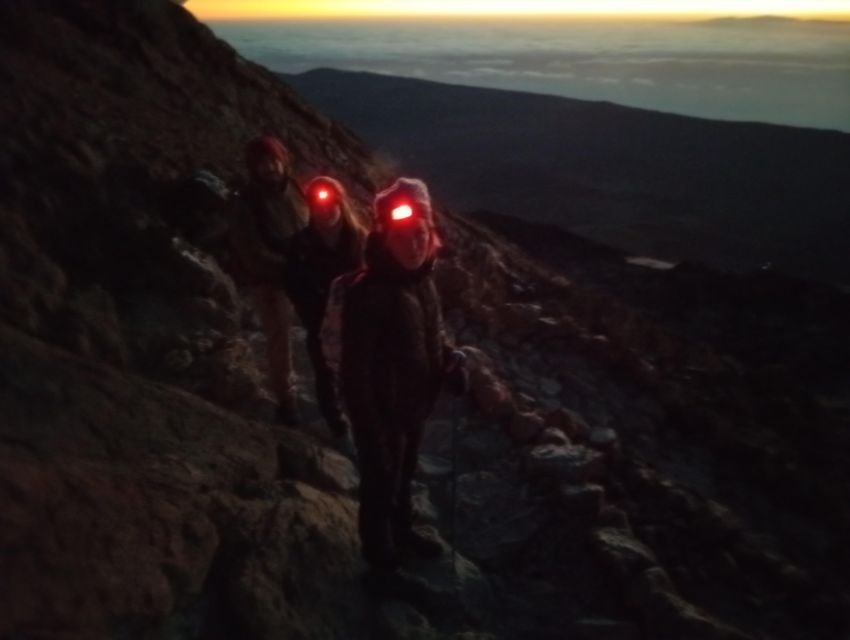
If your start time is set for sunrise, much of the first section takes place in the dark. You receive a headlamp, and the night can become part of the experience rather than just an inconvenience. One participant described walking under an unusually clear starry sky, followed by sunrise at the summit.
The tradeoff is that you will not see much of Tenerife on the way up. If your main goal is to study the volcanic scenery in daylight, a sunrise schedule has a clear limitation. You gain darkness, stars, and dawn, but you give up some detail during the climb.
The guide breaks the ascent into manageable sections. Along the way, you can stop to look at native plants, wildlife, and unusual volcanic rock forms. These pauses matter because they turn a long uphill effort into a series of shorter goals. They also give you time to manage your breathing before the thinner air becomes more noticeable.
Bring your own food and water. The guidance is to carry two to three liters of water and enough food for the activity. Eat properly before setting out, hydrate well, and rest beforehand. The specific advice calls for a two to three hour nap, which is especially useful if you are walking through the night.
The final climb to 3,715 meters
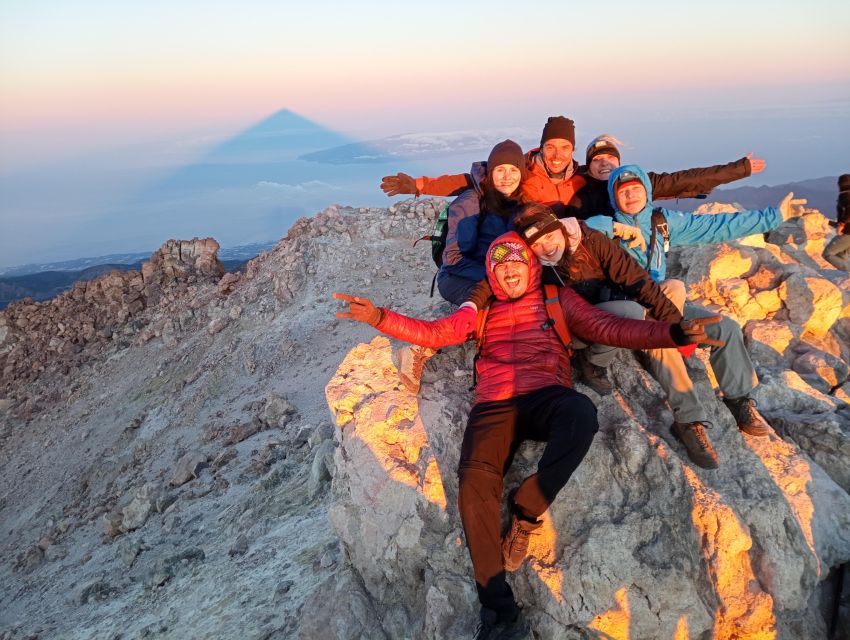
The summit section is where the hike becomes most demanding. The altitude is not a minor detail: at 3,715 meters, every steep section can feel harder than it would lower down. People who are in good shape can still find the pace and thin air challenging.
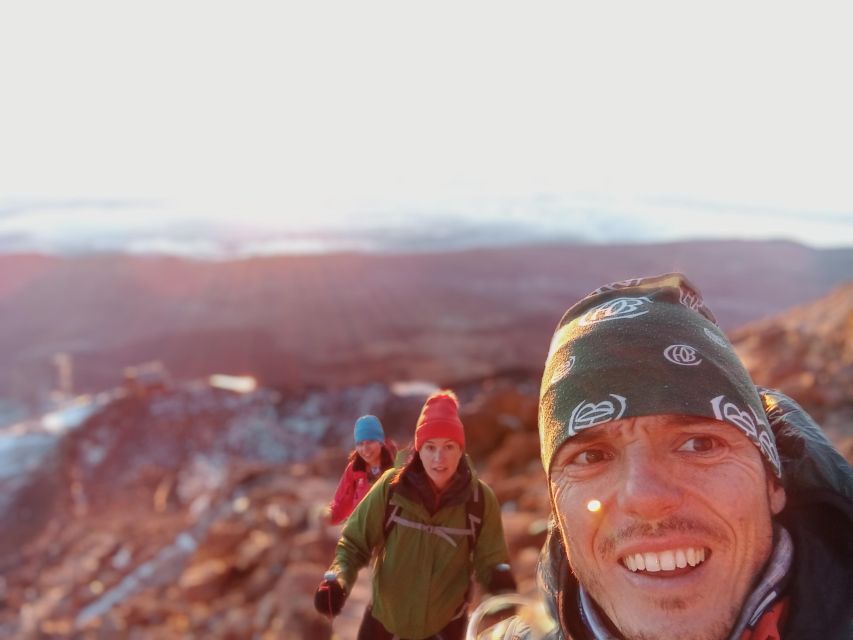
A careful guide makes a difference here. Almos is specifically praised for keeping a suitable pace, stopping when needed, and helping the group reach the top safely. He has also been noted for carrying or providing useful extras such as poles, warm layers, torches, snacks, and drinks. The supplied equipment can vary by guide, so use the listed kit as your baseline: headlamp, walking poles, and gloves.
You should still dress for cold conditions. Bring thermal clothing, a jacket, long or hiking pants, and sturdy hiking or waterproof shoes. The summit can be cold even when Tenerife feels warm below. Sunglasses and sunscreen are just as important as your jacket because high-altitude sun can be strong.
Do not treat the summit as a place to linger without preparation. One person reported waiting around 45 minutes near the cable car area in temperatures close to 0 degrees Celsius. A sheltered room may be available in some circumstances, but it can feel crowded and stuffy. Warm layers, gloves, and food make that waiting time much easier.
Sunrise, island views, and Atlantic air
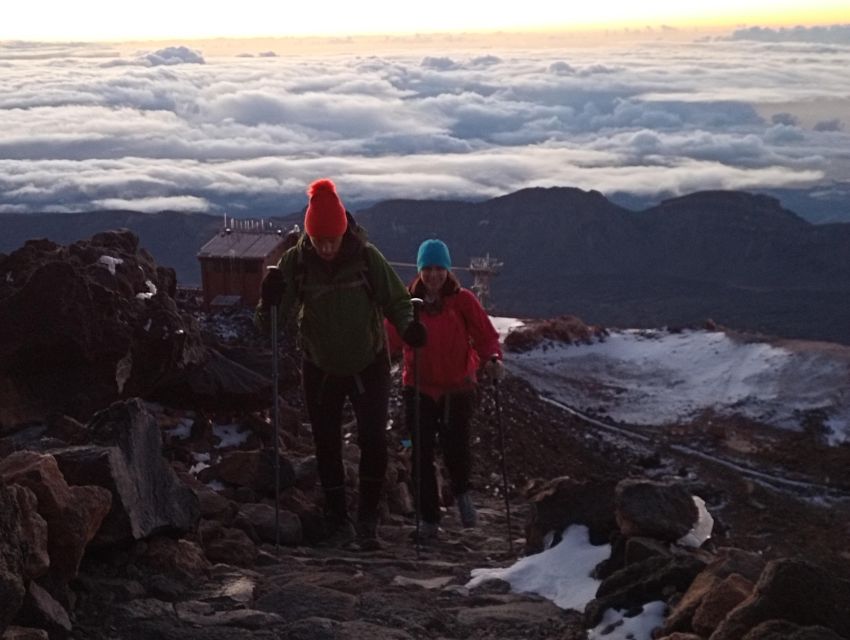
Reaching the summit around sunrise is the emotional payoff of this outing. From the top, you can look across Tenerife and, in clear conditions, spot Gran Canaria, La Gomera, El Hierro, and La Palma. The Atlantic stretches around the volcanic peaks, giving you a broad view that is hard to match from lower parts of the island.
The exact visibility depends on weather. Do not book this solely on the promise of seeing every island. Clouds, wind, and haze can change the view, and the summit can be cold even when the lower slopes are clear.
Still, the combination of height, ocean, neighboring islands, and dawn is unusual. You are not simply taking a cable car to a viewpoint. You are arriving there under your own power after hours of walking. That effort gives the final view more weight.
The guide also adds context about the volcano, the night sky, and the rock formations. One German-speaking participant praised the guide’s ability to talk about both the volcano and the stars. The languages offered are English, Spanish, Hungarian, and Romanian, so check that the language you need is available when booking.
More Volcano Hikes and Treks in Tenerife
- Tenerife: Teide Peak Hiking 3715m
★ 4.9 · 67 reviews - Tenerife: Climb to the summit of Mount Teide with an official permit and guide
★ 3.7 · 12 reviews
Taking the cable car down, if it runs
The usual plan is to ride the cable car down after reaching the summit. The ride returns you toward the starting area near the car park and saves your legs from another long descent.
The cable car ticket costs 22 euros per person and is not included in the $175 tour price. Add that amount when comparing the total cost with other Mount Teide options. The ride is also weather-dependent. It operates only in suitable conditions, with wind below 35 km/h given as the stated limit.
That condition is important. You should not assume the cable car is part of the guaranteed return. If it is closed because of wind or other bad weather, you walk down. The total route then becomes about 20 km, or roughly 12.4 miles, rather than 10 km.
This is the main practical risk in the booking. A person prepared for a five to six hour climb may not be ready for a long descent after reaching 3,715 meters. Pack as if you will walk the full route. If the cable car runs, the extra preparation simply gives you comfort and security.
What the $175 price covers
At $175 per person, this is not a cheap way to see Teide. The price becomes easier to assess when you look at what is included: a guide, access permits for the peak and Teide trails, insurance for the hike, and equipment including a headlamp, poles, and gloves.
The permit is important because summit access is controlled. You are paying for a guided experience built around reaching the peak, not just a general visit to Teide National Park. The small group also gives the guide more room to focus on individual needs.
The cable car is the main extra cost at 22 euros per person. Transportation to the meeting point is also your responsibility, and food and water are not supplied as part of the basic package. The value is strongest for people who want the physical challenge, a guide, and a chance to reach the summit at sunrise.
The value is weaker if you mainly want scenic views with little effort. In that case, the cable car alone or a shorter walking experience may suit you better. This tour asks you to pay for a demanding climb, then possibly pay again for the return ride.
Who should take this climb
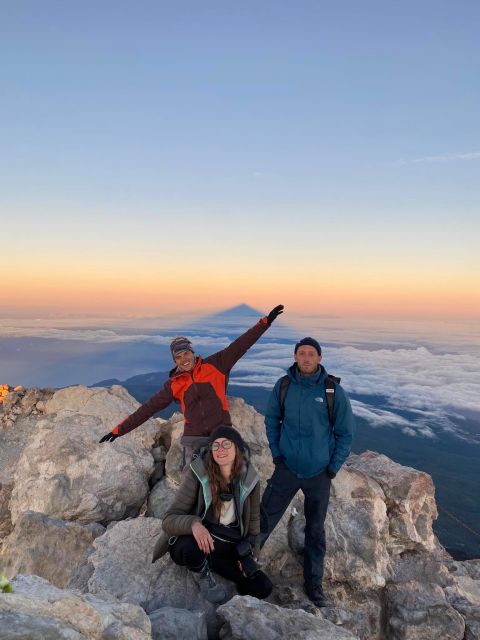
This experience suits you if you hike regularly, can handle a long uphill day, and want a proper summit attempt rather than a quick viewpoint visit. It is also a good match if you like small groups, early starts, volcanic geology, and the idea of walking beneath the stars.
You should be especially comfortable with:
- A 10 km uphill route
- About 1,500 meters of positive elevation
- High-altitude conditions at 3,715 meters
- Cold temperatures near the summit
- A possible 20 km round trip if the cable car closes
- Carrying two to three liters of water and your own food
This is not suitable for pregnant women or people with mobility, heart, respiratory, back, kidney, or seizure-related conditions. It is also not suitable for people with haemophilia, recent surgery, a cold, motion sickness, or other health concerns listed for the activity. If you are unsure, speak with a medical professional before booking.
Unaccompanied minors are not allowed. Pets, large bags, drones, bikes, alcohol, and drugs are also prohibited. Keep your bag compact, since the route is long and the rules are designed for safety in a protected volcanic area.
Small-group guiding and the human side of the hike
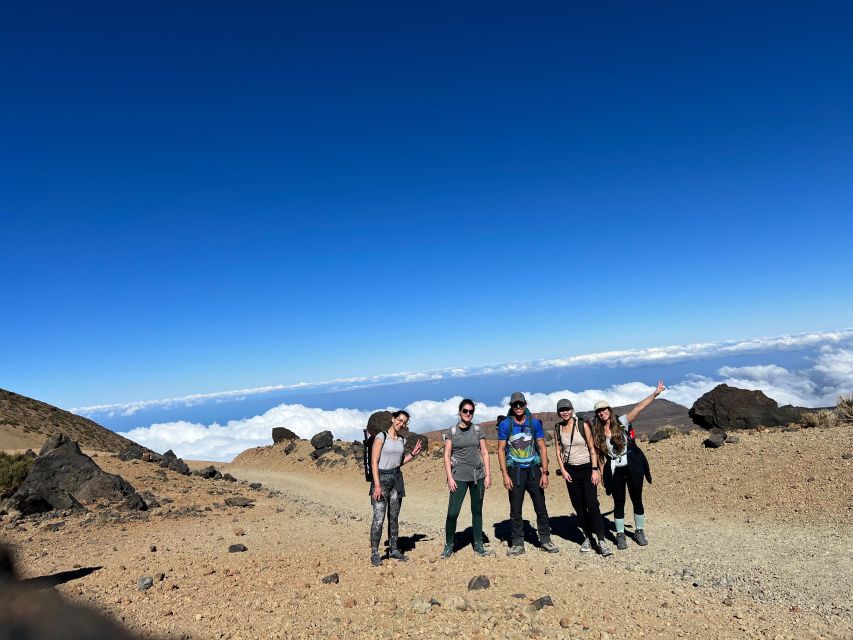
A strong guide can turn a hard climb into a manageable one. The best reported details about Almos are not grand speeches, but practical help: choosing a workable pace, making needed stops, offering extra layers and torches, and keeping people motivated when the altitude starts to bite.
That personal attention is one reason the six-person limit matters. It cannot make the route easy, but it can help you avoid charging ahead too fast and then struggling later. You also have a better chance to hear explanations about the volcano, plants, wildlife, rocks, and night sky.
The experience is not perfect for everyone. One participant felt that the group was pushed to hurry toward sunrise, then spent a cold wait at the top. That is a useful warning for anyone who dislikes rigid timing or expects a relaxed scenic walk. Sunrise demands a schedule, and the schedule may leave little room for a leisurely ascent.
If the cable car is closed, the day may actually feel more scenic because you walk down in daylight. But that benefit comes with a much harder physical finish. You should welcome the extra views only if your legs are ready for them.
What to pack for Teide
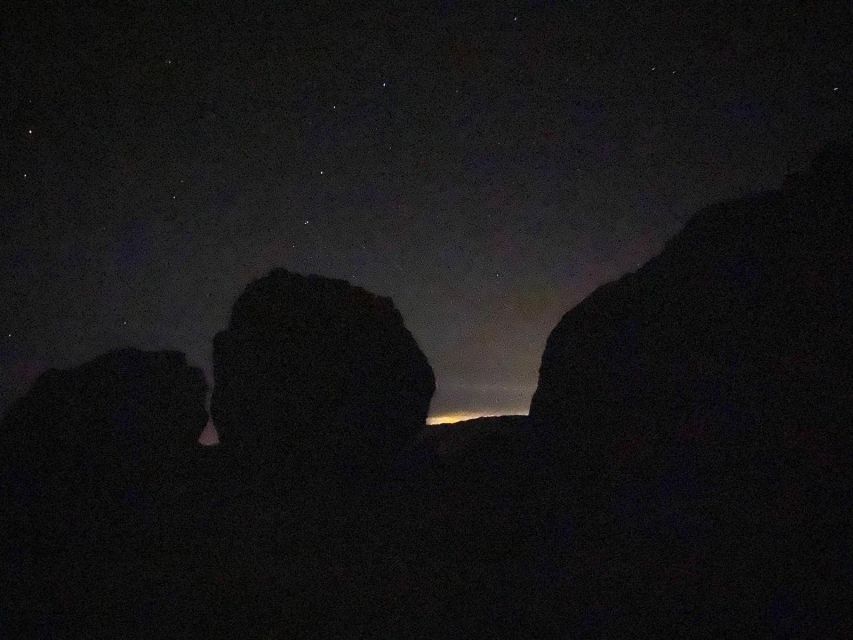
Pack lightly, but do not pack carelessly. The required list is long because conditions can shift between the meeting point and the summit.
Bring:
- Sunglasses and sunscreen
- Two to three liters of water
- Enough food for the full activity
- A jacket and thermal clothing
- Long pants or hiking pants
- Hiking or waterproof shoes
- A charged smartphone
- Personal medication
- A passport or identity card, with a copy accepted
The guide supplies a headlamp, walking poles, and gloves, but you should still use the clothing list seriously. A warm layer that stays in your bag is better than wishing you had one at the summit.
You can cancel for a full refund up to 24 hours before the activity, and reserve now while paying later. Those policies offer useful flexibility, but they do not remove the need to check the weather and your own fitness before the start.
Should you book the Mount Teide summit hike?
Book it if reaching Teide’s summit is a major goal, you are in good physical condition, and you like the idea of a demanding sunrise climb with a small group. The views, starry approach, guide support, and chance to see several Canary Islands can make this one of Tenerife’s strongest outdoor experiences.
Think twice if you want a relaxed day, dislike night walking, or would be disappointed by limited views during the ascent. Also budget for the 22 euro cable car ticket and prepare for a full 20 km walk if weather closes the cable car.
My advice is to treat the cable car as a bonus, not part of the plan. Bring enough water, warm clothing, food, and energy for the walk down. With that mindset, the $175 price is reasonable for a guided, permit-based summit attempt in a group of six. Without that preparation, the altitude and possible descent can turn a memorable day into a punishing one.
FAQ
Where does the Mount Teide hike start?
You meet in the car park near the Teleférico del Teide cable car, at 793H+X7 Paradores Cañadas del Teide.
How long does the activity last?
The scheduled duration is seven hours. The uphill section normally takes five to six hours, and the exact total depends on the pace, stops, weather, and descent method.
How far do you hike?
The planned uphill hike is 10 km with about 1,500 meters of positive elevation. If the cable car cannot operate, you walk back down as well, making the total distance about 20 km.
How high is the summit?
The summit of Mount Teide is 3,715 meters, or 12,188 feet, above sea level.
Is the cable car included?
No. The cable car costs 22 euros per person and must be paid separately.
Will the cable car always run after the hike?
No. It operates only in suitable weather conditions, including wind below 35 km/h. If it is not running, you must walk down.
What equipment does the guide provide?
The tour includes a headlamp, walking poles, and gloves, along with a guide, the required peak and trail permit, and hiking insurance.
What languages are available?
The live guide service is available in English, Spanish, Hungarian, and Romanian.
What should I bring?
Bring two to three liters of water, food, sunglasses, sunscreen, hiking or waterproof shoes, a jacket, thermal clothing, long pants, a charged smartphone, personal medication, and a passport or identity card.
More Mount Teide Tours in Tenerife
- Tenerife: Mount Teide Tour with Cable Car Ticket & Transfer
★ 4.3 · 5,094 reviews - Tenerife: Teide National Park Sunset & Stargazing Tour
★ 4.2 · 3,812 reviews - Tenerife: Sunset and Stargazing at Teide National Park
★ 4.7 · 2,826 reviews - Teide National Park Sunset & Stargazing with Dinner (Star Safari)
★ 5.0 · 2,601 reviews
Just added around Tenerife
- Tenerife: Water Jet-Ski / Teide Volcano Quad Safari Combo★ 4.5 · 6 reviews
- Tenerife: Tenerife Highlights beyond the Teide★ 4.8 · 160 reviews
- Puerto de la Cruz: Quad to Mount Teide Day or Sunset★ 4.7 · 25 reviews
- Tenerife: Teide Stargazing with an Astrophysicist★ 4.9 · 74 reviews
- Teide: Small Group Sunset Adventure with Picnic & Stargazing★ 4.6 · 231 reviews
- Tenerife: Teide National Park and Volcano Buggy Tour★ 4.0 · 39 reviews
- Tenerife: Teide National Park & Teno Rural Park Private Tour★ 5.0 · 35 reviews
- Tenerife: Teide National Park Sunset Quad Tour★ 4.1 · 164 reviews
Tenerife Volcano Tours, compared.
Tenerife: Mount Teide Tour with Cable Car Ticket & Transfer
Read our review →
Tenerife: Teide National Park Sunset & Stargazing Tour
Read our review →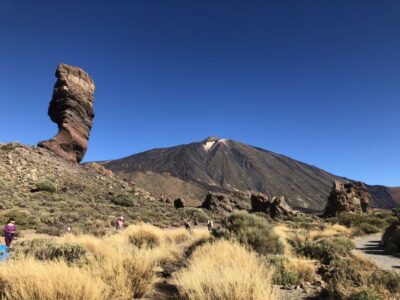
Tenerife: Mount Teide, Masca, Icod and Garachico Day Trip
Read our review →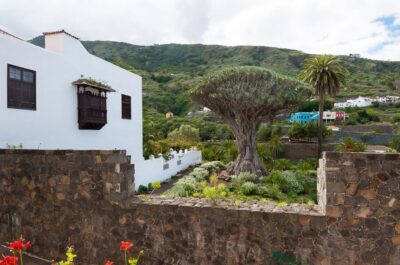
Tenerife: Teide National Park Full-Day Tour with Pickup
Read our review →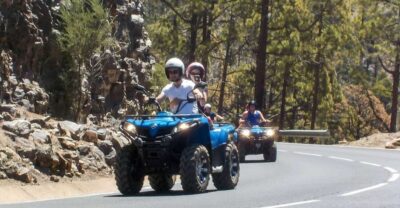
Tenerife: Quad Adventure Tour in Teide National Park
Read our review →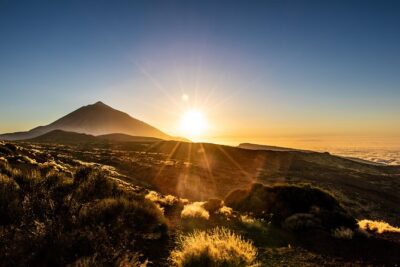
Teide by Night: Sunset & Stargazing with Telescopes Experience
Read our review →
Teide: Guided Sunset & Stargazing Tour by Night with Dinner
Read our review →
Browse the lists this tour appears in