
REVIEW · INDONESIA
Mount Rinjani Trek 3D-2N To Summit – Lake – Hotspring
Mount Rinjani saves its biggest rewards for people willing to work for them. This 3-day, 2-night trek takes you from open grassland at Sembalun to the 3,726-meter summit, down to Segara Anak Lake, and up again to Senaru crater rim. I like the full crossing because you see far more than a summit trail, especially the crater lake, the small volcano rising from it, and the sunset over Bali. The tradeoff is simple: this is a very hard hike, not a scenic stroll.
I like the way the small groups keep the pace manageable, and the way guides such as Sun, Sultan, Awan, Ringo, and San have helped hikers through difficult sections. I also like the practical care built into the trip: hot meals, porters, tents, sleeping gear, headlamps, gloves, and transport after the trek. Day two is the test, with a summit start at 3:00 in the morning followed by the long descent to the lake and climb to the next campsite.
What makes this Rinjani trek worth considering
- A complete Sembalun-to-Senaru route: You climb from the drier eastern side, cross the volcanic interior, and descend through rainforest.
- Sunrise from 3,726 meters: On a clear morning, you can see Lombok, Bali, Sumbawa, and Segara Anak Lake.
- A natural hot spring after the summit: The hot water beside the lake is a welcome place to ease tired legs.
- Two very different crater-rim camps: Sembalun gives you the sunset, while Senaru offers views across the lake toward Bali.
- Small groups of up to eight: This makes it easier for the guide to keep an eye on slower hikers.
- Strong support from guides and porters: Meals, camp equipment, drinking water, and much of the heavy gear are handled for you.
Starting at Sembalun, where the mountain opens wide
Your first morning begins with breakfast at about 6:00, followed by transport from the Senaru area to Sembalun Village. At roughly 1,100 meters, you register at the Rinjani information center before setting off at about 8:00.
The opening miles are not technically difficult. You walk through broad, open meadow with a gradual climb. That sounds gentle, but the sun and lack of shade can make this section tiring. Bring water, use sun protection, and avoid treating the first few hours as a warm-up you can ignore.
After around two hours, you reach Post 1 at about 1,300 meters. Post 2, at 1,500 meters, follows roughly 40 minutes later. The route continues to Post 3 at 1,800 meters, where lunch is served. These stops break up the day, but the real work begins after lunch.
The climb to Sembalun crater rim at 2,639 meters takes about three hours, including a long, steep section. You will feel the ascent in your legs, especially if you have already underestimated the exposed lower route. Your reward is a campsite with a broad view and an excellent sunset. This is one of the best reasons to choose three days instead of rushing through a shorter program.
The first night can be cold and windy. Warm clothing matters, even if the morning began in tropical heat. The package includes a tent, toilet tent, sleeping bag, mattress, and cooking equipment, so you do not need to carry a full camping setup.
More Volcano Hikes and Treks in Indonesia
- Bali: Sunrise Mount Batur Guided Hike with Breakfast
★ 4.8 · 9,660 reviews - Bali: Mount Batur Sunrise Guided Hike and Natural Hot Spring
★ 4.8 · 9,284 reviews - Bali: Mount Batur Sunrise Trek With Guide and Breakfast
★ 4.8 · 3,461 reviews
The 3:00 a.m. push for Mount Rinjani’s summit
Day two begins around 2:00 a.m. with a hot drink and a light breakfast. You leave at about 3:00, using the supplied headlamp to follow the dark trail toward the summit.
The early climb starts at a moderate pace. Later, the route becomes longer and more demanding, with loose volcanic scree near the top. This is the section that separates a fit hiker from someone who simply enjoys occasional walks. Each step can slide backward on the loose surface, so progress may feel frustratingly slow.
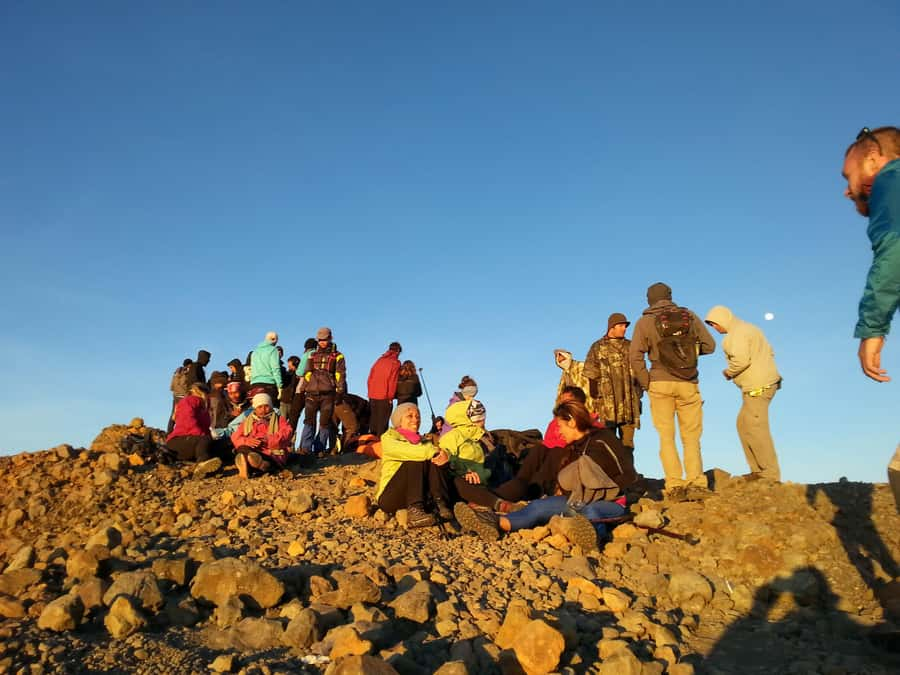
The goal is to reach the summit at about 6:00 a.m. If the sky is clear, sunrise reveals Lombok, Bali, Sumbawa, and Segara Anak Lake far below. The view is huge, but the summit itself is exposed and cold. Your guide may need to adjust the pace for wind, weather, or safety. A government safety closure has also prevented some groups from reaching the main summit, with guides instead taking people to the second-highest peak for sunrise, so conditions can change.
Do not judge the trek only by the summit distance. The hardest part of this program is what comes after it. You descend back to Sembalun crater rim in about two hours for breakfast, then continue down to Segara Anak Lake for another three hours.
Segara Anak Lake and the hot spring reward
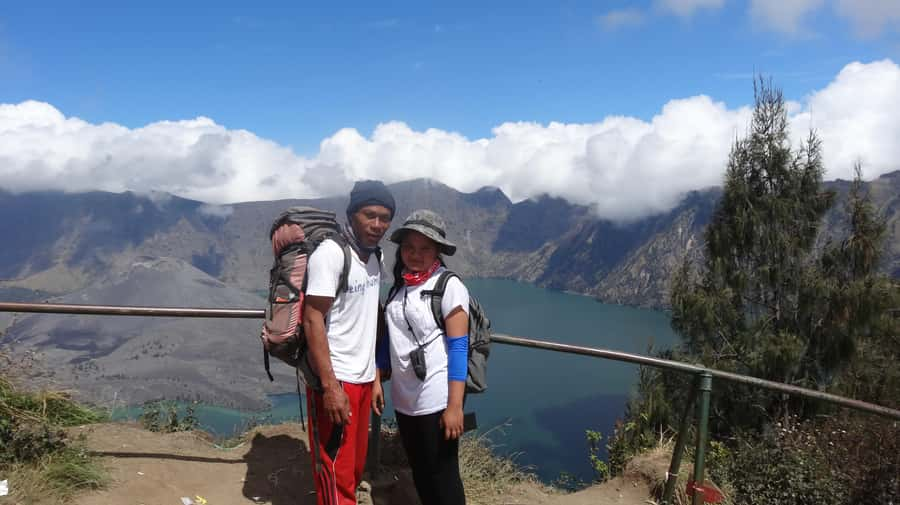
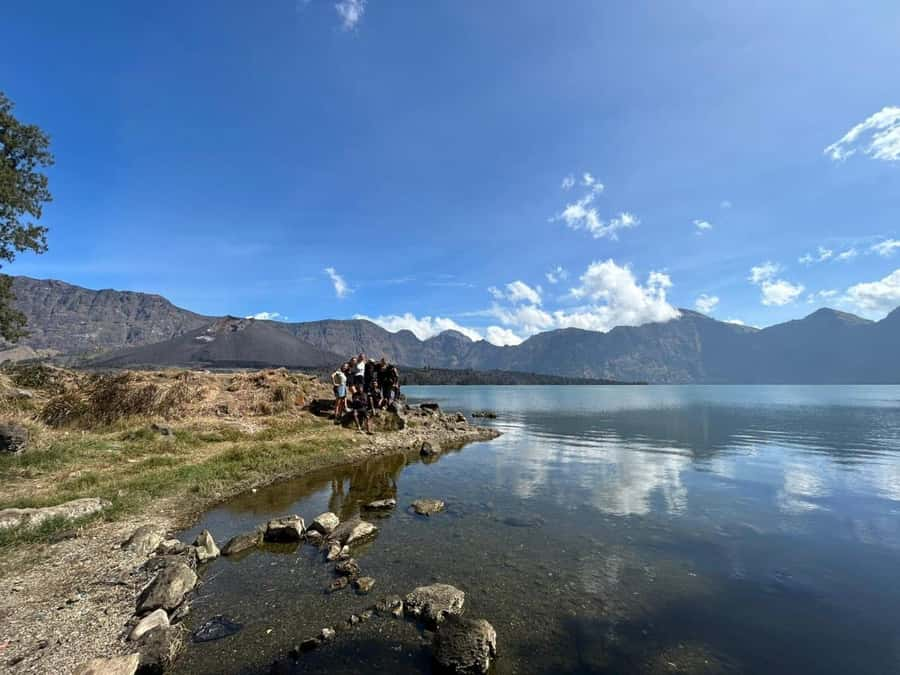
Segara Anak is the visual centerpiece of the trek. The turquoise lake sits inside Rinjani’s volcanic crater, with a smaller active volcano rising near its edge. After the stark summit trail, the lake feels like a complete change of scene.
You stop beside the water to rest and eat lunch. The program includes time for swimming in the lake and bathing in the nearby hot spring. This is not just a pleasant extra. After the summit climb and descent, warm water can help loosen aching muscles before the next ascent.
The hot spring is also the point where some people may wish the itinerary moved more slowly. You have already walked for hours, and the day is not finished. Give yourself enough time to recover, but remember that you still need to climb to Senaru crater rim at 2,641 meters.
Porters prepare the meals, and the food is one of the stronger parts of the arrangement. You receive breakfast, lunch, and dinner, along with fruit, fried bananas, and other sweet snacks. Several hikers found the portions generous and the cooking surprisingly good for a mountain camp. That matters here. You need steady fuel, not just one large meal at the end of the day.
Climbing again to Senaru crater rim
Leaving the lake means another substantial climb. The route to Senaru crater rim takes about three hours, and it arrives after the summit, descent, lake stop, and hot spring. This is why the second day is so demanding even though the main summit climb is already behind you.
At 2,641 meters, the Senaru campsite gives you a different view from the first night. You can look across the crater toward the lake, the small volcano, and Mount Agung on Bali. The sunset here is a major highlight, especially when smoke rises from the volcanic cone near the water.
The campsite may be windy, and the temperature can drop sharply after dark. Keep warm layers inside your day pack rather than buried in stored luggage. Gloves are included, but you should still bring clothing that works in cold, exposed conditions.
The second night is often less about comfort than relief. You have completed the steepest and longest day, and the next morning brings a much more steady descent.
Same volcano country, a different day out:
- Bali/Mount Batur: Private Sunrise Jeep Tour & Hot Spring
★ 4.8 · 3,528 reviews - Mount Batur Sunrise Hike and Natural Hot Spring Option
★ 5.0 · 1,927 reviews - From Ubud: Mount Batur Hiking With Hotspring
★ 4.8 · 1,850 reviews - From Ubud: Mount Batur Shared Jeep Sunrise & Hot Spring Tour
★ 4.8 · 1,842 reviews
Five hours through Senaru’s rainforest
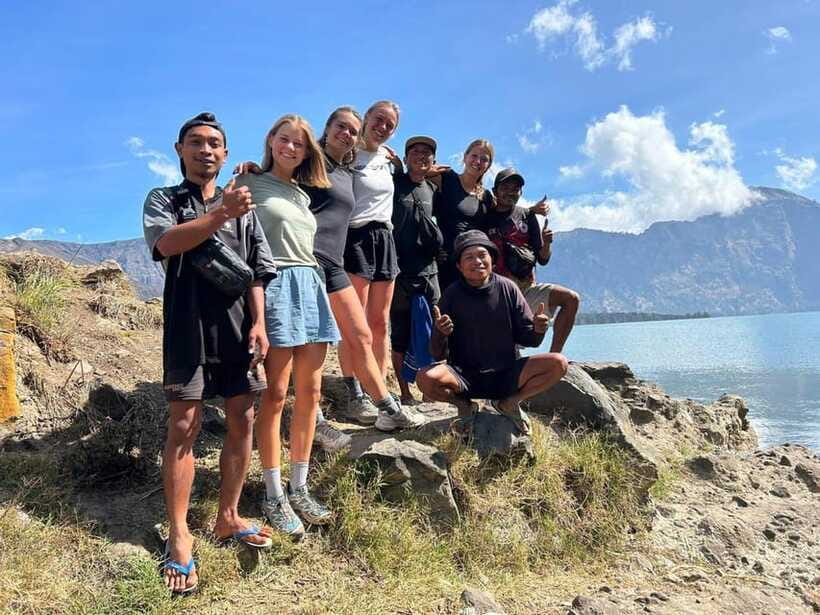
After breakfast and a sunrise view, you leave the crater rim and descend toward Senaru Village at about 601 meters. The route takes around five hours, with lunch along the way.
The forest changes the feel of the trek again. After the open grassland and bare volcanic slopes, you walk beneath trees and may spot a rare black monkey if you are lucky. This is a quieter ending than the summit morning and gives your knees a break from the loose rock, though a five-hour descent is still tiring.
The trail ends in Senaru, where transport takes you to your next destination. Included onward transport covers Bangsal, Senggigi, and Mataram. If you are heading elsewhere, confirm the arrangement before departure rather than assuming every destination is covered.
What the $237 price includes
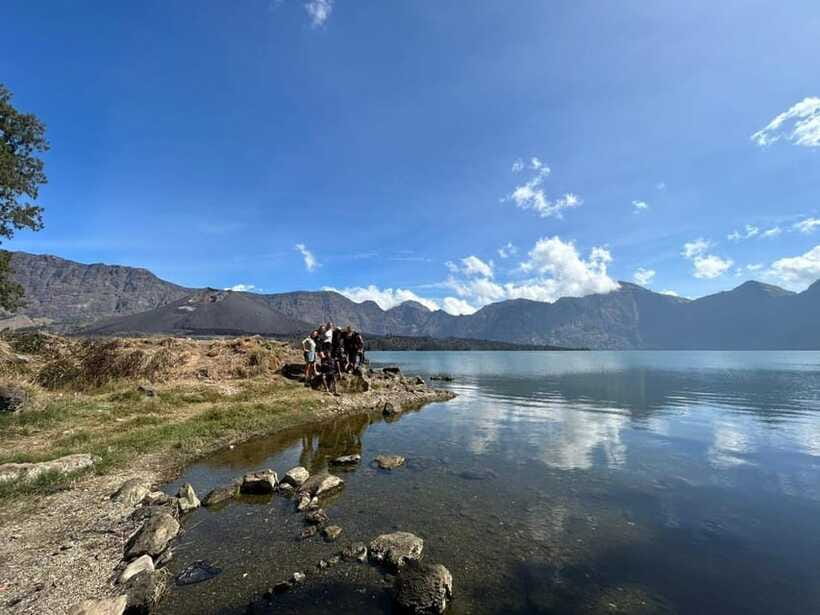
At $237 per person, this is not a bare-bones guided walk. The price includes the national park entrance fee, listed as IDR 750,000 per person, plus pickup from hotels in the Senaru area and transport after the trek to Bangsal, Senggigi, or Mataram.
You also receive:
- An English-speaking professional guide
- Porters
- Tent and toilet tent
- Sleeping bag and mattress
- Cooking equipment
- Mineral and spring water for drinking on the mountain
- Breakfast, lunch, and dinner
- Fried bananas, fruit, and snacks
- Trekking insurance
- Headlamp and gloves
- Luggage storage at the Cakrawala Rinjani office
That bundle gives the trip good value if you need equipment and support. Porters carry much of the communal gear, prepare meals, and help set up camp. You still need to carry your personal day items, water for the sections specified by the organizer, clothing, and any extra food you want.
One point deserves clarification before you set off: the description of water is not perfectly precise for every part of the route. Ask how much water is supplied on the final day and where you should refill. Spring water may be boiled by the team, but clear instructions are better than discovering the details when you are already tired.
The guides, porters, and small-group advantage
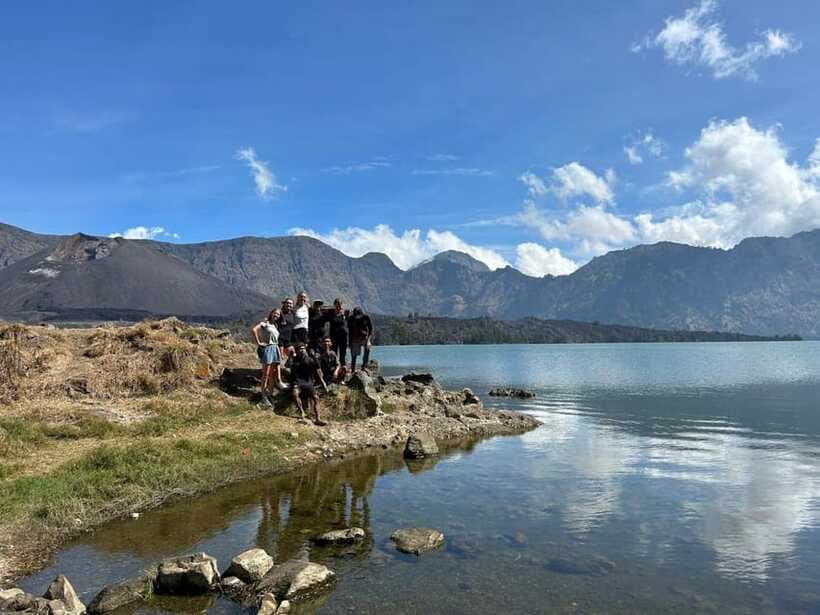
The group limit is eight people, which is useful on a route with such different walking speeds. A guide can stay with a slower hiker without losing the rest of the group for long, and the group can move more safely across the summit scree.
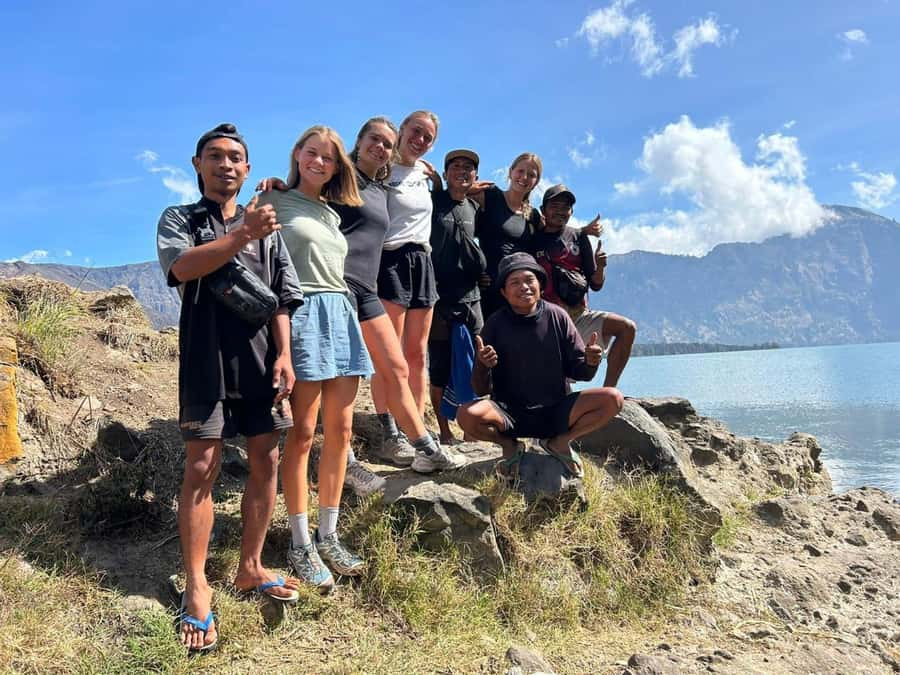
The guiding team has earned strong praise for patience and care. Sun has stayed with slower hikers and helped them maintain their own pace. San has been described as attentive, funny, and encouraging, while Awan has explained the volcano and local stories along the way. Other named guides include Ringo, Rengga, Sultan, Ajes Key, Jojo, Ryan, Patdi, and Sam.
You should still be clear about your ability before booking. The guides can support you, but they cannot remove the steep climbs, loose rock, altitude, cold, or long hours. Good support makes a hard trek safer and more manageable. It does not make it easy.
The porters are a major part of the experience. They carry tents, cooking gear, food, and other supplies up and down terrain that is difficult even with a light pack. You can expect practical help at camp and hot meals, but remember that porter labor is physically demanding. Treat the team with respect and ask how tipping is handled if you want to show extra appreciation.
What to pack for the summit and crater camps
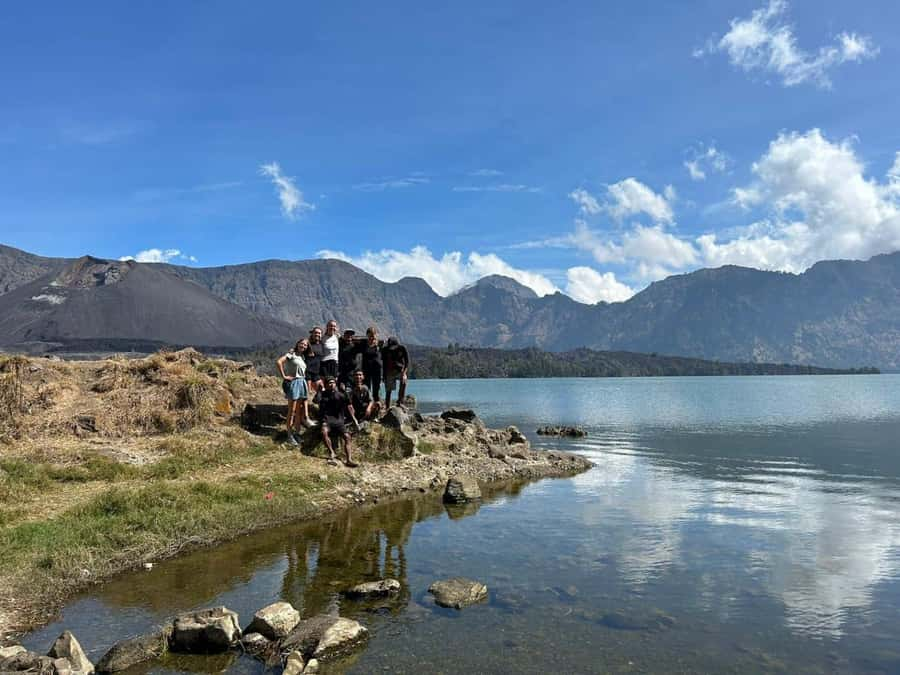
The supplied list covers comfortable shoes, hiking shoes, warm clothing, water, food, trekking gear, and a camera. I would take that advice seriously and think in layers.
Pack shoes with a firm grip, especially for the loose scree near the summit and the long descent. Bring warm layers for both crater rims, plus gloves and a headlamp if you prefer your own, even though those items are supplied.
Keep the following in your day pack:
- Water and extra snacks
- Warm layer and rain protection if needed
- Phone or camera with a protected battery
- Basic personal medication
- Small toiletries
- Sunscreen and a hat
- Trekking poles if you use them
Trekking poles are particularly useful on the descent. One hiker specifically wished for them before tackling the loose volcanic sections. Ask the organizer in advance if poles are available rather than waiting until you are on the trail.
Who should choose this three-day route?
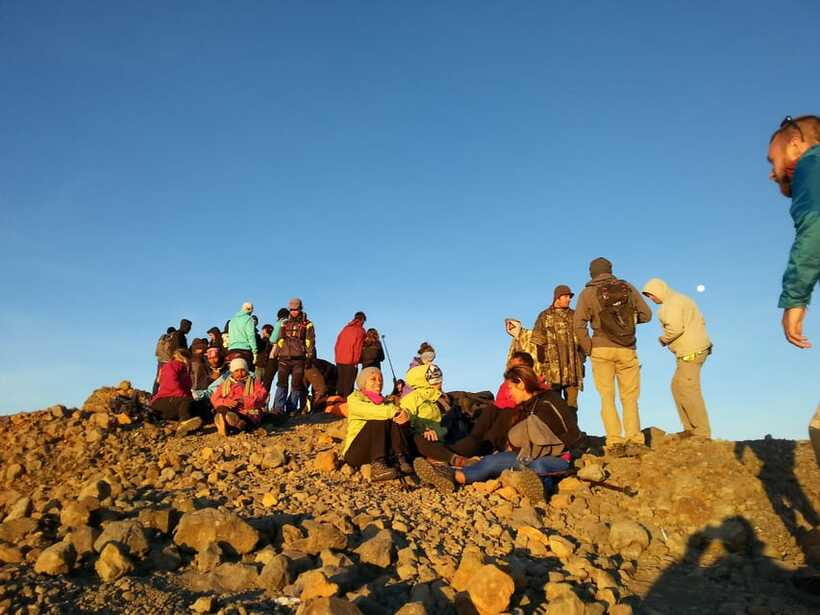
This itinerary suits you if you already hike regularly, can handle long ascents and descents, and want the full Rinjani experience rather than only a summit attempt. It also suits people who value support, since the team handles food, tents, cooking equipment, and much of the camp work.
You do not need technical climbing skills based on the route description, but you do need stamina and sound footing. The main challenge is continuous effort: a long climb on day one, a pre-dawn summit attempt and two major descents and climbs on day two, then a five-hour forest descent on day three.
If you like hiking but are unsure about your fitness, consider that several people found the three-day route more demanding than expected. Some felt a two-day option would be enough, while others preferred the extra time because it allowed the lake, hot spring, and second crater rim without rushing. The three-day plan is not automatically easier. It spreads the experience across more sights, but it still involves a great deal of walking.
The overall rating is 4.7 from 111 reviews, with especially strong praise for the guides, porters, food, and organization. The most common caution is also clear: this is a physically challenging mountain trek.
Booking, flexibility, and practical details
The meeting point is the Cakrawala Rinjani Trekking office, where the team explains the trip before you start. Luggage storage is available there, which is useful if you are carrying more than you need on the mountain.
The activity is offered in English, with a small group limited to eight participants. You can cancel up to 24 hours in advance for a full refund, and the reserve-now, pay-later option lets you hold a place without paying immediately.
Starting times depend on availability, but the actual trek schedule is early and fixed in its key stages: breakfast around 6:00 on day one, departure from Sembalun around 8:00, summit start around 3:00 a.m. on day two, and descent from Senaru crater rim after breakfast on day three.
Should you book Cakrawala Rinjani?
I would book this trek if you want the summit, Segara Anak Lake, hot spring, both crater rims, and the full Sembalun-to-Senaru route in one trip. The price is reasonable for the national park fee, transport, meals, equipment, guide, porters, and small group.
I would not book it as a casual first hike or a relaxed nature break. You need to prepare for cold nights, loose volcanic rock, steep climbs, and a very long second day. If you can accept the effort, this route gives you the most complete version of Mount Rinjani, with the sunrise summit and the lake-and-hot-spring recovery that make the hard work worthwhile.
FAQ
How long is the Mount Rinjani trek?
The program lasts three days and two nights.
Where does the trek start?
The trek starts in Sembalun Village, at about 1,100 meters, after registration at the Rinjani information center.
Where does the trek finish?
The route finishes in Senaru Village, at about 601 meters, after descending through the rainforest.
Does the trek reach Mount Rinjani’s summit?
The planned route reaches the 3,726-meter summit. Summit access can change because of government safety restrictions, and an alternative sunrise hike to the second-highest peak may be offered if the summit is closed.
Is the hot spring included?
Yes. The itinerary includes time to bathe in the hot spring beside Segara Anak Lake.
Are meals included?
Yes. Breakfast, lunch, and dinner are included, along with fried bananas, fruit, and other snacks.
Is camping equipment provided?
Yes. The package includes a tent, toilet tent, sleeping bag, mattress, and cooking equipment.
Is transport included?
Pickup from hotels in the Senaru area is included. Transport after the trek is included to Bangsal, Senggigi, and Mataram.
What is the maximum group size?
The group is limited to eight participants, with an English-speaking guide.
Just added around Indonesia
- From Banyuwangi or Bali Sunrise Ijen Vulcano Hiking All Inclusive★ 5.0 · 50 reviews
- Ijen Blue Fire & Sunrise Sharing Tour★ 5.0 · 6 reviews
- Kawah Ijen Midnight Tour (1 Day)★ 4.5 · 7 reviews
- 1 Day – ULTIMATE Tour Ijen Blue Fire From Surabaya, Malang and Banyuwangi★ 5.0 · 6 reviews
- Ijen Crater Tour★ 5.0 · 33 reviews
- 2 Days Private Tour Ijen and Bromo from Banyuwangi★ 5.0 · 31 reviews
- Kawah Ijen Blue Fire Tour – Share Package★ 5.0 · 7 reviews
- Guided Tour to Ijen Crater Blue Fire★ 5.0 · 4 reviews
Indonesia Volcano Tours, compared.
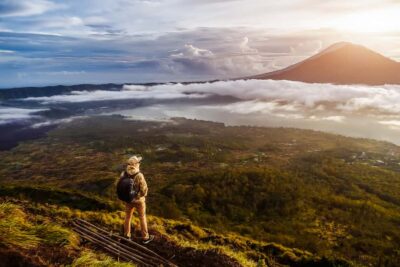
Bali: Sunrise Mount Batur Guided Hike with Breakfast
Read our review →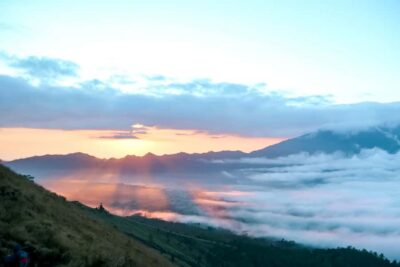
Bali: Mount Batur Sunrise Guided Hike and Natural Hot Spring
Read our review →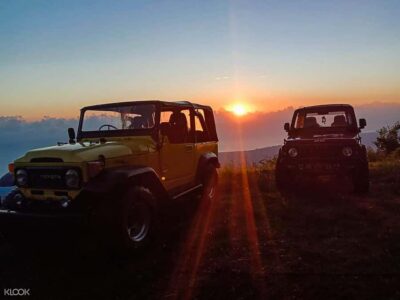
Bali/Mount Batur: Private Sunrise Jeep Tour & Hot Spring
Read our review →
Bali: Mount Batur Sunrise Trek With Guide and Breakfast
Read our review →
Mount Batur Sunrise Hike and Natural Hot Spring Option
Read our review →
From Ubud: Mount Batur Shared Jeep Sunrise & Hot Spring Tour
Read our review →
Mount Bromo Sunrise Tour from Surabaya or Malang – 1 Day
Read our review →Browse the lists this tour appears in