
REVIEW · INDONESIA
Mount Rinjani: 2D-1N Trekking Summit Sunrise Point Join Tour
The main event here is a pre-dawn push up Mount Rinjani’s volcanic summit, reaching 3,726 meters as the sun comes up over Lombok. You camp on Sembalun Crater Rim first, so the summit attempt begins high on the mountain rather than from the village below.
I like two things right away: the crew carries the camping equipment, food, and water, and the route gives you a real mountain night under the stars. The hot drink and light breakfast at 2:00 a.m. are small touches, but they matter when you are leaving camp in the dark.
The catch is simple: this is a very demanding two-day trek. The final summit slope is loose volcanic scree, the summit morning starts around 3:00 a.m., and the descent to Sembalun takes about five hours. Good fitness is not optional.
Key points at a glance
- Reach 3,726 meters for sunrise: The summit gives you broad views of Lombok, Bali, Sumbawa, and Segara Anak Lake.
- Camp at Sembalun Crater Rim: Your overnight site sits at about 2,639 meters, with sunset and sunrise views from camp.
- Start from Sembalun after a Senaru transfer: The first day begins with an easier walk through open meadow before the climb gets steep.
- Expect a long, tiring summit morning: You wake at 2:00 a.m., leave at 3:00 a.m., and return to Sembalun village after the summit and breakfast.
- Food and equipment are supplied: A guide, porter, camping gear, meals, water, headlamp, one trekking pole, and gloves are included.
- Budget for extra costs: The listed price is $133 per person, but entrance fees, transport, hotel accommodation, shoes, trousers, and a day pack are not included.
The climb begins in Sembalun, not Senaru
Your trek begins with an early breakfast and a drive from Senaru village, at about 601 meters, to Sembalun village, at roughly 1,100 meters. This transfer matters because the route to the summit starts from Sembalun, while Senaru is used as the meeting or accommodation area before and after the trek.
At Sembalun, you register at the Rinjani information center. The walking begins around 8:00 a.m., giving you a full day on the mountain before reaching camp.
The opening section is relatively gentle. You walk through open meadow, with the route gradually gaining height toward Pos 1. After about two hours, you reach Pos 1 at 1,300 meters. From there, it is around another 40 minutes to Pos 2 at 1,500 meters.
This first stretch can feel deceptively easy. The path is not yet the punishing summit trail, and the open setting gives you room to settle into a steady pace. I recommend resisting the urge to walk quickly here. You still have the main climb ahead, and saving your legs is more useful than arriving at the first posts early.
More Volcano Hikes and Treks in Indonesia
- Bali: Sunrise Mount Batur Guided Hike with Breakfast
★ 4.8 · 9,660 reviews - Bali: Mount Batur Sunrise Guided Hike and Natural Hot Spring
★ 4.8 · 9,284 reviews - Bali: Mount Batur Sunrise Trek With Guide and Breakfast
★ 4.8 · 3,461 reviews
Lunch at Pos 3 breaks up the first day
The route continues toward Pos 3 at about 1,800 meters. Lunch is served here, with time to rest before the steepest part of the first day.
That pause is valuable. The climb from Pos 3 to Sembalun Crater Rim takes about three hours and includes a prolonged steep ascent. You are gaining roughly 839 meters from Pos 3 to camp, so this is where the day begins to feel serious.
The schedule describes the early walking as a gentle climb, but the full day still involves a substantial uphill effort. You should expect tired legs by the time you reach the rim, especially if you are not used to mountain walking.
The supplied equipment includes lunch on the mountain, drinking water, a trekking pole, and gloves. Those basics reduce the amount you need to carry, but you still need a small day pack for personal items. A small bag is not provided, so bring one yourself.
Sembalun Crater Rim is your overnight reward
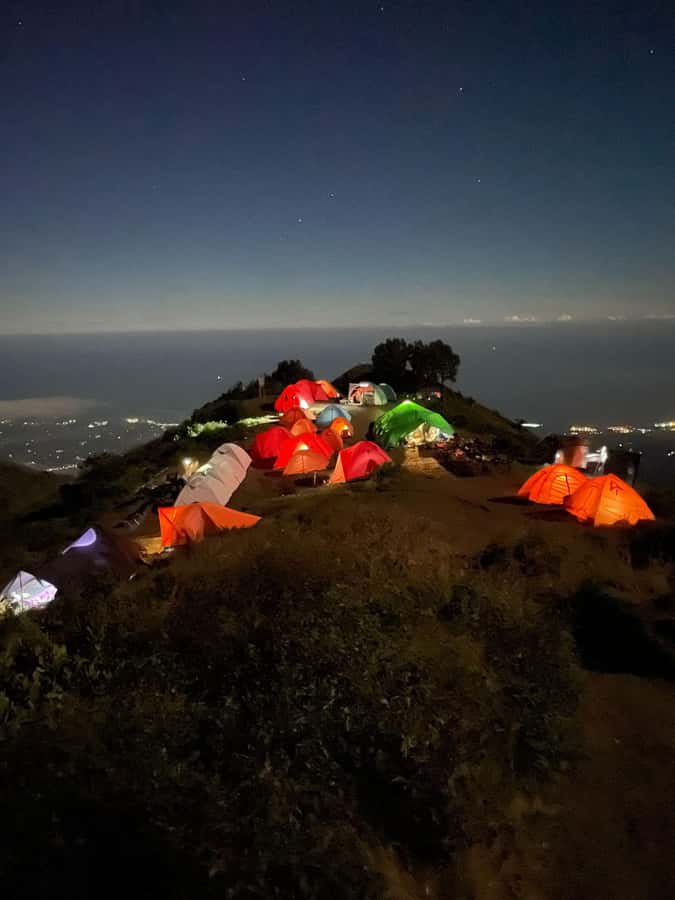
Camp is set on Sembalun Crater Rim at approximately 2,639 meters. This is the key pause in the trip. You have climbed for most of the day, and now you can look out from the rim while the crew prepares dinner and the campsite.
The campsite is also the best part of the schedule from a rhythm point of view. Instead of trying to climb from low elevation to the summit in one push, you spend the night high on the mountain. That makes the summit attempt possible in the early morning, though it does not make it easy.
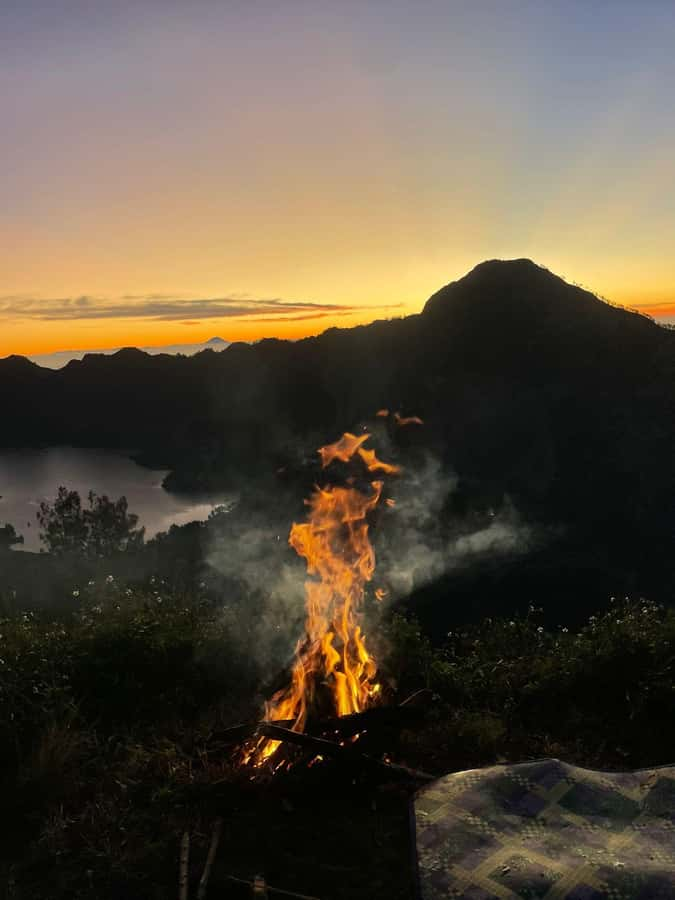
You may see sunset from camp, and the plan allows time to enjoy the night sky. The phrase sleep under the stars sounds romantic, but remember that this is a mountain campsite at altitude. Conditions can feel cold, and the next morning comes very early.
Dinner is included, as is camping equipment. The food earns especially strong praise in the available comments, with good meals and cooking mentioned more than once. That is not a small matter on a hard climb. A warm dinner gives you a better chance of resting before the summit attempt.
The crew also carries the camping equipment with a porter. You are not expected to haul the full tent and kitchen load, but you still need to carry your own personal belongings. Pack lightly and keep the essentials easy to reach.
The 2:00 a.m. wake-up sets the tone
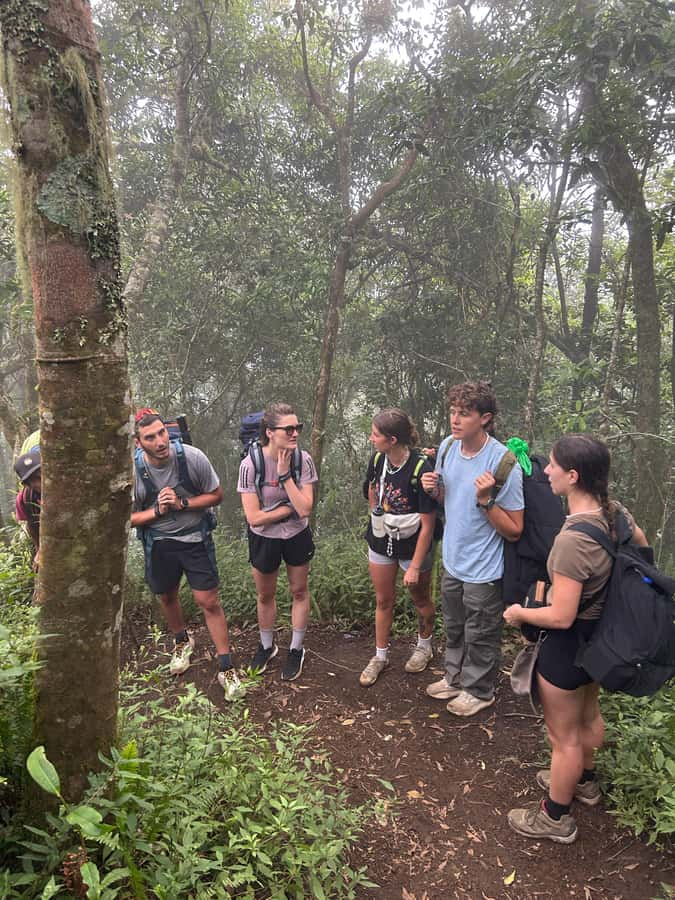
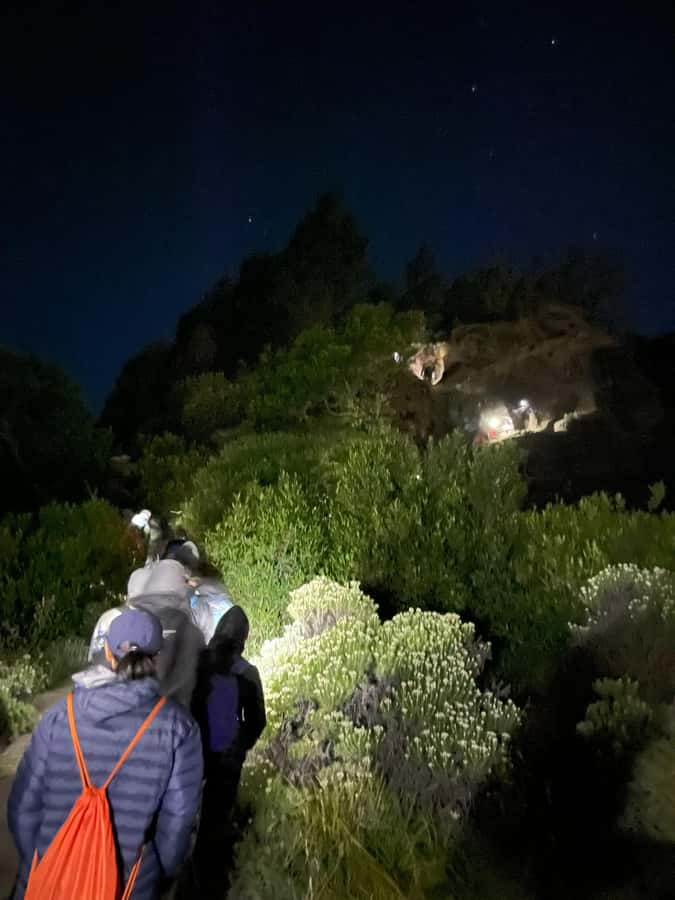
Day two begins around 2:00 a.m. You receive a hot drink and a light breakfast, then start walking toward the summit at about 3:00 a.m.
The first section is described as moderate, followed by a longer but fairly easy stretch. The final approach is the difficult part. It includes steep volcanic scree, with loose material underfoot. This surface can slow you down, and every step may feel less secure than it did on the firmer trail below.
You will likely move at a careful pace rather than a fast one. The included headlamp is important because the climb begins in darkness. Gloves also help with the cold and with balance on the rougher upper section.
The summit target is around 6:00 a.m. That timing is designed for sunrise, but the exact arrival time will depend on your pace and conditions. The schedule is ambitious. The summit climb alone can take several hours, and the effort comes after a full day of uphill walking.
The trip is not designed for a relaxed morning hike. It is a concentrated mountain challenge, with very little spare time between waking, climbing, sunrise, breakfast, and the long descent.
More Volcano Sunrise Tours in Indonesia:
- Bali/Mount Batur: Private Sunrise Jeep Tour & Hot Spring
★ 4.8 · 3,528 reviews - Mount Batur Sunrise Hike and Natural Hot Spring Option
★ 5.0 · 1,927 reviews - From Ubud: Mount Batur Shared Jeep Sunrise & Hot Spring Tour
★ 4.8 · 1,842 reviews - Mount Bromo Sunrise Tour from Surabaya or Malang – 1 Day
★ 5.0 · 1,759 reviews
Sunrise at 3,726 meters is the payoff
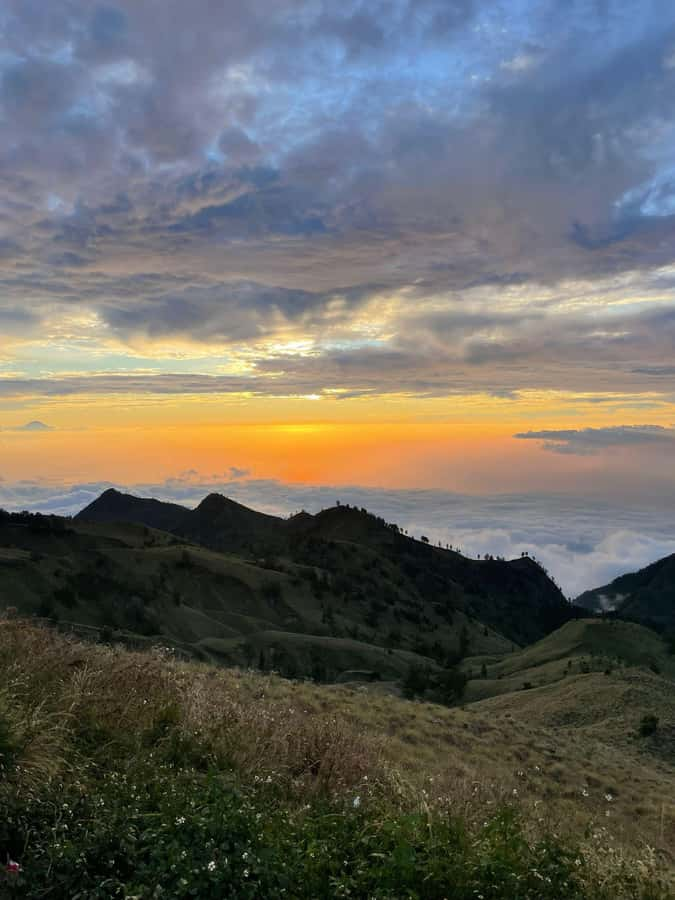
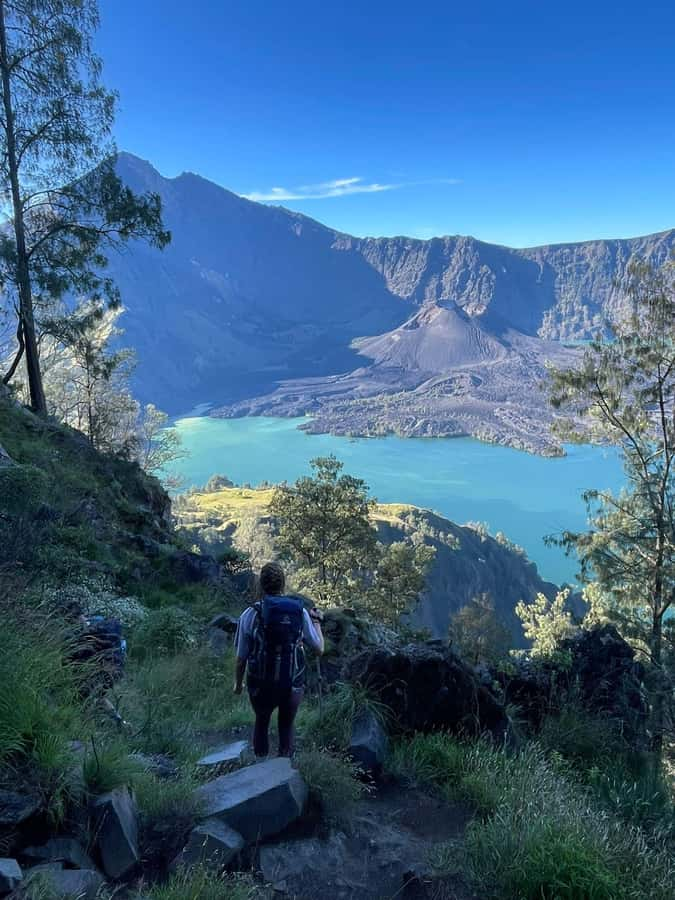
At the summit, you can photograph the moment and take in wide views across Lombok. The route description also names Bali, Sumbawa, and Segara Anak Lake, giving you a clear sense of the summit’s reward.
Mount Rinjani is Indonesia’s second-highest mountain at 3,726 meters, and reaching this point is the central achievement of the tour. The final climb may be slow and tiring, but the summit gives the effort a strong purpose.
You should plan your camera or phone access before leaving camp. Keep it protected from dust and cold, and do not let taking pictures distract you from footing on the loose upper trail. The summit is a place to pause, but the descent still lies ahead.
The available rating is 4.8 out of 5 from nine ratings. The strongest praise focuses on the crew’s friendly service, helpful attitude, clear communication, food, and equipment. That combination is useful on Rinjani because the experience depends as much on steady support as on scenery.
The descent is long, not an afterthought
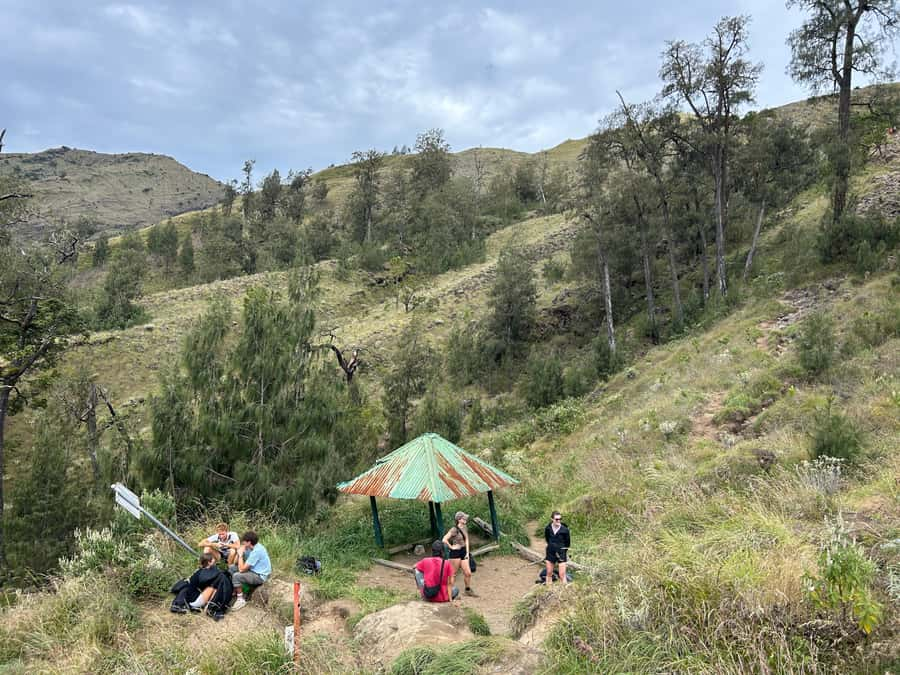
After the summit, you descend to Sembalun Crater Rim in about two hours and have breakfast there. This is a sensible stopping point. You have completed the hardest uphill section, but your body has already worked through a full day and an early morning.
From the crater rim, the route continues down to Sembalun village, taking about five hours. That long descent is easy to underestimate. Downhill walking can be hard on knees and thighs, especially after the summit push.
The final day therefore combines a pre-dawn climb with a lengthy walk downhill. If you are fit, this makes the two-day schedule efficient. If you are new to mountain trekking, the timetable may feel relentless.
A car takes you from Sembalun village back to Senaru village, followed by a transfer to your next destination. Transport connected with the trek is not included in the $133 price, so you need to clarify and budget for those arrangements before you go.
What the $133 price covers
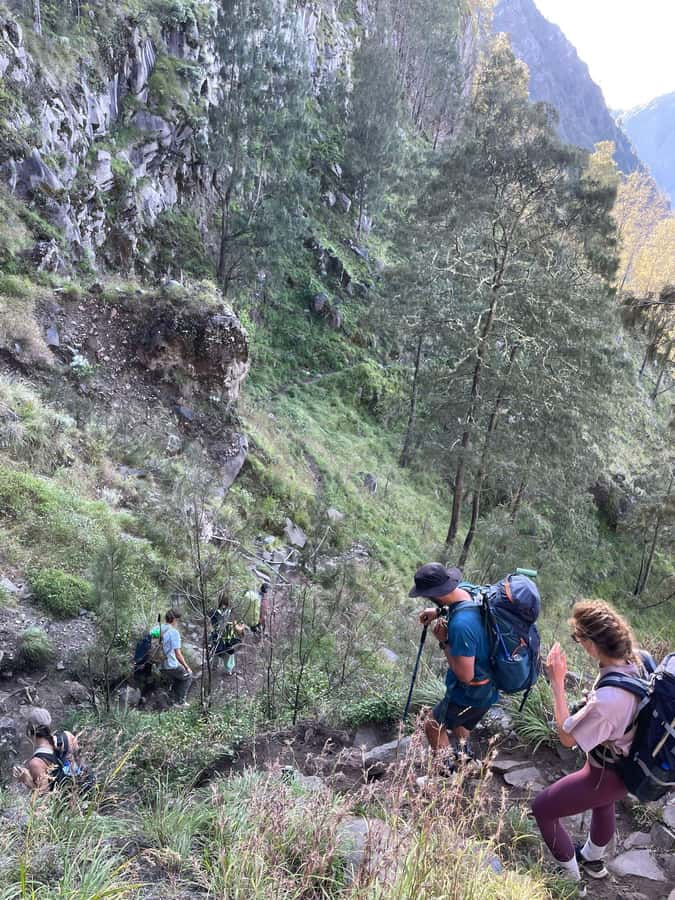
At $133 per person, the package offers a useful amount of support for a short, demanding expedition. The included items are:
- Trekking insurance
- English-speaking guide
- Porter for camping equipment
- Camping equipment
- Meals and drinks
- Drinking water
- Breakfast, lunch, and dinner
- Headlamp
- One trekking pole per person
- Gloves
The meals include lunch on the mountain, dinner at camp, breakfast on the mountain, and lunch during the trek. The wording lists some meals more than once, but the practical point is clear: food and water are supplied throughout the trekking program.
The biggest value comes from not carrying the camping kit yourself. You still need personal gear, but the porter support and prepared meals let you focus on pacing and the trail.
The price does not include the Rinjani entrance fee, listed at 210,000 Indonesian rupiah per day per person. Since this is a two-day trek, confirm how the fee is calculated for your booking. Transport is also excluded, along with hotel accommodation, trekking shoes, long pants, and a small day pack.
That makes the advertised price a starting figure rather than the full cost of the trip. Add the entrance fee, transfers, accommodation before or after the trek, and any equipment you need to buy or rent.
Food, equipment, and crew support
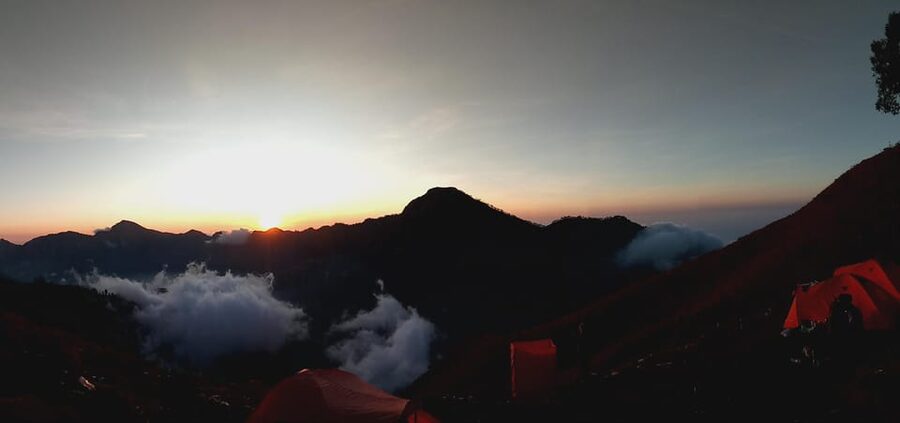
Service is one of the strongest reasons to consider this tour. The crew is described as friendly, helpful, and good at communication. The cooking also receives repeated praise, with comfortable equipment and tasty meals called out specifically.
You should still keep your expectations practical. This is a mountain campsite, not a hotel kitchen, and the schedule leaves limited time for elaborate comfort. The value is in having hot food, water, and a functioning camp after a long climb.
A headlamp is included, which is essential for the 3:00 a.m. start. One trekking pole and gloves are also supplied. Check the equipment when you arrive and make sure the lamp works before you leave camp.
Shoes and long trousers are not included. You need to bring suitable footwear and clothing yourself. The information does not specify a rental service or a particular shoe type, so ask the operator if you need to arrange equipment locally.
No individual guide names are provided, so you should confirm who will lead your group before departure. The listed operating language is English.
Who should book this trek?
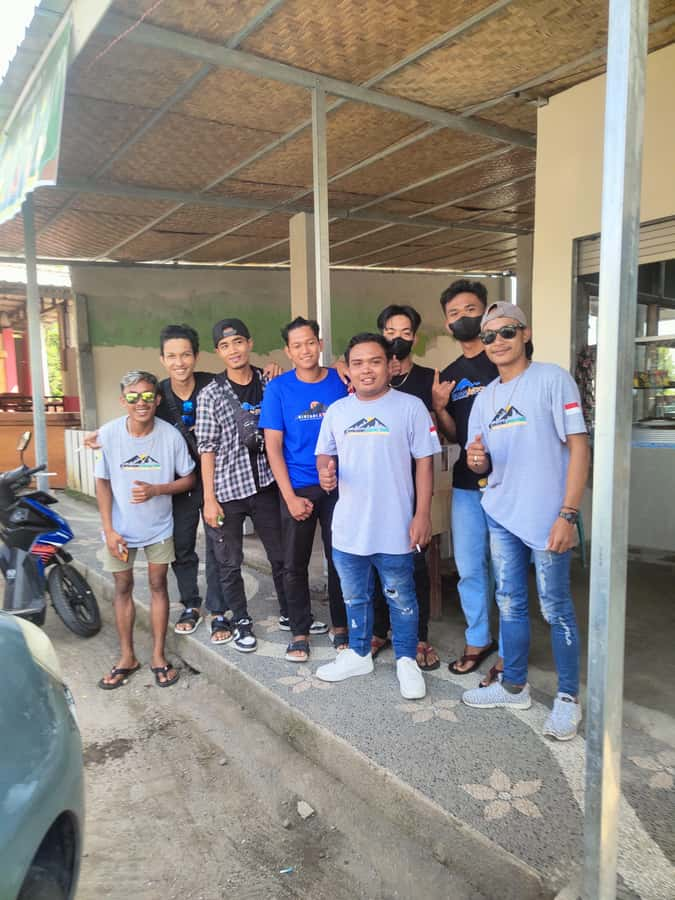
This trip fits you best if you want a fast, focused summit climb and are willing to accept a hard schedule. It suits people who value the achievement of reaching a high summit more than a slow, comfortable mountain holiday.
A physically healthy 12-year-old has completed the route with a parent, but that should not be treated as proof that the trek is easy for children. The climb is described as very difficult, and the trip requires a properly healthy fitness level. Age alone does not decide suitability, but stamina, comfort with steep paths, and the ability to manage an early start matter greatly.
You should think twice if you dislike night walking, loose volcanic ground, cold camping, or long descents. You also need to be comfortable with basic conditions and a packed schedule.
The tour has a full-refund cancellation policy up to 24 hours before departure, and you can reserve now and pay later. Those terms offer useful flexibility, but they do not remove the need to prepare properly.
Should you book the Mount Rinjani 2D-1N trek?
Book it if you want the shortest listed route to Rinjani’s summit, strong crew support, supplied camping equipment, and a sunrise goal at 3,726 meters. The $133 price is attractive once you account for the guide, porter, meals, water, and camp gear, but remember to add entrance fees, transfers, accommodation, and personal equipment.
Skip it if you want a gentle introduction to mountain walking. This is a demanding two-day push with a 2:00 a.m. wake-up, a steep scree climb, and a five-hour descent after the summit.
For a fit walker who wants a clear challenge and a big sunrise, this is a sensible package. Bring the right shoes, keep your personal bag light, pace the first day carefully, and treat the long descent as seriously as the climb.
FAQ
How much does the Mount Rinjani 2D-1N trek cost?
The listed price is $133 per person. Entrance fees, transport, hotel accommodation, trekking shoes, long pants, and a small day pack are not included.
Where does the trek start?
The walking section starts in Sembalun village at about 1,100 meters. You are transferred from Senaru village to Sembalun before trekking.
What time does trekking begin on the first day?
The trek starts around 8:00 a.m. after breakfast, the transfer to Sembalun, and registration at the Rinjani information center.
Where do you camp overnight?
You camp at Sembalun Crater Rim, at approximately 2,639 meters. The campsite allows time for sunset and sunrise views.
What time do you leave for the summit?
You wake around 2:00 a.m. for a hot drink and light breakfast, then begin the summit trek at approximately 3:00 a.m.
How high is Mount Rinjani’s summit?
The summit is 3,726 meters high. It is described as the second-highest mountain in Indonesia.
What meals are included?
Meals and drinks are included, along with drinking water. The program lists lunch on the first day, dinner at camp, breakfast on the mountain, and lunch during the trek.
What trekking equipment is provided?
The package includes camping equipment, a headlamp, one trekking pole per person, gloves, and a porter to carry the camping equipment.
Can I cancel or pay later?
You can reserve your place and pay later. Cancellation is allowed up to 24 hours in advance for a full refund.
More 2-Day Experiences in Indonesia
- From Surabaya / Malang : Mt Bromo Sunrise – Ijen Blue Fire 2D1N
★ 5.0 · 330 reviews - 2D1N Senaru Crater Rim Trekking
★ 5.0 · 178 reviews - From Malang: Shared Mount Bromo & Ijen Tours Start – 2D1N
★ 4.4 · 171 reviews - 2Days – Bromo Sunrise Ijen Adventure via Malang
★ 5.0 · 152 reviews
More Early-Start Tours in Indonesia
- Mount Batur Sunrise Hike with Breakfast
★ 5.0 · 1,757 reviews - Mount Batur Sunrise Jeep Tour with Optional Activities
★ 5.0 · 1,555 reviews - Bali: Shared Mount Batur Jeep Sunrise with Hot Springs
★ 4.9 · 1,332 reviews - Mount Batur Sunrise Jeep Tour
★ 5.0 · 1,247 reviews
Just added around Indonesia
- From Banyuwangi or Bali Sunrise Ijen Vulcano Hiking All Inclusive★ 5.0 · 50 reviews
- Ijen Blue Fire & Sunrise Sharing Tour★ 5.0 · 6 reviews
- Kawah Ijen Midnight Tour (1 Day)★ 4.5 · 7 reviews
- 1 Day – ULTIMATE Tour Ijen Blue Fire From Surabaya, Malang and Banyuwangi★ 5.0 · 6 reviews
- Kawah Ijen Blue Fire Tour – Share Package★ 5.0 · 7 reviews
- Ijen Crater Tour★ 5.0 · 33 reviews
- 2 Days Private Tour Ijen and Bromo from Banyuwangi★ 5.0 · 31 reviews
- Guided Tour to Ijen Crater Blue Fire★ 5.0 · 4 reviews
Indonesia Volcano Tours, compared.
Bali: Sunrise Mount Batur Guided Hike with Breakfast
Read our review →
Bali: Mount Batur Sunrise Guided Hike and Natural Hot Spring
Read our review →
Bali/Mount Batur: Private Sunrise Jeep Tour & Hot Spring
Read our review →
Bali: Mount Batur Sunrise Trek With Guide and Breakfast
Read our review →
Mount Batur Sunrise Hike and Natural Hot Spring Option
Read our review →
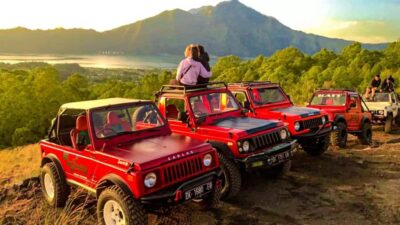
From Ubud: Mount Batur Shared Jeep Sunrise & Hot Spring Tour
Read our review →
Mount Bromo Sunrise Tour from Surabaya or Malang – 1 Day
Read our review →Browse the lists this tour appears in