
REVIEW · FUJIYOSHIDA
From Tokyo: Full-Day Mount Fuji Tour in English or Spanish
Mount Fuji is at its best when you see it from several angles, not just through a coach window. This 10-hour trip from Shinjuku links the famous Chureito Pagoda view with traditional shrines, a Fuji-facing shopping street, flower gardens, and a boat ride on Lake Kawaguchiko. I especially like the mix of classic photographs and local religious sites, plus the chance to experience the mountain without arranging several separate trains and buses.
I also like that the tour is offered in English and Spanish, with guide Luis praised for clear explanations, patience, and strong knowledge of the area. The main drawback is the pace: five major stops, walking, stairs, and a cruise make for a full day. The detailed route does not list Mount Fuji’s fifth station, despite it appearing among the headline highlights, so confirm that point before booking.
Key points at a glance
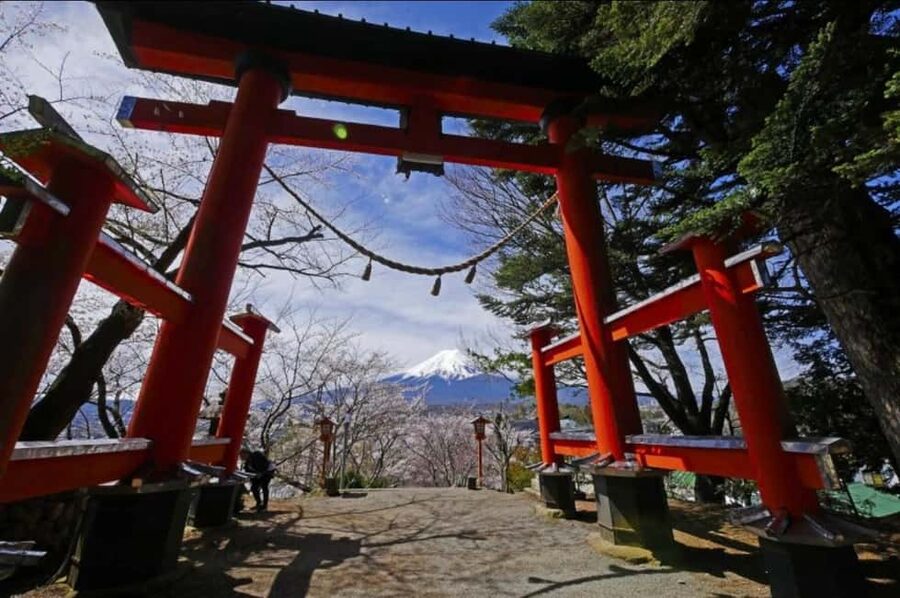
- Chureito Pagoda viewpoint: Climb 400 steps, or use the sloping path, for one of Japan’s most recognizable Fuji views.
- Honcho Street photo stop: Walk a traditional shopping street where Fuji rises behind the town.
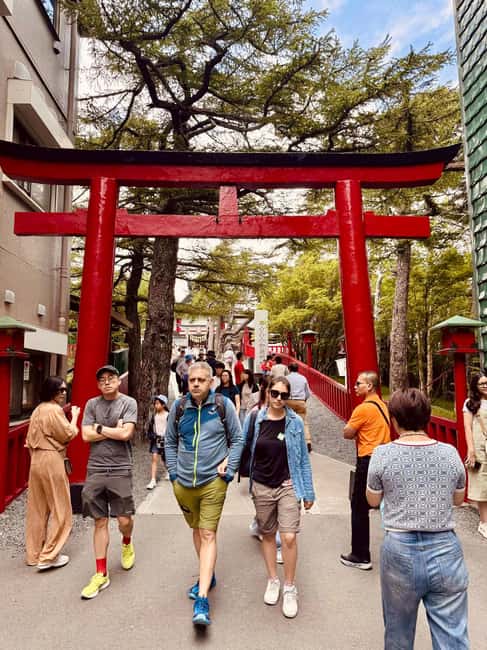
- Two important shrines: Visit Arakura Sengen Shrine and Kitaguchi Hongu Fuji Sengen Shrine, the old northern gateway to the mountain.
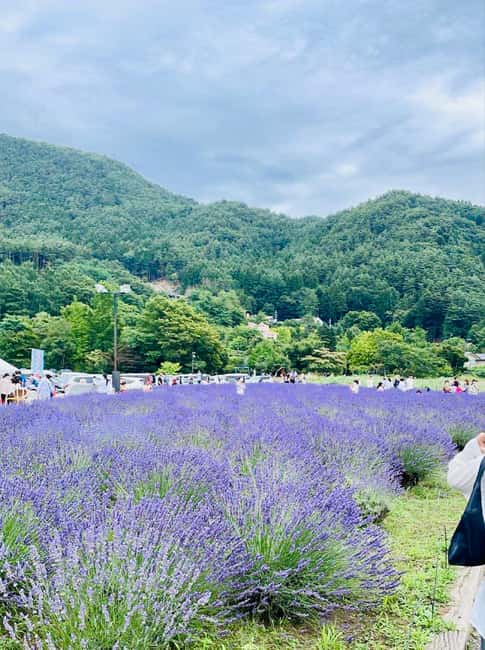
- Oishi Park in every season: See gardens and seasonal flowers beside Lake Kawaguchiko, with local fruit and ice cream available to buy.
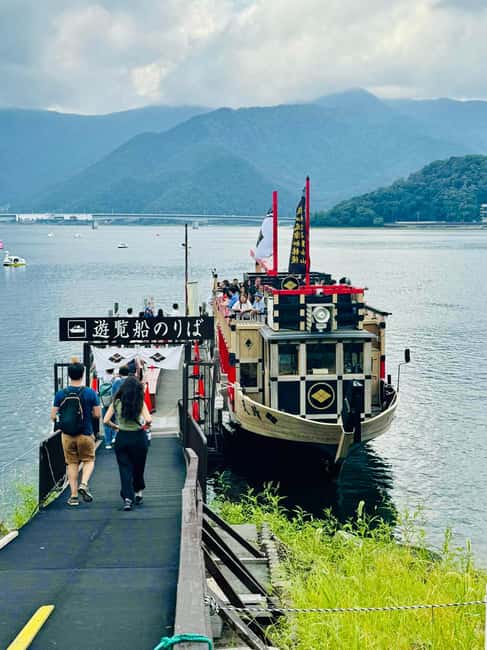
- Lake cruise finale: Finish with about 40 minutes on the water, weather permitting.
- Strong Spanish-language option: Luis is singled out for patient, detailed guiding, useful recommendations, and smooth communication in Spanish.
Why this Fuji day trip works
At $90 per person, this is not the cheapest way to reach the Fuji Five Lakes area, but it covers transport, a live guide, admission, and the cruise. That matters in Japan, where piecing together a day from Tokyo can mean changing trains, finding local buses, and watching the clock closely.
You are paying for a planned route and interpretation as much as for the places themselves. The shrines make more sense when you know their link to Fuji worship, and the guide can explain why certain viewpoints matter. A Spanish-language tour is especially useful if you want more than a few translated facts.
The day begins at 6-chōme-5-1 Nishishinjuku, in front of the Robert Indiana LOVE sculpture. Look for the guide holding a JP Travelers sign and, for Spanish departures, saying Fuji tour in Spanish. The return point is 1-chōme-8-8 Nishishinjuku, which keeps the start and finish within the Shinjuku area.
The advertised duration is 10 hours. That is a substantial day, but Fuji is far enough from central Tokyo that a shorter outing would leave little time outside the vehicle. A 30-minute coach segment is shown before the first sightseeing stop, though the full transport schedule will naturally depend on Tokyo traffic and road conditions.
More Mount Fuji Tours in Fujiyoshida:
- Tokyo: Mount Fuji & Hakone Private Car Day Tour Lowest Price
★ 5.0 · 31 reviews - Tokyo: Mt. Fuji Summer Trip 5th Station & Lake Kawaguchi
★ 3.8 · 28 reviews - Tokyo: Private Mt. Fuji Luxury Day Tour – Fully Customizable
★ 4.9 · 17 reviews
Arakura Sengen Park and the 400-step choice
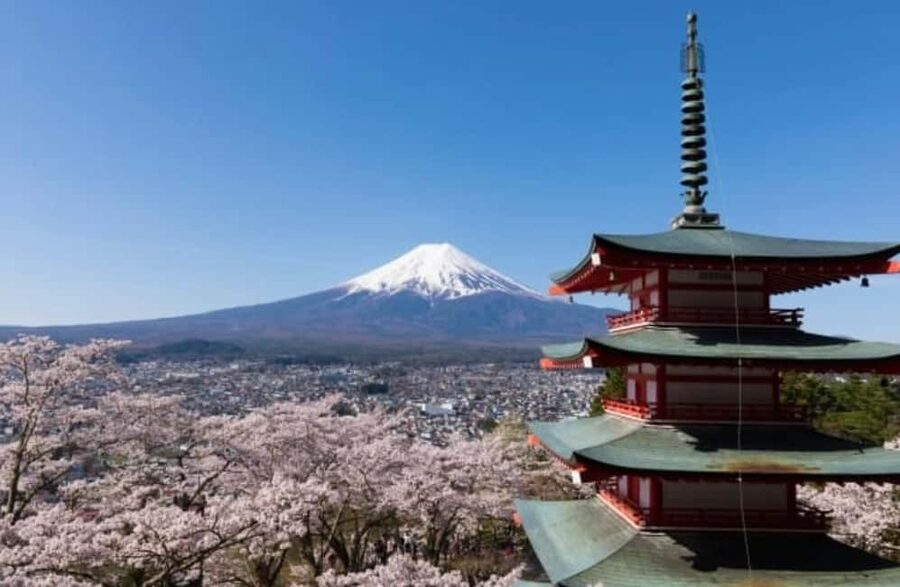
Your first major stop is Arakurayama Sengen Park, one of the day’s strongest photo locations. The view brings together Mount Fuji, the Chureito Pagoda, and the town below. When the air is clear, it is the image many people picture when they think of Fuji in Japan.
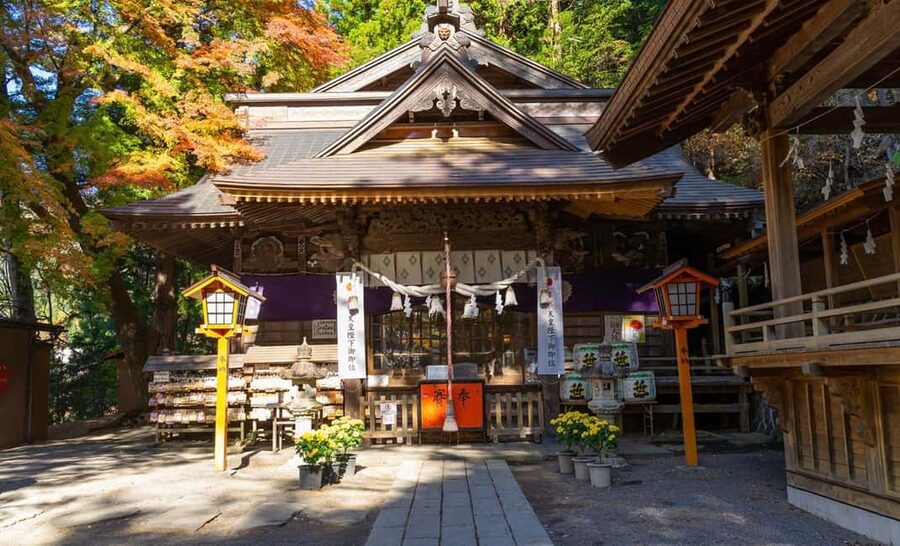
The route includes Arakura Fuji Sengen Shrine, described as one of the oldest shrines in the area. Local tradition connects its foundation with Lord of Yamanashi Takeda. The shrine gives you a useful introduction to the spiritual side of the mountain before you reach the pagoda above.
From the entrance, the direct route has 400 steps. The first 100 take you toward the shrine, with another 300 leading to the pagoda. This is not a tiny staircase added for a quick photograph. You should expect a real uphill effort, especially after a long day of walking and if you are carrying a heavy camera bag.
There is also a step-free alternative, a beautiful sloping path that reaches the same area. The information supplied for the tour does not describe its exact length or gradient, so do not assume it will be effortless. Still, it gives you a practical choice if stairs are uncomfortable.
You receive about 70 minutes at the observatory area, including guided sightseeing. That should allow time for the shrine, the ascent or slope, photographs, and a look around, though large crowds or slow movement on the steps can reduce your margin. Wear shoes with a firm sole and bring water.
Chureito Pagoda and the Fuji photograph
Chureito Pagoda is a five-story peace pagoda built on the mountainside above Fujiyoshida. The pagoda itself is attractive, but the real draw is the composition: red and white architecture in the foreground, Fuji behind it, and the town spread below.
Clouds are the great variable. Mount Fuji can disappear while the pagoda remains perfectly visible, so you should treat the view as weather-dependent rather than guaranteed. The tour information specifically warns that conditions can change quickly. A camera is worthwhile, but patience and a little luck matter just as much.
The guide’s role is useful here. Spanish-language guide Luis receives repeated praise for explaining each place carefully and arranging the timing to reduce crowds on some departures. That can help at a famous viewpoint where a few minutes of better positioning make a difference.
This stop is also the day’s clearest physical test. People with limited mobility should know about the stairs before reserving. The experience is not suitable for people over 95, and the overall day is best for anyone comfortable with repeated walks, uphill sections, and standing sightseeing.
Honcho Street, where town and mountain meet
After the pagoda area, you walk along Shimoyoshida Honcho Street for about 40 minutes. This is not a nature trail. It is a traditional shopping street in Fujiyoshida, with local businesses, older-style buildings, and a direct view toward Fuji.
The appeal comes from the contrast. Fuji rises at the end of an ordinary town street, framed by utility lines, shop fronts, and daily life. It feels less arranged than the pagoda viewpoint, and the setting helps you understand how closely the town is tied to the mountain.
The street’s older name, Fuji Michi, refers to its role as a route toward the sacred mountain. Historically, people used this way as part of their pilgrimage approach to Fuji. You do not need a long lecture to appreciate the view, but knowing that background adds meaning to a simple town walk.
This is a good place to keep your camera ready and your expectations realistic. The view depends on weather, traffic, and the exact position along the street. It is a walking stop, not a dedicated observation deck, and the time passes quickly.
More Full-Day Tours in Fujiyoshida:
- Mount fuji and Hakone full day private tour with English gui
★ 4.9 · 12 reviews - Mount Fuji Full Day Private Tour from Tokyo Full Customized
★ 4.0 · 9 reviews - Tokyo: Mount Fuji & Hakone Private Customized Full Day Tour
★ 4.4 · 7 reviews - Tokyo to Mount Fuji A Full Day Private Tour From Tokyo
★ 3.8 · 4 reviews
Kitaguchi Hongu Fuji Sengen Shrine
The next shrine is Kitaguchi Hongu Fuji Sengen Shrine, one of the most culturally important stops on the route. It is connected with the northern approach to Mount Fuji and is part of the mountain’s UNESCO World Cultural Heritage designation from 2013.
The site is said to trace its origins to around 100 AD, when a small shrine honored the legendary prince Yamato Takeru during his passage through the region. It later became the old northern entrance and starting point for a pilgrimage route up the sacred mountain.
That makes this stop different from a quick scenic pause. You are seeing a place tied to worship, travel, and the long-standing relationship between communities and Fuji. The tour allows about 50 minutes for guided sightseeing, enough to look around without turning the visit into a rushed photo stop.
This shrine is also the stated substitute if access to Mount Fuji is closed or not permitted for reasons outside the operator’s control. That policy gives you a useful fallback, but it also highlights an important point: mountain access and views are not fully under the tour company’s control.
Oishi Park beside Lake Kawaguchiko
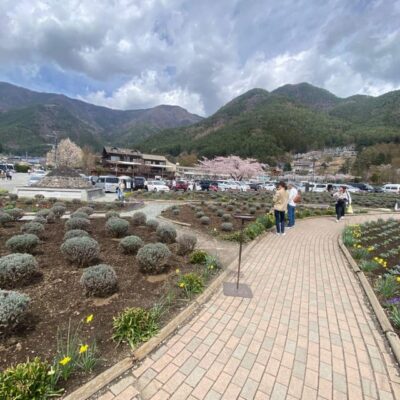
Oishi Park sits along Lake Kawaguchiko, with open views toward Mount Fuji and gardens arranged for seasonal color. About 50 minutes here gives you time to walk through two garden areas, take photographs, and browse local products.
The flowers change with the season, so this stop will not look identical throughout the year. The park is a good counterpoint to the shrines and streets because it gives you a slower stretch beside the water. You can enjoy the view even if you are not interested in buying anything.
The park also has 14 ice cream flavors, local fruit, and souvenirs for sale. Ice cream and snacks are not included in the $90 price, so carry cash as advised. Food, drinks, and lunch are also your responsibility.
The explanation provided for the park links its stonework to rocks recovered from the Fuji area, including material associated with past eruptions. That gives the place a local connection to the mountain’s volcanic force rather than treating it as only a flower garden.
The Lake Kawaguchiko cruise
The final sightseeing stop is a cruise of about 40 minutes on Lake Kawaguchiko, described as the second largest of the lakes around Fuji. From the water, you get a different relationship with both the lake shore and the mountain.
I like the decision to end on the lake. After a day of shrines, stairs, streets, and gardens, the boat gives you a chance to sit and watch the scenery change. It also provides another chance to see Fuji from a new angle if clouds have shifted.
As with every outdoor stop, visibility depends on the weather. The tour includes the cruise, but no operator can promise a clear mountain. Bring a jacket or another layer because conditions around the lake can change quickly, even when Tokyo feels mild.
Guide quality and language choice
The strongest pattern in the available feedback concerns the guiding, especially Luis on Spanish-language departures. He is praised for explaining each location, sharing historical information, offering shopping and local recommendations, and staying patient with the group.
That matters because this is not simply a transfer to a viewpoint. You visit two shrines, a pilgrimage street, a park shaped by Fuji’s volcanic past, and a lake tied to the mountain’s identity. Without context, some of those places could blur together. A good guide helps you see why they belong in the same day.
The tour runs in English and Spanish. It is conducted as a language option rather than a silent bilingual outing, so check the available departure language when you book. For Spanish speakers, the ability to ask questions and follow explanations in Spanish is a genuine advantage.
Transport also receives positive attention for being clean and comfortable. The exact vehicle and group size are not specified, so I would not book this expecting a private car or a small custom tour. Think of it as a guided coach-based day with a fixed route.
What to bring and what to watch
Comfortable shoes are essential. You will walk through shrine grounds, along Honcho Street, in Oishi Park, and possibly up 400 steps at Arakurayama.
Bring water, sunscreen, food or snacks, and cash. Lunch is not included, and neither are drinks, ice cream, snacks, or personal purchases. The day has several stops, but the supplied details do not promise a dedicated lunch break, so carrying something small is sensible.
Dress in layers and check the weather before leaving Tokyo. The Fuji area can change quickly, and cloudy conditions can hide the mountain. A camera is obvious, but a phone with spare battery power is just as useful for the many short photo stops.
Cancellation is free up to 24 hours before departure, and you can reserve now and pay later. Those terms help if your Tokyo schedule depends on weather, though they do not solve the basic Fuji problem: a clear view is never guaranteed.
The fifth station question
The headline information mentions views from Mount Fuji’s fifth station, but the detailed route provided here lists Arakura Sengen Park, Honcho Street, Kitaguchi Hongu Fuji Sengen Shrine, Oishi Park, and Lake Kawaguchiko. The fifth station is not included in that stop-by-stop schedule.
That distinction matters. If reaching the fifth station is your main goal, ask the operator to confirm exactly what your selected departure includes. The tour clearly offers excellent Fuji-area viewpoints without it, but you should not assume the fifth station is part of every outing.
If Fuji access is closed or restricted, the tour substitutes Kitaguchi Hongu Fuji Sengen Shrine. You still receive a cultural visit, but the day may not match your original expectation of going higher on the mountain.
Who should book this day?
I would recommend it to you if you want a broad introduction to the Fuji area without handling several transport connections yourself. It suits photographers, first-time visitors to the region, and Spanish speakers who want a full explanation rather than a few facts in English.
It is also a good fit if you value variety. In one day, you get a mountain viewpoint, a shrine, a traditional street, a UNESCO-linked sacred site, gardens, and a boat ride.
I would hesitate if you want a slow, flexible day, dislike stairs, or need guaranteed time at the fifth station. The route covers a lot, and the 10-hour schedule requires energy. Bad weather can also reduce the visual payoff, even though the cultural stops remain worthwhile.
Should you book it?
Book this tour if you want a well-packed Fuji day with dependable transport, English or Spanish guiding, and more substance than a single photo stop. The $90 price is fair for the included vehicle, guide, entrance fees, and Lake Kawaguchiko cruise.
Before paying, confirm the fifth station question and choose your language carefully. If you prepare for stairs, changing weather, and extra food costs, this is a practical way to see several sides of Mount Fuji in one day.
FAQ
Where does the tour start?
It starts at 6-chōme-5-1 Nishishinjuku, in front of the Robert Indiana Sculpture LOVE.
How do I identify the guide?
Look for a guide holding a JP Travelers sign. For Spanish departures, the guide will say Fuji tour in Spanish.
Where does the tour finish?
The tour finishes at 1-chōme-8-8 Nishishinjuku.
How long does the tour last?
The tour duration is 10 hours.
Which languages are available?
The tour is conducted in English and Spanish.
Is lunch included?
No. Lunch, snacks, drinks, ice cream, and personal expenses are not included.
Is the Lake Kawaguchiko cruise included?
Yes. The cruise is included and lasts about 40 minutes.
How many steps lead to Chureito Pagoda?
The direct route has 400 steps, with the first 100 leading toward the shrine and the remaining 300 going up to the pagoda.
Is there a route without stairs at Arakurayama?
Yes. A sloping path without stairs reaches the same area, although its exact length and gradient are not specified.
What happens if Mount Fuji is closed?
The tour visits Kitaguchi Hongu Fuji Sengen Shrine instead if Mount Fuji is closed or access is not permitted for reasons beyond the operator’s control.
Just added around Fujiyoshida
- Tokyo to Mount Fuji A Full Day Private Tour From Tokyo★ 3.8 · 4 reviews
- Tokyo: Mt-Fuji & Hakone Private Custom Tour English Driver★ 5.0 · 4 reviews
- Tokyo: Mt. Fuji and Hakone tour with English Speaking Driver★ 5.0 · 7 reviews
- Tokyo: Mount Fuji & Hakone Private Customized Full Day Tour★ 4.4 · 7 reviews
- Private Mount Fuji sightseeing Day trip with English Guide★ 5.0 · 8 reviews
- Mt. Fuji Private Tour With Hotel Pick Up From Tokyo★ 5.0 · 8 reviews
- Mt Fuji Private Day Tour with English Speaking Driver★ 4.0 · 4 reviews
- Mount Fuji Full Day Private Tour from Tokyo Full Customized★ 4.0 · 9 reviews
Fujiyoshida Volcano Tours, compared.
Tokyo: Mount Fuji & Hakone Private Car Day Tour Lowest Price
Read our review →
Tokyo: Mt. Fuji Summer Trip 5th Station & Lake Kawaguchi
Read our review →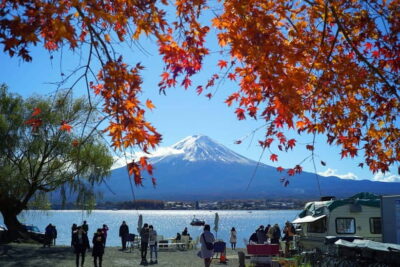
Tokyo: Private Mt. Fuji Luxury Day Tour – Fully Customizable
Read our review →
Mount Fuji Private Day Tour customized with English driver
Read our review →
From Tokyo: 5 Best Mount Fuji Photo Spots Private Day Trip
Read our review →
Mount fuji and Hakone full day private tour with English gui
Read our review →
Fuji/Hakone Private Tour, English speaking guide, Photograph
Read our review →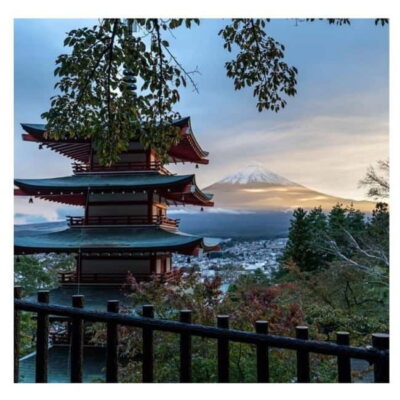
Mount Fuji Full Day Private Tour from Tokyo Full Customized
Read our review →Browse the lists this tour appears in